Hardcover. Iowa City, State Historical Society of Iowa, 1st, 1968, Book: Very Good, Dust Jacket: Good, Hardcover, 575 pages. Illustrated with black & white photographs. Some numbered Stickers on front endpaper. Foxing along edges of dust jacket. Clean, tight copy.
Hardcover. MY, Harcourt Brace & Co., 2nd pr., 1939, Book: Very Good, Dust Jacket: None, Hardcover, orange cloth stamped in black, 267 pages, b&w illustrations by James MacDonald. A boy's novel about track and field competition. Jim Wellington, Harvard senior and Waterloo, Iowa native, already the U. S. collegiate record holder for the two-mile, heads to Berlin for the Olympics. Inscription on front fly leaf, otherwise a clean, bright copy. Lacks dust jacket.
Hardcover. Minneapolis, Univ Of Minnesota Press, 1st, 2005, Book: Very Good, Dust Jacket: Very Good, Hardcover in a bright dust jacket, 151 pages illustrated in b&w. Iowa Central Railway supporters fought for a north-south route across the state that would link Minneapolis and St. Paul and St. Louis. This is the history from station records, reports, newspaper articles, and interviews of "The Hook & Eye", which brought both the industrial and human sides of railroading into sharp and memorable view. Clean copy.
Softcover. Iowa City IA, State Historical Society of Iowa, 1960, Book: Very Good, Dust Jacket: None, Softcover, monthly magazine, stapled color wraps, 86 pages with b&w illustrations. Entire issue devoted to "Railroads Come to Iowa" by William Petersen. Clean copy.
Hardcover. NY, Crown, 1st, 1995, Book: Very Good, Dust Jacket: Very Good, Hardcover in a bright, unclipped dust jacket, 644 pages, b&w illustrations. After a protracted squabble over private papers with the playwright's estate, Leverich delivers this hefty first volume of a projected two-volume life of Tennessee Williams (1911-1983). In it, Leverich, who produced several of Williams's plays and calls himself Williams's "chosen biographer", covers the years through 1945, when The Glass Menagerie opened on Broadway. Treated are Williams's youth in Mississippi and St. Louis; the college years at the universities of Missouri and Iowa; bumming around (but always writing) in New Orleans and Greenwich Village; the disaster of his first Broadway play (it closed in Boston); script writing, or avoiding it, at MGM's Hollywood mill; and, finally, the evolution of Menagerie, a wonderfully detailed and dramatic case history in itself. Leverich's overworked conceit, which he restates at intervals, is that this is the life of Tom Williams, a "repressed puritan" poet, who in time created a more flamboyant public persona called Tennessee. A few matters are set straight. Leverich maintains his subject's active homosexual life started in his late 20s, later than Williams stated in his memoirs, and that his sister's infamous lobotomy came later than his mother claimed. Although the accumulation of information is impressive, the lower Leverich keeps his own profile and editorial commentary the better his book is, which means it is at its best when it simply reproduces Williams's sporadically kept journal. If you believe that all the details of a life are but preparation for a single event, in this case, the opening of a remarkable play, this is an impressively argued biography.
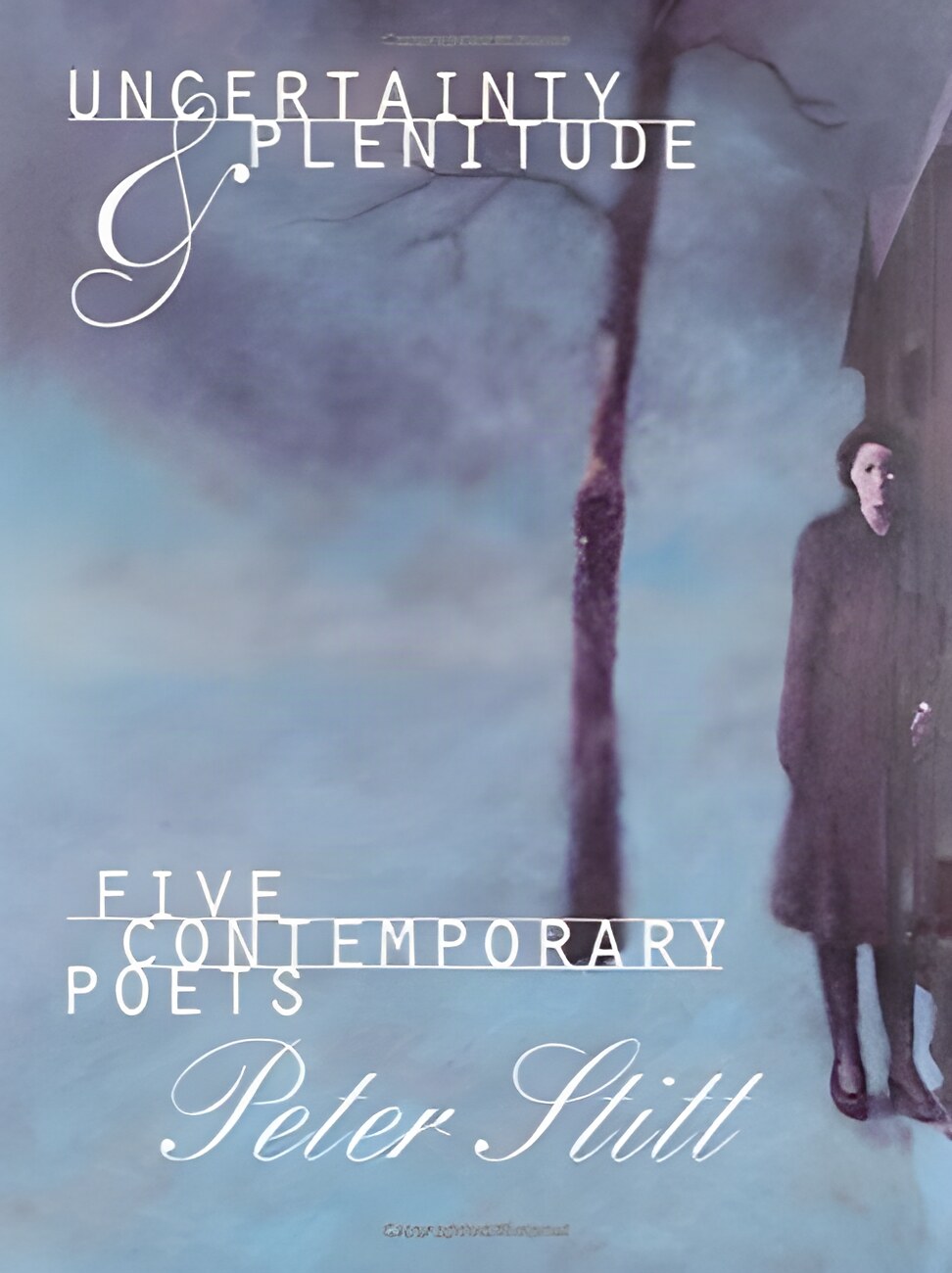
Hardcover. Iowa City, University of Iowa Press, 1st, 1997, Book: Very Good, Dust Jacket: Very Good, Hardcover in a bright dust jacket, 200 pages. Critical essays on Charles Simic, John Ashbery, Stephen Dobyns and Charles Wright. SIGNED on title page by Stitts, also INSCRIBED on the front fly leaf by him. Personal letter from author also laid in. Clean copy.
Hardcover. Ames IA, University Museums at Iowa State, 1st, 2006, Book: Very Good, Dust Jacket: Very Good, Hardcover in a bright dust jacket, 398 pages. Mainly b&w illustrations with a small color section in center. In 1927, President Raymond Hughes began planning aesthetic improvements to the Iowa State campus. In 1933, at the depth of the Great Depression, and in an act that dramatically illustrates his artistic commitment, he began discussion with Grant Wood and Christian Petersen for each to create a significant mural cycle for the Iowa State College campus in Ames. The federal New Deal s Public Works of Art Project began in 1934 and offered a grand opportunity to employ artists in executing Grant Wood s painted mural for the library, When Tillage Begins, Other Arts Follow, and Christian Petersen s sculpted mural for the Dairy Industry Building, The History of Dairying. This book presents the first history of the Public Works of Art Project in Iowa and the first in-depth examination of the Grant Wood and Christian Petersen murals at Iowa State College. It also discusses the co-operative painting group that Grant Wood developed and illuminates the collaborative nature of the Iowa Project among its artists, as well as between the State University of Iowa in Iowa City and Iowa State College in Ames. Clean, like new. DOMESTIC SHIPPING ONLY.

 "Steamboating on the Upper Mississippiby: Petersen, William J.")
 "The Duke Decides by: Tunis, John R.")
 "The Hook and Eye: A History of the Iowa Central Railwayby: Don L. Hofsommer")

 "Tom: The Unknown Tennessee Williams by: Lyle Leverich")
 "When Tillage Begins, Other Arts Follow: Grant Wood and Christian Petersen Muralsby: Lea Rosson DeLong")