Hardcover. NY, Cambridge University Press, 1st, 2014, Book: Very Good, Dust Jacket: None, Hardcover in pictorial boards, 318 pages. As the architect of the Iranian Revolution of 1979, Ayatollah Khomeini remains one of the most inspirational and enigmatic figures of the twentieth century. The revolution placed Iran at the forefront of Middle East politics and of the Islamic revival. Twenty years after his death, Khomeini is revered as a spiritual and political figurehead in Iran and in large swathes of the Islamic world, while in the West he is remembered by many as a dictator and as the instigator of Islamist confrontation. Arshin Adib-Moghaddam brings together both distinguished and emerging scholars in this comprehensive volume, which covers all aspects of Khomeini's life and critically examines Khomeini the politician, the philosopher, and the spiritual leader. The book details Khomeini's early years in exile from Iran, the revolution itself, and events that took place thereafter including the hostage crisis and the Iran-Iraq war. Lastly, the book considers his legacy in Iran - where Khomeini's image has been used by both reformist and conservative politicians to develop their own agendas - and further afield in other parts of the Islamic world and in the West. Written by scholars from varying disciplinary backgrounds, the book will prove invaluable to students and general readers interested in the life and times of Khomeini and the politics of Islam that he inspired.
Hardcover. London, John Murray, 2nd pr., 1947, Book: Very Good, Dust Jacket: None, Hardcover, 254 pages, index, b&w illustrations, double-page map. Light beige cloth, gilt lettering on spine, top of spine with fraying, light spotting to front cover otherwise clean. An illuminating record of travel in the Aden Protectorate in 1939 on the eve of World War II by a Dutch scholar of the region and it's people.
Softcover. Libya, Antiquities, Museums and Archives of Tripoli, 1st, 1965, Book: Very Good, Dust Jacket: None, Softcover, 178 text pages, three fold-out maps and many b/w plates in second half of the book.
Softcover. NY, Cambridge University Press, 1st pbk, 2009, Book: Very Good, Dust Jacket: None, Softcover, 309 pages. An Empire of Facts presents a fascinating account of the formation of French conceptions of Islam in France's largest and most important colony. During the period from 1870 to 1914, travelers, bureaucrats, scholars, and writers formed influential and long-lasting misconceptions about Islam that determined the imperial cultural politics of Algeria and its interactions with republican France. Narratives of Islamic mysticism, rituals, gender relations, and sensational crimes brought unfamiliar cultural forms and practices to popular attention in France, but also constructed Algerian Muslims as objects for colonial intervention. Personal lives and interactions between Algerian and French men and women inflected these texts, determining their style, content, and consequences. Drawing on sources in Arabic and French, this book places such personal moments at the heart of the production of colonial knowledge, emphasizing the indeterminacy of ethnography, and its political context in the unfolding of France's empire and its relations with Muslim North Africa. Clean copy.
Softcover. London, IB Tauris, reprint, 2000, Book: Very Good, Dust Jacket: None, Softcover, 418 pages. Ali Shariati is, for many, the ideological father of the Iranian revolution. A charismatic leader and teacher, his radical blend of Islam and Marxism mobilized a whole generation of young Iranians. This full-length political biography looks at Ali Shariati's life and thought in the context of the complex and contradictory cultural, social and political conditions of the Iranian society that shaped him. Clean copy.
Hardcover. London, England, Messrs. Luzac & Co., 1st Edition, 1954, Book: Very Good, Dust Jacket: None, Two volume set. Hardcovers. Domestic shipping only. Previous owner's name on front flyleaf. Vol. 1: 374 pages; Vol. 2: 217 pages. Black cover boards, gilt title on spine. Volume 2 has fading to spine. Pages unmarked. Spines straight. Binding tight. An important Islamic philosophical treatise in which the author defends the use of Aristotelian philosophy within Islamic thought. DOMESTIC SHIPPING ONLY.
Softcover. New York, Oxford University Press, 1st Edition, 2014, Book: Very Good, Dust Jacket: None, 480 pages. Softcover. Wrapper very good, french flaps, small bump to bottom of spine (see image). Pages clean. Binding good. Examines the nature and evolution of ruling bargains, the political systems to which they gave rise, the steady unraveling of the old systems and the structural consequences thereof, and the uprisings that have engulfed much of the Middle East since Dec. 2010.
Hardcover. Black Dog Publishing, 1st, 2006, Book: Very Good, Dust Jacket: Very Good, Hardcover, 189 pages. Blasphemy: Art that Offends is a prescient examination of the perpetually troubled, often explosive relationship between religion, politics and art. This book draws on a rich wealth of visual material, tracing both the history of blasphemy as a concept and re-positioning the term in the twenty-first century. Questions of censorship and freedom of expression are today extremely volatile, a fact evinced by the recent international backlash against the Danish newspaper Islamic caricatures and the murder of the Dutch filmmaker Theo Van Gogh following the release of his notorious Submission. Blasphemy: Art that Offends provides a vital vantage point from which to view the complicated, compelling interrelations between religion, politics and the visual arts.
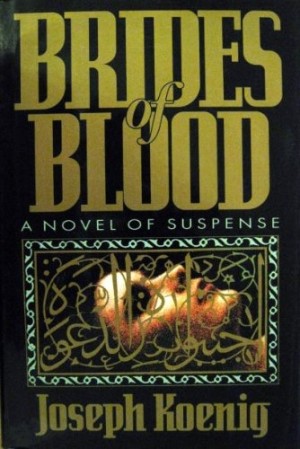
Hardcover. NY, Grove Press, 1st, 1993, Book: Very Good, Dust Jacket: Very Good, Hardcover in a bright, unclipped dust jacket. "In transposing to an Iranian setting the conventions of the thriller--the hard-drinking detective, the threatened heroine, the frantic escape from a brutal adversary--Koenig invests his story with unusual resonance. Here the familiar figure of the honest cop plays his role in the unfamiliar milieu of Teheran's fundamentalist Islamic society, as he becomes a threat to the government itself. Conducting a routine murder investigation to solve the death of a sexually mutilated young woman, chief homicide detective Darius Bakhtiar discovers the existence of a state-sponsored terrorist group, the Brides of Blood. This secret sorority of virgins, fanatical in their religious devotion, are trained to martyr themselves in terrorist aggression. After Bakhtiar uncovers evidence of sanctioned efforts to arm Iran with biological weapons, he and Maryam Lejavardi, the beautiful former Bride he has begun to protect and love, are tortured in Iran's feared Evin prison. The unimaginable horrors of Iran's torture factory might have overwhelmed a lesser novelist, but Koenig artfully blends assiduous research and superbly maintained suspense as he builds to the thrilling, unrelenting--and very cinematic--final pages."
Hardcover. New York, Aperture, 1st, 1998, Book: Very Good, Dust Jacket: Very Good, Hardcover in a bright, unclipped dust jacket. 96 pages, color photographs, Like new in publisher's shrinkwrap. Doors of the Kingdom is a unique collection of photographs depicting the ancient and disappearing craft of doormaking in Arabia. The Islamic concept of hurma, or sanctity of a place of dwelling or worship, is recurrent throughout Arabic poetry and literature. The door (bab), preserver of sanctity, becomes symbolic of the boundary between public and private space, and between the profane and the sacred. In 1995, Haajar Gouverneur traveled throughout the Arabian Peninsula photographing each region's distinctive doorways and the remaining artisans who make them. The doors of Arabia, painstakingly hand-carved from the wood of the Al-Athel trees, last in their exquisite variety for hundreds of years. This ancient craft, passed down from generation to generation in the central and northern regions of Saudi Arabia, is now nearly extinct. Modern materials, technology, and changing priorities threaten the continuity of the sacred and artisanal tradition of doormaking.
Softcover. NY, Columbia University Press, 1st, 1990, Book: Very Good, Dust Jacket: None, Softcover, 395 pages. The essays gathered here, in addition to those by editors Wm. Theodore de Bary and Irene Bloob, are written by leading scholars of Asian cultures--among them Donald Keene, Peter Awn, Barbara Stoler Miller, Ainslie Embree, Burton Watson, C.T. Hsia, Paul Anderer, and others. They introduce classics from the Islamic, Indian, Chinese, and Japanese traditions, providing entree to texts which have emerged as monuments of Asian thought and literature. Among the works discussed are the Qu'ran, the philosophy of history of Ibn Khaldun, the Upanishads, the epic Mahabarata, the philosopher Mencius, the Lotus Sutra, T'and Poetry, the Tale of Genji, and the poet Basho.
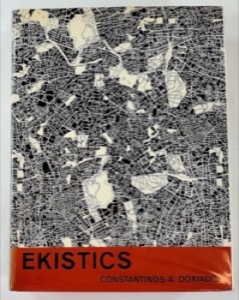
Hardcover. NY, Oxford University Press, 1st, 1968, Book: Very Good, Dust Jacket: Good, Hardcover in a lightly worn, chipped dust jacket, 527 pages, illustrated with b&w maps, tables, graphs, charts. Rust red cloth with gilt lettering. Constantinos Apostolou Doxiadis was an architect and urban planner who was extremely successful and influential in his field during the 1960s & 1970s. He was perhaps best known as the lead architect of Islamabad, the new capital of Pakistan. He later was also renowned for his pioneering work in the study of human habitation, which he referred to as ekistics. He was a prolific author, and is still revered by many as the father of modern urban planning. Clean copy. DOMESTIC SHIPPING ONLY.
Softcover. London/NY, Routledge , 1st, 1996, Book: Very Good, Dust Jacket: None, Softcover, 288 pages, illustrated in b&w. Empire Building is a study of how and why Western architecture was exported to the Middle East and how Islamic and Byzantine architectural ideas and styles impacted on the West.The book explores how far racial theory and political and religious agendas guided British architects (and how such ideas were resisted when applied), and how Eastern ideas came to influence the West, through writers such as Ruskin and buildings such as the Crystal Palace.Beautifully written and lavishly illustrated, Empire Building takes the reader on an extraordinary postcolonial journey, backwards and forwards, into the heart and to the edge of empire.
Softcover. NY, Metropolitan Museum of Art, 1st, 2001, Book: Very Good, Dust Jacket: None, Softcover, 330 pages illustrated in color. Islamic glassmakers were not only brilliant technicians and innovators in their own right, but they also preserved many of the methods of their Sasanian and Roman predecessors, passing them on centuries later to Venetian and other masters. Glass of the Sultans is the first comprehensive study of the accomplishments of these craftsmen, which are of lasting significance both to Islamic and to world art. Clean, bright copy.
Hardcover. NY, J. & J. Harper, 1831, Book: Very Good, Hardcover, Harper's Stereotype Edition. 6" tall; 261 pages + 4 page list of books in series; craft paper over boards. The frontis is a fold-out of the Sacred Temple of Mecca; the fold-out is quite clean, with only a bit of light foxing. Pages clean, covers tanned, remarkably nice condition, square and sound.
Hardcover. New York , The Macmillan Company, 1st U.S., 1953, Book: Very Good, Dust Jacket: Good, 141 pages. Red cloth cover in good condition. Inside bright, clean and crisp. Dust jacket has some wear. Frontispiece has b&w illustration of the opening verses of the Koran. A nice copy.
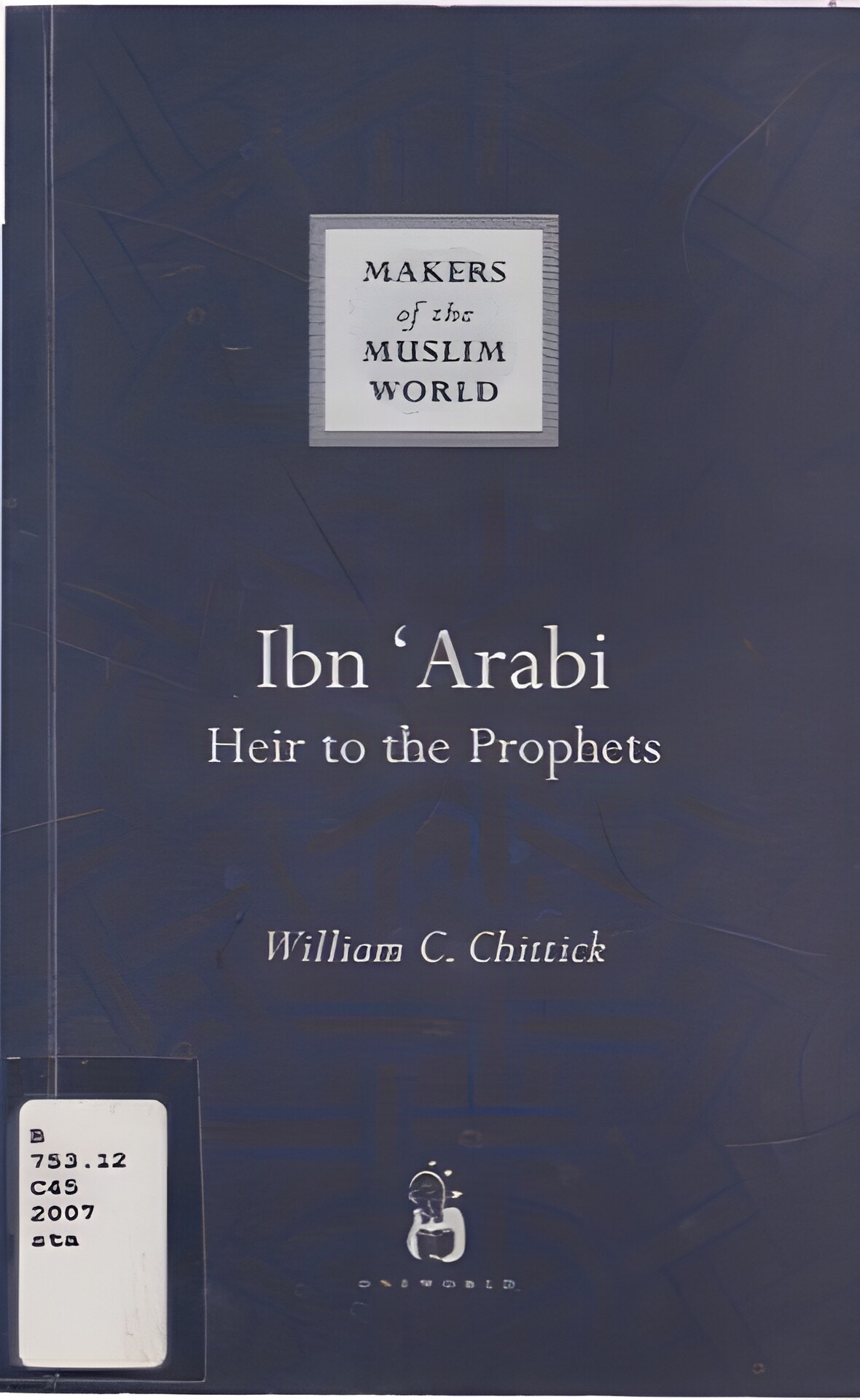
Softcover. Oxford UK, Oneworld, 1st, 2005, Book: Very Good, Dust Jacket: None, Softcover, 152 pages. Renowned expert William Chittick covers the life and works of this legendary Sufi writer. The importance of Muhyi al-Din Ibn al-Arabi (1165-1240) for Islamic mysticism lies in the fact that he was a speculative thinker of the highest order, albeit diffuse and difficult to understand. His central doctrine is the unity of all existence. In this text, William Chittick explores how, through the work of Ibn Al-Arabi, Sufism moves away from anguished and ascetic searchings of the heart also conscience and becomes a matter of speculative philosophy and theosophy. Ex-lib with stamping and stickers on front endpapers, cover, otherwise clean.
Softcover. Albany NY, State University of New York Press, reprint, 1987, Book: Very Good, Dust Jacket: None, Softcover, 157 pages. Introduction: Sharpe, Eric, Translation from the Swedish by Birgitta Sharpe. Here are the early Sufis: their ascetic practices, their attitudes toward women and marriage, toward food and drink and toward music and poetry. First published in 1947. Clean copy.
Hardcover. NY, Aperture, 1st, 1998, Book: Very Good, Dust Jacket: Very Good, Hardcover, 160 pages. Michael von Graffenried, an award-winning Swiss photographer, covertly photographed civil strife in Algeria from the early 1990s through 1998. In a land where Islamic terrorists have executed over sixty journalists and photographers in the last seven years, Graffenried's very survival is remarkable. His extraordinary accomplishment, however, is these photographs, which form a composite of Algeria that is more whole than the nation itself, fractured by one segment of the population in favor of democracy and another in favor of an Islamic state. Graffenried makes his pictures secretly, using an antique Widelux panoramic camera with a hidden lens. He would risk his picture and his life were he to raise a camera to his eyes. Instead, he shoots from the hip, with his hands clasped over what looks like a pair of binoculars. In learning to frame his photographs without a viewfinder, he opens himself to a rich array of surprise and irony in his pictures, and reveals a society that has been concealed from the international community for nearly seven years.
Softcover. Berkeley CA, Mizan Press, 1st pbk., 1981, Book: Very Good, Dust Jacket: None, Softcover, 460 pages. This unprecedented collection in English of notable works by Imam Khomeini, ranging in date from 1941 to 1980, makes it possible for non-Iranians to become directly acquainted with hsi ideas and to examine the convictions that underlay his indomitable mien. He was undeniably one of the most important figures of the age, not only for his roles as principle strategist of a successful revolutionary movement and supervisor of the Islamic order it ushered in, but also for his unhesitating promotion of what he saw as a global Islamic mission -- the union of all Muslim peoples. Clean copy.
Hardcover. NY, Knopf, 1st, 1976, Book: Very Good, Dust Jacket: Very Good, Hardcover in a bright dust jacket, 360 pages. Published in association with the American Heritage Publishing Co. Text by Bernard Lewis, Richard Ettinghausen, Oleg Grabar, Fritz Meier, Charles Pellat, A. Shiloah, A.I. Sabra, Edmund Bosworth, Emilio Garcia Gomex, Roger M. Savory, Norman Itzkowitz, S.A.A. Rizvi, Elie Kedourie. Illustrated with 495 reproductions, photographs, drawings, and maps, 160 of them in full color.
Hardcover. Oxford UK, Clarendon Press, reprint, 1967, Book: Very Good, Dust Jacket: Very Good, Hardcover in a lightly worn dust jacket, 262 pages, fold-out map in rear. Three pages with light underling, otherwise clean and tight copy.
Softcover. Philadelphia, Temple University Press, 1st pbk, 1993, Book: Very Good, Dust Jacket: None, Softcover, 379 pages. A collection of ten essays covering topics ranging from the expansion of Islamic civilization to gender issues in the Industrial Revolution and European global expansion. Each essay provides an overview of the problems and themes relating to critical processes and periods in global history. Clean copy.
Hardcover. London, Faber and Faber, Reprint, 1967, Book: Very Good, Dust Jacket: None, Hardcover. Orange cloth covers with gilt titles to spine. 93 pages of text followed by 613 monochrome plates, non-paginated. Frontis illustration, Tabriz, Tilework in the Courtyard of the So-called Blue Mosque, A. D. 1465, in full page, full color. Toning to edges. Clean, unmarked. A nice copy.

 "A Critical Introduction to Khomeiniby: Arshin Adib-Moghaddam")
 "Aden to the Hadhramaut: A Journey into South Arabiaby: Van der Meulen, D.")

 "An Empire of Facts: Colonial Power, Cultural Knowledge, and Islam in Algeria, 1870??\"1914 by: Trumbull IV, George R.")
 "An Islamic Utopian: A Political Biography of Ali Shariati by: Ali Rahnema")
 "Averroes' Tahafut Al-Tahafut (The Incoherence of the Incoherence) Volume 1 & 2by: Van Den Bergh, Somin")


 "Blasphemy: Art That Offendsby: Plate, S. Brent")
 "Doors of the Kingdomby: Gouverneur/Khaled Azzam (Author), Mohamed Zakariya , Haajar")
 "Eastern Canonsby: Wm. Theodore De Bary, Irene Bloom (Editors)")
 "Empire Building: Orientalism and Victorian Architectureby: Mark Crinson")


 "Holy Koran, The: An Introduction with Selectionsby: Arberry, A. J.")
 "In the Garden of Myrtles: Studies in Early Islamic Mysticism by: Andrae, Tor")
 "Inside Algeriaby: Michael von Graffenried , Mary-Jane Deeb, et al.")
 "Islam and Revolution: Writings and Declarations of Imam Khomeini (1941-1980)by: Imam Khomeini/Hamid Algar (transl.)")
 "Islam and the Arab World: Faith, People, Culture by: Bernard Lewis (Ed.)")

 "Islamic Architecture and its Decoration - A. D. 800 - 1500by: Hill, Derek")

