Hardcover. NY, A. S. Barnes & Co., reprint, 1854, Book: Very Good, Dust Jacket: None, Hardcover, embossed brown cloth with gilt decoration to cover, 437 pages, frontis. engraving of author. The first part contains two manuscripts that were sermons or addresses that the Rev. Walter Colton use when preaching in behalf of seamen. The author writes about: The Ocean in its Grandeur and Sublimity; The Sailor's Chivalric Devotion to Woman; Humanity of the Sailor; Navy Chaplains; Genoa and the Genoese; City of Pisa; We are Robbed of our Cigars; etc. The second part contains his writings about travel to France and Italy. Also includes his poetry, editorials, aphorisms, etc. Includes a memoir of the Rev. Walter Colton by Rev. Cheever. Light chip, wear to spine. Circulating library sticker on inside front cover otherwise clean. Covers with minor edgewear. Title page states 1854, copyright page is 1851.
Hardcover. NY, Fordham University Press, 1st, 2007, Book: Very Good, Dust Jacket: Very Good, Hardcover in a bright dust jacket, 234 pages. INSCRIBED BY AUTHOR on the half-title page. The writer Giuseppe Prezzolini said that Italian immigrants left behind tears and sweat but not "words," making their lives in America mostly in silence, their memories private and stories untold. In this innovative portrait of the Italian-American experience, these lives are no longer hidden. Ilaria Serra offers the first comprehensive study of a largely ignored legacy-the autobiographies written by immigrants. Here she looks closely at fifty-eight representative works written during the high tide of Italian migration. Scouring archives, discovering diaries, and memoirs in private houses and forgotten drawers, Serra recovers the voices of the first generation-bootblacks and poets, film directors and farmers, miners, anarchists, and seamstresses-compelled to tell their stories. Mostly unpublished, often thickly accented, these tales of ordinary men and women are explored in nuanced detail, organized to reflect how they illuminate the realities of work, survival, identity, and change.
Hardcover. NY, Fordham University Press, 1st, 2006, Book: Very Good, Dust Jacket: Very Good, Hardcover in a bright dust jacket, 309 pages. Barolini profiles six gifted women transformed by Italy's mythic appeal. Unlike Barolini herself, they were not daughters of the great Italian diaspora. Rather, they were drawn to an idea of "Italy" and its gifts-in whose welcome a new self could be created. Or discovered. Emily Dickinson traveled to Italy only in the imaginative genius of her verse. Margaret Fuller struggled alongside her Italian lover in the political revolutions that gave birth to the Italian Republic, while the novelist and short-story writer Constance Fennimore Woolson found her home in Venice and Florence. Here, too, is the flamboyant artist Mabel Dodge Luhan, entertaining at her villa near Florence; and Marguerite Chapin of Connecticut, who married an Italian prince and in Rome founded the premier literary review of the mid-century, Botteghe Oscure. Finally, here is Iris Cutting Origo, the Anglo-American heiress who, with her Italian nobleman husband, built a Tuscan estate, where she wrote acclaimed biographies-and created a refuge from Mussolini's fascism. Clean copy.
Hardcover. Boston, Houghton Mifflin, 1st, 1947, Book: Very Good, Dust Jacket: Fair, Hardcover in a worn, chipped dust jacket. Drawings by Saul Steinberg. Mississippi author, and war correspondent, who toured the World during WWII for the US Army Service Forces (Supply). Foreword says "This book is a personal record. It has to do with a journey that I made in 1944-45 to Great Britain, France, Belgium, Corsica, Italy, Egypt, Palestine, Iraq, Iran, India, Burma, China."
Hardcover. NY, Simon & Schuster, 1st, 2001, Book: Very Good, Dust Jacket: Very Good, Hardcover in a bright dust jacket with light sticker residue, 203 pages. The travel author and historian journeys to the beguiling city of Trieste, Italy, which has enchanted her for more than fifty years, to explore issues of patriotism, decency, wildness, and sex. In this love letter to Trieste a city she has grown to love over the years and never got tired of exploring Morris looks back on her life. She recalls first coming to Trieste as a soldier [male] in World War II and discusses the impact the city's way of life has had on her own philosophy of life. Each chapter begins with a philosophical quote stating its theme and setting the atmosphere. Morris is not only skilled at vividly describing townspeople and buildings in a way that brings Trieste to life, but she also successfully balances the personal with the historical by providing references to both history and literature. Clean copy.
Softcover. NY, The Feminist Press, 1ST, 1999, Book: Very Good, Dust Jacket: None, Softcover, 400 pages, b&w illustrations. The memoir of a young Catholic women's affair with a pastor in Italy. INSCRIBED BY AUTHOR on the half-title page. A few pages with light pencil underlining., otherwise clean.
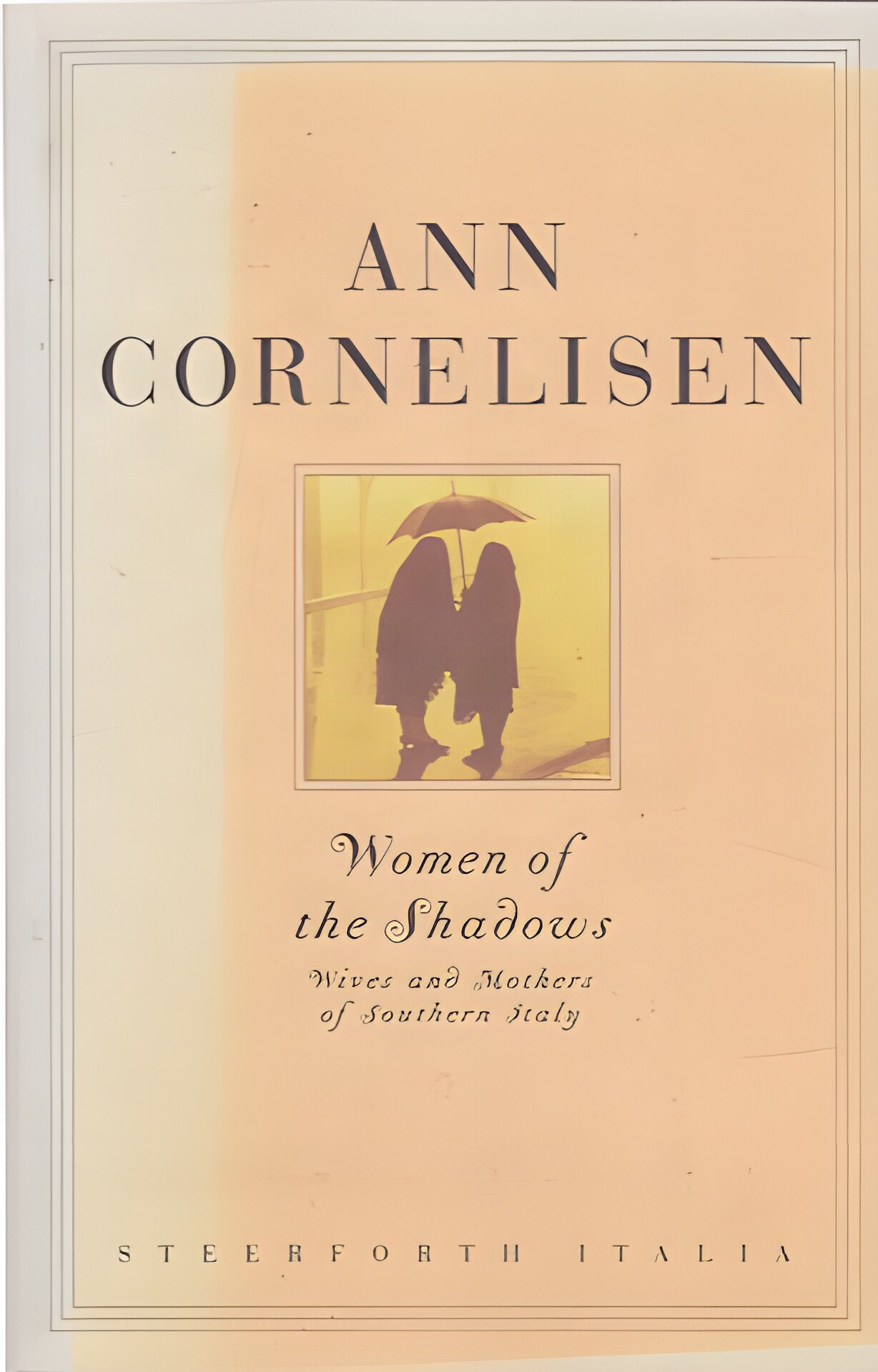
Softcover. South Royalton VT, Steerforth Press, reprint, 2001, Book: Very Good, Dust Jacket: None, Softcover, 187 pages plus b&w photos. With haunting photographs and piercing descriptions, Women of the Shadows depicts the secluded women of southern Italy and their passionate, painful, heartrending existence. Cornelisen, who lived among these women in the mountainous villages of Lucania after World War II, reveals their struggles during a time when most of their men had to leave for factories in the industrial north. The women remained behind to work the fields. There's Peppina, Ninetta, Teresa, Maria, Pinuccia, and Cettina, all women who "have done things of which they are not proud; they know it in their hearts, as one woman said, that nothing is private, they would also agree with her conclusion: That doesn't mean you get used to it." With an extraordinary understanding of the interior lives of these and other women, Cornelisen brings them out of the shadows to tell their heroic stories in a book which truly merits the label "classic." A new introduction by the author suggests that the more things change, the more, in essence, they remain the same. Wrappers sunned, otherwise tight and clean.

 "The Sea and the Sailor; Notes on France and Italy, and Other Literary Remains. With a Memoir by Rev. Henry T. Cheeverby: Colton, Walter")
 "The Value of Worthless Lives: Writing Italian American Immigrant Autobiographiesby: Ilaria Serra")
 "This Is the Story by: David L. Cohn")
 "Under the Rose: A Confession (INSCRIBED COPY)by: Flavia Alaya")