Hardcover. Rome, Italy Italy Enterprises, 1st, 2001, Book: Very Good, Dust Jacket: Very Good, Hardcover in a bright dust jacket, 240 pages illustrated in b&w and color. Clean copy.
Hardcover. Cambridge UK, Cambridge University Press, 1st, 1987, Book: Very Good, Dust Jacket: Very Good, Hardcover in a bright dust jacket. 288 pages.This substantial and unusual volume is not an encyclopedic summary of names, dates, and images but a roughly chronological series of scholarly, sometimes provocative essays by specialists in various aspects of the medium's history. Contributors (identified only in the table of contents) are from France, Italy, Germany, Switzerland, England, and the United States. The chapters on photo-journalism, the illustrated press, and photography between the world wars are particularly informative, while high-quality illustrations from public and private collections worldwide convey photography's technical and aesthetic development and its ubiquity.
Hardcover. Manchester UK, Carcanet Press , 1st UK, 1985, Book: Good, Dust Jacket: Good, Hardcover with a bright dust jacket, 300 pages. Set against the backdrop of Italy between 1939 to 1944 - the months of anxiety before the country entered the war through to the tension following the Allied victory - "All Our Yesterdays" follows the lives of two families during the period of great turbulence and tells how the children grow into war and its aftermath. The boys flirt with revolution; Amalia marries a young German Jew; Concettina marries into a family that supports Mussolini; and Anna the youngest child, becomes pregnant when she is sixteen and is married off to Cenzo Rena, an eccentric family friend. War scatters them, but even war cannot break their bonds. All Our Yesterdays is about the endurance and resilience of people living through adolescence and early adulthood in a hostile world. Ex-lib with minor residue to rear endpaper and dust jacket taped to covers.
Atgen PA, Schiffer, 1st, 2017, Book: Very Good, Dust Jacket: Very Good, Hardcover in a bright dust jacket. 144 pages illustrated in color and b&w. In 1942, Ed Vebell landed with the US Army in North Africa and was recruited by Stars & Stripes, the US armed forces newspaper, as their official staff artist. Daily, he drew illustrations and reported on the progress of World War II throughout Europe. This book offers a selection of his sketches, drawings, paintings, and photographs from that time, and presents one artist's view of the war from North Africa, through the campaigns in Italy, France, and Germany. After the war, the author spent two weeks with the Russians in Berlin, and was then assigned as the courtroom artist during the Nuremberg War Crimes Trials. Along the way are Ed's reminiscences about such personalities as famed war correspondent and artist Bill Mauldin, singers Josephine Baker and Edith Piaf, Charles de Gaulle, Gen. Teddy Roosevelt Jr., and many others. Ed also reminisces about his two years photographing backstage at the Folies Bergere in Paris, as well as his time as an Olympic fencer. Clean copy.
Hardcover. Annapolis MD, Naval Institute Press, 1st, 2005, Book: Very Good, Dust Jacket: Very Good, Hardcover in a bright dust jacket, 126 pages, b&w illustrations. Princeton grad Erasmus Kloman was undergoing Army training at Fort Bragg in 1943 when, due to his passing knowledge of French, he was interviewed for potential involvement in "a highly confidential activity." The interview culminated in the question, "Would you be willing to volunteer for hazardous duty behind enemy lines?" He signed up for duty with the newly formed Office of Strategic Services (OSS) and after an intensive period of training in various aspects of espionage, found himself on assignment in wartime Cairo, Algiers, and then Caserta. At age 24 with the title of OSS Acting Chief of Operations in the Mediterranean Theater of Operations, he helped organize and coordinate the actions of Operational Groups (OGs) , which infiltrated Italy and occupied France on daring sabotage missions. Clean copy.
Softcover. Port Townsend WA, Copper Canyon Press, reprint, 2002, Book: Very Good, Dust Jacket: None, Softcover, 372 pages. Cesare Pavese was one of Italy's great post-war writers. His poetry was revolutionary--both artistically and politically--rejecting the verbal and philosophical constraints of tradition and utilizing direct, colloquial language. His subjects were peasants, hobos, and prostitutes, and this bilingual volume includes all the poetry Pavese ever published, including work originally deleted by Fascist censors. A landmark volume. Clean copy.
Hardcover. Taschen, 1st, 2008, Book: Very Good, Dust Jacket: Very Good, Hardcover, 580 pages. 1940-1949: Destruction and Reconstruction. This volume covers the 1940s, when fascism came to a climax and World War II led to the extensive destruction of Europe. But the second half of this decade was also a time of reconstruction, democratization, and the related search for new social values. Unlike in Nazi Germany, in fascist Italy Modernism was able to advance in architecture and design - as proved impressively by the buildings and designs by Carlo Mollino, Gian Luigi Banfi, Franco Albini, and Giuseppe Terragni that are documented herein. After the war, Organic Design emerged alongside the International style. This edition reflects upon the economic, social, and cultural problems of the time, but also shows how the force of the avant-garde continued to thrive in Italy, Switzerland, Scandinavia and the USA. Reports and features on modern industrial design and furniture, as well as domestic and business interiors stand side by side with articles about novel prefabricated houses. In publisher's shrink wrap. Due to size and weight, DOMESTIC SHIPPING ONLY.
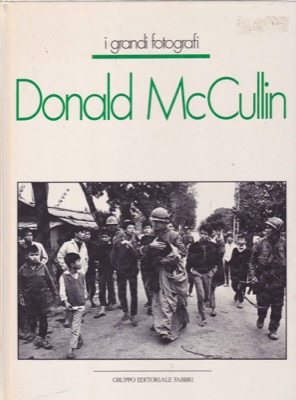
Hardcover. Italy, Gruppo Editoriale Fabbri, 1st, 1982, Book: Very Good, Dust Jacket: None, Hardcover, glossy pictorial boards. A retrospective survey of the photographs of Donald McCullin. The text is in Italian. He covered lots of violent events, war, civil war, terrorism. 50+ photos in this book from: Northern Ireland, Vietnam, Biafra, Cambodia, Beirut, India. ITALIAN TEXT. Clean copy.
Hardcover. NY, Alfred A. Knopf, 1st, 2013, Book: Very Good, Dust Jacket: Very Good, 589 pages. Hardcover with dust jacket. Remainder mark on bottom text block. Tight copy. Light rubbing to dust jacket.
Hardcover. Boston, Little Brown, 1st, 1985, Book: Very Good, Dust Jacket: None, Hardcover, 287 pages, 442 b&w illustrations. The famous photojournalist presents, among other events, the abdication of Edward VIII; the Anschluss; the Warsaw ghetto, before and after its destruction; Tito's guerrilla war against the Nazis; and Isr'l's battle for independence. He recorded the fall of Hungary to the Communists; he was with Churchill at Teheran; and with Khrushchev at Belgrade. There are also exotic parties given by Cecil Beaton and Lady Juliet Duff. Portraits of the last glories of the English aristocracy and the old French Bourgeoisie; the industrialists and artists who made Italy's miraculous postwar recovery possible. In 60,000 words of text he captures the extraordinary adventures and bizarre characters that together made up the author's life. The combination of words and pictures provides a rich, powerful portrait of a fascinating career. Missing dust jacket.
Hardcover. Chicago, University of Chicago Press, 1st, 2003, Book: Very Good, Dust Jacket: Very Good, Hardcover in a bright dust jacket, 202 pages. Natalia Ginzburg, arguably the most important woman writer of postwar Italy, always spoke of herself with irrepressible modesty. Yet the woman who claimed she "never managed to climb up mountains" in fact wrote the history of twentieth-century Italy with her sparse and captivating prose, chronicling Fascism, war, and the Nazi occupation as well as the intimacies of family life. Intensely reserved, Ginzburg said that she "crept toward autobiography stealthily like a wolf." But she did openly discuss her life and her work in an extraordinary series of interviews for Italian radio in 1990. Never before published in English, It's Hard to Talk about Yourself presents a vivid portrait of Ginzburg in her own words on the forces that shaped her remarkable life-politics, publishing, literature, and family. This fluid translation will join Ginzburg's autobiography, Family Sayings, as one of the most important records of her life and, as the editors write in their preface, "the last, unexpected, original book by Natalia Ginzburg."
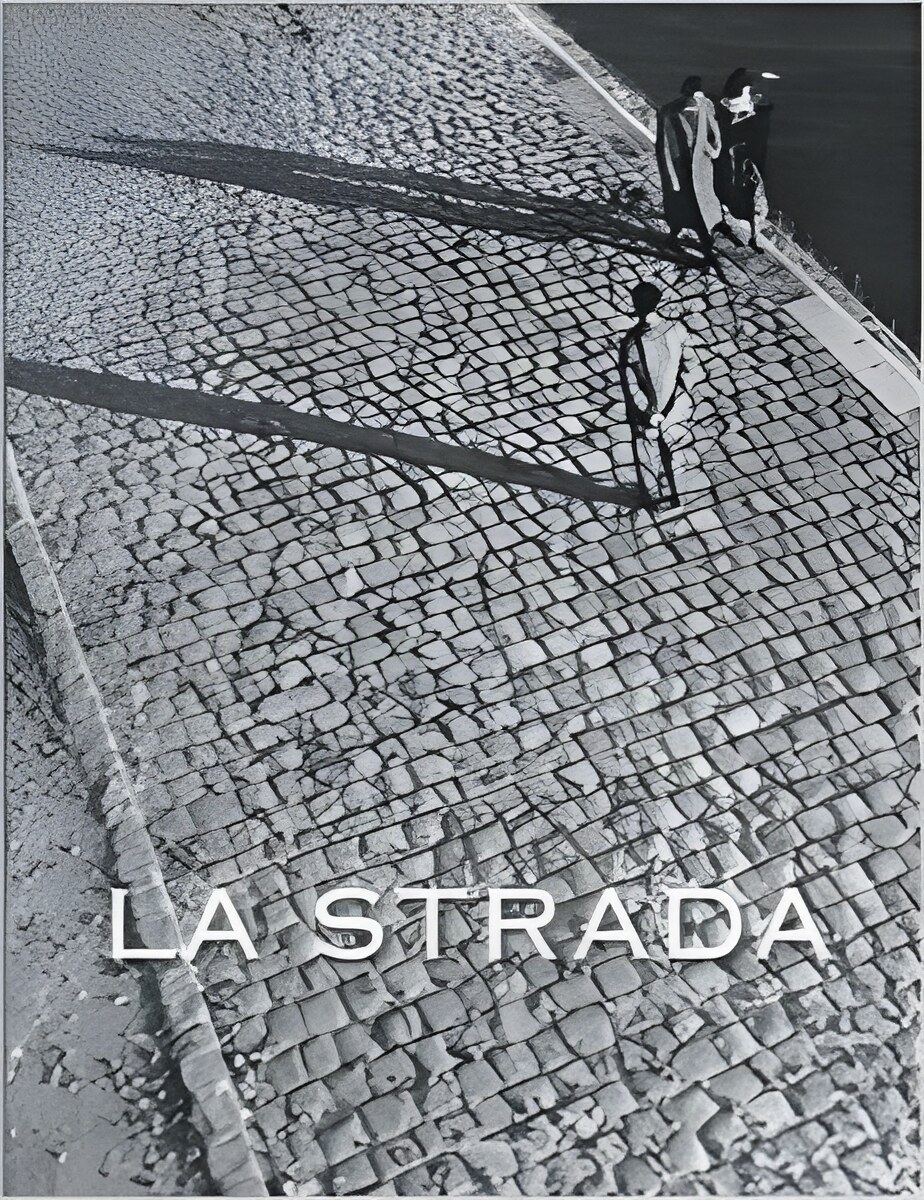
Hardcover. Damiani Publishing, 1st, 2006, Book: Very Good, Dust Jacket: None, Hardcover, pictorial boards, 189 pages. La Strada captures the life and drama of Italy's streets from World War II through the 1970s. Its exquisite photographs, made by some of the most deeply skilled artists of the mid-twentieth century, are imbued with the essence of Neo-Realism, the aesthetic that produced some of the most influential Italian film and literature of the same era. The American gallerist and curator Keith de Lellis's selection of more than 200 pictures, some previously unpublished, by more than 60 masters--including Mario Giacomelli, Nino Migliori, and Mario De Biasi--reveals the touching, the humorous, and the tragic in the day-to-day lives of the Italian people, liberated from the grips of Fascism. A treasure trove, and a case for the continuing recognition of this inspired group of picture-makers. Clean copy
Hardcover. Boston, Massachusetts, Harry N. Abrams, 1st, 1992, Book: Very Good, Dust Jacket: Very Good, 470 pages. Brown cloth cover, color illustrated dust jacket, 113 color and 206 illustrations. Still in original shrink wrap; book in excellent condition. American artists have been inspired by Italy since the 1760s, when Benjamin West, the first American painter to travel there, was drawn to the ancient Roman ruins and magnificent Renaissance architecture, statuary, and frescoes. This intriguing, superbly illustrated book is the first to explore the fascination Italy held for the American artist from West's time to the eve of World War I.The unique sense of the past found in Italy, where tangible evidence exists of a continual civilization from antiquity to the present, lured countless American artists to its cities, towns, and countryside. Painters from West and Copley in the eighteenth century to Cole, Inness, Whistler, Sargent, and Prendergast in the nineteenth century were inspired to create many of their finest works in Italy, as were American sculptors such as Hiram Powers and Harriet Hosmer and writers from Washington Irving to Henry James. This in-depth study includes 319 illustrations, of which 113 are reproduced in full color, many of works that have not previously been published. Theodore E. Stebbins, Jr., John Moors Cabot Curator of American Paintings at the Museum of Fine Arts, Boston, and Professor of Art History at Boston University, provides a broad overview of the American perception of Italy and the unique role that Italy played in the formation of American art.
Hardcover. Boston, Massachusetts, Harry N. Abrams, 1st, 1992, Book: Very Good, Dust Jacket: Very Good, 470 pages. Brown cloth cover, color illustrated dust jacket, 113 color and 206 illustrations. Still in original shrink wrap; book in excellent condition. American artists have been inspired by Italy since the 1760s, when Benjamin West, the first American painter to travel there, was drawn to the ancient Roman ruins and magnificent Renaissance architecture, statuary, and frescoes. This intriguing, superbly illustrated book is the first to explore the fascination Italy held for the American artist from West's time to the eve of World War I.The unique sense of the past found in Italy, where tangible evidence exists of a continual civilization from antiquity to the present, lured countless American artists to its cities, towns, and countryside. Painters from West and Copley in the eighteenth century to Cole, Inness, Whistler, Sargent, and Prendergast in the nineteenth century were inspired to create many of their finest works in Italy, as were American sculptors such as Hiram Powers and Harriet Hosmer and writers from Washington Irving to Henry James. This in-depth study includes 319 illustrations, of which 113 are reproduced in full color, many of works that have not previously been published. Theodore E. Stebbins, Jr., John Moors Cabot Curator of American Paintings at the Museum of Fine Arts, Boston, and Professor of Art History at Boston University, provides a broad overview of the American perception of Italy and the unique role that Italy played in the formation of American art.
Hardcover. Watkins, reprint, 2011, Book: Very Good, Dust Jacket: Very Good, Hardcover in a bright dust jacket, 272 pages. Marco Polo (c.1254-1324) was a Christian merchant from the Venetian Republic who learned about trading while his father and uncle were absent on an extended journey through Asia, which culminated in a visit with the great khan Kublai. In 1269 the brothers returned to Venice and met Marco for the first time. The three of them then embarked on a new journey to Asia and the court of the khan, returning after more than two decades to find Venice at war. Marco was imprisoned in Genoa, whereupon he dictated his romantic-sounding stories to a cellmate. The popularity of his account is a rare example of a success in publishing before the age of printing. Introduction by John Masefield.
Hardcover. New York, D.A.P.//La Fabrica , 1st, 2013, Book: Very Good, Dust Jacket: Very Good, Hardcover, 192 pages. Like new in publisher's shrink-wrap. America's first female war correspondent, Margaret Bourke-White was also something of a media star, with the portrait of her decked out in flying gear, camera in hand, about to set off on a bombing raid, being a favorite pin-up among U.S. forces. Focusing on the work Bourke-White made in the 1930s and 40s in Czechoslovakia, Germany, Italy, the Soviet Union and the U.K., Moments in History presents 150 classic photographs alongside revelatory extracts from letters and publications in periodicals. Bourke-White traveled to the USSR when the first Five-Year Plan was being implemented; she documented the German invasion of the Soviet Union in 1941, and the Allied bombing of Germany. In the summer of 1945 she was commissioned by Life to make a photographic record of the destroyed German cities. She was present at the liberation of the Buchenwald concentration camp and the Leipzig-Thekla forced labor camp. She recorded the partition of India and the Korean War, and one of her most famous pictures of this period is "Gandhi," which shows the subject at his spinning wheel. Also included in the catalogue are some of the word-picture sequences Bourke-White did for Fortune and Life, as well as extracts from her correspondence with personalities from the worlds of politics and culture, such as Winston Churchill and Georgia O'Keeffe. Bourke-White wanted to be the "eyes of the age," and her pictures testify to (as she put it) her "unquenchable desire to be present when history is being made."
Softcover. NY, Seven Stories Press, reprint, 2012, Book: Very Good, Dust Jacket: None, Softcover, 431 pages. A fascinating document of an extraordinary life, Memoirs of A Breton Peasant reads with the liveliness of a novel and bristles with the vigor of an opinionated autodidact from the very lowest level of peasant society. Brittany during the nineteenth century was a place seemingly frozen in the Middle Ages, backwards by most French standards; formal education among rural society was either unavailable or dismissed as unnecessary, while the church and local myth defined most people's reasoning and motivation. Jean-Marie Deguignet is unique not only as a literate Breton peasant, but in his skepticism for the church, his interest in science, astronomy and languages, and for his keen--often caustic--observations of the world and people around him. Born into rural poverty in 1834, Deguignet escapes Brittany by joining the French Army in 1854, and over the next fourteen years he fights in the Crimean war, attends Napoleon III's coronation ceremonies, supports Italy's liberation struggle, and defends the hapless French puppet emperor Maximilian in Mexico. He teaches himself Latin, French, Italian and Spanish and reads extensively on history, philosophy, politics, and literature. He returns home to live as a farmer and tobacco-seller, eventually falling back into dire poverty. Throughout the tale, Deguignet's freethinking, almost anarchic views put him ahead of his time and often (sadly, for him) out of step with his contemporaries. Deguignet's voluminous journals (nearly 4,000 pages in total) were discovered in a farmhouse in Brittany a century after they were written. This narrative was drawn from them and became a surprise bestseller when published in France in 1998. Clean copy.
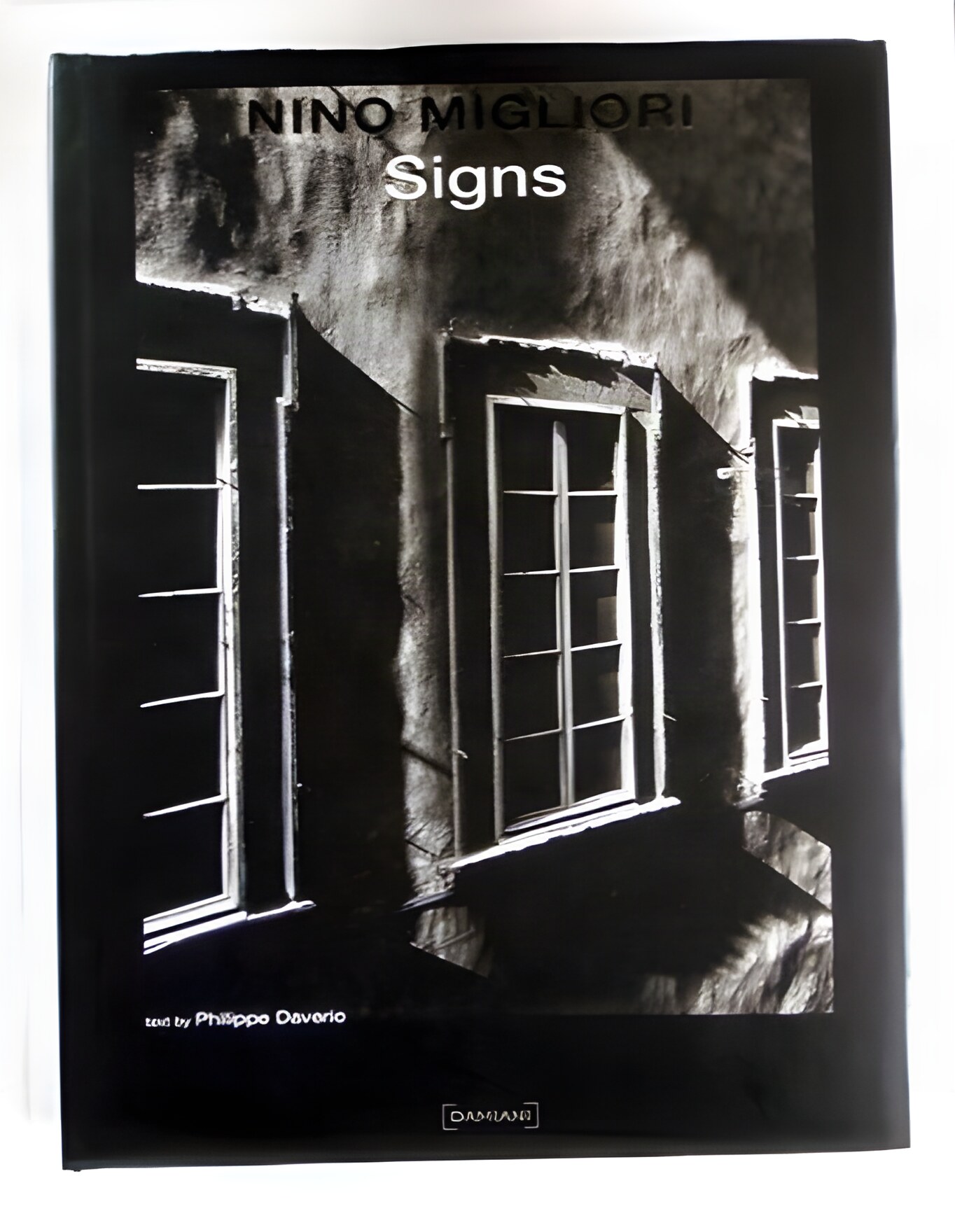
Hardcover. Damiani, 1st, 2005, Book: Very Good, Dust Jacket: Very Good, Hardcover in a lightly worn dust jacket, 300 pages. This monograph, Signs, is dedicated to Nino Migliori, one of the old masters of photography who had a significant effect on the history of Italian imagery after World War II. Signs presents a broad range of his production which has always been marked by creativity, versatility, and innovation. Included here are Miglori's portraits, landscapes, architecture, street scenes, abstract imagery, and polaroids. DOMESTIC SHIPPING ONLY.
Hardcover. Seattle, Fantagraphics, 1st, Book: Very Good, Dust Jacket: None, Hardcover in pictorial boards, 298 pages. Published for the first time in English -- and the first time in color -- the classic Petra Chérie by Italian master Attilio Micheluzzi follows the dramatic adventures of a mysterious heroine during the end of World War I. Originally published in serial format from 1977-1982, Petra Chérie follows the adventures of Petra De Karlowitz, 'Chérie' to creator Micheluzzi, who addresses her throughout the book. Born to a Polish businessman and the most beautiful woman in Paris, raised in Canton, China, and now based in neutral Holland, she is a spy who answers only to herself. Evoking but cleverly eschewing stereotypes of the femme fatale, Petra is equally at home in the cockpit of an airplane and behind the wheel of a motorcar. More than that, she is an endlessly fascinating enigma and one of the most iconic characters in Italian comics. In short, thrilling tales across sky, sea, and land, zipping from Northern Europe to Mitteleuropa, from the Balkans to the Bosphorus to the nascent Soviet Union, Micheluzzi grapples with an era when Europe's borders were in flux and battle lines were often blurred. Clean copy.
Softcover. New York, Rizzoli, 1st US, 1983, Book: Very Good, Dust Jacket: Very Good, Hardcover, 302 pages. Blue cloth cover with gilt lettering to spine, color illustrated dust jacket, 405 b&w and 80 color illustrations, stapled cardboard slipcase. Bottom right corner of cover slightly bumped. Very light wear to dust jacket edges; a very clean, tight copy. This book is the first to survey the whole i development of porcelain n Europe between the Napoleonic era and the First World War. The nineteenth century was a period of technological change and of artistic innovation: both these strands came together in the development of porcelain, which industrialization brought within the reach of the burgeoning middle classes of industrial Europe. While early in the century Neoclassicism had brought about a new purity of line and decoration, in Germany and in England taste demanded more elaborate styles and resulted in the emergence of the 'new Rococo' and later in the development of revived styles of decoration such as Minton's 'Majolica' and the work of studio potters. This book covers not only the great factories, Sevres, Limoges, Copenhagen, Meissen, but also the smaller producers in Holland, Italy and Spain and extends to the birth of Art Nouveau.
Softcover. London, Imperial War Museums, 1st, 2014, Book: Very Good, Dust Jacket: None, 96 pages. Softcover. Very clean, unmarked copy with only minor edgewear. Posters of the First World War collects more than one hundred posters from America, Britain, France, Germany, and Italy that showcase renewed concern among the warring nations with national character and conduct.
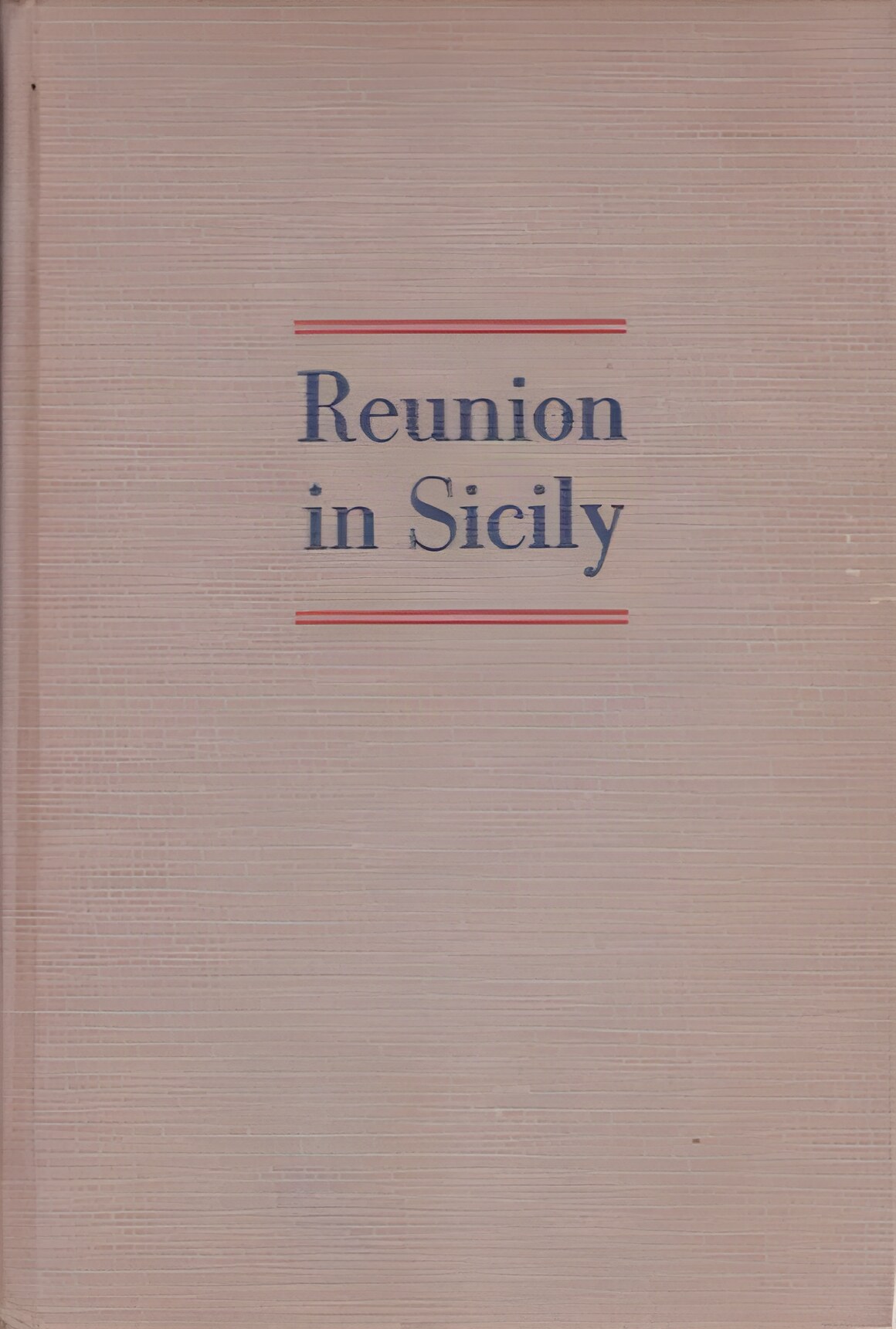
Hardcover. Boston, Houghton Mifflin , 1st, 1950, Book: Very Good, Dust Jacket: None, Hardcover, putty color cloth stamped in red and blue, 277 pages. To write this, his third book, the author lived in Sicily itself for several months on a Guggenheim Fellowship. There he found the humor and romance, the places and the people that figured in the legends of his childhood. During his extensive travel on the island, he also discovered some of the realities of post-war and post-fascism reconstruction. Mild shelf wear, dust jacket flaps laid in.
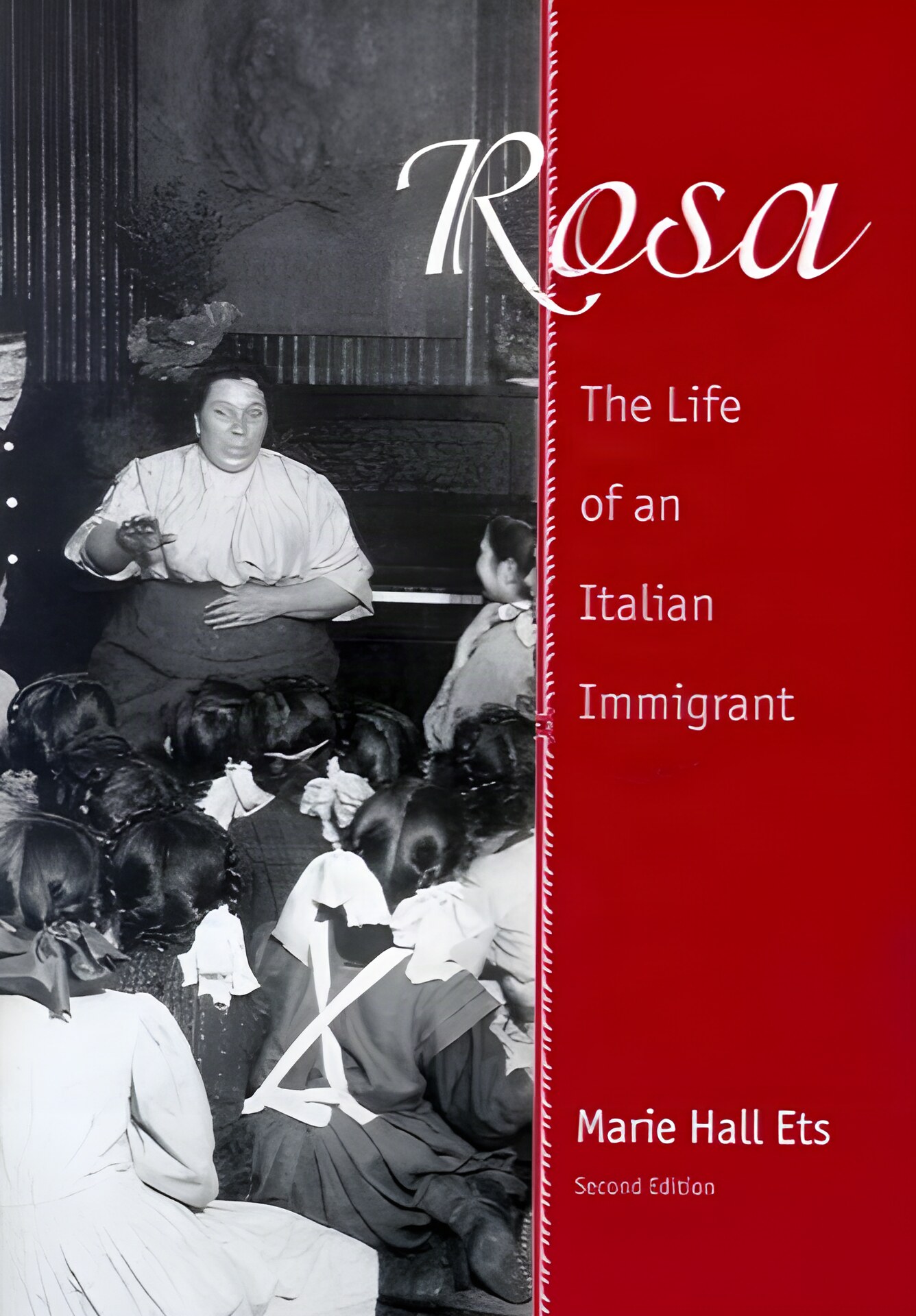
Softcover. Madison WI, University of Wisconsin Press., reprint, 1999, Book: Very Good, Dust Jacket: None, Softcover, 254 pages. This is the life story of Rosa Cavalleri, an Italian woman who came to the United States in 1884, one of the peak years in the nineteenth-century wave of immigration. A vivid, richly detailed account, the narrative traces Rosa's life in an Italian peasant village and later in Chicago. Marie Hall Ets, a social worker and friend of Rosa&;s at the Chicago Commons settlement house during the years following World War I, meticulously wrote down her lively stories to create this book. Clean copy.
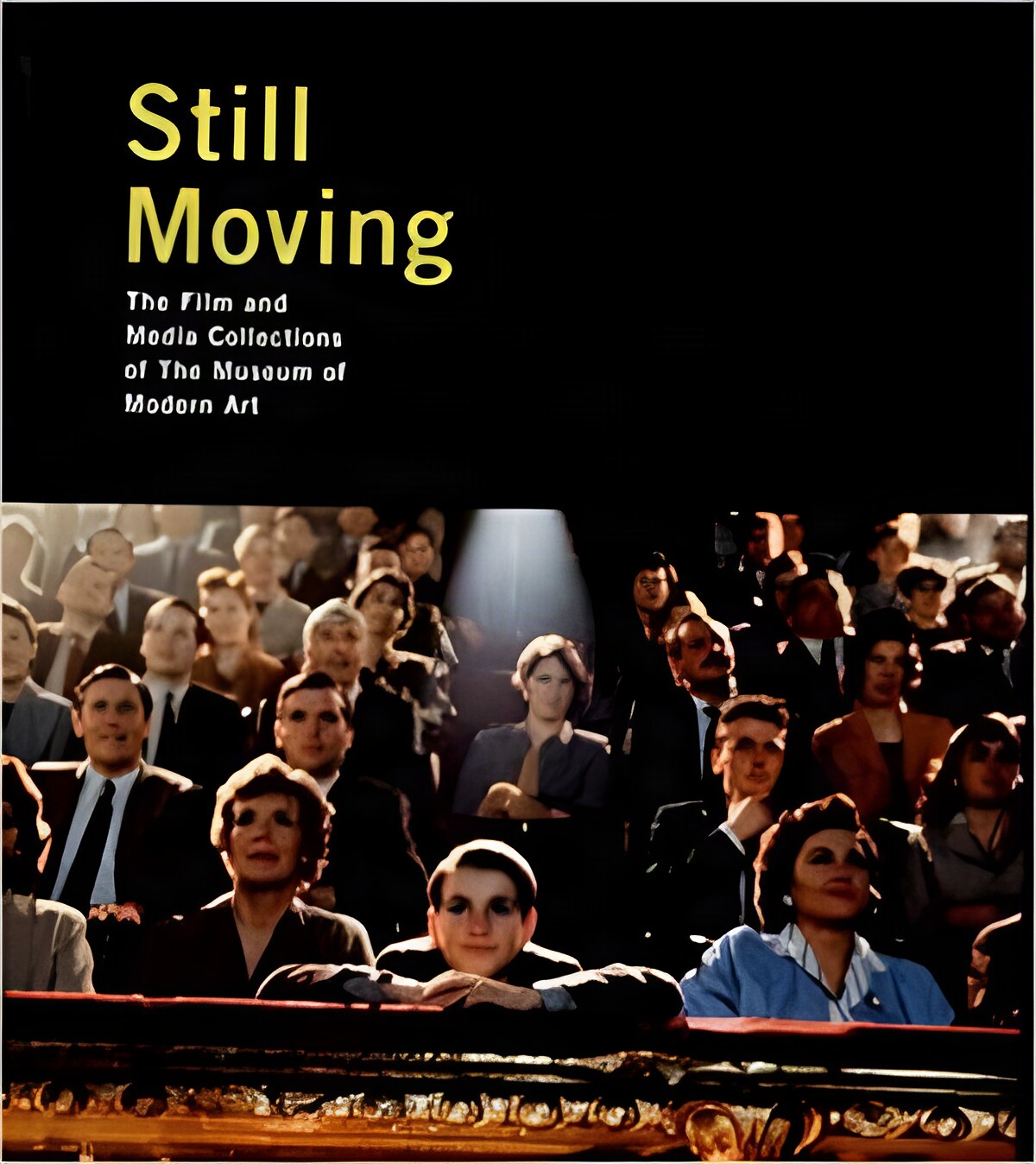
Hardcover. New York, The Museum of Modern Art, 1st, 2006, Book: Very Good, Dust Jacket: None, Hardcover, 375 pages, illustrated throughout in color and b&w. Clean, unmarked copy in excellent condition. 507 illustrations (108 in color, 399 in duotone). Founded in 1935, The Museum of Modern Art's Department of Film and Media is home to one of the most important moving-image archives in the world. Still Moving: The Film and Media Collections of The Museum of Modern Art marks the first time that MoMA has published a volume dedicated exclusively to these holdings. Drawn primarily from the Museum's vast library of film stills, the nearly 500 images in this book represent just a fraction of the department's renowned archive, including one of the world's most important collections of international silent cinema; classic early sound films from the United States, Great Britain, France, Germany, Italy, Russia, and Japan; extensive holdings of documentary and animation shorts and feature films; significant examples of Hollywood filmmaking from studios such as Warner Brothers, RKO, MGM, Twentieth Century-Fox, and Paramount; and more recent works by leading independent and avant-garde film and media artists.

 "A History of Photographyby: Jean-Claude Lemagny/ Andre Rouille")



 "Assignment Algiers: With the OSS in the Mediterranean Theater by: Erasmus H. Kloman")
 "Disaffections: Complete Poems, 1930-1950by: Cesare Pavese")


 "It Happened In Our Lifetime: A Memoir In Words and Pictures by: Phillips, John")

 "Lure of Italy, The: American Artists and The Italian Experience, 1760 - 1914by: Stebbins, Theodore E. Et al.")
 "Lure of Italy, The: American Artists and The Italian Experience, 1760 - 1914by: Stebbins, Theodore E. Et al.")
 "Marco Polo's Silk Road: The Art of the Journey - An Italian at the Court of Kublai Khanby: N/A")
 "Margaret Bourke- White: moments in historyby: Quimby, Sean")
 "Memoirs of a Breton Peasant, 1834-1905by: Jean-Marie D?©guignet")
 "Petra Chérie by: Atillio Micheluzzi")
 "Porcelain of the Nineteenth Centuryby: Fay-Halle, Antoinette and Barbara Mundt")
 "Posters of the First World Warby: Slocombe, Richard")