Hardcover. Washington DC, National Geographic Society, 1924, Book: Very Good, Dust Jacket: None, Hardcover, red cloth covers with black spine labels with gilt lettering. Six issues from the first half of 1924, 696 pages devoid of ads or inserts. Clean, bright pages, some color, mostly b&w. Include:s 1, Lost Tribes of Islam, Eastern Darfur; 2, Carthage Acheology; 3, Sahara by Automobile; 4, Hawaiian Islands; 5, Sakurajima, Japan volcanic eruption; 6, Norway; and 7, Tunisia. Clean, no markings. DOMESTIC SHIPPING ONLY.
Hardcover. Boston, David R. Godine, 3rd pr., 2008, Book: Very Good, Dust Jacket: Very Good, Hardcover in a bright, unclipped dust jacket. Tojiro, a nine-year-old orphan, sells rice cakes on the streets of 19th-century Edo, the bustling city we now call Tokyo. One of his customers is the grumpy, eccentric octogenarian Hokusai. The old man takes a liking to Tojiro, and soon employs him as his assistant. The boy's ignorance provides a convenient vehicle for introducing the artist's life and work. Much of the dialogue and action is written for the purpose of conveying information about Hokusai, as well as the technique of woodblock printing and the social customs of Edo. The book's greatest strength is not the text, but the art that enlivens every page. A combination of the author's watercolors and reproductions of Hokusai's drawings and woodblock prints, the illustrations are arranged in enticing and varied page designs.
Softcover. NY, Quill/ William Morrow, reprint, 1988, Book: Very Good, Dust Jacket: None, Softcover, 432 pages, b&w illustrations. Dotted with stunning disclosures of crimes and cover-ups, this is a startling narrative of the way Japan conducted World War II: from Nanking to Pearl Harbor to the attempted assassination of Stalin to their final surrender. Clean copy.
Hardcover. NY, W. W. Norton & Company, 1st, 1972, Book: Very Good, Dust Jacket: Very Good, Hardcover in a bright, unclipped dust jacket. 430 pages illustrated in b&w and color by Yee. "Customs and rituals, dress and language, poetry and drama, painting and sculpture, kites and carp, trees and flowers, everything is revealed to us in Mr. Yee's inimitable text and delightful drawings. Familiar centers and out-of-the-way corners of Japan all come under the Silent Traveller's scrutiny -- Tokyo's Ginza, a Shinto dance at Ise, Kyoto's Phoenix Hall, cormorant-fishing in Gifu, Mt. Fuji, an Ainu village, the five hundred arhats, the beardless hippies of Tokyo, the perennial towel-bearing bathers at a resort hotel, the phenomenon of the marimos, red-crested cranes -- and much more. Clean copy.
Hardcover. NY, Alfred A. Knopf, 1st thus, 1976, Book: Very Good, Dust Jacket: Very Good, Two volumes in a pictorial cardboard slipcase, quarter bound in purple cloth and decorated boards without jackets, as issued. The Tale of Genji was written in the eleventh century by Murasaki Shikibu, a lady of the Heian court. It is universally recognized as the greatest masterpiece of Japanese prose narrative, perhaps the earliest true novel in the history of the world. Until now there has been no translation that is both complete and scrupulously faithful to the original text. Edward G. Seidensticker's masterly rendering was hailed as a classic of the translator's art. DOMESTIC SHIPPING ONLY. Clean, bright copy.
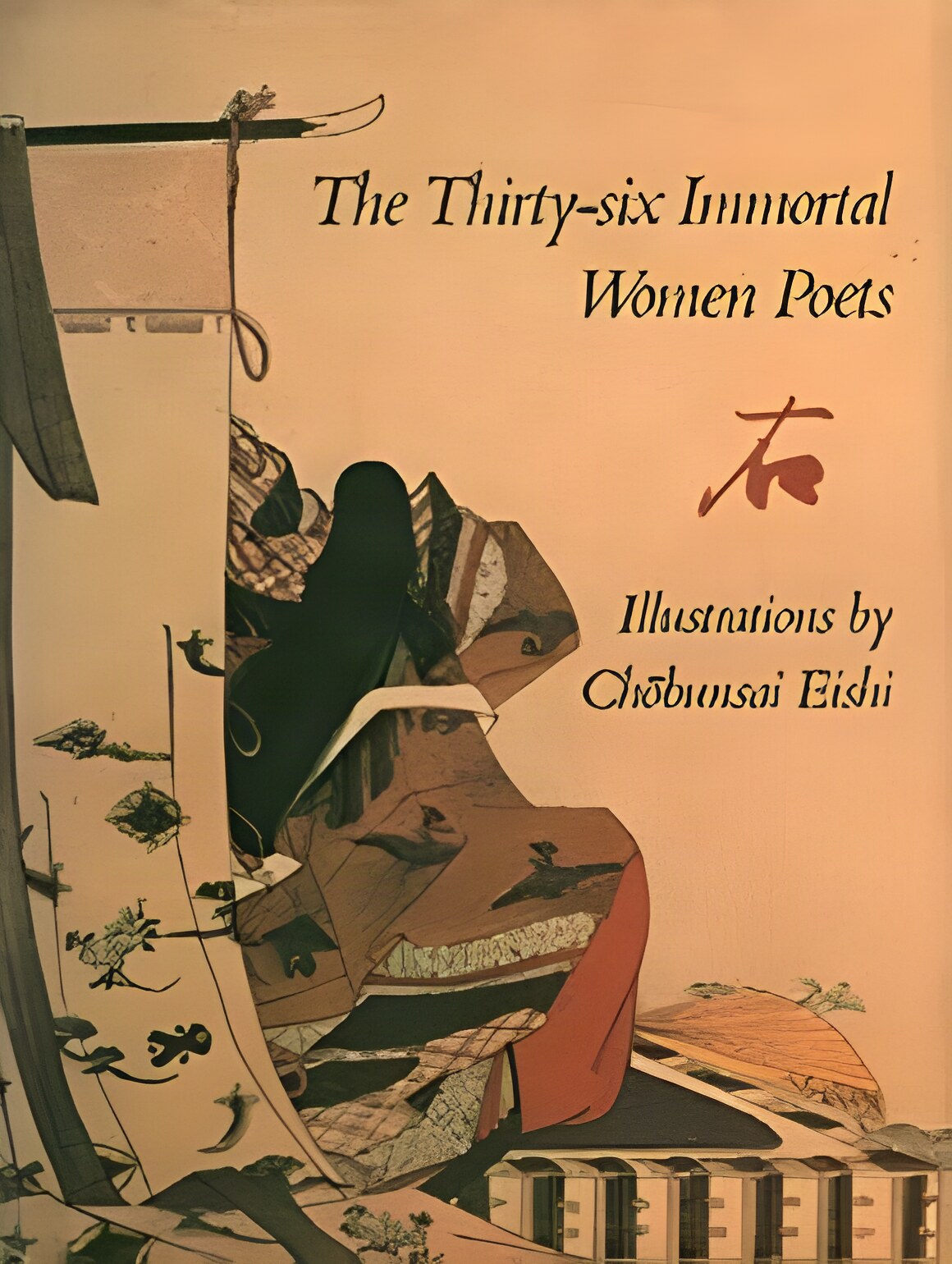
Hardcover. NY, George Braziller, 1st, 1991, Book: Very Good, Dust Jacket: Very Good, Hardcover in a dust jacket, 191 pages, 74 pages illustrated in color by Chobunsai Eishi. Exquisite illustrations in color throughout connecting beautifully with the text which includes one poem in English and Japanese by each poet. Historical background for each poet. Mild sunning to bottom edge of dust jacket. Clean copy.
Hardcover. NY, Random House, 1st, 2005, Book: Very Good, Dust Jacket: Very Good, Hardcover in a bright, unclipped dust jacket. A harrowing odyssey of love and betrayal on the high seas-and in the shadowy corners of the human heart. At fifty-nine, Harold Snow has seen his share of death. His baptism of fire came on his twenty-first birthday, on a navy ship in the Coral Sea, when a Japanese kamikaze pilot slammed into the deck. Years later, in the aftermath of a typhoon in the Bay of Bengal, he lay awake on a ship surrounded by thousands of drowned corpses and listened to the sharks feed. Now, serving as boatswain aboard the Tarshish, a decrepit tanker whose papers are as suspect as its seaworthiness, a weary Snow feels death creeping closer than ever. Clean copy.
Hardcover. London, John Murray, 1st, 1905, Book: Very Good, Dust Jacket: None, 552 pages. Green cloth boards with gilt title on spine and cover. Moisture stain in upper right corner of front endpaper. Fold-out map of Japan shows light foxing. Endpapers age faded. Light soiling to front and back covers.
Hardcover. London, Souvenir Press, 1st UK, 1986, Book: Very Good, Dust Jacket: Very Good, Hardcover in a bright, unclipped dust jacket, 192 pages. First-person accounts of life in a Japanese POW camp are not common, and illustrated memoirs are rare indeed. Searle, a young British art student, was captured at the fall of Singapore and spent the next four years covertly sketching his captors and fellow prisoners. His work matured as the war progressed, growing from merely facile to totally captivating. He grew skilled at suggesting personality, and many of his drawings are unforgettable. A brief personal narrative accompanies the portfolio, placing the works into historic perspective. Artistically as as well as historically, this book is a treat.
Hardcover. Stockbridge MA, Prospecta Press, 1st, 2014, Book: Very Good, Dust Jacket: Very Good, Hardcover, pictorial boards, 144 pages. INSCRIBED BY PHOTOGRAPHER on title page. Essay by Anna Gyorgy. This collection of vivid photographs tells the story of citizens who spoke up against the nuclear power industry, who refused to be nuclear neighbors, and who fought for years to stop construction or to close reactors in their backyards. The photographs also introduce us to the victims of nuclear power, among them the children who developed cancer and other grave health problems, even generations after the 1986 explosion at Chernobyl. Through Lionel Delevingne's record, we can see for ourselves the tragedies of the worst accident sites: Three Mile Island in the United States, Chernobyl in Russia, and Fukushima in Japan.
Hardcover. Scarsdale NY, Bradbury Press, 1st, 1974, Book: Very Good, Dust Jacket: None, Hardcover, beige cloth stamped in black. Folklore about a Japanese farmer who digs up a huge imo (yam). Ed Young style pencil drawings by Japanese artist Mitsu Yashima. No dust jacket. Clean copy.
Hardcover. London, Angus and Robertson, 1st UK, 1967, Book: Very Good, Dust Jacket: Very Good, Hardcover in a lightly worn dust jacket. General, minister of war, prime minister, and unrepentant ultranationalist, Hideki Tojo was the most powerful leader in the Japanese government during World War II. This clear and compelling portrait of Tojo illuminates the spartan, single-minded, incorruptible personality of the man who chose war rather than succumb to U.S.-induced economic strangulation. 20 photos. 288 pages. Clean copy.
Hardcover. Princeton NJ, Princeton University Press, 1st, 1979, Hardcover in a nice dust jacket with mild fading to spine, 347 pages. This work is the autobiography of Arai Hakuseki, the celebrated Confucian scholar who holds a prominent position in Japanese history as the influential adviser to Shogun Tokugawa Ienobu and his successor Ietsugu. Hakuseki's administrative reforms, his voluminous writings, and his advice on a multitude of topics--coinage, foreign trade, taxation, diplomatic protocol, justice, the samurai code and benevolent government, for example. governed most of the policies implemented during Ienobu's rule and influenced many of those of his successors. The book contains notes, biographical notes, appendices, a chronology, maps, and an index. Name on front flyleaf, otherwise a clean, tight copy.
Hardcover. Westport CT, Greenwood Press, 1st, 2003, Book: Very Good, Dust Jacket: None, Hardcover, maroon cloth covers stamped in silver, 242 pages. Previous owner's inscription on front fly leaf, otherwise clean. Over the course of the American Occupation of Japan, the U.S. attitude toward the Japanese Communist Party (JCP) gradually shifted from one of friendly cooperation to one of mutual opposition. This new study examines the initial approach toward communism in Japan; internal and external factors that affected American attitudes; the various phases of the relationship; and how Japan ultimately became a democratic nation. Oinas-Kukkonen investigates American information gathering techniques used at the time to determine possible links with the Soviet Union. He also discusses the possibility that Nosaka Sanzo, one of the main leaders of the JCP, was an American spy. Using previously secret records of General MacArthur's intelligence staff and plentiful archival materials on the Occupation, this study explores how the United States originally sought to utilize the JCP to assist in the democratization process. It identifies the perceived threat of a revolution in March 1947 as a key turning point in U.S. attitudes. Involved in a delicate balancing act with multiple Japanese interests, some American officials feared that elements of the extreme left might even evolve into extreme right-wing terrorists. In this comprehensive account, Oinas-Kukkonen includes information on the indirect role of the Europeans in this affair, as well as the roles of outsider groups such as the outcaste burakumin and the Koreans residing in Japan.
Hardcover. London, Routledge and Kegan Paul, 1st, 1951, Book: Very Good, Dust Jacket: Good, Hardcover in a worn dust jacket. Summary of the effects of German, Japanese and Australian occupation and the subsequent cultural adjustments to change. Based on years of field and background research. Very detailed records of religion, work, trade, councils and courts, community dynamics. Illustrated by 2 maps, 16 pages of plates, 326 pages including index. Owner's signature on inside front cover, otherwise clean.
Softcover. Berkeley CA, University of California Press, 2nd pr., 2004, Book: Very Good, Dust Jacket: None, Softcover, 421 pages, b&w illustrations. Located only blocks from Tokyo's glittering Ginza, Tsukiji-the world's largest marketplace for seafood-is a prominent landmark, well known but little understood by most Tokyoites: a supplier for countless fishmongers and sushi chefs, and a popular and fascinating destination for foreign tourists. Early every morning, the worlds of hi-tech and pre-tech trade noisily converge as tens of thousands of tons of seafood from every ocean of the world quickly change hands. Clean, bright copy.
Softcover. NY, Japan Society, Inc, 1st, 1975, Book: Very Good, Dust Jacket: None, Softcover, pictorial wraps, 215 pages. With a preface by Maryell Semal and photographs by Michikazu Sakai. 8 color plates, numerous b&w photos. Clean, bright copy.
Hardcover. London, England, Hammond, Hammond & Co. Ltd., 1st Edition, 1953, Book: Very Good, Dust Jacket: Very Good, 2 Volume Set, DOMESTIC SHIPPING ONLY. 1560 total pages. Hardcovers. Black cover boards, gilt title on spine. Light tanning from age to pages. Bindings good. Spines straight. A record of one of America's most distinguished diplomatic careers.
Hardcover. NY, W. W. Norton & Company, 2nd pr., 2020, Book: Very Good, Dust Jacket: Very Good, Hardcover in a bright dust jacket, 926 pages, illustrations. In June 1944, the United States launched a crushing assault on the Japanese navy in the Battle of the Philippine Sea. The capture of the Mariana Islands and the accompanying ruin of Japanese carrier airpower marked a pivotal moment in the Pacific War. No tactical masterstroke or blunder could reverse the increasingly lopsided balance of power between the two combatants. The War in the Pacific had entered its endgame. Beginning with the Honolulu Conference, when President Franklin Delano Roosevelt met with his Pacific theater commanders to plan the last phase of the campaign against Japan, Twilight of the Gods brings to life the harrowing last year of World War II in the Pacific, when the U.S. Navy won the largest naval battle in history; Douglas MacArthur made good his pledge to return to the Philippines; waves of kamikazes attacked the Allied fleets; the Japanese fought to the last man on one island after another; B-29 bombers burned down Japanese cities; and Hiroshima and Nagasaki were vaporized in atomic blasts. Ian W. Tolls narratives of combat in the air, at sea, and on the beaches are as gripping as ever, but he also reconstructs the Japanese and American home fronts and takes the reader into the halls of power in Washington and Tokyo, where the great questions of strategy and diplomacy were decided. Clean copy.
Hardcover. New York, Gallery Books, 1st US, 1991, Book: Very Good, Dust Jacket: Very Good, 390 pages, illustrated throughout in color. INSCRIBED BY YOSHIDA on half title page. Large, very heavy book. Light shelf-wear to dust jacket. Clean, tight copy.
Softcover. Nara, Nara National Museum, 1st, 2002, Book: Very Good, Dust Jacket: None, 375 pages. Softcover. Exhibition catalog. Full color photographs. Primary language of catalog is Japanese - Foreword and Exhibition Checklist in English. Light wear. Clean, tight copy.
Hardcover. NY, Reynal & Hitchcock, 1st, 1946, Book: Very Good, Dust Jacket: Very Good, Hardcover in a bright dust jacket, 241 pages. An historical novel of China's 1930's struggle with Japan. B&W illustrations by Margaret Ayer. Dust jacket with light edgewear, small hole in rear panel. Previous owner's signature on front fly leaf.
Softcover. Rutland VT, Charles E. Tuttle, 4th pr., 1971, Book: Very Good, Dust Jacket: None, Softcover, red wrappers with gilt stamping to front and back covers remains bright. Mild fading to red spine. Innovative Japanese binding and nicely designed two-color printing throughout. Book design and typography by Keiko Chiba. 59 pages. Paul Reps (1895 - 1990) was America's first haiku poet, over 20 years earlier than anyone else. His influential 1957 book, Zen Flesh, Zen Bones, introduced a generation of readers to Zen Buddhism. His work has steadily gained in popularity over the years. Previous owner's inscription on front fly leaf. Inscription on front fly leaf, otherwise clean.
Hardcover. NY, Delacorte Press, 1st, 1980, Book: Very Good, Dust Jacket: Very Good, Hardcover in a bright, unclipped dust jacket.In Japan during the 16th century two unemploed samurai attempt to discover who is mutilating the cherry trees in the valley of Lord Ohmori. Clean copy.

 "The Old Man Mad about Drawing: A Tale of Hokusaiby: Place, Francois")

 "The Tale of Genji (2 Vols.)by: Murasaki Shikibu. Translated by Edward G. Seidensticker")
 "Things Japanese - Being Notes on Various Subjects Connected with Japanby: Chamberlain, Basil Hall")
 "To the Kwai and Back: War Drawings 1939-1945by: Ronald Searle")
 "To the Village Square: From Montague to Fukushima: 1975 - 2014 (SIGNED COPY)by: Lionel Delevingne")


 "Tolerance, Suspicion, and Hostility: Changing U.S. Attitudes toward the Japanese Communist Movement, 1944-1947by: Oinas-Kukkonen, Henry")
 "Transformation Scene: The Changing Culture of a New Guinea Villageby: Hogbin, Ian")

 "Tsutsumu: An Introduction to an Exhibition of the Art of the Japanese Package by: Oka, Hideyuki; Sakai, Michikazu")
 "Turbulent Era: A Record of Forty Years in the U.S. Diplomatic Service, 1904-1945 (2 Volume set)by: Grew, Joseph C. , Walter Johnson (editor)")


 "Ukiyo-E: 250 Years of Japanese Art (SIGNED COPY)by: Yoshida, Susugu/Roni Neuer")
 "Ultimate Todai-ji - Incomparable Masterworks from Nara's Great Eastern Temple - Nara National Museum, Nara, Japan - April 20-July 7, 2002by: Nara National Museum")
 "Underground Retreat - A Novel of Chinaby: Cormack, Maribelle and Pavel Bytovetzski")
 "UnwrInkling Playsby: Reps, Paul")
 "Valley of the Broken Cherry Treesby: Namioka, Lensey")