Softcover. NY, Sotheby's, 1st, 1988, Book: Very Good, Dust Jacket: None, Softcover illustrated with color & b/w photos. Sale 5793 1,062 lots. Painting and Screens (55), Prints (223), Netsuke (89), Ojime (11), Inro (143), Sword Fittings (171), Swords (44), Armour (8). Also Ivory, Ceramics, Enamels, Metalwork, Furniture. Includes an important group of prints by Utagawa Hiroshige from The One Hundred Famous Views of Edo. Clean copy.
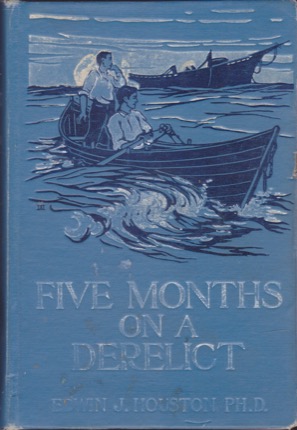
Hardcover. Philadelphia, Griffith and Rowland Press, 1st, 1908, Book: Good, Dust Jacket: None, Hardcover, light blue cloth covers stamped in white and dark blue. Story of survival based on a wreck in the China Sea of the Ketrel, a full-rigged ship bound from Liverpool to Yokohama, Japan. 360 pages, illustrated in b&w, one plate not present (the map on pg. 135). Bookplate on inside front cover, otherwise clean.
Hardcover. New York, Harry N. Abrams, 1st, 2001, Book: Very Good, Dust Jacket: Very Good, 232 pages. Hardcover with dust jacket. Clean, unmarked copy with only minor wear to dust jacket. Color and Black and white pictures throughout. Focusing on Ukiyo-e ("pictures of the floating or sorrowful world"), the colourful woodblock prints that are the most popular form of Japanese art, this book introduces the little-seen collection held by the Library of Congress. This collection of prints, drawings and books, one of the largest outside Japan, has never been exhibited and has rarely been handled. The art form of Ukiyo-e first flourished in 17th-century Edo (now Tokyo), depicting landscapes, portraits of courtesans and actors. This book includes known masterpieces by such names as Hokusai, Hiroshige and Kunisada, as well as rare and unusual prints that have not been explored before, and thus serves as a survey of its subject.
Hardcover. New York, Penguin Publishing Group, 1st, 2018, Book: Very Good, Dust Jacket: Very Good, 304 pages. Hardcover with dust jacket. A very clean, unmarked copy with only minor wear to dust jacket edges. A tight copy.
Hardcover. London, Reaktion Books, 1st, 2019, Book: Very Good, Dust Jacket: Very Good, Hardcover in a bright dust jacket, 256 pages illustrated in color and b&w. Meals associated with train travel have been an important aspect of railway history for more than a century - from dinners in dining cars to lunches at station buffets to foods purchased from platform vendors. For many travelers, the experience of eating on a railway journey is often a highlight of the trip, a major part of the 'romance of the rails'. Food on the Move focuses on the culinary history of these famous journeys on five continents, from the earliest days of rail travel to the present. The engaging story and vivid illustrations invite readers to discover an array of railway feasts: haute cuisine in the elegant dining carriages of the Orient Express, American steak-and-eggs on the Santa Fe Super Chief, and home-cooked regional foods along the Trans-Siberian tracks. Readers will be tempted to eat their way across Canada's vast interior and Australia's spectacular and colourful Outback; grab an infamous `British railway sandwich' to munch on the Flying Scotsman; snack on spicy samosas on the Darjeeling Himalayan `Toy Train'; dine at high speed on Japan's `Bullet Train'; and sip South African wines in a Blue Train luxury lounge car featuring windows of glass fused with gold dust. Food on the Move focuses on the culinary history of these famous journeys. Clean copy.
Hardcover. NY, Harper Collins, 1st, 1997, Book: Very Good, Dust Jacket: Very Good, Hardcover in a bright, unclipped dust jacket. Color Illustrations by Lettimore. In a carefully researched, lavishly illustrated original tale of long ago, Deborah Nourse Lattimore transports readers back through time to a land where Shoguns rule and mythical creatures abound. Focusing on one of her favorite periods in history--Japan's Edo period--Lattimore writes of a poor birdcatcher named Hideo who is banished from his village when he is accused of being the evil bandit who steals from Shogun and villager alike. Finding shelter under the boughs of a tree, Hideo hears a rustling and makes a catch beyond his wildest dreams. Painted in the art style of the Edo period, each spread is breathtaking in its detail; every page is awash in shimmering and vibrant color.
Hardcover. Jefferson NC, McFarland & Co., 1st, 2000, Book: Very Good, Dust Jacket: None, Hardcover, maroon cloth with gilt lettering. Part 1: A Korean Childhood in Japan, 1930-1944; Part 2: Growing Up in Korea, 1944- 1951. No Dust jacket issued.
Softcover. Tokyo, Japan, A.D.A. Edita, 1st, 1986, Book: Very Good, Dust Jacket: None, 317 pages. Softcover with French flaps. (Japanese to English Text) Color and b/w illustrations throughout. Illustrations consist of photographs and drawings of completed buildings and relevant projects. A touch of age-yellowing throughout. Soil on bottom edge. Spine is slightly faded. Complete with no pages missing, binding still tight. Rare.
Softcover. Tokyo, Japan, A.D.A. Edita, 1st, 1989, Book: Very Good, Dust Jacket: None, 358 pages. Softcover with French flaps. (Japanese to English Text) Color and b/w illustrations throughout. Illustrations consist of photographs and drawings of completed buildings and relevant projects. A touch of age-yellowing throughout. Soil on bottom edge. Spine is slightly faded. Complete with no pages missing, binding still tight. Rare.
Softcover. Tokyo, Japan, A.D.A. Edita, 1st, 1988, Book: Very Good, Dust Jacket: None, 390 pages. Softcover with French flaps. (Japanese to English Text) Color and b/w illustrations throughout. Illustrations consist of photographs and drawings of completed buildings and relevant projects. A touch of age-yellowing throughout. Soil on bottom edge. Spine is slightly faded. Complete with no pages missing, binding still tight. Rare.
Hardcover. London, Merrell Publishers, 1st, 2010, Book: Very Good, Dust Jacket: None, 256 pages. Hardcover with no dust jacket. Very clean, unmarked copy still in publishers shrink-wrap. Illustrated with over 250 photographs and sketches. Future Beauty is the first comprehensive survey of Japanese avant-garde fashion of the last 30 years. Such designers as Issey Miyake, Yohji Yamamoto and Rei Kawakubo made an enormous impact on the world fashion scene in the late twentieth century, challenging established notions of beauty and turning fashion into art.
Hardcover. New York, Kodansha International, Reprint, 1984, Book: Very Good, Dust Jacket: Very Good, 228 pages. Hardcover with dust jacket. A very clean, unmarked copy with only minor wear to dust jacket edges. Black & white and color photographs throughout. A tight copy.
Hardcover. NY, powerHouse Books, 1st, 2006, Book: Very Good, Dust Jacket: Very Good, Hardcover in a bright dust jacket, 119 pages. SIGNED AND INSCRIBED BY STANLEY BURNS on the title page. Japanese geisha and courtesans intrigue and fascinate Westerners. During the mid-nineteenth century, Japan opened its doors to the world and became an essential destination for travelers. Tourists desired images of landscapes and traditional Japanese culture, which Japanese photographers provided. They created souvenir albums consisting of hand-colored photographs individually chosen by the tourist. Many are so beautifully painted that they challenge modern sensibilities familiar with color photography. The photographic conventions were inspired by the aesthetics of the noted colored woodblock print medium of ukiyo-e and the privately published surimono. These works depicted the "floating world"--courtesans, geisha, and entertainments--which also were intriguing subject matter for tourists. The beautiful, large photos in this volume give a special insight into the old world of geisha. Clean copy.
Hardcover. NY, Farrar, Straus and Giroux, 1st, 2017, Book: Very Good, Dust Jacket: Very Good, Hardcover in a bright dust jacket, 206 pages. Famously unabashed, W. Eugene Smith was photography's most celebrated humanist. As a photo essayist at Life magazine in the 1940s and '50s, he established himself as an intimate chronicler of human culture. His photographs of war and disaster, villages and metropolises, doctors and midwives, revolutionized the role of images in journalism, transforming photography for decades to come. When Smith died in 1978, he left behind eighteen dollars in the bank and forty-four thousand pounds of archives. He was only fifty-nine, but he was flat worn-out. His death certificate read "stroke," but, as was said of the immortal jazzman Charlie Parker, Smith died of "everything," from drug and alcohol benders to weeklong work sessions with no sleep. Lured by the intoxicating trail of people that emerged from Smith's stupefying archive, Sam Stephenson began a quest to trace his footsteps. In Gene Smith's Sink, Stephenson merges traditional biography with rhythmic digressions to revive Smith's life and legacy. Traveling across twenty-nine states, Japan, and the Pacific, Stephenson profiles a lively cast of characters, including the playwright Tennessee Williams, to whom Smith likened himself; the avant-garde filmmaker Stan Brakhage, with whom he once shared a Swiss chalet; the artist Mary Frank, who was married to his friend Robert Frank; the jazz pianists Thelonious Monk and Sonny Clark, whose music was taped by Smith in his loft; and a series of obscure caregivers who helped keep Smith on his feet. The distillation of twenty years of research, Gene Smith's Sink is an unprecedented look into the photographer's potent legacy and the subjects around him. Clean, bright copy.
Softcover. US, PIE International, 1st, 2012, Book: Very Good, Dust Jacket: None, Softcover, Clean, unmarked copy with only minor wear to wrappers. Most of text in English and Japanese with portions in Japanese only. 256 pp. ; 200 color illustrations.
Hardcover. New York, Farrar, Straus and Giroux, 1st, 2003, Book: Near Fine, Dust Jacket: Near Fine, 278 pages, very clean and tight copy.The Great Fire was the winner of the 2003 National Book Award for Fiction. More than twenty years after the classic The Transit of Venus, Shirley Hazzard returns to fiction with a novel that in the words of Ann Patchett "is brilliant and dazzling..." The Great Fire is an extraordinary love story set in the immediate aftermath of the great conflagration of the Second World War. In war-torn Asia and stricken Europe, men and women, still young but veterans of harsh experience, must reinvent their lives and expectations, and learn, from their past, to dream again. Some will fulfill their destinies, others will falter. At the center of the story, a brave and brilliant soldier finds that survival and worldly achievement are not enough. His counterpart, a young girl living in occupied Japan and tending her dying brother, falls in love, and in the process discovers herself.
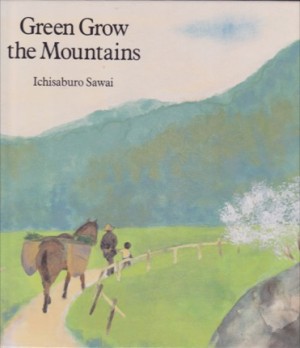
Hardcover. London, J. M. Dent, 1st UK, 1985, Book: Very Good, Dust Jacket: None, Hardcover in pictorial boards. Grandfather and grandchild enjoy the life in Japan's forested rural areas. Translated from the Japanese. Lovely color illustrations by the author. Ichisaburo Sawai is one of Japan's foremost painters, though "Green Grow the Mountain" is his first picture book. This enchanting glimpse into an idyllic rural life will delight both young and old, evoking as it does a serenity and charm that is ageless. Clean, bright copy.
Hardcover. Portland, OR, Nazraeli Press, 1st, 2010, Book: Very Good, Dust Jacket: None, 108 pages. This printing limited to 1000 copies. Hardcover with no dust jacket. Creasing to a few pages. An otherwise clean, unmarked copy with only minor edgewear. In the mid-1980s, Stu Levy began making 'grid-portraits' in order to overcome his his frustration with traditional portraiture's limited point of view. These constructs of photographs, consisting of twelve to twenty-five individual images, scan the architecture and flow of time in a subject's living or working environment. The resulting portraits, usually of artists, craftspeople and musicians, are made in the subjects' studios or living spaces and serve as a backstage tour of the artist s mind and creative process. Levy is fascinated by the artifacts that fill these spaces the possessions by which the subjects are themselves possessed. Rather than confining himself to a single 'decisive' moment, Levy explore its antithesis, a maze of scrambled time. These are made with a view camera using 4 x 5-inch negatives to allow for precision of detail. The sections are printed together to form the illusion of glancing through a window at a 'snapshot' of an event, which in reality might consist of fragmentary views made months apart and in totally separate rooms or environments. Among the subjects included in this important new monograph are Dr. Stanley Burns, Linda Connor, Barbara Crane, Jay Dusard, David Hockney, Graham Nash, and Jerry Uelsmann. Beautifully printed in duotone on matt art paper and bound in black Japanese cloth, this first printing of Grid-Portraits is limited to 1,000 copies.
Hardcover. London, Gibbings and Co., 2nd Ed., 1896, Book: Very Good, Dust Jacket: None, 341 pages. Hardcover with blue cloth covers with black and gilt design. An ex-library but aside from spine stickers and bookplate, a remarkably clean, tight copy. Doesn't appear to be a circulating copy. Tales of hunting throughout the world, but mostly in America, from snipe shooting to wolf coursing. Includes several fishing chapters; salmon in Japan, black and striped bass, grey mullet, brook trout and muskies, with a final chapter on artificial stocking of lakes and rivers.
Hardcover. London, Fourth Estate, 1st, 2005, Book: Very Good, Dust Jacket: Very Good, Hardcover in a bright dust jacket. 362 pages, SIGNED BY AW on title page. Set in Malaysia in the 1930s and 40s, with the rumbling of the Second World War in the background and the Japanese about to invade, The Harmony Silk Factory is the story of four people: Johnny, an infamous Chinaman -- a salesman, a fraudster, possibly a murderer -- whose shop house, The Harmony Silk Factory, he uses as a front for his illegal businesses; Snow Soong, the beautiful daughter of one of the Kinta Valley's most prominent families, who dies giving birth to one of the novel's narrators; Kunichika, a Japanese officer who loves Snow too; and an Englishman, Peter Wormwood, who went to Malaysia like many English but never came back, who also loved Snow to the end of his life. A journey the four of them take into the jungle has a devastating effect on all of them, and brilliantly exposes the cultural tensions of the era. Haunting, highly original, The Harmony Silk Factory is suspenseful to the last page. Clean copy.
Softcover. Berkeley, University of California Press, 1st, 2000, Book: Very Good, Dust Jacket: None, Softcover, 315 pages, b&w illustrations. In this engaging tale, Honda Katsuichi reconstructs the life of an Ainu woman living on the northern island of Japan over five hundred years ago. Harukor's story, created from surviving oral accounts of Ainu life and culture as well as extensive scholarly research, is set in the centuries before the mainland Japanese nearly destroyed the way of life depicted here. In the first person, the fictional Harukor tells us of her childhood, her adolescence, and her motherhood, drawing on tales and songs performed by her grandmother and other bards. She describes festivals, weddings, childbirth and midwifery, traditional healing methods, battles, and funerals in detail. Her story is followed by the adventures of her oldest son, Pasekur, which end by foreshadowing an early Ainu rebellion against Japanese encroachment.
Softcover. New York, Christie's, 1st, 1998, Book: Very Good, Dust Jacket: None, Softcover catalog, 234 pages. Illustrated in full color and black & white. Clean, tight copy.
Hardcover. NY, Cambridge University Press, 1st, 2005, Book: Very Good, Dust Jacket: Very Good, Hardcover, 346 pages, b&w photographs. This book shows how Henry Robinson Luce used his famous magazines to advance his interventionist agenda in Cold War China, Korea, Japan, and above all, Vietnam. This is the first balanced work on Luce and his influence, using hitherto undiscovered or inaccessible sources. Luce saw the American Century as the heir to the fading British Empire; he failed to see the hubris and cultural blindness that would lead to disaster in Vietnam - a disaster for which his magazines paved the way. Remainder mark on top edge. Else a very clean, tight copy.
Hardcover. New York, George Braziller Incorporated, 1st, 1988, Book: Very Good, Dust Jacket: Good, 192 pages. Hardcover with dust jacket. Heavy damage on 2 inches of bottom right corner. Otherwise, tight copy. Color pictures throughout. Endlessly experimenting with design, composition, and color, Hiroshige captured in these paintings, as no where else in his work, his poetic and idyllic sense of nature.


 "Floating World of Ukiyo-E: Shadows, Dreams and Substanceby: Kita, Sandy")
 "Flying Tigers, The: The Untold Story of the American Pilots Who Waged a Secret War Against Japanby: Kleiner, Sam")
 "Food on the Move: Dining on the Legendary Railway Journeys of the Worldby: Sharon Hudgins")
 "Fool and the Phoenix, The - A Tale of Old Japanby: Lettimore, Deborah Nourse")
 "Forever Alien: A Korean Memoir 1930 -1951by: Che, Sunny")
 "Frank Lloyd Wright Monograph 1937-1941 Volume 6 (Japanese to English Text)by: Futagawa (Editor, Photography), Yukio, Bruce Brooks Pfeiffer (Text)")
 "Frank Lloyd Wright Monograph 1942-1950 Volume 7 (Japanese to English Text)by: Futagawa (Editor, Photography), Yukio, Bruce Brooks Pfeiffer (Text)")
 "Frank Lloyd Wright Monograph 1951-1959 Volume 8 (Japanese to English Text)by: Futagawa (Editor, Photography), Yukio, Bruce Brooks Pfeiffer (Text)")
 "Future Beauty: 30 Years of Japanese Fashionby: Fukai, Akiko")
 "Gardens of Japan, The (English and Japanese Edition)by: Itoh, Teiji")


 "George Barbier: Master of Art Deco: Fashion, Illustration and Graphic Design(English and Japanese Edition)by: Unno, Hiroshi")
 "Great Fire, The by: Hazzard, Shirley")
 "Grid-Portraits (SIGNED)by: Levy, Stu")
 "Gun Rod and Saddle: A Record of Personal Experiencesby: Gillmore, Parker")

 "Harukor: An Ainu Woman's Tale by: Katsuichi Honda; Kyoko Selden Translator; David L. Howell Foreword")

 "Henry R. Luce, Time, and the American Crusade in Asiaby: Herzstein, Robert E.")
 "Hiroshige : Birds and Flowersby: Hiroshige, Ando; Israel Goldman; Cynthea J. Bogel")