Hardcover. Boston, Little, Brown and Company, 1st, 1957, Book: Good, Dust Jacket: None, Hardcover, orange cloth stamped in black. 41 pages illustrated in two and three colors by the author. Tale of a young boy set in contemporary (1950s) Japan. Inscription on front fly leaf. An unfortunate musty odor.
Tokyo, Japan, Charles E. Tuttle Co., 1st, 1966, Book: Very Good, Dust Jacket: Good, Hardcover, 101 pages, black and white Illustrations by Yoshie Noguchi. Dust jacket with small rips, tears and creases, otherwise in good condition.
Hardcover. Clover Press , 1st, 2024, Book: Very Good, Dust Jacket: None, Hardcover in pictorial boards. The saga continues in Terry and the Pirates Volume 8, reproduced from Milton Caniff's personal set of color syndicate tabloid proofs. Pat Ryan's bittersweet reunion with the entire Sandhurst family including young daughter Merrily is cut short when they are captured and placed in a Japanese prisoner of war camp. Even worse, human weasel Tony Sandhurst is revealed as an Axis conspirator! Pat revs up an escape for Normandie, Merrily, and himself, but their path to freedom intersects with the Dragon Lady. When the Sandhurst women find themselves on their own behind enemy lines, their privations finally end in the same U.S. Army camp hospital where Terry Lee is recuperating! Terry has happy encounters with nurse Taffy Tucker and aviator Flip Corkin, and a less-pleasant encounter with the conniving redhead known only as Rouge! This tabloid-sized Volume 8 containing the 1942 dailies and Sundays is an unparalleled upgrade that no Terry fan can afford to pass up. Sill in publisher's shrinkwrap. DUE TO WEIGHT, DOMESTIC SHIPPING ONLY.
Hardcover. NY, Dodd Mead, reprint, 1957, Book: Very Good, Dust Jacket: Good, Hardcover, 275 pages. Black & white illustrations by Kurt Wiese. Slight chipping to top and bottom spine, front corners. Price clipped.
Hardcover. NY, Charles Scribner's Sons, 1st, 1984, Book: Very Good, Dust Jacket: Very Good, Hardcover in a bright, unclipped dust jacket. The teenage character of this story is taken to Japan after his father gets a job. Getting used to his new life in Japan is hard for him due to the fact that he had to leave his team behind and after the death of his mother. The move to Japan was supposed to be a fresh start for this whole family yet, he doesn't truly find happiness there until the discover of the baseball team at the high school. Clean copy.
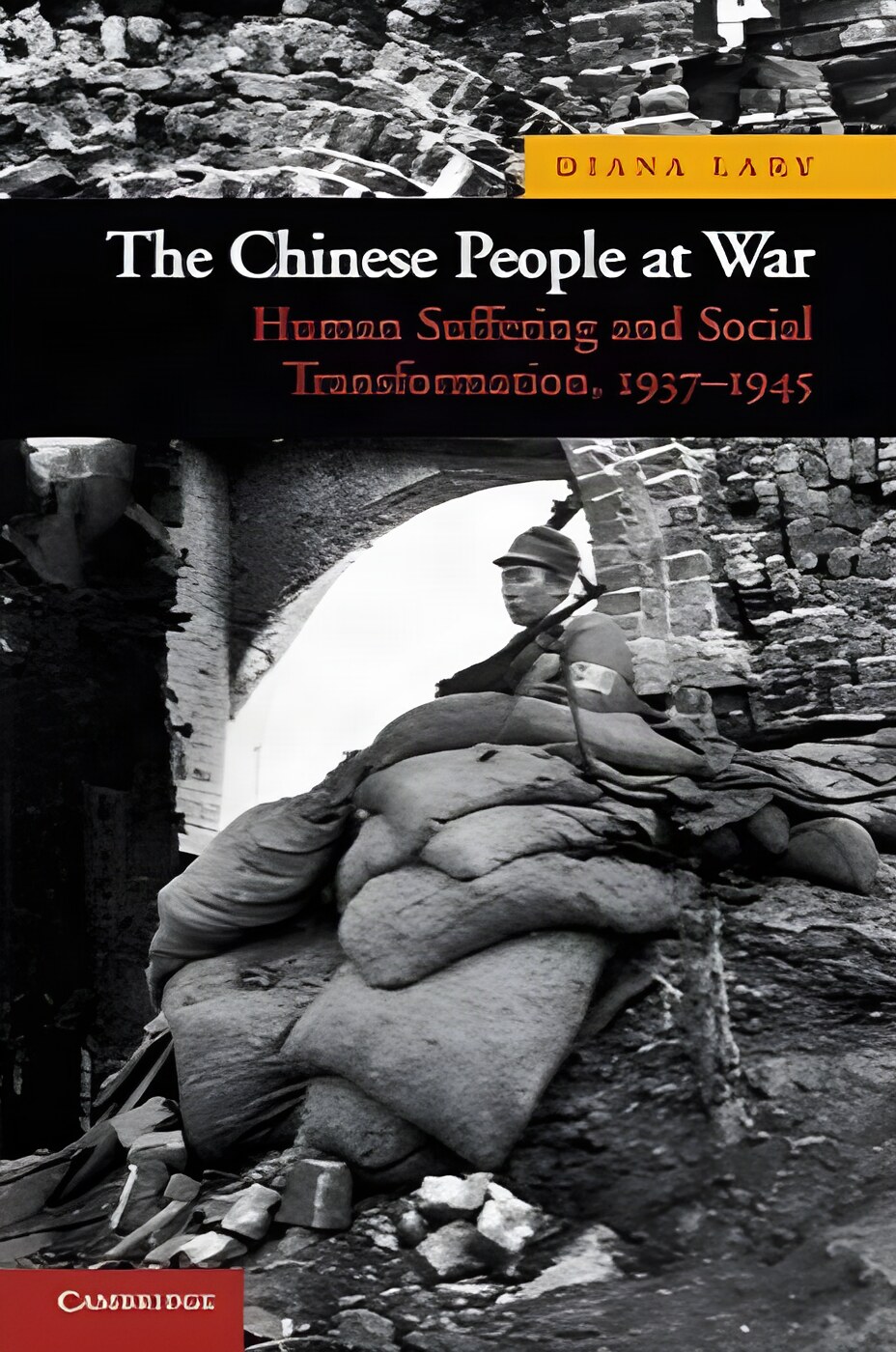
Softcover. UK, Cambridge University Press, reprint, 2011, Book: Very Good, Dust Jacket: None, Softcover, 231 pages, b&w illustrations. The Chinese peoples' experience of war during the Second World War, as it is known in the West, was one of suffering and stoicism in the face of dreadful conditions. China's War of Resistance began in 1937 with the Japanese invasion and ended in 1945 after eight long years. Diana Lary, one of the foremost historians of the period, tells the tragic history of China's war and its consequences from the perspective of those who went through it. Using archival evidence only recently made available, interviews with survivors, and extracts from literature, she creates a vivid and highly disturbing picture of the havoc created by the war, the destruction of towns and villages, the displacement of peoples, and the accompanying economic and social disintegration. Her focus is on families torn apart, men, women, and children left homeless and struck down by disease and famine. It is also a story of courage and survival. By 1945, the fabric of China's society had been utterly transformed, and entirely new social categories had emerged. As the author suggests in a new interpretation of modern Chinese history, far from stemming the spread of communism from the USSR, which was the Japanese pretext for invasion, the horrors of the war, and the damage it created, nurtured the Chinese Communist Party and helped it to win power in 1949. Clean copy.
Hardcover. Stanford CA, Stanford University Press, reprint, 1976, Book: Very Good, Dust Jacket: None, Hardcover, beige cloth covers, black lettering to spine, 288 pages. About 1307 a remarkable woman in Japan sat down to complete the story of her life. The result was an autobiographical narrative, a tale of thirty-six years (1271-1306) in the life of Lady Nijo, starting when she became the concubine of a retired emperor in Kyoto at the age of fourteen and ending, several love affairs later, with an account of her new life as a wandering Buddhist nun. Through the vagaries of history, however, the glory of Lady Nijo's story has taken six and half centuries to arrive. The Confessions of Lady Nijo or Towazugatari in Japanese, was not widely circulated after it was written, perhaps because of the dynastic quarrel that soon split the imperial family, or perhaps because of Lady Nijo's intimate portrait of a very human emperor. Whatever the cause, the book was neglected, then forgotten completely, and only a single manuscript survived. This was finally discovered in 1940, but would not be published until after World War II in 1950. This translation and its annotations draw on multiple Japanese editions, but borrow most heavily from the interpretations offered by Tsugita Kasumi. No dust jacket. Name on front fly leaf, otherwise a bright, clean copy.
Hardcover. London, John Murray, 2nd Ed., 1889, Book: Good, Dust Jacket: None, Hardcover, blue cloth stamped in gilt, a little rubbed and bumped at edges. 456 pages with color frontispiece map, 139 illustrations of which 27 are full-page and 14 maps of which some are folding. School ex-library copy with spine label, minimal stamping to front endpapers and title page. Previous owner's inscription on half-title page. Interior clean with no marking, all fold-out maps in great condition. NOTE: The Marchesa a schooner yacht sailed from England in 1881 to the seas of China and Japan the East Indies and New Guinea before returning to England in 1884. First published in 1886 as a two volume set.
Hardcover. Princeton NJ, Princeton University Press, 1st, 1958, Book: Very Good, Dust Jacket: Very Good, Hardcover in a lightly worn, price-clipped dust jacket, 513 pages, b&w illustrations. In 1918 the U.S. government decided to involve itself with the Russian Revolution by sending troops to Siberia. This book re-creates that unhappily memorable story: the arrival of British marines at Murmansk, the diplomatic maneuvering, the growing Russian hostility, the uprising of Czechoslovak troops in central Siberia which threatened to overturn the Bolsheviks, the acquisitive ambitions of the Japanese in Manchuria, and finally the decision by President Wilson to intervene with American troops. Of this period Kennan writes, "Never, surely, in the history of American diplomacy, has so much been paid for so little." Name on front fly leaf, otherwise clean.
Hardcover. NY, Orion/Crown, 1st, 1989, Book: Very Good, Dust Jacket: Very Good, Hardcover, 272 pages. Recaptures the World War II bombing raid over Tokyo under the command of Lt. Col. "Jimmy" Doolittle and the incredible seek-and-destroy mission that he and other American pilots endured after the bombing.
Hardcover. NY, St. Martin's Press, 1st, 1986, Book: Very Good, Dust Jacket: Very Good, Hardcover in a dust jacket with light fading to spine, 487 pages. In this book Ryoshin Minami studies the last hundred years of Japan's remarkable economic growth from the Meiji period up to the present day. First, he reveals the factors which account for Japan's successful economic take-off during the Meiji period. Second, he explains why Japan achieved a more rapid rate of economic growth than other developed countries. This forms the major part of the book and will interest those in the developed countries who have felt the full force of Japan's export drive and whose own industries are consequently in decline. Finally, the author evaluates the results of Japan's economic growth and makes predictions for its future. The book makes a comprehensive survey of the Japanese experience in the pre- and post-war periods and points out lessons not only for developed countries but also for developing countries. Name on front fly leaf, otherwise clean.
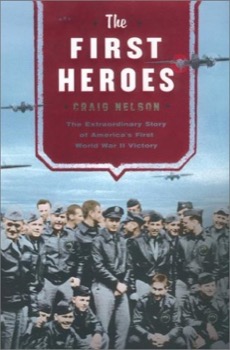
Hardcover. NY, Viking Press, 2nd pr., 2002, Book: Very Good, Dust Jacket: Very Good, Hardcover in a bright, unclipped dust jacket, 430 pages. Immediately after Japan's attack on Pearl Harbor, President Franklin D. Roosevelt sought to restore the honor of the United States with a dramatic act of a retaliatory bombing raid on Tokyo. On April 18, 1942, eighty brave young men, led by the famous daredevil Jimmy Doolittle, took off from a navy carrier in the mid-Pacific on what everyone regarded as a suicide mission but instead became a resounding American victory and helped turn the tide of the war. The First Heroes is the story of that mission. Meticulously researched and based on interviews with twenty of the surviving Tokyo Raiders, this is a true account that almost defies belief, a tremendous human drama of great personal courage, and a powerful reminder that ordinary people, when faced with extraordinary circumstances, can rise to the challenge of history. Clean copy.
Hardcover. NY, Random House, 1st, 1954, Book: Very Good, Dust Jacket: Good, 403 pages. Hardcover. 65 illustrations, 40 in full color. Price clipped dust jacket worn with tape repairs, fading - jacket now protected with clear plastic cover. "An account of the life and death of an art, of the men who made it and of the lusty age in which they flourished. 65 illustrations, including 40 in full color." Index, glossary, bibliography, appendices, artist biographies, chronology. Clean, tight copy.
Hardcover. NY, Viking, 1st, 2018, Book: Very Good, Dust Jacket: Very Good, Hardcover in a bright, unclipped dust jacket. 294 pages, b&w photos. Sam Kleiner's The Flying Tigers uncovers the hidden story of the group of young American men and women who crossed the Pacific before Pearl Harbor to risk their lives defending China. Led by legendary army pilot Claire Chennault, these men left behind an America still at peace in the summer of 1941 using false identities to travel across the Pacific to a run-down airbase in the jungles of Burma. In the wake of the disaster at Pearl Harbor this motley crew was the first group of Americans to take on the Japanese in combat, shooting down hundreds of Japanese aircraft in the skies over Burma, Thailand, and China. At a time when the Allies were being defeated across the globe, the Flying Tigers' exploits gave hope to Americans and Chinese alike. Clean copy.
Hardcover. NY, New York University Press, 1st, 2002, Book: Very Good, Dust Jacket: Very Good, Hardcover in a bright dust jacket, pages. The GI War Against Japan recounts the harrowing experiences of American soldiers in Asia and the Pacific. Based on countless diaries and letters, it sweeps across the battlefields, from the early desperate stand at Guadalcanal to the tragic sinking of the U.S.S. Indianapolis at war's very end. From the daunting spaces of the China-India theater to the fortress islands of Iwo Jima and Okinawa, Schrijvers brings to life the GIs' struggle with suffocating wilderness, devastating diseases, and Japanese soldiers who preferred death over life. Amidst the frustration and despair of this war, American soldiers abandoned themselves to an escalating rage that presaged Hiroshima and Nagasaki.
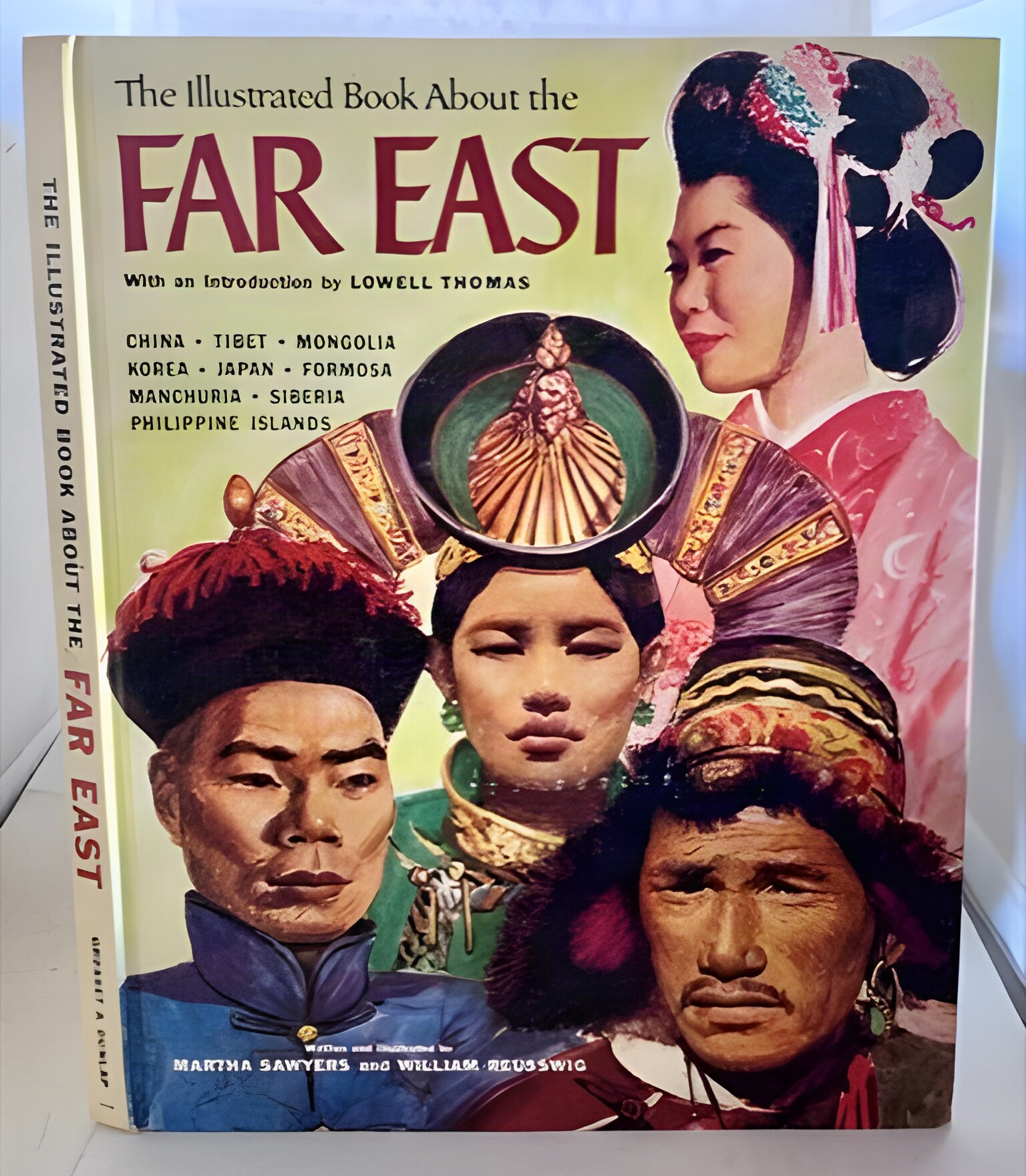
Hardcover. NY, Grosset & Dunlap, 1st, 1961, Book: Very Good, Dust Jacket: None, Hardcover in pictorial cloth, 101 pages. Oversized, no dust jacket issued. B&W and color Illustrations by Sawyers and Reusswig.
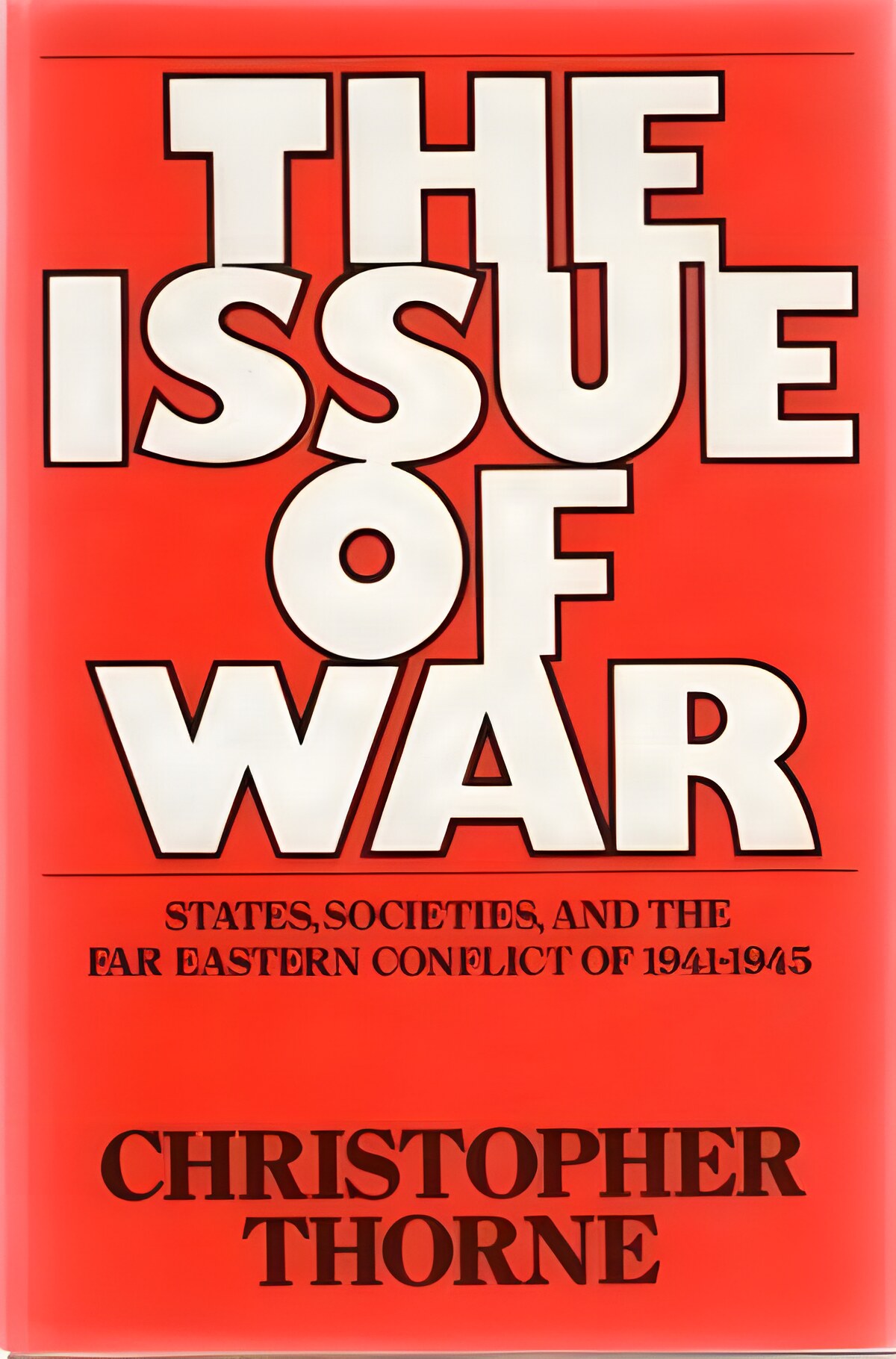
Hardcover. NY, Oxford University Press, 1st, 1985, Book: Very Good, Dust Jacket: Very Good, Hardcover in a bright, unclipped dust jacket, 364 pages. The Second World War's Pacific conflict was one of the most complex in history. It embrioled peoples from opposite sides of the globe; it was fought in China, across the expanses of the Pacific, and in the jungles of Southeast Asia; and it was devastating in its consequences for civilians and servicemen alike. It saw the first use of atomic weapons, hastened the end of the Western empires in Asia, and marked America's rise to the position of the most powerful nation in the world. Christopher Thorne, whose previous studies of the war in the Pacific have become landmarks in the field, here weaves together both the entire network of international relations surrounding the war and the impact the war had on all the societies involved--Indian as well as American; Australian and New Zealand as well as Japanese; Korean, Chinese, and Southeast Asian as well as British, French, and Dutch. The Issue of War draws on material gathered over many years in the Far East, Western Europe, and the U.S.--material including wartime films, broadcasts, and newspapers,as well as countless private and offical papers. Representing a synthesis of military, diplomatic, economic, intellectual, and social history, it not only places the war in the context of developments before 1941, but illuminates various patterns that cut across the familiar distinctions between Asia and the West or between Japan and the Allies. Name on front fly leaf, otherwise clean.
Hardcover. Tokyo, Fuzanbo Publishing, reprint, 1909, Book: Good, Dust Jacket: None, Hardcover, brown cloth covers with a decorative gilt design to front cover, spine with Japanese lettering. 139 pages. Nine small b&w line drawings. Small volume, contains 5 stories from the London edition published in 1903 by Constable. Wear to spine, clean.
Hardcover. Pinceton NJ, Princeton University Press, 1st, 1979, Book: Very Good, Dust Jacket: Very Good, Hardcover in a bright dust jacket, 315 pages. The Western ideal of individualism had a pervasive influence on the culture of the Meiji period in Japan (1868-1912). Janet Walker argues that this ideal also had an important influence on the development of the modern Japanese novel. Focusing on the work of four late Meiji writers, she analyzes their contribution to the development of a type of novel whose aim was the depiction of the modern Japanese individual. Professor Walker suggests that Meiji novels of the individual provided their readers with mirrors in which to confront their new-found sense of individuality. Her treatment of these novels as confessions allows her to discuss the development of modern Japanese literature and "the modern literary self" both in themselves and as they compare their prototypes and analogues in European literature. The author begins by examining the evolution of a literary concept of the inner self in Futabatei Shimei's novel Ukigumo (The Floating Clouds), Kitamura Tokoku's essays on the inner life, and Tayama Katai's I-novel Futon (The Quilt). She devotes the second half of her book to Shimazaki Toson, the Meiji novelist who was most influenced by the ideal of individualism. Here she traces Toson's development of a personal ideal of selfhood and analyzes in detail two examples of the lengthy confessional novel form that he created as a vehicle for its expression.
Hardcover. NY, James Pott & Co., 1st, 1905, Book: Very Good, Dust Jacket: None, Hardcover, blue cloth with bright gilt design to cover, gilt lettering on spine, 127 pages. Introduction by George Meredith. Bookplate/name on inside front cover. Otherwise a clean, bright copy.
Hardcover. Hoboken NJ, Wiley Publishing, 1st, 2003, Book: Very Good, Dust Jacket: Very Good, Hardcover in a bright, unclipped dust jacket. The Last Samurai traces Saigo's life from his early days as a tax clerk in far southwestern Japan, through his rise to national prominence as a fierce imperial loyalist. Saigo was twice exiled for his political activities - sent to Japan's remote southwestern islands where he fully expected to die. But exile only increased his reputation for loyalty, and in 1864 he was brought back to the capital to help his lord fight for the restoration of the emperor.
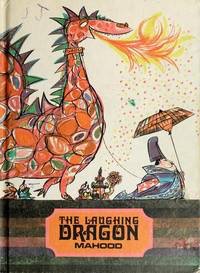
Hardcover. NY, Charles Scribner's Sons, 1st US, 1971, Book: Very Good, Dust Jacket: None, Hardcover in decorated cloth, 32 pages illustrated in color by Mahood. Enjoying the last few days of summer,The Emperor of Japan was about to eat his morning egg when suddenly out jumped a little smiling dragon. He seemed very friendly, so the Emperor decided to call him Hojo and keep him as the Imperial Pet. Hojo soon became a great favorite with everyone by making himself useful around the palace. He made delicious soups, had a very light hand with pastry, and the Emperor loved his pancakes. In addition he was always gay and cheerful, could sing, play chess, enjoy a joke, and his hot breath kept the palace warm, which was a great comfort to the Emperor who suffered from cold feet. Name on front fly leaf, otherwise clean and bright copy.
Hardcover. London, Allen & Unwin, 1st, 1970, Book: Very Good, Dust Jacket: Very Good, Hardcover in a lightly worn dust jacket with fading to spine. INSCRIBED BY THE TRANSLATOR INGALLS on the front fly leaf. The desperate struggle between the aging Manchu Empress T z'u-hsi and her young nephew the Emperor, at the close of the nineteenth century. A story told as a parable against both Japanese occupation and the Communist rule. Small ownersjp stamp on first page, otherwise clean.
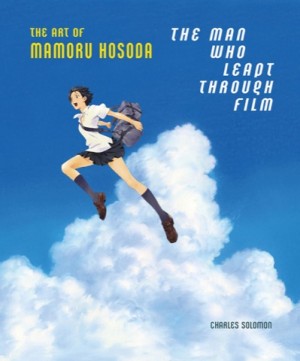
Hardcover. NY, Harry N. Abrams, 1st, 2022, Book: Very Good, Dust Jacket: None, Hardcover in pictorial boards, 271 pages. Journey into the mind and creative process of one of the most celebrated anime directors working today with The Man Who Leapt Through Film: The Art of Mamoru Hosoda. Written by renowned animation critic and historian Charles Solomon (The Art of WolfWalkers) and featuring exclusive interviews alongside hundreds of never-before-seen sketches, storyboards, background paintings, character designs, and concept art, this is the ultimate companion piece to Hosoda's work. Writer/director/animator Mamoru Hosoda's work includes Belle (2021), the Academy Award-nominated Mirai (2018); The Boy and the Beast (2015); Wolf Children (2012); Summer Wars (2009); and The Girl Who Leapt Through Time (2006). He is the cofounder of Studio Chizu, one of Japan's premier animation studios. Clean, bright copy.


 "Tatsu The Dragonby: Van Aken, Helen")

 "The Adventures of Kenji of Japanby: Nevins, Albert J.")
 "The Atami Dragonsby: Klass, David")
![The Confessions of Lady Nijo by: Lady Nijo [Translated by Karen Brazell ]](https://www.browsingisarousing.com/shop/images/The-Confessions-of-Lady-Nijo_by_Lady-Nijo-Translated-by-Karen-Brazell-396624-446680.jpg "The Confessions of Lady Nijo by: Lady Nijo [Translated by Karen Brazell ]")
 "The Cruise of the Marchesa to Kamschatka & New Guinea. With Notices of the Formosa, Liu-Kiu, and various Islands of the Malay Archipelagoby: Guillemard F. H. H")

 "The Doolittle Raid: America's daring first strike against Japanby: Carroll V. Glines")
 "The Economic Development of Japan: A Quantitative Study by: Ryoshin Minami")

 "The Flying Tigers: The Untold Story of the American Pilots Who Waged a Secret War Against Japanby: Sam Kleiner")

 "The Japanese Novel of the Meiji Period and the Ideal of Individualismby: Janet A. Walker")
 "The Last Samurai: The Life and Battles of Saigo Takamori by: Mark Ravina")