Softcover. Lockport NY, Niagara County Historical Society, 1st, 1966, Book: Very Good, Dust Jacket: None, Softcover, blue wrappers, 377 pages, black & white line drawings. Minor wear to covers, clean copy.
Hardcover. London```, Konemann UK Ltd, Reprint, 1995, Book: Very Good, Dust Jacket: Very Good, 2 VOLUME SET. 920 pages. Oversize hardcovers. Both volumes very clean and unmarked. Only minor wear to dust jacket edges. In a unique collection of hundreds of photographs, 150 Years of Photo Journalism gives a visual record of the years 1850 - 1918, the last and greatest period of European dominance of the world in culture, science and weapons of destruction. VERY HEAVY- extra charges for overseas shippimg.
Hardcover. London, Book Palace Books, 1st, 2022, Book: Very Good, Dust Jacket: None, Hardcover, pictorial boards, 160 pages. In August 1914 much of Europe was pitched into a war that would eclipse all others in terms of its industrial ferocity. In an era when photography and film recording were still in their infancy, much of the news was relayed through the work of reportage artists. Pre-eminent amongst such artists was Fortunino Matania who was The Sphere's artist-on-the-spot for events ranging from coronations to colliery disasters. Sent to a variety of Fronts to cover the conflict, his illustrations created a gripping and, at times, life-affirming testimony to those traumatic times, drawn from the personal visits he made and interviews he conducted with survivors. For the first time ever, this book collects those images in large format so that they can be viewed as they were intended. OVER 150 paintings and drawings on the World War 1 conflict, depicting all its horrors and special moments. His work inspired many contemporary artists: Annigoni and Russell Flint both visited his studio, and many comic strip artists collected his work including Al Williamson, Roy Krenkel, Frank Frazetta, John Bolton, Bernie Wrightson as well as film directors such as Cecil B DeMille and Alfred Hitchcock.
Hardcover. NewYork, Oxford University Press, 1st, 1957, Book: Very Good, Dust Jacket: None, Hardcover, blue cloth with black lettering. Features 40 full-page etchings of Civil War scenes with commentary on opposite page.
Hardcover. NY, Simon and Schuster, 2nd pr., 1956, Book: Good, Dust Jacket: Good, Hardcover in a worn dust jacket, 314 pages. Once a correspondent for the "Daily Worker" of London, foreign reporter for The Times of London and founder of The Week, an anti-fascist periodical, This self portrait is a fascinating read, The book is solid but the cheap paper used has tanned considerably.
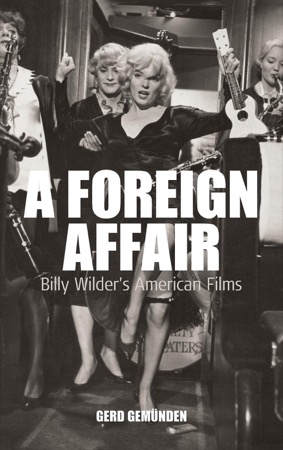
Hardcover. Berghahn Books, 1st, 2008, Book: Very Good, Dust Jacket: None, Hardcover, pictorial boards, 193 pages, b&w illustrations. With six Academy Awards, four entries on the American Film Institute's list of 100 greatest American movies, and more titles on the National Historic Register of classic films deemed worthy of preservation than any other director, Billy Wilder counts as one of the most accomplished filmmakers ever to work in Hollywood. Yet how American is Billy Wilder, the Jewish emigre from Central Europe? This book underscores this complex issue, unpacking underlying contradictions where previous commentators routinely smoothed them out. Wilder emerges as an artist with roots in sensationalist journalism and the world of entertainment as well as with an awareness of literary culture and the avant-garde, features that lead to productive and often highly original confrontations between high and low. Clean copy.
Hardcover. Cambridge UK, Cambridge University Press, 1st, 1987, Book: Very Good, Dust Jacket: Very Good, Hardcover in a bright dust jacket. 288 pages.This substantial and unusual volume is not an encyclopedic summary of names, dates, and images but a roughly chronological series of scholarly, sometimes provocative essays by specialists in various aspects of the medium's history. Contributors (identified only in the table of contents) are from France, Italy, Germany, Switzerland, England, and the United States. The chapters on photo-journalism, the illustrated press, and photography between the world wars are particularly informative, while high-quality illustrations from public and private collections worldwide convey photography's technical and aesthetic development and its ubiquity.
Hardcover. Chicago, Regnery Gateway, 1st, 1982, Book: Very Good, Dust Jacket: Fair, Hardcover in a worn, faded dust jacket. 191 pages. John Chamberlain, a veteran newspaperman and reviewer for the New York Times and other prestigious publications, shares the story of his career. INSCRIBED BY CHAMBERLAIN on the front fly leaf. Introduction by William F. Buckley.
Hardcover. NY, George H. Doran Co., 1st, 1916, Book: Very Good, Dust Jacket: None, Hardcover, Small octavo, tan boards with paper labels on top cover and spine. 93 pages. Doyle's account of visiting the military fronts during World War I. Clean, some scraping to paper covered board on rear otherwise very good.
Hardcover. NY, G.P. Putnam's Sons, 1st, 1959, Book: Very Good, Dust Jacket: Very Good, Hardcover in a bright, unclipped dust jacket with minor wear. 532 pages. An essential guide to the life and work of one of America's most controversial writers, Advertisements for Myself is a comprehensive collection of the best of Norman Mailer's essays, stories, interviews and journalism from the Forties and Fifties, linked by anarchic and riotous autobiographical commentary. Laying bare the heart of a witty, belligerent and vigorous writer, this manifesto of Mailer's key beliefs contains pieces on his war experiences in the Philippines (the basis for his famous first novel The Naked and the Dead), tributes to fellow novelists William Styron, Saul Bellow, Truman Capote and Gore Vidal and magnificent polemics against pornography, advertising, drugs and politics.
Hardcover. NY, Knopf, 1st, 1988, Book: Very Good, Dust Jacket: Very Good, Hardcover in a bright, unclipped dust jacket. 202 pages. A collection of four pieces on African history or culture. "The Woman Who Loved Gorillas" is a stark, unflattering look at Dian Fossey. Differing from the usual hagiography about Fossey, this essay focuses on her mistreatment of the Africans, her erratic and supposedly violent behavior, and her anti-social arrogance. It's not a slam piece, though, offering motives about her murder and admitting that Dian did much for the gorillas of Rwanda. "The Last of the Dog-Headed Men" is a look at the elusive indri, a "singing" lemur of Madagascar. "The Emperor Who Ate His People" is a look back at the career of Central African Republic dictator Bokassa. Finally, "In Search of the Source Of AIDS" is both a quest for possible sources of the virus and a look at how the disease is ravaging Africa (circa 1987). Clean, bright copy.
Hardcover. NY, St Martins Press, 1st, 1998, Book: Very Good, Dust Jacket: Very Good, Hardcover in a bright, unclipped dust jacket. 707 pages, b&w illustrations. Born in poverty, and self-educated while working in a print shop, William Lloyd Garrison was one of the United States' greatest crusading editors, putting out a weekly anti-slavery newspaper, The Liberator, for 35 years, beginning in 1831. A product of the rough and tumble political journalism of the day, Garrison wrote with extreme passion and from an uncompromising point of view. Yet the man who emerges from the pages of All on Fire is a deeply thoughtful person who, despite barely escaping lynch mobs himself, had a great sense of humor and a very polite demeanor. Historians have tended to minimize Garrison's impact on America, and some consider him a fringe character. But Henry Meyer, in this hefty biography, places Garrison at the center of his century, noting that Garrison's thought and tactics influenced not only the country's changing view of slavery, but also inspired the incipient feminist movement. The Lincoln administration noted Garrison's influence by inviting him to help raise the flag over the recaptured Fort Sumter. All on Fire goes into great detail on Garrison's life and work, providing the close and copious examination this activist's life fully deserves. Clean copy.
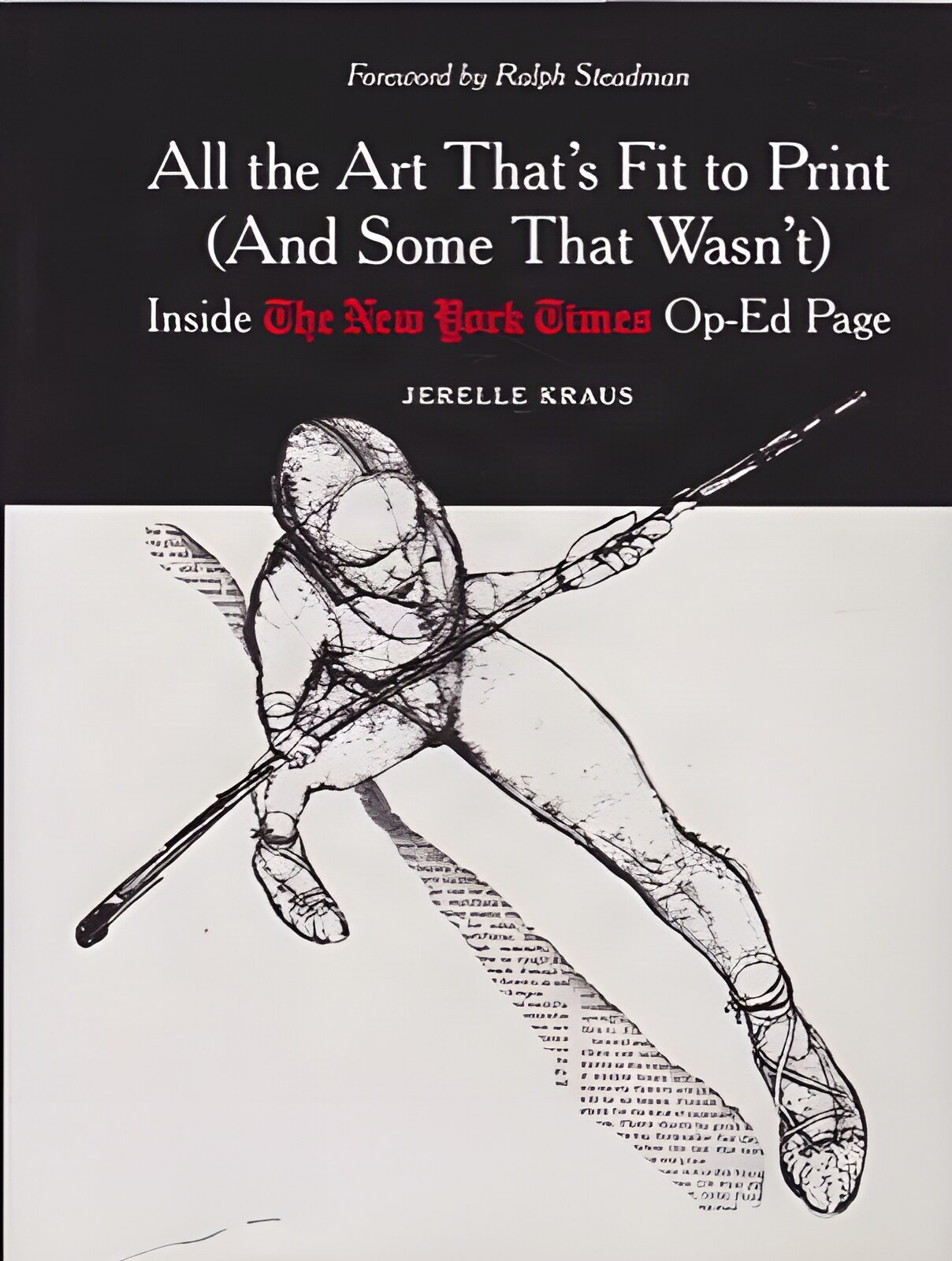
Hardcover. NY, Columbia University Press, 1st, 2008, Book: Very Good, Dust Jacket: Very Good, Hardcover in a bright dust jacket, 280 pages. Jerelle Kraus, whose thirteen-year tenure as Op-Ed art director far exceeds that of any other art director or editor, unveils a riveting account of working at the Times. Her insider anecdotes include the reasons why artist Saul Steinberg hated the Times, why editor Howell Raines stopped the presses to kill a feature by Doonesbury's Garry Trudeau, and why reporter Syd Schanburg-whose story was told in the movie The Killing Fields-stated that he would travel anywhere to see Kissinger hanged, as well as Kraus's tale of surviving two and a half hours alone with the dethroned peerless outlaw, Richard Nixon.All the Art features a satiric portrayal of John McCain, a classic cartoon of Barack Obama by Jules Feiffer, and a drawing of Hillary Clinton and Obama by Barry Blitt. Clean, bright copy.
Hardcover. New York, Bulfinch Press, First Edition, 2004, Book: Very Good, Dust Jacket: Very Good, 127 pages. Hardcover. Wine cloth boards with silver titles to spine. Full page, black & white photographs throughout. Clean, unmarked copy.
Softcover. NY, Random House, 1st pbk, 1994, Book: Very Good, Dust Jacket: None, Softcover, 360 pages. profusely illustrated with b&w photos. Portraits and interviews with Nevada test site workers, veterans who trained at the site, and people living nearby who suffered health problems from the radiation. Minor shelf wear. Clean copy.
Hardcover. NY, Macmillan, 1st, 1941, Book: Very Good, Dust Jacket: None, Hardcover, beige cloth stamped in blue and gilt, 772 pages, b&w plates. Illustrated endpapers. The author focuses on newspapers as interpreters of events and ideas for the popular audience, highlighting dramatic, humorous, and colorful episodes in American history- and the way in which American newsmen have reported them.
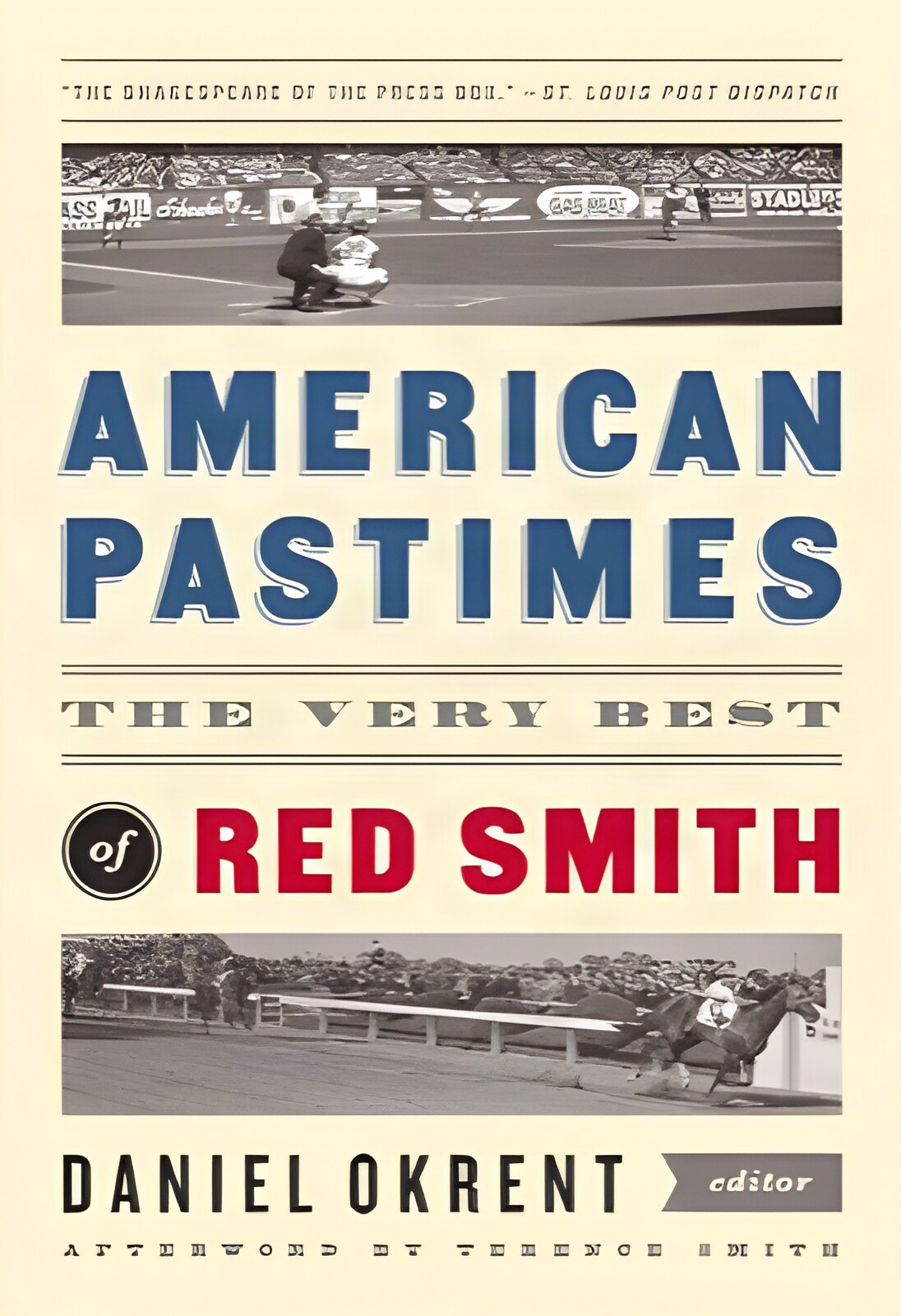
Hardcover. Library of America , 1st, 2013, Book: Very Good, Dust Jacket: Very Good, Hardcover in a bright, unclipped dust jacket, 560 pages. Walter Wellesley "Red" Smith was the most widely read sports writer of the last century and the first to win the Pulitzer Prize for commentary. From the 1940s to the 1980s, his nationally syndicated columns for the New York Herald Tribune and later for The New York Times traversed the world of sports with literary panache and wry humor. "I've always had the notion," Smith once said, "that people go to spectator sports to have fun and then they grab the paper to read about it and have fun again." Now, writer and editor (and inventor of Rotisserie League Baseball) Daniel Okrent presents the best of Smith's inimitable columns--miniature masterpieces that remain the gold standard in sports writing. Clean copy.
Hardcover. New York, George Braziller, 1st, 1961, Book: Very Good, Dust Jacket: Good, Hardcover in a dust jacket. Non-paginated. Black & white illustrations by Al Hirschfeld. Introduction by Brooks Atkinson. Previous owners bookplate on front endpaper. Dust jacket with creases, and light wear. Clean, tight copy.
Atgen PA, Schiffer, 1st, 2017, Book: Very Good, Dust Jacket: Very Good, Hardcover in a bright dust jacket. 144 pages illustrated in color and b&w. In 1942, Ed Vebell landed with the US Army in North Africa and was recruited by Stars & Stripes, the US armed forces newspaper, as their official staff artist. Daily, he drew illustrations and reported on the progress of World War II throughout Europe. This book offers a selection of his sketches, drawings, paintings, and photographs from that time, and presents one artist's view of the war from North Africa, through the campaigns in Italy, France, and Germany. After the war, the author spent two weeks with the Russians in Berlin, and was then assigned as the courtroom artist during the Nuremberg War Crimes Trials. Along the way are Ed's reminiscences about such personalities as famed war correspondent and artist Bill Mauldin, singers Josephine Baker and Edith Piaf, Charles de Gaulle, Gen. Teddy Roosevelt Jr., and many others. Ed also reminisces about his two years photographing backstage at the Folies Bergere in Paris, as well as his time as an Olympic fencer. Clean copy.
Hardcover. NY, Farrar & Rinehart, 1st, 1940, Book: Good, Dust Jacket: None, Hardcover, red cloth covers stamped with black and gilt lettering. 506 pages with index. Illustrated by Henry C. Barrow. This book covers the (what was then) hundred years of history the AP Press had witnessed. A "fast-moving, action-filled narrative of the rise of The Associated Press--the inside story of the only world-wide non-profit news gathering association as it grew from pigeon post and pony express to telegraph and wireless, with a daily news report of over 1,000,000 words and its spot-news picture system which shoots newspaper photographs by electricity across the globe." Short tear to top of spine cloth, bookplate on inside front cover, otherwise clean.
Softcover. New York , Aperture Book, 1st, 1987, Book: Very Good, Dust Jacket: None, Softcover. Fall 1897. Includes work by: Sebastiao Salgado, Susan Meiselas, David Goldblatt, Bill Burke. Also writing by Arthur Miller, William Shawcross, Frances Hodgson, Nadine Gordimer.
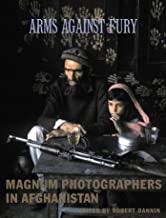
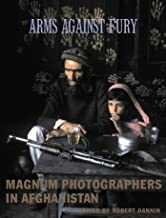
Hardcover. NY, powerHouse Books, 1st, 2002, Book: Very Good, Dust Jacket: Good, Hardcover in a lightly worn dust jacket. 240 pages. Arms Against Fury examines the dramatic struggle of the Afghan people through the lens of Magnum photographers, dating back to co-founder George Rodger's documentation of the country's role in World War II. Ever since, Magnum's intrepid photographers have crisscrossed the country's striking landscape from the Central Asian steppes to the parched southern desert by way of the Hindu Kush mountains surrounding Kabul and the adjacent Panjshir Valley. As early as the 1950s, Eve Arnold and Marc Riboud filed unprecedented stories from a legendary Shangri-La, showing a small kingdom struggling for statehood against the forces of underdevelopment and unfortunate geographic position during the Cold War. The ultimate overthrow of the monarchy and brutal liquidation of Afghanistan's constitutional government in 1978 heralded the arrival of Soviet-style communism. Peasants in Nuristan rebelled immediately and initiated a jihad that was covered first by Raymond Depardon and then by Steve McCurry, and later by renowned photojournalist Abbas, who also focused on the progress of the mujahedin, who eventually faced a massive Red Army invasion and savage aerial bombardments. Clean copy.
Hardcover. NY, powerHouse Books, 1st, 2002, Book: Very Good, Dust Jacket: Very Good, Hardcover, 240 pages. Arms Against Fury examines the dramatic struggle of the Afghan people through the lens of Magnum photographers, dating back to co-founder George Rodger's documentation of the country's role in World War II. Ever since, Magnum's intrepid photographers have crisscrossed the country's striking landscape from the Central Asian steppes to the parched southern desert by way of the Hindu Kush mountains surrounding Kabul and the adjacent Panjshir Valley. As early as the 1950s, Eve Arnold and Marc Riboud filed unprecedented stories from a legendary Shangri-La, showing a small kingdom struggling for statehood against the forces of underdevelopment and unfortunate geographic position during the Cold War. The ultimate overthrow of the monarchy and brutal liquidation of Afghanistan's constitutional government in 1978 heralded the arrival of Soviet-style communism. Peasants in Nuristan rebelled immediately and initiated a jihad that was covered first by Raymond Depardon and then by Steve McCurry, and later by renowned photojournalist Abbas, who also focused on the progress of the mujahedin, who eventually faced a massive Red Army invasion and savage aerial bombardments.
Hardcover. NY, Hawthorn Books, 1st, 1977, Book: Very Good, Hardcover, 111 illustrations by Geoffrey Moss, with an introduction by Dan Rather. Clean and tight copy. Dust jacket price-clipped. Clean copy.

 "100 Years Ago Today: Niagara County in the Civil War As Reported in the Pages of the Niagara Falls Gazetteby: Reed, Richard")
 "150 Years of Photojournalism (2 Vol.) by: Yapp, Nick & Hopkinson, Amanda")
 "1914 - 1918 Through the eyes of Fortunino Mataniaby: Peter Richardson")


 "A Civil War Artist at the Front: Edwin Forbes' Life Studies of the Great Armyby: Dawsos, William Forrest")
 "A Discord of Trumpets: An Autobiographyby: Claud Cockburn")
 "A History of Photographyby: Jean-Claude Lemagny/ Andre Rouille")
 "A Life with the Printed Word (SIGNED COPY)by: Chamberlain, John")
 "A Visit to Three Fronts: Glimpses of the British, Italian and French Linesby: Sir Arthur Conan Doyle")

 "African Madnessby: Shoumatoff, Alex")

 "Amazing Men - Courage, Insight, Enduranceby: Tenneson, Joyce")

 "American Theatre as seen by Hirschfeld, Theby: Hirschfeld, Al")


 "Aperture 108 Witness to Crisisby: Holborn, Mark")
 "Art and Politics of Geoffrey Moss, The by: Moss, Geoffrey")