Hardcover. La Salle IL, Open Court Publishing , 1st, 1946, Book: Very Good, Dust Jacket: None, Hardcover, dark green cloth covers, gilt lettering on spine, 567 pages. The Paul Carus Lectures: Seventh Series, 1945. Name on a blank prelim page, otherwise clean.
Softcover. NY, Universe Publishing, 2nd pr., 2006, Book: Very Good, Dust Jacket: None, Softcover, 272 pages illustrated in color and b&w. The first book to capture the philosophy and spirit behind the work of Charles and Ray Eames, An Eames Primer offers an in-depth look at the couple's prolific legacy--one that has placed them among the most important American designers of the twentieth century. Those who know one or two aspects of the Eameses' work are often surprised to learn just how far and vast their range extended. Yet throughout their myriad works, from architecture and furniture to exhibition and design and filmmaking, their core philosphy prevails. An Eames Primer is the first book to illuminate this seamless connection. Author Eames Demetrios explores the rich energy of the Eameses' world from a unique perspective, informed by his close relationship with Charles and Ray. He shares personal anecdotes, previously unpublished photos, and his extensive interviews with former friends and colleagues of the Eameses to make connections between the Eameses' influential philosophy and their widely admired work. For those unacquainted with the designers, the stories behind the design process will inform, entertain, and inspire, while readers with an extensive knowledge of the Eameses' work gain a deeper level of understanding their process.
Softcover. NY, Liberal Arts Press, 1st, 1956, Book: Very Good, Softcover, 615 pages. Translated with an introduction by Merritt H. Moore. Some light fading to edges of yellow wrappers, name on front fly leaf, otherwise clean. Out of print and uncommon.
Hardcover. Canada, McGill-Queen's University Press, 1st, 1982, Book: Very Good, Dust Jacket: None, 227 pages. Hardcover. Brown cloth cover boards, black title on spine and front cover. Pages clean and bright. Spine straight. Binding tight. Previous owner's name on front flyleaf. Brown endpapers. This book challenges widespread asumptions about common-sense philosophies and provides a major reassessment of an influential segment of the history of ideas.
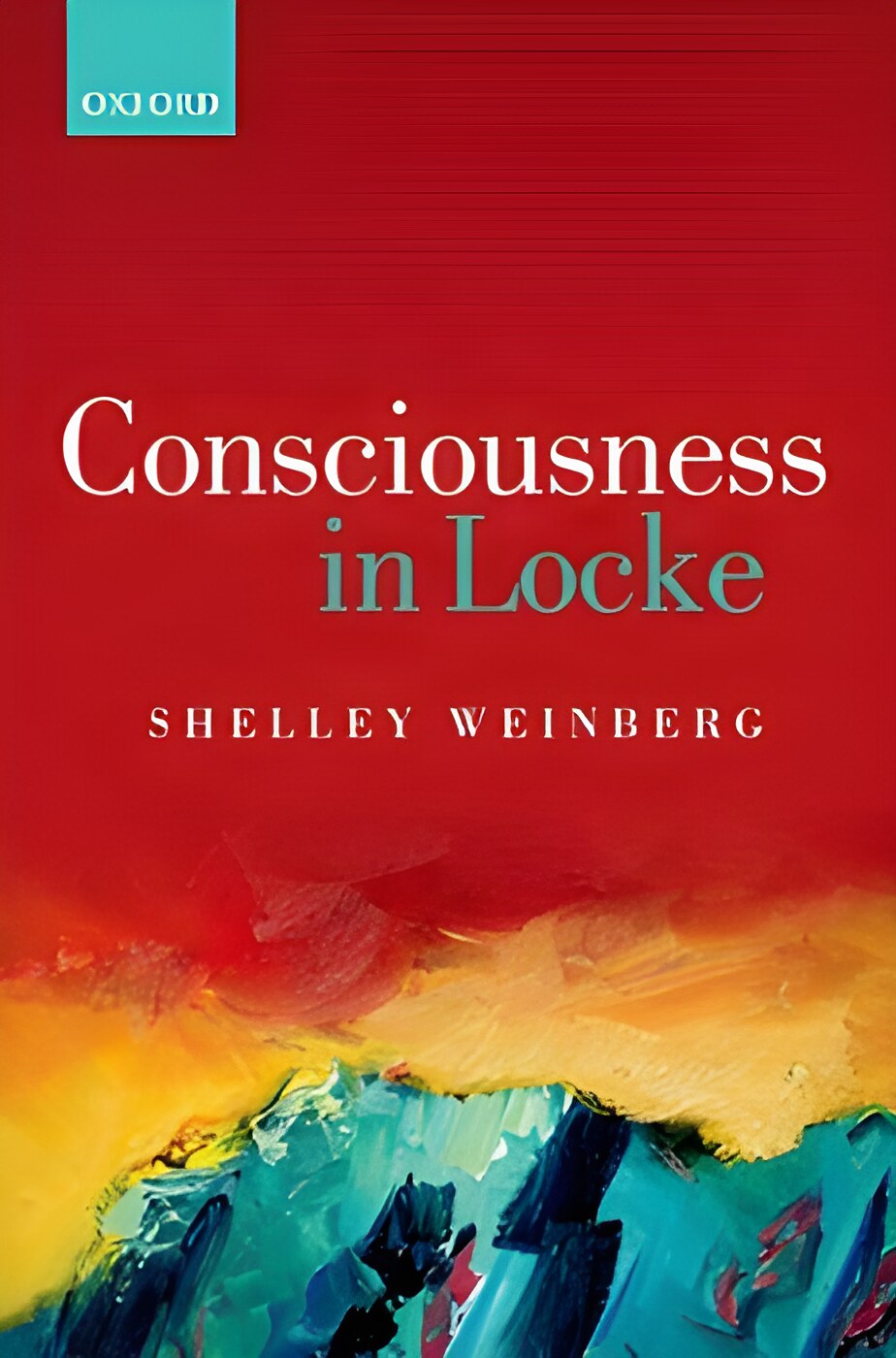
Hardcover. Oxford UK, Oxford University Press , 1st, 2016, Book: Very Good, Dust Jacket: Very Good, Hardcover in a bright dust jacket, 240 pages. Shelley Weinberg argues that the idea of consciousness as a form of non-evaluative self-awareness runs through and helps to solve some of the thorniest issues in Locke's philosophy: in his philosophical psychology and in his theories of knowledge, personal identity, and moral agency. Central to her account is that perceptions of ideas are complex mental states wherein consciousness is a constituent. Such an interpretation answers charges of inconsistency in Locke's model of the mind and lends coherence to a puzzling aspect of Locke's theory of knowledge: how we know individual things (particular ideas, ourselves, and external objects) when knowledge is defined as the perception of an agreement, or relation, of ideas. In each case, consciousness helps to forge the relation, resulting in a structurally integrated account of our knowledge of particulars fully consistent with the general definition. This model also explains how we achieve the unity of consciousness with past and future selves necessary for Locke's accounts of moral responsibility and moral motivation. And with help from other of his metaphysical commitments, consciousness so interpreted allows Locke's theory of personal identity to resist well-known accusations of circularity, failure of transitivity, and insufficiency for his theological and moral concerns. Although virtually every Locke scholar writes on at least some of these topics, the model of consciousness set forth here provides for an analysis all of these issues as bound together by a common thread. Clean copy.
Hardcover. London, England, Cambridge at the University Press, Revised 2nd edition, 1925, Book: Very Good, Dust Jacket: None, 207 pages. Hardcover. Navy blue cloth cover boards, gilt title on spine. Ex-library book with labels/stamps/and appropriate markings. Light pencil markings throughout. Some light tanning to edges and pages. Traditions of Science, The Foundations of Dynamical Physics, Scientific Relativity, The Natural Elements...
Hardcover. London, England, Oxford at the Clarendon Press, Reprint, 1962, Book: Very Good, Dust Jacket: None, 480 pages. Hardcover. Previous owner's bookplate on front endpaper and names written on front flyleaf. Light pencil notes and underlining. Spine straight. Black cover boards, gilt title on spine. Split at gutter on title page, but binding good. Bradley was a leading member of the philosophical movement known as British idealism.
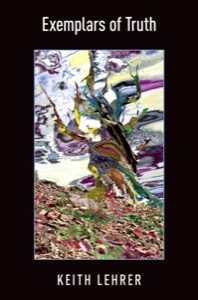
Hardcover. Oxford UK, Oxford University Press, 1st, 2019, Book: Very Good, Dust Jacket: Very Good, Hardcover in a bright dust jacket, 155 pages. This monograph is both an intellectual summation as well as a philosophical advancement of key themes of the work of Keith Lehrer on several key topics--including knowledge, self-trust, autonomy, and consciousness. He here attempts to integrate these themes and develop an intellectual system that can constructively solve philosophical problems. The system is indebted to the modern work of Sellars, Quine, and Chisholm, as well as historically to Hume and Reid. At the core of this system lies Lehrer's theory of knowledge, which he previously called a coherence theory of knowledge but now calls a defensibility theory. Lehrer argues that knowledge requires the capacity to justify or defend the target claim of knowledge in terms of a background system. Defensibility is an internal capacity supplied by that system to meet objections to the claim. This theory however leaves open the problem of "experience"--noted by other philosophers--i.e. how to explain the special role of experience in a background system even granted we are fallible in describing it. Lehrer offers a solution to the problem of experience, arguing that reflection on experience converts the experience itself into an exemplar, something like a sample that becomes a vehicle or term of representation. Name on front fly leaf, light pencil marking to about 12 pages.
Hardcover. UK, Oxford University Press, 1st, 2019, Book: Very Good, Dust Jacket: Very Good, Hardcover in a bright dust jacket, 277 pages. The seventeenth and eighteenth centuries represent a period of remarkable intellectual vitality in British philosophy, as figures such as Hobbes, Locke, Hume, and Smith attempted to explain the origins and sustaining mechanisms of civil society. Their insights continue to inform how political and moral theorists think about the world in which we live. From Moral Theology to Moral Philosophy reconstructs a debate which preoccupied contemporaries but which seems arcane to us today. It concerned the relationship between reason and revelation as the two sources of mankind's knowledge, particularly in the ethical realm: to what extent, they asked, could reason alone discover the content and obligatory character of morality? This was held to be a historical, rather than a merely theoretical question: had the philosophers of pre-Christian antiquity, ignorant of Christ, been able satisfactorily to explain the moral universe? What role had natural theology played in their ethical theories - and was it consistent with the teachings delivered by revelation? Much recent scholarship has drawn attention to the early-modern interest in two late Hellenistic philosophical traditions - Stoicism and Epicureanism. Yet in the English context, three figures above all - John Locke, Conyers Middleton, and David Hume - quite deliberately and explicitly identified their approaches with Cicero as the representative of an alternative philosophical tradition, critical of both the Stoic and the Epicurean: academic scepticism. All argued that Cicero provided a means of addressing what they considered to be the most pressing question facing contemporary philosophy: the relationship between moral philosophy and moral theology. Clean copy.
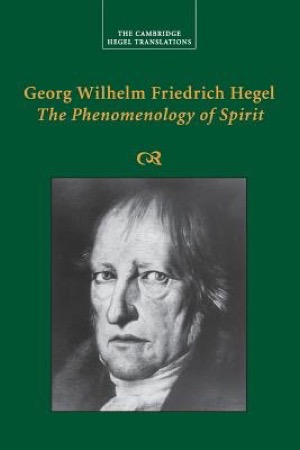
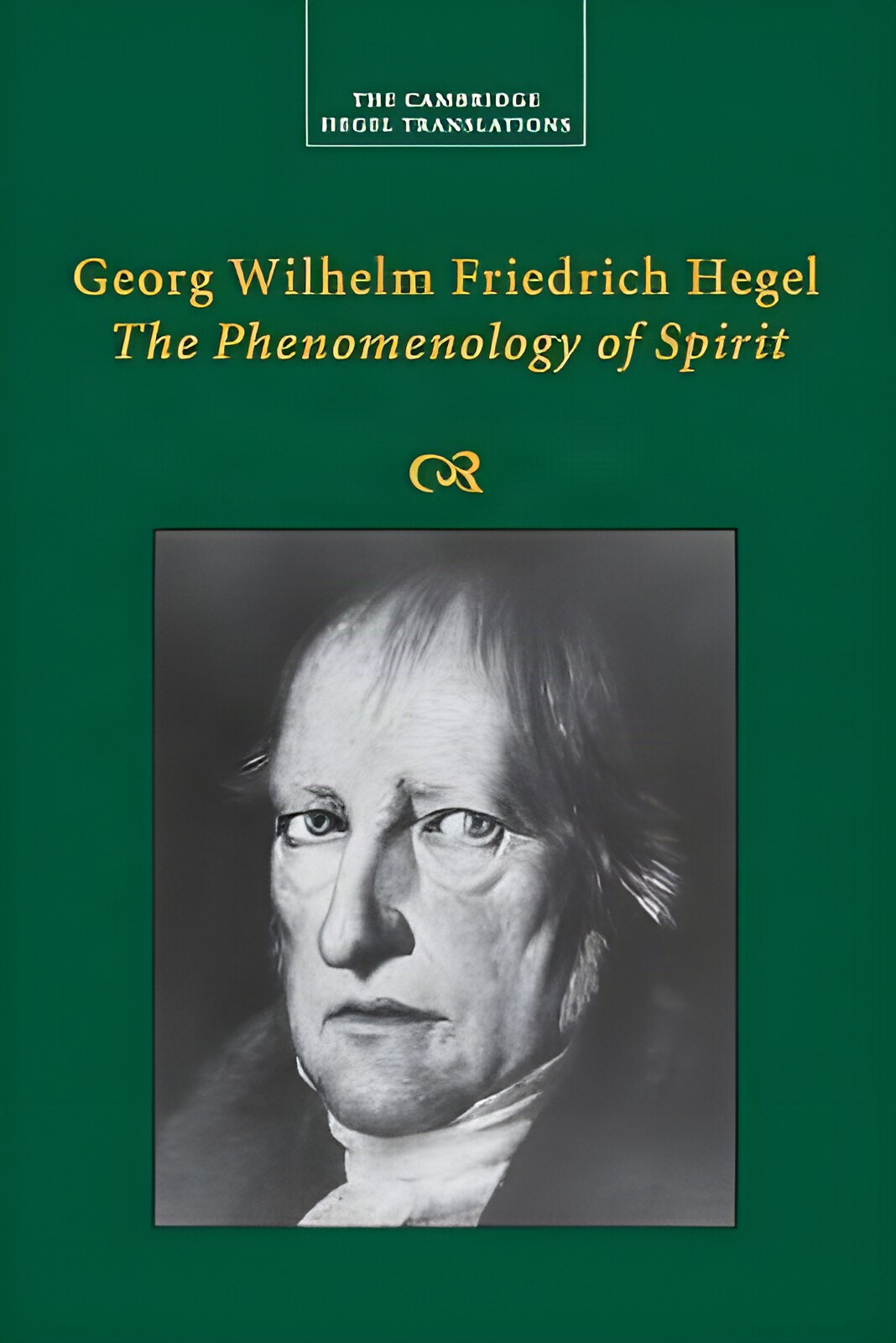
Softcover. Cambridge UK, Cambridge University Press, 1st pbk, 2018, Book: Very Good, Dust Jacket: None, Softcover, 492 pages. Hegel's The Phenomenology of Spirit (1807) is one of the most influential texts in the history of modern philosophy. In it, Hegel proposed an arresting and novel picture of the relation of mind to world and of people to each other. Like Kant before him, Hegel offered up a systematic account of the nature of knowledge, the influence of society and history on claims to knowledge, and the social character of human agency itself. A bold new understanding of what, after Hegel, came to be called 'subjectivity' arose from this work, and it was instrumental in the formation of later philosophies, such as existentialism, Marxism, and American pragmatism, each of which reacted to Hegel's radical claims in different ways. This edition offers a new translation, an introduction, and glossaries to assist readers' understanding of this central text, and will be essential for scholars and students of Hegel. Clean copy.
Softcover. Cambridge UK, Cambridge University Press, 1st pbk, 2018, Book: Very Good, Dust Jacket: None, Softcover, 492 pages. Hegel's The Phenomenology of Spirit (1807) is one of the most influential texts in the history of modern philosophy. In it, Hegel proposed an arresting and novel picture of the relation of mind to world and of people to each other. Like Kant before him, Hegel offered up a systematic account of the nature of knowledge, the influence of society and history on claims to knowledge, and the social character of human agency itself. A bold new understanding of what, after Hegel, came to be called 'subjectivity' arose from this work, and it was instrumental in the formation of later philosophies, such as existentialism, Marxism, and American pragmatism, each of which reacted to Hegel's radical claims in different ways. This edition offers a new translation, an introduction, and glossaries to assist readers' understanding of this central text, and will be essential for scholars and students of Hegel. Clean copy.
Softcover. Cambridge UK, Cambridge University Press, 1st, 1987, Book: Very Good, Dust Jacket: None, Softcover, 482 pages. Previous owner's signature on front end paper, else a clean, unmarked copy with only minor wear to wrappers.
Hardcover. London, England, Cambirdge at the University Press, 1st Edition, 1917, Book: Good, Dust Jacket: None, 338 pages. Hardcover. Green cloth cover boards, gilt title on spine and front cover board, gilt faded on cover, some agewear. Some light pencil within. Previous owner's name on front flyleaf. Some tanning to pages and edges.
Hardcover. London, Routledge, 1st, 2003, Book: Very Good, Dust Jacket: Very Good, Hardcover in a bright dust jacket, 289 pages. Nicolas Malebranche (1638-1715) is one of the most important philosophers of the seventeenth century after Descartes. A pioneer of rationalism, he was one of the first to champion and to further Cartesian ideas. Andrew Pyle places Malebranche's work in the context of Descartes and other philosophers, and also in its relation to ideas about faith and reason. He examines the entirety of Malebranche's writings, including the famous The Search After Truth, which was admired and criticized by both Leibniz and Locke. Pyle presents an integrated account of Malebranche's central theses, occasionalism and 'vision in God', before exploring and assessing Malebranche's contribution to debates on physics and biology, and his views on the soul, self-knowledge, grace and the freedom of the will. This penetrating and wide-ranging study will be of interest to not only philosophers, but also to historians of science and philosophy, theologians, and students of the Enlightenment or seventeenth century thought.
Hardcover. Hildesheim, Germany, Georg Olms Verlagsbuchhandlung, Reprint, 1967, Book: Very Good, Dust Jacket: None, Volumes 1-2. Hardcovers. Vol. 1: 512 pages. Vol. 2: 455 pages plus index. Green cloth covers, gilt title on black on spine and gilt title on front cover boards. top edge dyed. Key work by British philosopher, explaining his theories on the mind-body connection, including his doctrines of vibrations and associations, the formation and growth of consciousness, etc. Clean copies.
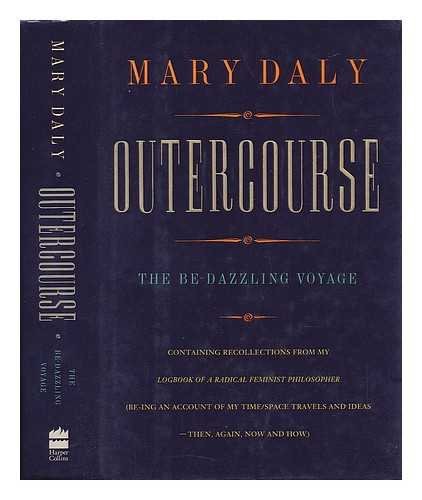
Hardcover. Harper San Francisco, 1st, 1992, Book: Very Good, Dust Jacket: Very Good, Hardcover in a bright dust jacket, 477 pages. The author of Beyond God the Father and Gyn/Ecology blends autobiography and visionary philosophy to reveal her struggles to reclaim the treasures of knowledge stolen and hidden from women. Mary Daly was an American radical feminist philosopher, academic, and theologian. Daly, who described herself as a "radical lesbian feminist", taught at Boston College, a Jesuit-run institution, for 33 years. Daly consented to retire from Boston College in 1999, after violating university policy by refusing to allow male students in her advanced women's studies classes. Clean copy.
Hardcover. Princeton NJ, Princeton University Press, 1st, 2015, Book: Very Good, Dust Jacket: Very Good, Hardcover in a bright dust jacket, 354 pages. From the turn of the fifth century to the beginning of the eighteenth, Christian writers were fascinated and troubled by the "Problem of Paganism," which this book identifies and examines for the first time. How could the wisdom and virtue of the great thinkers of antiquity be reconciled with the fact that they were pagans and, many thought, damned? Related questions were raised by encounters with contemporary pagans in northern Europe, Mongolia, and, later, America and China. Pagans and Philosophers explores how writers-philosophers and theologians, but also poets such as Dante, Chaucer, and Langland, and travelers such as Las Casas and Ricci-tackled the Problem of Paganism. Augustine and Boethius set its terms, while Peter Abelard and John of Salisbury were important early advocates of pagan wisdom and virtue. University theologians such as Aquinas, Scotus, Ockham, and Bradwardine, and later thinkers such as Ficino, Valla, More, Bayle, and Leibniz, explored the difficulty in depth. Meanwhile, Albert the Great inspired Boethius of Dacia and others to create a relativist conception of scientific knowledge that allowed Christian teachers to remain faithful Aristotelians. At the same time, early anthropologists such as John of Piano Carpini, John Mandeville, and Montaigne developed other sorts of relativism in response to the issue. Clean copy.
Hardcover. UK, Oxford University Press, 1st, 2008, Book: Very Good, Dust Jacket: Very Good, Hardcover in a bright dust jacket, 238 pages. The Laws is Plato's last and longest dialogue. Although it has been neglected (compared to such works as the Republic and Symposium), it is beginning to receive a great deal of scholarly attention. Book 10 of the Laws contains Plato's fullest defence of the existence of the gods, and his last word on their nature, as well as a presentation and defence of laws against impiety (e.g. atheism). Plato's primary aim is to defend the idea that the gods exist and that they are good - this latter meaning that they do not neglect human beings and cannot be swayed by prayers and sacrifices to overlook injustice. As such, the Laws is an important text for anyone interested in ancient Greek religion, philosophy, and politics generally, and the later thought of Plato in particular. Robert Mayhew presents a new translation, with commentary, of Book X of the Laws. His primary aim in the translation is fidelity to the Greek. His commentary focuses on philosophical issues (broadly understood to include religion and politics), and deals with philological matters only when doing so serves to better explain those issues. Knowledge of Greek is not assumed, and the Greek that does appear has been transliterated. It is the first commentary in English of any kind on Laws X for nearly 140 years. Light pencil notations to about 15 pages.
Softcover. NY, Oxford University Press, reprint, 2011, Book: Very Good, Dust Jacket: None, Softcover, 384 pages. Plato is the best known and most widely studied of all the ancient Greek philosophers. Malcolm Schofield, a leading scholar of ancient philosophy, offers a lucid and accessible guide to Plato's political thought, enormously influential and much discussed in the modern world as well as the ancient. Schofield discusses Plato's ideas on education, democracy and its shortcomings, the role of knowledge in government, utopia and the idea of community, money and its grip on the psyche, and ideological uses of religion. Clean, bright copy.
Softcover. UK, Oxford University Press, Revised Ed., 2001, Book: Very Good, Dust Jacket: None, Softcover, 384 pages. Published here for the first time is much of a final and long-anticipated work on the philosophy of history by the great Oxford philosopher and historian R. G. Collingwood (1889-1943). The original text of this uncompleted work has only recently been discovered and is accompanied here by Collingwood's shorter writings on historical knowledge and inquiry. Besides containing entirely new ideas, these incredible writings discuss many of the issues which Collingwood famously raised in The Idea of History and in his Autobiography. This book also includes two conclusions written by Collingwood, which were eventually revised and published as The Idea of Nature. and a lengthy editorial introduction that puts Collingwood's writings in their context and discusses the philosophical questions they initiate. A landmark publication, this work will appeal not only to those studying Collingwood but also to anyone broadly curious about philosophy of history. Clean copy.
Hardcover. Edinburgh, Edinburgh University Press, 1st, 1996, Book: Very Good, Dust Jacket: Very Good, Hardcover in a bright dust jacket, 340 pages. Proclus was the most important figure in Neo-Platonism when it was established as the dominant philosophy of Late Antiquity. Neo-Platonism is not only the final flowering of Greek thought but also the mode in which it was transmitted to the Byzantine, Western European and Islamic civilisations. Stripping away the complexities surrounding this traditionally difficult philosopher, Lucas Siorvanes takes the reader through Proclus' metaphysics and theory of knowledge with original research examining all aspects of Proclus' work. This is the first book which places Proclus in his complete intellectual context and sheds new light on aspects of Proclus' thought, to which previous scholars have rarely done justice. - Presents a general survey of Proclus and his Neo-Platonism- Introduces results of original research, mainly on his metaphysics, theory of knowledge and science. All areas of Proclus' philosophical interest are covered including religion, physics, astronomy, mathematics and poetry. His philosophy is found in all these because concern with being and truth is central to all. Also introduced is the neglected area of his natural philosophy with its remarkable freshness of thought punctuated by the rejection of Aristotelian science and Ptolemy's cosmology. In this book, Proclus is shown as much more than just a metaphysician.
Hardcover. Carbondale IL, Southern Illinois University, 1st, 1969, Book: Very Good, Dust Jacket: Very Good, Hardcover in a bright, unclipped dust jacket with mild edgewear. In a wide-ranging study of unusual interest, Paul Weiss, Sterling Professor of Philosophy at Yale University, applies the principles and methods of philosophy to athletics. Every culture, he notes, has games of some kind; few activities seem to interest both children and young men as much as sports do; and few attract so many spectators, rich and poor. Yet none of the great philosophers, claiming to take all knowledge and being as their province, have made more than a passing reference to sport, in part, Professor Weiss suggests, because they thought that what pleased the vulgar was not worth sustained study by the leisured.
Hardcover. Indianapolis, Hackett Publishing, 1st, 2000, Book: Very Good, Dust Jacket: Very Good, Hardcover in a bright dust jacket, 322 pages. In this groundbreaking work, C. D. C. Reeve uses a fundamental problem--the Primacy Dilemma--to explore Aristotle's metaphysics, epistemology, dialectic, philosophy of mind, and theology in a new way. At a time when Aristotle is most often studied piecemeal, Reeve attempts to see him both in detail and as a whole, so that it is from detailed analysis of hundreds of particular passages, drawn from dozens of Aristotelian treatises, and translated in full that his overall picture of Aristotle emerges. Primarily a book for philosophers and advanced students with an interest in the fundamental problems with which Aristotle is grappling, Substantial Knowledge's clear, non-technical and engaging style will appeal to any reader eager to explore Aristotle's difficult but extraordinarily rewarding thought. Name on front fly leaf, otherwise clean.

 "An Analysis of Knowledge and Valuationby: Clarence Irving Lewis")

 "An Essay on the Foundations of Our Knowledge by: Cournot, Antoine Augustin, 1801-1877")


 "Enquiry Concerning the Principles of Natural Knowledge, Anby: Whitehead, A.N.")

 "Essays on Truth and Realityby: Bradley, F.H.")


 "Kant and the Claims of Knowledgeby: Guyer, Paul")
 "Locke's Theory of Knowledge and its Historical Relationsby: Gibson, James")

 "Malebrancheby: Pyle, Andrew")
 "Marx's Theory of Scientific Knowledgeby: Murray, Patrick (Irving Adler)")




 "Sport: a Philosophic Inquiry by: Weiss, Paul")
