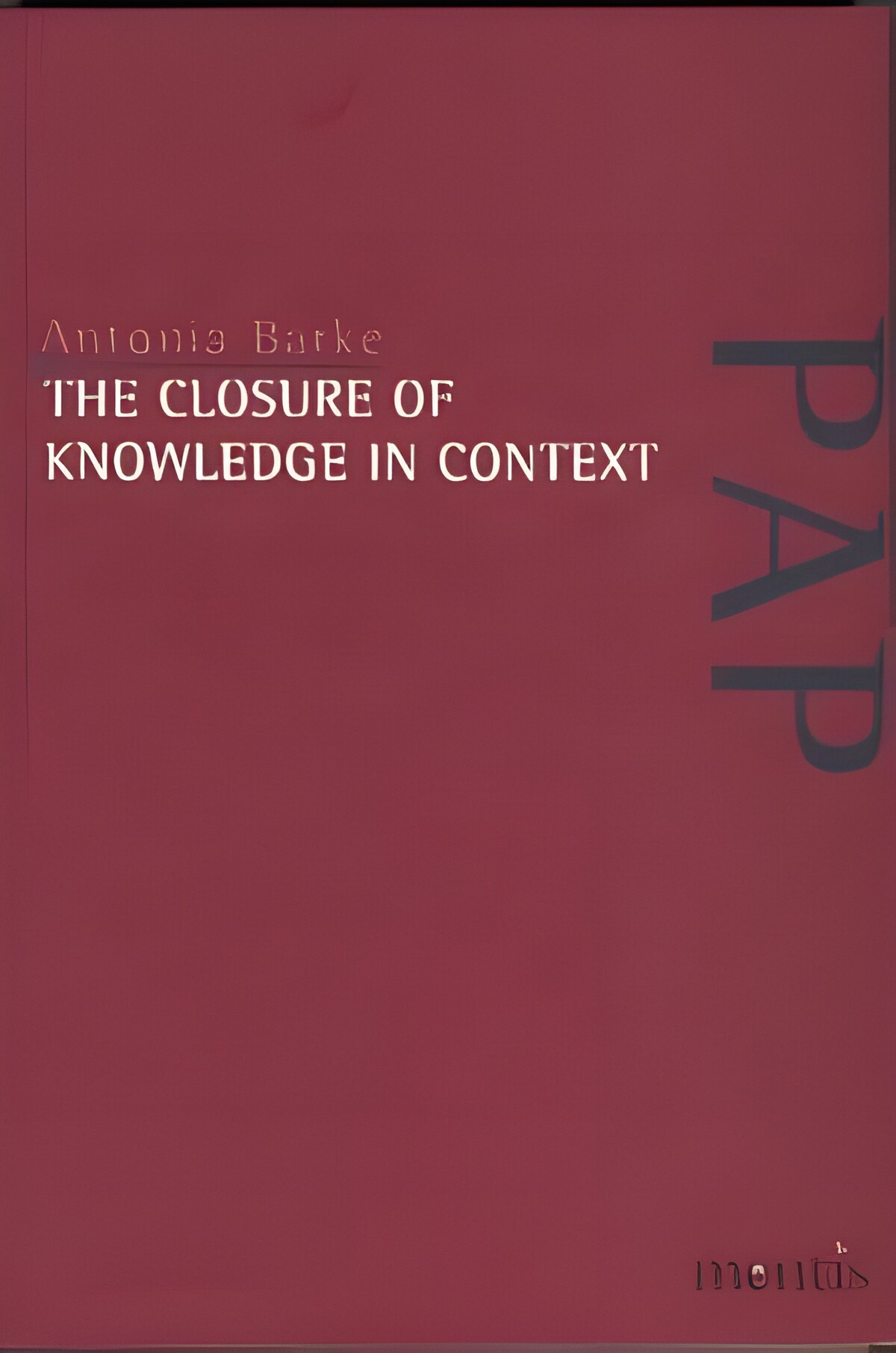
Softcover. Paderborn GER, Mentis, 1st, 2002, Book: Very Good, Dust Jacket: None, Softcover, 199 pages. INSCRIBED BY AUTHOR on the front fly leaf. This book investigates whether knowledge is closed under known entailment. Clean copy.
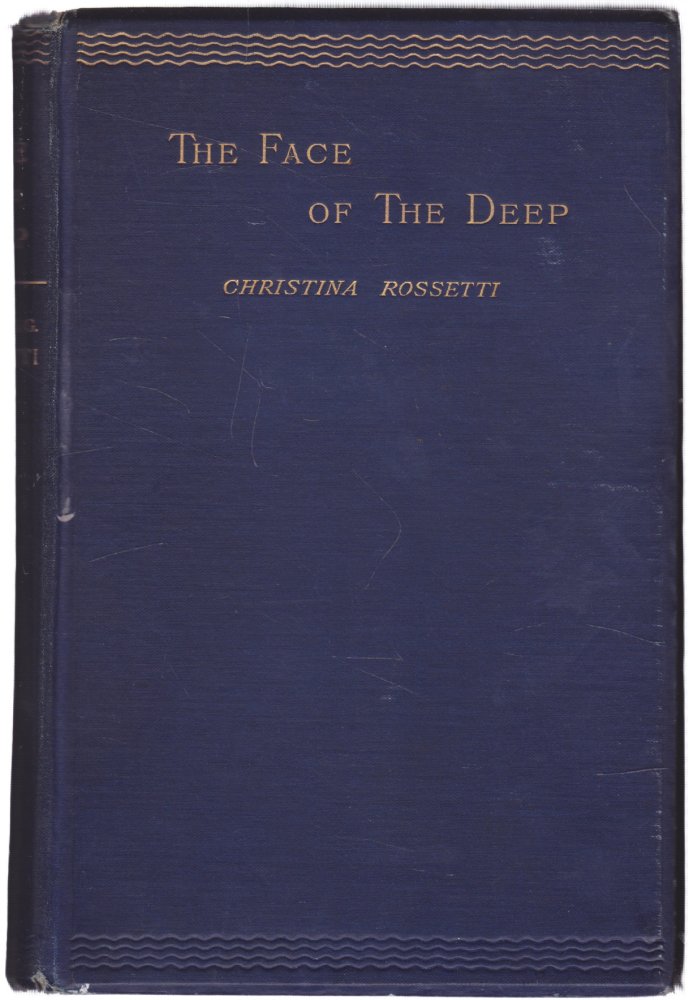
Hardcover. London, Society for Promoting Christian Knowledge, 1st, 1892, Book: Good, Dust Jacket: None, Hardcover, blue cloth with gilt stamping. Black endpapers, title page states 1892 with only "Richard Clay and Sons, Limited/London & Bungay" on copyright page. A commentary on the biblical book of Revelation, also known as the Apocalypse, which describes the end of the world and the return of Christ. Throughout the book, Rossetti offers her insights and reflections on the various chapters and verses of the Apocalypse. She provides a devotional perspective, emphasizing the spiritual lessons that can be gleaned from the text. The book is divided into chapters, each of which covers a different section of the Apocalypse. Rossetti provides an overview of the text, followed by her commentary. Her last and perhaps most audacious volume, she found the Tractarian emphasis on emotional and imaginative freedom particularly helpful in her need for a woman's response to a 'masculine' text. Rear hinge cracked, 13 line quote from text written in ink on the half title page, otherwise clean.
Hardcover. London, Hodder and Stoughton, 1st, 1938, Book: Very Good, Dust Jacket: None, Hardcover, maroon cloth with gilt stamped spine, 255 pages including index. Karl Barth (1886-1968), the Swiss Reformed professor and pastor, was once described by Pope Pius XII as the most important theologian since Thomas Aquinas. As principal author of 'The Barmen Declaration', he was the intellectual leader of the German Confessing Church -- the Protestant group that resisted the Third Reich. This volume contains The Gifford Lectures he delivered in Aberdeen in 1937 and 1938. Name on front fly leaf, pencil marking (mostly underlining) to half the pages. Sound copy.
Hardcover. London, Jonathan Cape, 1st UK, 1930, Book: Very Good, Dust Jacket: None, Hardcover, orange cloth, gilt lettering on spine, 249 pages. Science had explained the world and, in the explaining, emptied it. By 1929 the educated mind could account for the body, the emotions, even love and grief -- and found, in the accounting, that the things it most valued had no standing in the universe that science described. Published in January 1929, months before the Crash that ended the decade's prosperity, Joseph Wood Krutch's The Modern Temper: A Study and a Confession became the defining diagnosis of that crisis: a clear-eyed reckoning of what the modern mind had gained in knowledge and forfeited in meaning. Krutch's incisive examination of the dilemmas faced by modern man has proved remarkably prophetic. This book stands as an unflinchingly honest examination of the major moral questions of our era. Clean copy.
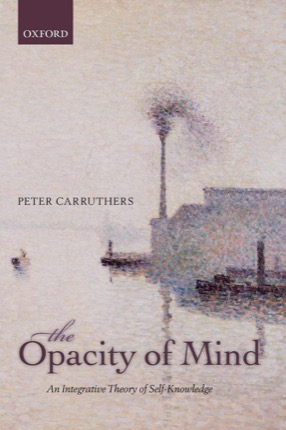
Hardcover. UK, Oxford University Press, 1st, 2011, Book: Very Good, Dust Jacket: Very Good, Hardcover in a bright dust jacket, 437 pages. It is widely believed that people have privileged and authoritative access to their own thoughts, and many theories have been proposed to explain this supposed fact. The Opacity of Mind challenges the consensus view and subjects the theories in question to critical scrutiny, while showing that they are not protected against the findings of cognitive science by belonging to a separate "explanatory space." The book argues that our access to our own thoughts is almost always interpretive, grounded in perceptual awareness of our own circumstances and behavior, together with our own sensory imagery (including inner speech). In fact our access to our own thoughts is no different in principle from our access to the thoughts of other people, utilizing the conceptual and inferential resources of the same "mindreading" faculty, and relying on many of the same sources of evidence. Peter Carruthers proposes and defends the Interpretive Sensory-Access (ISA) theory of self-knowledge. This is supported through comprehensive examination of many different types of evidence from across cognitive science, integrating a diverse set of findings into a single well-articulated theory. One outcome is that there are hardly any kinds of conscious thought. Another is that there is no such thing as conscious agency. Clean, like new.
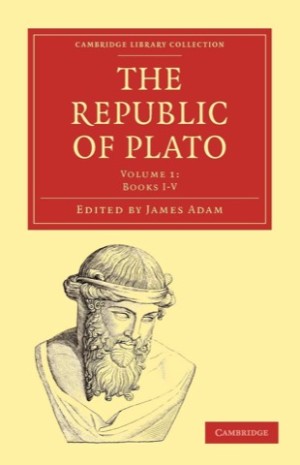
Softcover. Cambridge University Press, reprint, 2007, Book: Very Good, Dust Jacket: None, Two softcover volumes: Vol. 1: Books 1-V, 364 pages. Vol. 2: Books VI-X and Indexes, 531 pages. Previous owner's name, otherwise clean. James Adam (1860-1907) was a Scottish classics scholar who taught at Emmanuel College, Cambridge. A strong defender of the importance of Greek philosophy in a well-rounded education, Adam published a number of Plato's works including Protagoras and Crito. This two-volume critical edition of the Republic (1902) was another major contribution to the field. Though his preface claims 'an editor cannot pretend to have exhausted its significance by means of a commentary,' Adam's depth of knowledge and erudite analysis of the Greek text ensured that his edition remained the standard reference for decades to follow, and it remains a thought-provoking evaluation of one of the great works of Western thought.
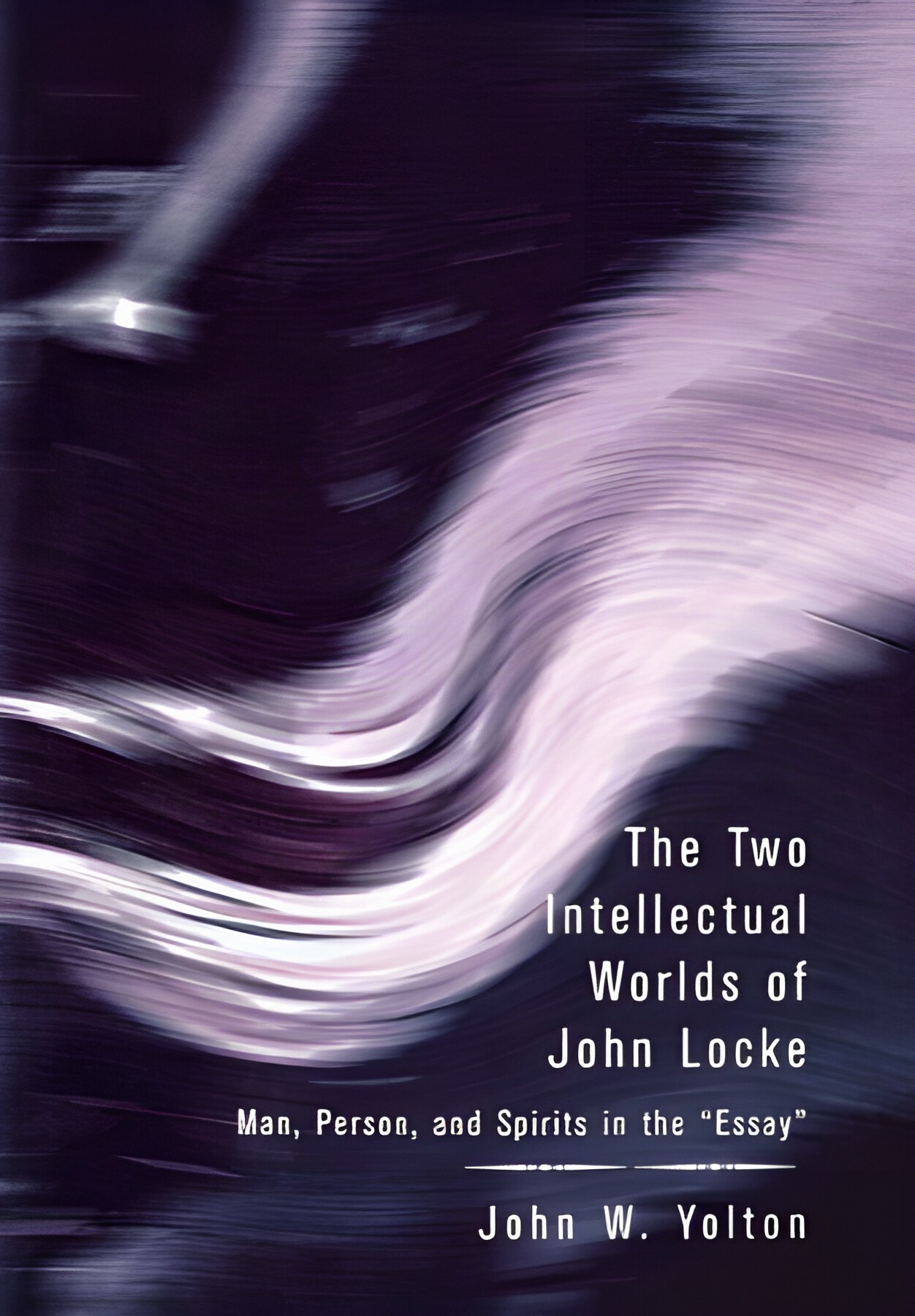
Hardcover. Ithaca NY, Cornell University Press, 1st, 2004, Book: Very Good, Dust Jacket: Very Good, Hardcover in a bright dust jacket, 180 pages. Using his intimate knowledge of John Locke's writings, John W. Yolton shows that Locke comprehends "human understanding" as a subset of a larger understanding of other intelligent Beings-angels, spirits, and an omniscient God. Locke's books on Christianity (The Reasonableness of Christianity and Paraphrases of St. Paul's Epistles) have received extensive analysis and commentary, but little attention has been given to the place of his Essay Concerning Human Understanding in his religious and theological beliefs. Yolton shows that Locke's account of what it is to be human in that work is profoundly religious. Yolton's book opens with an attempt to sort out several important terms basic to Locke's account of identity: man, self, person, and soul. A number of rarely examined components of Locke's thought emerge: the nature of man, the nature of a human being, and the place of man in the universe among the other creatures. Some will be surprised to learn that the domain of God, angels, and spirits is a part of Locke's universe, where it is considered the hoped-for destination of the just. Name, date on front fly leaf, otherwise clean.
Hardcover. NY, Jewish Publication Society, 1st, 1987, Book: Very Good, Dust Jacket: Very Good, Hardcover in a bright dust jacket, 278 pages. A major treatise of Levi ben Gershom of Provence (1288-1344), one of the most creative and daring minds of the medieval world. It is devoted to a demonstration that the Torah, properly understood, is identical to true philosophy. Volume 2 ONLY. Clean copy.
Hardcover. Oxford UK, Oxford University Press, 1st, 2016, Book: Very Good, Dust Jacket: Very Good, Hardcover in a bright dust jacket, 175 pages. Despite recent advances in Locke scholarship, philosophers and political theorists have paid little attention to the relations among his three greatest works: An Essay Concerning Human Understanding, Two Treatises of Government, and Epistola de Tolerantia. As a result our picture of Locke's thought is a curiously fragmented one. Toleration and Understanding in Locke argues that these works are unified by a concern to promote the cause of religious toleration. Making extensive use of Locke's neglected replies to Proast, Nicholas Jolley shows how Locke draws on his epistemological principles to criticize religious persecution - for Locke, since revelation is an object of belief, not knowledge, coercion by the state in religious matters is not morally justified. In this volume Jolley also seeks to show how the Two Treatises of Government and the letters for toleration adopt the same contractualist approach to political theory; Locke argues for toleration from the function of the state where this is determined by the decisions of rational contracting parties. Throughout, attention is paid to demonstrating the range of Locke's arguments for toleration and to defending them, where possible, against recent criticisms. The book includes an account of the development of Locke's views about religious toleration from the beginning to the end of his career; it also includes discussions of his individualism about knowledge and belief, his critique of religious enthusiasm, his commitment to the minimal creed, and his teachings about natural law. Locke emerges as a rather systematic thinker whose arguments are highly relevant to modern debates about religious toleration. Light pencil marking to some pages.
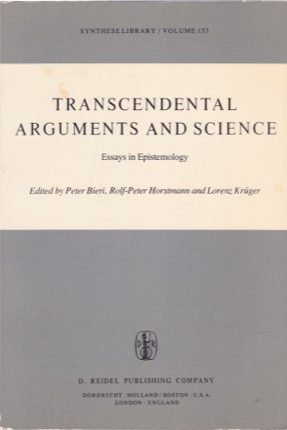
Softcover. Boston, Reidel Publishing, 1st, 1979, Book: Very Good, Dust Jacket: None, Softcover, 314 pages. The goal of the present volume is to discuss the notion of a 'conceptual framework' or 'conceptual scheme', which has been dominating much work in the analysis and justification of knowledge in recent years. More specifi- cally, this volume is designed to clarify the contrast between two competing approaches in the area of problems indicated by this notion: On the one hand, we have the conviction, underlying much present-day work in the philosophy of science, that the best we can hope for in the justifi- cation of empirical knowledge is to reconstruct the conceptual means actually employed by science, and to develop suitable models for analyzing conceptual change involved in the progress of science. This view involves the assumption that we should stop taking foundational questions of epistemology seriously and discard once and for all the quest for uncontrovertible truth. The result- ing program of justifying epistemic claims by subsequently describing patterns of inferentially connected concepts as they are at work in actual science is closely connected with the idea of naturalizing epistemology, with concep- tual relativism, and with a pragmatic interpretation of knowledge. On the other hand, recent epistemology tends to claim that no subsequent reconstruction of actually employed conceptual frameworks is sufficient for providing epistemic justification for our beliefs about the world. This second claim tries to resist the naturalistic and pragmatic approach to epistemology and insists on taking the epistemological sceptic seriously. Name on front fly leaf, otherwise clean.
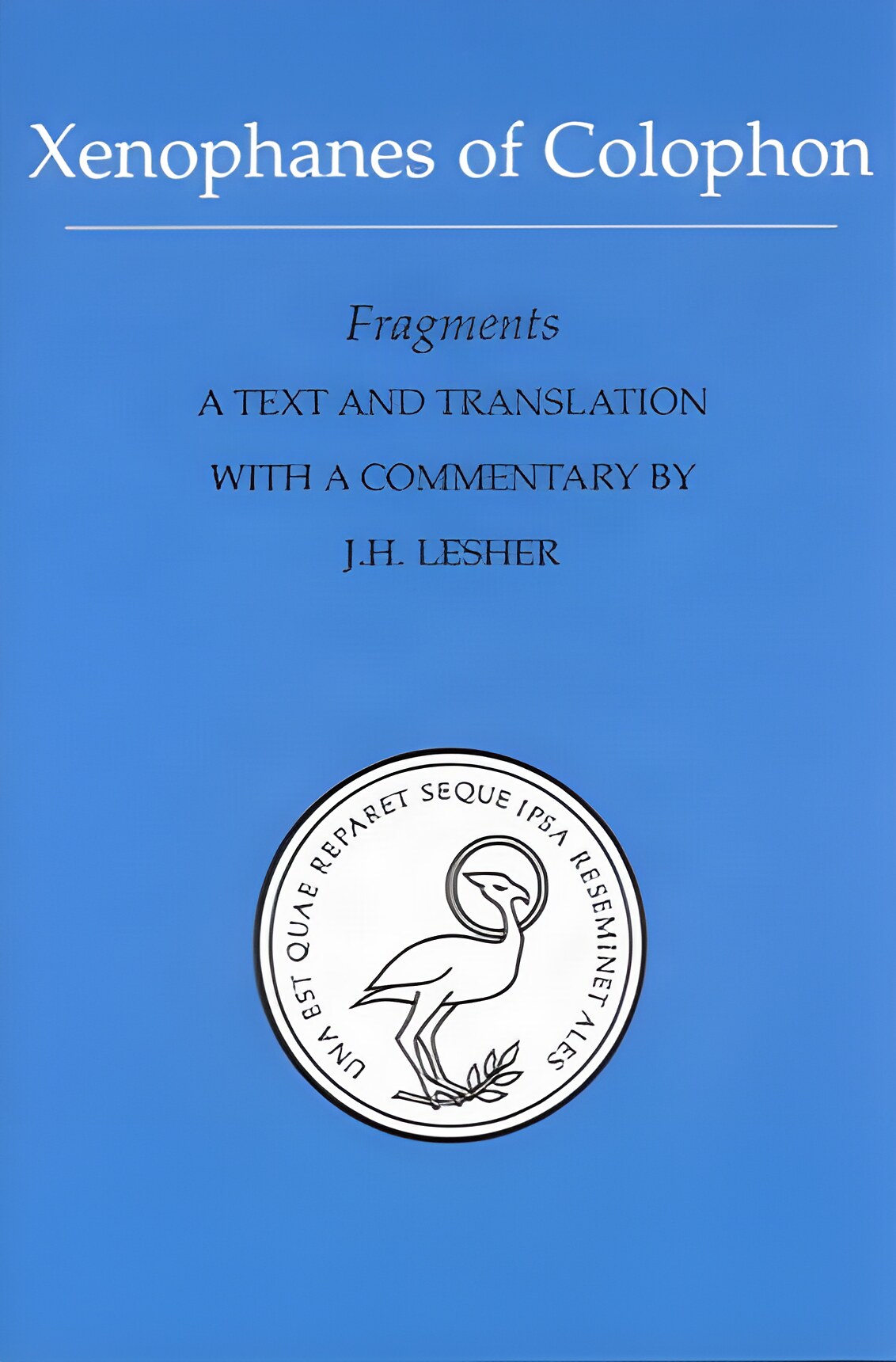
Softcover. Toronto, University of Toronto Press, 1st pbk, 2001, Book: Very Good, Dust Jacket: None, Softcover, 264 pages. Xenophanes of Colophon was a philosophical poet who lived in various cities of the ancient Greek world during the late sixth and early fifth centuries BC. In this book, James Lesher presents the Greek texts of all the surviving fragments of Xenophanes' teachings, with an original English translation on facing pages, along with detailed notes and commentaries and a series of essays on the philosophical questions generated by Xenophanes' remarks. Also included are English translations of all the ancient testimonia relating to Xenophanes' life and teachings, and a discussion of how many of the testimonia pose the impediments to achieving a consistent interpretation of his philosophy. The Xenophanes who emerges in this account fully warrants classification as a philosophical thinker: moral critic and reflective student of nature, critic of popular religious belief and practice, and perhaps the first to challenge claims to knowledge about divine matters and the basic forces at work in nature. As with earlier works in the Pheonix series, this volume aims to make an important portion of Presocratic writing accessible to all those interested in ancient philosophy and the first phase of European natural science. This paperback edition contains an updated bibliography. Clean copy.

 "The Knowledge of God and the Service of God According to the Teaching of the Reformation: Recalling the Scottish Confession of 1560 (Gifford Lectures 1937 & 1938)by:")



 "Toleration and Understanding in Locke by: Jolley, Nicholas")