Hardcover. New York, Thames & Hudson, 1st US, 2007, Book: Very Good, Dust Jacket: Very Good, 208 pages. Hardcover with cloth covers. Color photographs throughout. Light staining on rear copyright page, otherwise Clean, unmarked copy with only minor wear to dust jacket.
Hardcover. Seattle, University of Washington Press, 1st, 1991, Book: Very Good, Dust Jacket: Very Good, 388 pages, hardcover. B&w plates. INSCRIBED BY ECKERT. Light foxing to edge and light wear to bottom edges of cover. According to conventional interpretations, the Japanese annexation of Korea in 1910 destroyed a budding native capitalist economy on the peninsula and blocked the development of a Korean capitalist class until 1945. In this expansive and provocative study, now available in paperback, Carter J. Eckert challenges the standard view and argues that Japanese imperialism, while politically oppressive, was also the catalyst and cradle of modern Korean industrial development. Ancient ties to China were replaced by new ones to Japan - ties that have continued to shape the South Korean political economy down to the present day. Eckert explores a wide range of themes, including the roots of capitalist development in Korea, the origins of the modern business elite, the nature of Japanese colonial policy and the Japanese colonial state, the relationship between the colonial government and the Korean economic elite, and the nature of Korean collaboration. He conveys a clear sense of the human complexity, archival richness, and intellectual challenge of the historical period. His documentation is thorough; his arguments are compelling and often strikingly innovative.
Hardcover. NY, Harper & Row, 1st, 1961, Book: Very Good, Dust Jacket: Good, Hardcover in a worn, chipped dust jacket, 270 pages. David Duncan was an accomplished photojournalist who covered World War II and the Korean War. He later joined Life magazine. He was a close friend of Picasso and was the only person allowed to photograph Picasso's private collection. Issued for the 80th birthday of the artist, the book is a recollection of Picasso's work between 1895-1960. The photographic reportage was shoot by Duncan in Villa La Californie in Cannes on the French Riviera, where Picasso was living with his wife Jacqueline. The book contains many illustrations, tipped in color plates, photographs of Picasso, and black and white illustrations, the text is reach of anecdotes and presents a fine portrait of Picasso's life through his work and time. Clean, no markings. DUE TO WEIGHT, DOMESTIC SHIPPING ONLY.
Saint Paul MN, West Publishing Group, 1st, 1979, Book: Very Good, Dust Jacket: None, Hardcover, red cloth pictorial covers, faded spine. The life histories of 6 Korean shaman women who share in common the social ascription of outcast status. Previous owner's name on inside front cover, otherwise clean.
Hardcover. London, Picador, 1st, 2001, Book: Very Good, Dust Jacket: Very Good, Hardcover in a bright dust jacket. This signed first edition of author and journalist Sid Smith's novel 'Something Like A House' was awarded the James Tait Black Memorial Prize and the Whitbread First Novel Award, following a British soldier who deserts to China during the Korean War and stays there some 35 years, bringing up a little girl who later becomes a victim of experimental biological warfare. Despite being set in China, Smith had never traveled there before writing the novel, the background gleaned from extensive research at the British Library amongst other places. An exciting novel set in a China almost unknown to the outside world, a chilling account of an army deserter living through a Cultural Revolution. Clean, bright copy.
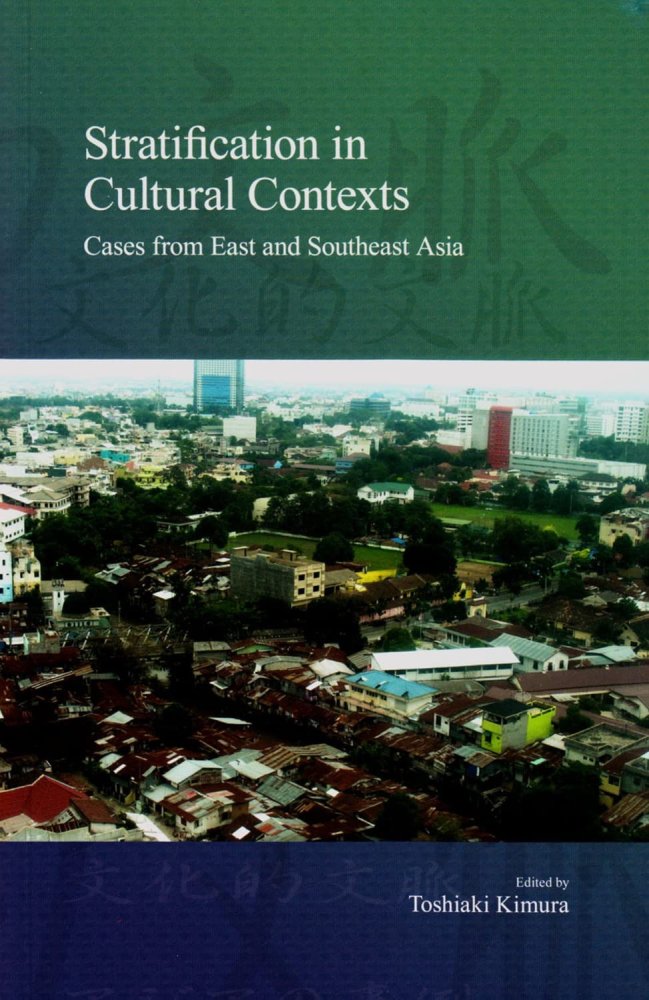
Hardcover. Trans Pacific Press, 1st, 2013, Book: Very Good, Dust Jacket: None, Hardcover in glossy boards, 170 pages. Stratification in Cultural Contexts is a collection drawn from research results of the East Asian Division of the Center for the Study of Social Stratification and Inequality at Tohoku University. In this book, scholars who specialize in areas of East and Southeast Asia examine how the problem of stratification manifests itself in different cultural and historical contexts, discussing when and in what circumstances the problem of stratification has become more serious, and suggesting how the tension could be eased. The topics dealt with are diversified, from religion to economic concerns. The local wisdom of traditional societies is used to analyze inequality and stratification in cases such as the phenomenon of 'religious revival' following democratization in Mongolian society, the lives of 'slaves' under the Choson dynasty in Korea, and the role of warrior-class women in early-modern Japan. Clean, bright copy.
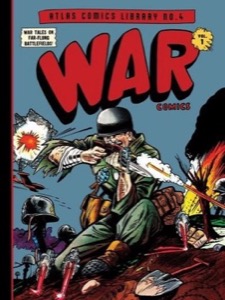
Hardcover. Seattle, Fantagraphics, 1st, 2024, Book: Very Good, Dust Jacket: None, Hardcover, pictorial boards, Forged in the crucible of the Korean War, and produced by veterans of the Second World War, this volume's eight issues present the brutality and grimness of armed combat by some of Atlas' most notable war artists and future comics stars including Gene Colan, Russ Heath, Joe Maneely, Dave Berg, Jay Scott Pike, Mike Sekowsky, Vern Henkel, Allen Bellman, Pete Morisi and Norman Steinberg. Propaganda abounds from the very first story, published in War Comics #1 in September 1950: "Peril in Korea," a primer explaining why the USA joined the conflict. Other highlights include Colan's "The Chips are Down" and "Victory," Heath's "Alone" and "No Survivors," Maneely's "Stormy Weather," Henkel's "Total Destruction," and Berg's "The Infantry's War." Originally a trial spun off from the publisher's "Men's Adventure" publications, in the nine years to follow, Atlas went on to produce 533 comic book issues with war content, across 34 different titles. War Comics is where it all began - unseen in decades, scanned from the original books, restored and packaged as one large, beautiful hardcover volume. Clean, bright copy.
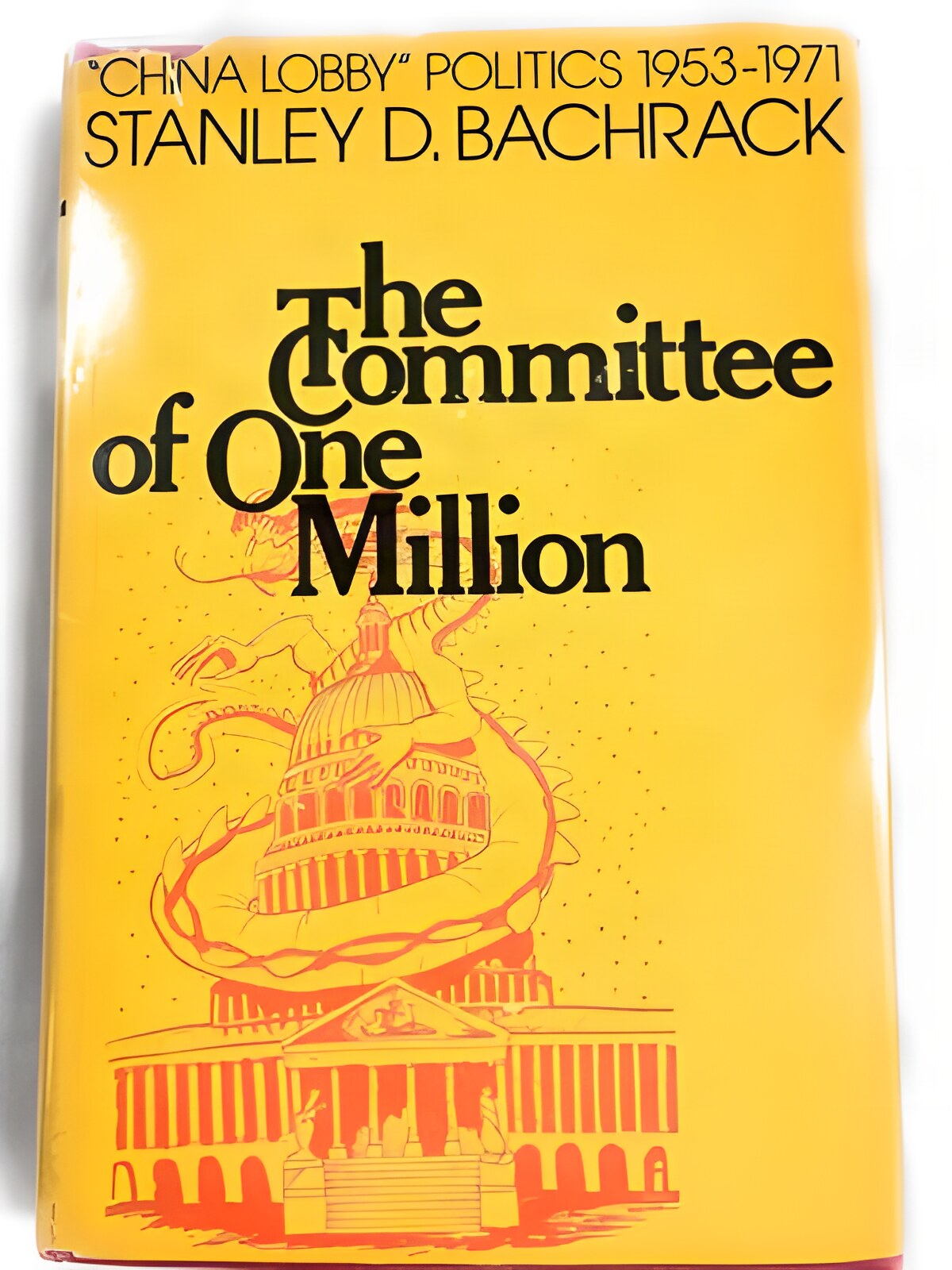
Hardcover. NY, Columbia University Press, 1st, 1976, Book: Very Good, Dust Jacket: Very Good, Hardcover in a bright, price-clipped dust jacket, 371 pages. Looks into the origins and activities of a foreign-policy interest group which emerged after the Korean War and exerted pressure on the federal government not to recognize the People's Republic of China. Name on front fly leaf, otherwise clean.
Hardcover. NY, Harry N. Abrams, 1st, 1984, Book: Very Good, Dust Jacket: Good, Hardcover in a lightly sunned dust jacket. Covers 11 seasons and 251 episodes of Korean War TV comedy. Profusely illustrated in color and b&w, 240 pages. Introduction by Larry Gelbart. Light paper clip mark to front endpapers, otherwise clean. DOMESTIC SHIPPING ONLY.
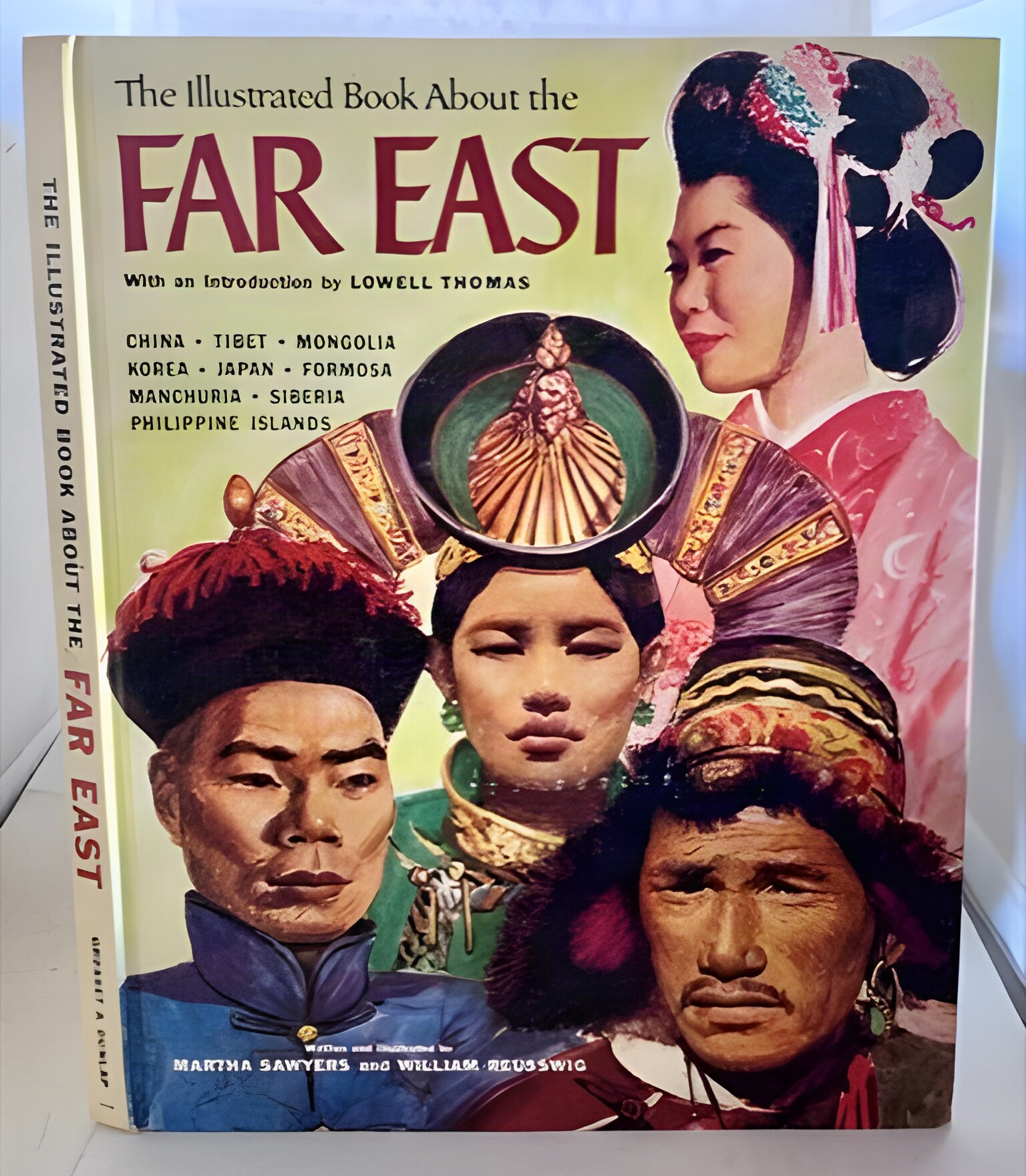
Hardcover. NY, Grosset & Dunlap, 1st, 1961, Book: Very Good, Dust Jacket: None, Hardcover in pictorial cloth, 101 pages. Oversized, no dust jacket issued. B&W and color Illustrations by Sawyers and Reusswig.
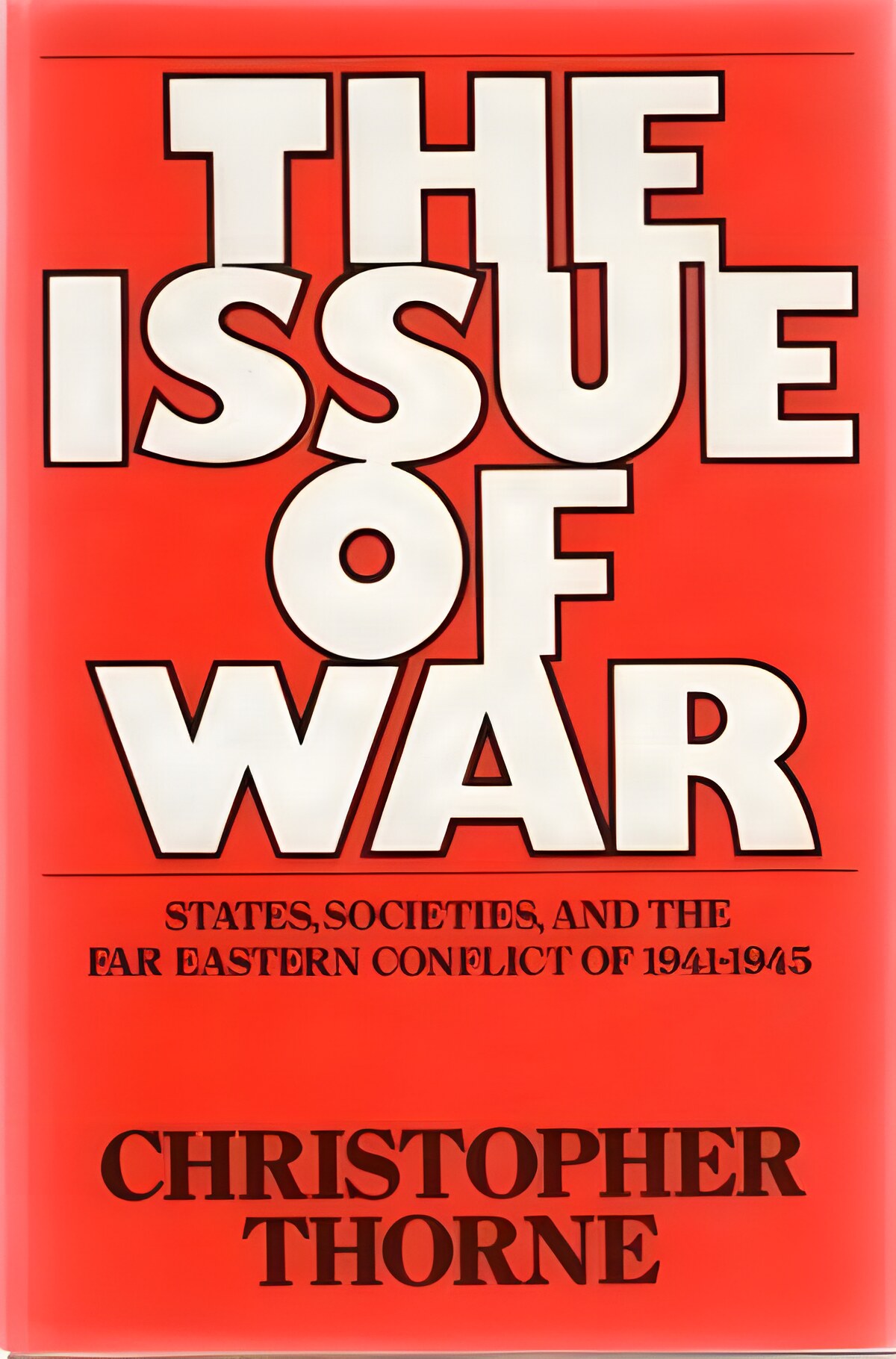
Hardcover. NY, Oxford University Press, 1st, 1985, Book: Very Good, Dust Jacket: Very Good, Hardcover in a bright, unclipped dust jacket, 364 pages. The Second World War's Pacific conflict was one of the most complex in history. It embrioled peoples from opposite sides of the globe; it was fought in China, across the expanses of the Pacific, and in the jungles of Southeast Asia; and it was devastating in its consequences for civilians and servicemen alike. It saw the first use of atomic weapons, hastened the end of the Western empires in Asia, and marked America's rise to the position of the most powerful nation in the world. Christopher Thorne, whose previous studies of the war in the Pacific have become landmarks in the field, here weaves together both the entire network of international relations surrounding the war and the impact the war had on all the societies involved--Indian as well as American; Australian and New Zealand as well as Japanese; Korean, Chinese, and Southeast Asian as well as British, French, and Dutch. The Issue of War draws on material gathered over many years in the Far East, Western Europe, and the U.S.--material including wartime films, broadcasts, and newspapers,as well as countless private and offical papers. Representing a synthesis of military, diplomatic, economic, intellectual, and social history, it not only places the war in the context of developments before 1941, but illuminates various patterns that cut across the familiar distinctions between Asia and the West or between Japan and the Allies. Name on front fly leaf, otherwise clean.
Hardcover. NY, The Free Press, 1st, 1968, Book: Very Good, Dust Jacket: None, Hardcover, gray cloth binding with orange and gilt lettering on spine. 394 pages. Prof. Paige's reconstruction and analysis of the U.S. decision to resist Chinese aggression in Korea in 1950. Name on front fly leaf othewise clean. No dust jacket.
Hardcover. Boston, Little Brown & Company, reprint, 1990, Book: Very Good, Dust Jacket: Very Good, Hardcover in a bright dust jacket. Intense eyewitness writing, and photographs on the opening weeks of the Korean War, by the renowned LIFE photographer. First Printing of this edition, originally published in 1951. Clean copy.
Hardcover. Westport CT, Greenwood Press, 1st, 2003, Book: Very Good, Dust Jacket: None, Hardcover, maroon cloth covers stamped in silver, 242 pages. Previous owner's inscription on front fly leaf, otherwise clean. Over the course of the American Occupation of Japan, the U.S. attitude toward the Japanese Communist Party (JCP) gradually shifted from one of friendly cooperation to one of mutual opposition. This new study examines the initial approach toward communism in Japan; internal and external factors that affected American attitudes; the various phases of the relationship; and how Japan ultimately became a democratic nation. Oinas-Kukkonen investigates American information gathering techniques used at the time to determine possible links with the Soviet Union. He also discusses the possibility that Nosaka Sanzo, one of the main leaders of the JCP, was an American spy. Using previously secret records of General MacArthur's intelligence staff and plentiful archival materials on the Occupation, this study explores how the United States originally sought to utilize the JCP to assist in the democratization process. It identifies the perceived threat of a revolution in March 1947 as a key turning point in U.S. attitudes. Involved in a delicate balancing act with multiple Japanese interests, some American officials feared that elements of the extreme left might even evolve into extreme right-wing terrorists. In this comprehensive account, Oinas-Kukkonen includes information on the indirect role of the Europeans in this affair, as well as the roles of outsider groups such as the outcaste burakumin and the Koreans residing in Japan.
NY, US Camera Publishing, 1st, 1953, Book: Very Good, Dust Jacket: Very Good, Hardcover with a bright dust jacket, 424 pages. Catagories of photos include post-war European photography, the year's best pictures American-International, Elisofon's Africa-in color, combat in Korea, The News in Pictures. Clean copy.
Hardcover. New York , Thames & Hudson, 1st, 1990, Book: Very Good, Dust Jacket: Very Good, 255 pages, clean hardcover in a bright, unclipped dust jacket. B&w photographs throughout by Bischof. His images were influenced by the major photo-movements of his time: the formal concepts of Das Neues Sehen (New Vision), the surrealism of Man Ray, and the documentary tradition of photojournalism. From the 1940s through the early 1950s, he covered World War II, the bombing of Hiroshima, and the Korean War for Life , Paris-Match , and other publications; his most famous series, "Famine in India," appeared in Life in 1951. This first major compilation of Bischof's work is nicely complemented by the text, a joint effort by son Marco and Swiss art historian Magnaguagno that vividly integrates biography and history. Dust jacket with minor edgewear, short closed tear to rear panel.
Hardcover. New York , Thames & Hudson, 1st, 1990, Book: Very Good, Dust Jacket: Very Good, 255 pages, clean hardcover in a bright, unclipped dust jacket. B&w photographs throughout by Bischof. His images were influenced by the major photo-movements of his time: the formal concepts of Das Neues Sehen (New Vision), the surrealism of Man Ray, and the documentary tradition of photojournalism. From the 1940s through the early 1950s, he covered World War II, the bombing of Hiroshima, and the Korean War for Life , Paris-Match , and other publications; his most famous series, "Famine in India," appeared in Life in 1951. This first major compilation of Bischof's work is nicely complemented by the text, a joint effort by son Marco and Swiss art historian Magnaguagno that vividly integrates biography and history.
Hardcover. New York, Clarion Books, 1st, 2002, Book: Very Good, Dust Jacket: Very Good, Hardcover in a bright, unclipped dust jacket, 199 pages. A brother & sister face the increasingly oppressive occupation of Korea by Japan during WW II, which threatens to suppress their culture. WON JANE ADDAMS HONOR AWARD. Clean copy.
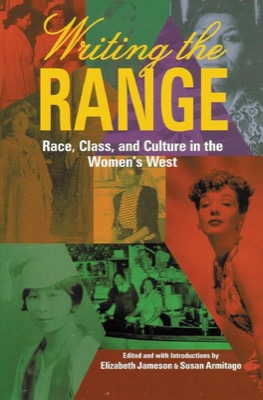
Softcover. Norman OK, University of Oklahoma Press, 1st, 1997, Book: Very Good, Dust Jacket: None, Softcover, 656 pages. In mythic sagas of the American West, the wide western range offered boundless opportunity to a limited cast of white men. Buffalo roamed, deer and antelope played, and women's voices were never heard. Writing the Range allows us to hear many long-silenced women: Spanish-Mexican settlers and American Indians on New Spain's northern frontiers; Chinese, Basque, Japanese, Korean, Vietnamese, Slavic, and Irish immigrants; film stars Dolores del Rio and Lupe Velez; Navajos and African Americans who moved to western cities during World War II; and the activist Mothers of East Los Angeles, who organized to resist environmental dangers to their community. A valuable introduction to the rapidly changing field of western history, Writing the Range explains clearly how race, class, and culture are constructed and connected. The first section examines issues raised by more than a decade of multicultural western women's histories; following are six chronological sections spanning four centuries. Each section offers a short introduction connecting is essays and placing them in analytic and historical perspective. Clean copy.


 "North Koreaby: Poivert, Philippe Chancel, Michel; Fenby, Jonathan")
 "Offspring of Empire: The Koch'ang Kims and the Colonial Origins of Korean Capitalism 1876-1945 (SIGNED COPY)by: Eckert, Carter J.")


 "Six Korean Women: The Socialization of Shamansby: Harvey, Youngsook Kim")


 "The Complete Book of MASHby: Kalter, Suzy")

![This Is War!: A Photo-Narrative of the Korean War by: David Douglas Duncan; Harrison E. Salisbury [Foreword]](javascript:largeIMTop('https://www.browsingisarousing.com/shop/images/This-Is-War-A-Photo-Narrative-of-the-Korean-War_by_David-Douglas-Duncan-Harrison-E.-Salisbury-Forewo398314-451716.jpg','https://www.browsingisarousing.com/shop/images/This-Is-War-A-Photo-Narrative-of-the-Korean-War_by_David-Douglas-Duncan-Harrison-E.-Salisbury-Forewo398314-451716.jpg',0,'398314',0,'') "This Is War!: A Photo-Narrative of the Korean War by: David Douglas Duncan; Harrison E. Salisbury [Foreword]")
 "Tolerance, Suspicion, and Hostility: Changing U.S. Attitudes toward the Japanese Communist Movement, 1944-1947by: Oinas-Kukkonen, Henry")
 "U.S. Camera 1954by: Maloney (Ed.), Tom")
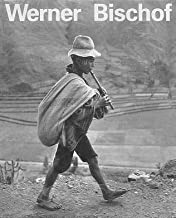
 "Werner Bischof. 1916 - 1954. His Life and Work. Introduction by Hugo Loetscher. Text by Marco Bischof and Guido Magnaguagno. by: Bischof, Marco and Ren")
 "When My Name Was Keoko (Jane Addams Honor Bookby: Park, Linda Sue")