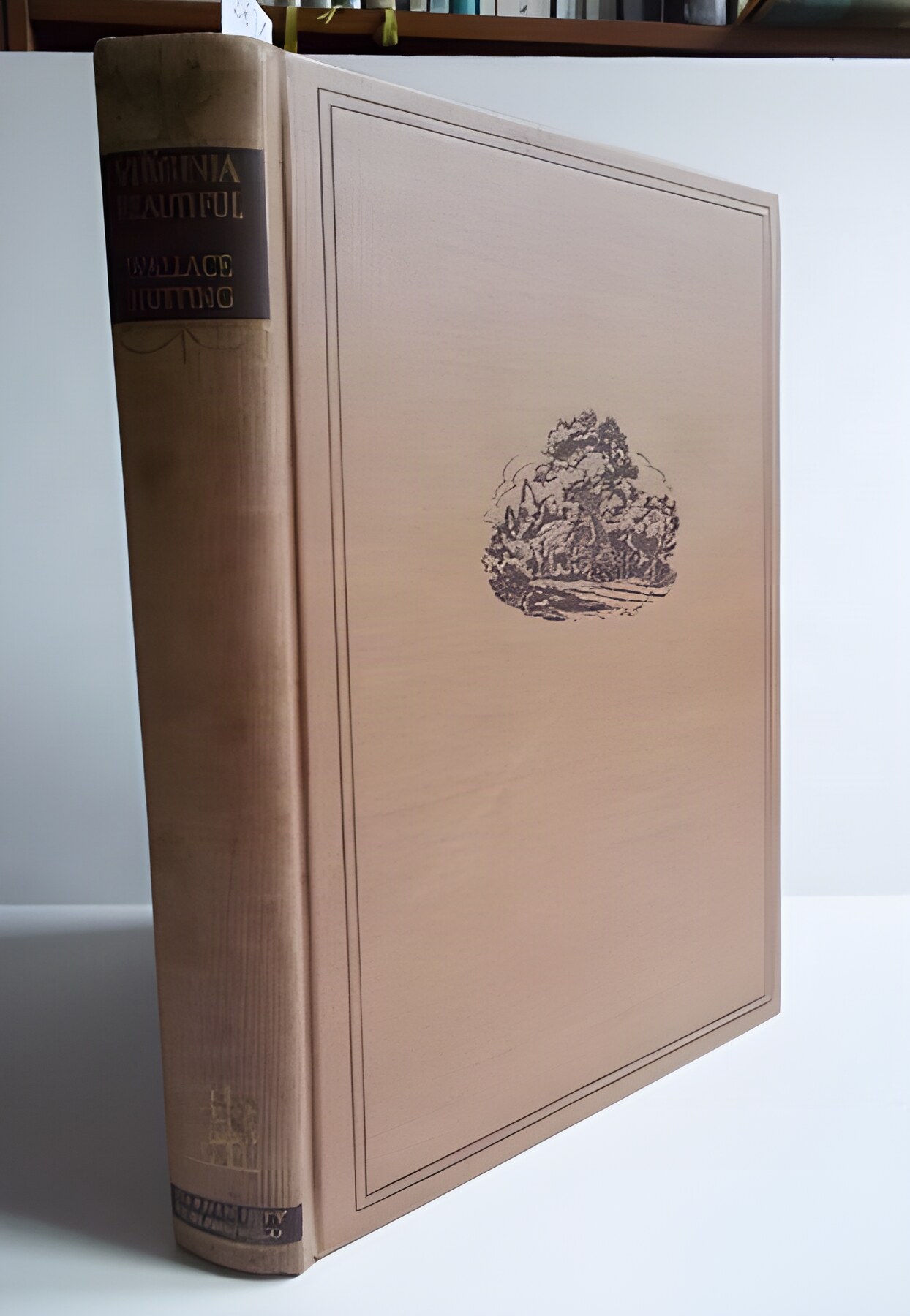
Hardcover. NY, Garden City Publishing, reprint, 1935, Book: Very Good, Dust Jacket: None, Hardcover. 262 pages, frontispiece, illustrated throughout in b&w. Tan cloth, gilt lettering to spine, no dust jacket. light foxing to title page and frontis, slight rubbing to spine, else a very neat, tight copy.
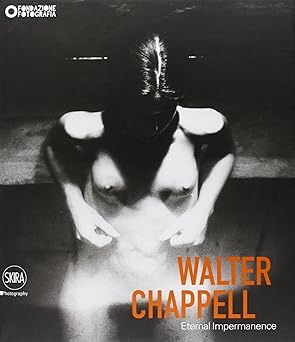
Hardcover. NY, Skira, 1st, 2013, Book: Very Good, Dust Jacket: Very Good, Hardcover in a bright dust jacket, 224 pages. A splendid monograph on an unconventional photographer who developed a unique and deeply personal vision of the world surrounding him. Walter Chappell (1925-2000) is considered one of the foremost figures in twentieth-century American photography. His thinking and vision of the world were closely connected with the intimistic, spiritual explorations undertaken between the 1950s and the 1970s by artists like Minor White and Paul Caponigro. While Chappell photographed various subjects, his inner eye was stimulated in particular by the form of the human body and landscapes as well as the combination of both, through which he endeavored to perceive the creative flow, the energy that runs through and connects all things. Produced to accompany the first major European retrospective of Walter Chappell's work, this catalog presents over 130 photographs, all originals, as well as the unfinished and previously unpublished album World of Flesh, which the photographer intended as the primary publication on his work. Clean copy.
Hardcover. Lars Muller Publishers, 1st, 2008, Book: Very Good, Dust Jacket: None, Hardcover in publisher's shrink-wrap. 320 pages. The photographer Lukas Felzmann was fascinated by the very thing that some driving past would find boring, flat, and disconsolate: the vast Sacramento Valley, located just a hundred miles from San Francisco. Felzmann discovers with his camera the hidden charms of that seeming nonplace. For him, exploring a place means both walking around and lingering quietly, until the valley opens up like a book, with stories that cry out to be read and discovered. With his camera he traces how time, determined here by the growth of the plants, slows on the plane, and how the horizontality of the surface becomes a reassuring balance to the hectic city of millions nearby. The photographs show the diversity of the plane: the original landscape in its natural state, the large swaths put to agricultural use, the modern provincial towns, and the transitional areas in between. Photographs of water in all its facets run through the book, just as water runs through and forms a valley.
Hardcover. Lars Muller Publishers, 1st, 2008, Book: Very Good, Dust Jacket: None, Like new in publisher's shrink-wrap. 320 pages. The photographer Lukas Felzmann was fascinated by the very thing that some driving past would find boring, flat, and disconsolate: the vast Sacramento Valley, located just a hundred miles from San Francisco. Felzmann discovers with his camera the hidden charms of that seeming nonplace. For him, exploring a place means both walking around and lingering quietly, until the valley opens up like a book, with stories that cry out to be read and discovered. With his camera he traces how time, determined here by the growth of the plants, slows on the plane, and how the horizontality of the surface becomes a reassuring balance to the hectic city of millions nearby. The photographs show the diversity of the plane: the original landscape in its natural state, the large swaths put to agricultural use, the modern provincial towns, and the transitional areas in between. Photographs of water in all its facets run through the book, just as water runs through and forms a valley.
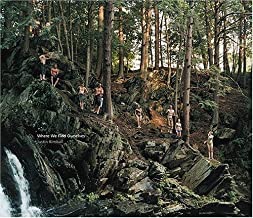
Hardcover. Center for American Places, 1st, 2006, Book: Very Good, Dust Jacket: Very Good, Hardcover, 88 pages. Clambering down slippery rocks to a swimming hole. Ducking the plume of smoke from a barbecue grill. Wishing for a breeze in a too-small dome tent. Scanning the sky for rain from a postage-stamp backyard. It is in these small moments of action--and inaction--that Justin Kimball captures our everyday attempts to relax. Indeed, one might argue that the events depicted are everyday life. Kimball's compelling photographs depict ordinary people--parents and teens, grandparents and kids--in landscapes of leisure. These are not the exclusive resorts and white sand beaches of the affluent; rather, they are the parks, campgrounds, and fishing piers where most Americans vacation. They are natural landscapes--inviting, green, and sometimes beautiful--but at the same time they are imperfect--muddy, crowded, and partially paved. There is nothing idyllic about these vacation spots; indeed, Kimball's photographs make clear that daily life can never be fully left behind. The people in his pictures, though momentarily transformed by cascading water or the shade of towering trees, remain enmeshed in ties of family and obligation, shadowed by thoughts of home.
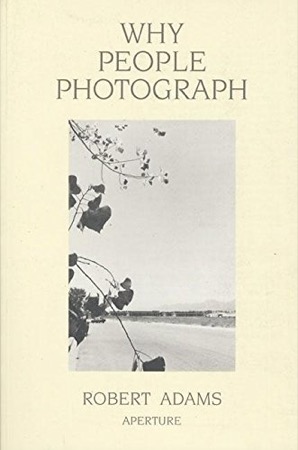
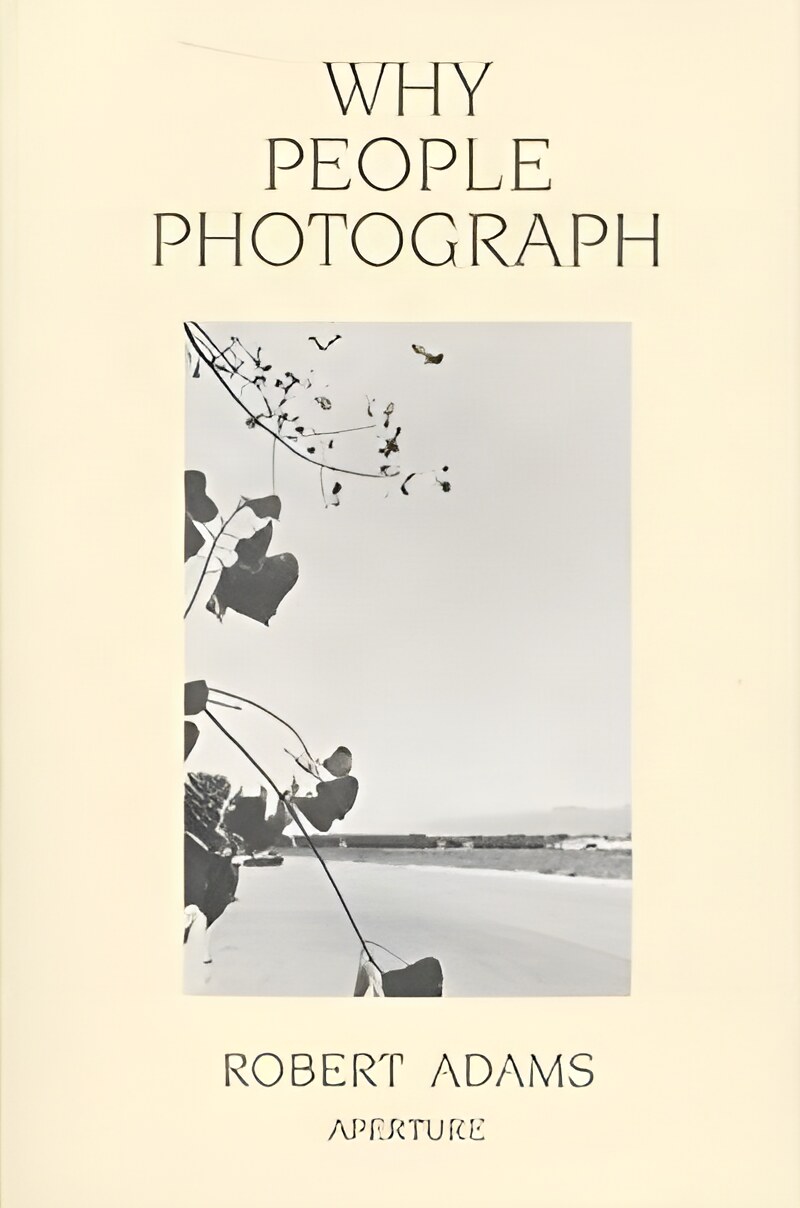
Softcover. NY, Aperture, 3rd pr., 1994, Book: Very Good, Dust Jacket: None, Softcover, 186 pages. A now classic text on the art, Why People Photograph gathers a selection of essays by the great master photographer Robert Adams, tackling such diverse subjects as collectors, humor, teaching, money and dogs. Adams also writes brilliantly on Edward Weston, Paul Strand, Laura Gilpin, Judith Joy Ross, Susan Meiselas, Michael Schmidt, Ansel Adams, Dorothea Lange, and Eugene Atget. The book closes with two essays on "working conditions" in the nineteenth- and twentieth-century American West, and the essay "Two Landscapes." Clean copy.
Softcover. NY, Aperture, 1st, 1994, Book: Very Good, Dust Jacket: None, Softcover, 186 pages, b&w illustrations. A now classic text on the art, Why People Photograph gathers a selection of essays by the great master photographer Robert Adams, tackling such diverse subjects as collectors, humor, teaching, money and dogs. Adams also writes brilliantly on Edward Weston, Paul Strand, Laura Gilpin, Judith Joy Ross, Susan Meiselas, Michael Schmidt, Ansel Adams, Dorothea Lange, and Eugene Atget. The book closes with two essays on "working conditions" in the nineteenth- and twentieth-century American West, and the essay "Two Landscapes." Name on front fly leaf otherwise clean.
Hardcover. Birmingham AL, University of Alabama Press, 1st, 2007, Book: Very Good, Dust Jacket: Very Good, Hardcover, 64 pages. William Christenberry is enjoying wide exposure of his artistic body of work. Since the early 1960s, he has plumbed the regional identity of the American South, primarily centering on his early home in the Black Belt counties of Alabama, His poetic elucidation of Southern vernacular landscape and architecture using the media of photography, drawing, painting, collage, sculpture, and miniaturization reveals how history, the very story of place, is at the heart of his lifelong project.
Hardcover. Dobbs Ferry NY, Morgan and Morgan / Amon Carter Museum, 1st, 1974, Book: Very Good, Dust Jacket: Very Good, Hardcover in a bright, pric-clipped dust jacket, 158 pages. Complete with a List of Photographs, Preface, Introduction, a long presentation of the photographs of William H. Jackson, Chronology and full Bibliography. Over 100 of Jackson's finest photographs in black-and-white and duotone. With a critical essay by William L. Broecker. Ink inscription on front fly leaf otherwise clean.
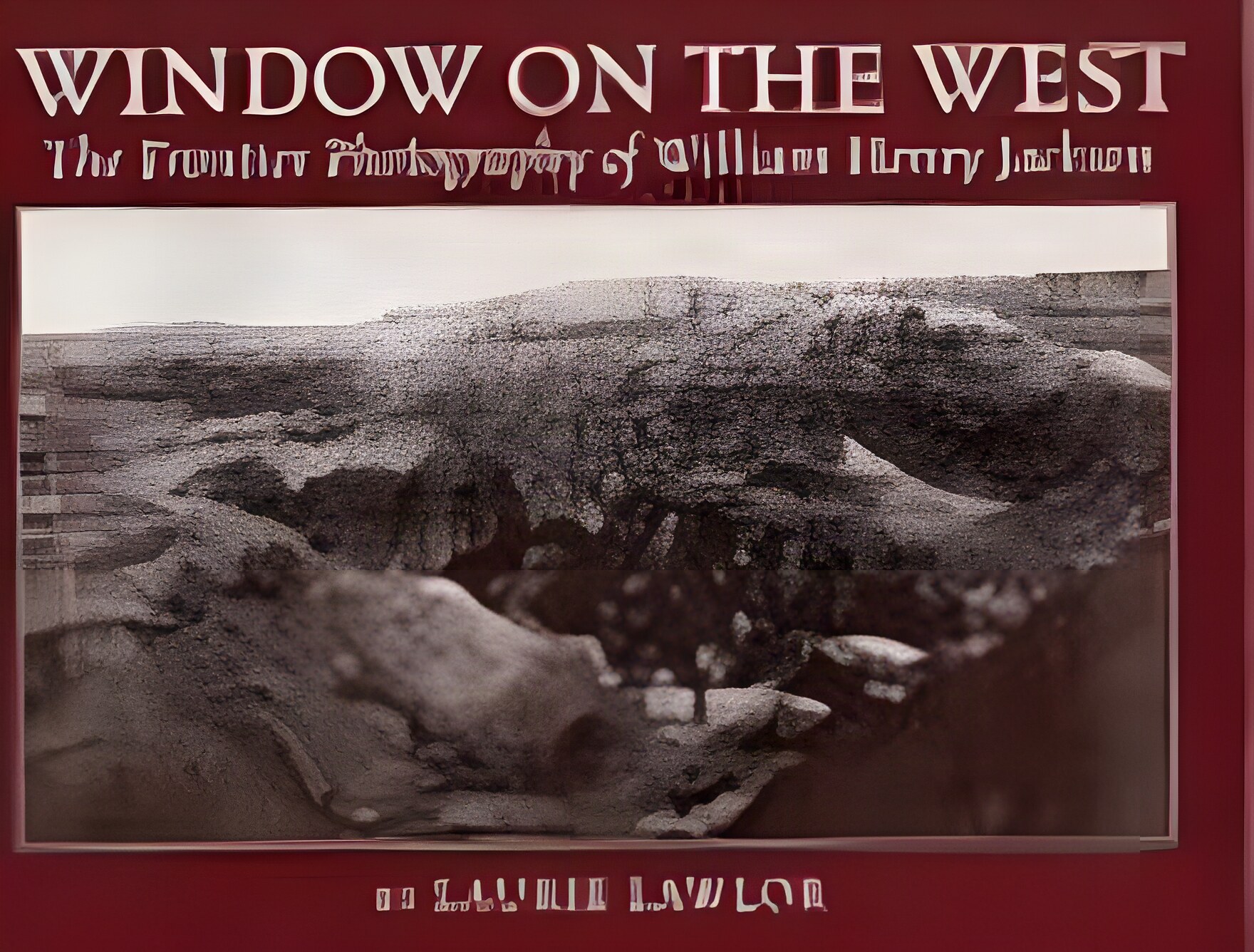
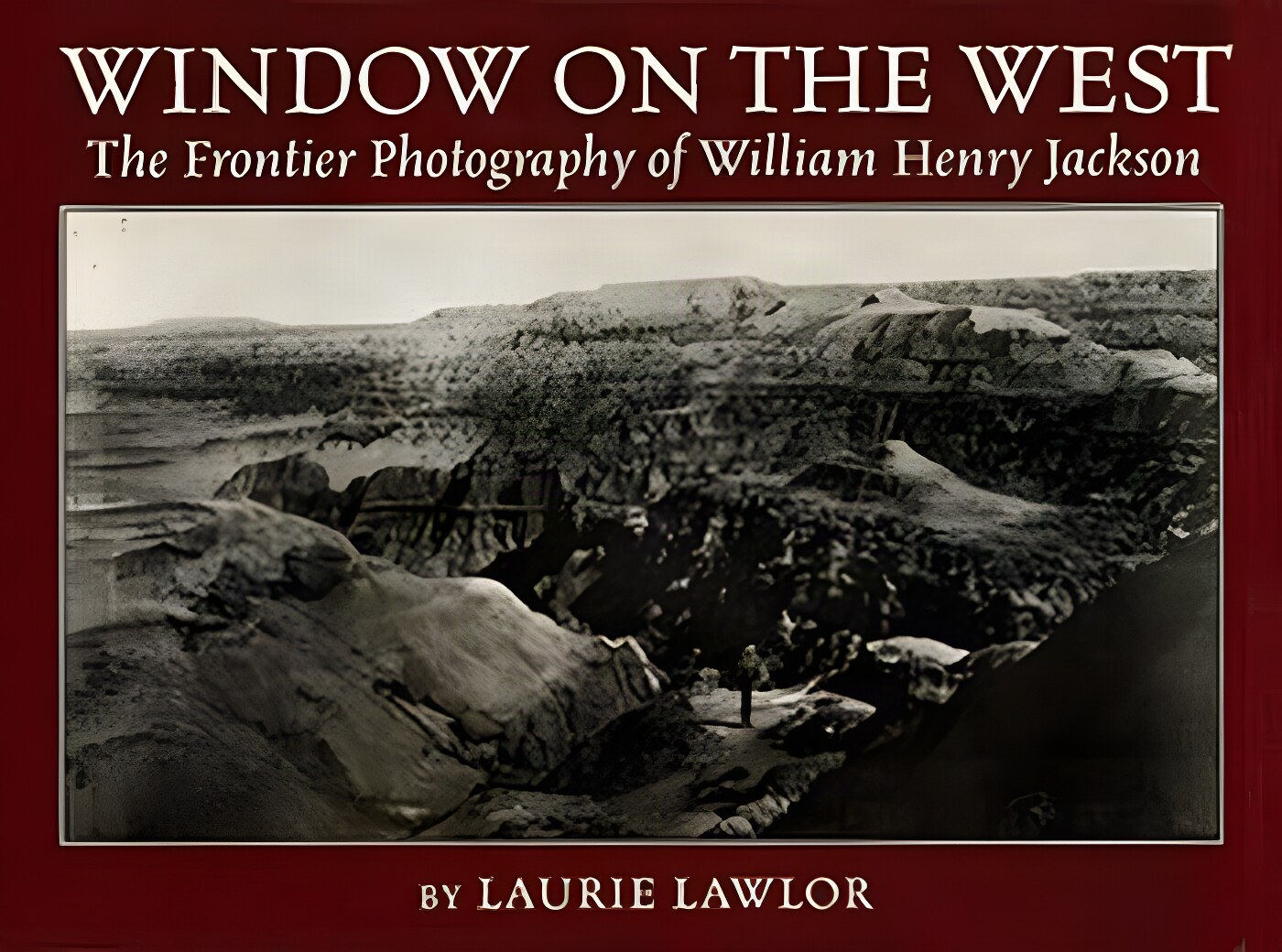
Hardcover. NY, Holiday House, 1st, 1999, Book: Very Good, Dust Jacket: Very Good, Hardcover in a bright, unclipped dust jacket. An exploration of the career of Western photographer William Henry Jackson features forty photographs of such subjects as Yellowstone and the Grand Canyon and discusses how his work and life parallel the opening of the West in the 1800s. 132 pages, clean copy.
Hardcover. NY, Holiday House, 1st, 1999, Book: Very Good, Dust Jacket: Very Good, Hardcover in a bright dust jacket, 132 pages. Illustrated throughout with Jackson's black and white photographs. In this fascinating book, Laurie Lawlor tells parallel stories of the settling of the western United States and the wanderings of a man who captured much of that history in singular and beautiful photographs. Lawlor includes forty of Jackson's photographs as illustrations for her narrative. Bibliography, timeline, glossary, and index. Clean copy.
Hardcover. New York, Harper & Row, 1st, 1978, Book: Very Good, Dust Jacket: Very Good, Hardcover in a bright dust jacket. Text assenbled by Arno Karten. SIGNED BY ORKIN on half-title page. Previous owner's inscription front fly leaf. Color photographs of Central Park and environs from Orkin's 15th floor window, with short quotations from the famous authors assembled by Arno Karlen. 119 pages.
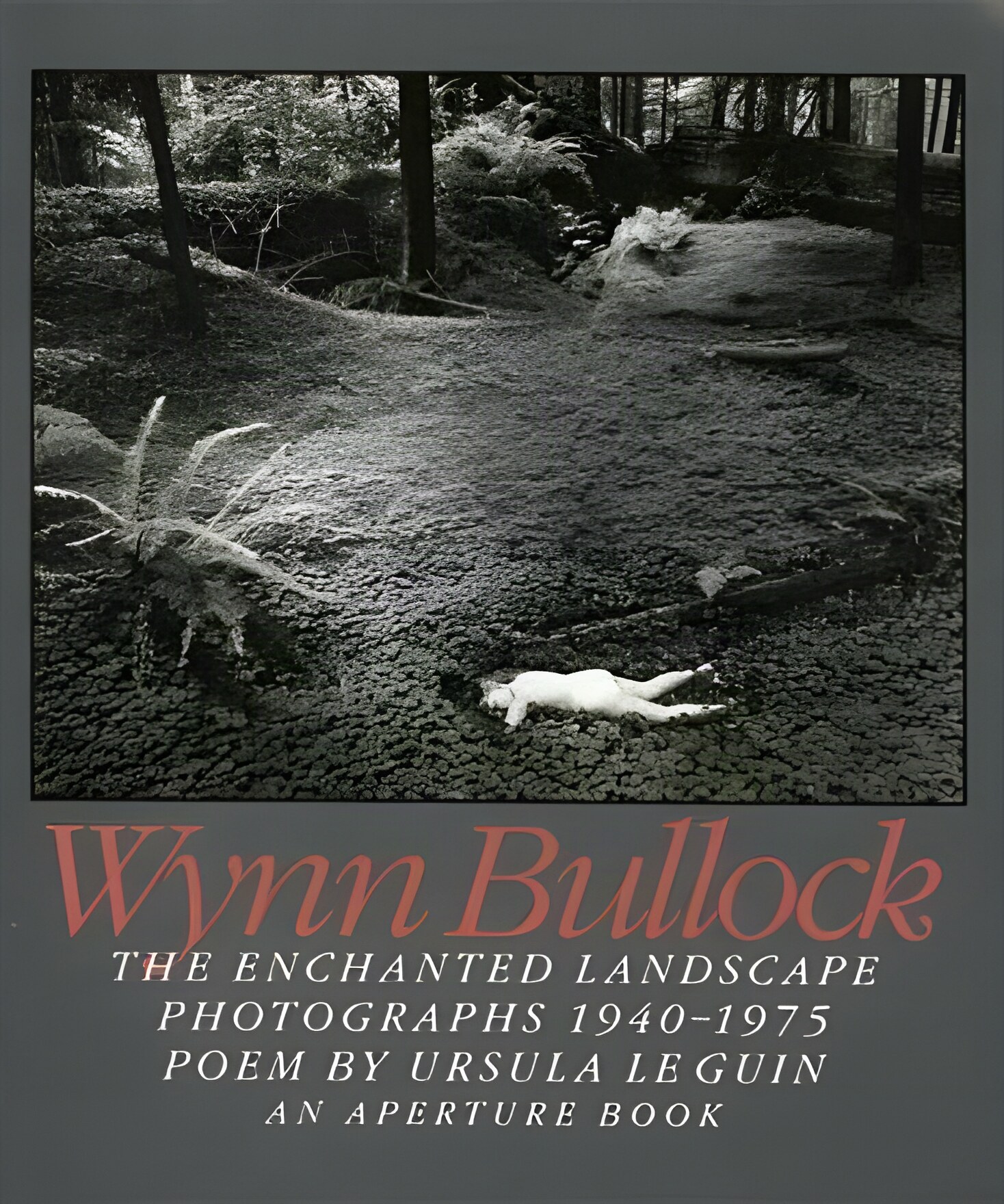
Softcover. Chicago, Stephen Daiter Gallery, 1st, 2002, Book: Very Good, Dust Jacket: None, Softcover, 32 pages. The catalog for an exhibition of Wynn Bullock's nudes and landscapes. Photographs by Bullock; essay by James Rhem. 32 pages; duo-toned b&w plates + text illustrations; 8.5 x 10.5 inches. Clean copy.
Softcover. NY, Aperture, 1st, 1997, Book: Very Good, Dust Jacket: None, Softcover, 120 pages with 90 iconic black & white photographs on high gloss paper. A rare poem by Ursula K. Le Guin at the front and a biographical essay by Raphael Shevelev at the back. A generous collection of superb photographs forms the bulk of the contents, with some commentary by the photographer. Mild wear to bottom corner of wrappers, otherwise a clean, bright copy.
Hardcover. Seattle, University of Washington Press, 1st, 2012, Book: Very Good, Dust Jacket: Very Good, 196 pages. Hardcover with dust jacket. Color photographs. Clean, unmarked copy with only minor wear to dust jacket. In Yamuna Walk, photographer and multimedia artist Atul Bhalla documents a five-day trek along the sacred Yamuna River as it passes through his home city of New Delhi, India. Through his vivid and haunting photographs, Bhalla explores the myriad ways that modern life along the Yamuna is shaped by water, from the rural outskirts of the city to the polluted landscape of urban Delhi. Climbing over fences, crossing concrete overpasses, and navigating between blooming fields and piles of waste on his journeys, Bhalla also shows the diverse marks of human development that can be read in the image of the river.

 "Waters In Between: An Archive of a Marsh with Marginalia by Angelus Silesius and John Bergerby: Felzmann, Lukas")
 "Waters In Between: An Archive of a Marsh with Marginalia by Angelus Silesius and John Bergerby: Felzmann, Lukas")
 "William Christenberry's Black Beltby: William Christenberry , Guin A. Nance, et al.")

 "World Through My Window, A (SIGNED COPY)by: Orkin, Ruth")
 "Yamuna Walkby: Bhalla, Atul (Photographer)")