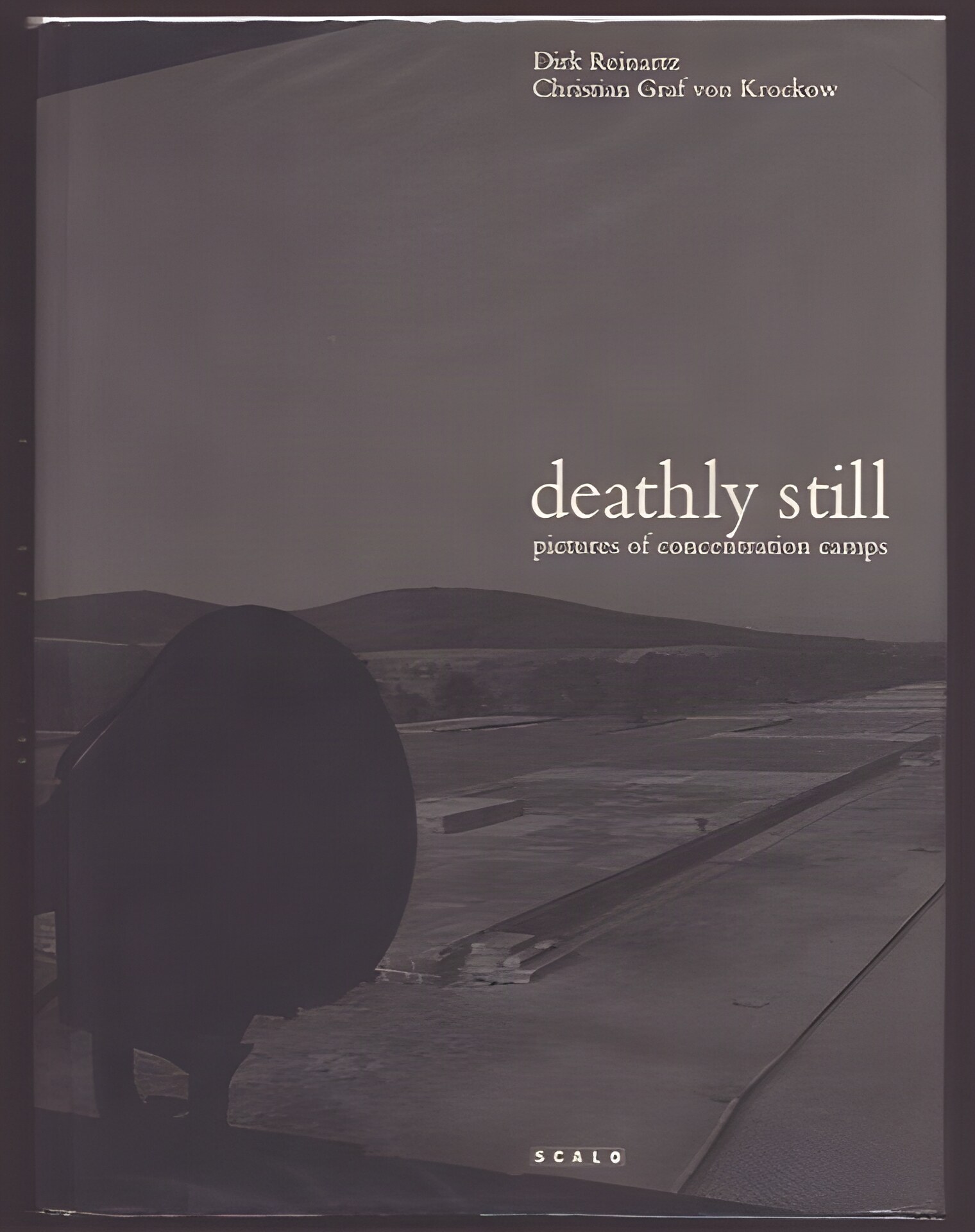
Hardcover. Scalo, 1st, 1995, Book: Very Good, Dust Jacket: Very Good, Hardcover in a bright dust jacket, 308 pages. In 1987 Dirk Reinartz set out on his sad itinerary: Dachau, Auschwitz, Ravensbruck, Treblinka. The list goes on. Seven years later he compiled this series of 200 black-and-white photographs of the 24 ruins of the death camps. In 279 chilly, gray photographs taken at 25 different Nazi concentration camps, Reinartz successfully portrays the very purpose--death--of these horrific places. In the photographs, no figure intrudes on the stark emptiness and brutal orderliness of the camps' architecture. The photographs are carefully composed, and their tonal range deliberately compressed, so that there is no brightness in them, only shades of gray. Nor is there any shred of sentiment, only emptiness and silence. In his text, Krockow contrasts the truth of the pictures and the superficial, "amusement park" ambiance that greets actual visitors to the camps today. He meditates as well on the failings of the human mind that allowed the power to kill to go unchecked. Disturbing photographs, thoughtful text. Clean copy.
Hardcover. San Francisco, Chronicle, reprint, 2007, Book: Very Good, Dust Jacket: Very Good, Softcover, 80 pages illustrated in color. A collection of gorgeous desert landscapes.
Hardcover. Italy, Damiani, 1st, 2012, Book: Very Good, Dust Jacket: None, 240 pages. Hardcover with no dust jacket. Very clean, unmarked copy still in publishers shrink-wrap. Over 200 color illustrations throughout. Portraits of famous celebrities such as Jessica Alba, Gabriel Byrne, Sofia Coppola, Diane von Furstenberg, Lazaro Hernandez of Proenza Schouler, Jack McCollough, Julianne Moore and Sting, as well as landscape photographs.
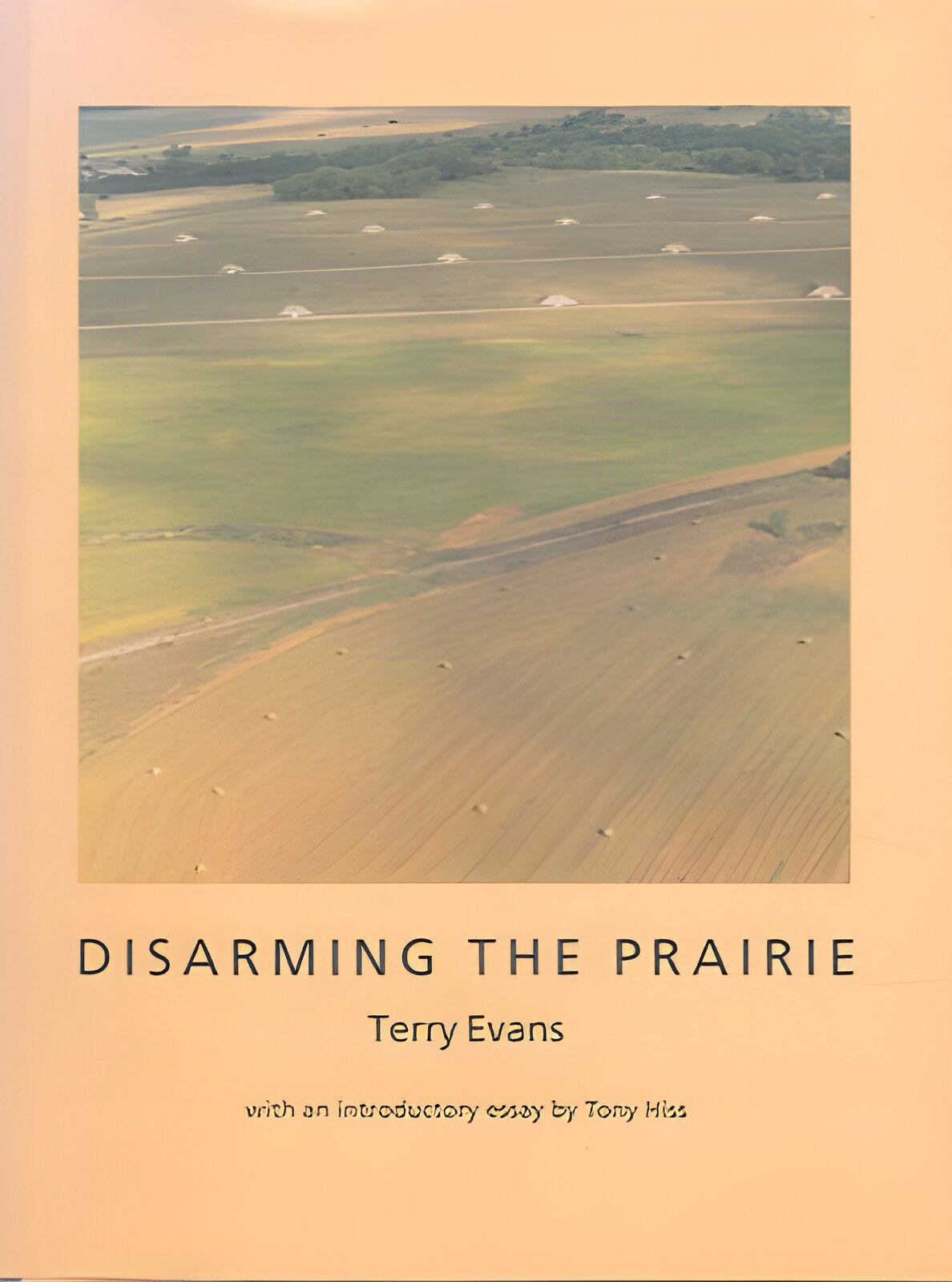
Hardcover. Baltimore, Johns Hopkins University Press, 1st, 1998, Book: Very Good, Dust Jacket: Very Good, Hardcover in a dust jacket with light fading to spine, 96 pages, 50 color photographs. Since the end of the Cold War, the U.S. government has been quietly focusing on how to utilize the vast tracks of land that were sequestered as munitions plants during WWII. In Joliet, Illinois, Terry Evans has photographed one such plant, and it's surrounding landscape, creating a gentle sense of irony in these beautiful color landscapes, many of which are low altitude aerial photographs. Part of the Center for American Places Series. Clean copy.
Softcover. Carmel CA , Friends of Photography Bookstore, 1st, 1981, Book: Good, Dust Jacket: None, 55 pages. Softcover. Extensive b&w photography throughout. Some rubbing to spine and corners. Some soil to covers, otherwise clean, tight copy. Untitled, No. 25 in the Friends of Photography publications on serious photography. Includes Harry Callahan's distinguished career in photography, "Lee Friedlander, Photographer of 1980," Mark Klett, the 1980 Ferguson Grant recipient, Beaumont Newhall on John B. Green, Anita Ventura Mozley on Imogen Cunningham's beginnings, and more.
Hardcover. Merrell, 1st, 2002, Book: Very Good, Dust Jacket: Very Good, Hardcover, 144 pages. Wright Morris was the poet laureate of Middle America. An icon of the 1940s, he died in 1998. Honored many times for his literary work, Morris twice received the prestigious American Book Award for The Field of Vision (1957) and Plains Song (1981), and pioneered the "photo-text." But Morris also created memorable images capturing the soul and mystique of the Midwest. Morris's images are the expression of his life-long quest to discover a vernacular and imagined America. His images brilliantly subvert such "cliched" motifs as grain elevators, Model T Fords, a farmer's cutlery set, or dusty badlands. Here, for the first time, the full emotional impact of his extraordinarily beautiful photographs-as forceful as his more celebrated writing-has been given free reign.
Hardcover. NY, Farrar, Straus And Giroux, 1st, 2024, Book: Very Good, Dust Jacket: Very Good, Hardcover in a bright dust jacket, 464 pages. A personal exploration of the American West and the work of one of America's greatest photographers. Timothy O'Sullivan is America's most famous war photographer. You know his work even if you don't know his name: A Harvest of Death, taken at Gettysburg, is an icon of the Civil War. He was also among the first photographers to elevate what was then a trade to the status of fine art. The images of the American West he made after the war, while traveling with the surveys led by Clarence King and George Wheeler, display a prescient awareness of what photography would become; years later, Ansel Adams would declare his work 'surrealistic and disturbing.' At the same time, we know very little about O'Sullivan himself. Nor do we know-really know-much more about the landscapes he captured. Robert Sullivan's Double Exposure sets off in pursuit of these two enigmas. This book documents the author's own road trip across the West in search of the places, many long forgotten or paved over, that O'Sullivan pictured. It also stages a reckoning with how the changes wrought on the land were already under way in the 1860s and '70s, and how these changes were a continuation of the Civil War by other means.
Softcover. Manchester, England, Manchester University Press, 1st Paperback Edition, 1994, Book: Very Good, Dust Jacket: None, 300 pages. Softcover. Color and b/w illustrations throughout. Wrapper very good, has a crease at the top right corner of front cover. Pages clean and unmarked, edges have some light foxing/tanning. Binding tight. In great shape. This superbly-illustrated new book explores English society and its relationship to the landscape, as seen through photography and tourism over the last hundred years.
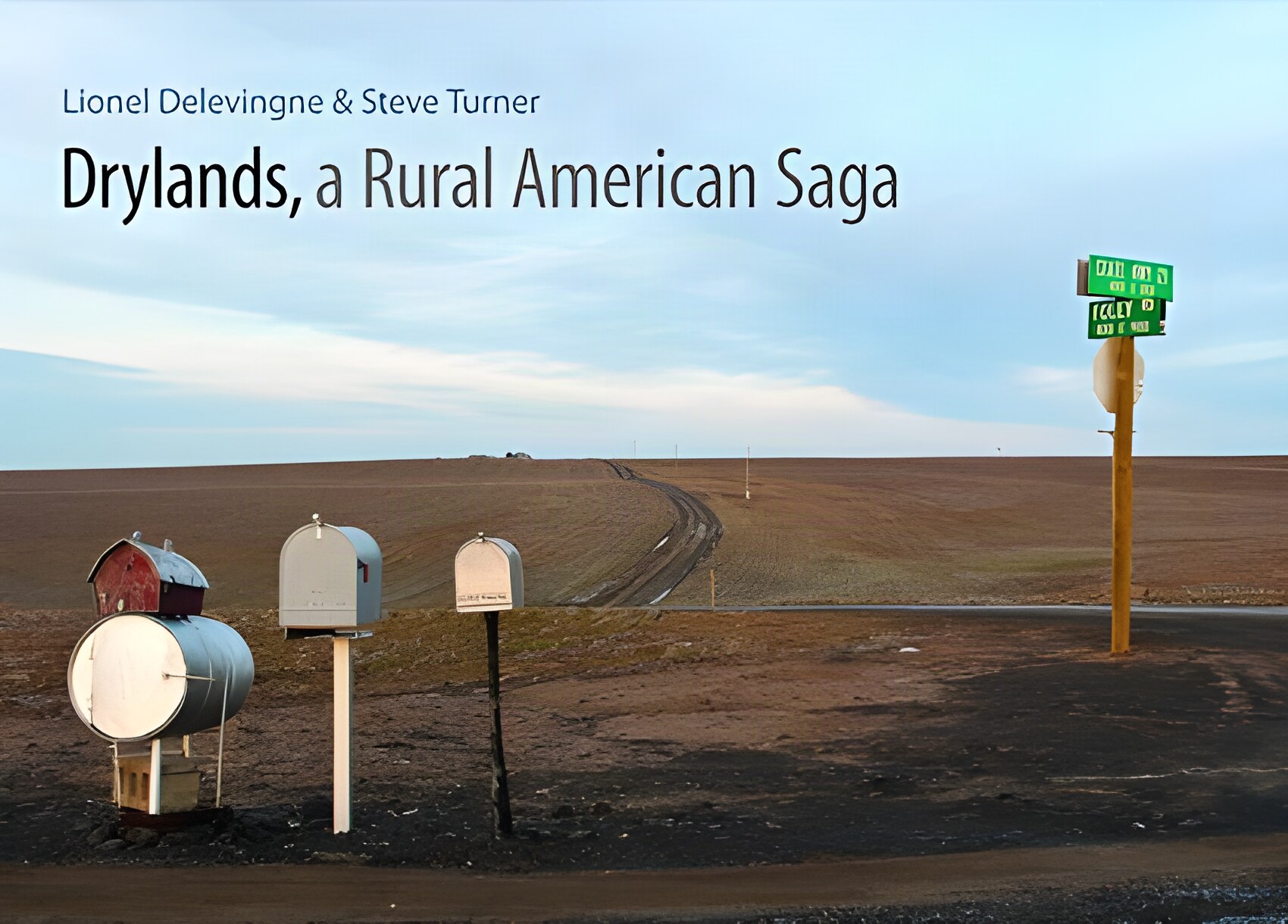
Hardcover. Lincoln NE, University of Nebraska Press, 1st, 2011, Book: Very Good, Dust Jacket: Very Good, Hardcover, oblong format, in a bright dust jacket, 144 pages. B&w and color photographs by Delevingne. Focusing on Adams County in the Columbia Plateau in eastern Washington, Drylands, a Rural American Saga is a pictorial essay documenting the reality underlying our national self-portrait. Both an exception to and a paradigm of the country's agricultural folkways, Adams County offers a panorama of rolling cropland, sagebrush scree, and deep coulees formed by volcanic forces and ice-age floods. The shortage of rainfall, however, mocks the richness of the soils produced by prehistoric events. Yet as documented in these pages, the harvests of Adams County produce a significant share of the nation's food, standing as clear testimony to the skill and perseverance of those who work the land. Clean copy.
Hardcover. NY, W. W. Norton , 1st, 2007, Book: Very Good, Dust Jacket: Very Good, Hardcover, 176 pages, 120 b&w images. Once locked away in European archives, these early modernist photographs of America rival those of Steichen and Evans. Emil Otto Hoppe was born in Munich in 1878 but lived in London from 1900 until his death in 1972. He was an early and important modernist whose seminal views of the United States in the 1920s rival those of his peers: Paul Strand, Edward Steichen, Alfred Stieglitz, and Walker Evans. His work shows us an America as only an outsider could: brave, new, and grand in scale but with a hint of trouble brewing in the gaps between its multicultural and economic diversities.
Hardcover. NY, W. W. Norton , 1st, 2008, Book: Very Good, Dust Jacket: Very Good, Hardcover, 208 pages, b&w illustrations. Photographer E. O. Hoppe journeyed to Australia in the 1930s with the goal of capturing "the true spirit" of the nation. Enthralled by the country and its people, he traveled for a year tirelessly capturing images of life in bustling cities as well as the remote interior. No other photographer had presented such a comprehensive national portrait at the time; his iconic images captured a land both wild and refined. Very good in a bright dust jacket.
Hardcover. Santa Fe, Museum of New Mexico Press, 1st, 2011, Book: Very Good, Dust Jacket: Very Good, Hardcover in a bright, unclipped dust jacket, 188 pages, color and b&w photos. Since its invention, photography has been used to document and interpret the landscape. Survey photographers in the 1860s were the first environmental advocates, arguing for the U.S. national park system. During the first half of the 20th century photographers Ansel Adams and Eliot Porter were central figures in influencing American attitudes toward wilderness and conservation. This book traces the development of environmental photography beginning with Adams, Porter and others, and the next generation of landscape photographers - Robert Adams, Richard Misrach, Robert Glenn Ketchum, Patrick Nagatani, Mark Klett, whose works confronted the issues of landscape and the environment in less idealised terms. Shifting from the historical framework, the book presents new work by twenty-three photographers working in the U.S., the next wave of artists using the camera to engage the environmental issues of the day. Clean copy.
Hardcover. New Haven, CT, Yale University Press, 1st, 2018, Book: Very Good, Dust Jacket: None, 47 pages. Hardcover with no dust jacket. Very clean, LIKE NEW in publishers shrinkwrap. Ruscha's work comprises five black-and-white Los Angeles landscapes made in 1992 paired with color representations of the same sites as they appeared ten years later and draws attention to how often-overlooked changes in the evolving urban landscape are redolent of economic might and globalization or decline and stagnation.
Softcover. London, Random House UK, 1st, 1995, Book: Very Good, Dust Jacket: None, 160 pages, illustrated throughout with b&w photos of England's coastline. Light wear to wrappers, else a very neat, tight copy.
Hardcover. Gottingen GR, Steidl Publishers, 1st, 2009, Book: Very Good, Dust Jacket: Very Good, Hardcover in a bright dust jacket with light edgewear. Large format, 191 pages. Essay by Michael Mitchell. A striking collection of 80 color photographs taken by Burtynsky over the course of seventeen years at various quarry sites around the world. Including Canada, Italy, China, Spain, Portugal, India and America these thought provoking studies of sites that are created as we dig into the earth for material in order to build our cities, urge us to consider how we as viewers are simultaneously attracted yet repulsed by these landscapes somewhere a building is created while a landscape is destroyed. DOMESTIC SHIPPING ONLY.
Hardcover. NY, Merrell, 1st, 2017, Book: Very Good, Dust Jacket: Very Good, Hardcover, 160 pages. Over the course of his fifty-year career, American photographer Edward Weston (1886-1958) blazed a path into Photo-Modernism rendering portraits, landscapes, still-lifes and nudes. In 1902, a sixteen-year-old Weston took up photography in Highland Park, Illinois, where he worked as an amateur for five years. In 1907, at the age of twenty-one, Weston moved to Tropico, California, now the city of Glendale in Los Angeles County, where he constructed his first studio and set about with great purpose to become a photographic artist. Examining Weston's earliest sharp- and soft-focus photographs reveals that the young artist had already formed a perfect sense of composition that was to be the hallmark of his later work. Presenting Weston's earliest work from a recently discovered family album, Edward Weston: Portrait of the Young Man as an Artist compares the artist's naive first artistic efforts with his latest masterworks to show the persistence and evolution of his singular vision to find essential form in the vernacular with an ever-increasing intensity. As a young man deeply intuitive and original in his creative expression, Edward Weston demonstrates that his teenage work, beginning with his amateur snapshots, embrace the same significant form as the later work for which he is now considered a master.
Softcover. Garden City, N.Y., Doubleday & Co., 1st, 1971, Book: Good, Dust Jacket: None, Small folio. Eight loose reproductions in stiff paper chemise folder with "photographer sheet" by Peter Bunnell. Fine in faintly soiled and faintly rubbed illustrated slipcase. Plates are 11" x 14" and are suitable for framing.
Hardcover. NY, Holt, Rinehart & Winston, 1st, 1985, Hardcover in a bright dust jacket, square format, 114 pages. This handsome book provides a first-time look at the black-and-white artistry of one of the century's master photographers. Ninety-one images, some going back almost fifty years, together with a richly evocative text by the author, record an authentic vision of the American Southwest - past and present. Large book measures about 12 x 11, introduction section of 25 pages followed by section of 88 b&w plates (total 91 plates in book). Clean copy.
Hardcover. US, Prestel, 1st, 2013, Book: Very Good, Dust Jacket: Very Good, 128 pages. Like new in publisher's shrink-wrap. The first publication dedicated to Rose Mandel, a pioneering woman in photography, introduces her remarkable, if often overlooked, body of work to a wider audience. Born in Poland, Rose Mandel immigrated to California in 1942. A love of photography soon brought her into contact with Edward Weston, and then with Ansel Adams and Minor White, both of whom had a strong influence on Mandel's work. Including her important sequence The Errand of the Eye, this book presents the sensitivity and clarity of Mandel's vision. Images from natural and man-made environments, eloquent portraits, and abstract landscapes convey Mandel's delight in the compositions and patterns that can be found anywhere, whether walking along a city street or a country path. These photographs are the result of a highly refined sense of craftsmanship and a complex understanding of psychology and abstract expressionism that caused Mandel to be described as "a painter with a camera." The first monograph on the artist, this volume features an enlightening overview of Mandel's life and work, along with an illustrated chronology and exhibition history.
Hardcover. Birmingham AL, Oxmoor House, 1st, 1990, Book: Very Good, Dust Jacket: Very Good, Hardcover, 154 pages, illustrated throughout in color. Light edgewear to dust jacket, else a clean, tight copy. With excerpts from Sanctuary, The Faulkner Reader, As I Lay Dying, The Unvanquished, Light in August, Essays, Go Down, Moses; Absalom, Absalom!; and the exceptional writing style of editor/novelist Willie Morris, this work reveals the textures of Faulkner's Mississippi--cultural, linguistic, and social--making an exceptional commentary on southern life. Morris accomplishes the task of seizing and capturing the imagination of the reader. This image is heightened by the stark, often haunting photographs of Eggleston which combines the reality of Mississippi's landscape with an almost spiritual journey through Faulkner's mystical Yoknapatawpha County.
Hardcover. New York, Dahesh Museum of Art, July 2002, Book: Near Fine, Dust Jacket: Near Fine, Hardcover in a dust jacket. Never opened, still in original shrink wrap. Spotless copy. Frederic Church (1826-1900), who gained international renown for paintings such as Niagara (1857), Heart of the Andes (1859), Twilight in the Wilderness (1860), and The Icebergs (1861), was inspired by his extensive travel and study. His work was also informed by his appreciation of a new visual medium. Fire & Ice, a selection from the several thousand photographs and daguerreotypes Church collected at Olana, his Orientalist home on the Hudson River, provides insight into the interests and taste of one of nineteenth-century America's greatest painters.
Hardcover. London, Thames and Hudson , 1st, 2008, Book: Very Good, Dust Jacket: None, Hardcover, pictorial cloth stamped with gilt lettering. Color photos throughout. These captivating landscapes by the Magnum photographer Stuart Franklin provide a visual document of Europe in the midst of a growing environmental crisis. Technically flawless, cool, detached, yet highly analytical, Franklin's photos reveal the irrefutable proof of humans' effect on Europe and the vulnerability we face as a result, from the Arctic Circle to the Peloponnese. Footprint brings together a singular photographic perspective with a powerful environmental message to present an engaging picture of the vulnerability of Europe's landscape and population in the wake of ominous change. Features photographs that provide a visual document of Europe in the midst of an environmental crisis.
Hardcover. New Haven CT, Yale University Press, 1st, 2010, Book: Very Good, Dust Jacket: Very Good, Hardcover, 272 pages. The image of the untamed American West persists as one of our country's most enduring cultural myths, and few photographers have captured more compelling images of the frontier than Timothy H. O'Sullivan. Trained under Mathew Brady, O'Sullivan accompanied several government expeditions to the West--most notably with geologist Clarence King in 1867 and cartographer George M. Wheeler in 1871. Along these journeys, O'Sullivan produced many beautiful photographs that exhibit a forthright and rigorous style formed in response to the landscapes he encountered. Faced with challenging terrain and lacking previous photographic examples on which to rely, O'Sullivan created a body of work that was without precedent in its visual and emotional complexities. The first major publication on O'Sullivan in more than thirty years, Framing the West offers a new aesthetic and formal interpretation of O'Sullivan's photographs and assesses his influence on the larger photographic canon. The book features previously unpublished and rarely seen images and serves as a field guide for O'Sullivan's original prints, presenting them for the first time in sequence with the chronology of their production.
Hardcover. New Haven CT, Yale University Press, 1st, 2010, Book: Very Good, Dust Jacket: Very Good, Hardcover, 272 pages. In a lightly worn dust jacket with mild fading to spine.The image of the untamed American West persists as one of our country's most enduring cultural myths, and few photographers have captured more compelling images of the frontier than Timothy H. O'Sullivan. Trained under Mathew Brady, O'Sullivan accompanied several government expeditions to the West--most notably with geologist Clarence King in 1867 and cartographer George M. Wheeler in 1871. Along these journeys, O'Sullivan produced many beautiful photographs that exhibit a forthright and rigorous style formed in response to the landscapes he encountered. Faced with challenging terrain and lacking previous photographic examples on which to rely, O'Sullivan created a body of work that was without precedent in its visual and emotional complexities. The first major publication on O'Sullivan in more than thirty years, Framing the West offers a new aesthetic and formal interpretation of O'Sullivan's photographs and assesses his influence on the larger photographic canon. The book features previously unpublished and rarely seen images and serves as a field guide for O'Sullivan's original prints, presenting them for the first time in sequence with the chronology of their production.

 "Desert Realtyby: Freeman, Ed")

 "Discovery and Recognition (Untitled 25)by: Alinder, James")
 "Distinctly American: The Photography of Wright Morrisby: Alan Trachtenberg and Ralph Lieberman")
 "Double Exposure: Resurveying the West with Timothy O'Sullivan America's Most Mysterious War Photographer by: Robert Sullivan")
 "Dream of England, A: Landscape, Photography and the Tourist's Imaginationby: Taylor, john")


 "E. O. Hopp")
 "E. O. Hopp")

 "Ed Ruscha: Course of Empireby: Riopelle, Christopher")
 "Edge of the Land, The by: Godwin, Fay")


 "Edward Weston: Portrait of the Young Man as an Artistby: Graham Howe and R.D. Beth Warren")
 "Eight Photographs. Edward Westonby: Weston, Edward")

 "Errand of the Eye, The: Photographs by Rose Mandelby: Ehrens, Susan")
 "Faulkner's Mississippiby: Morris, Willie (text); William Eggleston (photographs)")
 "Fire & Ice: Treasures from the Photographic Collection of Frederic Church at Olanaby: Fels, Thomas")
 "Footprint: Our Landscape in Fluxby: Stuart Franklin")

