Hardcover. New York, Kodansha International, Reprint, 1984, Book: Very Good, Dust Jacket: Very Good, 228 pages. Hardcover with dust jacket. A very clean, unmarked copy with only minor wear to dust jacket edges. Black & white and color photographs throughout. A tight copy.
Hardcover. NY, powerHouse Books, 1st, 2006, Book: Very Good, Dust Jacket: Very Good, Hardcover in a bright dust jacket, 119 pages. SIGNED AND INSCRIBED BY STANLEY BURNS on the title page. Japanese geisha and courtesans intrigue and fascinate Westerners. During the mid-nineteenth century, Japan opened its doors to the world and became an essential destination for travelers. Tourists desired images of landscapes and traditional Japanese culture, which Japanese photographers provided. They created souvenir albums consisting of hand-colored photographs individually chosen by the tourist. Many are so beautifully painted that they challenge modern sensibilities familiar with color photography. The photographic conventions were inspired by the aesthetics of the noted colored woodblock print medium of ukiyo-e and the privately published surimono. These works depicted the "floating world"--courtesans, geisha, and entertainments--which also were intriguing subject matter for tourists. The beautiful, large photos in this volume give a special insight into the old world of geisha. Clean copy.
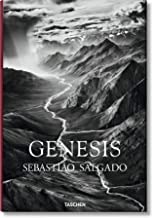
Hardcover. Taschen, 1st, 2013, Book: Very Good, Dust Jacket: Very Good, Hardcover, 520 pages. Over 30 trips-traveled by foot, light aircraft, seagoing vessels, canoes, and even balloons, through extreme heat and cold and in sometimes dangerous conditions-Salgado created a collection of images showing us nature, animals, and indigenous peoples in breathtaking beauty. Mastering the monochrome with an extreme deftness to rival the virtuoso Ansel Adams, Salgado brings black-and-white photography to a new dimension; the tonal variations in his works, the contrasts of light and dark, recall the works of Old Masters such as Rembrandt and Georges de La Tour. What does one discover in GENESIS? The animal species and volcanoes of the Galapagos; penguins, sea lions, cormorants, and whales of the Antarctic and South Atlantic; Brazilian alligators and jaguars; African lions, leopards, and elephants; the isolated Zo'e tribe deep in the Amazon jungle; the Stone Age Korowai people of West Papua; nomadic Dinka cattle farmers in Sudan; Nenet nomads and their reindeer herds in the Arctic Circle; Mentawai jungle communities on islands west of Sumatra; the icebergs of the Antarctic; the volcanoes of Central Africa and the Kamchatka Peninsula; Saharan deserts; the Negro and Jurua rivers in the Amazon; the ravines of the Grand Canyon; the glaciers of Alaska... and beyond. Having dedicated so much time, energy, and passion to the making of this work, Salgado calls GENESIS "my love letter to the planet."Due to size and weight, DOMESTIC SHIPPING ONLY.
Softcover. Albuquerque NM, University of New Mexico Press, 1st, 2002, Book: Near Fine, Dust Jacket: None, 178 pages, 70 color plates by Fitch of deserted buildings and locations in the Great Plains. Soft cover edition, published simultaneously iwith the hardcover. In publisher's shrinkwrap.
Softcover. Albuquerque NM, University of New Mexico Press, 1st, 2002, Book: Near Fine, Dust Jacket: None, 178 pages, 70 color plates by Fitch of deserted buildings and locations in the Great Plains. Soft cover edition, published simultaneously with the hardcover. In publisher's shrink wrap.
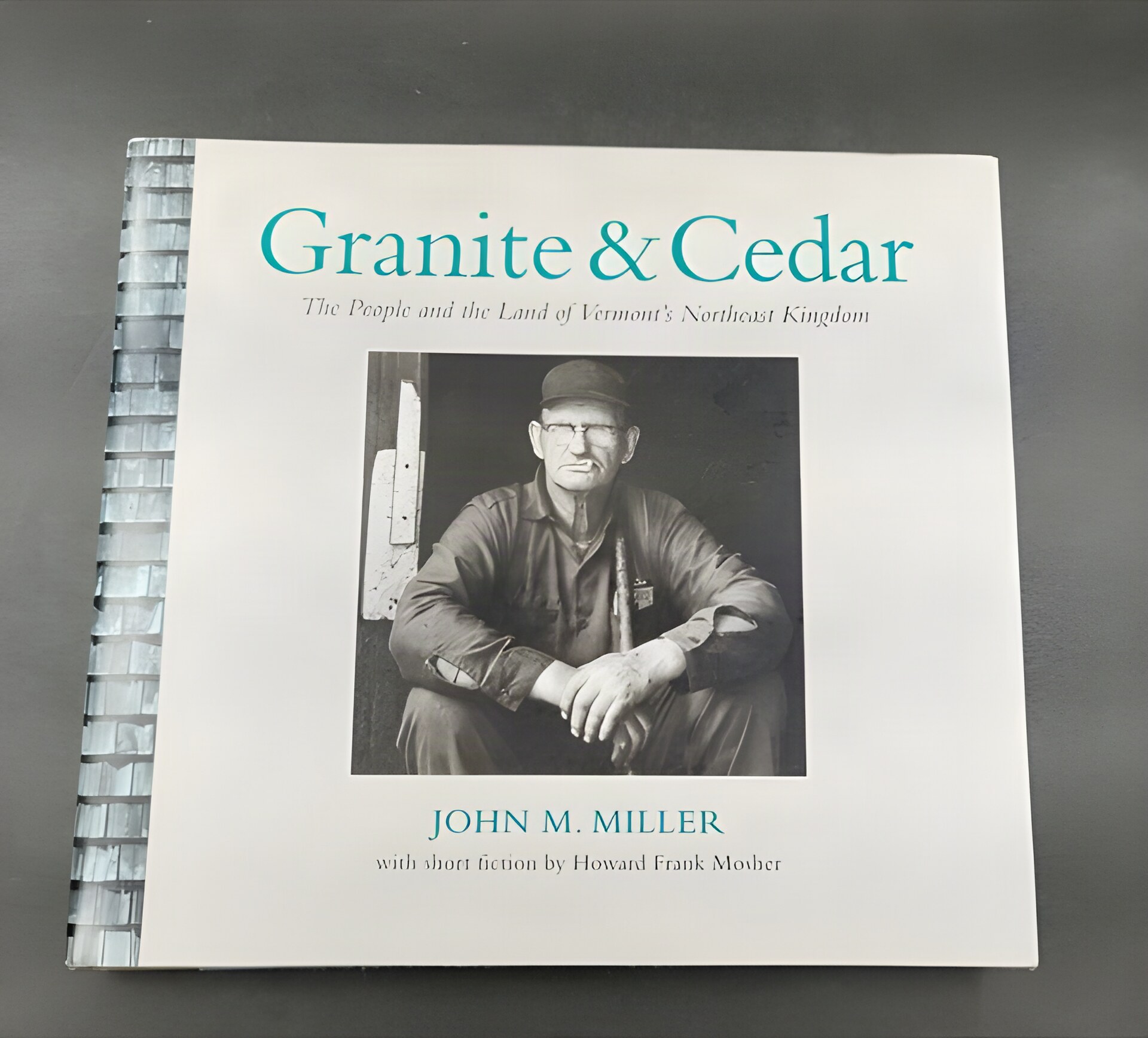
Hardcover. Thistle Hill Publications & Vermont Folklife Center, 1st, 2001, Book: Very Good, Dust Jacket: Very Good, Hardcover in a bright dust jacket, 108 pages, 68 b&w photographs. SIGNED BY BOTH MOSHER AND MILLER on the half-title page. Granite and Cedar represents an unusual collaboration between a documentary photographer and a writer of fiction to produce a haunting portrait of the people and the land of Vermont's most rural area, often referred to as the "Northeast Kingdom." Veteran photographer JOHN M. MILLER uses his brilliant collection of elegiac, but unsentimental, images dating from the 1970s to evoke the disappearing folkways, the rugged people, and the desolate and abandoned landscape of his native corner of the Green Mountain State. Miller's austere, black-and-white photos richly detail the erosion and the breakup of the small farms of the region and of the families who worked those farms. While they emphasize the stark beauty of the land, they also pay homage to the innate dignity and fierce pride of the people who live in such hardscrabble circumstances.
Hardcover. Thistle Hill Publications & Vermont Folklife Center, 1st, 2001, Book: Very Good, Dust Jacket: Very Good, Hardcover in a bright dust jacket, 108 pages, 68 b&w photographs. Granite and Cedar represents an unusual collaboration between a documentary photographer and a writer of fiction to produce a haunting portrait of the people and the land of Vermont's most rural area, often referred to as the "Northeast Kingdom." Veteran photographer JOHN M. MILLER uses his brilliant collection of elegiac, but unsentimental, images dating from the 1970s to evoke the disappearing folkways, the rugged people, and the desolate and abandoned landscape of his native corner of the Green Mountain State. Miller's austere, black-and-white photos richly detail the erosion and the breakup of the small farms of the region and of the families who worked those farms. While they emphasize the stark beauty of the land, they also pay homage to the innate dignity and fierce pride of the people who live in such hardscrabble circumstances.
Hardcover. Los Angeles, J. Paul Getty Museum, 1st, 2002, Book: Very Good, Dust Jacket: Very Good, 416 pages, profusely illustrated. After years of research, this complete retrospective offers, as no volume before it, an assessment of Le Gray's important place in the history of photography. His work had remained largely unknown by the general public until he was rediscovered in the 1960s and was deemed by connoisseurs to be the Monet of photography. Gustave Le Gray began as a young painter in Rome, then became a fashionable portrait photographer in Paris. He received commissions from Napoleon Ill, and astonished viewers with his painterly landscapes and ravishing seascapes. Facing bankruptcy, he feld Paris with Alexandre Dumas to Palermo, travelled to the Middle East, and finally settled in Egypt, where he became drawing master to the ruler's children and continued to make photographs until his death in 1884. Le Gray's work had remained largely unknown by the general public until he was rediscovered in the 1960s.
Hardcover. Steidl , 1st, 2015, Hardcover, terra-cotta cloth with pastedown photo on front cover. 264 pages, 170 color illustrations. Balls and Bulldust is a rich collection of images that explores life and work among the cattlemen in the Northern Territory in Australia. It is not another cowboy story, rather one about men and women working very hard, and seeking some kind of solitude and sense of space in the midst of harsh conditions. For some, life in Australia's outback is a life-long routine. The young are attracted by its romanticism, which is-more often than not-shattered by reality's hardships. The red dust covering this vast scrubby landscape and filling the air is prevalent in Ludwigson's images. Days can be blistering hot and temperatures at nights may sometimes fall below zero. People sleep on "swags" on the ground for weeks. The food is drab and the men are in their saddles twelve hours a day mustering herds of cattle, branding and castrating young bulls. Hakan Ludwigson spent three months with the cattlemen of the Australian outback early in his career, and returned to his native Sweden with a body of work that became Balls and Bulldust. DOMESTIC SHIPPING ONLY.
Hardcover. Chicago, University Of Chicago Press, 1st, 2013, Book: Very Good, Dust Jacket: Very Good, Hardcover, 364 pages, illustrated throughout in color. Clean, unmarked copy with only minor wear to dust jacket. Wandering the streets of Harlem for the past forty years, Camilo Vergara has noticed and miraculously recorded those moments of great human invention that have been largely overlooked by the official chronicles of architecture and urban history. For this reason, his photographs are unique and indispensable.
Hardcover. US, Steidl, 1st, 2012, Book: Very Good, Dust Jacket: None, 32 pages. Like new in publisher's shrink-wrap. Harry Callahan was one of the most respected and influential American photographers of the modern era. He was a master of traditional genres such as portraiture, landscape, architecture and nature studies, but also experimented with new ways of using the medium. One of Callahan's favorite themes was the repeating pattern, whether in multiple reeds reflected on a lake's surface or the rows of windows on a building's facade. While lesser known than some of his other work, Callahan's collages demonstrate an intense interest in and profound understanding of the process of photographic seeing. His collages are rigorous yet playful explorations of a visual world created in his studio. The subject is either faces cut from magazines or rectangles cut from black or white paper. Callahan then photographed the collages pinned to his studio wall on his 8x10-inch view camera, one leading to the next to create this never before published series.
Hardcover. London, Dewi Lewis Publishing, 1st, 2000-04-01, Book: Very Good, Dust Jacket: None, Hardcover, 128 pages. Like new in publishers shrink-wrap. The photographs in Harvey Benge's fourth book, Vital Signs, were made in Paris, London, Prague, Hong Kong, and beyond, and invite the viewer to examine his or her own experiences of urban life. Offering up both humorous and deeply disturbing images, Benge questions the significance and substance of the many outwardly bizarre constructs that form the urban landscape.
Hardcover. London, Dewi Lewis Publishing, 1st, 2000, Book: Very Good, Dust Jacket: None, Hardcover, 128 pages. Like new in publishers shrink-wrap. The photographs in Harvey Benge's fourth book, Vital Signs, were made in Paris, London, Prague, Hong Kong, and beyond, and invite the viewer to examine his or her own experiences of urban life. Offering up both humorous and deeply disturbing images, Benge questions the significance and substance of the many outwardly bizarre constructs that form the urban landscape.
Hardcover. Atglen, PA, Schiffer Publishing, Ltd., 1st, 2010, Book: Very Good, Dust Jacket: Very Good, 176 pages. Hardcover with dust jacket. Clean, unmarked copy with only minor wear to dust jacket. Black and white pictures throughout. Freelance photographer Harvey Caplin recorded ranch life in the American West from the 1940s to the 1980s, before the last roundup, magnificent landscapes, and picturesque people. See 173 of his beautiful images and revel at the grandeur of the land and drama of life played out upon it.
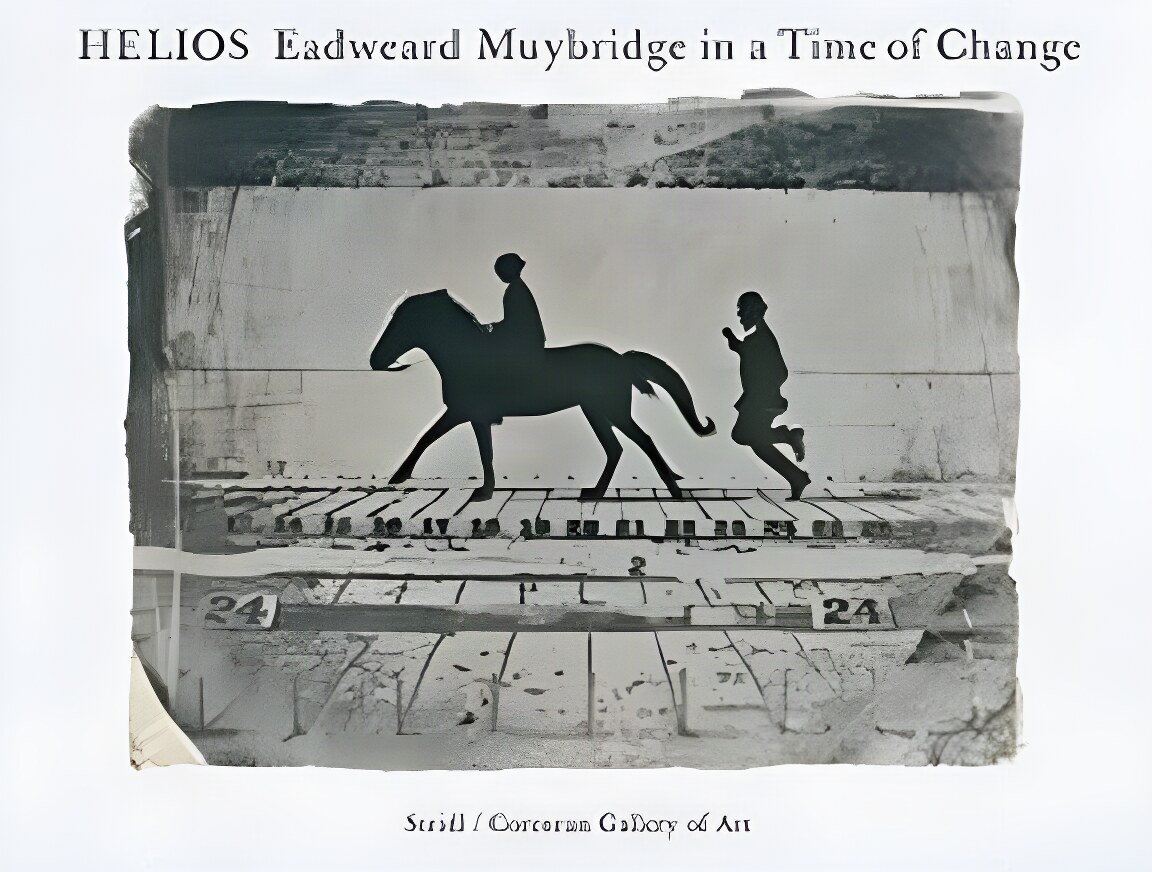
Hardcover. Steidl, 1st, 2010, Book: Very Good, Dust Jacket: Very Good, Hardcover, 360 pages. In 1878, the Photographic Times claimed that ten minutes provided sufficient exposure for photographing a landscape. Six years earlier, an English immigrant to the West Coast named Eadweard Muybridge, going by the commercial name of Helios, had already pushed photography far in the opposite direction: not to soak up time into pictures, but to divide time with the quickest exposures then imaginable. In 1872, the tycoon Leland Stanford had commissioned Muybridge to photograph his horse, Occident, to determine whether it ever lifted all four hooves off the ground at once. In proving that this was indeed the case, Muybridge achieved a five-hundredth-of-a-second exposure, and so began an anatomy of motion-in humans, horses, birds-that exploded the possibilities of photography and ultimately led to the development of the motion picture. Helios: Eadweard Muybridge in a Time of Change offers an opportunity to trace the life and art of the great photographer. In the wake of a wave of recent scholarship and renewed interest, it pitches his entire body of work against the backdrop of one of the most transformative periods of American and European history. Published to accompany a retrospective exhibition organized by the Corcoran Gallery of Art, Helios features essays by Philip Brookman, Marta Braun, Corey Keller and Rebecca Solnit that provide a variety of new approaches to Muybridge's art and influences.
Hardcover. New York, N.Y., Aperture Foundation, 1st, 1988, Book: Very Good, Dust Jacket: Very Good, INSCRIBED on title page by photojournalist Ken Heyman. B&w photographs throughout. Light wear to dust jacket. Clean, tight copy. This collection of innovative b&w photos provides an intimate view of a summer urban landscape (NYC).
Hardcover. New Haven CT, Yale University Press, 1st, 2014, Book: Very Good, Dust Jacket: Very Good, Hardcover, 160 pages. Photographer Laura McPhee, noted for her stunning large-scale landscapes and portraits of the people who live and work in them, has been traveling to eastern India for over a decade. This book features a selection of McPhee's works in and around India's former capital.
Hardcover. New Haven, CT, Yale University Press, 1st, 2014, Book: Very Good, Dust Jacket: Very Good, Hardcover in publisher's shrink-wrap. 160 pages, illustrated with 110 color images. Photographer Laura McPhee, noted for her stunning large-scale landscapes and portraits of the people who live and work in them, has been traveling to eastern India for over a decade. There she has devoted her perceptive vision to picturing layers of history, culture, religion, and class as they appear in private heritage homes and public markets, in lively street festivals, and in the faces of city dwellers in Calcutta (also known as Kolkata). This exquisitely produced book features a selection of McPhee's works made in and around India's former capital.
Hardcover. Lily Bay Press, 1st, 2003, Book: Very Good, Dust Jacket: Very Good, Hardcovr, 98 pages. After the horrendous events of September 2001, photographer Peter Elliott loaded his cameras and some clothes into his car and began a cross-country journey, looking for the flag. He found it everywhere: painted on a retaining wall in Tacoma, flying over a trailer in Bozeman, carried billowing by a lone man walking a sandbar in Florida, made of plastic cups stuck in a fence in Mississippi, draped over a fake horse in Salinas, immaculately hanging from a Beverly Hills mansion's window. Home Front is both a tribute to the profound emotions of the country and a testament to Elliott's eye. His genius in these eighty-seven arresting images is to wed these serendipitous meetings with the flag to a language of light and composition that draws as much from classic landscape photography as it does from urban visual idioms. Elliott manages to convey here America's stirring and complex national character, one in which those who have not benefited from the nation's prosperity nonetheless feel the same sense of pride as those who have. With its inspiring introduction by Julia Reed, Home Front is the record--both somber and joyous--of Elliott's encounters with spontaneous patriotism.
Hardcover. Portfolio, 1st, 2012, Book: Very Good, Dust Jacket: Very Good, Hardcover in a bright, unclipped dust jacket, 194 pages. A great book by the bestseller author Sigurgeir Sigurjonsson. In this breathtaking new book about Icelandic landscape Sigurgeir entwines nature and culture in a dramatic, vivid and unforgettable moments. You can really feel the energy and flow of all that Iceland has to offer while going through the pages. This is the large edition 25x25 cm. The book comes in a beautiful bag.
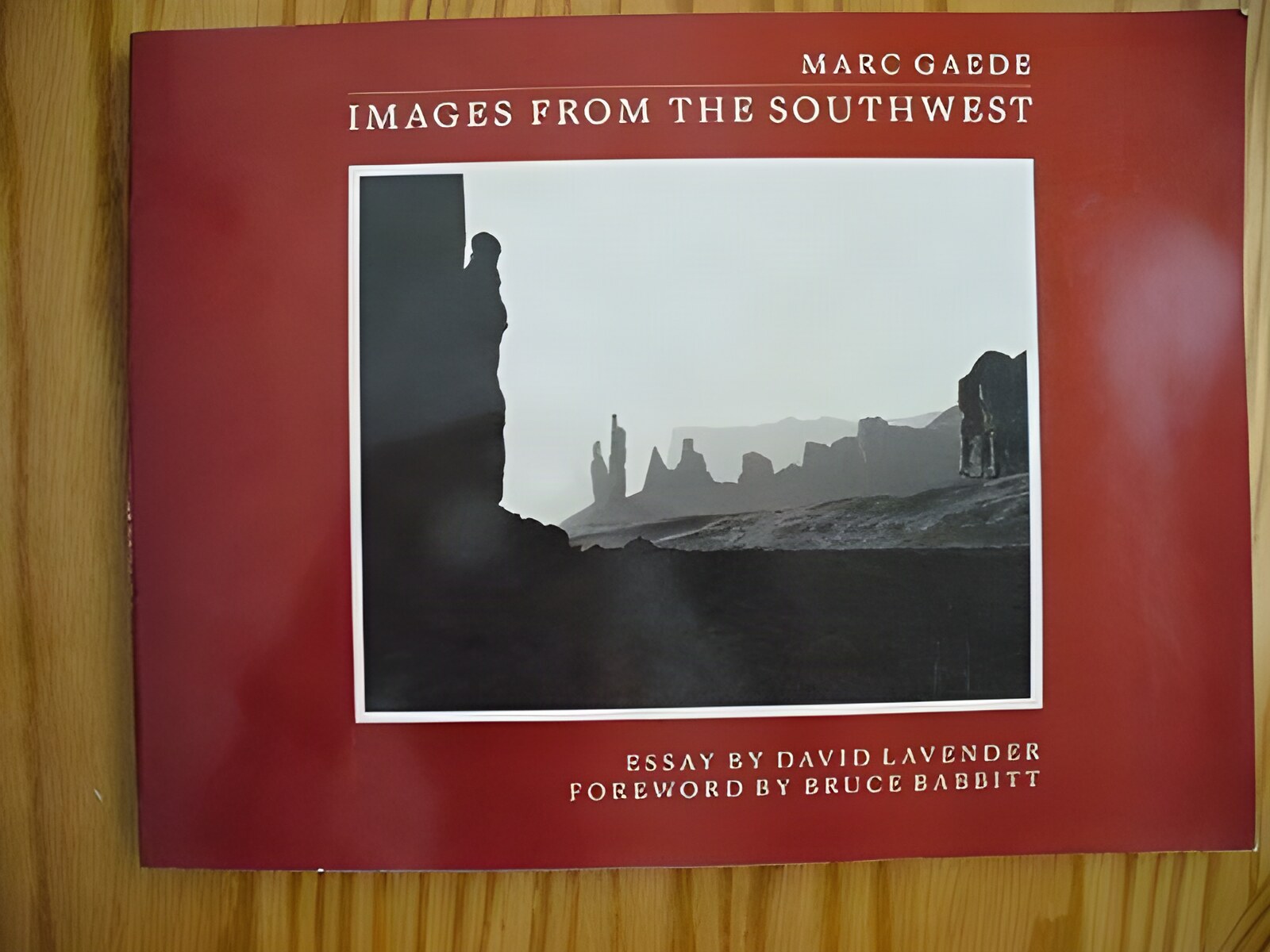
Softcover. Flagstaff AZ, Northland Publishing, 1st, 1986, Book: Very Good, Dust Jacket: None, Softcover, 89 pages. Extensive b&w photography throughout. Illustrated frontispiece. Slight curl to corner edges, otherwise clean, tight copy. Images that portray the contemporary Southwest with the zeal and romantic fervor inherent in one who has absorbed and integrated the southwestern environment. Whether landscape or portrait, Gaede's photos evoke a reverence for the Southwest and it's inhabitants.
Hardcover. Steidl/The George Eastman House , 1st, 2007, Book: Very Good, Dust Jacket: Very Good, Hardcover, 288 pages. Imagining Paradise is the first book to showcase the treasures of The George Eastman House's incomparable Richard and Ronay Menschel Library. It features over 250 rare books, each beautifully illustrated here and accompanied by commentary from prominent scholars. A large and handsome volume itself, as befits its subject, it ranges over the history of the medium of photography, its practitioners and its processes -- from bucolic landscapes, to travel and exploration, science and medicine, the literary and the illustrious. It encompasses the incunabula of William Henry Fox Talbot through the reveries of Maxime Du Camp and Francis Frith; the vision of Peter Henry Emerson to Alfred Stieglitz's Camera Work and 291; and the exceptional published and unpublished books by Alvin Langdon Coburn. It documents works illustrated with tipped-in original salt prints, albumen prints, platinum prints, photogravures, carbon prints, collotypes and Woodburytypes. It includes translations in five languages of Louis Jacques Mande Daguerre's seminal instructional manual describing the daguerreotype process and works of great and unusual beauty, such as a red leather, bronze-trimmed Bible, illustrated in the 1860s with 56 photographs by Francis Frith. No other library in the world holds this breadth and depth of the history, aesthetics and technology of photography and no other book can bring them so thoroughly into the reader's hands. This exceptional collection of rare books was formed from the Eastman Historical Photographic Collection of the Kodak Company, which encompassed the collections of many of the most important photographic scientists, historians and collectors in the world. Due to size and weight, DOMESTIC SHIPPING ONLY.
Softcover. Gjettum Norway, Imago Ans, 1st, 2009, Book: Very Good, Dust Jacket: None, Softcover, SIGNED BY PHOTOGRAPHER on half-title page, with 38 black & white reproductions. Minor edge wear, small stain on back cover, otherwise, very clean and bright copy.
Hardcover. US, Frances Lincoln, 1st, 2015, Book: Very Good, Dust Jacket: Very Good, Hardcover, pages. The most widely read British poet of the twentieth century, Philip Larkin was also a keen amateur photographer and through his life he made images of the people, places and things that meant most to him. The Importance of Elsewhere gathers the best of Larkin's photographic work, divided into short thematic chapters arranged in chronological order. Written by Richard Bradford, the acclaimed author of the Larkin biography First Boredom, Then Fear, the book shows how Larkin, as an individual, as a writer and indeed as a photographer, developed an acute sensitivity to all aspects of the world around him, from his love of open uninhabited landscapes and empty churches to his mixed feelings about crowds. There are also fascinating portraits of those people who were closest to Larkin, including his lovers, his mother and his literary peers. The book beautifully reproduces more than 200 images from the Larkin archive at Hull: the majority have never previously been seen in print. A substantial foreword by Mark Haworth-Booth, formerly curator of photography at the V&A, explores what it meant to be a serious amateur photographer of Larkin's generation.

 "Gardens of Japan, The (English and Japanese Edition)by: Itoh, Teiji")

 "Gone: Photographs of Abandonment on the High Plainsby: Fitch, Steve")
 "Gone: Photographs of Abandonment on the High Plainsby: Fitch, Steve")
 "Granite and Cedar: The People and the Land of Vermont's Northeast Kingdom by: Miller/Howard Frank Mosher, John M.")
 "Gustave Le Gray, 1820-1884by: Aubenas, Sylvie")
 "Hakan Ludwigson: Balls and Bulldust by: Hakan Ludwigson")
 "Harlem: The Unmaking of a Ghetto (Historical Studies of Urban America)by: Vergara, Camilo Jose")
 "Harry Callahan: Seven Collagesby: Callahan, Harry (Photographer)")
 "Harvey Benge: Vital Signsby: Benge, Harvey")
 "Harvey Benge: Vital Signsby: Benge, Harvey")
 "Harvey Caplin's Real Cowboys & the Old Westby: Caplin, Abbie")
 "Hipshot: One-Handed, Auto-Focus Photographs by a Master Photographer (SIGNED COPY)by: Heyman, Ken")
 "Home and the World : A View of Calcuttaby: McPhee, Laura")
 "Home and the World, The: A View of Calcuttaby: McPhee, Laura")
 "Home Front: American Flags from Across the United Statesby: Elliott, Peter")
 "Iceland Small Worldby: Sigurgeir Sigurjonsson")


 "Imagining Paradise: The Richard and Ronay Menschel Libraryby: Manfred Heiting, Sheila Foster, et al.")
 "Imagining Place: Photographs of a Tall Grass Prairie - Eastern Deciduous Forest Ecotome (SIGNED COPY)by: Goodpasture, Carll (Photographer, Introduction)")
 "Importance of Elsewhere, The: Philip Larkin's Photographsby: Bradford, Richard/ Philip Larkin (Photographer), Mark Haworth-Booth (Foreword)")