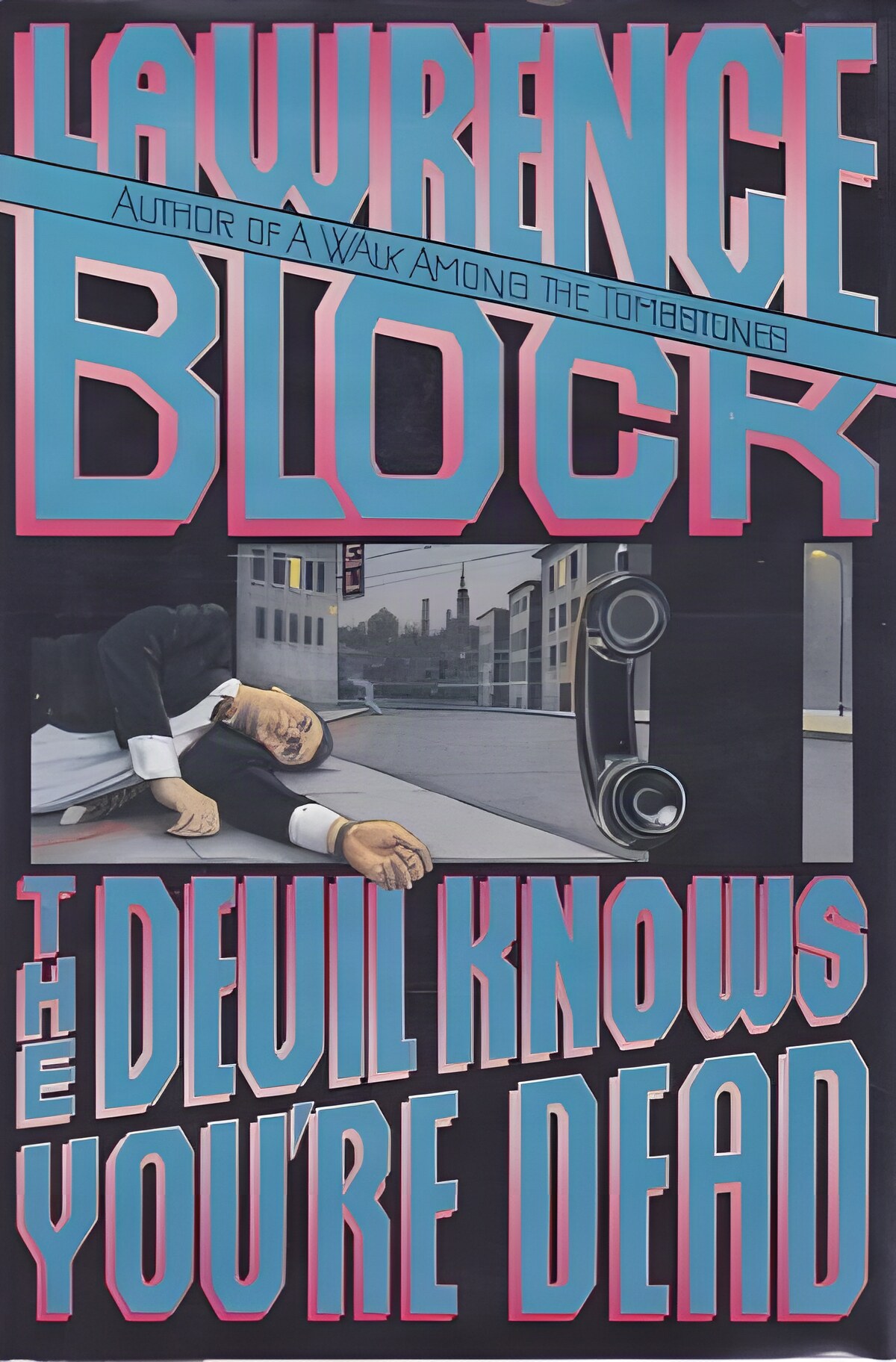
Hardcover. NY, Morrow, 1st, 1993, Book: Very Good, Dust Jacket: Very Good, Hardcover in a bright, unclipped dust jacket. INSCRIBED BY BLOCK on title page.
Hardcover. Germany, Taschen, 1st, 2013, Book: Very Good, Dust Jacket: Very Good, 3-vol set in slip case. Hardcovers. Like new in publisher's shrink-wrap. Editor Dian Hanson traces the fascinating development of the genre from 1900 to 1969 in three compact, informative volumes. In Volume 1 you'll learn about the first magazines that appeared around 1900 in France, Germany, and the U.S., and follow the development of the genre through the First and Second World Wars. Covered are men's magazines masquerading as movie magazines, humor magazines, art magazines, nudist magazines, and "spicy" fiction. Volume 2 documents the proliferation of pin-up magazines following World War II, most notably a little item called Playboy that debuted in December 1953 and spawned dozens of imitators. This volume also charts the emergence of English men's magazines, fetish magazines, and the top five covergirls of the 1950s. Volume 3 begins with an explosion of new American pin-up magazines following the loosening of U.S. obscenity laws, and continues with French titles in decline, England going pervy; nudists going hippy, and Germany going pervy, hippy and political.
Hardcover. NY, Abrams Press, 1st, 2023, Book: Very Good, Dust Jacket: Very Good, Hardcover in a bright, unclipped dust jacket, 439 pages. In the 1950s, comics meant POW!BAM! superheroes, family-friendly gags, and Sunday funnies, but in the 1960s, inspired by these strips and the satire of MAD magazine, a new generation of creators set out to subvert the medium, and with it, American culture. Their "comix"--spelled that way to distinguish the work from their dime-store contemporaries--presented tales of taboo sex, casual drug use, and a transgressive view of society. Embraced by hippies and legions of future creatives, this subgenre of comic books and strips often ran afoul of the law, but that would not stop them from casting cultural ripples for decades to come, eventually moving the entire comics form beyond the gutter and into fine-art galleries. Brian Doherty weaves together the stories of R. Crumb, Art Spiegelman, Trina Robbins, Spain Rodriguez, Harvey Pekar, and Howard Cruse, among many others, detailing the complete narrative history of this movement. Through dozens of new interviews and archival research, he chronicles the scenes that sprang up around the country in the 1960s and '70s, beginning with the artists' origin stories and following them through success and strife, and concluding with an examination of these creators' legacies. Dirty Pictures is the essential exploration of a truly American art form that recontextualized the way people thought about war, race, sex, gender, and expression.
Hardcover. NY, Abrams Press, 1st, 2023, Book: Very Good, Dust Jacket: Very Good, Hardcover in a bright, unclipped dust jacket, 439 pages. In the 1950s, comics meant POW!BAM! superheroes, family-friendly gags, and Sunday funnies, but in the 1960s, inspired by these strips and the satire of MAD magazine, a new generation of creators set out to subvert the medium, and with it, American culture. Their "comix"--spelled that way to distinguish the work from their dime-store contemporaries--presented tales of taboo sex, casual drug use, and a transgressive view of society. Embraced by hippies and legions of future creatives, this subgenre of comic books and strips often ran afoul of the law, but that would not stop them from casting cultural ripples for decades to come, eventually moving the entire comics form beyond the gutter and into fine-art galleries. Brian Doherty weaves together the stories of R. Crumb, Art Spiegelman, Trina Robbins, Spain Rodriguez, Harvey Pekar, and Howard Cruse, among many others, detailing the complete narrative history of this movement. Through dozens of new interviews and archival research, he chronicles the scenes that sprang up around the country in the 1960s and '70s, beginning with the artists' origin stories and following them through success and strife, and concluding with an examination of these creators' legacies. Dirty Pictures is the essential exploration of a truly American art form that recontextualized the way people thought about war, race, sex, gender, and expression.
Hardcover. Birmingham AL, The Legal Classics Library , reprint, 1988, Book: Very Good, Dust Jacket: None, Hardcover, maroon calf, decorative gilt stamping, raised bands, marbled endpapers, all edges gilt, ribbon marker. A facsimile reprint of the 1787 London edition, the 17th Edition, corrected and improved by William Muchal. 335 pages plus index. Bright, clean copy.
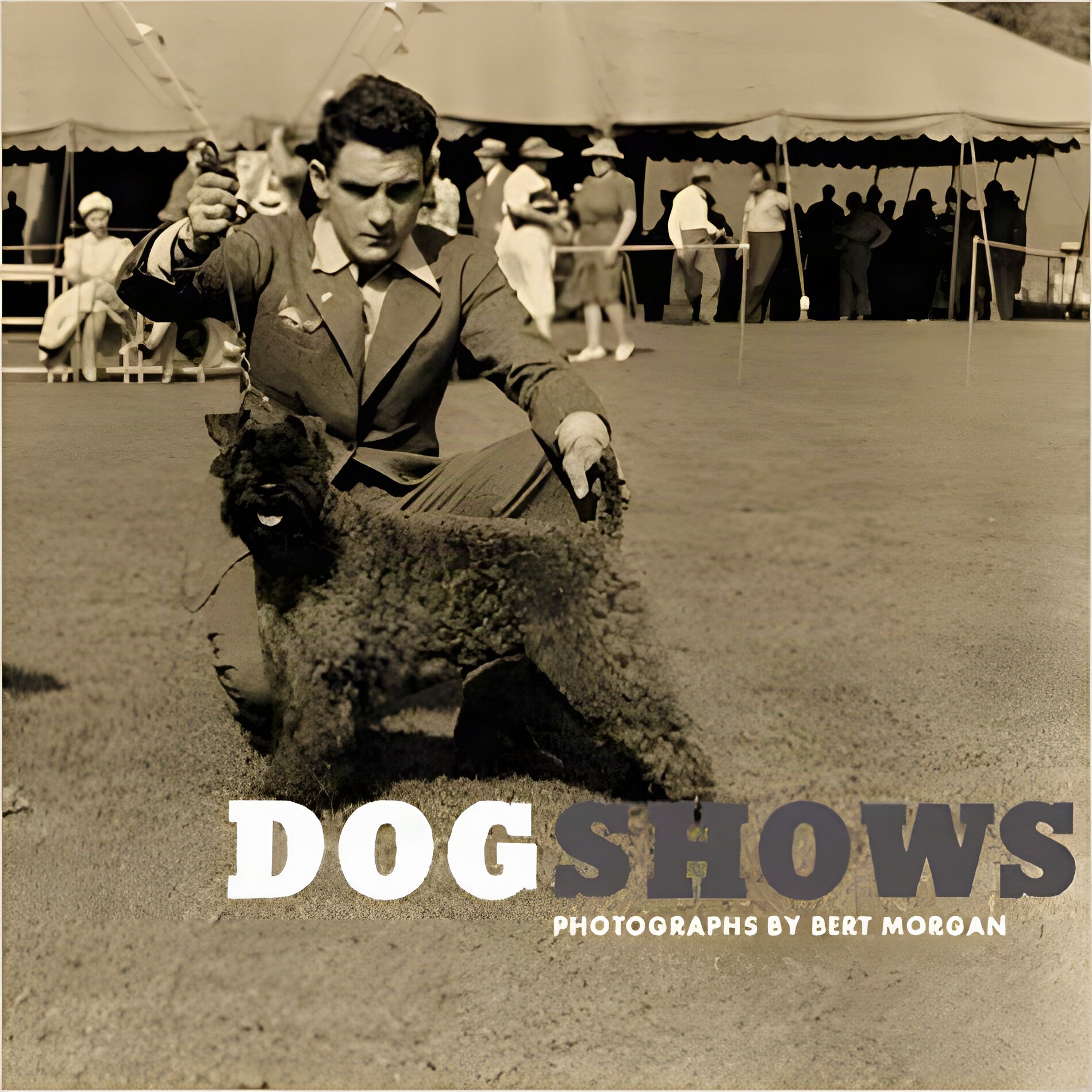
Softcover. San Francisco, Chronicle Books, 1st, 2000, Book: Very Good, Dust Jacket: None, Softcover, unpaginated (176 pages). This irresistible celebration captures dogs in their finest moments, at the charming and idiosyncratic society dog shows of the 1930s and '40s, when both dogs and owners were at their dapper best. Selected from the collection of the late, renowned society photographer Bert Morgan, these more than 150 exquisite duotone photographs evoke an era of refined leisure with the famous and fabulous-and their dogs-in competition and at home: eight-year-old Jacqueline Bouvier, Band-Aid on her knee, stands beaming on her front lawn with her enormous Great Dane; firehouse Dalmations line up at the Westminster Kennel Club's annual show; and descendents of Napoleon Bonaparte admire their distinguished pup on a park bench. Pedigreed pets vault walls, preen and promenade, all for the admiration of their owners-and the judges.
Hardcover. London, Sinclair-Stevenson, 1st UK, 1995, Book: Very Good, Dust Jacket: Very Good, Hardcover in a bright dust jacket. Canadian author's first book, a novel of late eighteenth-century London featuring young George Cautley navigating his way through London's high society, finds that nothing is as it seems and everyone wears a disguise. Illustrations by John Lawrence. Clean, bright copy.
Hardcover. New Haven, Yale University Press, 1st, 1964, Book: Very Good, Dust Jacket: None, Two hardcover volumes. V.1; 164 pages with text, V.2; 227 plates in color and b&w. Gray cloth, gilt title spine. Lacking slipcase and dust jacket, but in excellent shape. A very nice, tight, clean set.
Hardcover. New Haven CT, Yale University Press, 1st, 2007, Book: Very Good, Dust Jacket: Very Good, Hardcover, 223 pages, 250 color illustrations. Betsy Beinecke Shirley, one of the great collectors of American children's literature, gathered a peerless collection of books, original illustrations, manuscripts, and ephemera. This gorgeously illustrated book presents over 200 selected original artworks from the enchanting collection she bequeathed to the Beinecke Rare Book and Manuscript Library of Yale University. Artists whose works are represented include many beloved favorites, among them Ludwig Bemelmans, Maurice Sendak, A. B. Frost, Wanda Gag, Peter Newell, N. C. Wyeth, Tony Sarg, Robert Lawson, and Johnny Gruelle. From variant illustrations for Goodnight Moon and Where the Wild Things Are to little-known sketches for nineteenth-century periodicals that delighted generations of children.
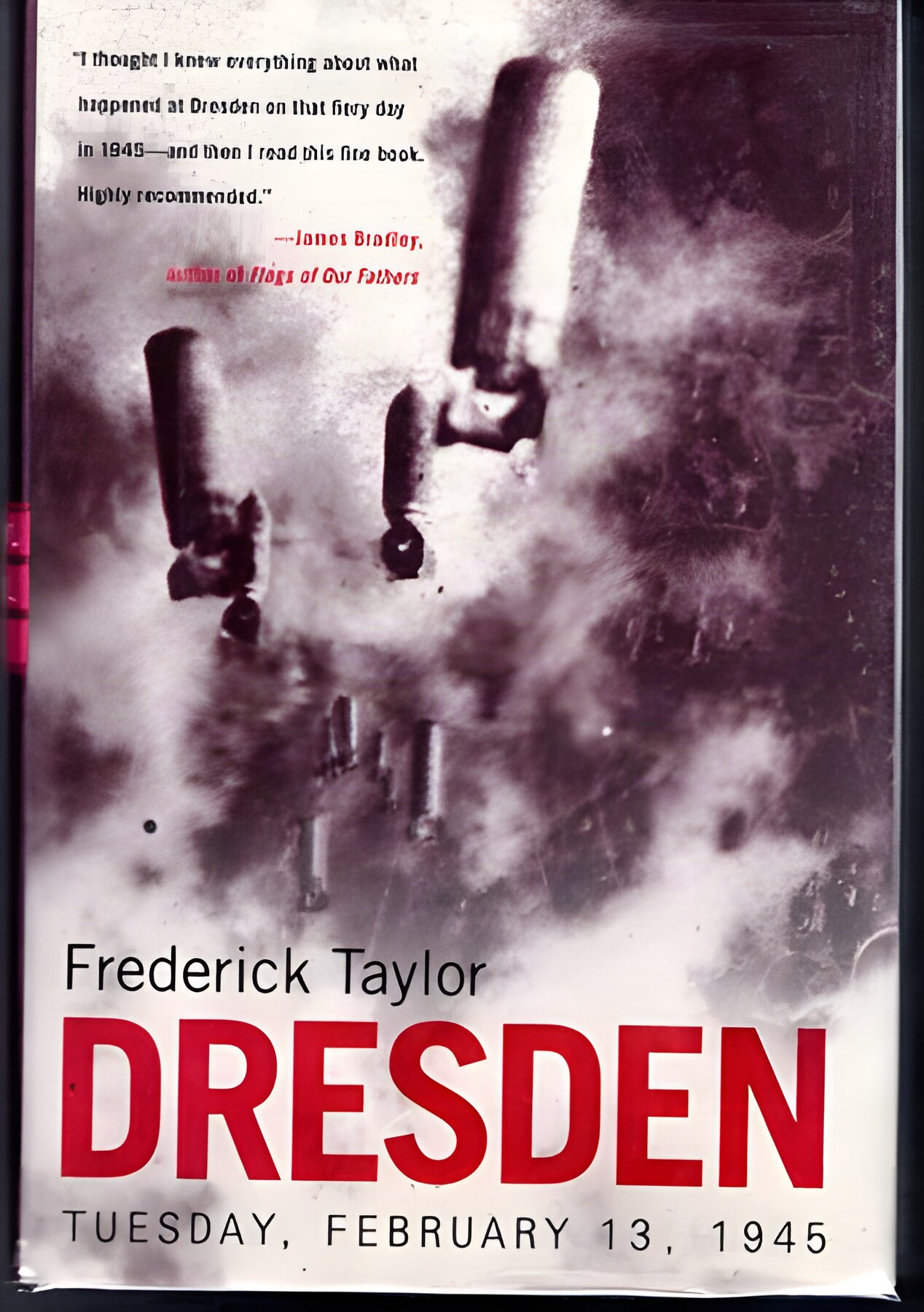
Hardcover. NY, HarperCollins, 1st, 2004, Book: Very Good, Dust Jacket: Very Good, Hardcover in a bright dust jacket, 518 pages with index. B&w illustrations. The allied bombing of Dresden created a massive fire that swept the city center, killing thousands of people and destroying its medieval heart. Debate began almost immediately: Was the destruction of this seemingly civilian city necessary militarily, or was it, some asked, equivalent to a war crime? Not just another in an endless parade of books on Dresden, Taylor's account may go a long way toward putting such questions to rest. It opens with the start, by British bombers, of the nighttime attack, and immediately turns to the past, meandering through several centuries of Dresden history, from its founding in the Middle Ages to the 20th century and the rise of the Nazis. Taylor, translator of The Goebbels Diaries, also covers the history of aerial bombardment and its international laws; gives glimpses of life under the Nazi regime; details the Allied bombing campaign against Germany; and, most excitingly, puts forth new information concerning Dresden's part in the German war effort, which turns out to be much greater than postwar information generally portrays. Clean copy.
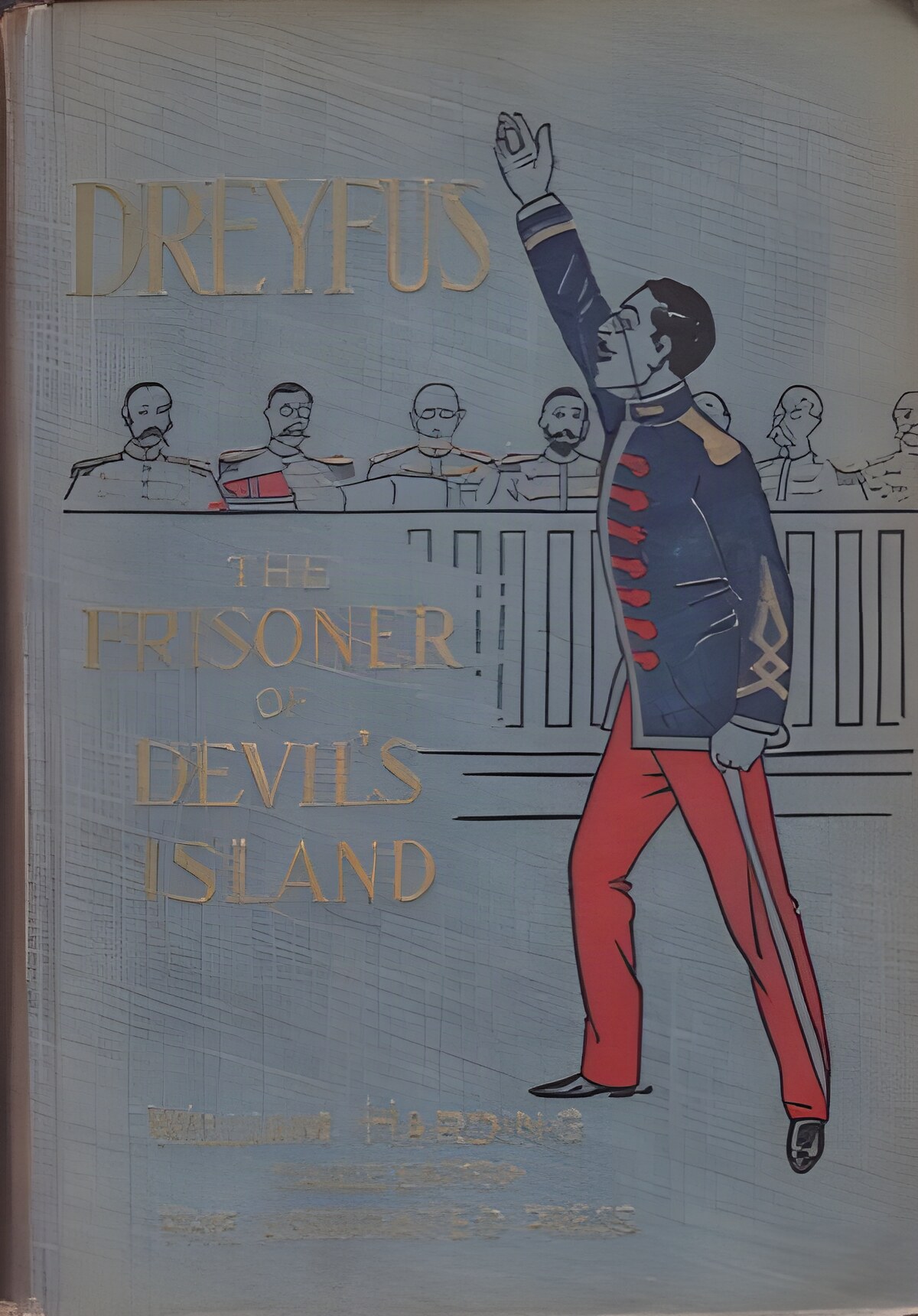
Hardcover. Associated Publishing Company, 1st, 1899, Book: Good, Dust Jacket: None, Hardcover, blue pictorial cloth illustrated on upper cover with gilt, red, blue and black illustration and embossed gilt title. Gilt title on spine faded. 406 pages, frontispiece illustrated with b/w plate of Captain Dreyfus. Profusely illustrated with b/w portraits of the principal actors, and photographic reproductions of the places and scenes of Dreyfus trial and exile. Name and embossed stamp on front fly leaf, cover with light edge wear, interior clean.
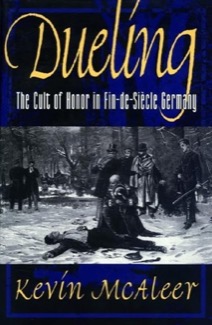
Hardcover. Princeton NJ, Princeton University Press, 1st, 1994, Book: Very Good, Dust Jacket: Very Good, Hardcover in a bright dust jacket, 268 pages. The question of what it takes "to be a man" comes under scrutiny in this sharp, often playful, cultural critique of the German duel--the deadliest type of one-on-one combat in fin-de-siecle Europe. At a time when dueling was generally restricted to swords or had been abolished altogether in other nations, the custom of fighting to the death with pistols flourished among Germany's upper-class males, who took perverse comfort in defying their country's weakly enforced laws. From initial provocation to final death agony, Kevin McAleer describes with ironic humor the complex protocol of the German duel, inviting his reader into the disturbing mindset of its practitioners and the society that valued this socially important but ultimately absurd pastime. Clean copy.
Hardcover. The Library of America, 1st pr., 1991, Book: Very Good, Dust Jacket: None, A first printing of the Library of America. Maroon cloth with spine printed in gilt. Patterned endpapers and attached blue ribbon bookmark. Ivory slipcase lettered and bordered in gilt. Arnold Rampersad wrote the notes for this volume. Includes: Lawd Today!, Uncle Tom's Children, and Native Son. Clean copy.
Hardcover. New Haven CT, Yale University Press, 1st, 2019, Book: Very Good, Dust Jacket: None, Hardcover, pictorial boards, 232 pages. The question "What is American art?" might conjure the hyperrealism of Raphaelle Peale and William Harnett, the bold graphic style of Stuart Davis and Jacob Lawrence, or the Precisionist forms of Charles Sheeler. Little known, however, is that such notions of American art are significantly owed to a Russian Jewish immigrant named Edith Halpert. The founder of the Downtown Gallery in New York, Halpert shaped an identity for American art, declaring that its thrilling heterogeneity and democratic values were what most distinguished it from the European avant-garde. For forty-plus years, Halpert's gallery brought recognition and market success to now-legendary American artists--among them Arthur Dove, Marsden Hartley, and Georgia O'Keeffe, in addition to the artists mentioned above. She relentlessly championed nonwhite, female, and unknown artists and was a formative advisor in the shaping of many of the nation's most celebrated art museums and collections, from San Francisco to Boston. Not content with those achievements, she also pioneered the appreciation and collecting of American folk art. Richly illustrated with works that passed through her groundbreaking gallery, this book tells the extraordinary and largely overlooked story of her career and legacy. The artists Halpert launched into the American canon are household names--and this book compellingly argues that hers should be, as well. In publisher's shrinkwrap.
Hardcover. New York, Aperture, 1st, 1995, Book: Very Good, Dust Jacket: Very Good, Hardcover in a bright, price-clipped dust jacket, 96 pages. Illustrated with black & white photographs by Edward Weston. Clean, bright copy. Among some of the portraits are D.H. Lawrence, Frida Kahlo, Diego Rivera, Orozco, Robinson Jeffers, Henry Fonda, James Cagney, Stravinsky, E.E. Cummgs and many distinctive nudes. Clean copy.
Hardcover. Lawrence KS, University Press of Kansas, 1st, 2007, Book: Very Good, Dust Jacket: Very Good, Hardcover in a bright dust jacket, 274 pages. With the landmark election of Franklin Delano Roosevelt in 1932, decades of Republican ascendancy gave way to a half century of Democratic dominance. It was nothing less than a major political realignment, as the direction of federal policy shifted from conservative to liberal-and liberalism itself was redefined in the process. Electing FDR is the first book in seventy years to examine in its entirety the 1932 presidential election that ushered in the New Deal. Award-winning historian Donald Ritchie looks at how candidates responded to the nation's economic crisis and how voters evaluated their performance. More important, he explains how the Democratic Party rebuilt itself after three successive Republican landslides: where the major shifts in party affiliation took place, what contingencies contributed to FDR's victory, and why the new coalition persisted as long as it did. Ritchie challenges prevailing assumptions that the Depression made Roosevelt's election inevitable. He shows that FDR came close to losing the nomination to contenders who might have run to the right of Hoover, and discusses the role of newspapers and radio in presenting the candidates to voters. He also analyzes Roosevelt's campaign strategies, recounting his attempts to appeal to disaffected voters of all ideological stripes, often by altering his positions to broaden his popularity. With the advent of the New Deal, Americans came to enjoy a wide federal safety net that provided everything from old age pensions to rural electricity-government innovations so embraced by voters that even later conservative presidents recognized their importance. Ritchie traces this legacy through the Reagan and Bush years, but he relates how FDR in 1932 was often vague about the specifics of his program and questions whether voters really knew what they were in for with the New Deal. Clean copy.
Hardcover. Seattle, University of Washington Press, 1st, 2019, Book: Very Good, Dust Jacket: Very Good, Hardcover in a bright dust jacket, color illustrations; 7.2 X 0.9 X 10.3 inches; 272 pages. Tang dynasty (618-907) China hummed with cosmopolitan trends. Its capital at Chang'an was the most populous city in the world and was connected via the Silk Road with the critical markets and thriving cultures of Central Asia and the Middle East. In Empire of Style, BuYun Chen reveals a vibrant fashion system that emerged through the efforts of Tang artisans, wearers, and critics of clothing. Across the empire, elite men and women subverted regulations on dress to acquire majestic silks and au courant designs, as shifts in economic and social structures gave rise to what we now recognize as precursors of a modern fashion system: a new consciousness of time, a game of imitation and emulation, and a shift in modes of production. This first book on fashion in premodern China is informed by archaeological sources-paintings, figurines, and silk artifacts-and textual records such as dynastic annals, poetry, tax documents, economic treatises, and sumptuary laws. Tang fashion is shown to have flourished in response to a confluence of social, economic, and political changes that brought innovative weavers and chic court elites to the forefront of history. Still in publisher's shrinkwrap.
Hardcover. London, Lawrence & Bullen, Revised Ed., 1899, Book: Very Good, Dust Jacket: None, Hardcover, 262 pages plus 37 preliminary pages. Bound in half leather and marbled boards. Spine with raised bands, gilt design. End papers with marbled design. Near Fine. With a 4 line inscription by poet and literary critic Joseph Warren Beach.
Hardcover. Bristol/Philadelphia, Institute of Physics Publishing, 1st , 2005, Book: Very Good, Dust Jacket: Very Good, Hardcover in a bright dust jacket, 330 pages, b&w illustrations. All physicists are familiar with Hooke's law of springs, but few will know of his theory of combustion, that his Micrographia was the first book on microscopy, that his astronomical observations were some of the best seen at the time, that he contributed to the knowledge of respiration, insect flight and the properties of gases, that his work on gravitation preceded that of Newton's, that he invented the universal joint, and that he was an architect of distinction and a surveyor for the City of London after the Great Fire. England's Leonardo is a biography of Hooke covering all aspects of his work, from his early life on the Isle of Wight through his time at Oxford University, where he became part of a group who would form the original Fellowship of the Royal Society. The author adopts a novel approach at this stage, dividing the book by chapter according to the fields of research-Physiology, Engineering, Microscopy, Astronomy, Geology, and Optics-in which Hooke applied himself. The book concludes with a chapter considering the legacy of Hooke and his impact on science.
Hardcover. New York, Garland Publishing, Inc., 1978, Book: Very Good, Dust Jacket: None, Hardcover. 130 pages. Clean text. Light rubbing to corners and spine.
Hardcover. Lawrence KS, Coronado Press, 1st, 1972, Book: Very Good, Dust Jacket: None, 217 pages, green cloth over boards. Limited to 400 copies. The author was a scholar on the banking business in the early American west, especially Kansas.
Hardcover. NY, W. W. Norton & Company, 1st, 2016, Book: Very Good, Dust Jacket: Very Good, Hardcover in a bright, unclipped dust jacket, 580 pages, b&w illustrations. Los Angeles is a city founded on blood. Once a small Mexican pueblo teeming with Californios, Indians, and Americans, all armed with Bowie knives and Colt revolvers, it was among the most murderous locales in the Californian frontier. In Eternity Street: Violence and Justice in Frontier Los Angeles, "a vivid, disturbing portrait of early Los Angeles" (Publishers Weekly), John Mack Faragher weaves a riveting narrative of murder and mayhem, featuring a cast of colorful characters vying for their piece of the city. These include a newspaper editor advocating for lynch laws to enact a crude manner of racial justice and a mob of Latinos preparing to ransack a county jail and murder a Texan outlaw. In this "groundbreaking" (True West) look at American history, Faragher shows us how the City of Angels went from a lawless outpost to the sprawling metropolis it is today. A riveting popular history of Los Angeles's bloody beginnings. Clean copy.





 "Doctor and Student; or Dialogues Between a Doctor of Divinity and a Studentby: Saint Germain German Christopher; John Baker")

 "Drawings From the Clark Art Institute. A Catalogue Raisonne of the Robert Sterling Clark Collection (2 Volumes)by: Haverkamp-Begemann,, Egbert & Standis D. Lawder, &")

 "Early Works by: Wright, Richard")
 "Edith Halpert: The Downtown Gallery and the Rose of American Artby: Shaykin, Rebecca")


 "Empire of Style: Silk and Fashion in Tang Chinaby: BuYun Chen")


 "England's Leonardo: Robert Hooke and the Seventeenth-Century Scientific Revolution by: Chapman, Allan")
 "English Judiciary in the Age of Glanvill and Bracton, c. 1176-1239, Theby: Turner, Ralph V.")
 "Essay on the Law of Bailments, Anby: Jones, William")
 "Essays in Anglo-Saxon Lawby: Adams, Henry, Henry Cabot Lodge, Ernest Young And J. Laurence Laughlin")
 "Essays on the History of Bankingby: Anderson, George L.")