Hardcover. New Haven CT, Yale University Press, 1st, 2016, Book: Very Good, Dust Jacket: Very Good, Hardcover in a bright dust jacket. A compelling account of how women shaped the common law right to privacy during the late nineteenth and early twentieth centuries Drawing on a wealth of original research, Jessica Lake documents how the advent of photography and cinema drove women--whose images were being taken and circulated without their consent--to court. There they championed the creation of new laws and laid the groundwork for America's commitment to privacy. Vivid and engagingly written, this powerful work will draw scholars and students from a range of fields, including law, women's history, the history of photography, and cinema and media studies.
Hardcover. Birmingham AL, The Legal Classics Library, reprint, 1983, Book: Very Good, Dust Jacket: None, Hardcover, Two volumes bound as one. Brown calf with decorative gilt stamping, raised bands, all edges gilt, marbled endpapers, ribbon marker. Facsimile reprint of the rare first edition. Includes the text of the United States Constitution. One of the undisputed landmarks in American political thought, The Federalist is a collected edition of essays by Hamilton. Madison and Jay that were published under the pseudonym "Publius" in several New York newspapers and journals in 1787 and 1788. Numbered copy #1778 with prior owners name typed on the publishers nameplate pasted to fly leaf, otherwise clean, bright copy.
Hardcover. NY, Citadel Press, 1st, 1970, Book: Very Good, Dust Jacket: Very Good, Hardcover in a bright, lightly chipped dust jacket. Profusely illustrated review of Ingrid Bergman's films in the classic Citadel Press style. 242 pages. Clean copy.
Hardcover. Binghamton NY, Medieval & Rennaissance Texts & Studies, 1st, 1993, Book: Very Good, Dust Jacket: None, Hardcover, blue cloth with gilt lettering and design to spine and front cover. 652 pages. Identical binding to the Harvard University Press set. Clean, bright copy.
Hardcover. Binghamton NY, Medieval & Rennaissance Texts & Studies, 1st, 1993, Book: Very Good, Dust Jacket: None, Hardcover, blue cloth with gilt lettering and design to spine and front cover. pages 653-1247. Identical binding to the Harvard University Press set. Errata slip taped to front fly leaf, otherwise clean, bright copy.
Hardcover. Cambridge MA, Harvard University Press , 1st, 1981, Book: Very Good, Dust Jacket: None, Hardcover, blue cloth with gilt lettering and design to spine and front cover. The writings of Richard Hooker are of central interest to those studying English Renaissance thought and literature. In this, the third volume of a much-needed critical edition of the Works of Richard Hooker, are the posthumous books of the Laws of Ecclesiastical Polity. Hooker planned the Laws in eight books, but he died shortly after publication of Book Five. Books Six, Seven, and Eight, which contain his analysis of jurisdiction, episcopacy, and the royal supremacy, are here transcribed from versions that have the most authority. The volume also includes Hooker's autograph notes toward those texts (brought to light by P. G. Stanwood in the course of his research) and the contemporary notes by George Cranmer and Edwin Sandys on a lost draft of Book Six. Mr. Stanwood's introduction lays to rest all doubts about the authenticity of the last three books as we have them, doubts current since publication of Walton's Life of Hooker in 1662.Clean, bright copy.
Hardcover. Cambridge MA, Harvard University Press , 1st, 1990, Book: Very Good, Dust Jacket: None, Hardcover, blue cloth with gilt lettering and design to spine and front cover, 926 pages. Although Richard Hooker (1554-1600) is now known principally as the author of the Laws of Ecclesiastical Polity, in his lifetime the Tractates and Sermons brought him greater notoriety. Hooker's views on justification, the perseverance of faith, and the relationship of the Church of Rome to the reformed Church of England were widely reported, and texts of the tracts were extensively circulated in manuscript. Thanks to the meticulous editing of Laetitia Yeandle, Curator of Manuscripts at the Folger Shakespeare Library, the contemporary impact of these debates can now be appreciated for the first time. These tracts provide a unique perspective on the turbulent world of late Elizabethan theology. In addition, they lay the doctrinal foundations of the Laws of Ecclesiastical Polity itself and-with the excellent commentary of Egil Grislis, Professor of Theology at the University of Manitoba in Winnipeg, enable us to trace the intellectual formation of sixteenth-century England's most innovative and provocative theologian. The volume includes a newly discovered letter; three newly attributed sermon fragments; and analysis by P. F. Forte of Hooker's distinctive preaching style. Clean, bright copy.
Hardcover. Cambridge MA, Harvard University Press, 1st, 1982, Book: Very Good, Dust Jacket: None, Hardcover, blue cloth with gilt lettering and design to spine and front cover. 274 pages. Clean, bright copy.
Hardcover. Cambridge MA, Harvard University Press, 1st, 1977, Book: Very Good, Dust Jacket: None, Hardcover, blue cloth with gilt lettering and design to spine and front cover. 552 pages. Clean, bright copy.
Lawrence, KS, Spencer Museum of Art, 1st, 1984, Book: Very Good, Dust Jacket: None, Hardcover, 158 pages. Black & white illustrations throughout. No dust jacket.
Softcover. New Haven CT, Yale University Press, reprint, 1999, Book: Very Good, Dust Jacket: None, Softcover, 436 pages, b&w illustrations. Eighteenth-century women have long been presented as the heroines of traditional biographies, or as the faceless victims of vast historical processes, but rarely have they been deemed worthy of historical inquiry. "The Gentleman's Daughter" provides an account of the lives of genteel women - the daughters of merchants, the wives of lawyers and the sisters of gentlemen. Based on a study of the letters, diaries and account books of over 100 women from commercial, professional and gentry families, mainly in provincial England, "The Gentleman's Daughter" challenges the view that the period witnessed a new division of the everyday worlds of privileged men and women into the separate spheres of home and work. Amanda Vickery invokes the women's own accounts of their lives to argue that in the course of the 18th and early 19th centuries the scope of female experience did not diminish - in fact, quite the reverse. Contrary to orthodoxy, in the 18th century there was neither a loss of female freedoms, nor a novel retreat into the home. In their own writing, genteel women throughout the Georgian era singled out their social and their emotional roles: kinswoman, wife, mother, housekeeper, consumer, hostess and member of polite society. Clean copy.
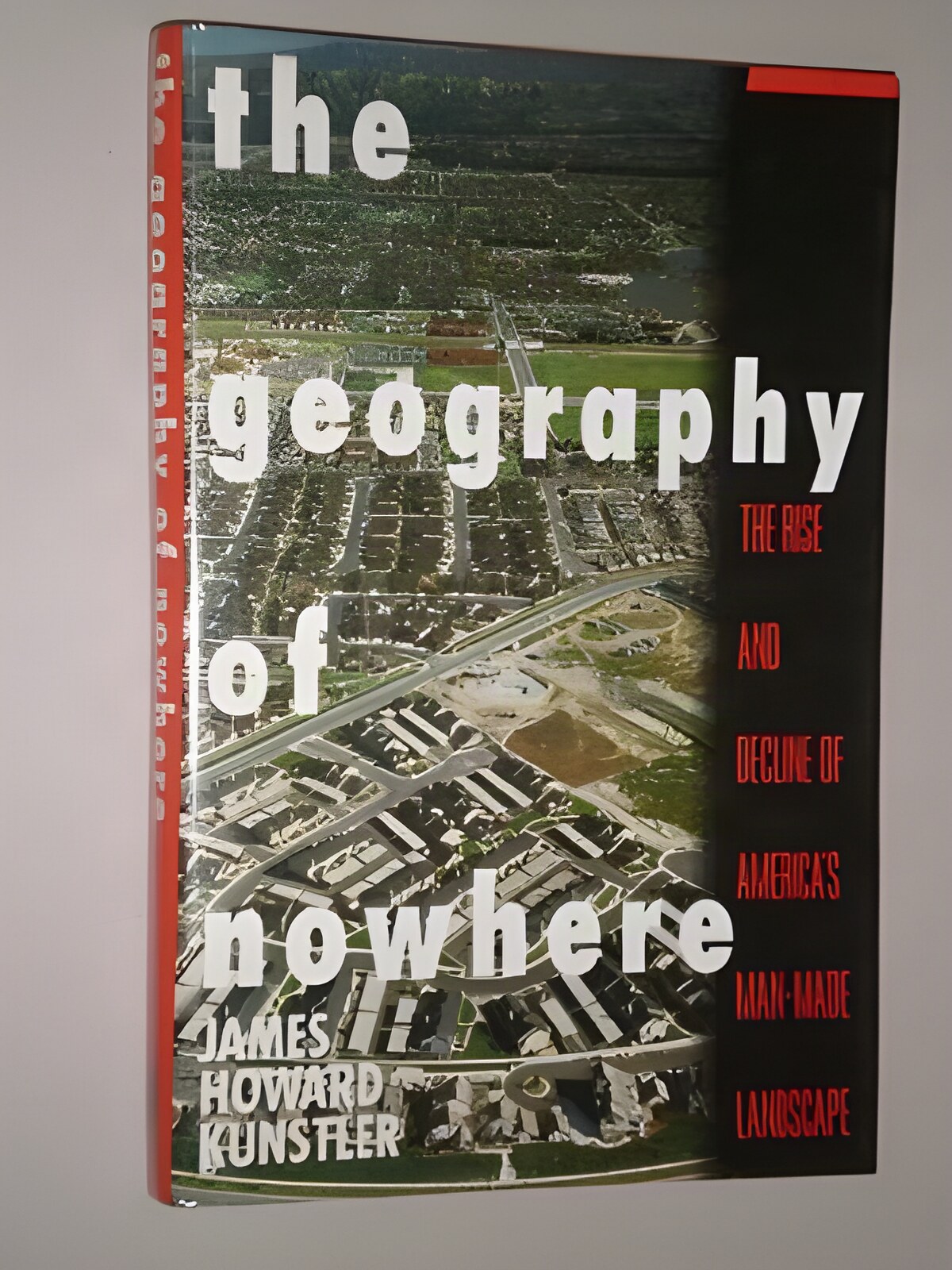
Hardcover. NY, Simon & Schuster, 1st, 1993, Book: Very Good, Dust Jacket: Very Good, Hardcover in a bright, unclipped dust jacket, 303 pages. Eighty percent of everything ever built in America has been built since the end of World War II. This tragic landscape of highway strips, parking lots, housing tracts, mega-malls, junked cities, and ravaged countryside is not simply an expression of our economic predicament, but in large part a cause. It is the everyday environment where most Americans live and work, and it represents a gathering calamity whose effects we have hardly begun to measure. In The Geography of Nowhere, James Howard Kunstler traces America's evolution from a nation of Main Streets and coherent communities to a land where everyplace is like noplace in particular, where the city is a dead zone and the countryside a wasteland of cars and blacktop. Now that the great suburban build-out is over, Kunstler argues, we are stuck with the consequences: a national living arrangement that destroys civic life while imposing enormous social costs and economic burdens. Kunstler explains how our present zoning laws impoverish the life of our communities, and how all our efforts to make automobiles happy have resulted in making human beings miserable. Name on front fly leaf, otherwise like new.
Softcover. Chicago, University of Chicago Press, 1st, 2014, Book: Very Good, Dust Jacket: None, Softcover, 223 pages. Over the course of a fifty-year career, Donald E. Westlake published nearly one hundred books, including not one but two long-running series, starring the hard-hitting Parker and the hapless John Dortmunder. In the six years since his death, Westlake's reputation has only grown, with fans continuing to marvel at his tightly constructed plots, no-nonsense prose, and keen, even unsettling, insights into human behavior. With The Getaway Car, we get our first glimpse of another side of Westlake the writer: what he did when he wasn't busy making stuff up. And it's fascinating. Setting previously published pieces, many little seen, alongside never-before-published material found in Westlake's working files, the book offers a clear picture of the man behind the books-including his thoughts on his own work and that of his peers, mentors, and influences. The book opens with revealing (and funny) fragments from an unpublished autobiography, then goes on to offer an extended history of private eye fiction, a conversation among Westlake's numerous pen names, letters to friends and colleagues, interviews, appreciations of fellow writers, and much, much more. There's even a recipe for Sloth a la Dortmunder. Really. Rounded out with a foreword by Westlake's longtime friend Lawrence Block, The Getaway Car is a fitting capstone to a storied career and a wonderful opportunity to revel anew in the voice and sensibility of a master craftsman.
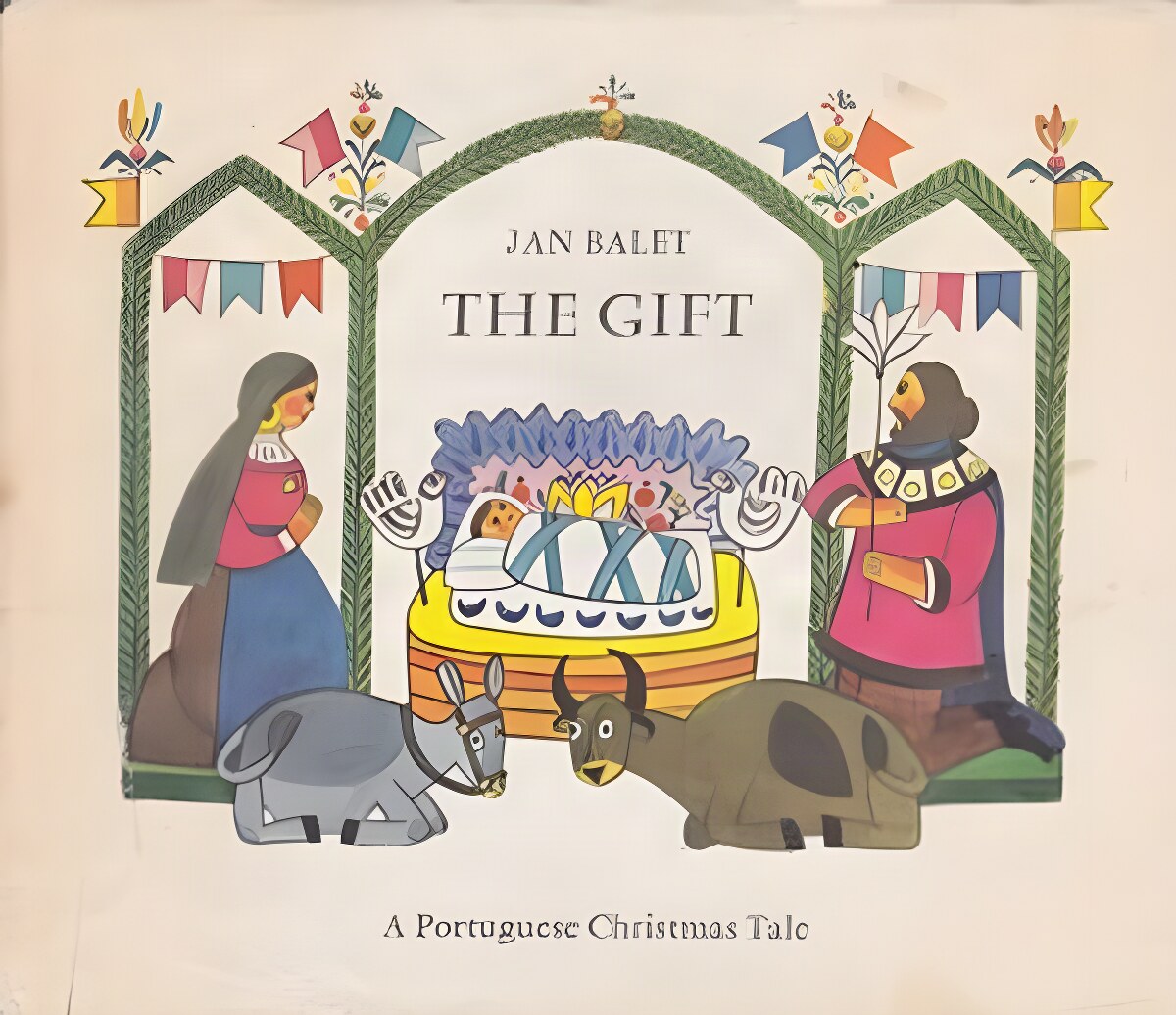
Hardcover. NY, Seymour Lawrence/Delacorte, 1st US, 1967, Book: Very Good, Dust Jacket: Good, Hardcover in a lightly worn dust jacket with closed tears. Illustrated in color by Balet. ist published in Germany in 1966.
Hardcover. London, Hard Case Crime, 1st thus, 2015, Book: Very Good, Dust Jacket: None, Hardcover, colorful dust jacket with a retro-style illustration by Glen Orbik. Cashed out from the NYPD after 24 years, Doak Miller operates as a private eye in steamy small-town Florida, doing jobs for the local police. Like posing as a hit man and wearing a wire to incriminate a local wife who's looking to get rid of her husband. But when he sees the wife, when he looks into her deep blue eyes. He falls--and falls hard. Soon he's working with her, against his employer, plotting a devious plan that could get her free from her husband and put millions in her bank account. But can they do it without landing in jail? And once he's kindled his taste for killing...will he be able to stop at one? Like new.
Softcover. London, Hard Case Crime, 1st thus, 2005, Book: Very Good, Dust Jacket: None, Softcover, colorful wraps with a retro-style illustration by Robert McGinnis. Johnny Hayden and Doug Rance had a scheme to take real estate entrepreneur Wallace Gunderman for all he was worth. But they needed a girl on the inside to make it work. Enter Evelyn Stone: Gunderman's secretary, his lover - and his worst enemy. Gunderman had promised to marry her, but never came through. Now she's ready to make him pay. Lawrence Block has won more awards for mystery writing than almost any other living author: 4 Edgar Awards, 4 Shamus Awards, 2 Maltese Falcon Awards, the Nero Wolfe Award, and more. Block was named a Grandmaster by the Mystery Writers of America, their highest honor. Like new.
NY, Simon & Schuster, 1st, 2021, Book: Very Good, Dust Jacket: Very Good, Hardcover in a bright, unclipped dust jacket. 609 pages, b&w illustrations. They say that history is written by the victors. But not in the case of the most famous dissenter on the Supreme Court. Almost a century after his death, John Marshall Harlan's words helped end segregation and gave us our civil rights and our modern economic freedom. But his legacy would not have been possible without the courage of Robert Harlan, a slave who John's father raised like a son in the same household. After the Civil War, Robert emerges as a political leader. With Black people holding power in the Republican Party, it is Robert who helps John land his appointment to the Supreme Court. At first, John is awed by his fellow justices, but the country is changing. Northern whites are prepared to take away black rights to appease the South. Giant trusts are monopolizing entire industries. Against this onslaught, the Supreme Court seemed all too willing to strip away civil rights and invalidate labor protections. So as case after case comes before the court, challenging his core values, John makes a fateful decision: He breaks with his colleagues in fundamental ways, becoming the nation's prime defender of the rights of Black people, immigrant laborers, and people in distant lands occupied by the US. Harlan's dissents, particularly in Plessy v. Ferguson, were widely read and a source of hope for decades. Thurgood Marshall called Harlan's Plessy dissent his "Bible"--and his legal roadmap to overturning segregation. In the end, Harlan's words built the foundations for the legal revolutions of the New Deal and Civil Rights eras.
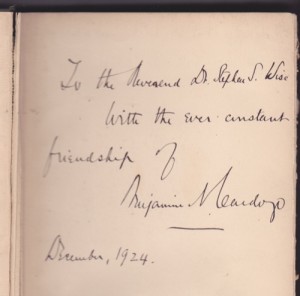
Hardcover. New Haven CT, Yale University Press, 1st, 1924, Book: Very Good, Hardcover, black cloth with gilt title on spine partially faded. A collection of lectures given by the future Supreme Court judge in the early 20s. INSCRIBED BY CARDOZO on the front fly leaf: "To the Reverend Dr. Stephen S. Wise/With the ever constant/ friendship of/ Benjamin N. Cardozo/ December 1924". Stephen Samuel Wise (March 17, 1874 - April 19, 1949) was an early 20th-century American Reform rabbi and Zionist leader in the Progressive Era. Joining U.S. Supreme Court Justice Louis Brandeis, Felix Frankfurter, and others, Wise laid the groundwork for a democratically elected, nationwide organization of 'ardently Zionist' Jews, 'to represent Jews as a group and not as individuals'.[7] In 1917 he participated in the effort to convince President Woodrow Wilson to approve the Balfour declaration in support of Jewish settlement in Mandate Palestine.[8] In 1918. In 1932, President Herbert Hoover appointed Cardozo to the Supreme Court to succeed Oliver Wendell Holmes Jr. Cardozo served on the Court until his death in 1938, and formed part of the liberal bloc of justices known as the Three Musketeers.
Hardcover. London, Stevens and Sons, 1835, Book: Good, Dust Jacket: None, Hardcover. 575 pages. Volume Two. Front corners bumped. Some soiling to covers. Light rubbing to spine and corners.
Hardcover. NY, Alfred A. Knopf, 1st, 2025, Book: Very Good, Dust Jacket: Very Good, Hardcover in a bright, unclipped dust jacket. In this sweeping, timely thriller, a Palestinian American FBI agent teams up with a hardline Israeli cop to solve the murder of the Israeli police chief in Gaza. Clean copy.
Hardcover. Birmingham AL, The Legal Classics Library , reprint, 1984, Book: Very Good, Dust Jacket: None, Hardcover. Dark green calf with decorative gilt stamping, raised bands, all edges gilt, marbled endpapers, ribbon marker, 946 pages. Previous owner's bookplate on inside front pastedown, otherwise clean and bright. Facsimile of the 1925 edition containing all 3 volumes of the original work from 1646. The author established the system of modern public international law, based on the concept of "droit naturel," a morality-based law that superseded the laws of individuals or nations. Though based on Christian natural law, Grotius advanced the novel argument that his system would still be valid if it lacked a divine basis. In this regard Grotius pointed to the future by moving international law in a secular direction.
Hardcover. Birmingham AL, The Legal Classics Library, reprint, 1982, Book: Very Good, Dust Jacket: None, Hardcover, 72 pages. Quarto [30.5 cm] Maroon leather with raised bands, a gilt stamped title on the spine, and decorative gilt stamped designs on the spine and covers. All edges gilt. Marbled endsheets. Very good. There is a former owner's bookplate on the inside of front cover. The Laws and Liberties of Massachusetts is one of the seminal documents in the development of the American legal system. It is believed to be the precursor to the General Laws of Massachusetts and the Massachusetts Constitution. An influence on the U.S. Constitution, it contains provisions that were incorporated in the Bill of Rights.






![The Folger Library Edition of the Works of Richard Hooker: Of the Lawes of Ecclesiastical Polity: Attack and Response - Volume Four ] by: Richard Hooker/ John E. Boot](https://www.browsingisarousing.com/shop/images/The-Folger-Library-Edition-of-the-Works-of-Richard-Hooker-Of-the-Lawes-of-Ecclesiastical-Polity-Atta386149-437874.jpg "The Folger Library Edition of the Works of Richard Hooker: Of the Lawes of Ecclesiastical Polity: Attack and Response - Volume Four ] by: Richard Hooker/ John E. Boot")

 "The Franklin D. Murphy Lectures V - Programs of Medieval Illuminationby: Calkins, Robert G.")


 "THE GIRL WITH THE DEEP BLUE EYESby: Lawrence Block")
 "THE GIRL WITH THE LONG GREEN HEARTby: Lawrence Block")




 "The History of the Boroughs and Municipal Corporations: Vol. IIby: Merewether, Henry Alworth and John Archibald Stephens")
 "The Human Scale: A Novel by: Wright, Lawrence")