Hardcover. NY, WW Norton & Co, 1st, 2016, Book: Very Good, Dust Jacket: Very Good, Hardcover in a bright, unclipped dust jacket. 580 pages, 16 pages of illustrations. Eternity Street tells the story of a violent place in a violent time: the rise of Los Angeles from its origins as a small Mexican pueblo. In a masterful narrative, John Mack Faragher relates a dramatic history of conquest and ethnic suppression, of collective disorder and interpersonal conflict. Eternity Street recounts the struggle to achieve justice amid the turmoil of a loosely governed frontier, and it delivers a piercing look at the birth of this quintessentially American city. In the 1850s, the City of Angels was infamous as one of the most murderous societies in America. Saloons teemed with rowdy crowds of Indians and Californios, Mexicans and Americans. Men ambled down dusty streets, armed with Colt revolvers and Bowie knives. A closer look reveals characters acting in unexpected ways: a newspaper editor advocating lynch law in the name of racial justice; hundreds of Latinos massing to attack the county jail, determined to lynch a hooligan from Texas. Murder and mayhem in Edenic southern California. "There is no brighter sun...no country where nature is more lavish of her exuberant fullness," an Angeleno wrote in 1853. "And yet, with all our natural beauties and advantages, there is no country where human life is of so little account. Men hack one another to pieces with pistols and other cutlery as if God's image were of no more worth than the life of one of the two or three thousand ownerless dogs that prowl about our streets and make night hideous." Like-new.
Hardcover. NY, Morrow, 1st, 1998, Book: Very Good, Dust Jacket: Very Good, Hardcover in a bright, unclipped dust jacket. SIGNED BY BLOCK on title page.
Hardcover. London, Picador, 1st UK, 1992, Book: Very Good, Dust Jacket: Very Good, Hardcover in a bright dust jacket. Ever After is a rumination on death, faith, and finding meaning in life more than a proper novel. The narrator, Bill Unwin, is recovering from a failed suicide. His convalescence is used to muse over the fate of the father he never knew, and who may not even have been his father, and the ravings of his hedonistic mother over the vanity of posterity. Meanwhile, he is withholding the manuscript of one of his Victorian ancestors from a fellow Cambridge don, a vain, publicity-seeking but successful rival. This is finally the motive for a second, parallel plot, in many ways the more interesting, about the Victorian in forebear in question, Matthew Pearce. For Pearce, surveyor, amateur fossil-collector, and son-in-law to the local parson, is a man of his age, scientifically inclined yet religious. Lyell, Darwin cannot fail to attract Pearce, yet they also threaten his marriage and family, his very social standing. Clean copy.
Hardcover. NY, Morrow, 1st, 1998, Book: Very Good, Dust Jacket: Very Good, Hardcover in a bright dust jacket, 292 pages. Light wear to pictorial dust jacket protected by a clear brodart cover. A very nice, tight, clean copy.
Hardcover. NY, E.J. Brill, 1st, 1993, Book: Very Good, Dust Jacket: Very Good, Hardcover in a bright dust jacket, 578 pages plus charts, b&w photos in rear. Translation and notes by H.P. Salomon and I.S.D. Sassoon. Da Costa's long-lost book rejects the divine origin of the rabbinic tradition. His insight was that what he calls Pharisaism is irreconcilable with the religion of the Pentateuch and therefore cannot derive from the same source. He claims, for example, that the Law of Moses does not allow for a belief in an afterlife for individual human beings. Concomitantly he denied the Mosaic origin of the notion of eternal punishment. The rabbinic reading of the Mosaic Law appeared to him almost as great a falsification as the Christian one. Yet there could be no reversion to Christianity and despite his deep rift with the synagogue he still believed in ultimate redemption for the Jewish people. As he so dramatically declares in his closing sonnet, Israel's rehabilitation depends on its shedding man-made doctrines, and holding fast to the Law in its purity.
Hardcover. New York , Viking Press, 1st, 1949, Book: Very Good, Dust Jacket: Good, Hardcover, 152 pages, blue cloth covers with dark blue design. Illustrated in b&w by Lawson. . Dust jacket with light edgewear, chipping, not price clipped ($2.50).
Hardcover. NY, Weybright and Talley, 1st US, 1970, Book: Very Good, Dust Jacket: None, Hardcover, lavender cloth with gilt tile on spine, 338 pages. Previous owner's name on front fly leaf, otherwise clean. No dust jacket but flaps laid-in.
Hardcover. NY, Thames & Hudson, 1st, 2006, Book: Very Good, Dust Jacket: Very Good, Hardcover, 240 pages. This groundbreaking publication announces the death of the conventional portrait. In an age when we are bombarded with flawless images of youthful beauty, when rejuvenation is available through a jar of cream or a scalpel, artists and photographers seek to portray the face in new ways.Through a variety of techniques, including computer manipulation, photomontage, and retouching, the artists present their new portraits. They replace clarity with blur, the split-second with the elastic moment, questioning the notion of a fixed identity, of universality of expression, of what constitutes beauty. Whether Cindy Sherman's disquieting disguises, Gillian Wearing's masked self-portrait, LawickMuller's composite portraits of couples, or Orlan's disturbing experiments with cosmetic surgery, these faces demand attention. 260 illustrations, 165 in color.
Hardcover. New York, Charles Scribner's Sons, 1st, 1905, Book: Very Good, Dust Jacket: None, Hardcover, 104 pages with B/W illustrations by author. Soiled ivory colored covers with orange, blue and black printed design on front, black lettering on spine. Hinge cracking but binding solid. Pages clean. Previous bookseller's label on back end papers.
Softcover. McKinleyville CA, Fithian Press/, 1st, 2014, Book: Very Good, Dust Jacket: None, Softcover, 238 pages, b&w illustrations. INSCRIBED BY COHEN on the front fly leaf. Robert Cohen is the founding Chair of Drama a the University of California, Irvine, and has written 20 book on theatre. In this memoir, he recounts the "lucky breaks" that took him from being a college student preparing for law school to a long career as a man of the theatre. The first lucky break took place in his junior year of high school when Judy Berkenbilt asked him to be in "Belles On Their Toes," a play she was directing. She wanted to cast him as a policeman but after reading the script, Cohen asked for the role as the family handyman, which she agreed to. He identifies Lucky Break #2, in the same year, as ending up in a Vocational Typing class when he transferred out of the Mechanical Drawing class to escape a creepy instructor. He became a fabulous typist and was able to earn lunch money in college by typing papers for other students. Lucky Break #3 was getting into the 12th grade Advanced English class taught by Miss Casey, which advanced his intellectual development and reading "like crazy." Lucky Break #6 was being asked to take over as coach of the swimming program at the camp where he was a counselor. When Cohen did not have the $20 needed to to get a Water Safety Instructor certification, the camp owner asked him take over the drama program instead. And so on.
Softcover. NY, Oxford University Press, reprint, 2012, Book: Very Good, Dust Jacket: None, Softcover, 592 pages. Two-time Lincoln Prize-winning historian Allen C. Guelzo offers a marvelous portrait of the Civil War and its era, covering not only the major figures and epic battles, but also politics, religion, gender, race, diplomacy, and technology. And unlike other surveys of the Civil War era, it extends the reader's vista to include the postwar Reconstruction period and discusses the modern-day legacy of the Civil War in American literature and popular culture. Guelzo also puts the conflict in a global perspective, underscoring Americans' acute sense of the vulnerability of their republic in a world of monarchies. He examines the strategy, the tactics, and especially the logistics of the Civil War and brings the most recent historical thinking to bear on emancipation, the presidency and the war powers, the blockade and international law, and the role of intellectuals, North and South. Clean copy.
Hardcover. Princeton NJ, Princeton Architectural Press, 1st, 2001, Book: Very Good, Dust Jacket: Very Good, 326 pages, illustrated with b&w photographs, several color plates and architectural drawings by Vitale. Foreword by Horace Havemeyer III. Ferruccio Vitale is America's forgotten landscape architect. Though his works like Skylands and Longwood Gardens are well known, his name has been eclipsed by his contemporary, Frederick Law Olmsted, Jr. Yet Vitale's influence on the modern direction of landscape design and his promotion of it as a profession is arguably more significant than Olmsted's. His unique designs and philosophy, which challenged the then-dominant pictorial mode of landscape architecture, influenced generations of followers, and is still felt today. Vitale (1875-1933) developed his rationale designs, based on the principles of composition from the fine arts and architecture, in both civic commissions and, most notably, at the country estates of captains of industry and finance. He introduced an idealized and abstracted type of formal design that created beautiful spaces, structured large sites, and reflected informal and relaxed plant compositions. Ferruccio Vitale tours over 40 of his masterworks, photographed by some of the best landscape photographers of the time, including Samuel Gottscho. It recounts the compelling story of a life in the early twentieth century, influenced by immigrant dreams, social clubs, and professional connections, and its culmination in some of the greatest landscapes of the 20th century.
Hardcover. Princeton NJ, Princeton Architectural Press, 1st, 2001, Book: Very Good, Dust Jacket: Very Good, 326 pages, illustrated with b&w photographs, several color plates and architectural drawings by Vitale. Foreword by Horace Havemeyer III. Ferruccio Vitale is America's forgotten landscape architect. Though his works like Skylands and Longwood Gardens are well known, his name has been eclipsed by his contemporary, Frederick Law Olmsted, Jr. Yet Vitale's influence on the modern direction of landscape design and his promotion of it as a profession is arguably more significant than Olmsted's. His unique designs and philosophy, which challenged the then-dominant pictorial mode of landscape architecture, influenced generations of followers, and is still felt today. Vitale (1875-1933) developed his rationale designs, based on the principles of composition from the fine arts and architecture, in both civic commissions and, most notably, at the country estates of captains of industry and finance. He introduced an idealized and abstracted type of formal design that created beautiful spaces, structured large sites, and reflected informal and relaxed plant compositions. Ferruccio Vitale tours over 40 of his masterworks, photographed by some of the best landscape photographers of the time, including Samuel Gottscho. It recounts the compelling story of a life in the early twentieth century, influenced by immigrant dreams, social clubs, and professional connections, and its culmination in some of the greatest landscapes of the 20th century.
Hardcover. London, Bloomsbury Academic, 1st, 2020, Hardcover, decorated boards, 244 pages. The portrait of John Locke as a secular advocate of Enlightenment rationality has been deconstructed by the recent 'religious turn' in Locke scholarship. This book takes an important next step: moving beyond the 'religious turn' and establishing a 'theological turn', Nathan Guy argues that John Locke ought to be viewed as a Christian political philosopher whose political theory was firmly rooted in the moderating Latitudinarian theology of the seventeenth-century. Nestled between the secular political philosopher and the Christian public theologian stands Locke, the Christian political philosopher, whose arguments not only self-consciously depend upon Christian assumptions, but also offer a decidedly Christian theory of government. Finding Locke's God identifies three theological pillars crucial to Locke's political theory: (1) a biblical depiction of God, (2) the law of nature rooted in a doctrine of creation and (3) acceptance of divine revelation in scripture. As a result, Locke's political philosophy brings forth theologically-rich aims, while seeking to counter or disarm threats such as atheism, hyper-Calvinism, and religious enthusiasm. Clean copy.
Hardcover. Miami, Mad Cave Studios, 1st, 2024, Book: Very Good, Dust Jacket: None, Hardcover in pictorial boards,, oblong format, 205 pages in color by Raymond. Introduction by Doug Murray. More magnificent Sunday pages by one legendary master artist. Five complete adventures, each one legendary : Beast Men of Mongo, Outlaws of Mongo, Tyrant of Mongo, Ice Kingdom of Mongo and Power Men of Mongo! Escalating tensions between Flash and Ming threaten to bring about a full-scale planetary war...and only Ming's estranged son-in-law, Prince Barin, can avert it. Considered Raymond's artistic peak period! Clean, bright copy, no dj issued.
Softcover. San Francisco, Chronicle Books, 2nd pr., 1987, Book: Very Good, Dust Jacket: None, 143 pages. Softcover. Light edgewear to wrappers, light fading to top edge. Black and white pictures throughout.
Hardcover. NY, William Morrow , 1st, 1997, Book: Very Good, Dust Jacket: Very Good, Hardcover in a bright, unclipped dust jacket. INSCRIBED BY LEVINE on the half-title page. Pro football player turned lawyer Jake Lassiter is savoring a drink at a South Beach bar when a beautiful young woman shoots the man on the next bar stool and faints in Lassiter's arms. It's one way to get clients, he figures. The woman, Chrissy Bernhardt, is charged with the first-degree murder of her father, whom Chrissy believes abused her as a child. Lassiter takes the case, which is complicated by the fact that Chrissy's repressed memories of her father's abuse have been "unlocked" with the help of a therapist who turns out to be her late mother's former lover. The seventh Lassiter novel continues the series' steady improvement. Lassiter is smart, tough, funny, and very human. He's coming on fast as one of the most entertaining series characters in contemporary crime fiction. Clean copy.
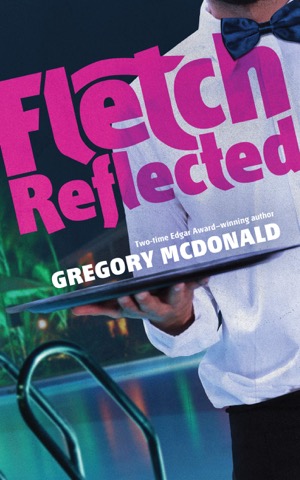
Softcover. Ashland OR, Blackstone Publishing, reprint, 2019, Book: Very Good, Dust Jacket: None, Softcover, pictorial wraps. Fletch's newfound son Jack has just heard from an old flame who's about to marry a billionaire's son -- that is until her future father-in-law suffers several near-fatal accidents. The potential victim -- the inventor of the perfect mirror, which allows people to see themselves exactly as others do -- lives in his own secluded compound, so Jack gets a job as pool hand on the estate to get closer to the action. Now Jack's life may be in danger, and he will need his inimitable father's help to discover -- before it's too late -- whose reflection hides a killer's heart.
Softcover. Ashland OR, Blackstone Publishing, reprint, 2019, Book: Very Good, Dust Jacket: None, Softcover, pictorial wraps. Fletch's newfound son Jack has just heard from an old flame who's about to marry a billionaire's son -- that is until her future father-in-law suffers several near-fatal accidents. The potential victim -- the inventor of the perfect mirror, which allows people to see themselves exactly as others do -- lives in his own secluded compound, so Jack gets a job as pool hand on the estate to get closer to the action. Now Jack's life may be in danger, and he will need his inimitable father's help to discover -- before it's too late -- whose reflection hides a killer's heart.
Hardcover. New York, Abrams, 1st, 2018, Book: Very Good, Dust Jacket: Very Good, Hardcover, 144 pages, illustrated with color photographs by Morell. Conversation by Lawrence Weschler, afterword by Lisa McElaney. Bright, clean copy in a similar dust jacket.
Hardcover. NY, Macmillan, reprint, 1947, Book: Very Good, Dust Jacket: Fair, Hardcover in a worn dust jacket, 471 pages, b&w plates. The biography of the great English lawyer who appeared in dozens of famous murder trial at the Old Bailey. Dust jacket flap clipped, name on front fly leaf, otherwise clean.
Hardcover. New York, Watson Guptill, 1st Ed., 1946, Book: Good, Dust Jacket: None, Hardcover, black cloth stamped in 3 colors. 300 b&w illustrations, 24 in color. Profiles famous illustrators of the 1940s and includes their photo, examples of their work, a step-by-step demonstration of their working methods, and text written from interviews. Artists are: Constantin Alajalov, Boris Artzybasheff, John Atherton, Ernest Hamlin Baker, Walter Biggs, V. Bobri, Harrison Cady, Fred Cooper, Mario Cooper, Dean Cornwell, Gregory D'Alessio, Floyd Davis, Stevan Dohanos, Albert Dorne, Harvey Dunn, Carl Erickson, John Gannam, Glenn Grohe, George Giusti, Stuart Hay, Peter Helck, Earl Oliver Hurst, Walter Klett, Robert Lawson, Ervine Metzl, Wallace Morgan, William Oberhardt, Henry C. Pitz, George Price, Ray Prohaska, Robert Riggs, Leslie Ragan, Norman Rockwell, Martha Sawyers, Howard Scott, Amos Sewell, Donald Teague, Aldren A. Watson, Denys Wortman, and N. C. Wyeth. Top of spine has cloth frayed, rear edge of spine, previous owner's signature on front fly leaf otherwise clean.
Softcover. A. J. Cornell Publications , 1st thus, 2018, Book: Very Good, Dust Jacket: None, Softcover, 189 pages. Cornell Woolrich, best known as the author of "Rear Window," is unsurpassed in his ability to create and sustain sheer suspense. In his tales of terror, ordinary people find themselves in the most extraordinary circumstances--and, as readers, we share their spine-tingling tension every step of the way. Collected here are four of his most nail-biting novellas: EYES THAT WATCH YOU: Greedy Vera Miller plots her husband's murder right under the nose of her mute, paralyzed mother-in-law. After all, the old lady won't be able to tell anyone about the crime. Or will she? THE NIGHT I DIED: Nice guy Ben Cook, goaded by his scheming common-law wife, fakes his own suicide and moves to another town--all to trick his life insurance company into making a large payout. No one en route or at the new address will recognize him, will they? YOU'LL NEVER SEE ME AGAI": Ed Bliss's new bride, miffed by her husband's insults about her biscuits, promises that Ed will never have to see her again--and storms out! When she doesn't return within a few days, Ed begins to suspect foul play--but when he reports the crime to the police, he's the first one they suspect! MURDER ALWAYS GATHERS MOMENTUM: For his wife's sake, Dick Paine approaches a former employer for back wages he is owed--but things go terribly wrong and the old boss ends up dead. Now the guilt-ridden Paine, who'd never before committed a crime, is convinced that people will figure out what happened. As his paranoia gathers momentum, anyone he meets is at risk of becoming his next victim.




 "Ever After by: Swift, Graham")

 "Fabulous Frauds: Fascinating Tales of Great Art Forgeries by: Jeppson, Lawrence")


 "Flashing on the Sixtiesby: Law, Lisa")
 "Flowers for Lisa: a Delirium of Photographic Inventionby: Morell, Abelardo")
 "Forty Illustrators and How They Workby: Watson, Ernest W.")
