Hardcover. La Salle IL, Open Court Publishing , 1st, 1946, Book: Very Good, Dust Jacket: None, Hardcover, dark green cloth covers, gilt lettering on spine, 567 pages. The Paul Carus Lectures: Seventh Series, 1945. Name on a blank prelim page, otherwise clean.
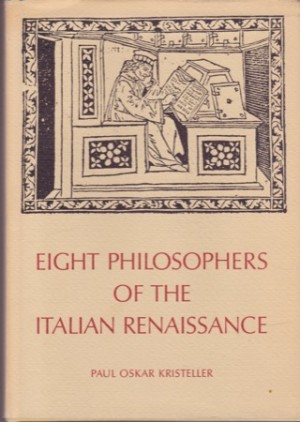
Hardcover. Stanford CA, Stanford University Press, 1st, 1964, Book: Very Good, Dust Jacket: Very Good, Hardcover in a bright dust jacket, 194 pages. Based upon the 1961 Arensberg Lectures, given at Stanford University, this collection of essays offers a genuinely unified interpretation of Italian Renaissance thought by describing and evaluating the philosophies of eight pivotal figures: 1). Francesco Petrarch. 2). Lorenzo Valla. 3). Marsilio Ficino. 4). Giovanni Pico della Mirandola. 5). Pietro Pomponazzi. 6). Bernardino Telesio. 7). Francesco Patrizi. 8). Giordano Bruno. With appendix: The medieval antecedents of Renaisssance Humanism, notes, bibliographical survey and index. Name on front fly leaf, otherwise clean.
Hardcover. POONA, Oriental Book Agency, 1st, 1939, Book: Very Good, Dust Jacket: None, 567 pages. Hardcover. Boards bound at spine with orange quartercloth, has fading and foxing to spine from age. Gray cardboard cover boards (some agewear). Pages and edges have some tanning, but otherwise unmarked. Previous owner's name on front flyleaf. This work is a product of seven manuscripts. It begins with the English tranlation of lectures on Nyayasutras by Gautama. The author has also used his notes from Bodhasiddhi.
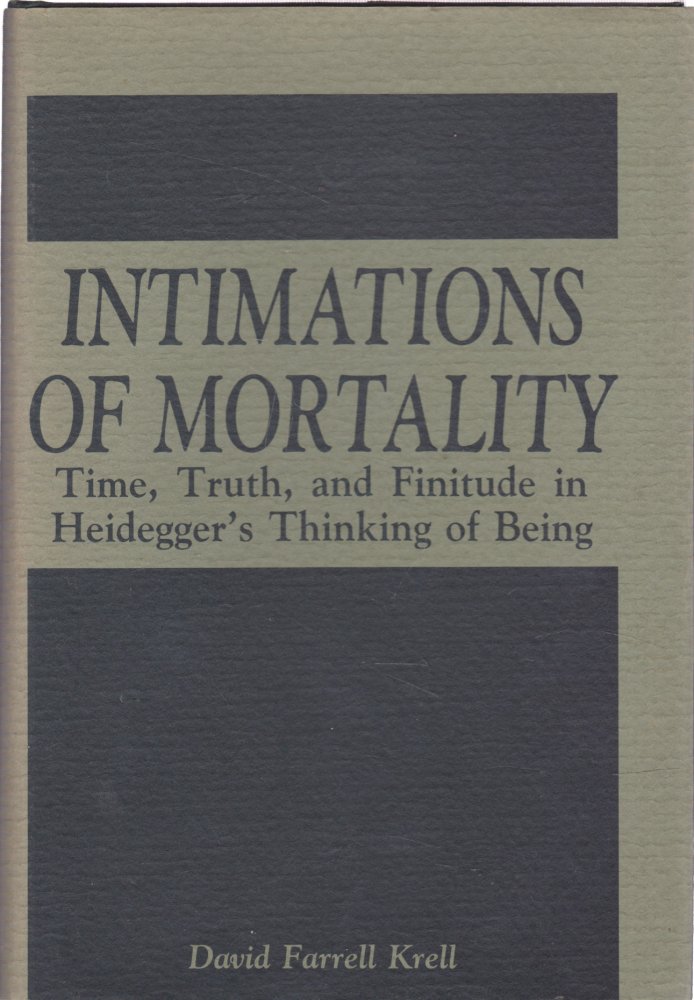
Hardcover. Pennsylvania State University Press, 1st, 1986, Book: Very Good, Dust Jacket: Very Good, Hardcover in a bright dust jacket, 201 pages. Four major subthemes in Heidegger's thinking are explored in the book's four parts: the fundamental ontology developed in Being and Time; the "lighting and clearing" of Being, understood as "unconcealment"; the history of philosophy-with emphasis on Heraclitus, Hegel, and Nietzsche-interpreted as the "destiny" of Being; and the poetics of Being, explicated as the "fundamental experience" of mortality. Neither an introduction nor a survey, this book is a close reading of a wide range of Heidegger's books, lectures, and articles-including extensive material not yet translated into English-informed by the author's conversations with Heidegger in 1974-76. Each of the four subthemes is treated critically. The aim of the book is to push its interrogations of Heidegger's thought as far as possible, in order to help the reader toward an independent assessment of his work and to encourage novel, radically conceived approaches to traditional philosophical problems. Clean copy.
Softcover. NY, Columbia University Press, 2nd pr., 1986, Book: Very Good, Dust Jacket: None, Softcover, 353 pages. The only available collection of Ricoeur's lectures on ideology and utopia, this seminal collection discusses the work of Althusser, Marx, Habermas, Geertz, Mannheim, and Weber. Clean copy.
Hardcover. Berkeley CA, University of California Press, 1st, 1985, Book: Very Good, Dust Jacket: Very Good, Hardcover in a bright dust jacket, 423 pages. Volume III only. Edited by Peter C. Hodgson. Translated from the German by R. F. Brown, et al. The third volume of philosopher G.W.F. Hegel's LECTURES ON THE PHILOSOPHY OF RELIGION covers Hegel's philosophical interpretation of Christianity. Taken together, the three volumes establish a critical study, separating the material and publishing it as autonomous units on the basis of a complete re-editing of the sources--a series of actual lectures delivered by Hegel in 1821, 1824, 1827, and 1831. Name on front fly leaf, otherwise clean.
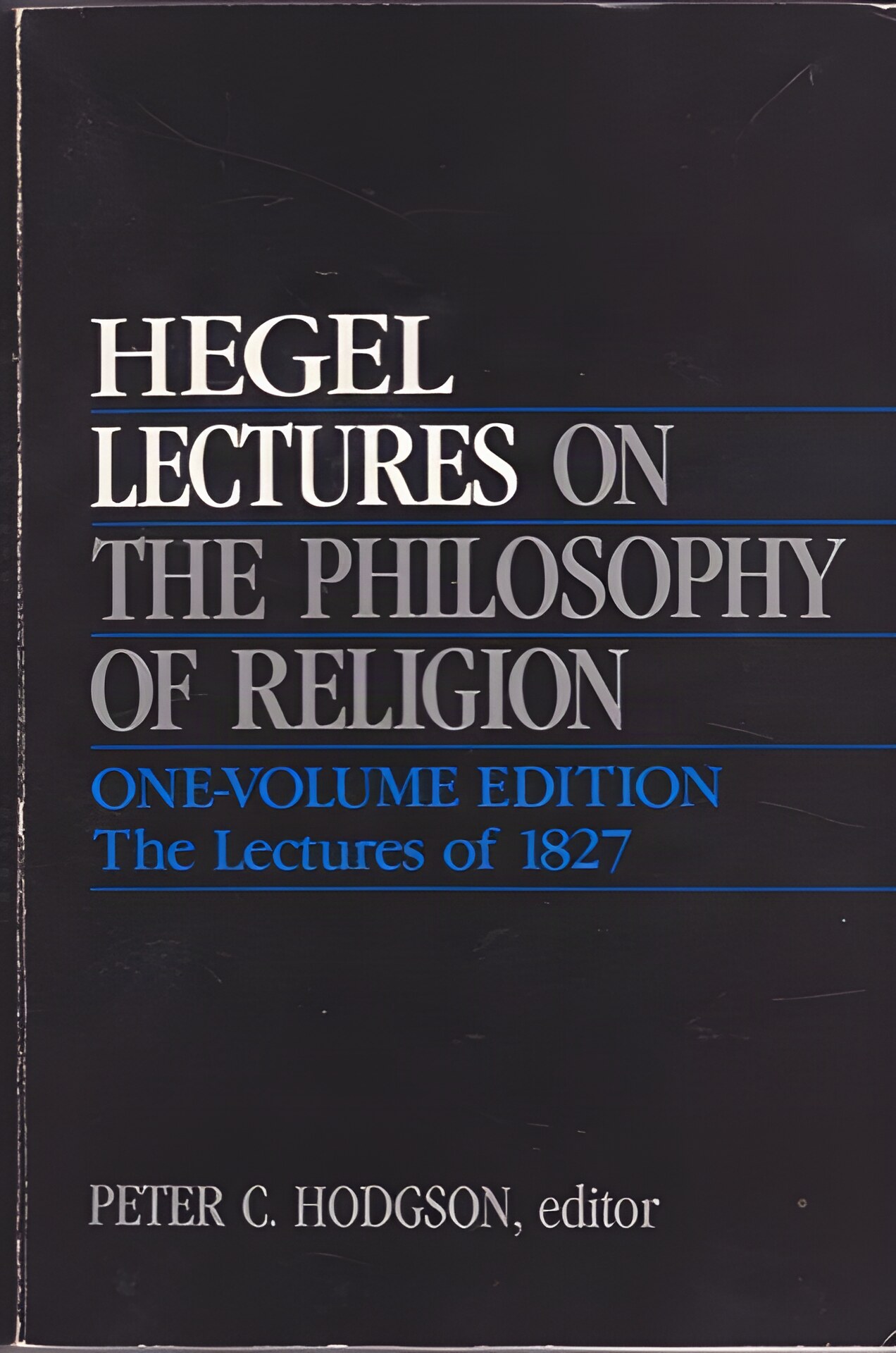
Softcover. Berkeley, University of California Press, reprint, 1988, Book: Very Good, Dust Jacket: None, Sotcover, 552 pages. From the complete three-volume critical edition of Hegel's Lectures on the Philosophy of Religion, this edition extracts the full text and footnotes of the 1827 lectures, making the work available in a convenient form for study. Of the lectures that can be fully reconstructed, those of 1827 are the clearest, the maturest in form, and the most accessible to nonspecialists. In them, readers will find Hegel engaged in lively debates and in important refinements of his treatment of the concept of religion, the Oriental religions and Judaism, Christology, the Trinity, the God-world relationship, and many other topics. Name onfront fly leaf, otherwise clean.
Hardcover. London, Rudolf Steiner Publishing, 1st, 1945, Book: Good, Hardcover, red cloth faded to tan on front and spine, 211 pages. Translation by H. Collison. Name and stamp on front fly leaf, no other markings.
Hardcover. London, Macmillan & Co, reprint, 1956, Book: Good, Dust Jacket: Good, Hardcover, 530 pages, dust jacket edge wear and small tears, price clipped. Pencil markings and underlining on some pages, foxing on edges, and previous owner's signature on front fly leaf, otherwise, clean and tight copy.
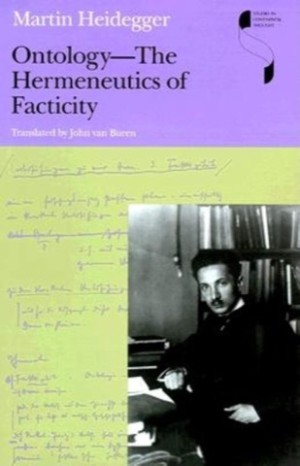
Hardcover. Bloomington, Indiana University Press, 1st, 1999, Book: Very Good, Dust Jacket: Good, Hardcover in a very good dust jacket with fading to spine and spine edge, 138 pages. "With thematic trajectories pointing both toward and beyond Being and Time, this translation ...is of enormous significance for students of the development of Heidegger's early thought." - Daniel O. Dahlstrom, Boston University. First published in 1988 as volume 63 of Heidegger's Collected Works, "Ontology" follows Heidegger's lectures at the University of Freiburg during the summer semester of 1923. In these lectures, Heidegger reviews and makes critical appropriation of the hermeneutical tradition from Plato, Aristotle, and Augustine to Schleiermacher and Dilthey. Other important themes that are taken up are his turn to the facticity and everyday world of Dasein, his interpretation of human existence in the present historically and philosophically, his understanding of phenomenology, and his repeated insistence on the temporal dimension of interpretation and significance. Students of Heidegger's thought will find initial breakthroughs in his unique elaboration of the meaning of human existence and "question of Being," which received mature expression in Being and Time. Name on front fly leaf, light pencil notations to rear endpapers, 3 pages.
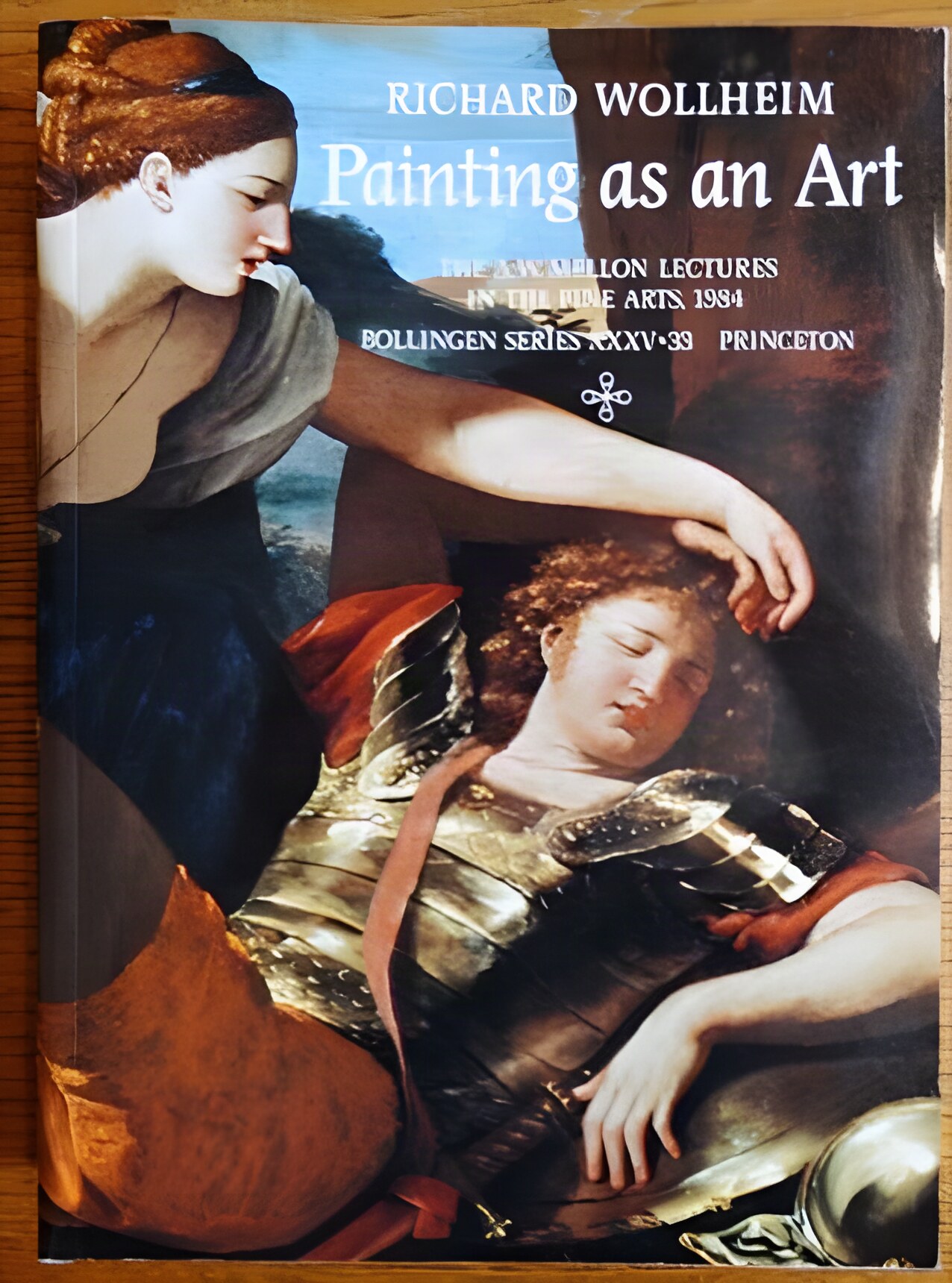
Hardcover. Princeton NJ, Princeton University Press, 1st, 1987, Book: Very Good, Dust Jacket: Very Good, Hardcover in a bright dust jacket, In Painting as an Art, which began as the 1984 Andrew Mellon Lectures at the National Gallery of Art in Washington, D.C., philosopher Richard Wollheim transcended the boundaries and habits of both philosophy and art history to produce a large, encompassing vision of viewing art. Wollheim had three great passions--philosophy, psychology, art--and his work attempted to unify them into a theory of the experience of art. He believed that unlocking the meaning of a painting involved retrieving, almost reenacting, the creative activity that produced it.In order to fully appreciate a work of art, Wollheim argued, critics must bring to the understanding of a work of art a much richer conception of human psychology than they have in the past: "Many [critics] . . . make do with a psychology that, if they tried to live their lives by it, would leave them at the end of an ordinary day without lovers, friends, or any insight into how this came about." Many reviewers have remarked on the insightfulness of the book's final chapter, in which Wollheim contended that certain paintings by Titian, Bellini, de Kooning, and others represent the painters' attempts to project fantasies about the human body onto the canvas. Light fading to dj spine. Name on front fly leaf, otherwise clean.
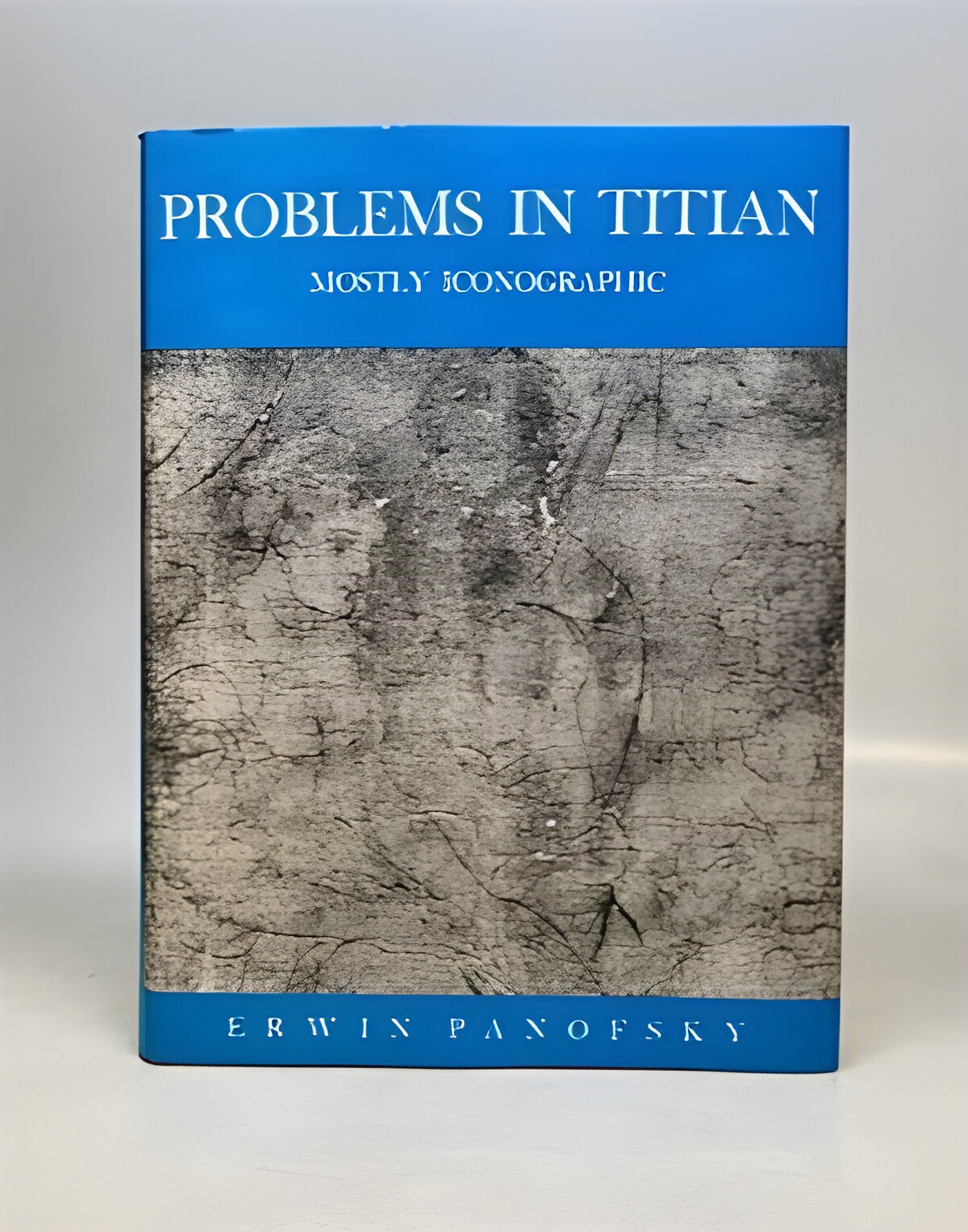
Hardcover. New York, NYUP, 1st, 1969, Book: Very Good, Dust Jacket: Very Good, Hardcover. 208 pages of text followed by a ection of corresponding black & white illustrations. Titian's fame as the greatest colorist in the history of painting has led students of his art to concentrate on problems of style and authenticity rather than on problems of content and meaning. Dr. Panofsky treats this neglected aspect of the Venetian master's work with a wealth of humanistic scholarship, exploring such varied topics as Titian's relationship to the philosophy and literature of his time, his attitude toward the antique, and the reasons behind his unrivaled acclaim as a portraitist. These studies show Titian to have been a man of far richer and more complex culture than hitherto assumed, possessed not only of the supremely gifted hand but of a subtle and poetic mind.Light wear. Clean, tight copy.
Hardcover. La Salle, Illinois, Open Court, 1st, 1974, Book: Good, Dust Jacket: Fair, Hardcover, 151 pages. No. 14 of the Paul Carus Lecture Series. Tears on dust jacket and some foxing on rear of dust jacket. Dust jacket rubbing on front. Previous owner's signature on front flyleaf. Small notes and markings in pencil on about 20 pages. Light creasing on top edge. Nice reading copy.
Hardcover. UK, Cambridge at the University Press, 2nd pr., 1926, Book: Very Good, Dust Jacket: None, Hardcover, dark blue cloth with gilt lettering on spine, 202 pages. When The Concept of Nature by Alfred North Whitehead was first published in 1920 it was declared to be one of the most important works on the relation between philosophy and science for many years, and several generations later it continues to deserve careful attention. This is the second printing published six years later. Whitehead explores the fundamental problems of substance, space and time, and offers a criticism of Einstein's method of interpreting results while developing his own well-known theory of the four-dimensional 'space-time manifold'. Name on front fly leaf, light pencil notations to 15 pages.
Hardcover. London, Hodder and Stoughton, 1st, 1938, Book: Very Good, Dust Jacket: None, Hardcover, maroon cloth with gilt stamped spine, 255 pages including index. Karl Barth (1886-1968), the Swiss Reformed professor and pastor, was once described by Pope Pius XII as the most important theologian since Thomas Aquinas. As principal author of 'The Barmen Declaration', he was the intellectual leader of the German Confessing Church -- the Protestant group that resisted the Third Reich. This volume contains The Gifford Lectures he delivered in Aberdeen in 1937 and 1938. Name on front fly leaf, pencil marking (mostly underlining) to half the pages. Sound copy.
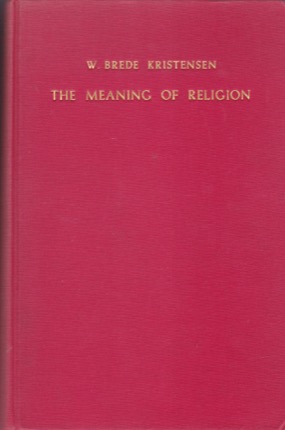
Hardcover. The Hague, Martinus Nijhoff, 3rd pr., 1971, Book: Very Good, Dust Jacket: None, Hardcover, red cloth stamped in gilt, 532 pages. Translated by John Carman. Monumental work by the Norwegian professor on ancient religion, cosmology, and anthropology. Spine cloth lightly faded. Clean copy.
Hardcover. NY, Charles Scribner's Sons, 1st thus, 1953, Book: Good, Dust Jacket: None, Hardcover, green cloth with gilt stamping, First one-volume edition, 300 and 332 pages. Spine lettering faded. Good sound copy, but pencil marking throughout.
Hardcover. Boston, Houghton Mifflin, 1st, 1911, Book: Very Good, Dust Jacket: None, Hardcover, blue cloth covers, Gilt title on spine, top edge gilt, 211 pages. The book explores the concept of freedom, its meaning, and its significance in human life. Palmer examines the different philosophical and ethical theories surrounding freedom and its limitations, including determinism and the role of the state in regulating individual freedom. He also discusses the relationship between freedom and morality, and the importance of individual responsibility in the exercise of freedom. The text results from a course of lectures delivered in 1909 before the Lowell Institute of Boston. Delivered without notes, they were carefully reported and subsequently much revised. Clean copy.
Hardcover. NY, Open Court/ W.W. Norton, 1st, 1930, Book: Very Good, Dust Jacket: None, Hardcover, dark green cloth, gilt lettering on spine, 325 pages. Includes chapters on Bertrand Russell and Alfred North Whitehead. "The Revolt Against Dualism, first published in 1930, belongs to a tradition in philosophical theorizing that Arthur O. Lovejoy called "descriptive epistemology." Lovejoy's principal aim in this book is to clarify the distinction between the quite separate phenomena of the knower and the known, something regularly obvious to common sense, if not always to intellectual understanding. This work is as much an argument about the ineluctable differences between subject and object and between mentality and reality, as it is a subtle polemic against those who would stray far from acknowledging these differences. With a resolve that lasts over three hundred pages, Lovejoy offers candid evaluations of a generation's worth of philosophical discussions that address the problem of epistemological dualism. Name on front fly leaf, pages tanning, otherwise very good, clean copy.
Hardcover. Hartford CT, Edwin Hunt, 1st, 1847, Book: Very Good, Dust Jacket: None, Hardcover, 213 pages. 7.75 x 4.75", blind & gold stamped brown cloth. A collection of sermons: Elements of Power: spirit of enterprise, enthusiasm, courage, readiness to receive & propagate new truths; Sources of Danger: trifling pursuits, unworthy associates, improper pleasures & amusements, ball-room, intemperance, theatre, improper reading; Pleasure & the Judgment; Demands of Age: reforms, slavery, war, temperance; spurious reforms, capital punishment. Some light foxing, minor wear to covers, clean.
Hardcover. Oxford UK, Sandford Publications, 1st, 1980, Book: Very Good, Dust Jacket: None, Hardcover, limited to 750 copies, 182 pages, b&w illustrations, INSCRIBED BY DEWHURST on inside front cover, brown faux-leather. Thomas Willis (1621-1675) was an English doctor who played an important part in the history of anatomy, neurology and psychiatry, and was a founding member of the Royal Society.
Hardcover. Oxford UK, Clarendon Press, 1st, 1957, Book: Very Good, Dust Jacket: None, Hardcover, blue cloth with gilt lettering on spine, 148 pages, paper with light tanning. The relationship between formal logic and general philosophy is discussed under headings such as A Re-examination of Our Tense-Logical Postulates, Modal Logic in the Style of Frege, and Intentional Logic and Indeterminism. The relationship between formal logic and general philosophy is discussed under headings such as A Re-examination of Our Tense-Logical Postulates, Modal Logic in the Style of Frege, and Intentional Logic and Indeterminism. Name on front fly leaf, otherwise clean.
Softcover. UK, Cambridge University Press, 8th pr., 2008, Book: Very Good, Dust Jacket: None, Softcover, 751 pages. -In this wide-ranging book, based on her Gifford Lectures, philosopher Nussbaum draws on philosophy, psychology, anthropology, music and literature to illuminate the role emotions play in thoughts about important goals. Clean, bright copy.

 "An Analysis of Knowledge and Valuationby: Clarence Irving Lewis")
 "Gautama's Nyaua Sutras (With Vatsuayana-Bhasya)by: Jha, Ganganatha (English translation with revised notes)")

 "Lectures on Ideology and Utopia by: Paul Ricoeur")

 "Man as Symphony of the Creative Word: (Esoteric Studies) Twelve lectures given in Dornach, Switzerland from October 19th to November 11th, 1923 by: Steiner, Rudolf")
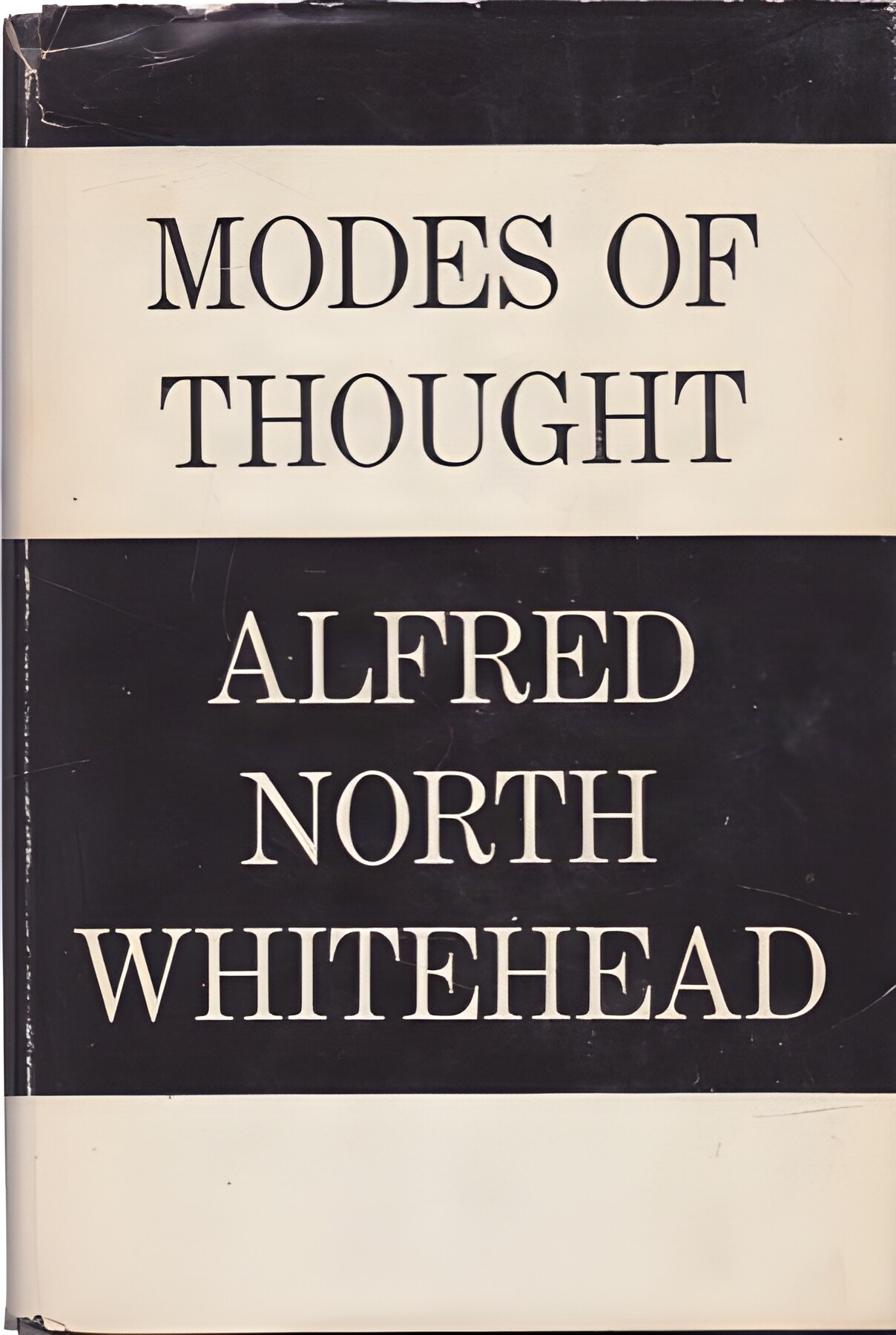
 "Nature, Man and God: Being the Gifford Lectures Delivered in the University of Glasgow in the Academical Years 1932-1933 and 1933-1934by: Temple, William")
 "Roots of Reference: The Paul Carus Lectures, Theby: Quine, W. V.")
 "The Concept of Nature: Tarner Lectures Delivered in Trinity College November 1919.by: Alfred North Whitehead")
 "The Knowledge of God and the Service of God According to the Teaching of the Reformation: Recalling the Scottish Confession of 1560 (Gifford Lectures 1937 & 1938)by:")
 "The Nature and Destiny of Man; A Christian Interpretation; I. Human Nature; II. Human Destiny; Gifford Lectures by: Reinhold Niebuhr")


 "The YOUNG MAN: or Lectures for the Times, Delivered in the Fourth Congregational Church, Hartford, Ct.by: Patton, William W.")



 "Upheavals of Thought: The Intelligence of Emotionsby: Martha C. Nussbaum")