Hardcover. San Francisco, Sierra Club Books, 1st, 1986, Book: Very Good, Dust Jacket: Very Good, Hardcover in a lightly worn dust jacket. 51 pages, illustrated with wood engravings by Michael McCurdy. Bly's commentary sheds important new light on the intellectual and spiritual development of a major American literary figure. Mild fade to dj spine. Clean copy.
Hardcover. NY, W.W. Norton & Co., 1st, 2005, Book: Very Good, Dust Jacket: Very Good, Hardcover in a bright, unclipped dust jacket, 299 pages. The author investigate the trauma behind poets Robert Lowell, Elizabeth Bishop, Sylvia Plath, John Berryman, Randall Jarrell, and Delmore Schwartz. They formed one of the great constellations of talent in American literature. In the decades after World War II, they changed American poetry forever by putting themselves at risk in their poems in a new and provocative way. Their daring work helped to inspire the popular style of poetry now known as 'confessional.' But partly as a result of their openness, they have become better known for their tumultuous lives-afflicted by mental illness, alcoholism, and suicide-than for their work. This book reclaims their achievement by offering critical 'biographies of the poetry'-tracing the development of each poet's work, exploring their major themes and techniques, and examining how they transformed life into art. Clean copy.
Hardcover. NY, Penguin Press, 1st, 2007, Book: Very Good, Dust Jacket: Very Good, Hardcover in a bright dust jacket, 512 pages. The novels of Thomas Hardy have a permanent place on every booklover's shelf, yet little is known about the interior life of the man who wrote them. A believer and an unbeliever, a socialist and a snob, an unhappy husband and a desolate widower, Hardy challenged the sexual and religious conventions of his time in his novels and then abandoned fiction to reestablish himself as a great twentieth-century lyric poet. In this acclaimed new biography, Claire Tomalin, one of today's preeminent literary biographers, investigates this beloved writer and reveals a figure as rich and complex as his tremendous legacy. Clean copy.
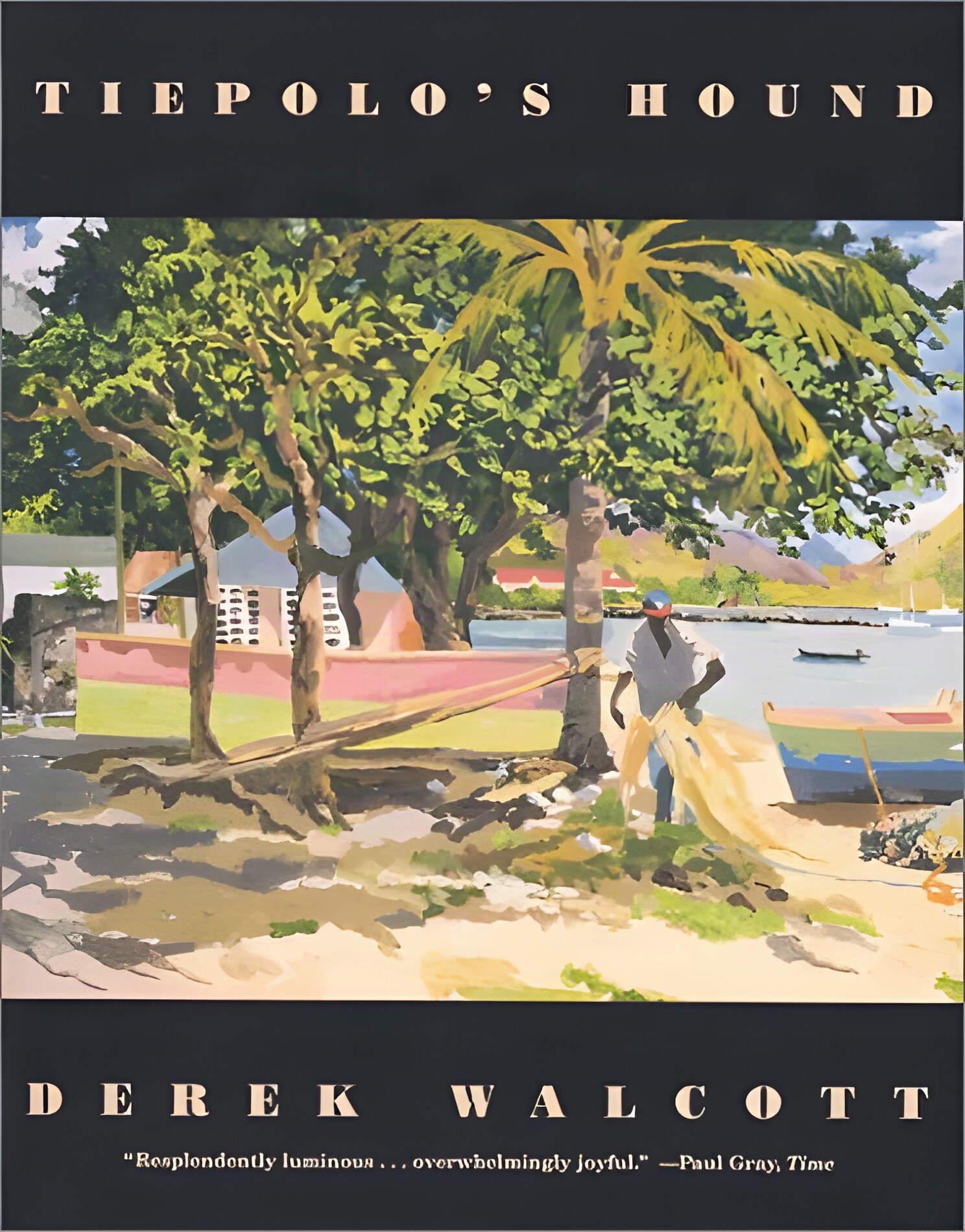
Softcover. NY, Farrar, Straus and Giroux, 1st , 2000, Book: Very Good, Dust Jacket: None, Softcover, pictorial wrappers. SIGNED and dated 2002 by this Nobel Prize winner for literature in 1992 on the front fly leaf. With 26 full-page reproductions of Walcott's paintings. Clean copy.
Hardcover. UK, Oxford University Press , 1st, 2019, Book: Very Good, Dust Jacket: Very Good, Hardcover in a bright dust jacket, 310 pages. Tolkien's Lost Chaucer uncovers the story of an unpublished and previously unknown book by the author of The Lord of the Rings. Tolkien worked between 1922 and 1928 on his Clarendon edition Selections from Chaucer's Poetry and Prose, and though never completed, its 160 pages of commentary reveals much of his thinking about language and storytelling when he was still at the threshold of his career as an epoch-making writer of fantasy literature. Drawing upon other new materials such as his edition of the Reeve's Tale and his Oxford lectures on the Pardoner's Tale, this book reveals Chaucer as a major influence upon Tolkien's literary imagination. Clean copy.
Hardcover. NY, Crown, 1st, 1995, Book: Very Good, Dust Jacket: Very Good, Hardcover in a bright, unclipped dust jacket, 644 pages, b&w illustrations. After a protracted squabble over private papers with the playwright's estate, Leverich delivers this hefty first volume of a projected two-volume life of Tennessee Williams (1911-1983). In it, Leverich, who produced several of Williams's plays and calls himself Williams's "chosen biographer", covers the years through 1945, when The Glass Menagerie opened on Broadway. Treated are Williams's youth in Mississippi and St. Louis; the college years at the universities of Missouri and Iowa; bumming around (but always writing) in New Orleans and Greenwich Village; the disaster of his first Broadway play (it closed in Boston); script writing, or avoiding it, at MGM's Hollywood mill; and, finally, the evolution of Menagerie, a wonderfully detailed and dramatic case history in itself. Leverich's overworked conceit, which he restates at intervals, is that this is the life of Tom Williams, a "repressed puritan" poet, who in time created a more flamboyant public persona called Tennessee. A few matters are set straight. Leverich maintains his subject's active homosexual life started in his late 20s, later than Williams stated in his memoirs, and that his sister's infamous lobotomy came later than his mother claimed. Although the accumulation of information is impressive, the lower Leverich keeps his own profile and editorial commentary the better his book is, which means it is at its best when it simply reproduces Williams's sporadically kept journal. If you believe that all the details of a life are but preparation for a single event, in this case, the opening of a remarkable play, this is an impressively argued biography.
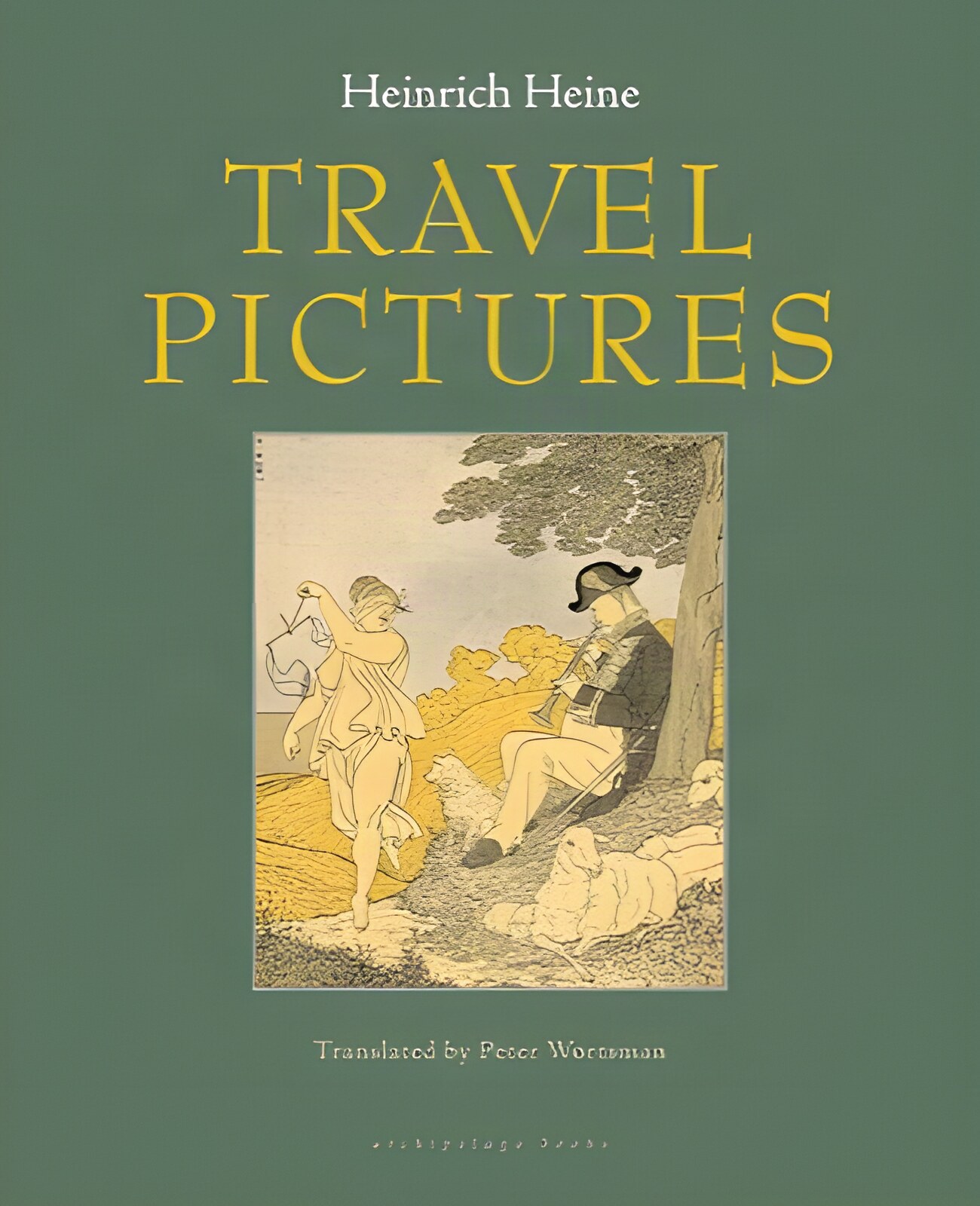
Softcover. NY, Archipelago Books , 1st, 2008, Book: Very Good, Dust Jacket: None, Softcover in pictorial wrappers, 223 pages. Heinrich Heine (1797-1856), one of Germany's most revered poets, is equally well-known for his idiosyncratic prose, the vibrant voice of which feels astonishingly modern in its familiar tone and thematic acrobatics. Travel Pictures comprises the accounts of four journeys taken at different times in his life. The opening "Harz Journey," a quirky chronicle of his walking tour in the Harz Mountains, is the text that first made him famous. But in all four accounts, Heine, seasoned by the skepticism of a born outsider, does more than climb mountains, ford streams and cross borders. In this remarkable book, Heine propels German letters into the Modern mindset. Freud cites a few of Travel Pictures' most humorous passages in Jokes and Their Relation to the Unconscious. Heine's incomparable lyric vision lifts the book into the transcendent realm of great journey literature. Clean, bright copy.
Softcover. Madison, MN, The Seventies Press, 1st pbk, 1977, Book: Very Good, Dust Jacket: Very Good, Softcover, 81 pages. Translated. by Lewis Hyde and Robert Bly.Edited by Lewis Hyde. Winner of the 1977 Nobel Prize for Literature. Mild fade to edges of dust jacket.
Hardcover. Iowa City, University of Iowa Press, 1st, 1997, Book: Very Good, Dust Jacket: Very Good, Hardcover in a bright dust jacket, 200 pages. Critical essays on Charles Simic, John Ashbery, Stephen Dobyns and Charles Wright. SIGNED on title page by Stitts, also INSCRIBED on the front fly leaf by him. Personal letter from author also laid in. Clean copy.
Softcover. Saint Paul MN, Graywolf Press, 1st, 1978, Book: Very Good, Dust Jacket: None, Softcover, 53 pages. Gallagher was born in 1943 in Washington state, and studied at the University of Washington under Theodore Roethke. She later married the poet and writer Raymond Carver.
Hardcover. Athens GA, University of Georgia Press, 1st, 1995, Book: Very Good, Dust Jacket: Very Good, Hardcover, 464 pages, b&w photographs. Light edge wear to dust jacket. Else a very clean, tight copy. This biography offers the most complete and accurate portrait to date of the writer Caroline Gordon (1895-1981). Viewing Gordon's life in the context of female literary tradition, Nancylee Novell Jonza reclaims Gordon's integrity, individuality, and artistic vision from beneath a self-effacing, sometimes detractive, public image carefully fostered by the artist herself. Gordon's nine novels and three short-story collections are a major contribution in their own right to the southern literary renaissance. Despite an enduring readership, however, she still remains in the shadow of her husband, Allen Tate, the Fugitive Poet and Agrarian critic, partially due to her contrived persona of a traditional southern lady turned artist under the tutelage of a gifted, benevolent male writer. Drawing on manuscript drafts, unpublished works, letters, and a significant body of her journalistic writing, Jonza investigates fully the causes and effects of Gordon's self-mythologizing and covers substantially more ground than the thirty years during which she was closest to Tate.
NY, Simon & Schuster, 1st, 2001, Book: Very Good, Dust Jacket: Very Good, Hardcover in a bright, unclipped dust jacket. Uphill with Archie is a beautifully written and deeply involving look at the life and the world of the great literary icon, poet Archibald MacLeish, by his youngest son. Partly an homage, partly an attempt to come to terms with the man (and the legend), Uphill with Archie speaks to all sons and daughters who have never completely resolved their feelings about powerful parents. Young William MacLeish grew up both captivated and cowed by the fame of a father who won Pulitzer Prizes for his poetry and comparable honors for his work as a lawyer, playwright, teacher, and government official. William's mother, Ada, began her marriage as a successful concert singer in Paris but later felt compelled to give up her art for her family. When Archie was working for Henry Luce and Fortune magazine, his younger children, watched over by a governess, stayed with their grandfather in Connecticut. But it is of the time spent with his family at Uphill Farm, a beautiful old house above a Massachusetts hilltown, that MacLeish has his fondest and most telling memories: "Archie and Ada gave me great gifts: music, the sound of the language beautifully spoken, the draw of knowledge, the arts of humor," William writes. "I learned to perform for them, and in time found myself addicted to getting a nice tan from Archie's sun. And the more I bathed in his light, the harder I found it to go looking for my own."
Hardcover. Albany NY, State University of New York Press, 1st, 1970, Book: Very Good, Dust Jacket: Good, Hardcover in a lightly worn and tanned dust jacket, 262 pages. A critical introduction to major English poetry of the nineteenth century with an analysis of the changes in subject matter form, tone, and technique resulting from romantic influences. Clean copy.
Softcover. Cambridge UK/US, Cambridge University Press, reprint, 2006, Book: Very Good, Dust Jacket: None, Softcover, 321 pages. Virgil's agricultural poem, the Georgics, forms part of a long tradition of didactic epic going back to the archaic poet Hesiod. This book explores the relationship between the Georgics and earlier works in the didactic tradition, particularly Lucretius' De Rerum Natura ("On the Nature of Things"). It is the first comprehensive study of Virgil's use of Lucretian themes, imagery, ideas and language; it also proposes a new reading of the poem as a whole, as a confrontation between the Epicurean philosophy of Lucretius and the opposing world views of his predecessors. Clean copy.
Softcover. Norman OK, University of Oklahoma Press,, 1st pbk., 1965, Book: Very Good, Dust Jacket: None, Softcover, 254 pages, b&w illustrations. This volume is a study of Mesopotamian literature from the beginnings of the Bronze Age to the fall of Babylon as an independent state in the 6th century BCE. Part I of this volume deals with the history and culture of the region from the Sumerians to the Persian conquests. Part II treats the development of poetic forms and the mythology and religion upon which much of the poetry is based. Clean copy.
NY, The Macmillan Company, 1st, 1958, Book: Very Good, Dust Jacket: Very Good, Hardcover in a nice dust jacket with light tanning to spine. A study and interpretation of Yeats' five plays and related lyrics. Includes notes, bibliography & index.
Hardcover. Syracuse University Press, 1st, 1970, Book: Very Good, Dust Jacket: Very Good, Hardcover in a lightly worn dust jacket, 185 pages. Clean copy.
Hardcover. NY, Simon and Schuster, 2nd pr., 1980, Book: Very Good, Dust Jacket: Very Good, Hardcover in a bright, unclipped dust jacket. Whitman's genius, passions, poetry, and androgynous sensibility entwined to create an exuberant life amid the turbulent American mid-nineteenth century. In vivid detail, Kaplan examines the mysterious selves of the enigmatic man who celebrated the freedom and dignity of the individual and sang the praises of democracy and the brotherhood of man. Clean copy.
Softcover. Boston, Exact Change, 1st, 1995, Book: Very Good, Dust Jacket: None, Softcover, 342 pages. INSCRIBED BY ESHLEMAN in red ink on the half-title page. Clean, like new.
Hardcover. NY, Norton, 1st, 2020, Book: Very Good, Dust Jacket: Very Good, Hardcover in a bright, unclipped dust jacket. Effortlessly blending biography, criticism, and memoir, National Book Award-winning poet and best-selling memoirist Mark Doty explores his personal quest for Walt Whitman. Mark Doty has always felt haunted by Walt Whitman's bold, perennially new American voice, and by his equally radical claims about body and soul and what it means to be a self. In What Is the Grass, Doty--a poet, a New Yorker, and an American--keeps company with Whitman and his Leaves of Grass, tracing the resonances between his own experience and the legendary poet's life and work. What is it then between us? Whitman asks. In search of an answer, Doty explores spaces--both external and internal--where he finds the poet's ghost. He meditates on desire, love, and the mysterious wellsprings of the poet's enduring work: a radical experience of transformation and enlightenment, queer sexuality, and an obsession with death, as well as unabashed love for a great city and for the fresh, rowdy character of American speech. In riveting close readings threaded with personal memoir and illuminated by awe, Doty reveals the power of Whitman's persistent presence in his life and in the American imagination at large. Clean copy.
Hardcover. NY, Harcourt Brace Jovanovich, 1st, 1973, Book: Good, Dust Jacket: Good, Hardcover in a lightly worn and chipped dust jacket. 401 pages with index. Ex-lib copy with stamp to front fly leaf, envelope on rear endpaper, sticker on dust jacket spine, interior clean.
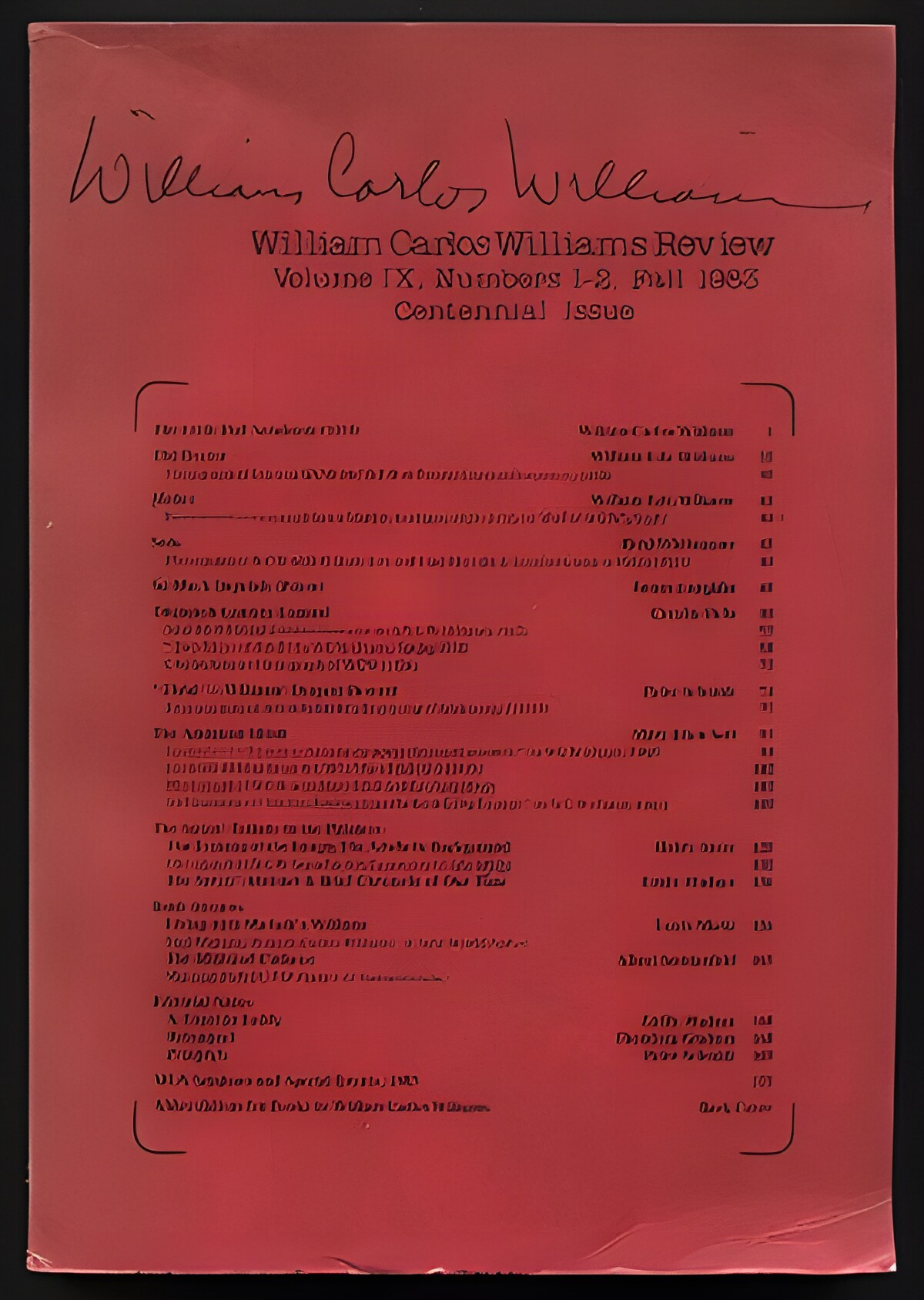
Softcover. Middletown PA, Pennsylvania State University, 1st, 1983, Book: Good, Dust Jacket: None, Softcover. Red perfect bound wrappers, 176 pages. Covers with a few faint creases, spine slightly faded, mild wave to book. Prints Williams' 80-page 1914 little red notebook in exact-size facsimiles with a transcription and two additional essays from his son William Eric Williams; additional contributions by Reed Whittemore, James Laughlin, Cecelia Tichi, Peter Schmidt, Mary Ellen Solt, Henry Sayre, Emily Wallace, Louis Martz and Albert Sonnenfeld. The journal showcases scholarly essays on any aspect of the life and work of William Carlos Williams.





 "Tom: The Unknown Tennessee Williams by: Lyle Leverich")
 "Toward the Poetics of Surrealismby: Matthews, J. H.")
 "Twenty Poemsby: Aleixandre, Vicente")
 "Under Stars by: Gallagher, Tess")
 "Underground Stream, The: The Life and Art of Caroline Gordonby: Jonza, Nancylee Novell")
 "Uphill with Archie: A Son's Journey by: William H. MacLeish")

 "Virgil's Book of Bucolics, the Ten Eclogues Translated into English Verse: Framed by Cues for Reading Aloud and Clues for Threading Texts and Themesby: Van Sickle, Jo")
 "Voices From the Clay: The Development of Assyro-Babylonian Literature by: Fiore, Silvestro")
 "W.B. Yeats and Traditionby: Wilson, F.A.C.")
 "Walt Whitman: A Lifeby: Justin Kaplan")
 "What Is the Grass: Walt Whitman in My Lifeby: Mark Doty")