Hardcover. NY, Columbia University Press, 1st, 1986, Book: Very Good, Dust Jacket: Very Good, Hardcover in a bright dust jacket, 248 pages. Clean copy.
Softcover. Durham NC, Duke University Press, 1st pbk, 1994, Book: Very Good, Dust Jacket: None, Softcover, 279 pages. Much recent critical theory has dismissed or failed to take seriously the question of the self. French theorists--such as Derrida, Barthes, Benveniste, Foucault, Lacan, and Levi-Strauss--have in various ways proclaimed the death of the subject, often turning to German intellectual tradition to authorize their views. Stanley Corngold's heralded book, The Fate of the Self, published for the first time in paperback with a spirited new preface, appears at a time when the relationship between the self and literature is a matter of renewed concern. Originally published in 1986 (Columbia University Press), the book examines the poetic self of German intellectual tradition in light of recent French and American critical theory. Focusing on seven major German writers--Holderlin, Dilthey, Nietzsche, Mann, Kafka, Freud, and Heidegger--Corngold shows that their work does not support the desire to discredit the self as an origin of meaning and value but reconstructs the allegedly fragmented poetic self through effects of position and style. Offering new and subtle models of selfhood, The Fate of the Self is a source of rich insight into the work of these authors, refracted through post-structuralist critical perspectives. Clean copy.
Softcover. Los Angeles, Augustan Reprint Society, reprint, 1984, Book: Very Good, Dust Jacket: None, Softcover, 64 pages, facsimile reprint of a pamphlet, an early feminist document in the form of a poem with a 14 page introduction by Gae Holladay. Clean copy.
Softcover. Los Angeles, Augustan Reprint Society, reprint, 1981, Book: Very Good, Dust Jacket: None, Softcover. Facsimile reprint of 17th century (1754) edition; stapled wraps; 44 pages with a 12 page introduction by Jocelyn Harris.
Softcover. Cambridge MA, Harvard University Press, 1st, 1995, Book: Very Good, Dust Jacket: None, Softcover, 139 pages. How does a poet repeatedly make art over a lifetime out of an arbitrary assignment of fate? By asking this question of the work of four American poets--two men of the postwar generation, two young women writing today--Helen Vendler suggests a fruitful way of looking at a poet's career and a new way of understanding poetic strategies as both mastery of forms and forms of mastery. Fate hands every poet certain unavoidable "givens." Of the poets Vendler studies, Robert Lowell sprang from a family famous in American and especially New England history; John Berryman found himself an alcoholic manic-depressive; Rita Dove was born black; Jorie Graham grew up trilingual, with three words for every object. In Vendler's readings, we see how these poets return again and again to the problems set out by their givens, and how each invents complex ways, both thematic and formal, of making poetry out of fate. Clean copy.
Hardcover. NY, Archipelago Books, 1st thus, 2008, Book: Very Good, Dust Jacket: Very Good, Hardcover in a bright dust jacket, 450 pages. The Great Weaver from Kashmir is Laxness' first major novel, the book that propelled Icelandic literature into the modern world. Shortly after World War One, Steinn Ellidi, a young philosopher-poet dandy, leaves the physical and cultural confines of Iceland's shores for mainland Europe, seeking to become "the most perfect man on earth." His journey leads us through a wide range of moral, philosophical, religious, political, and social realms, from hedonism to socialism to aestheticism to Benedictine monasticism. Upon his return to Iceland, Steinn finds himself more conflicted than before, torn between love of the beauty and traditions of his homeland, longing and regret for his great adolescent love, Dilja, and his newfound monastic ideal, forcing him to make choices with fateful consequences. Clean copy.
Softcover. Santa Cruz CA, Kayak Press, 1st, 1976, Book: Very Good, Dust Jacket: None, Softcover, tan wrappers with paper label on front, 48 pages. Pictures by Douglas McClellan. An uncommon experimental work, 1000 copies printed.
Hardcover. NY, Columbia University Press, 1st, 1939, Book: Very Good, Dust Jacket: None, Six matching volumes, red cloth bindings with black/gilt titling on spines, gilt initials on front board. Covers Emerson's letters from 1813 to 1881. Ralph Waldo Emerson (1803-1882) was an influential American essayist, philosopher, and poet, known for leading the Transcendentalist movement. His works emphasized individualism, nature, and self-reliance, significantly impacting American literature and thought. NOT ex-lib, clean complete set. Due to weight DOMESTIC SHIPPING ONLY.
Hardcover. NY, Pantheon, 1st, 1970, Book: Very Good, Dust Jacket: Good, Hardcover in an edgeworn, chipped dust jacket. This is the first detailed and balanced biography of one of the most controversial literary figures of the twentieth century. It includes much material - poetry, prose, and letters - which has not previously been published. Ezra Pound, an American who left home for Venice and London at the age of twenty-three, was a leading member of "the modern movement," a friend and helper of Joyce, Eliot, Yeats, and Hemingway, and an early supporter of Lawrence and Frost. Clean copy.
Hardcover. Charlestown MA, Printed and Sold By Samuel Etheridge, Revised Ed., 1810, Book: Very Good, Hardcovers, two volumes complete, 432 and 448 pages. bound in 3/4 calf, with red leather spine labels intact, bindings tight. New corrected edition. A collection of biographical studies on the life of important poets in the cannon of English literature, including: Cowley, Milton, Blackmore, Granville, Somerville, Thomson, Mallet, and Lyttelton. Written by Samuel Johnson, an English writer who made lasting contributions as a poet, playwright, essayist, moralist, critic, biographer, editor, and lexicographer. With the original advertisement to the first edition. originally published in 1779-81. Light edgewear to covers, mild water stain to first 4 pages of Vol. 2, otherwise clean, mild foxing, very good set overall.
Hardcover. NY, Pellegrini & Cudahy, 1st, 1952, Book: Very Good, Dust Jacket: Very Good, Hardcover in a mildly soiled dust jacket with tanning to spine,name on front fly leaf, otherwise clean.
Softcover. Baltimore MD, Johns Hopkins University, 1st pbk., 2006, Book: Very Good, Dust Jacket: None, Softcover, 210 pages. Historian and literary scholar Christopher Celenza argues that serious interest in the intellectual life of Renaissance Italy can be reinvigorate, and the nature of the Renaissance itself re-accessed, by recovering a major part of its intellectual and cultural activity that has been largely ignored since the Renaissance was first "discovered": the vast body of works-literary, philosophical, poetic, and religious-written in Latin. Produced between the mid-fourteenth and the early sixteenth centuries by major figures such as Leonardo Bruni, Lorenzo Valla, Marsilio Ficino, and Leon Battista Alberti, as well as minor but interesting thinkers like Lapo da Castiglionchio the Younger, this literature was initially overlooked by scholars of the Renaissance because they were not written in the vernacular Italian which alone was seen as was the supreme expression of a culture. Clean copy.
Hardcover. NY, Free Press, 1st, 1987, Book: Very Good, Dust Jacket: Very Good, Hardcover in a bright dust jacket, 270 pages, b&w illustrations. Light edgewear to dust jacket, else a clean, tight copy. Recounts the life of the English poet who died during World War I, looks at the group of his friends and fellow poets known as the Neo-Pagans, and discusses the influence of homosexuality on his life. His sonnet "The Soldier" and early death in World War I made British poet Rupert Brooke a key figure in the nation's myth of patriotism and youthful valor. Biographer Delaney places him among the Neo-pagans, a small circle of writers, artists, and intellectuals who flourished from 1908 to 1912. The group honored youth, comradeship, and the simple life and aimed to set aside the constraints of Victorianism. Delany shows how the internal dynamics of the group, not shock of war, led to its disintegration.
Softcover. Seattle, Wave Books, 1st, 2023, Book: Very Good, Dust Jacket: None, Softcover, 219 pages. A collection of essay/talks that the poet Rachel Zucker, expanded from lectures presented for the Bagley Wright Lecture Series in 2016. Devastating in their revelations, yet hopeful in their endurance, these are lectures of protest and reckoning. Zucker declares 'I write against. My poetics is a poetics of opposition and provocation that I never outgrew. Against the status quo or the powers that be, writing out of and into wrongness.' Thus, Zucker deftly dismantles the outdated paradigms of motherhood, aesthetics, feminism, poetics, and politics. Bringing Bernadette Mayer, Marina Abramovic, Alice Notley, Adrienne Rich, Audre Lorde-among many others-into the conversation, Zucker questions the categories that have been imposed on poetry, as well as a poet's need to speak, and the resulting responsibilities. Clean copy.
Softcover. NY/London, Palgrave , 2nd Ed., 2002, Book: Very Good, Dust Jacket: None, Softcover, 244 pages. Taking into account recent developments in historical and ecological criticism, and incorporating fresh research into poetry and politics in the 1790s, the second edition of The Politics of Nature enlarges and updates Nicholas Roe's acclaimed study of Romanticism. Hitherto marginal figures are restored to prominence, and there is new material on William Wordsworth's radical years.
Hardcover. NY, Pantheon, 6th pr., 2023, Book: Very Good, Dust Jacket: Very Good, Hardcover in a bright dust jacket, 338 pages. Argentine poet Jorge Luis Borges was madly in love when his life was shattered by painful heartbreak. But the breakdown that followed illuminated an incontrovertible truth-that love is necessarily imbued with loss, that the one doesn't exist without the other. German physicist Werner Heisenberg was fighting with the scientific establishment on the meaning of the quantum realm's absurdity when he had his own epiphany-that there is no such thing as a complete, perfect description of reality. Prussian philosopher Immanuel Kant pushed the assumptions of human reason to their mind-bending conclusions, but emerged with an idea that crowned a towering philosophical system-that the human mind has fundamental limits, and those limits undergird both our greatest achievements as well as our missteps. Through fiction, science, and philosophy, the work of these three thinkers coalesced around the powerful, haunting fact that there is an irreconcilable difference between reality "out there" and reality as we experience it. Clean copy.
Hardcover. Chicago, University of Chicago Press, 1st, 1971, Book: Very Good, Dust Jacket: Very Good, Hardcover in a bright dust jacker with minor edgewear, 352 pages. Bloom provides both an advanced guide to English and American Romanticism with its Victorian and Modern continuators, and an introduction to a new development in literary criticism that should increase the reader's grasp of the problematic but crucial relationship between the working poet and his poetic tradition. Mr. Bloom's judgment finds most significant cases of poetic influence to be examples of what he calls "a saving misprision, in which later poets overcome the anxieties induced by the glory of their precursors by creatively misinterpreting those great originals." Consequently, poets and poems are read against one another to locate the personal misinterpretations, the swerves that both separate and inescapably connect them. Among the poets studied are Blake, Shelley, Wordsworth, Keats, Tennyson, Browning, Emerson, Whitman, Yeats, Lawrence, Stevens, and others. Clean copy.
Hardcover. Lanham MD, Lexington Books, 1st, 2022, Book: Very Good, Dust Jacket: None, Hardcover, pictorial boards, 143 pages. American nature writing characteristically embodies an appreciative, lyrical evocation of the natural world. But often, too, green-disposed authors have been moved to dramatize diverse, anthropogenic perils to environmental health. John Gatta freshly reveals how this dark yet graced and hopeful strain of environmental literature enlarges upon a jeremiad tradition of prophecy inherited from Puritan New England. Across successive historical periods, such expression has assumed a rich variety of American form--as creative nonfiction, poetry, fiction, or film documentary. In the spirit of ancient Hebrew prophecy, jeremiads--unlike diatribes--reach beyond effusions of doom and gloom toward the prospect of change through a conversion of heart. Accordingly, the new climate fiction and much other writing steeped in what Gatta terms this "Green Jeremiad" tradition not only warn of material threats to life's flourishing, but may also look to stir spiritual understanding and renewal. Clean copy.
Hardcover. NY, Mcdowell, Obolensky, 1st, 1957, Book: Good, Dust Jacket: None, Hardcover, brown cloth with faded gilt lettering to spine, 347 pages. Edited with an introduction by John C. Thirlwall. Clean copy.
Softcover. NY, Oxford University Press, repriny, 1989, Book: Very Good, Dust Jacket: None, Softcover, 290 pages. Henry Louis Gates, Jr.'s original, groundbreaking study explores the relationship between the African and African-American vernacular traditions and black literature, elaborating a new critical approach located within this tradition that allows the black voice to speak for itself. Examining the ancient poetry and myths found in African, Latin American, and Caribbean culture, and particularly the Yoruba trickster figure of Esu-Elegbara and the Signifying Monkey whose myths help articulate the black tradition's theory of its literature, Gates uncovers a unique system for interpretation and a powerful vernacular tradition that black slaves brought with them to the New World. His critical approach relies heavily on the Signifying Monkey--perhaps the most popular figure in African-American folklore--and signification and Signifyin(g). Exploring signification in black American life and literature by analyzing the transmission and revision of various signifying figures, Gates provides an extended analysis of what he calls the "Talking Book," a central trope in early slave narratives that virtually defines the tradition of black American letters. Gates uses this critical framework to examine several major works of African-American literature--including Zora Neale Hurston's Their Eyes Were Watching God, Ralph Ellison's Invisible Man, and Ishmael Reed's Mumbo Jumbo--revealing how these works signify on the black tradition and on each other. Clean copy.
Hardcover. Albuquerque NM, University of New Mexico Press, 1st, 1989, Book: Very Good, Dust Jacket: Very Good, Hardcover in a bright dust jacket, 217 pages. Includes essays on William Everson, Robert Duncan, Gary Snyder, Kenneth Rexroth, Michael McClure, Nathaniel Tarn, Thom Gunn and more. Notes, bibliography. Clean copy.
Softcover. Madison WI, Coda Press, 1st, 1979, Book: Very Good, Dust Jacket: None, Square softcover. Two titles bound in one volume, texts in English and French. The Voice in the Closet by Raymond Federman has text in English. Bound upside down at other end of book is La Voix Dans le Cabinet de Debarras by Federman, now in French, plus Echoes by Maurice Roche, also in French. English cover is white; French cover is black. INSCRIBED BY AUTHOR on the title page.
Softcover. NY, New York University Press, 1st pbk, 1978, Book: Very Good, Dust Jacket: None, Softcover, 272 pages. With bibliography and index. A complete biography of Dahlberg's life and career with an examination of the writings. Contains fourteen illustrations. Clean copy.

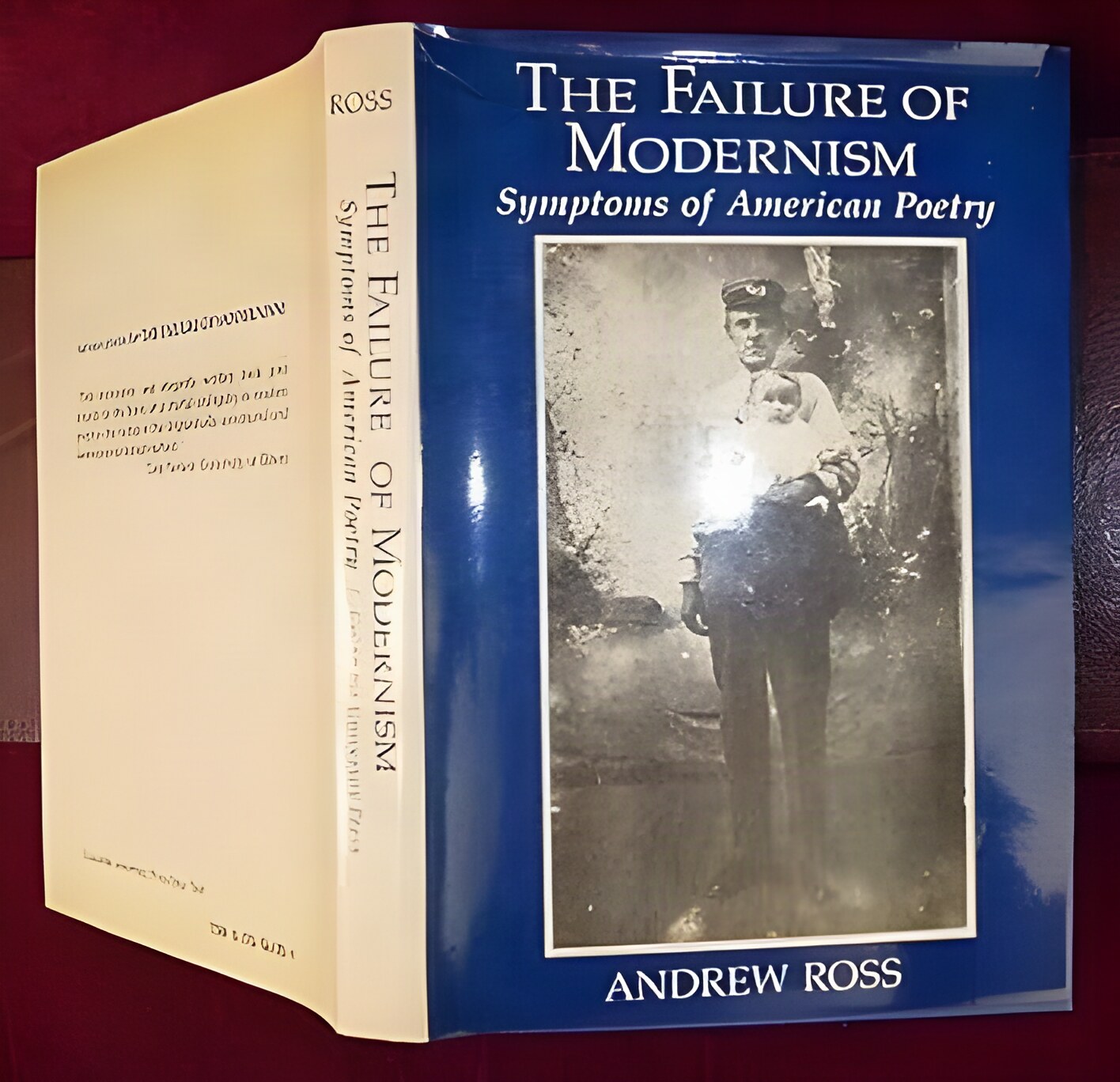


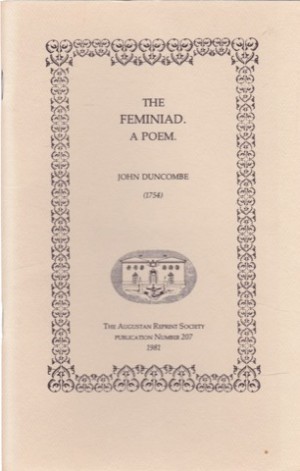

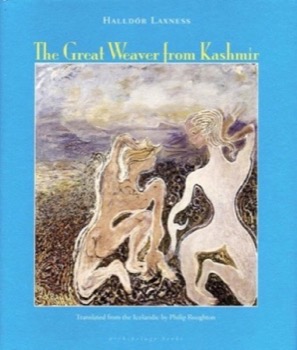
 "The Intussusception of Miss Mary Americaby: Harmon, William")
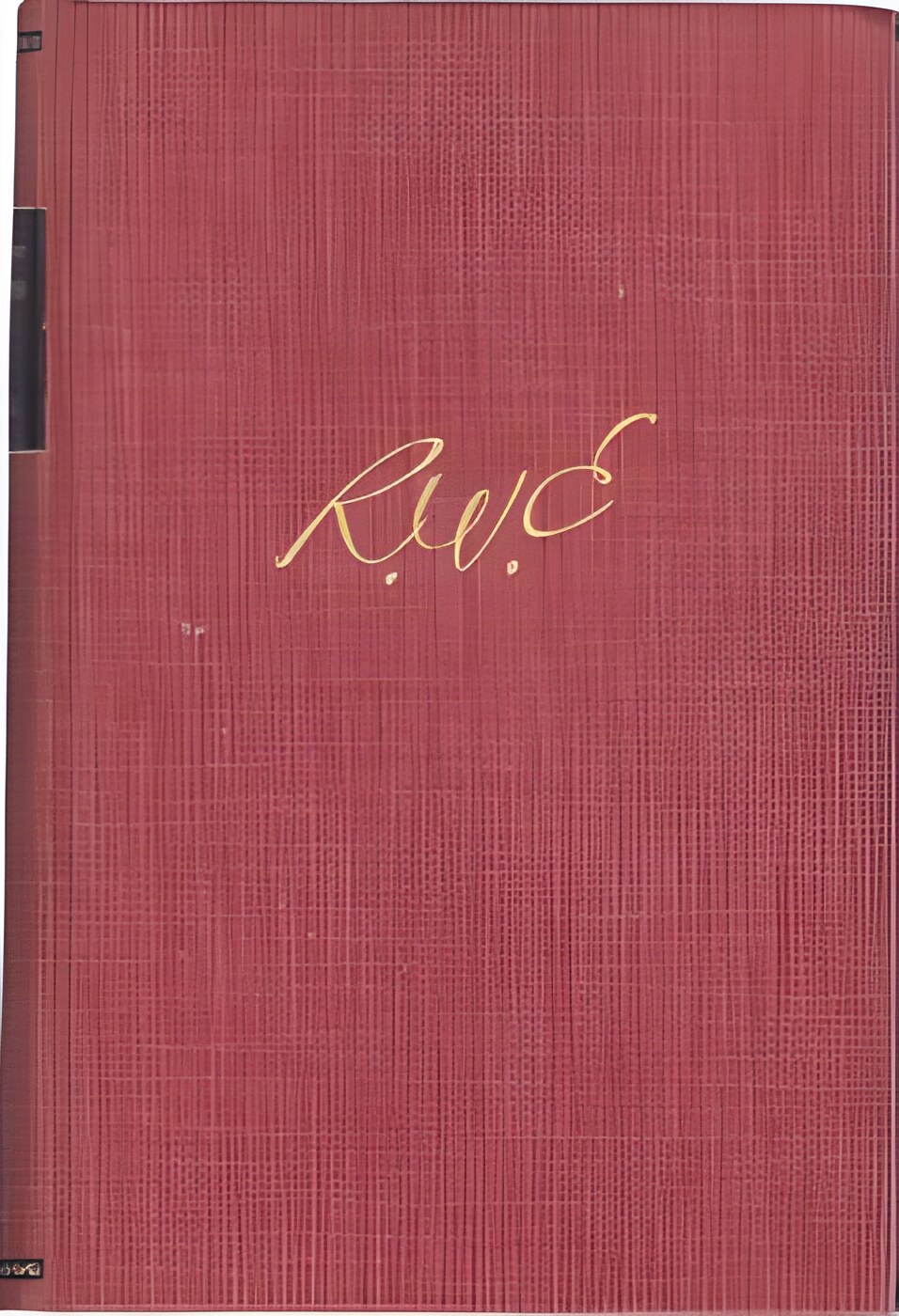



 "The Lonely Tower: Studies in the Poetry of W. B. Yeatsby: Henn, T. R.")
 "The Lost Italian Renaissance: Humanists, Historians, and Latin's Legacy by: Christopher S. Celenza")

 "The Poetics of Wrongnessby: Rachel Zucker")



 "The Saving Grace of America's Green Jeremiad by: John Gatta")
![The Selected Letters of William Carlos Williams by: Williams, Williams Carlos [John Thirlwall, Ed]](https://www.browsingisarousing.com/shop/images/The-Selected-Letters-of-William-Carlos-Williams_by_Williams-Williams-Carlos-John-Thirlwall-Ed-398095-451262.jpg "The Selected Letters of William Carlos Williams by: Williams, Williams Carlos [John Thirlwall, Ed]")
 "The Signifying Monkey: A Theory of African American Literary Criticism by: Gates Jr, Henry Louis")
 "The Sun Is But a Morning Star: Studies in West Coast Poetry and Poeticsby: Lee Bartlett")



 "The Wages of Expectation: A Biography of Edward Dahlberg by: Charles L. DeFanti")