Hardcover. UK, Cambridge University Press, 1st, 1993, Book: Very Good, Dust Jacket: Very Good, Hardcover in a bright jacket, b&w illustrations, 167 pages. Donald Davie is the foremost literary critics of his generation and one of its leading poets. His career has been marked by a series of challenging critical interventions. The eighteenth century is the great age of the English hymn though these powerful and popular texts have been marginalized in the formation of the conventional literary canon. These are poems which have been put to the text of experience by a wider public than that generally envisaged by literary criticism, and have been kept alive by congregations in every generation. Davie's study of the eighteenth-century hymn and metrical psalm brings to light a body of literature forgotten as poetry: work by Charles Wesley and Christopher Smart, Isaac Watts and William Cowper, together with several poets unjustly neglected, such as the mysterious John Byron.
Hardcover. NY, Dutton, 1st US, 1975, Book: Very Good, Dust Jacket: Very Good, Hardcover in a price-clipped dust jacket. A memoir of the real Christopher Robin and Winnie-the-Pooh. An attractive copy of Christopher Milne's book about the origins of the Pooh stories, his childhood, and his family. Previous owner's inscription, sticker on front fly leaf.
Hardcover. NY, Sheed and Ward, 1st, 1974, Book: Very Good, Dust Jacket: Very Good, Hardcover in a lightly worn dust jacket with faded spine, 480 pages. Richard Kostelanetz's monumental evisceration of the American book world circa 1974--the self-appointed backslapping elites, the perpetual disdain for the unconventional, the laziness in book reviewing and fear of losing one's status when criticising the wrong thing--remains, as a final sadness, itself a rare out of print tome. Kostelanetz has written perhaps the most fearless exploration of literary politics in print, taking on and naming the titans at the top of the heap, dissecting the power structures that emerged in the 1950s and 60s, and the emergence of the plutocratic hierarchies that continue to dominate publishing. Outing the various cliques as mobs, and using apt and amusing mafia parallels, Kostelanetz is unrelenting in his meticulousness, and counteracts the status quo with a passionate defence of the avant-garde, using the second half of the book to bring light to the various emerging authors of experimental poetry, fiction, and mixed media works around the time. At times a touch long-winded and overfed with quotes, this nevertheless is an essential read for those requiring a hard slap as to the inherent evil of the corporate book world and why indie is the only way forward. Clean copy.
Softcover. Middletown CT, Wesleyan University Press, 1st, 1974, Book: Very Good, Dust Jacket: None, Softcover, 225 pages. First published in 1930 and untranslated until now, this is one of the minor classics of French historical literature. The author relates the bizarre beginnings of the Third Republic during the presidency of Adolphe Thiers (1871-1873), when an assembly dominated by monarchists groped uncertainly toward the establishment of a republican government.
Hardcover. Princeton NJ, Princeton University Press, 1st, 1994, Book: Good, Dust Jacket: Good, Hardcover in a dust jacket with minor wear, 278 pages. A re-examination of the roles played by authors, readers, scribes and texts in medieval literature, which describes how consideration of marks on the physical manuscript - elements added by scribes and readers - can shed light on interpretive issues that have puzzled modern readers. Light underlining to 18 pages in first chapter.
Hardcover. NY, Viking, 1st US, 2002, Book: Very Good, Dust Jacket: Very Good, Hardcover in a bright, unclipped dust jacket. SIGNED by the author on the title page, without dedication. Jasper Fforde's novel introduces literary detective Thursday Next and her alternate reality of literature-obsessed England. In a world where one can literally get lost in literature, Thursday Next, a Special Operative in literary detection, tries to stop the world's Third Most Wanted criminal from kidnapping characters, including Jane Eyre, from works of literature. Clean, like new.
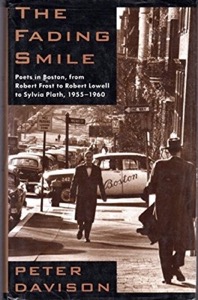
Hardcover. NY, Knopf, 1st, 1994, Book: Very Good, Dust Jacket: Very Good, Hardcover in a bright, unclipped dust jacket, 346 pages. An intimately perceptive account, by a poet who knew them all, of the brilliant circle of poets who lived and worked in Boston through the half-decade beginning in 1955. That was the year Peter Davison, coming to Boston as a book editor. was swept up in a world -- in a tumult -- of poetry. He rediscovered his father's old friend Robert Frost. He briefly squired Sylvia Plath. He came to know Robert Lowell (whose poems and private disasters dominated the period) and Adrienne Rich, Stanley Kunitz, Richard Wilbur. Anne Sexton, W. S. Merwin, and others who, closely bound together in friendship or rivalry or both, defined the shape of American poetry at mid-century Through their eves as well as his own, and often in their words, Davison presents a sharply fresh vision of the shift from confidence to a troubled questioning that overtook America -- a transformation that was, in a sense, foreshadowed in the sensibilities, in the writings, sometimes in the lives, of some of our finest poets. Clean copy.
Hardcover. NY, Columbia University Press, 1st, 1986, Book: Very Good, Dust Jacket: Very Good, Hardcover in a bright dust jacket, 248 pages. Clean copy.
Hardcover. NY, Nicholas Brealey, 1st US, 2022, Book: Very Good, Dust Jacket: Very Good, Hardcover in a bright dust jacket, 326 pages. In this far-ranging quest, award-winning author Nicholas Jubber unearths the lives of the dreamers who made our most beloved fairy tales: inventors, thieves, rebels and forgotten geniuses who gave us classic tales such as 'Cinderella', 'Hansel and Gretel', 'Beauty and the Beast' and 'Baba Yaga'. Clean copy.
Softcover. NY, Archipelago Books, 1st, 2018, Book: Very Good, Dust Jacket: None, Softcover in pictorial wrappers, 468 pages. Closely knit Colombian siblings' internal rifts threaten to tear apart the hard-won legacy their father fought to establish against guerilla and paramilitary violence. An intimate and transgressive novel that confirms Hector Abad as one of the great writers of Latin American literature today. Clean copy.
Softcover. Durham NC, Duke University Press, 1st pbk, 1994, Book: Very Good, Dust Jacket: None, Softcover, 279 pages. Much recent critical theory has dismissed or failed to take seriously the question of the self. French theorists--such as Derrida, Barthes, Benveniste, Foucault, Lacan, and Levi-Strauss--have in various ways proclaimed the death of the subject, often turning to German intellectual tradition to authorize their views. Stanley Corngold's heralded book, The Fate of the Self, published for the first time in paperback with a spirited new preface, appears at a time when the relationship between the self and literature is a matter of renewed concern. Originally published in 1986 (Columbia University Press), the book examines the poetic self of German intellectual tradition in light of recent French and American critical theory. Focusing on seven major German writers--Holderlin, Dilthey, Nietzsche, Mann, Kafka, Freud, and Heidegger--Corngold shows that their work does not support the desire to discredit the self as an origin of meaning and value but reconstructs the allegedly fragmented poetic self through effects of position and style. Offering new and subtle models of selfhood, The Fate of the Self is a source of rich insight into the work of these authors, refracted through post-structuralist critical perspectives. Clean copy.
Softcover. Los Angeles, Augustan Reprint Society, reprint, 1984, Book: Very Good, Dust Jacket: None, Softcover, 64 pages, facsimile reprint of a pamphlet, an early feminist document in the form of a poem with a 14 page introduction by Gae Holladay. Clean copy.
Softcover. Los Angeles, Augustan Reprint Society, reprint, 1981, Book: Very Good, Dust Jacket: None, Softcover. Facsimile reprint of 17th century (1754) edition; stapled wraps; 44 pages with a 12 page introduction by Jocelyn Harris.
Hardcover. NY, The Free Press, 1st, 1965, Book: Very Good, Dust Jacket: Very Good, Hardcover in a lightly worn dust jacket, 330 pages. This book traces the central developments in American literature between and 1919. It opens with an account of the consolidation of realism as the dominant standard of critical value and brings the reader forward to the moment, at the end of World War I, when American writers began to take a recognized place among the masters of literary modernism. The ascendancy of the novel as the principal genre of the realists is presented against a broader cultural and historical background. Professor Berthoff reviews and evaluates American fiction from the time when Howells, Twain, and Henry James were still under attack by old-school idealizers, to the emergence of a new critical and testamentary realism with Crane, Dreiser, and Gertrude Stein. Clean copy.
Hardcover. NY, Farrar Straus & Giroux, 1st, 1986, Book: Very Good, Dust Jacket: Very Good, Hardcover in a bright, unclipped dust jacket. 663 pages. Clean copy. Edited and with an introduction by Leon Edel. This is the highly acclaimed fourth volume in the series that began with The Twenties and it is complimented with photographs and journal excerpts of some of the most interesting characters of the decade.
Softcover. NY, Applause, 1st pbk, 1995, Book: Very Good, Dust Jacket: None, Softcover, 896 pages. A facsimile edition of the original 1623 publication of the bard's works. Recounts the background of the first folio, the earliest and most authoritative collection of Shakespeare's thirty-six plays.
Hardcover. Cambridge MA, Harvard University Press , 1st, 1981, Book: Very Good, Dust Jacket: None, Hardcover, blue cloth with gilt lettering and design to spine and front cover. The writings of Richard Hooker are of central interest to those studying English Renaissance thought and literature. In this, the third volume of a much-needed critical edition of the Works of Richard Hooker, are the posthumous books of the Laws of Ecclesiastical Polity. Hooker planned the Laws in eight books, but he died shortly after publication of Book Five. Books Six, Seven, and Eight, which contain his analysis of jurisdiction, episcopacy, and the royal supremacy, are here transcribed from versions that have the most authority. The volume also includes Hooker's autograph notes toward those texts (brought to light by P. G. Stanwood in the course of his research) and the contemporary notes by George Cranmer and Edwin Sandys on a lost draft of Book Six. Mr. Stanwood's introduction lays to rest all doubts about the authenticity of the last three books as we have them, doubts current since publication of Walton's Life of Hooker in 1662.Clean, bright copy.
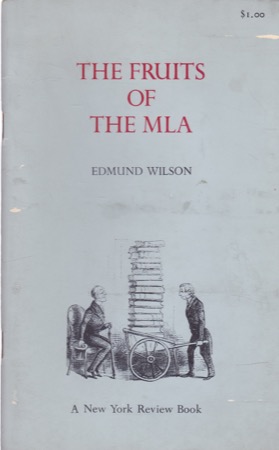
Softcover. NY, New York Review Book, 1st, 1968, Book: Very Good, Dust Jacket: None, Softcover, light blue glossy wrappers, stapled. Covers with light soil, no markings.
Softcover. Cambridge MA, Harvard University Press, 1st, 1995, Book: Very Good, Dust Jacket: None, Softcover, 139 pages. How does a poet repeatedly make art over a lifetime out of an arbitrary assignment of fate? By asking this question of the work of four American poets--two men of the postwar generation, two young women writing today--Helen Vendler suggests a fruitful way of looking at a poet's career and a new way of understanding poetic strategies as both mastery of forms and forms of mastery. Fate hands every poet certain unavoidable "givens." Of the poets Vendler studies, Robert Lowell sprang from a family famous in American and especially New England history; John Berryman found himself an alcoholic manic-depressive; Rita Dove was born black; Jorie Graham grew up trilingual, with three words for every object. In Vendler's readings, we see how these poets return again and again to the problems set out by their givens, and how each invents complex ways, both thematic and formal, of making poetry out of fate. Clean copy.
Hardcover. NY, Grosset and Dunlap, 1st, 1967, Book: Very Good, Dust Jacket: Very Good, Hardcover in a bright dust jacket. A collection of essays, most previously appearing in Pageant, The New York Time, The New Republic and other publications in the 1960s. Subjects include Madison Avenue Foreign Policy, The Strange Case of Negro Superiority, Margaret Mead for President, A Solution for Leisure, among many others.
Softcover. Berkeley, University of California Press, 1st, 1987, Book: Very Good, Dust Jacket: None, Softcover, 248 pages. Name on front fly leaf whited out, otherwise clean.
Hardcover. NY, Hogarth Press, Book: Very Good, Dust Jacket: None, Hardcover in cloth with dark green buckram spine with gold lettering on the spine, no DJ, deckled edges. 359 pages, 6 full page plates and chapter head drawings by Philip Hagreen. Uncommon edition. Clean, bright copy.

 "The Education of Shakespeareby: Plimpton, George A.")

 "The Enchanted Places: A Memoir of the Real Christopher Robin and Winnie-the-Poohby: Christopher Milne")


 "The Ethics of Reading in Manuscript Culture:Glossing the Libro de Buen Amorby: Dagenais, John")
 "The Eyre Affair (SIGNED COPY)by: Jasper Fforde")


 "The Famous Tragedy of the Queen of Cornwall at Tintagel in Lyonnesse A New Version of an Old Story Arranged as a Play for Mummers in One Act Requiring No Theatre or Scenteryby:")




 "The Fifties: From Notebooks and Diaries of the Periodby: Edmund Wilson; Leon Edel Introduction")
 "The First Folio of Shakespeare 1623by: William Shakespeare/Doug Moston")


 "The Glossy Rats by: David Cort")