Softcover. Booth-Clibborn Editions , 1st, 2009, Book: Very Good, Softcover, pages. A collection of essays, photographs and behind the scenes commentary from TRACE magazine. TRACE is a forward thinking global magazine that always leaves you craving more of what you just read/saw. Many of the early and current TRACE contributors are now some of the biggest more influential creative writers, designers and photographers in the world today. It is great to see all of these amazing artist in one collection and follow how they have evolved over the past ten years. As TRACE has matured so have they. This book is a great snap shot of fashion, music and art from around the world through the eyes of TRACE.
Softcover. NY, Thames & Hudson, 1st, 2019, Book: Very Good, Dust Jacket: None, Softcover in a cardboard slipcase. A large-scale publication dedicated to the 1950s as captured in the pages of American Vogue. This book is illustrated by fashion's greatest photographs of that period-the era when the magazine became the cultural force it is today. One of only seven editors in chief in American Vogue's history, Jessica Daves has remained one of fashion's most enigmatic figures. Diana Vreeland's direct predecessor in the role, it is Daves who first catapulted the magazine into modernity. A testament to a changing America on every level, Daves's Vogue was the first to embrace a "high/low" blend of fashion in its pages and to introduce world-renowned artists, literary greats, and cultural icons into every issue, offering the reader a complete vision of how design, interiors, architecture, entertaining, art, literature, and culture all connected and contributed to refining and defining taste and personal style. Daves profiled icons of American style, from John and Jackie Kennedy to Charles and Ray Eames, alongside Dior, Chanel, Givenchy, and Balenciaga creations. Organized in multifaceted, thematic chapters, 1950s in Vogue features carefully curated photographs, illustrations, and page spreads from the Vogue archives (with iconic images as well as lesser-known wonders), and unpublished photographs and letters from Jessica Daves's personal archives. Clean, bright copy. Slipcase with minor wear, line in bottom edge. PLEASE NOTE: DUE TO WEIGHT, DOMESTIC SHIPPING ONLY.
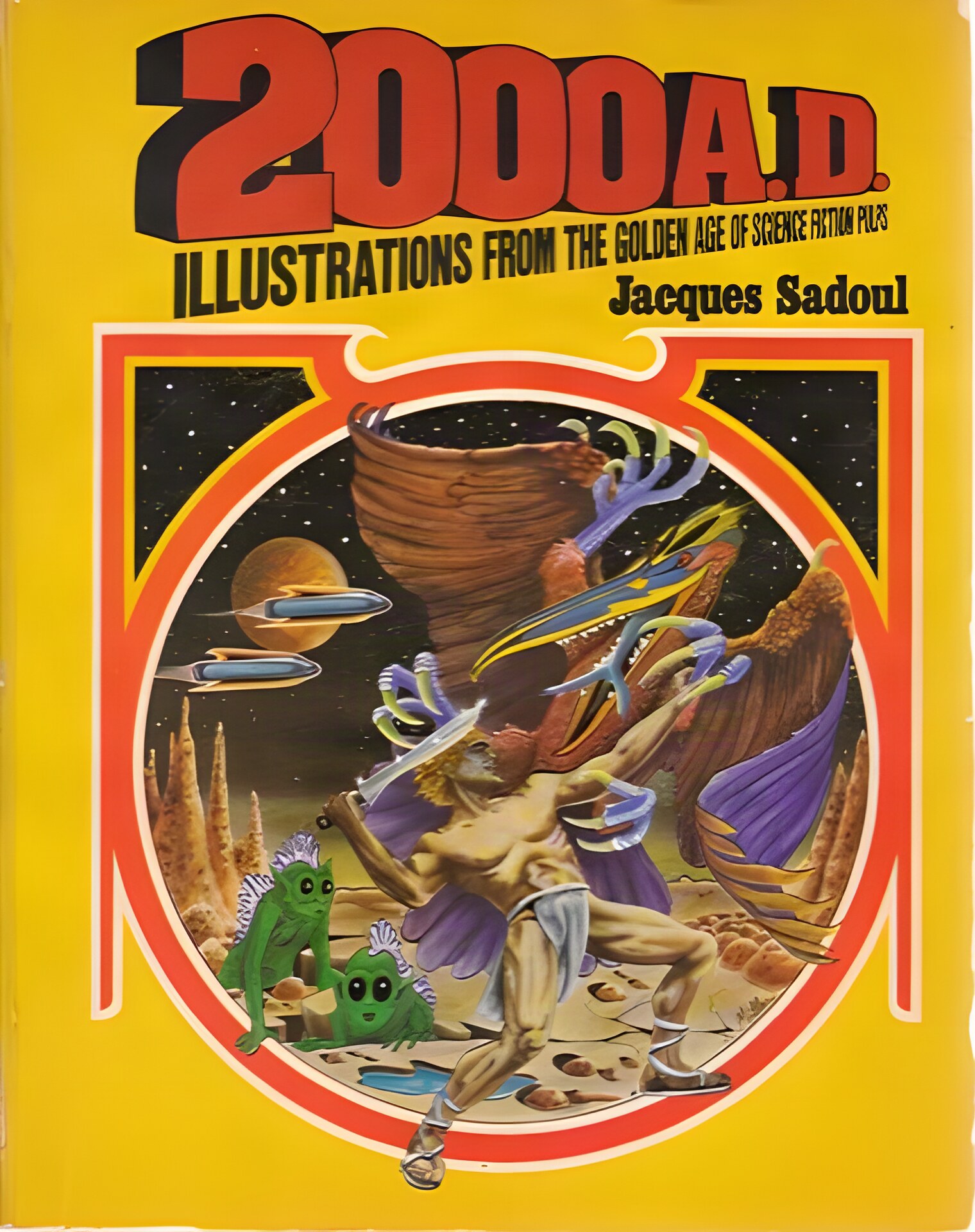
Softcover. Chicago, Regnery Publishing, 1st, 1975, Book: Very Good, Dust Jacket: None, Softcover, pictorial wraps, 176 pages. Mostly b&w illustrations, some color. Well-illustrated survey of the SF pulps from the mid-1920s through the mid-1950s. Preface by A. E. Van Vogt. Clean copy.
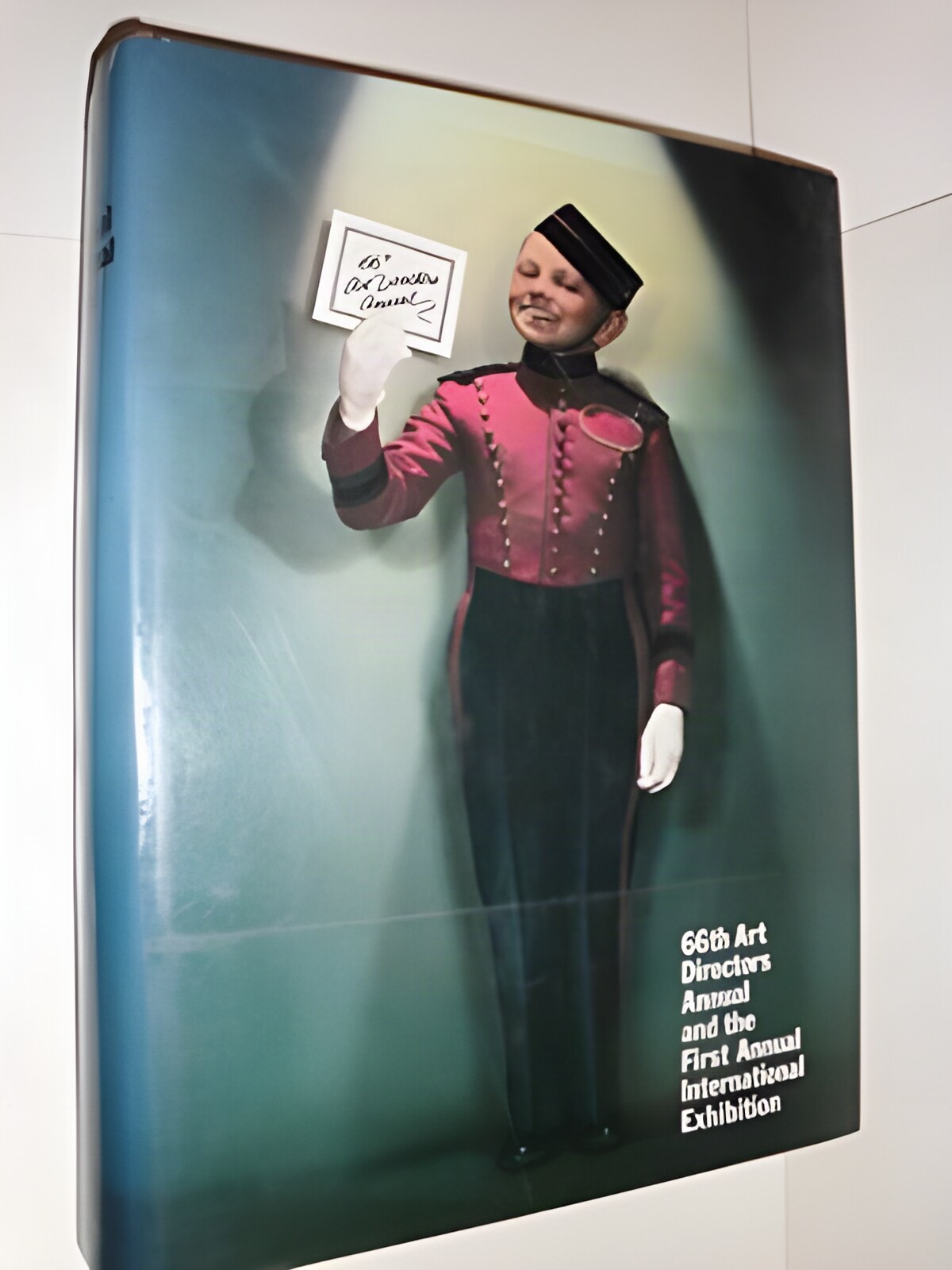
Hardcover. NY, Art Directors Club, 1st, 1982, Book: Very Good, Dust Jacket: None, Hardcover in pictorial cloth. No names, clean text. Over1200 magazine covers, packaging, advertising art, etc. With b/w & color repros. very good, no dust jacket. NOTE: DUE TO WEIGHT, DOMESTIC SHIPPING ONLY.
Hardcover. NY, Robert Silver Associates, 1st, 1987, Book: Very Good, Dust Jacket: Very Good, Hardcover in a bright dust jacket. Shows award winning posters, promotional material, newspaper advertising, packaging, magazine and television advertising, illustrations, book covers, and editorial art. 820 pages. The Art Directors Club of New York:
Hardcover. NY, Madison Square Press , 1st, 1988, Book: Very Good, Dust Jacket: Very Good, Hardcover in a bright dust jacket. Shows award winning posters, promotional material, newspaper advertising, packaging, magazine and television advertising, illustrations, book covers, and editorial art. Clean copy. NOTE: DUE TO WEIGHT, DOMESTIC SHIPPING ONLY.
Hardcover. Harrison NY, Harbor Hill Books, reprint, 1977, Book: Very Good, Dust Jacket: Good, Two hardcover volumes in lightly worn dust jackets. Alfred Donaldson's History of the Adirondacks is recognized as the major work about the entire region and as such remains unsurpassed. Originally published in 1921, this reprint has a brief biographical sketch of the author by John Duquette. As Donaldson pointed out in the preface, "The previously recorded history of the Adirondacks lies scattered in the most meager parts of old country histories, in a score of early books on travel, in a few guide-books and pamphlets, in many detached magazine and newspaper articles, and in a long series of rather dry and often technical State Reports." His task was, therefore, to sift and sort this material and to bring it together into a comprehensive and cohesive history, while adding much information from "untapped sources" and a copious index. Vol. 1: 383 pages, b&w illustrations, light edgewear to dj. Volume 2: 383 pages, b&w plates. Clean set.
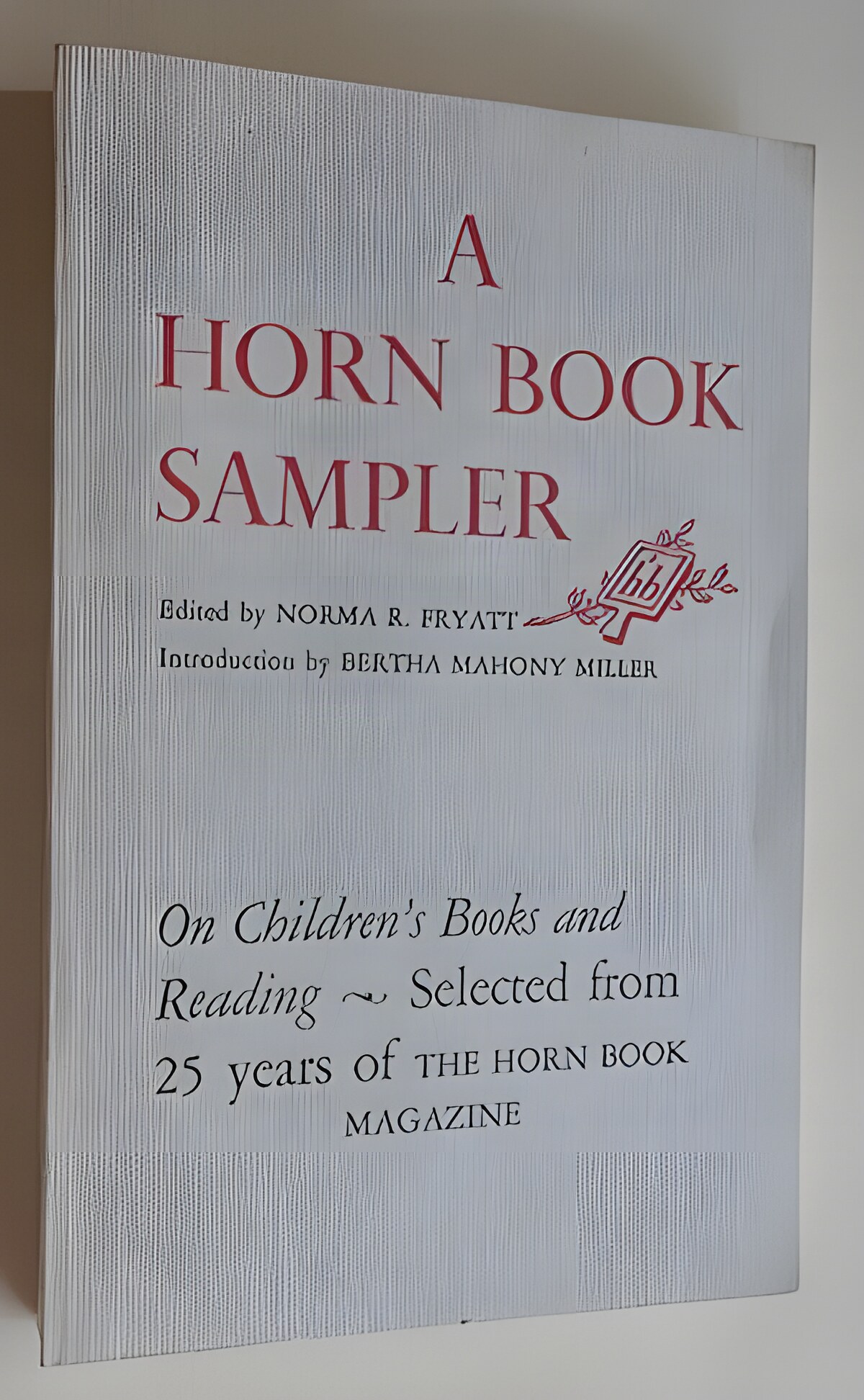
Hardcover. Boston, Horn Book, 1st, 1959, Book: Very Good, Dust Jacket: Good, Hardcover, 261 pages. Brown top edge. Yellowing to dust jacket, chipping to top of spine; in Brodart. Essays about children's literature selected from 25 years of the 'Horn Book Magazine'; 1924 - 1958. Introduction by Bertha Mahony Miller. Previous owner's inscription on front fly leaf. Else a very clean, tight copy.
Hardcover. NY, Harper & Brothers, 1st, 1907, Book: Very Good, Dust Jacket: None, Hardcover, red cloth covers with pictorial design of girl on a horse stamped in white and black. 153 pages illustrated with 5 b&w plates by Lucius Hitchcock. Twain's historical fiction novel, partially written from the point of view of Buffalo Bill's favorite horse, Soldier Boy. This novel was first published in two installments in August and September 1906 in 'Harper's Magazine'. Twain's daughter Susy Clemens, who died in 1896 at age 24 of spinal meningitis, is understood to be the inspiration for lead character Cathy Alison. When Twain provided the story to Harper's, he included a photograph of Susy for the illustrator to use for Cathy. Spine is lightly faded, otherwise a bright, clean copy.
Hardcover. NY, Knopf, 1st, 20, Book: Very Good, Dust Jacket: Very Good, Hardcover in a bright dust jacket. Drawing on original and exhaustive research from interviews and never-before-seen material in the Picasso family archives, this book opens with a visit by the Hungarian-French photographer Brassai to Picasso's chateau in Normandy, Boisgeloup, where he would take his iconic photographs of the celebrated plaster busts of Marie-Therese, Picasso's mistress and muse. Picasso was contributing to Andre Breton's Minotaur magazine and he was also spending more time with the likes of Man Ray, Salvador Dali, Lee Miller, and the poet Paul Eluard, in Paris as well as in the south of France. It was during this time that Picasso began writing surrealist poetry and became obsessed with the image of himself as the mythic Minotaur--head of a bull, body of a man--and created his most famous etching, Minotauromachie. Richardson shows us the artist is as prolific as ever, painting Marie-Therese, but also painting the surrealist photographer Dora Maar who has become a muse, a collaborator and more. In April 1937, the bombing of the town of Guernica during the Spanish Civil War inspires Picasso's vast masterwork of the same name, which he paints in just a few weeks for the Spanish Pavilion at the Paris World's Fair. When the Nazis occupy Paris in 1940, Picasso chooses to remain in the city despite the threat that his art would be confiscated. In 1943, Picasso meets Francoise Gilot who would replace Dora, and as Richardson writes, "rejuvenate his psyche, reawaken his imagery and inspire a brilliant sequence of paintings." As always, Richardson tells Picasso's story through his work during this period, analyzing how it shows what the artist was feeling and thinking. His fascinating and accessible narrative immerses us in one of the most exciting moments in twentieth century cultural history, and brings to a close the definitive and critically acclaimed account of one of the world's most celebrated artists.
Hardcover. Boston, Ticknor and Company, 1st, 1889, Book: Very Good, Dust Jacket: None, Hardcover, blue cloth stamped with gilt lettering, 380 pages. Edgar Watson Howe (May 3, 1853 - October 3, 1937) was an American novelist and newspaper and magazine editor in the late 19th and early 20th centuries. He was perhaps best known for his magazine, E.W. Howe's Monthly, which he wrote from 1911 to 1933. His first novel, The Story of a Country Town (1883), was also his best-known. Howe's subsequent novels were neither critically nor popularly successful. Clean, bright copy.
Hardcover. NY, McGraw-Hill, 1st, 1970, Book: Very Good, Dust Jacket: Very Good, Hardcover in a bright dust jacket, 474 pages. This wonderful collection contains all of Bogan's criticism, most of it written during her many years as poetry critic for The New Yorker magazine. "One does not easily recall another writer of such stature who served her fellow writers, and the reading public, for so long, or with such pertinence and distinction." She lived from 1897-1970. Flap price crossed out with smaller price in ink. Otherwise like new condition.
Softcover. NY, Hearst Magazines/Getty Images, 1st, 2007, Book: Very Good, Dust Jacket: None, Softcover, 82 pages ilustrated mostly in color. A selection of photographer slim Aarons work, done in conjuction with Getty Images. Not to be confused with the 1974 book with the same title published by Harper and Row. This sampling covers his entire career. Introductory essays by Anthony Mazzola and Pamela Fiore, Editor of Town & Country. Clean copy.
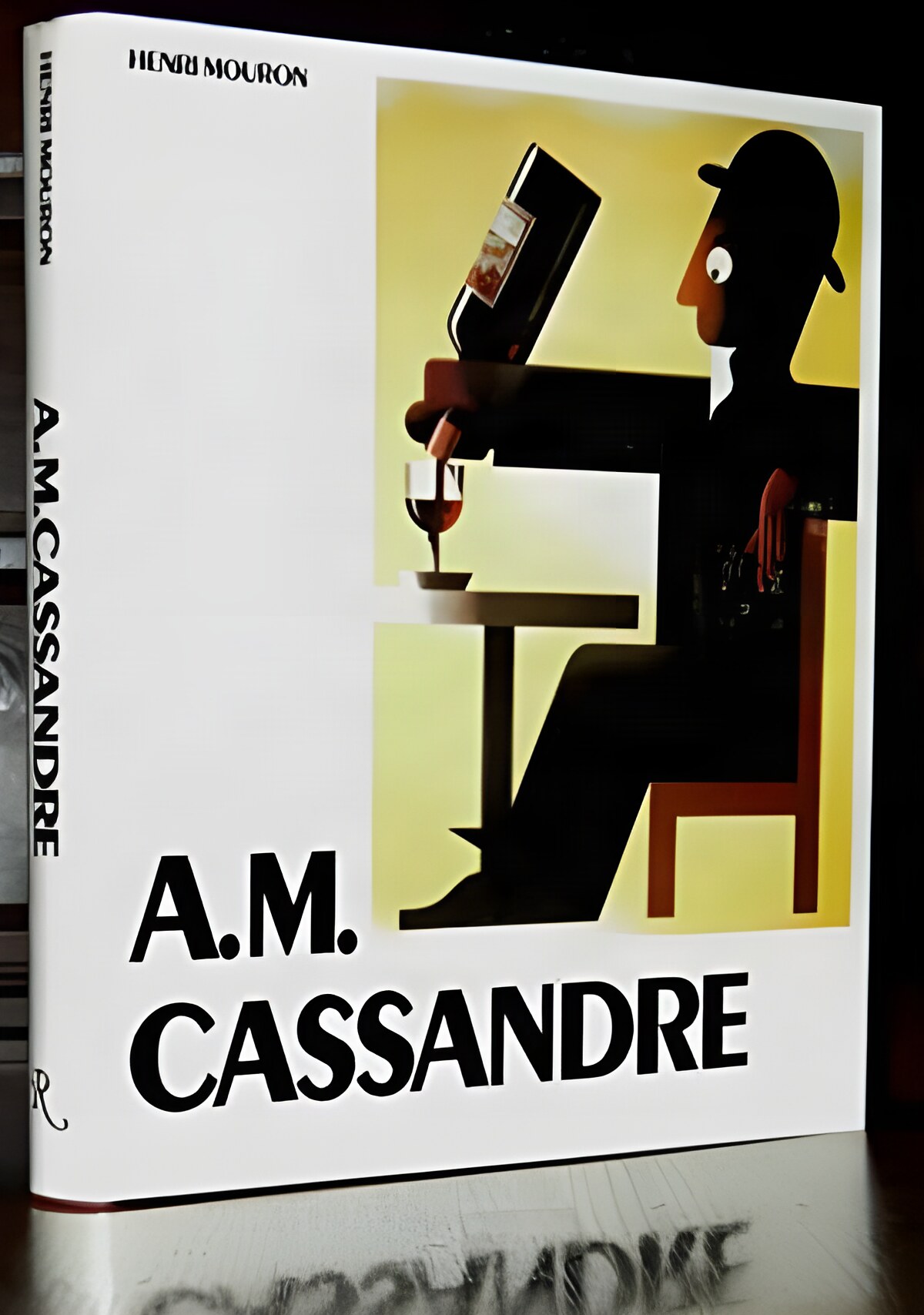
Hardcover. NY, Rizzoli, 1st, 1985, Book: Very Good, Dust Jacket: Very Good, Hardcover, 315 pages. Superb oversize book on the great French poster designer. Illustrated with 398 reproductions of his posters, set designs, magazine covers and more, including 90 in full color.
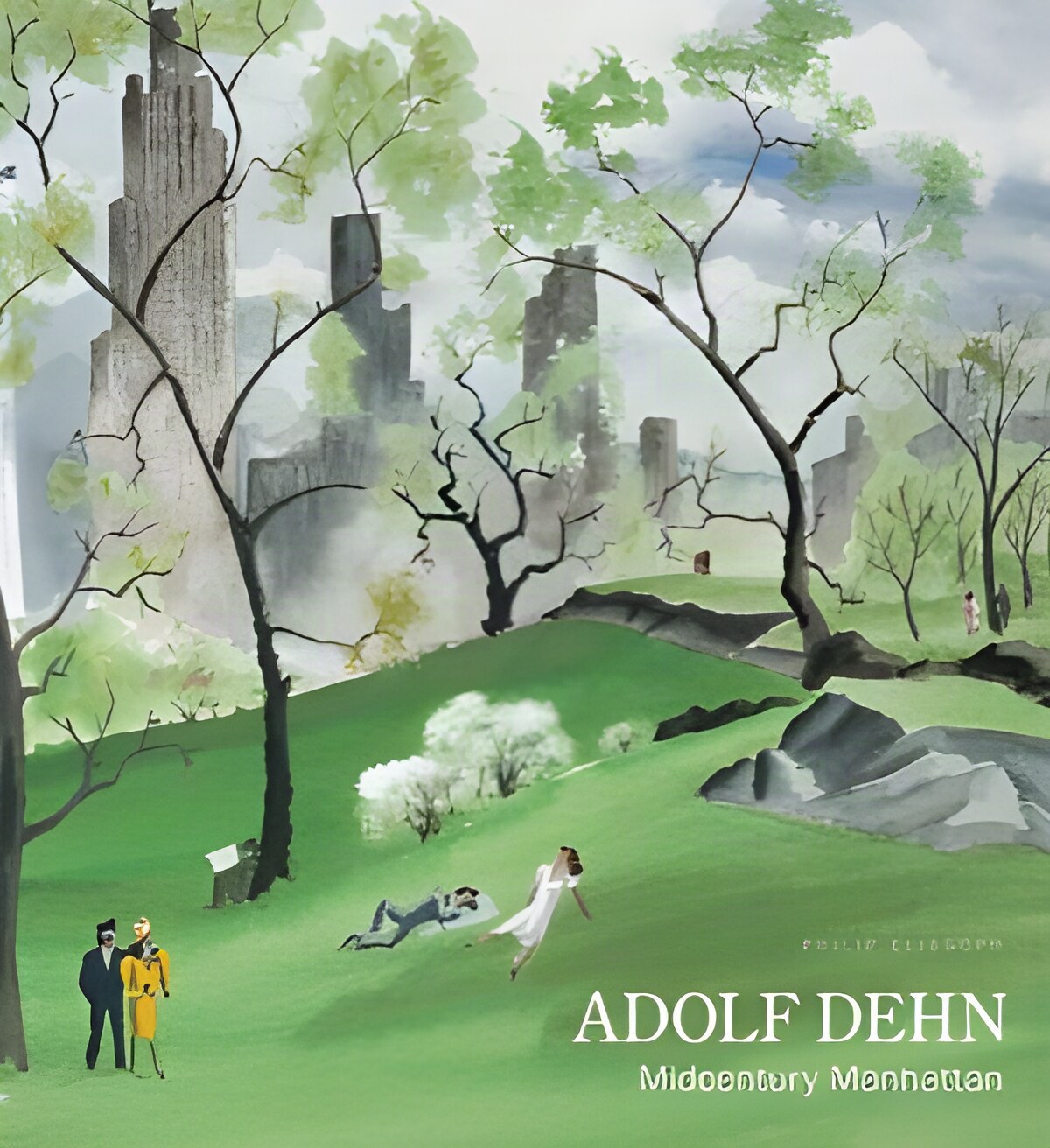
Hardcover. NY, The Artist Book Foundation, 1st, 2017, Book: Very Good, Dust Jacket: Very Good, Hardcover in a bright dust jacket. Adolf Dehn (1895-1968), an American lithographer and watercolorist, left his hometown in Minnesota after formal training at the Minneapolis Art Institute to study at the Art Students League in New York. In the early 1920s, he traveled to the cosmopolitan cities of Paris, Vienna, and Berlin, where he focused on lithography and printmaking, and soon found success as a magazine illustrator. As he toured Europe, Dehn quickly acclimated to the continental lifestyle and was adept at depicting its nuances and idiosyncrasies through his prolific lithographs and sketches. His critical and satirical renderings of the political movements, social conventions, and governmental policies in pre-World War II Europe gave the Midwestern artist ample material for his growing body of work. Returning to the United States in 1930, Dehn exhibited his prints in several solo shows at the Weyhe Gallery in New York, starting in 1935. As an artist during the era of the Great Depression, Dehn did commercial artwork and contributed to popular magazines such as The New Yorker, Vogue, and Vanity Fair. In fact, his clever drawings that reflected the culture and fashionable society during the Jazz Age, made Dehn a favourite of Frank Crowninshield, Vanity Fair's renowned editor. 182 pages, clean, still in publisher's shrinkwrap.
Hardcover. New Haven CT, Yale University Press, 1st, 2013, Book: Very Good, Dust Jacket: Very Good, Hardcover, 120 pages. Like new in publisher's shrink-wrap. A glimpse inside the mind and artistic process of a fascinating contemporary cartoonist. Born to working-class parents in a small town in Italy, and reared in Chicago, Ivan Brunetti (b. 1967) was drawn to cartoons and comic strips from an early age. Finding inspiration in Spider-Man and Peanuts, he began crafting his own stories and gradually developed a unique style that he applied to imaginative, sometimes shocking subjects. The dark humor of his graphic novels earned him a cult following, yet his illustrations have had broad appeal. Now recognized as an award-winning cartoonist and illustrator, Brunetti has published his work in the New Yorker, the New York Times Magazine, and McSweeney's, among others.
Hardcover. New Haven , Yale University Press, 1st, 2013, Book: Very Good, Dust Jacket: Very Good, Hardcover, 120 pages. Like new in publisher's shrink-wrap. A glimpse inside the mind and artistic process of a fascinating contemporary cartoonist. Born to working-class parents in a small town in Italy, and reared in Chicago, Ivan Brunetti (b. 1967) was drawn to cartoons and comic strips from an early age. Finding inspiration in Spider-Man and Peanuts, he began crafting his own stories and gradually developed a unique style that he applied to imaginative, sometimes shocking subjects. The dark humor of his graphic novels earned him a cult following, yet his illustrations have had broad appeal. Now recognized as an award-winning cartoonist and illustrator, Brunetti has published his work in the New Yorker, the New York Times Magazine, and McSweeney's, among others.
Hardcover. New Haven CT, Yale University Press, 1st, 2013, Book: Very Good, Hardcover, 120 pages. A glimpse inside the mind and artistic process of a fascinating contemporary cartoonist. Born to working-class parents in a small town in Italy, and reared in Chicago, Ivan Brunetti (b. 1967) was drawn to cartoons and comic strips from an early age. Finding inspiration in Spider-Man and Peanuts, he began crafting his own stories and gradually developed a unique style that he applied to imaginative, sometimes shocking subjects. The dark humor of his graphic novels earned him a cult following, yet his illustrations have had broad appeal. Now recognized as an award-winning cartoonist and illustrator, Brunetti has published his work in the New Yorker, the New York Times Magazine, and McSweeney's, among others.
Hardcover. Munich, Prestel, 1st, 2013, Book: Very Good, Dust Jacket: Very Good, Hardcover in a bright dust jacket, 192 pages illustrated in color. INSCRIBED BY NICKELSBERG on the front fly leaf. Noted documentary photographer Robert Nickelsberg's photographs help bring into focus the day-to-day consequences of war, poverty, oppression, and political turmoil in Afghanistan. Since the attack on the World Trade Center, Afghanistan has evolved from a country few people thought twice about to a place that evokes our deepest emotions. TIME magazine photographer Robert Nickelsberg has been publishing his images of this distant yet all too familiar country since 1988, when he accompanied a group of mujahideen across the border from Pakistan. This remarkable volume of photographs is accompanied by insightful texts from experts on Afghanistan and the Taliban. The images themselves are captioned with places, dates, and Nickelsberg's own extensive commentary. Timely and important, the book serves as a reminder that Afghanistan and the rest of the world remain inextricably linked, no matter how much we long to distance ourselves from its painful realities. Clean copy.
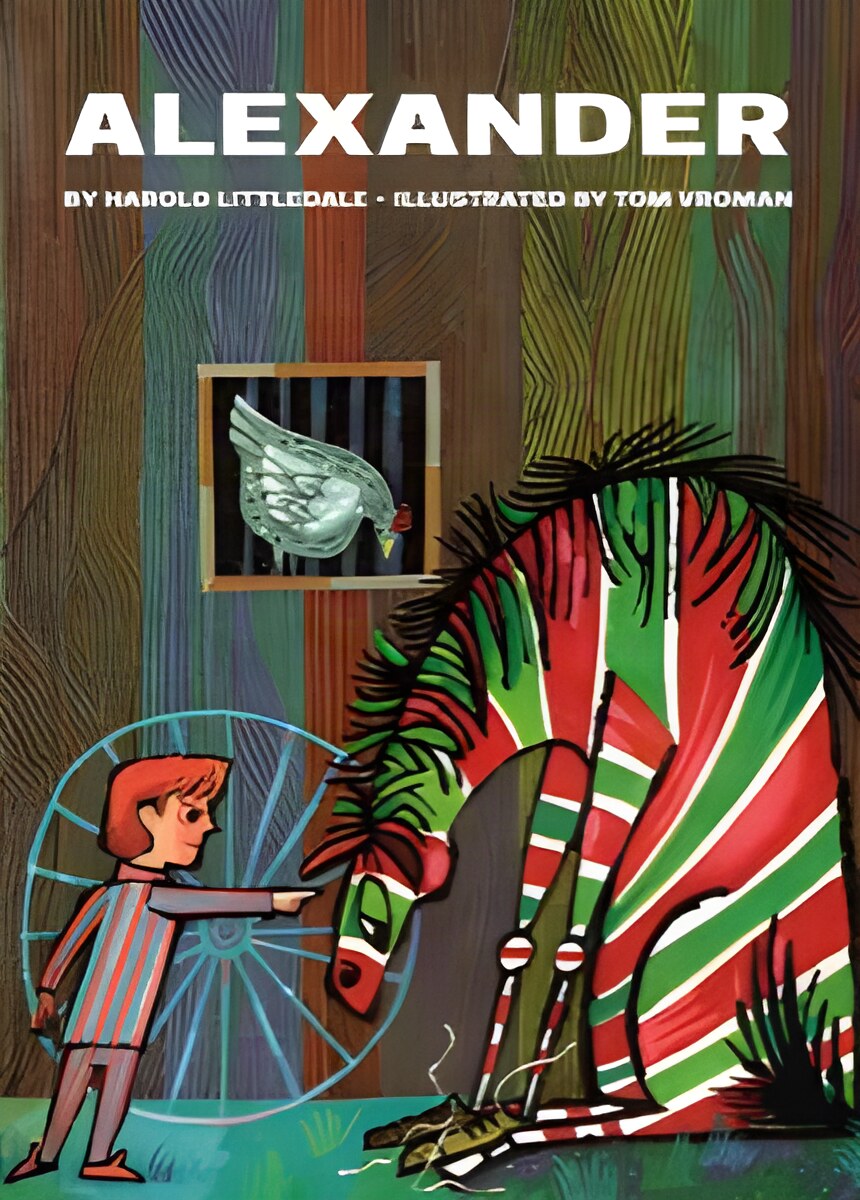
Hardcover. NY, Parents' Magazine Press, 1st, 1964, Book: Very Good, Dust Jacket: None, Hardcover, pictorial cloth, 40 pages illustrated in color by Tom Vroman. It was bedtime. Chris and his father sat down side by side on Chris's bed. They talked of Chris's friend Alexander, the red horse with green stripes. "Alexander was a pretty bad horse today," Chris said. "He wouldn't eat his cereal. He wouldn't sit up at the table and he spilled his milk." "That's too bad," said Chris's father. "What else happened?" The ensuing conversation of Alexander's bad day makes for an entertaining read, along with its priceless ending. Mild shelfwear. name on inside front cover, otherwise clean.
Softcover. London, Thames & Hudson, 1st, 2017, Book: Very Good, Dust Jacket: None, Softcover, 224 pages in color. A trip around the globe with fashion photographer Alice Hawkins, capturing unique personalities in locales as far-flung as Texas, India, Nairobi, Cuba, and Jamaica. Displaying an uncommon flair for storytelling that imbues each image with a sense of wonder, Alice Hawkins's work explores the importance of individuality, role play, dressing up, fantasy, and playfulness. Her extended series of stylized "fashion portraits" from around the world question and ultimately celebrate beauty and the representation of the feminine outside of the mainstream. Her photographs for some of the world's leading fashion magazines document the men and women Hawkins has encountered on "road trips" in far-flung locations, focusing on people she sees on the street or locals whose particular style or appearance she has sought out in lieu of fashion models'. Mild bumps to corners, otherwise like new.
Hardcover. New York, N.Y., Gotham, 1st, 2010, Book: Very Good, Dust Jacket: Very Good, Hardcover, 318 pages, b&w illustrations. Light edgewear to dust jacket. Overall, a tight clean copy. A highly entertaining exploration of the complicated science of quantum mechanics made easy to understand by way of pop culture. As a young science fiction fan, physicist James Kakalios marveled at the future predicted in the pulp magazines, comics, and films of the '50s and '60s. By 2010, he was sure we'd have flying cars and jetpacks. But what we ended up with-laptop computers, MRI machines, Blu-ray players, and dozens of other real-life marvels-are even more fantastic. In The Amazing Story of Quantum Mechanics, he explains why the development of quantum mechanics enabled our amazing present day.
Hardcover. NY, powerHouse Books, 1st, 2019, Book: Very Good, Dust Jacket: Very Good, Hardcover in a bright dust jacket, still in publisher's shrink wrap. Jean Patchett was both model and muse, a famous face from New York's vibrant midcentury popular culture and the most successful high-fashion model of her time. A small-town girl from rural Maryland, Patchett had no firm ambitions until a friend suggested she drop out of college and go to New York and become a model. Within a year Jean had left school, met model agent Eileen Ford, and begun a career that saw her photographed by the greatest photographers of her era, with more than 58 magazine covers over 14 years. "A young American goddess in Paris couture," was Irving Penn's epitaph for the model he photographed for a classic series in Lima, Peru where, pushed past their limits, Patchett and Penn created passionate art with a possible passionate relationship as well. Penn would go on to create stunning images of Patchett forVogueand later, for a series of nudes he called "the major artistic experience of my life." Letters from Patchett to her family show a young woman in love with her life and eager to share the thrills and struggles of her career. Quotes from photographers Cecil Beaton, John Rawlings, William Helburn, Jerry Schatzberg, and Francesco Scavullo reflect their admiration for her technical skills as a model as well as her unique beauty. A work diary from 1951 allows us to see how-and with whom-she worked from day to day.
Hardcover. NY, powerHouse Books, 1st, 2019, Book: Very Good, Dust Jacket: Very Good, Hardcover in a bright dust jacket, still in publisher's shrink wrap. Jean Patchett was both model and muse, a famous face from New York's vibrant midcentury popular culture and the most successful high-fashion model of her time. A small-town girl from rural Maryland, Patchett had no firm ambitions until a friend suggested she drop out of college and go to New York and become a model. Within a year Jean had left school, met model agent Eileen Ford, and begun a career that saw her photographed by the greatest photographers of her era, with more than 58 magazine covers over 14 years. "A young American goddess in Paris couture," was Irving Penn's epitaph for the model he photographed for a classic series in Lima, Peru where, pushed past their limits, Patchett and Penn created passionate art with a possible passionate relationship as well. Penn would go on to create stunning images of Patchett forVogueand later, for a series of nudes he called "the major artistic experience of my life." Letters from Patchett to her family show a young woman in love with her life and eager to share the thrills and struggles of her career. Quotes from photographers Cecil Beaton, John Rawlings, William Helburn, Jerry Schatzberg, and Francesco Scavullo reflect their admiration for her technical skills as a model as well as her unique beauty. A work diary from 1951 allows us to see how-and with whom-she worked from day to day.

 "10 Years of Trace by Claude Grunitzky by: Grunitzky, Claude")
 "1950s in Vogue: The Jessica Daves Years, 1952-1962by: Tuite, Rebecca C.")







 "A Life of Picasso IV: The Minotaur Years 1933-1943by: John Richardson")


 "A Wonderful Time/Photographs by Slim Aaronsby: Aarons/Getty Images, Slim")
 "Aesthetics: A Memoirby: Brunetti, Ivan")
 "Aesthetics: A Memoirby: Brunetti, Ivan")



 "Amazing Story of Quantum Mechanics, The : A Math-Free Exploration of the Science that Made Our Worldby: Kakalios, James")
 "American Goddess: Jean Patchettby: Lilly, Robert & Lois")
 "American Goddess: Jean Patchettby: Lilly, Robert & Lois")