Bologna, Damiani, 1st, 2017, Book: Very Good, Dust Jacket: None, Hardcover, 280 pages. American fashion photographer James Moore (1936-2006) was an influential voice in mid-20th-century fashion photography, working for Harper's Bazaar during its 1960s heyday under the leadership of legendary editor Carmel Snow. Shooting languid mod gamines and luxe bohemians in arresting, often surreal or cinematic compositions, Moore helped shape the visual vocabulary of '60s fashion alongside better-known colleagues such as art director Alexey Brodovitch (under whom Moore studied). Moore also directed television commercials and contributed photographs to European magazines in the 1980s and 1990s, and taught photography at the School of Visual Arts, New York, and the Rochester Institute of Technology. Every Moore photograph is an intricate exploration of space and beauty, with an attention to detail that betrays the photographer's peerless eye. Something of a "photographer's photographer," Moore influenced the next generation of great fashion photographers but has been somewhat neglected in histories of 1960s fashion and culture--until now. James Moore: Photographs 1962-2006 collects a half century of extraordinary photographs by Moore, the first time his work has been collected in a single monograph. Including texts from the leading editors, models, photographers and designers of the day, this volume takes stock of James Moore's astounding career and an extraordinary cultural moment.
Hardcover. Boston, Roberts Brothers, 1st US, 1876, Book: Very Good, Dust Jacket: None, Hardcover, brown cloth, gilt title to spine and gilt vignette of windmill and black borders to front cover. 310 pages.Originally published in Aunt Judy's Magazine as: The Miller's Thumb in 1873. Appears to be the first U.S. printing. Bright, clean copy.
Softcover. Neshannock PA, Hermes Press, 1st, 2014, Book: Very Good, Dust Jacket: None, 112 pages. Softcover. Extensive color and b&w illustrations by Jaro Fabry throughout. Clean, unmarked copy with only minor wear to wrappers. During the Golden Age of Hollywood no illustrator chronicled the great stars, pin-ups and good girls better than Jaro Fabry-he was even engaged to one of the era's hottest starlets! His artwork graced such magazines as Colliers, Harpers, and The New Yorker. Now see his behind the scenes illustrations of Hollywood nightlife in the 1930s through the early 1950s together with glamorous and alluring pin-ups and good girls. The style and romance of this by-gone era are captured in the over 220 full color illustrations presented in this definitive monograph. See finished artwork, drawings, covers, and documentary artwork in this tribute to the Golden Age of Hollywood. The cover features actress and sex symbol Lana Turner!
Hardcover. NY, Da Capo Press, reprint, 1979, Book: Very Good, Dust Jacket: None, Hardcover, red cloth with silver gilt lettering. First published in 1962 Jazz Panorama presents roughly forty short articles from the pages of The Jazz Review from the late 1950s and early 1960s, selected by respected jazz historian Martin Williams, the magazine's co-founder (with Nat Hentoff). This is the type of book that one can dip into from time to time and always find something both enjoyable and educational. Written in clear, understandable prose, the book collects short essays, record reviews (usually of multiple LPs), and two interviews. A wide range of jazz styles and movements is covered here, everything from Dixieland to "third stream" and the avant-garde of Ornette Coleman.The jazz musicians included for discussion range from King Oliver and Jelly Roll Morton to Bix Biederbecke. Louis Armstrong, Billie Holiday, Stan Getz, and Miles Davis. 318 pages, clean copy. No dust jacket.
Hardcover. NY, Thomas Crowell, 1st, Book: Very Good, Dust Jacket: Very Good, Hardcover, 224 pages, illustrated in color and b&w. Jessie Willcox Smith (1863-1935), was one of the most prominent female illustrators in the United States during the Golden Age of American illustration. She illustrated stories and articles for clients such as Century, Collier's Weekly, Leslie's Weekly, Harper's, McClure's, Scribners, and the Ladies' Home Journal. Four appendices give detailed listings of the appearance of Smith's illustrations in books, magazine covers, posters, etc. Bibliography. Notes. Index. With a lightly worn dust jacket that's been price-clipped. Previous owner's inscription on front fly lead, otherwise clean.
Hardcover. Chicago, Haase-Mumm Publishing, 1st, 1981, Book: Very Good, Dust Jacket: Very Good, Hardcover in a bright dust jacket, 189 pages. #174 of 1, 000 copies signed by author. Biography and critical study of John Barber (1893-1965), American artist and contributor to the radical magazine The Masses. 16 color and 109 b&w plates. Bibliography and index.
Hardcover. NY, Library of America, 1st, 2016, Book: Very Good, Dust Jacket: Very Good, Hardcover in a bright, unclipped dust jacket, 860 pages. Writing with equal insight about New York City, Hollywood, and the small-town Pennsylvania world where he grew up, John O'Hara cultivated an unsentimental and often unsparing realism, aiming, he said, "to record the way people talked and thought and felt . . . with complete honesty." Praised by contemporaries including Ernest Hemingway and Dorothy Parker, he wrote about sex, drinking, and social class with a frankness ahead of its time. The fiction he published in The New Yorker (more than any other writer to this day) came to epitomize the kind of short story featured in that magazine, and his impeccable ear and skillful dialogue have influenced later writers such as Raymond Carver. Bringing together sixty stories written over four decades--the largest, most comprehensive collection of O'Hara's stories ever published--former New York Times Book Review editor Charles McGrath presents a fresh and arresting new perspective on one of American literature's master storytellers. Clean copy.
Hardcover. New Haven, CT, Yale University Press, 1st, 2014, Book: Very Good, Dust Jacket: Very Good, 240 pages. Hardcover with dust jacket. Very clean, like new in publishers shrink-wrap. A tight copy. The American realist artist John Sloan is best known for his portrayals of daily life in early 20th-century New York and as a member of The Eight and the Ashcan School, alongside peers like Robert Henri, Everett Shinn, and George Luks. Sloan's artistic approach was shaped by his experience as a commercial illustrator, a type of work that inaugurated his professional career-at newspapers like the Philadelphia Press and later for mass-market magazines-and which he pursued even after he turned his focus to painting. In John Sloan: Drawing on Illustration, Michael Lobel explores the impact of Sloan's illustrating on his wider output, including his paintings, his drawings for the radical journal The Masses, and his response to the watershed 1913 Armory Show. Illuminating the interaction between art and popular culture, this book provides an important new framework for understanding the modern genre of illustration, and in so doing touches on major 20th-century currents, including the rise and expansion of the mass media and the visual legacy of European modernism.
Hardcover. New Haven, CT, Yale University Press, 1st, 2014, Book: Very Good, Dust Jacket: Very Good, 240 pages. Hardcover with dust jacket. Very clean, like new in publishers shrink-wrap. A tight copy. The American realist artist John Sloan is best known for his portrayals of daily life in early 20th-century New York and as a member of The Eight and the Ashcan School, alongside peers like Robert Henri, Everett Shinn, and George Luks. Sloan's artistic approach was shaped by his experience as a commercial illustrator, a type of work that inaugurated his professional career-at newspapers like the Philadelphia Press and later for mass-market magazines-and which he pursued even after he turned his focus to painting. In John Sloan: Drawing on Illustration, Michael Lobel explores the impact of Sloan's illustrating on his wider output, including his paintings, his drawings for the radical journal The Masses, and his response to the watershed 1913 Armory Show. Illuminating the interaction between art and popular culture, this book provides an important new framework for understanding the modern genre of illustration, and in so doing touches on major 20th-century currents, including the rise and expansion of the mass media and the visual legacy of European modernism.
Hardcover. NY, Thames & Hudson, 1st, 2012, Book: Very Good, Dust Jacket: None, Hardcover, 152 pages. A fabulous facsimile of an almost unknown masterpiece by Joseph Cornell, presented in a box, along with a volume of essays and an interactive DVD One of Joseph Cornell's favorite pastimes was to meander through the used bookstalls of lower Manhattan, sorting through old books, magazines, postcards, photos, and other ephemera in search of items to spark his creative impulses. Sometime in the early 1930s he came upon the Journal d'Agriculture Practique (Volume 21, 1911), a voluminous handbook of advice for farmers. Though he was very much an urban creature, he adored French culture of that period, and the book was filled with charming black and white engraving and photographs of pigs, horses, vegetables, and farm machinery. Over time Cornell altered and reinvented many of the pages in the Journal. He inserted collages, photomontages, and occasional drawings; he crossed out words in the text and made French puns with others. Hand-colored engravings, cutouts, and lift-ups intricately transport the reader from page to page. The dazzling elegance of Cornell's work on the Journal has rarely been viewed. It was discovered in his basement studio soon after his death in 1972 and is now in the collection of the Philadelphia Museum of Art. Due to its fragility, the work is not well known, even among Cornell scholars. Now, in a unique venture, sixty of the most extraordinary pages have been re-created in virtual facsimile, with cutouts, glue-ons, and other unique handmade details. Included in a specially designed box are a DVD of the entire work, including pop-up commentaries, and a volume of illustrated essays on the Journal and Cornell's artistic practice. 103 illustrations
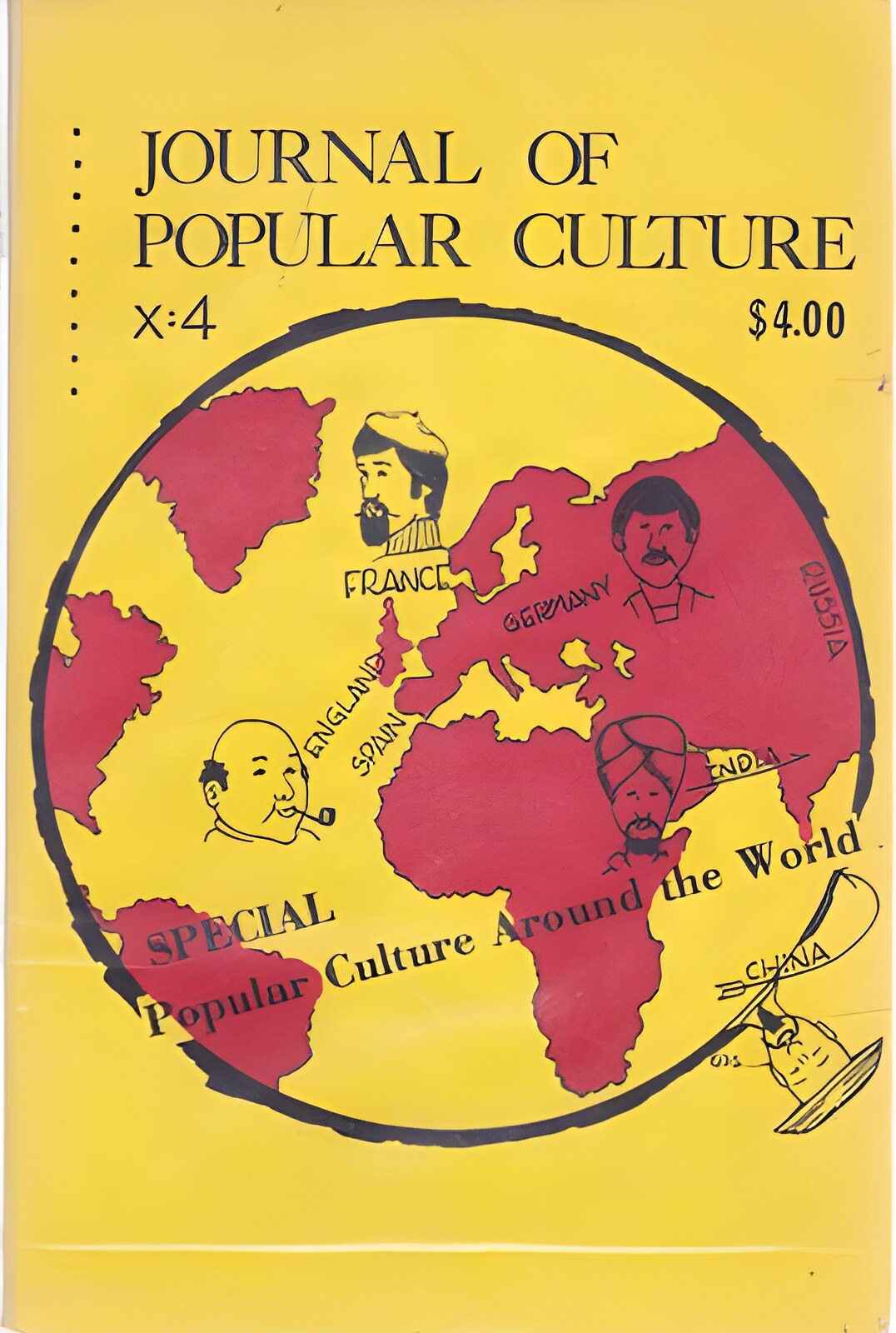
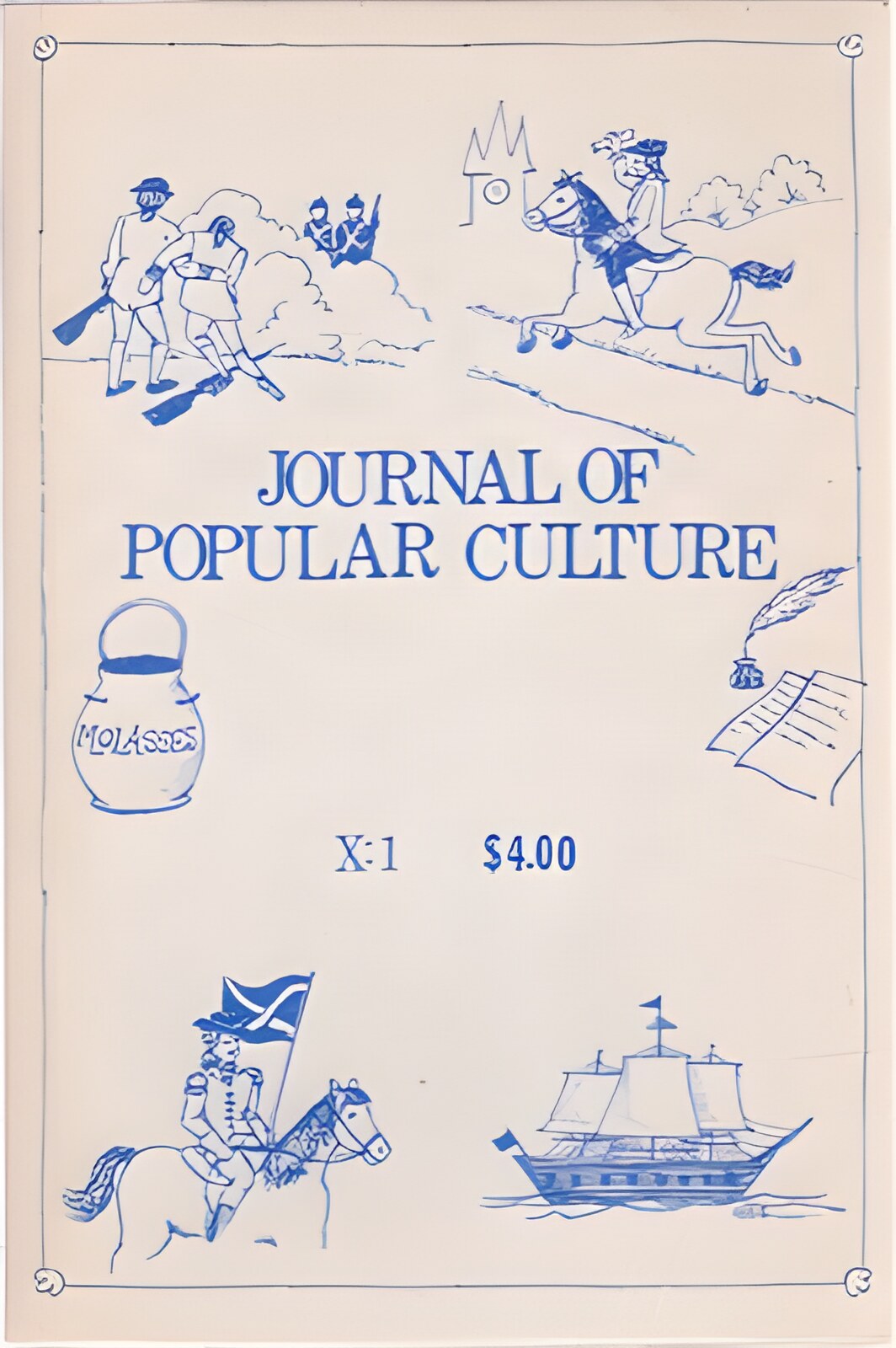
Softcover. Bowling Green OH, Journal of Popular Culture, 1st, 1977, Book: Very Good, Dust Jacket: None, Softcover, pages 701-909. Articles include: Philip Gordon on Ayn Rand. Louis F. Helbig on Struwwelpeter: an inquiry into the effects of violence in children's literature. French folk songs. D. L. Ashliman on the American Indian in German Travel Narratives and Literature. Clean.
Softcover. Bowling Green OH, Journal of Popular Culture, 1st, 1976, Book: Very Good, Dust Jacket: None, Softcover, pages 1-258. Articles include: The tragedy of Bert Williams, mystery writer John D. MacDonald, Edward R. Murrow's WW2 radio broadcasts, the dance marathon craze, Spider-Man - Superhero in the Liberal Tradition, others. Clean.
Softcover. NY, Judge Publishing Co., 1928, Book: Good, Softcover, 32 pages. Color cover art by Jefferson Machamer, "The Dummy". Color ads for Fatima and Marlboro cigarettes. B/w cartoons by Gardner Rea, Suess, others. Small tan spot to bottom edge.
Hardcover. Hatje Cantz, 1st, 2008-08-01, Book: Very Good, Dust Jacket: Very Good, Hardcover, pages. Like new in publisher's shrink-wrap. In the early 1950s, Berlin-born photographer Jurgen Schadeberg captured Nelson Mandela, (then a young attorney), singer Miriam Makeba and the nightlife in Sophiatown, a dynamic black neighborhood in Johannesburg. Revealing the poverty endemic to the majority of South Africa's black population became Schadeberg's chief focus. He arrived there in 1950, at the advent of apartheid, to work for Drum, the first magazine for black readers. In 1964, when Drum was banned, Schadeberg left South Africa for Europe and the United States, creating a body of portraits unique in their ability to cut across race, class and social standing. In 1994, Schadeberg created an iconic image of Nelson Mandela, by then the first black President of South Africa, standing at the window of his former prison cell on Robben Island, where he had been detained on charges of conspiracy from 1964-1982. Schadeberg, whose work has been highly influential to younger artists, now lives and works near Paris. This substantial volume collects 250 images from across his career.
Hardcover. NY, Parents' Magazine Press, 1st, 1968, Book: Very Good, Dust Jacket: None, Hardcover, pictorial cloth boards, 40 pages illustrated in color by Aldren Watson and SIGNED BY WATSON on the title page. Farmer West is getting old and finding taking care of his farm hard, but when he decides to sell, he doesn't like what all the buyers will do with it. What is he to do? Clean copy, no dust jacket.
Softcover. Seattle, Fantagraphics, 1st, 2007, Softcover, 168 pages. Edward Sorel is widely recognized as America's premier illustrator. But when he wasn't painting covers and doing drawings for The New Yorker, The Atlantic, Time, Rolling Stone, and many other mass circulation magazines, he was indulging, over the last 30 years, in his first love--making comic strips. Sorel's strips are iconoclastic, cynical, and universally excoriating. No target escapes his watchful wrath: politicians, theological dynasties, ideologues left and right, lawyers, publishers, and the usual gang of movers and shakers--panderers, philistines, money-grubbers. (Nor does he spare himself.) Culled from the pages of The Nation, The Village Voice, Penthouse, and other magazines, Sorel proves he is that most dangerous of creatures--a cartoonist with a chip on his shoulder, an inveterate troublemaker, a burner of bridges.
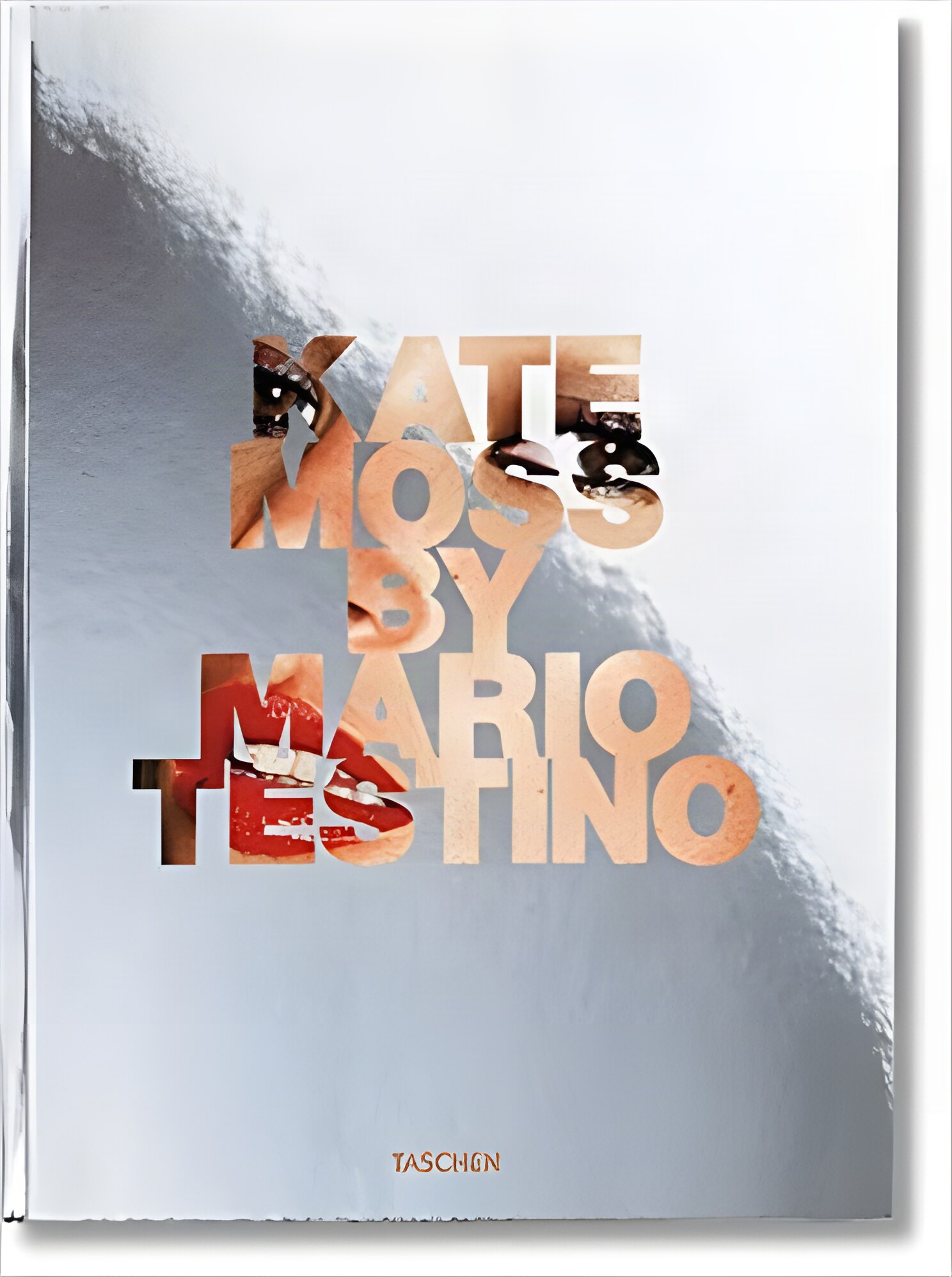
Hardcover. NY/Cologne, Taschen, reprint, 2024, Book: Very Good, Dust Jacket: None, Hardcover, silver metallic boards. Mario Testino is recognized as the ultimate fashion photographer of his generation but his pictures of Kate Moss transcend fashion. The result of three decades of extraordinary friendship, and phenomenal glamour, this iconic collaboration is an intimate insight into the lives and minds of two of the world's definitive style leaders. This book follows the journey of this exceptional fashion partnership, from early days backstage at the shows to behind-the-scenes glimpses of the groundbreaking editorials they continue to produce for the world's most respected magazines. Of the 100-plus images, many photographs have been chosen from Testino's private archive. They are accompanied by a foreword by Testino and an exclusive essay by Kate Moss. This is a smaller format edition that Taschen published in 2010. Clean, bright copy.
Softcover. Taschen, 1st, 2014, Book: Very Good, Dust Jacket: None, Softcover, 232 pages. Mario Testino is recognized as the ultimate fashion photographer of his generation but his pictures of Kate Moss transcend fashion. The result of two decades of extraordinary friendship, and phenomenal glamour, this iconic collaboration is an intimate insight into the lives and minds of two of the world's definitive style leaders. This book follows the journey of this exceptional fashion partnership, from early days backstage at the shows to behind-the-scenes glimpses of the groundbreaking editorials they continue to produce for the world's most respected magazines. Of the 100-plus images, many photographs have been chosen from Testino's private archive and are published here for the first time. They are accompanied by a foreword by Testino and an exclusive essay by Kate Moss.
Softcover. Paris, Beaux Arts Magazine, 1st, 1994, Book: Very Good, Dust Jacket: None, 65 pages, illustrated throughout in color and b&w. Text in French. Light edgewear to wrappers, else a clean, tight copy.
Hardcover. New York, Calla Editions, 1st, 2018, Book: Very Good, Dust Jacket: Very Good, 208 pages. Hardcover with dust jacket. A very clean, unmarked copy with only minor wear to dust jacket edges. This deluxe large-format volume presents scores of sumptuous color illustrations from La Vie Parisienne's heyday, the years between 1917 and 1922. Consisting chiefly of cover designs and editorial cartoons, the images abound in chic young beauties in fanciful and occasionally risque tableaux. Many of these illustrations have not been readily available for nearly a century, making this compilation of particular interest and value to lovers of graphic art and Parisian culture.
Hardcover. NY, Time-Life, 1st, 1972, Book: Very Good, Dust Jacket: None, Hardcover in a slipcase. Published posthumously, this volume provides an excellent survey of Larry Burrows' work for Life magazine from the late-1940s to 1971 (when he disappeared in Laos), concentrating primarily on the Vietnam War. Astonishingly powerful photojournalistic work; some of the best photographic work to emerge from the war. Photographs by Larry Burrows; introduction by Ralph Graves; reminiscences by Life editors sprinkled throughout. 160 pages; profusely illustrated with b&w and color plates; 10 x 12.5 inches. No dj issued.
Hardcover. Columbia, MI, University of Missouri Press, 1st, 1991, Book: Very Good, Dust Jacket: Very Good, 270 pages. Hardcover with dust jacket. A very clean, unmarked copy with only minor wear to dust jacket edges. Black and white illustrations throughout. A tight copy.
Hardcover. New Haver CT, Yale University , 1st, 2015, Book: Very Good, Dust Jacket: None, Hardcover, 80 pages, 59 plates in duotone, large format. Friedlander ventures into new territory, turning his eye to the rarefied world of fashion and revealing precisely what is commonplace about it: behind the glamorous spectacle of the runway are many people hard at work. The photographs, commissioned by the 'New York Times Magazine,' were taken in 2006 during New York Fashion Week, when the artist spent time backstage at the Marc Jacobs, Donna Karan, Calvin Klein, Zac Posen, Oscar de la Renta, and Proenza Schouler shows. The resulting images, many of which are published here for the first time, depict a flurry of toiling stylists, dressers, makeup artists, photographers, and models--all of them preparing, but not quite prepared, for an image to be taken.

 "James Moore: Photographs 1962-2006by: Martin Harrison (Author), Holly Brubach (Author), Nicolas Moore (Editor), James Moore (Photographer)")


 "Jan of the Windmill. A Story of the Plainsby: Ewing, Juliana Horatia")
 "Jaro Fabry: The Art of Fashion, Style, And Hollywood In The 1930s - 1940sby: Fabry, Artist) Jaro (Author")
 "Jazz Panorama: from the Pages of the Jazz Reviewby: Williams, Martin T.")
 "Jessie Wilcox Smithby: Schnessel, S. Michael")
 "John Barber: the Artist, the Man (SIGNED COPY)by: Love, Richard H.")
 "John O'Hara: Stories (LOA #282)by: John O'Hara (Author), Charles McGrath (Editor)")
 "John Sloan: Drawing on Illustrationby: Lobel, Michael")
 "John Sloan: Drawing on Illustrationby: Lobel, Michael")
 "Joseph Cornell's Manual of Marvels: How Joseph Cornell reinvented a French agricultural manual to create an American masterpieceby: Dickran Tashjian and Analisa Leppa")
 "Judge Magazine: February 11 1928 - Bridge Numberby: N/A Jefferson Machamer (cover)")
 "Jurgen Schadebergby: Schadeberg, Jurgen")

 "Juxtapoz Magazine: Spring 2018, # 205: Featuring Ines Longevial; Julian Schnabel; Theresa Chromatiby: N/A")
 "Kate Moss by Mario Testino by: Mario Testino")


 "Kurt Schwittersby: N/A")
 "La Vie Parisienne: Covers and Cartoons, 1917-1922by: Herouard, Cheri")
 "Larry Burrows: Compassionate Photographerby: Burrows, Larry")


 "Last Dandy, The: Ralph Barton, American Artist 1891-1931by: Kellner, Bruce")
 "Lee Friedlander - Dressing Up: Fashion Week NYCby: Lee Friedlander, Kathy Ryan")