Softcover. Decatur IL, Illustrated Press, 1st, 2023, Book: Very Good, Dust Jacket: None, Softcover, magazine format, 80 pages. Two long profiles on illustrators Frank McCarthy and Paul Bransom, All in color.
Softcover. Decatur IL, Illustrated Press, 1st, 2023, Book: Very Good, Dust Jacket: None, Softcover, magazine format, 80 pages. Two long profiles on illustrators Frank McCarthy and Paul Bransom, All in color.
Softcover. Decatur IL, Illustrated Press, 1st, 2023, Book: Very Good, Dust Jacket: None, Softcover, magazine format, 80 pages. Two long profiles on illustrators Robert Meyers and Bernard D'Andrea, both from the 1950s and 60s. All in color.
Hardcover. Chapel Hill NC, University of North Carolina Press, 1st, 2001, Book: Very Good, Dust Jacket: None, Hardcover, blue cloth covers with silver lettering, 384 pages, b&w illustrations. Say "New England" and you likely conjure up an image in the mind of your listener: the snowy woods or stone wall of a Robert Frost poem, perhaps, or that quintessential icon of the region--the idyllic white village. Such images remind us that, as Joseph Conforti notes, a region is not just a territory on the ground. It is also a place in the imagination. This ambitious work investigates New England as a cultural invention, tracing the region's changing identity across more than three centuries. Incorporating insights from history, literature, art, material culture, and geography, it shows how succeeding generations of New Englanders created and broadcast a powerful collective identity for their region through narratives about its past. Whether these stories were told in the writings of Frost or Harriet Beecher Stowe, enacted in historical pageants or at colonial revival museums, or conveyed in the pages of a geography textbook or Yankee magazine, New Englanders used them to sustain their identity, revising them as needed to respond to the shifting regional landscape. Clean copy. No dust jacket.
Softcover. London, Vision, 1st, 2000, Book: Very Good, Dust Jacket: None, 135 pages. Softcover with light wear to paper wrappers. First page is stick to front wrapper in one spot at bottom near spine, otherwise clean, tight copy.
Softcover. Bangor ME, Bangor and Aroostook Railroad , 1st, 1941, Book: Very Good, Dust Jacket: None, Softcover. Published by the Bangor and Aroostook Railroad, this wonderfully evocative magazine brings the unspoiled Maine woods of pre-World War II back to life. The magazine has articles on a variety of topics, including camping, canoeing, Indian relics, Maine guides, Moosehead Lake and climbing Mt. Katahdin. Illustrated throughout with black and white photos designed to make you drop everything and head North. With canoeing map, list of big game records for 1940, Sportsman's Directory of camps, hotels and fishing waters reached by the railroad and 39 pages of vintage advertisements. 128 pages. Light edgewear, small name on first page, otherwise clean.
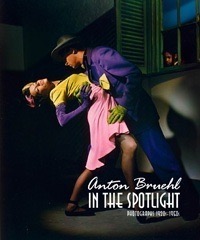
Softcover. Canberra AU, National Gallery of Australia, 1st, 2011, Book: Very Good, Dust Jacket: None, Softcover, 96 pages. From his studio in the heart of New York, Australian-born Anton Bruehl created inventive and perfectly realized color photographs for advertisements in top American magazines such as Vogue and the New Yorker. Seen by the millions of readers, his ads had a dedicated following eliciting bags of fan mail. As well as advertising, Bruehl produced evocative images of stars of stage and screen, other celebrities, seasonal child studies, and his personal photography in the classic documentary tradition including his award-winning photo book Mexico (1933) and Tropic patterns (1970). Essays cover the early lives of the Bruehl brothers in Australia; Anton's success in New York, including his most famous and whimsical advertising campaigns; and fascinating details on Bruehl-Bourges color process which gave Breuhl's photographs their distinctive look. Illustrated with Bruehl's photographs, magazine prints, and printers proofs, this book is a must for anyone interested in photography, advertising, and popular culture. In publisher's shrinkwrap.
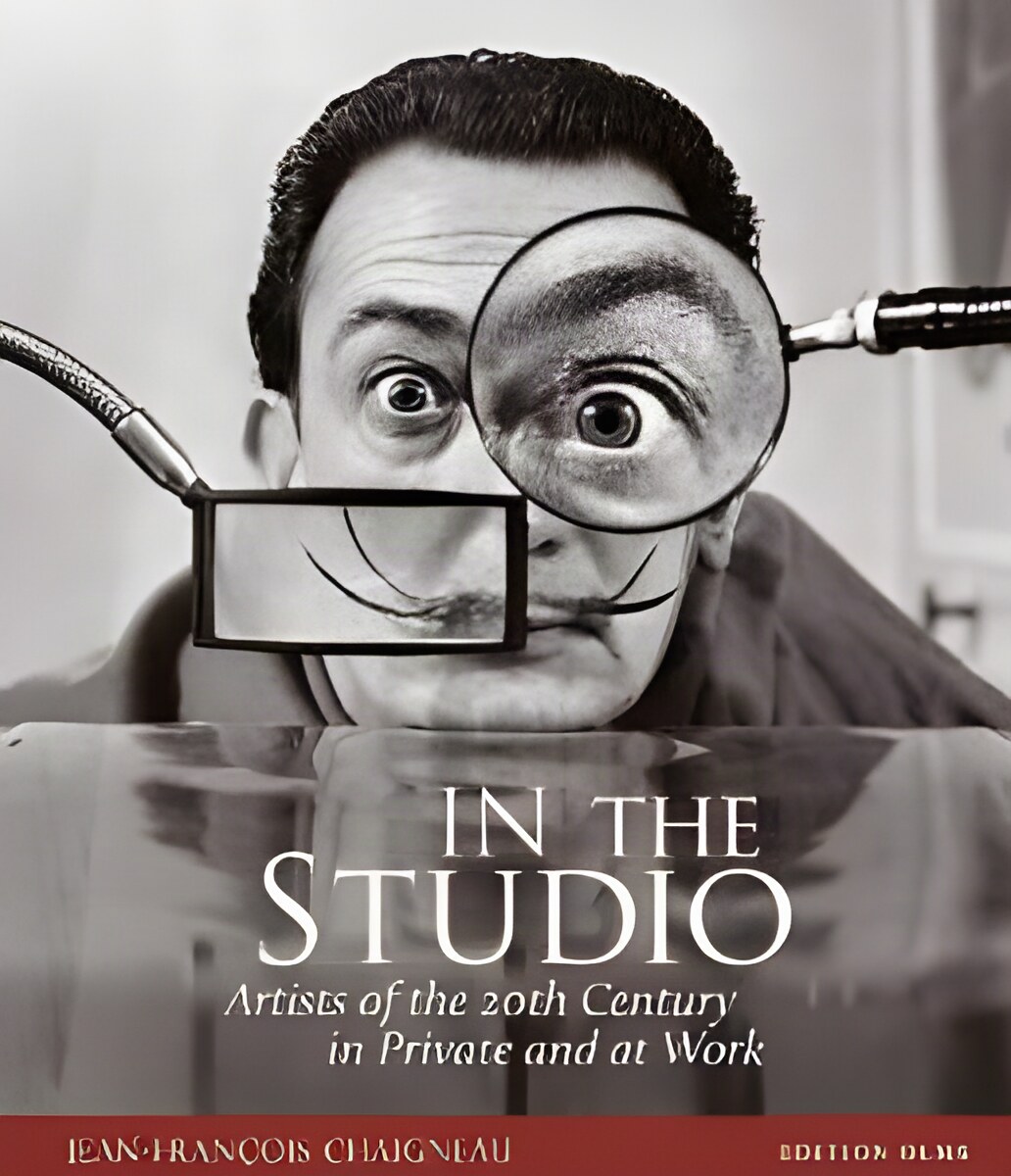
Hardcover. Zurich, Edition Olms, 1st, 2012, Book: Very Good, Dust Jacket: Very Good, Hardcover, 208 pages, with dust jacket. Like new in publisher's shrink-wrap. Delving into the photo archives of French magazine, Paris Match, where Chaigneau is an editor, and accompanied by several of the interviews and articles the magazine published, the author offers a glimpse into the working processes and personal lives of some of the 20th century's canonical visual artists . Focused mostly on European masters such as Pablo Picasso, Bernard Buffet, Rene Magritte, Marc Chagall, and Joan Miro, the book's highly accessible, if minimal, commentary and anecdotes allow the photos to take center stage. Georg Baselitz, for example, is pictured perched on a chair with his head in his arms, as if "haunted by invisible demons," with several large scale paintings in the background. In contrast, Salvador Dali, ever the "wily publicist," seems to relish the camera's presence: in one shot dressed as a Spanish nobleman with an expression of faux-seriousness. Elsewhere, as a testament to his creative drive, Henri Matisse is pictured in 1954, bedridden but still painting with a specially devised long brush mere months before his death. Moving beyond the studio, some attention is given to the private lives of the artists, adding a human element to these creative giants. Photographer Willy Rizzo captures Picasso in a rare candid and intimate moment, reading the comics of a newspaper while his boxer, Yan, looks on. But perhaps the most illuminating moments are when the artists, in interviews, talk about their creative process; there is something humble and brave, for instance, in Jacques Villon's quip, "I don't know what I've discovered... but I know that I'm still looking". Color and b&w photos.
Hardcover. New York, Rizzoli, 3rd pr., 2007, Book: Very Good, Dust Jacket: Very Good, 409 pages, color and b&w plates. A 100-year history of woman's fashion from the pages of the magazine. Some wrinkles along spine on cover where paper over boards got crimped in production. Otherwise very good in a bright dust jacket.
Hardcover. Paris/London, Robert Delpire/Photography Magazine, 1st, 1956, Book: Very Good, Dust Jacket: None, Hardcover, 25 pages & 77 plates, finely printed in photogravure. Original white cloth. 4to. Text by Manuel Tunon de Lara. Werner Bischof's last assignment, completed by Robert Frank and Pierre Verger. Early Frank publication, preceding The Americans. Clean. No dust jacket
Softcover. Taschen, 1st, 2013, Book: Very Good, Dust Jacket: None, Softcover in a pictorial slipcase. Inez van Lamsweerde and Vinoodh Matadin's work has graced the walls and pages of some of the world's finest galleries and fashion magazines, and if it is surprising that their photographs easily float between these worlds, it is by virtue of their ease in creating imagery that seeks homes in both culturally elite and mainstream outlets. For some of their photographs, such as their portrait of Bjork or campaign for Givenchy, van Lamsweerde and Matadin have worked in collaboration with the art directors M/M (Paris), who have also designed this retrospective that looks back at pretty much everything? that the photographers have been working on for over two decades and that has brought them to the forefront in the fields of both art and fashion. 702 pages. 11 x 11 inches.
Hardcover. NY, Warner Books, 1st, 2006, Book: Very Good, Dust Jacket: Very Good, Hardcover in a bright, unclipped dust jacket. The saucy and often humorous memoir of New York magazine food critic Gael Greene. From the glamorous restaurants of Manhattan to the culinary shrines of France, Greene's fierce wit and sensuous prose reveal the humor, obsession, and insatiable desires behind fine dining. Greene's love for life and food shine through in the pages of this book. From her midwestern roots to her position as a powerful critic for one of New York's most respected magazines, Greene brings readers on a quest to satisfy an insatiable hunger. 368 pages, b&w photos. Clean copy.
Hardcover. Koln GR, Konemann, 1st, 2001, Book: Very Good, Dust Jacket: Very Good, 459 pages photographs throughout. Minor dust jacket edge wear, otherwise, very clean and tight copy. Globe Photos took photos of Hollywood's stars between 1942 & 2000 for Life, Look, Photoplay, Modern Screen & Parade magazines. The section headings are: Hollywood at home; Hollywood at work: Hollywood at play.
Hardcover. Lausanne, Clairefontaine, 1st , 1956, Book: Very Good, Dust Jacket: Very Good, Hardcover, 128 pages. Black & white photos by Schuh printed in gravure. Documentary images of people in the Cartier-Bresson style. FRENCH TEXT by Fouchet. Nice condition. Schuh's early work as freelance photojournalist for several magazines, including "Paris Match" and "Life," led him throughout Europe and as far as Indonesia. In this work, Schuh presents the realities of daily life through a selection of his early photographs, including his two most famous: "Enfant javanais jouant" (a boy stretched out playing a game), and "Danseuses sacrees de Bali" (temple dancer), both taken in Indonesia in 1938-39.
Hardcover. privately printed, 1st, 2007, Book: Very Good, Dust Jacket: Very Good, Hardcover, 64 pages. With over 60 beautiful color plates, this gorgeous book of flower photographs is bound to appeal to a wide audience of anyone interested in Nature, Beauty, Meditation or Art. Tenneson explores the world of botanicals in a way that is completely unique. These photographs transcend mere documentation; they encourage the viewer to see flowers in a whole new way. Joyce Tenneson's breathtaking photographs have graced the covers of major magazines, as well as museums and galleries. Her ethereal portraits of roses, tulips, poppies and other garden blooms also come accompanied by select quotes from authors such as Emily Dickinson, William Carlos Williams, and Anais Nin.
Hardcover. Feral House, 1st, 2003, Book: Very Good, Dust Jacket: None, Glossy illustrated paper covered boards, no jacket. B/W and Color images and reproductions throughout.
Softcover. Kansas City, Hallmark, 1st, 1971, Book: Very Good, Dust Jacket: None, Softcover, spiral bound, a week-by-week calendar with each spread illustrated with a two-color cartoon by the Berenstains. Art reprinted from 16 years of their cartoon series which ran in McCalls Magazine. Light wear, clean.
Hardcover. Seattle, Fantagraphics, 1st, 2016, Book: Very Good, Dust Jacket: Very Good, Hardcover in a bright dust jacket, 304 pages. In 1976, the critic Paul Nelson spent several weeks interviewing his literary hero, legendary detective writer Ross Macdonald. Beginning in the late 1940s with his shadowy creation, ruminating private eye Lew Archer, Macdonald had followed in the footsteps of Dashiell Hammett and Raymond Chandler, but ultimately elevated the form to a new level. "We talked about everything imaginable," Nelson wrote-including Macdonald's often meager beginnings; his dual citizenship; writers, painters, music, books, and movies he admired; how he used symbolism to change detective writing; his own novels and why Archer was not the most important character-"my God, everything." It's All One Case provides an open door to Macdonald at his most unguarded. The book is far more than a collection of never-before-published interviews, though. Published in a handsome, oversized format, it is a visual history of Macdonald's professional career, illustrated with rare and select items from one of the world's largest private archives of Macdonald collectibles. Featuring in full color the covers of the various editions of Macdonald's more than two dozen books, facsimile reproductions of pages from his manuscripts, magazine spreads, and many never before seen photos of Macdonald and his friends (such as Kurt Vonnegut), including those by celebrated photojournalist Jill Krementz. It's All One Case is an intellectual delight and a visual feast, a fitting tribute to Macdonald's distinguished career. Full-color illustrations throughout
Hardcover. New York, Rizzoli International Publication, reprint, 2013, Book: Very Good, Dust Jacket: Good, 239 pages. Hardcover with dust jacket. Extensive color and b&w photographs throughout. Illustrated end papers and fly leafs. Tear to top right corner of rear dust jacket flap repaired with tape. Light edge wear to dust jacket, otherwise clean, tight copy.
Softcover. Italy, Charta/Fondazione Pitti Immagine Discovery, 1st, 2005, Book: Very Good, Dust Jacket: None, Softcover, 396 pages illustrated in color. Italian Eyes presents the most important fashion magazines in the world and the advertising campaigns photographed for Italian and international designers--a sort of visual atlas of Italian evolution of fashion photography. Various chapters unfold with images accompanied by texts analyzing fashion photography according to different themes: portrait, narration, the fashion photo set, the evolution of masculine and feminine images, and others. Clean, very good.
Softcover. South Orange NJ, Serving House Books, 1st, 2021, Book: Very Good, Dust Jacket: None, Softcover, 432 pages. SIGNED BY SOLONCHE on the title page. A generous offering of his favorite poems from past books, including the two nominated for the Pulitzer Prize, Invisible (2017) and Piano Music (2020) and the 2020 Shelf Unbound Notable Indie Book, The Porch Poems. In her introduction to Selected Poems: 2002-2021, Grace Cavalieri says, 'The absolute best remark I can make about this book is that I would give it to non-readers of poems as a conversion to poetry, for its language is as available as rain; hopeful as sunshine; and fresh as the wind. It's a perfect book to let the reading public know that this is America's poetry. This is a serious book disguised as playfulness, and we are its lucky recipients. 'J.R. Solonche has published poetry in more than 400 magazines, journals, and anthologies since the early 70s. Clean copy.
Hardcover. NY, Abrams, 1st, 2005, Book: Very Good, Dust Jacket: Very Good, Hardcover, 128 pages. Although Stock has been associated with Magnum Photos since 1951 and his work has been collected in numerous books (California Trip; Jazz Street), he remains best known for his unforgettable b&w photographs of Dean, which soared beyond routine celebrity shots. Stock's photo essay in Life, "Moody New Star," attracted attention the same week East of Eden opened in 1955, and in the years since, his photos of Dean have resurfaced in magazines, books and exhibitions. Published on the 50th anniversary of Dean's death, this collection of 80 duotones recaptures the few weeks in 1954 Stock spent with the actor in New York and his Fairmount, Ind., hometown before the two flew back to L.A. for the filming of Rebel Without a Cause. Hyams (James Dean: Little Boy Lost) calls the haunting shot of Dean alone in a rainy Times Square "one of the foremost iconic images of the 20th century." A surreal scene at the Fairmount farm shows Dean banging bongo drums for an audience of cows and pigs, and a peek inside an Actors Studio session is a rarity since Lee Strasberg "almost never let anyone photograph his classes." Stock's own brief memoir of his friendship with Dean is well written, evocative and insightful.
Hardcover. GR, Steidl , 1st, 2014, Book: Very Good, Dust Jacket: Very Good, Hardcover in a bright, unclipped dust jacket. "James Karales (1930-2002) was big-time in the best time but is not as well-known as he should be," argues photographic historian Vicki Goldberg. This book will change that. Early in his career, Karales began a photo-essay documenting Rendville, Ohio, an important stop on the Underground Railroad during the Civil War and one of the few racially integrated communities in America in the late 1950s. These pictures demonstrate his striking ability to capture the essential qualities of a community, are reminiscent of images made for the Farm Security Administration in the 1930s, and reflect Karales' state of mind as he grappled with the racial issues that were to preoccupy him and America for many years to come. Karales worked for Look from 1960 until it ceased publication in 1971. Among many important assignments for the magazine, Karales documented Martin Luther King and the fifty-mile, five-day Selma (Alabama) march in 1965. Fifteen minutes before the end of the march, the sky darkened and Karales' wide-angle shot of the protesters silhouetted against the horizon has since become an emblem of the march and has insured the photographer's place in this tumultuous period of American history. In this new publication we discover that Karales' stature as a photojournalist and social documentary photographer par excellence is based on much more than one iconic image.
Bologna, Damiani, 1st, 2017, Book: Very Good, Dust Jacket: None, Hardcover, 280 pages. American fashion photographer James Moore (1936-2006) was an influential voice in mid-20th-century fashion photography, working for Harper's Bazaar during its 1960s heyday under the leadership of legendary editor Carmel Snow. Shooting languid mod gamines and luxe bohemians in arresting, often surreal or cinematic compositions, Moore helped shape the visual vocabulary of '60s fashion alongside better-known colleagues such as art director Alexey Brodovitch (under whom Moore studied). Moore also directed television commercials and contributed photographs to European magazines in the 1980s and 1990s, and taught photography at the School of Visual Arts, New York, and the Rochester Institute of Technology. Every Moore photograph is an intricate exploration of space and beauty, with an attention to detail that betrays the photographer's peerless eye. Something of a "photographer's photographer," Moore influenced the next generation of great fashion photographers but has been somewhat neglected in histories of 1960s fashion and culture--until now. James Moore: Photographs 1962-2006 collects a half century of extraordinary photographs by Moore, the first time his work has been collected in a single monograph. Including texts from the leading editors, models, photographers and designers of the day, this volume takes stock of James Moore's astounding career and an extraordinary cultural moment.

 "Illustration: Eighty-Three (83)by: Daniel Zimmer (Frank McCarthy/Paul Bransom)")
 "Illustration: Eighty-Three (83)by: Daniel Zimmer (Frank McCarthy/Paul Bransom)")
 "Illustration: Eighty-Two (82)by: Daniel Zimmer (Robert Meyers/Bernard D'Andrea")

 "Improperhanda: The Art of the Publicity Stuntby: Borkowski (editor), Mark")

 "In Vogue: The Illustrated History of the World's Most Famous Fashion Magazineby: Angeletti, Norberto and Alberto Oliva")
 "Incas to Indiansby: Bischof, Werner, Robert Frank and Pierre Verger")

 "Insatiable: Tales from a Life of Delicious Excessby: Gael Greene")
 "Inside Hollywood: 60 Years of Globe Photosby: Deneut, Richard")
 "Instants Voles Instants Donnesby: Schuh, Gotthard and Max-Pox Fouchet")
 "Intimacy: The Sensual Essence of Flowersby: Tenneson, Joyce")
 "It's All in the Family 1972 Engagement Calendarby: Berenstain, Stanley and Janice")
 "It's All One Case: The Illustrated Ross Macdonald Archivesby: Kevin Avery , Paul Nelson, et al.")
 "Italian Eyes: Italian Fashion Photographs from 1951 to Todayby: Ferre, Giusi/Francesco Bonami (Editor), Maria Luisa Frisa")
 "J.R. Solonche: Selected Poems 2002-2021 (SIGNED COPY)by: Solonche, J. R.")
 "James Dean: Fifty Years Agoby: Dennis Stock and Joe Hyams")
 "James Karalesby: James Karales")
 "James Moore: Photographs 1962-2006by: Martin Harrison (Author), Holly Brubach (Author), Nicolas Moore (Editor), James Moore (Photographer)")

