Softcover. Belgium, Brepols Publishers, 1st, 1994, Book: Very Good, Dust Jacket: None, Softcover, 76 pages. INSCRIBED BY RICHTER on front fly leaf. Light pencil marks to several pages.
Hardcover. Princeton NJ, Princeton University Press, 1st, 2015, Book: Very Good, Dust Jacket: Very Good, Hardcover in a bright dust jacket, 354 pages. From the turn of the fifth century to the beginning of the eighteenth, Christian writers were fascinated and troubled by the "Problem of Paganism," which this book identifies and examines for the first time. How could the wisdom and virtue of the great thinkers of antiquity be reconciled with the fact that they were pagans and, many thought, damned? Related questions were raised by encounters with contemporary pagans in northern Europe, Mongolia, and, later, America and China. Pagans and Philosophers explores how writers-philosophers and theologians, but also poets such as Dante, Chaucer, and Langland, and travelers such as Las Casas and Ricci-tackled the Problem of Paganism. Augustine and Boethius set its terms, while Peter Abelard and John of Salisbury were important early advocates of pagan wisdom and virtue. University theologians such as Aquinas, Scotus, Ockham, and Bradwardine, and later thinkers such as Ficino, Valla, More, Bayle, and Leibniz, explored the difficulty in depth. Meanwhile, Albert the Great inspired Boethius of Dacia and others to create a relativist conception of scientific knowledge that allowed Christian teachers to remain faithful Aristotelians. At the same time, early anthropologists such as John of Piano Carpini, John Mandeville, and Montaigne developed other sorts of relativism in response to the issue. Clean copy.
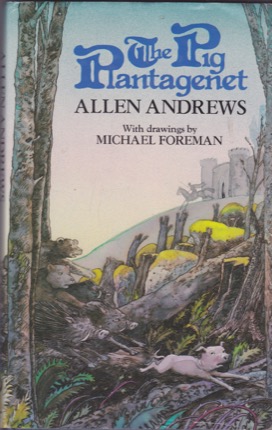
Hardcover. London, Hutchinson, 1st UK, 1980, Book: Very Good, Dust Jacket: Very Good, Hardcover in a bright dust jacket. 199 pages, illustrated in b&w by Michael Foreman. "Set in medieval France, the hero is - yes - a pig, a small but highly intelligent pig with a little boar blood lurking in his veins . . . When the feudal lords of Pitou decide with the farmers to rid the nearby forest of wild animals, it is Plantagenet (beloved of the farmer's daughter, Adele) who warns his cousin, the wild boar Grondin, of what is afoot . . . "
Softcover. Los Angeles, University of California Press , 1st, 1982, Book: Very Good, Dust Jacket: Very Good, Large softcover, 100 pages; many illustrations. Clean and tight; fairly unblemished. Stiff card wraps with wraparound jacket. Following the publication of the 3-volume Plan of St. Gall an exhibition was mounted which used selected text, drawings, models, etc. that were used to produce the large work This shorter volume grew out of that exhibition.
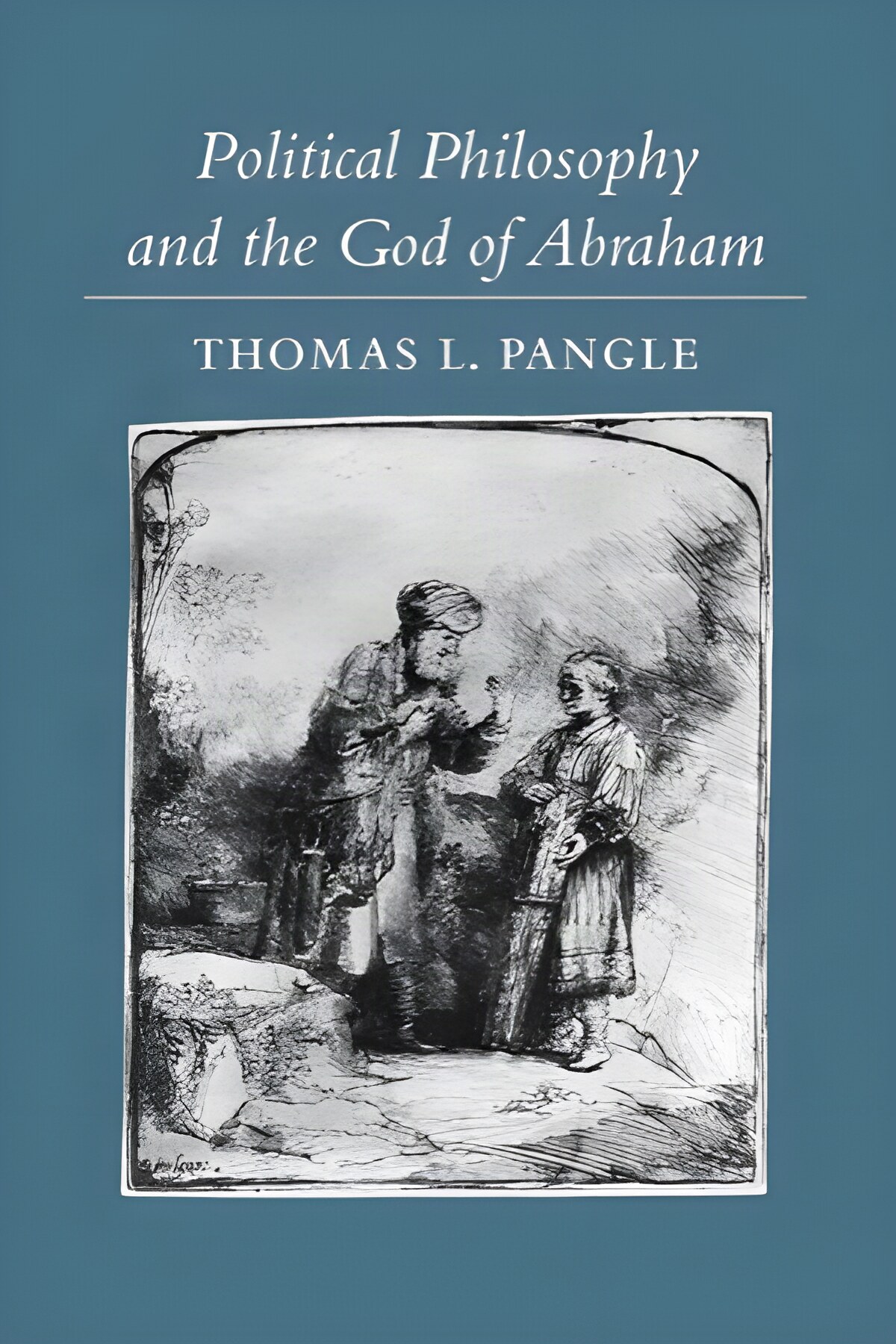
Softcover. Baltimore, Johns Hopkins University Press, reprint, 2007, Book: Very Good, Dust Jacket: None, Softcover, 285 pages. In this book noted scholar Thomas L. Pangle brings back a lost and crucial dimension of political theory: the mutually illuminating encounter between skeptically rationalist political philosophy and faith-based political theology guided ultimately by the authority of the Bible. Focusing on the chapters of Genesis in which the foundation of the Bible is laid, Pangle provides an interpretive reading illuminated by the questions and concerns of the Socratic tradition and its medieval heirs in the Christian, Jewish, and Islamic worlds. He brings into contrast the rival interpretive framework set by the biblical criticism of the modern rationalists Hobbes and Spinoza, along with their heirs from Locke to Hegel. The full meaning of these diverse philosophic responses to the Bible is clarified through a dialogue with hermeneutic discussions by leading political theologians in the Judaic, Muslim, and Christian traditions, from Josephus and Augustine to our day. Profound and subtle in its argument, this book will be of interest not only to students and scholars of politics, philosophy, and religion but also to thoughtful readers in every walk of life who seek to deepen their understanding of the perplexing relationship between religious faith and philosophic reason. Name and date on front fly leaf, otherwise clean.
Hardcover. Seattle, Fantagraphics, 1st, 2012, Hardcover, 112 pages. Fully half of this volume of Hal Foster's epic masterpiece -- again scanned from superb syndicate proofs -- is devoted to the remaining chapters of "The Winning of Aleta," a 20-month (!) epic in which Valiant obsessively pursues his bride to be. Not surprisingly this is followed by a sequence called "Matrimony," which ends with a newly wed queen adjusting to the luxurious, exciting court life at Camelot. But Val's marriage does not signal an end to his adventures. In "War in the Forest" Val is sent out to spy on encroaching Saxons -- unknowingly aided by Aleta, who, disguised as a small knight (and dubbed "Sir Puny") helps prevent disaster. But the 1946 strips end with Val and Aleta unable to return to Camelot and the displaced couple journeying to Thule. Half the strips in this volume also include the delightful "The Medieval Castle," Foster's chronicle of two young boys growing up during the time of the First Crusade -- but by the end of the 1945 strips this series has ended and the Valiant portion resumes its full-page glory.
Hardcover. Paris, Zodiaque, 1st, 1982, Book: Very Good, Dust Jacket: Very Good, Hardcover, 407 pages plus index. Color and b&w gravure plates, plans of medieval churches of France. French text. A clean, tight copy in a bright dust jacket.
Hardcover. Chicago, University of Chicago Press, 1st, 2005, Book: Very Good, Dust Jacket: Very Good, Hardcover, 284 pages. In Rustic Cubism, Bruce Adams tells the fascinating story of Moly-Sabata, an art colony founded in the Rhone Valley during the height of French modernism by Cubist pioneer Albert Gleizes. Following his social and spiritual agenda of earthly labor and a Celtic-medievalist view of Christianity, Gleizes' disciples worked to fuse Cubism with a revival of ancient agrarian, artisanal traditions. The most important and committed member of this experimental commune was ceramicist Anne Dangar (1885-1951). Generously illustrated with photographs of the art and social milieu of the period, this captivating and original narrative makes a considerable contribution to our understanding of French modernism and early twentieth-century cultural politics as well as of the life of a most talented and intriguing female artist.
Softcover. Princeton NJ, Princeton University Press, reprint, 1996, Book: Very Good, Dust Jacket: None, Softcover, pictorial wraps, 490 pages. By explaining how to sire multicolored horses, produce nuts without shells, and create an egg the size of a human head, Giambattista Della Porta's Natural Magic (1559) conveys a fascination with tricks and illusions that makes it a work difficult for historians of science to take seriously. Yet, according to William Eamon, it is in the "how-to" books written by medieval alchemists, magicians, and artisans that modern science has its roots. These compilations of recipes on everything from parlor tricks through medical remedies to wool-dyeing fascinated medieval intellectuals because they promised access to esoteric "secrets of nature." In closely examining this rich but little-known source of literature, Eamon reveals that printing technology and popular culture had as great, if not stronger, an impact on early modern science as did the traditional academic disciplines. Clean copy.
Hardcover. New Haven CT, Yale University Press, 1st, 2000, Book: Very Good, Dust Jacket: Very Good, Hardcover in a bright dust jacket. 328 pages, 267 b&w and color illustrations. "The only comprehensive discussion available on materials, techniques, and condition issues in Western easel paintings from medieval times to the present. In detailed case studies of 25 paintings by artists from Giotto and Leonardo to Vermeer, Degas, and Pollock, the authors take the reader through the layers of a painting, from canvas or panel to varnish, in clear, readable language, de-mystifying the world of the conservator for art historians, dealers, collectors, or curators." Clean, bright copy.
Softcover. Switzerland, Parkett Verlag, 1st, 2010, Book: Very Good, Dust Jacket: Very Good, Heavy paper covers in a bright color dust jacket. 209 pages, color and b&w illustrations, bilingual text - German and English. Sigmar Polke (born 1941) recently completed a series of 12 windows for the Grossmunster cathedral in Zurich, setting new standards for the mutual relationship between art and church. One group of seven Romanesque windows shows luminous mosaics of thinly sliced agate, some of it artificially colored, to produce pulsating blocks of back-lit color. Says Marina Warner, "The interior of rocks opens not only on unexpected colors... on once imprisoned now scintillating rays and gleams, but it also tunnels into the past, into the distant past of geological and cosmological millennia." For the remaining five windows, Polke designed images of figures from the Old Testament, based on medieval illuminations, which have themselves undergone transformation in the course of their long journey through time. Polke's figures now appear as radiantly contemporary icons created in colored glass, using a variety of traditional and customized techniques devised especially for this project. Minor wear to dj, lacks blue wrap-around band with title, clean copy.
Hardcover. London, William Pickering, 1st, 1835, Book: Good, Dust Jacket: None, Hardcover, 298 pages. Black leather covers with gilt rules, faded gilt title on ribbed spine. All edges gilt. Covers with edgewear and the top 6th of the spine leather is gone. Marbled endpapers with bookplate inside front cover. Rear flyleaf with a chunk cut out. Interior is very good. Medieval and Renaissance French poetry, translated into English by an acclaimed poet, travel writer, historian, and painter. Louisa Costello (1799-1870), was an accomplished Anglo-Irish artist and prolific poet and author. She was also a fine miniature painter, and her illustrations show her exquisite sensibility. 4 beautifully hand-colored lithograph plates by the author. Not all copies contain these plates.
Softcover. Cambridge MA, Medieval Academy of America, 1st, 1979, Book: Very Good, Dust Jacket: None, Softcover, 152 pages. Bouchard's work is erudite and provides a picture of the development of the shifting relationship between the pastoral demands placed on the prelates and those of the secular administrative. Some coped with the phenomenal increase of secular administration over the century better than others. Some coped with the machinations of local counts and even kings who would seize property almost at a whim better than others. One even defied the Pope until threatened with excommunication if he did not accept his 'promotion'. Clean copy.
Hardcover. UK, Oxford University Press, reprint, 1968, Book: Very Good, Dust Jacket: Very Good, Hardcover in a bright dust jacket, 196 pages. Translated with an Introduction and Philosophical Commentary by M. J. Charlesworth. This is the work in which Anselm (a medieval church father) presents his ontological argument for the existence of God. It's one of the most debated philosophical arguments for the existence of God in history. Clean copy.
Hardcover. Cambridge UK, Cambridge University Press, 1st, 2004, Book: Very Good, Dust Jacket: Very Good, Hardcover in a bright dust jacket with mild edgewear. 295 pages. Stoicism is now widely recognized as one of the most important philosophical schools of ancient Greece and Rome. But how did it influence Western thought after Greek and Roman antiquity? The contributors recruited for this volume include leading international scholars of Stoicism as well as experts in later periods of philosophy. They trace the impact of Stoicism and Stoic ideas from late antiquity through the medieval and modern periods. Name on front fly leaf otherwise clean.
Hardcover. New York , G. G Putnam's Sons , 1st , 1939, Book: Good, Dust Jacket: None, 312 pages hardcover. Blue cloth bindings. Black and white illustrations at chapter headings. Illustrated flyleaves and end pages. Top edge decorative stain. Gilt decoration on spine and cover. Some shelf wear and soiling on front and back cover, otherwise clean, tight copy. No dust jacket.
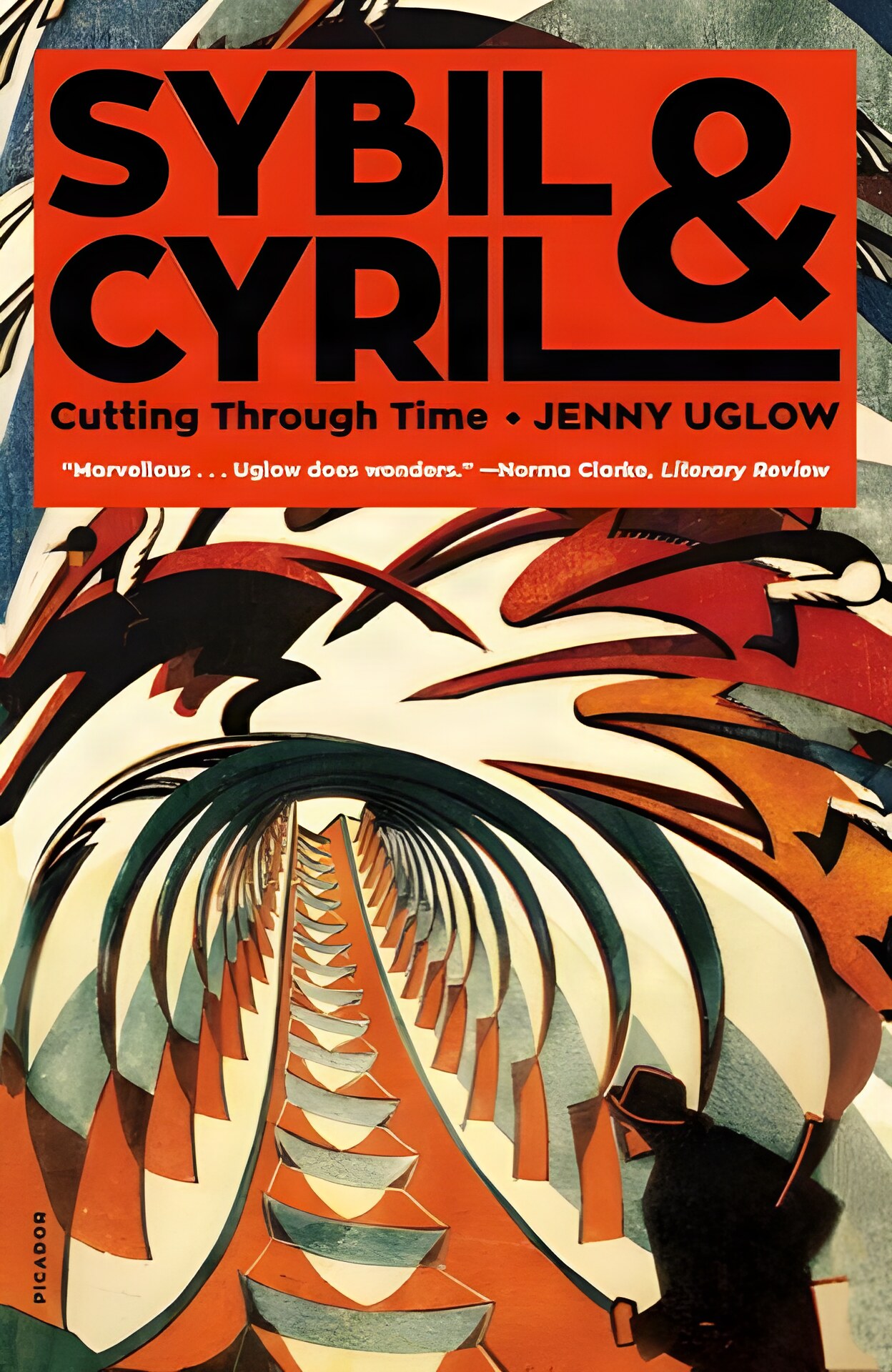
Softcover. NY, Picador/Farrar Straus Giroux, 1st US, 2022, Book: Very Good, Dust Jacket: None, Softcover, 398 pages, Illustrated in color and b&w. In 1922, Cyril Power, a fifty-year-old architect, left his family to work with the twenty-four-year-old Sybil Andrews. They would be together for twenty years. Both became famous for their dynamic, modernist linocuts-streamlined, full of movement and brilliant color, summing up the hectic interwar years. Yet at the same time, they looked back to medieval myths and early music, to country ways that were disappearing from sight. Jenny Uglow's Sybil & Cyril: Cutting Through Time traces their struggles and triumphs, conflicts and dreams, following them from Suffolk to London, from the New Forest to Vancouver Island. This is a world of futurists, surrealists, and pioneering abstraction, but also of the buzz of the new, of machines and speed, of shops and sport and dance, shining against the threat of depression and looming shadows of war. Remainder dot to top edge otherwise like new.
Softcover. Washington DC, The Catholic University of America Press, 1st, 1954, Book: Very Good, Dust Jacket: None, Softcover, 178 pages, original printed wraps. VG, light wear to edges of covers. INSCRIBED BY 0'MALLEY on front fly leaf.
Softcover. Philadelphia, University of Pennsylvania Press, 1st pbk, 1998, Book: Very Good, Softcover, 330 pages. Twelve literary scholars and historians investigate the ways in which space and place are politically, religiously, and culturally inflected. Exploring medieval texts as diverse as Icelandic sagas, Ptolemy's Geography, and Mandeville's Travels, the contributors illustrate the intimate connection between geographical conceptions and the mastery of land, the assertion of doctrine, and the performance of sexuality. Clean copy.
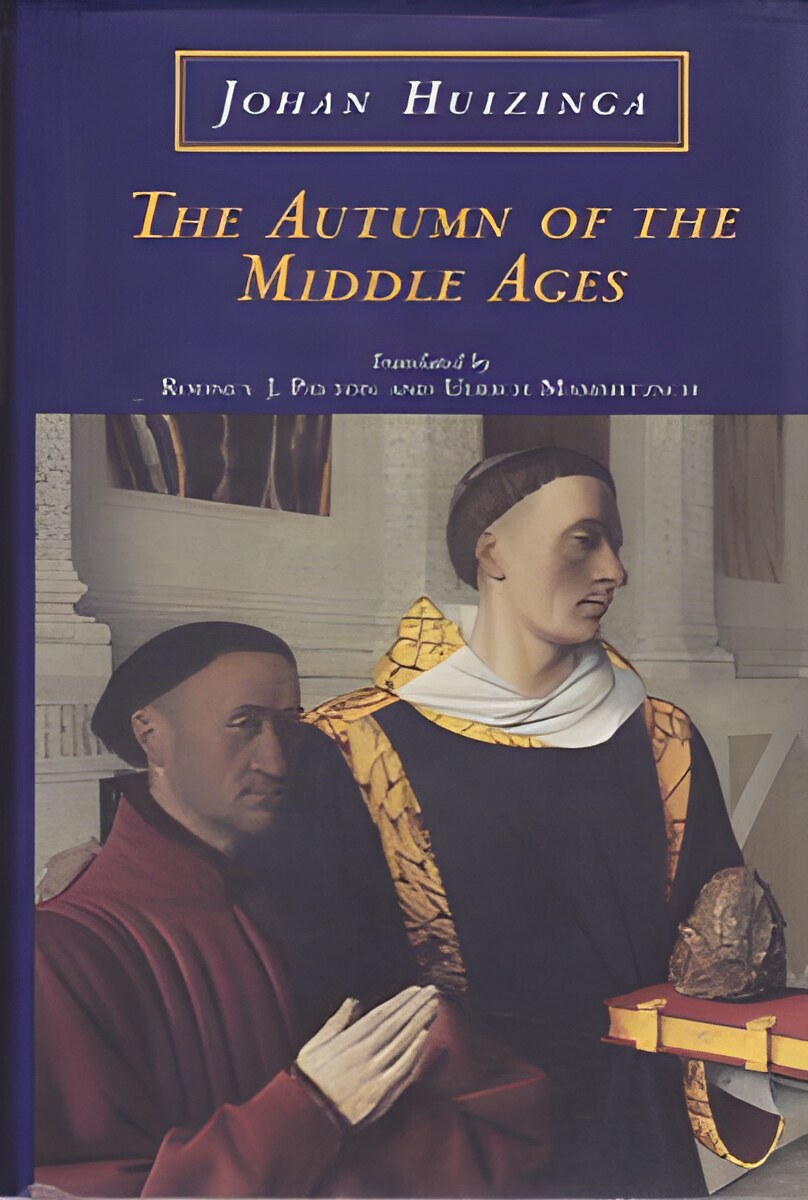
Hardcover. Chicago, University of Chicago Press, 1st, 1996, Book: Very Good, Dust Jacket: Very Good, Hardcover in a bright dust jacket. Clean, bright copy, 467 pages. Illustrated with 36 pages of historic Plates, b/w, on coated paper. One of the most famous works of history, Johan Huizinga presents a brilliant portrait of life, thought, and art in 14th and 15th century France and the Netherlands.
Hardcover. Chicago, University of Chicago Press, 1st, 1996, Book: Very Good, Dust Jacket: Very Good, Hardcover in a bright dust jacket. Clean, bright copy, 467 pages. Illustrated with 36 pages of historic Plates, b/w, on coated paper. One of the most famous works of history, Johan Huizinga presents a brilliant portrait of life, thought, and art in 14th and 15th century France and the Netherlands.
Hardcover. Cambridge UK, Cambridge University Press, 1st, 1998, Book: Very Good, Dust Jacket: Very Good, Hardcover in a dust jacket with mild fading to spine, 949 pages. Volume 1 only of a 2-volume set. The Cambridge History of Seventeenth-Century Philosophy offers a uniquely comprehensive and authoritative overview of early-modern philosophy written by an international team of specialists. As with previous Cambridge Histories of Philosophy the subject is treated by topic and theme, and since history does not come packaged in neat bundles, the subject is also treated with great temporal flexibility, incorporating frequent reference to medieval and Renaissance ideas. The basic structure corresponds to the way an educated seventeenth-century European might have organized the domain of philosophy. Thus, the history of science, religious doctrine, and politics feature very prominently. Name on front fly leaf, about 12 pages with light pencil markings. Otherwise clean.


 "Plan of St. Gall, The: In Brief by: Price, Lorna")
 "Prince Valiant, Vol. 5: 1945-1946by: Hal Foster and P. Craig Russell")


 "Science and the Secrets of Nature: Books of Secrets in Medieval and Early Modern Cultureby: William Eamon")
 "Seeing Through Paintings: Physical Examination in Art Historical Studies by: Andrea Kirsh; Rustin Levenson")



 "St. Anselm's Proslogion with A Reply on Behalf of the Fool by Guanilo and The Author's Reply to Gauniloby: Charlesworth, M.J. (trans.)")
 "Sword In The Stone, Theby: White, T. H.")
 "Text and Territory: Geographical Imagination in the European Middle Ages by: Tomasch, Sylvia; Gilles, Sealy (Editors)")

 "The Book Of The Archpriest Of Hita. (libro De Bien Amor)by: Singleton, Mack (Trans.)")