Softcover. Washington DC, Association of American Railroads, 1st, 1948, Book: Very Good, Dust Jacket: None, Oblong softcover, stapled wraps., 37 pages. Includes name of train - road on which it operated - between which cities- equipment - power . Clean copy.
Softcover. Washington DC, National Geographic Society, 1st, 1930, Book: Very Good, Dust Jacket: None, Original magazines July - December 1930, in a green pebbled hardcover binding. Magazines are dated and paged, with photographs and maps, but do not have covers, advertisements, etc. Includes: Mexico's west coast; 3 articles on the conquest of Antarctica; Unmapped areas of China, Unexplored areas of the Philippines; Chateau country of France; Yugoslavia; Virgil's Aeneid and Roman Geography; Strange tribes in the Shan States of Burma; The Yukon trail of 1898; Viking life in the Faeroes; and much more. Clean, bright volume.
Hardcover. Bunker Hill Publishing Inc, Piermont, NH, 2009, Book: Very Good, Dust Jacket: Very Good, 144 pages. Hardcover with dust jacket. Clean, unmarked copy with only minor wear to dust jacket. Color pictures throughout. Neon Mesa: Wonders of the Southwest is a stunning photographic record of the vernacular landscape of the American Southwest - the roadside landscape littered with the signs, relics, sights and debris of countless anonymous road trips. The Four Corners is a unique region where Colorado, New Mexico, Arizona and Utah meet. Rob Atkins' photos capture the irony and pathos of the place in icons of the American Dreams, be they those of the Nuclear Age, the Frontier, the Cowboy, or the Native American, all caught in the stark majestic images of a present already passing, in rusting road-signs, flickering neon light, and derelict motels, set against some of America's most awe-inspiring natural scenery. The dazzling light of the Southwest, the enormous skies and stark desert imagery form the back drop to Rob Atkins stunning exploration of a quintessential American landscape. He captures visual gems with his camera from the ghostly quarries of old motels and roadside wrecks, of decaying signs and faded walls, and writes about the minutiae of lost Americana with affection and great style.
Hardcover. Bunker Hill Publishing Inc, Piermont, NH, 2009, Book: Very Good, Dust Jacket: Very Good, 144 pages. Hardcover with dust jacket. Clean, unmarked copy with only minor wear to dust jacket. Color pictures throughout. Neon Mesa: Wonders of the Southwest is a stunning photographic record of the vernacular landscape of the American Southwest - the roadside landscape littered with the signs, relics, sights and debris of countless anonymous road trips. The Four Corners is a unique region where Colorado, New Mexico, Arizona and Utah meet. Rob Atkins' photos capture the irony and pathos of the place in icons of the American Dreams, be they those of the Nuclear Age, the Frontier, the Cowboy, or the Native American, all caught in the stark majestic images of a present already passing, in rusting road-signs, flickering neon light, and derelict motels, set against some of America's most awe-inspiring natural scenery. The dazzling light of the Southwest, the enormous skies and stark desert imagery form the back drop to Rob Atkins stunning exploration of a quintessential American landscape. He captures visual gems with his camera from the ghostly quarries of old motels and roadside wrecks, of decaying signs and faded walls, and writes about the minutiae of lost Americana with affection and great style.
Hardcover. 1st, 2002, Book: Very Good, Dust Jacket: None, Hardcover, 96 pages. Born in 1902, Manuel Alvarez Bravo is Mexico's most celebrated photographer. His far-reaching body of work includes many of the 20th century's most recognizable and iconic images. Collected here is a seductive, timeless, and entrancing sampling of the maestro's nudes, images taken in 1939 and as recently as the 1990s. Sensitively edited and sequenced by Ariadne Kimberly Huque, and with an impassioned and poetic introduction by Carlos Fuentes, this delicate, elegant volume beautifully reproduces some of Bravo's most favorite work, and provides an intimate window through which to view the career of one of the camera's true masters.
Softcover. Albuquerque, University of New Mexico, 1st, 1981, Book: Very Good, Dust Jacket: None, Softcover, 113 pages, b&w and color illustrations. Light smudging to back wrapper; else a very clean, tight copy. This splendid publication, a compact guide to rug dating and identification, examines patterns, styles, and weaving materials of Navajo rugs. In order to produce this heavily illustrated volume, the author, a noted authority in the field, examined thousands of rugs in public collections and researched the catalogues turn-of-the century traders used for their rug customers
Hardcover. Boston, Houghton Mifflin , 1st, 1889, Book: Good, Dust Jacket: None, Hardcover, green cloth stamped in dark green with drawing of two riders on horseback. Gilt title on spine. Bookseller's sticker on inside front cover, previous owner's signature on front fly leaf otherwise clean.
Hardcover. Boston, Houghton Mifflin Harcourt, 1st, 2019, Book: Very Good, Dust Jacket: Very Good, Hardcover in a bright dust jacket, 436 pages, color photos. The legendary travel writer drives the entire length of the US-Mexico border, then takes the back roads of Chiapas and Oaxaca, to uncover the rich, layered world behind the everyday headlines. Paul Theroux has spent his life crisscrossing the globe in search of the histories and peoples that give life to the places they call home. Now, as immigration debates boil around the world, Theroux has set out to explore a country key to understanding our current discourse: Mexico. Just south of the Arizona border, in the desert region of Sonora, he finds a place brimming with vitality, yet visibly marked by both the US Border Patrol to the north and mounting discord from within. With the same humanizing sensibility that he employed in Deep South, Theroux stops to talk with residents, visits Zapotec mill workers in the highlands, and attends a Zapatista party meeting, communing with people of all stripes who remain south of the border even as family members brave the journey north. Clean copy.
Softcover. Albuquerque, University of New Mexico Press, 1st, 1999, Book: Very Good, Dust Jacket: None, Softcover, oblong format, color photos. The end of the twentieth century represents an unsettled time, and the contemporary Southwest, as seen by Virgil Hancock III in these fifty-two exquisite color photographs, is a strange place full of omens and signs. His images peer beyond the scenery, beyond the tourism-council view of this region as a storied land of golf courses and climate-controlled shopping centers. He gets at the soul of the Southwest, of the nation, and, in his best photographs, at the human condition itself, seizing on the accidental symbols that speak to our yearnings and shortfalls: skyward-pointing arrows and crosses and dreams just beyond reach at Indian casinos, failed department stores, retirement cities. He photographs signs of the violence that has been endemic to the region and shows us ruins, not of the Anasazi or Spanish missions, but of commercialization, scarcely twenty years old, already gone belly-up.
Softcover. Mexico City, Asociacion Mexicana de Orquideologia A.C., 1st, 1983, Book: Very Good, Dust Jacket: None, Softcover, yellow wrappers, 190 pages. Illustrated in b&w and color. A publication devoted to the study of orchid flora in Mexico and Central America. Text in English and Spanish.
Softcover. Mexico City, Asociacion Mexicana de Orquideologia A.C., 1st, 1982, Book: Very Good, Dust Jacket: None, Softcover, yellow wrappers, pages 155-417. Illustrated in b&w and color. A publication devoted to the study of orchid flora in Mexico and Central America. Text in English and Spanish. Tape repair to bottom of spine where paper chipped off. Still sound, clean.
Hardcover. New York, Scribners, 1st, 1916, Book: Very Good, Dust Jacket: None, Hardcover, 245 pages, b&w illustrations by Peixotto throughout, gilt decorated cover, titles and top edge. Minor corner bumps and spine edge wear, otherwise, very clean and tight copy. Descriptions of the old Spanish Missions and settlements of Arizona, New Mexico and along the Texan border.
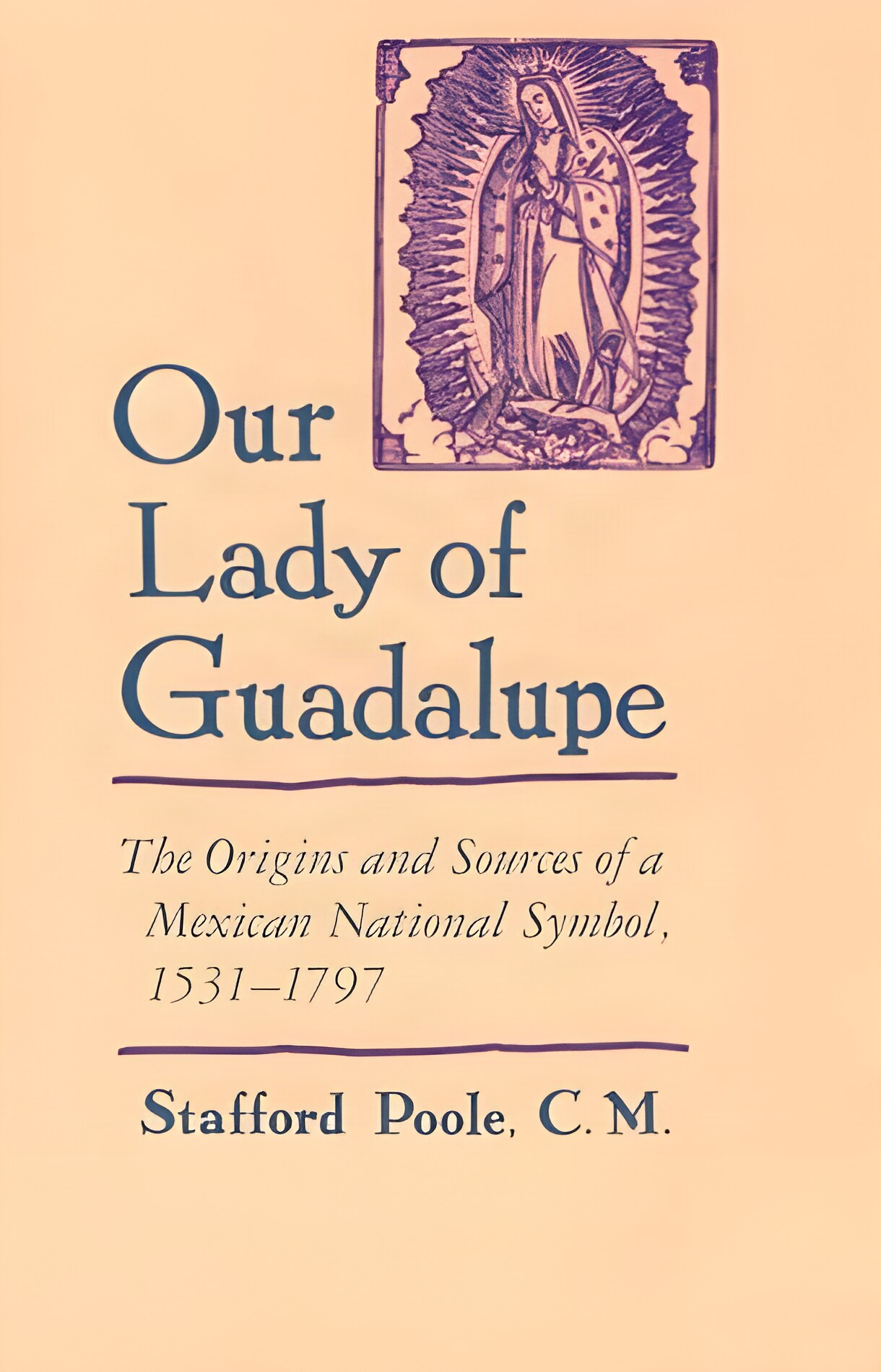
Softcover. Tucson, University of Arizona Press, 3rd pr., 1997, Book: Very Good, Dust Jacket: None, Softcover, 325 pages with index. The devotion to Our Lady of Guadalupe, based on the story of apparitions of the Virgin Mary to Juan Diego, an Indian neophyte, at the hill of Tepeyac in December 1531, is one of the most important formative religious and national forces in the history of Mexico. It has variously been interpreted as the source of Mexican national identity, a means of continuity between the Indian past and Spanish domination, a symbol of national liberation, and a way of evangelizing and pacifying the Indians. The aphorism "Mexico was born at Tepeyac" aptly summarizes its importance. In this, the first work ever to examine in depth every historical source of the Guadalupe apparitions, Stafford Poole traces the origins and history of the account, and in the process challenges many commonly accepted assumptions and interpretations. Small corner clip to front fly leaf, otherwise a clean, tight copy.
Softcover. Washington, D.C., Smithsonian, 1st, November 17, 1991, Book: Very Good, Dust Jacket: None, INSCRIBED BY PHOTOGRAPHER. Softcover, 256 pages, b&w photographs. A very clean, tight copy. In interviews and photographic portraits, [the author] and [the photographer] bring together forty-nine of Mexico's most acclaimed artists in the performing, visual, and literary arts, displaying the creative energy of a nation.
Hardcover. New Haven, CT, Yale University Press, 1st, 2015, Book: Very Good, Dust Jacket: None, 480 pages. Hardcover with no dust jacket. Very clean, unmarked copy still in shrink wrap. 378 color and 10 black & white illustrations. Tight copy. While European art forms were widely disseminated, copied, and adapted throughout Latin America, colonial painting is not a derivative extension of Europe. The ongoing debate over what to call it-mestizo, hybrid, creole, indo-hispanic, tequitqui-testifies to a fundamental yet unresolved question of identity. Comparing and contrasting the Viceroyalties of New Spain, with its center in modern-day Mexico, and Peru, the authors explore the very different ways the two regions responded to the influence of the Europeans and their art. A wide range of art and artists are considered, some for the first time.
Hardcover. New York , The Viking Press, 1st, 1948, Book: Very Good, Dust Jacket: Good, Hardcover, 189 pages, decorations by Lynd Ward. Dust jacket with minor edgewear, creases, tears at spine, price clipped - still Good. Previous owner's name on front fly leaf.
Hardcover. US, University of Arizona Press, 1st, 1984, Book: Very Good, Dust Jacket: Very Good, Hardcover, 252 pages. Light shelf-wear to price clipped dust jacket, else a clean, tight copy.
Hardcover. New York, Aperture Foundation and Fundacion Televisa, 1st, 2010, Book: Very Good, Dust Jacket: None, Hardcover issued without a dust jacket. This publication tells the story of the photographer's journeys through Mexico in the early 1930s. In search of a fresh start, Strand traveled to Mexico City in late 1932 at the invitation of Carlos Chavez, the eminent Mexican composer and conductor. The culmination of Strand's time in Mexico was his collaboration with Emilio Gomez Muriel and Academy Award-winning director Fred Zinnemann on the groundbreaking film, Redes (The Wave) (1936). A remastered DVD version of the film is included in this volume. Illus., 100 color/89 tritone/240 b&w. 356 pages.
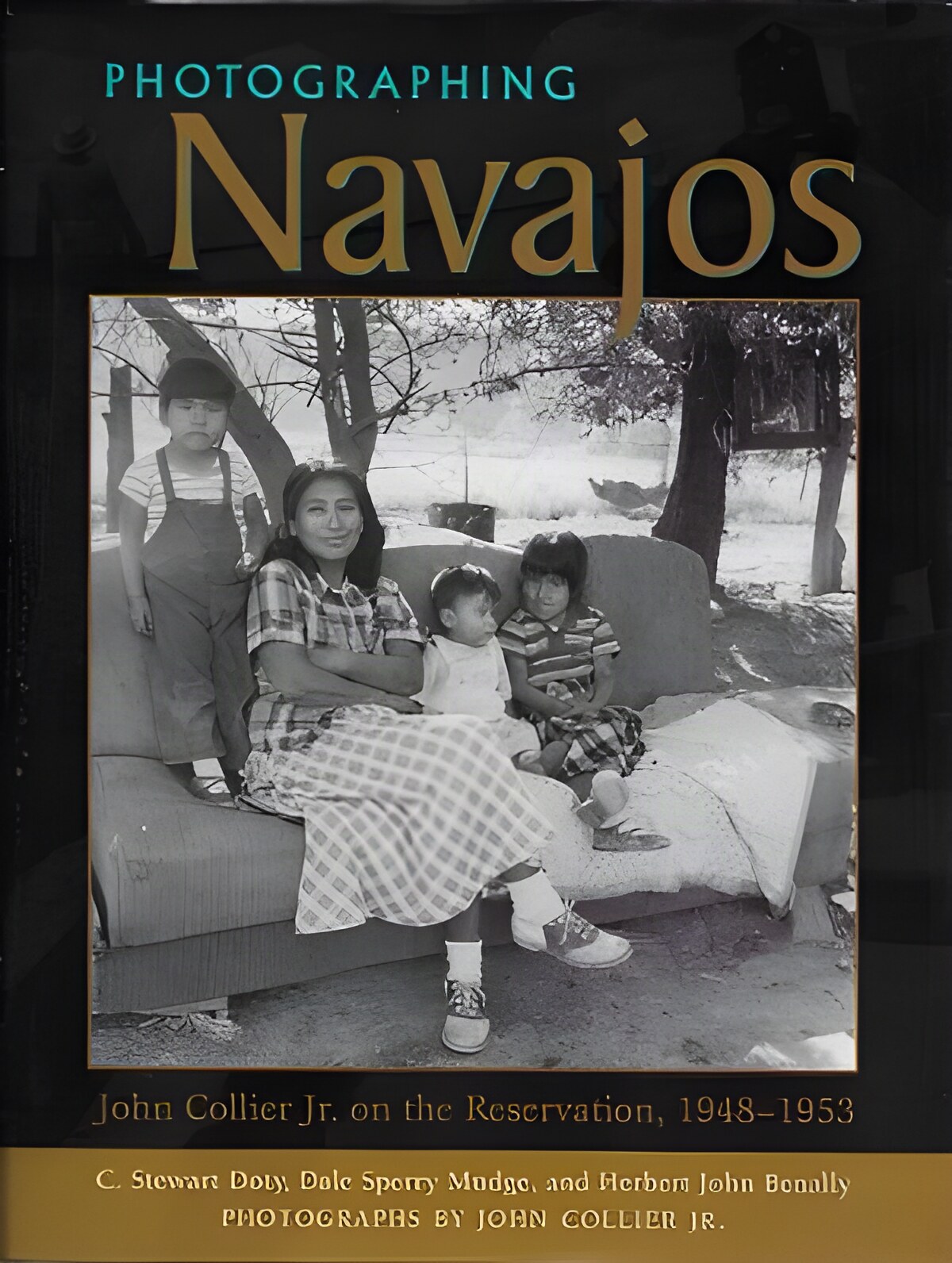
Hardcover. Albuquerque, University of New Mexico Press, 1st, 2002, Book: Very Good, Dust Jacket: Very Good, Hardcover, 224 pages,97 b&w photographs taken by Collier between 1948 and 1953, with map, and text by Benally. Never opened, still in original shrink wrap.
Hardcover. Albuquerque, University of New Mexico, 1st, 2002, Book: Very Good, Dust Jacket: Very Good, 224 pages. Hardcover with dust jacket. Clean, tight copy. Black and white phots throughout. In the early 1950s the great anthropological photographer John Collier Jr. made nearly 1,000 photographs documenting Navajo life in Fruitland, New Mexico, near the Four Corners. Lost until recently in archives far from the Southwest, most of these photos have never before been published. The authors of this book have assembled a selection of Collieri? 1/2 s Navajo photographs showing the changes in post-World War II reservation life.
Hardcover. US, Univ of New Mexico Press, 1st, 1995-10-01, Book: Very Good, Dust Jacket: Very Good, 227 pages. Minor edgewear to dust jacket, else a clean, tight copy. A in depth study of the exhibition held at the Museum of Modern Art in 1955, and its influence, with a final chapter on "Edward Steichen, Robert Frank and American Modernism".
Hardcover. Museum of New Mexico Press, 1st, 2003, Book: Very Good, Dust Jacket: Very Good, Hardcover, 124 pages. Featuring eighty-two vintage postcards published beginning at the turn of the century, Postcards of the Night traces American cultural life as it was transformed by industrial strength and shifting demographics. The nation increasingly was growing more educated, upwardly mobile, and urban, and the nighttime postcard popularized this modernism for ordinary consumption. Coalitions of city planners and urban developers, politicians and the media utilized the picture postcard to strategize the role of the individual in the rise of the city. It was the birth of leisure and of travel, the new tourist city to which the postcard needed forcefully to speak, in ways that were equal part artifice and art.
Hardcover. NY, Abbeville Press, 1st, 2010, Book: Very Good, Dust Jacket: Very Good, Hardcover in a bright dust jacket. 336 pages illustrated in color. This authoritative yet accessible study begins with an overview of the aesthetics, meanings, functions, and techniques of Mesoamerican architecture, and then proceeds to survey the historical development of the builder's art in each of the region's cultural areas. As readers travel from the Maya heartland of Guatemala and the Yucatan to the Aztec stronghold of the Valley of Mexico, and all the way to the northern hinterlands of Mesoamerica, they will gain an appreciation of both the unity and the diversity of the region's architecture. Clean copy. DOMESTIC SHIPPING ONLY.
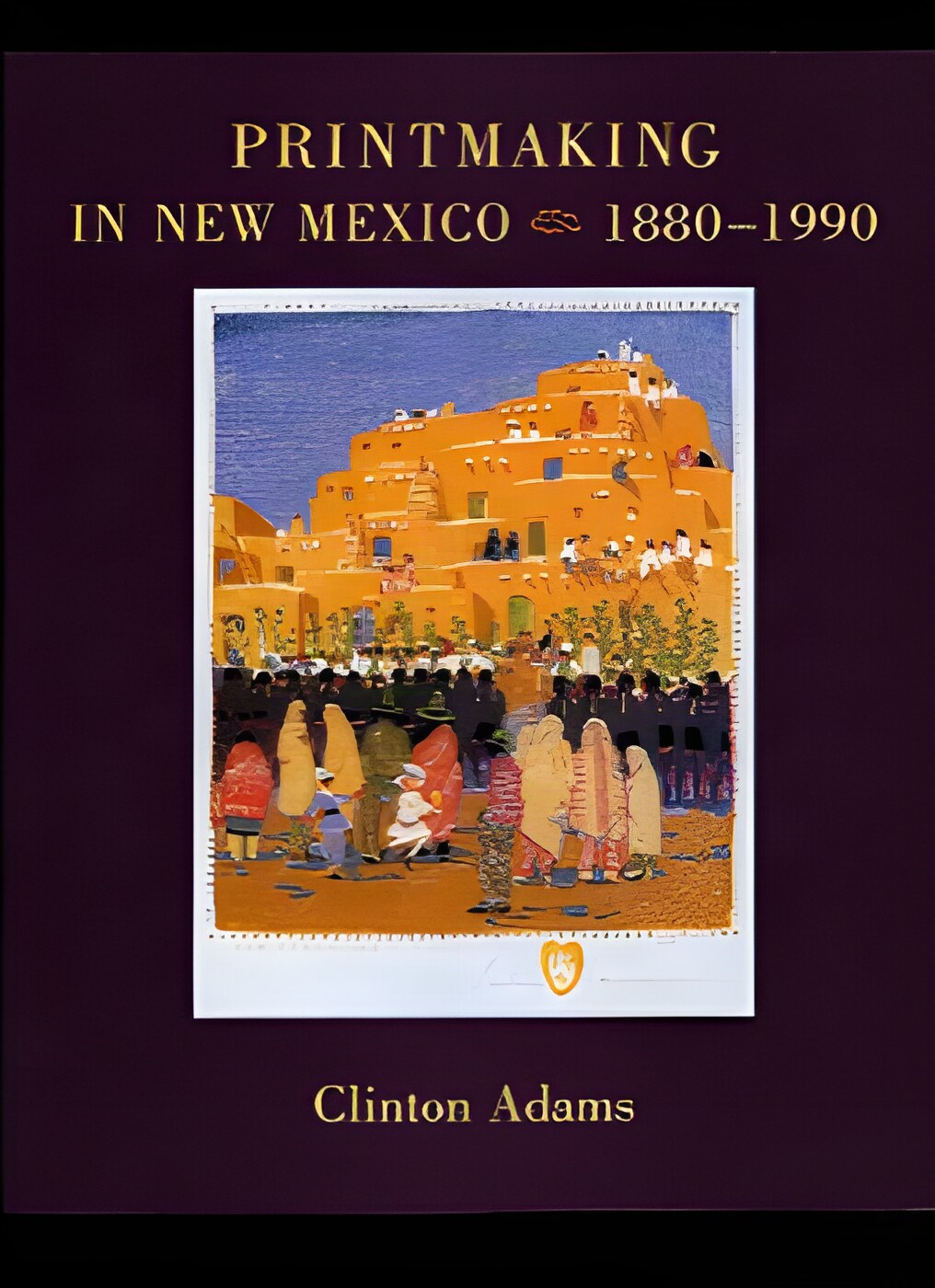
Softcover. Albuquerque NM, University of New Mexico Press, 1st, 1991, Book: Very Good, Dust Jacket: None, Softcover, 167 pages. Over 100 etchings, woodcuts, lithographs, and serigraphs by New Mexicans or relating to New Mexico, are accompanied by a review of the art over the past century. Clean copy.

 "Named Passenger Trains: Operated on the Railroads of the United States, Canada and Mexico. Railway Informtation Series No. 4by: Association of American Railroads/Erne")
 "National Geographic Magazine - Vol. LVIII July - December 1930 (Six Issues)by: National Geographic Society")


 "Old Navajo Rugs: Their Development from 1900 to 1940by: Rodee, Marian E.")
 "On Horseback: A Tour in Virginia, North Carolina and Tennessee with notes of travel in Mexico and Californiaby: Warner, Charles Dudley")

 "Open Range and Parking Lots: Southwest Photographsby: Hancock, Virgil and Gregory McNamee")


 "Our Hispanic Southwestby: Peixotto, Ernest")




 "Pancho Villa and John Reed: Two Faces of Romantic Revolutionby: Tuck, Jim")

 "Photographing Navajos: John Collier Jr. on the Reservation, 1948-1953by: Doty C. Stewart; Dale Sperry Mudge & Herbert John Benally")

 "Postcards of the Night: Views of American Citiesby: Jakle, John A.")