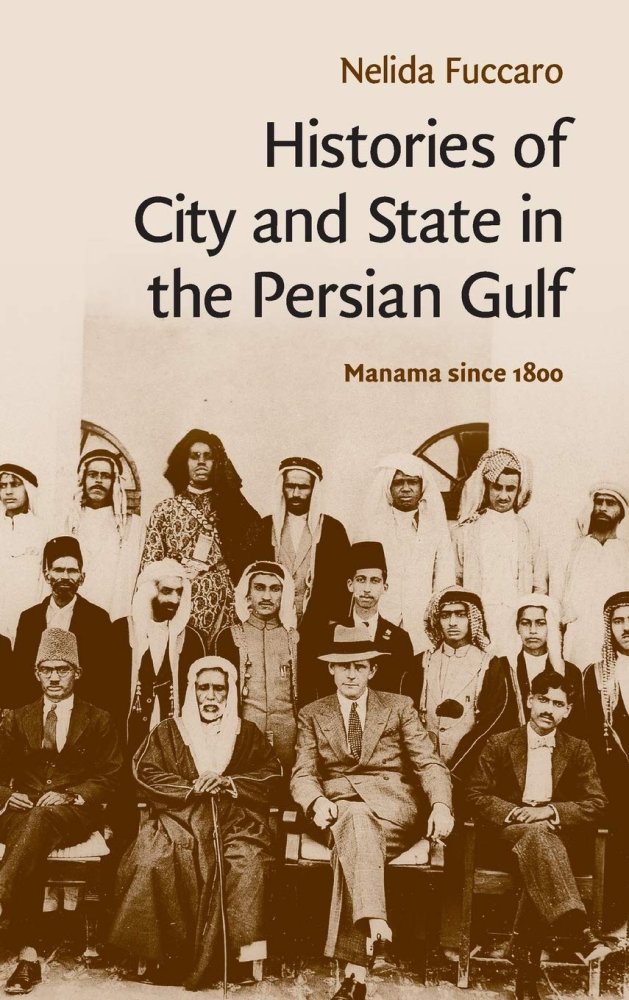
Softcover. UK, Cambridge University Press, 1st pbk., 2009, Book: Very Good, Dust Jacket: None, Softcover, 257 pages, b&w illustrations. In this path-breaking and multi-layered account of one of the least explored societies in the Middle East, Nelida Fuccaro examines the political and social life of the Gulf city and its coastline, as exemplified by Manama in Bahrain. Written as an ethnography of space, politics and community, it addresses the changing relationship between urban development, politics and society before and after the discovery of oil. By using a variety of local sources and oral histories, Fuccaro questions the role played by the British Empire and oil in state-making. Instead, she draws attention to urban residents, elites and institutions as active participants in state and nation building. She also examines how the city has continued to provide a source of political, social and sectarian identity since the early nineteenth century, challenging the view that the advent of oil and modernity represented a radical break in the urban past of the region. Clean copy.
Hardcover. NY, Columbia University Press, 1st, 1972, Book: Very Good, Dust Jacket: Very Good, Hardcover in a dust jacket with fading to spine, 494 pages. Name on front fly leaf, otherwise clean.
Softcover. University of Chicago Press, reprint, 1996, Book: Very Good, Dust Jacket: None, Softcover, 568 pages, b&w illustrations. Out of a lifetime of study of the ancient Near East, Professor Olmstead has gathered previously unknown material into the story of the life, times, and thought of the Persians, told for the first time from the Persian rather than the traditional Greek point of view. "The fullest and most reliable presentation of the history of the Persian Empire in existence."-M. Rostovtzeff. Clean copy.
Hardcover. Princeton NJ, Princeton University Press, 2nd pr., 1994, Book: Very Good, Dust Jacket: None, Hardcover in green cloth covers, 188 pages, b&w illustrations. In this provocative examination of collective identity in Jordan, Linda Layne challenges long-held Western assumptions that Arabs belong to easily recognizable corporate social groups. Who is a "true" Jordanian? Who is a "true" Bedouin? These questions, according to Layne, are examples of a kind of pigeonholing that has distorted the reality of Jordanian national politics. In developing an alternate approach, she shows that the fluid social identities of Jordan emerge from an ongoing dialogue among tribespeople, members of the intelligentsia Hashemite rulers, and Western social scientists. Many commentators on social identity in the Middle East limit their studies to the village level, but Layne's goal is to discover how the identity-building processes of the locality and of the nation condition each other. She finds that the tribes creates their own cultural "homes" through a dialogue with official nationalist rhetoric and Jordanian urbanites, while King Hussein, in turn, maintains the idea of the "homeland" in many ways that are powerfully influenced by the tribespeople. Clean copy, no dust jacket.
Hardcover. London, Wm. H. Allen and Co., 1st, 1863, Book: Very Good, Dust Jacket: None, Hardcover, bright green pebbled cloth stamped with a gilt design of an Arab horseman standing next to his horse, gilt title on spine. Commentaries by The Emir Abd-El-Kader, translated from the French by James Hutton. Clean and bright copy.
Hardcover. NY, Houghton Mifflin Harcourt, 1st, 2012, Book: Very Good, Dust Jacket: Very Good, Hardcover in a bright, unclipped dust jacket, 321 pages. In spring 2011, Anthony Shadid was one of four New York Times reporters captured in Libya, cuffed and beaten, as that country was seized by revolution. When he was freed, he went home. Not to Boston or Beirut--where he lives-- or to Oklahoma City, where his Lebanese-American family had settled and where he was raised. Instead, he returned to his great-grandfather's estate, a house that, over three years earlier, Shadid had begun to rebuild. House of Stone is the story of a battle-scarred home and a war correspondent's jostled spirit, and of how reconstructing the one came to fortify the other. In this poignant and resonant memoir, the author of the award-winning Night Draws Near creates a mosaic of past and present, tracing the house's renewal alongside his family's flight from Lebanon and resettlement in America. In the process, Shadid memorializes a lost world, documents the shifting Middle East, and provides profound insights into this volatile landscape. House of Stone is an unforgettable meditation on war, exile, rebirth, and the universal yearning for home. Clean copy.
Softcover. Oxford UK, Oneworld, 1st, 2005, Book: Very Good, Dust Jacket: None, Softcover, 152 pages. Renowned expert William Chittick covers the life and works of this legendary Sufi writer. The importance of Muhyi al-Din Ibn al-Arabi (1165-1240) for Islamic mysticism lies in the fact that he was a speculative thinker of the highest order, albeit diffuse and difficult to understand. His central doctrine is the unity of all existence. In this text, William Chittick explores how, through the work of Ibn Al-Arabi, Sufism moves away from anguished and ascetic searchings of the heart also conscience and becomes a matter of speculative philosophy and theosophy. Ex-lib with stamping and stickers on front endpapers, cover, otherwise clean.
Hardcover. NY, Aperture, 1st, 1998, Book: Very Good, Dust Jacket: Very Good, Hardcover, 160 pages. Michael von Graffenried, an award-winning Swiss photographer, covertly photographed civil strife in Algeria from the early 1990s through 1998. In a land where Islamic terrorists have executed over sixty journalists and photographers in the last seven years, Graffenried's very survival is remarkable. His extraordinary accomplishment, however, is these photographs, which form a composite of Algeria that is more whole than the nation itself, fractured by one segment of the population in favor of democracy and another in favor of an Islamic state. Graffenried makes his pictures secretly, using an antique Widelux panoramic camera with a hidden lens. He would risk his picture and his life were he to raise a camera to his eyes. Instead, he shoots from the hip, with his hands clasped over what looks like a pair of binoculars. In learning to frame his photographs without a viewfinder, he opens himself to a rich array of surprise and irony in his pictures, and reveals a society that has been concealed from the international community for nearly seven years.
Softcover. Berkeley CA, Mizan Press, 1st pbk., 1981, Book: Very Good, Dust Jacket: None, Softcover, 460 pages. This unprecedented collection in English of notable works by Imam Khomeini, ranging in date from 1941 to 1980, makes it possible for non-Iranians to become directly acquainted with hsi ideas and to examine the convictions that underlay his indomitable mien. He was undeniably one of the most important figures of the age, not only for his roles as principle strategist of a successful revolutionary movement and supervisor of the Islamic order it ushered in, but also for his unhesitating promotion of what he saw as a global Islamic mission -- the union of all Muslim peoples. Clean copy.
Hardcover. NY, Knopf, 1st, 1976, Book: Very Good, Dust Jacket: Very Good, Hardcover in a bright dust jacket, 360 pages. Published in association with the American Heritage Publishing Co. Text by Bernard Lewis, Richard Ettinghausen, Oleg Grabar, Fritz Meier, Charles Pellat, A. Shiloah, A.I. Sabra, Edmund Bosworth, Emilio Garcia Gomex, Roger M. Savory, Norman Itzkowitz, S.A.A. Rizvi, Elie Kedourie. Illustrated with 495 reproductions, photographs, drawings, and maps, 160 of them in full color.
Hardcover. NY, Oxford University Press, 1st, 1990, Book: Very Good, Dust Jacket: Very Good, Hardcover in a bright dust jacket, 199 pages. This book examines Syria's religious, intellectual, and political history during the period of transformation before World War I. Focusing on an attempt to reform Islamic belief and practice at the turn of the century, Commins shows how the reformers used debates over the religious law of Islam to advance their visions of a progressive Islamic state. Based on a wide variety of previously unpublished sources, the book will shed new light on a period that is of considerable importance for the modern history of the Middle East. Clean copy.
Hardcover. Syracuse University Press, 1st, 1987, Book: Very Good, Dust Jacket: Very Good, Hardcover in a bright dust jacket, 350 pages. Describes Israel's use of spies in Lebanon during the seventies, the secret relations between Israel and Jordan, and U.S. secret channels to the PLO. Posner focuses on violence and terrorism employed by the Palestinians in their quest for nationhood, and on inter-communal violence in the Middle East in general and more specifically in Lebanon. He treats the little-known Circassion community in Jordan, that community's role in the Arab-Israeli conflict, the Sadat peace initiative, and the role of the United States in seeking a peaceful resolution of the civil war in Lebanon. A good book to gain a perspective on contemporary diplomacy and Middle East politics. Clean copy.
Hardcover. UK, Cambridge University Press, 1st, 1989, Book: Very Good, Dust Jacket: Very Good, Hardcover in a bright dust jacket, 288 pages, map illustration. Includes bibliographical references (pages 261-277) and index. Subjects: To 1917; Jewish-Arab relations History To 1917; Jews Colonization Palestine; Labor Zionism Palestine; Land settlement Palestine; Palestine Social conditions; Palestine History 1799-1917. Name, date on front fly leaf otherwise clean, tight copy.
Softcover. Berkeley, University of California Press, 1st pbk, 2011, Book: Very Good, Dust Jacket: None, Softcover, 393 pages. Reaching beyond sensational headlines, Land of the Unconquerable at last offers a three-dimensional portrait of Afghan women. In a series of wide-ranging, deeply reflective essays, accomplished scholars, humanitarian workers, politicians, and journalists-most with extended experience inside Afghanistan-examine the realities of life for women in both urban and rural settings. They address topics including food security, sex work, health, marriage, education, poetry, politics, prisoners, and community development. Eschewing stereotypes about the burqa, the contributors focus instead on women's empowerment and agency, and their struggles for peace and justice in the face of a brutal ongoing war. A fuller picture of Afghanistan's women past and present emerges, leading to social policy suggestions and pragmatic solutions for a peaceful future. Review copy stamp on top edge otherwise like new.
London, Thames & Hudson, 1st, 1976, Book: Very Good, Dust Jacket: Very Good, Hardcover in a bright dust jacket. INSCRIBED BY AUTHOR on the front fly leaf. 126 pages: 98 black and white illustrations and maps. Synopsis: A richly illustrated account of the historical background to, and life of T. E .Lawrence. Clean copy.
Hardcover. Beirut Lebanon, American University of Beirut, 1st, 1994, Book: Very Good, Dust Jacket: Very Good, Hardcover in a dust jacket with light fading to edges, 315 pages. Daniel Bliss was the first President of the Syrian Protestant College (now The American University of Beirut) which opened it's doors in 1866. In the early 1870s land was purchased to construct new buildings under his supervision. These letters were written by Bliss to his wife who returned to Amherst, Massachusetts for health reasons. Written in 1873-74, his descriptions of mid-nineteenth century Beirut are illuminating, filled with interesting everyday details. Clean copy.
Hardcover. Stockport UK, Dewi Lewis, 1st, 2013, Book: Very Good, Dust Jacket: None, 80 pages, 40 color images by Simoneau documenting his relationship with Caroline Annandale. Clean. No dust jacket issued. Simoneau, a Montreal-based photographer, chronicles his long romantic relationship with Caroline Annandale. Having met at a photography workshop in 2000, Simoneau and Annandale engaged in what the book's description calls a "feverish" relationship, which took a turn on September 11th 2001, the date of the World Trade Center attacks in New York. Shortly afterwards, Annandale enlisted in the US Army and was shipped off to Iraq. Simoneau, the photographer of this love story, stayed behind. Simoneau does not present what might be expected from a 'war' book, nor does he delve into the gender role switch of the female partner going to combat while the male stays back on the homefront. Instead, his view of war becomes a unique assembly of what he sees and feels from a distance. Removed from the actual conflict, but connected emotionally to Caroline Annandale, Simoneau's view takes on a limited frame: he can see only what is sent to him or what is represented in the media during wartime. Love and War therefore is a book about war, and yet, the war is defined by the absence it's created in Simoneau's life.
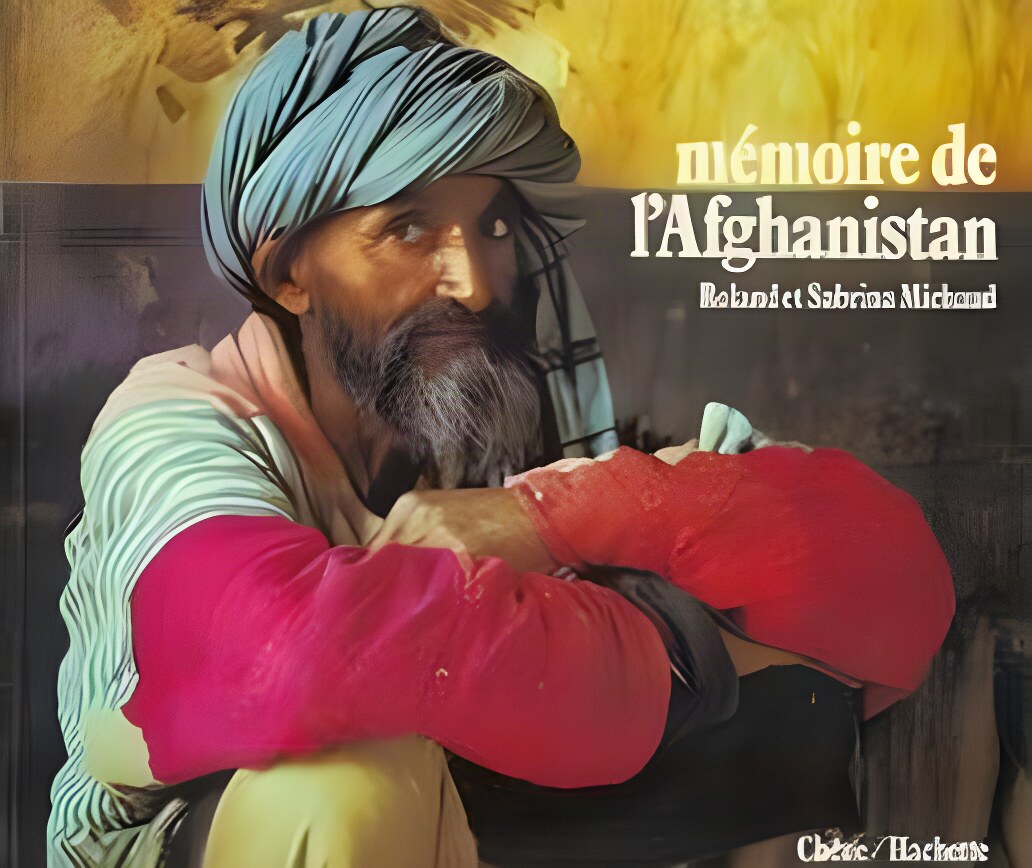
Hardcover. US, Hachette, 1st, 1980-01-01, Book: Very Good, Dust Jacket: Very Good, 98 pages. Clean, unmarked copy with only minor wear to dust jacket. In French language. Includes white cardboard mailer sleeve
Softcover. Austin TX, University Of Texas Press, reprint, 1978, Book: Very Good, Dust Jacket: None, Softcover, 400+ pages. A collection of autobiographical and biographical writings by and about Middle Eastern women. Many of the selections have been translated by the editors from Arabic, Persian or French. Illustrated with b/w photos.
Softcover. Wiltshire UK, Gibb Memorial, reprint, 1999, Book: Very Good, Dust Jacket: None, Softcover, 109 pages with a modern double spread line map, a glossary and a biographical index. The description of his mission to the court of the Shah Tahmasp I of Persia by the Venetian Michele Membre is one of the most informative as well as one of the most individual of the few European accounts of 16th century Persia. Clean copy.
Softcover. NY, Columbia University Press, 1st, 1998, Book: Very Good, Dust Jacket: None, Softcover, 264 pages, b&w illustrations. The first book to chart responses in the Muslim Middle East to modernity through an examination of the evolution of the Baha'i faith--a millenarian movement led by the nineteenth-century Iranian prophet Baha'u'llah ("the Glory of God"). This volume illuminates the complexity and ambiguity that characterized the changing relationship of Baha'u'llah and his followers to modernity, considered as a transnational and fluid political and cultural field of contestation. The insights presented here into these responses to modernity illuminate not only the genesis of a new world-religion but also important facets of Middle Eastern-particularly Iranian-social and cultural shifts in the nineteenth century. Drawing on the work of Habermas, Giddens, Touraine and Bryan Turner, among others, Juan R. I. Cole considers some of the ways in which Middle Eastern society was affected by five developments central to modernity: the lessening entanglement of the state with religion, the move from absolutism to democracy, the rise of sovereign nation-states, the advent of nationalism, and the women's movement. Clean copy.
Hardcover. Boston, Houghton Mifflin, 1st, 2003, Book: Very Good, Dust Jacket: Very Good, 96 pages. Hardcover with dust jacket. SIGNED BY AUTHOR ON HALF TITLE PAGE. An author and artist who has continually stripped away the mystique of architectural structures that have long fascinated modern people, David Macaulay here reveals the methods and materials used to design and construct a mosque in late-sixteenth- century Turkey. Clean, tight copy with minor rubbing to edges.
Hardcover. New York, Thames and Hudson, 1st, 1993, Book: Very Good, Dust Jacket: Very Good, Hardcover, 413 pages, illustrated with 450 plates, 50 in color. In a bright, unclipped dust jacket. Errata slip laid in.

 "Home and Homeland: The Dialogics of Tribal and National Identities in Jordanby: Linda L. Layne")
 "Horses of the Sahara and the Manners of the Desert, Theby: Daumas, E.")
 "Inside Algeriaby: Michael von Graffenried , Mary-Jane Deeb, et al.")
 "Islam and Revolution: Writings and Declarations of Imam Khomeini (1941-1980)by: Imam Khomeini/Hamid Algar (transl.)")
 "Islam and the Arab World: Faith, People, Culture by: Bernard Lewis (Ed.)")



 "Letters from a New Campusby: Daniel Bliss (")
 "Love and Warby: Simoneau, Guillaume")
 "Middle Eastern Muslim Women Speakby: Fernea Elizabeth Warnock and Basima Qattan Bezirgan Edited by")


 "Muslim Law Courts and the French Colonial State in Algeria (Princeton Legacy Library) by: Allan Christelow")
 "Nomads of Luristan: History, Material Culture and Pastoralism in Western Iranby: Mortensen, Inge Demant")