Hardcover. Chicago, The Lakeside Press, 1st, 1913, Book: Very Good, Dust Jacket: None, Hardcover, dark green cloth stamped in gilt, top edge gilt, 137 pages. Tight, attractive copy of this early "Lakeside Classic," the annual keepsake presented by this printer/publisher to friends and clients starting in 1903. The frontispiece is a portrayal of Chicago in 1853 with a tissue guard. Includes: Introduction; William Bross - extracted from "What I remember of early Chicago", a lecture delivered Jan. 23, 1876; Charles Cleaver - extracts from articles which appeared first in the Chicago tribune; Joseph Jefferson, Chicagoan - reprinted from "The autobiography of Joseph Jefferson"; and Chicago's first railroad systems - reprinted from Andraes's "History of Chicago." Clean, bright copy.
Hardcover. Chicago, The Lakeside Press, 1st, 1915, Book: Very Good, Dust Jacket: None, Hardcover, dark green cloth stamped in gilt, top edge gilt, 140 pages. Tight, attractive copy of this early "Lakeside Classic," the annual keepsake presented by this printer/publisher to friends and clients starting in 1903. In this volume there have been gathered the personal experiences of some ten individuals who passed through the great Chicago Fire of 1871. The total area burned over was 2,124 acres, the number of buildings destroyed was about 17,450 and the persons rendered homeless nearly 100,000; out of a population of about 300,000. This work has two large fold-outs the first of which is opposite the title page and is entitled: "Chicago After the Great Fire of 1871". It is in two pieces with the last section separated along fold, minor tape repair. The second fold out (after page 36) is a map showing the course of the Chicago Fire of 1871 and is in excellent condition. No markings.
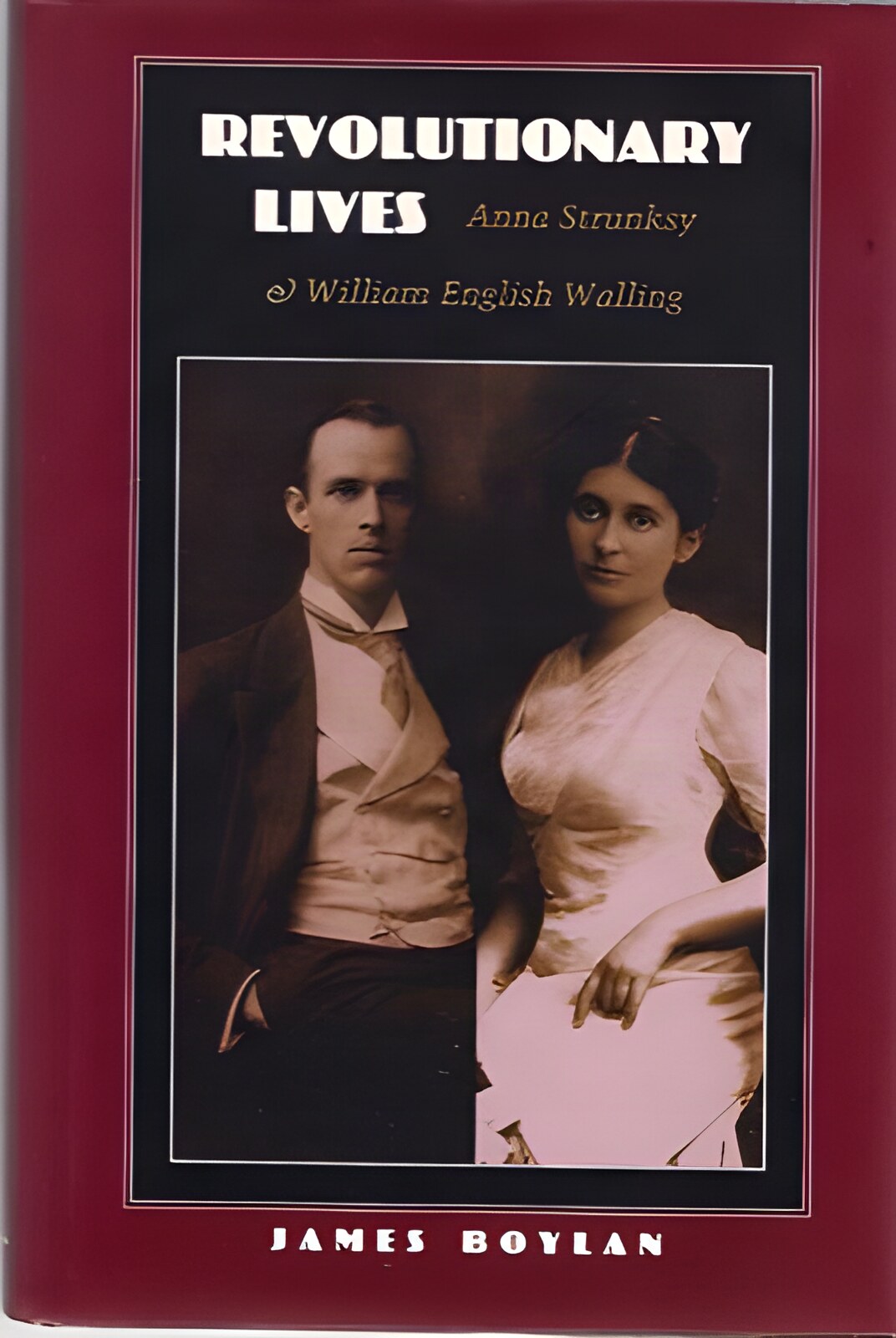
Hardcover. Amherst MA, University of Massachusetts Press, 1st, 1999, Book: Very Good, Dust Jacket: Very Good, Hardcover in a bright dust jacket, 334 pages, b&w illustrations. Relying on original historical materials, an illustrated biography traces the lives of an influential pair of American socialists--he a wealthy journalist-activist, she an aspiring novelist. When they fell in love amid the tumult of the 1905 Russian revolution, they believed they were destiny's match: William English Walling, a wealthy American journalist-activist from the Midwest, an Anna Strunsky, an aspiring novelist from San Francisco. Vowing to dedicate themselves to socialist ideals, they soon became celebrities who moved in an elite circle of writers, journalist, and reformers. ultimately, both their marriage and their political commitment faltered, but not before they had participated in some of the most urgent social causes of their day. Drawing on archival sources and family materials, James Boylan creates engaging portraits of two striking figures. He reveals the details of Strunsky's intesnse involvement with Jack London and their troubled literary collaboration. He describes the creation of Walling's "revolutionary news bureau" in Russia under scrutiny of the czarist police, and Strunsky's harrowing journey to report on a pogrom. He also recounts the couple's dash to cover a race riot in Illinois, Walling's pivotal role in creating the NAACP and the disasterous schism between Strunksky's pacifism and Walling's bellicosity during World War I. Clean copy.
Softcover. Gwinn MI, Avery Color Studios, 1st, 2014, Book: Very Good, Dust Jacket: None, Softcover, 201 pages, b&w illustrations. The Reverend Law was in peril on the Great Lakes and was rescued by a U.S. Life-Saving Service Station crew. As a result of that rescue, seeing their heroic efforts first hand, Reverend Law dedicated the rest of his life to the men and women stationed at Light and Life-Saving stations throughout the United States. Whether it was bringing his "Floating Library" to stations located on the Great Lakes, regular correspondence with the crews of stations far too remote for a personal visit, or his relentless pursuit of Congress to approve a bill to provide better pay and pensions, Reverend Law became a fast friend to those serving in the Lighthouse and Life-Saving services. "Sky Pilot" was sailors' slang for a chaplain. To the men and women he served, Reverend Law was lovingly known as "The Sky Pilot of the Great Lakes." A true tale of unconquerable optimism,
Hardcover. Chicago, University of Chicago Press, 2nd pr., 2015, Book: Very Good, Dust Jacket: Very Good, Hardcover in a bright dust jacket, 233 pages, b&w illustrations. From the minute it opened--on Christmas Day in 1865--it was Chicago's must-see tourist attraction, drawing more than half a million visitors each year. Families, visiting dignitaries, even school groups all made trips to the South Side to tour the Union Stock Yard. There they got a firsthand look at the city's industrial prowess as they witnessed cattle, hogs, and sheep disassembled with breathtaking efficiency. At their height, the kill floors employed 50,000 workers and processed six hundred animals an hour, an astonishing spectacle of industrialized death. Slaughterhouse tells the story of the Union Stock Yard, chronicling the rise and fall of an industrial district that, for better or worse, served as the public face of Chicago for decades. Dominic A. Pacyga is a guide like no other--he grew up in the shadow of the stockyards, spent summers in their hog house and cattle yards, and maintains a long-standing connection with the working-class neighborhoods around them. Pacyga takes readers through the packinghouses as only an insider can, covering the rough and toxic life inside the plants and their lasting effects on the world outside. He shows how the yards shaped the surrounding neighborhoods and controlled the livelihoods of thousands of families. He looks at the Union Stock Yard's political and economic power and its sometimes volatile role in the city's race and labor relations. And he traces its decades of mechanized innovations, which introduced millions of consumers across the country to an industrialized food system. Clean copy.
Hardcover. New York, Macmillan, 1st, 1917, Book: Very Good, Dust Jacket: None, Hardcover, 467 pages. SIGNED BY AUTHOR - ("SPECIAL AUTOGRAPHED EDITION"). Previous owners notes and related clippings adhered to inside front cover and front endpaper. Illustrations by Alice Barber Stephens. Covers show light wear, with some rubbing to cloth at top and bottom of spine. Clean, unmarked text.
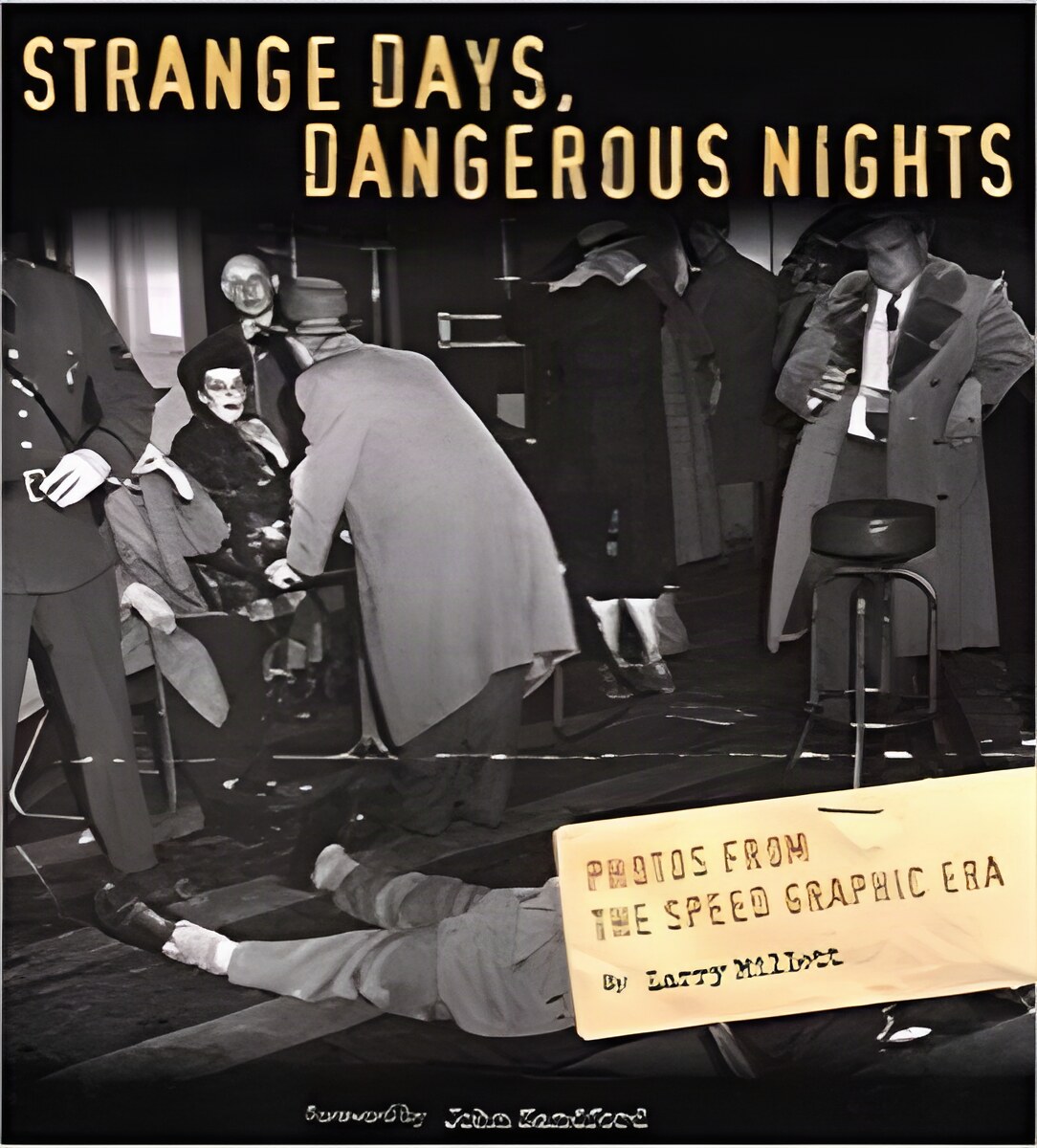
Hardcover. St. Paul MN, Borealis Books, 1st, 2004, Book: Very Good, Dust Jacket: Very Good, Hardcover, 224 pages. The photographs in this collection are taken from the files of the St. Paul Pioneer Press and the St. Paul Dispatch, and span a period from the nineteen-forties to the mid-sixties. Among the many records of long-forgotten civic functions are shocking crime-scene photographs, a reminder of an era when the country's newspaper photographers--an army of Weegees, equipped with oversized Speed Graphic flash cameras and radios tuned to the police scanners--regularly provided readers with lurid coverage of violent crimes and spectacular accidents. There is a harsh intimacy to these photographs, which bring us as close as possible to car-crash victims, suicides, and mass murderers confessing their crimes. But the welter of detail in the pictures--the seamed stockings of a murder victim, the huddle of bystanders after a bar shooting--provides a nuanced portrait of a Midwestern city and of American culture at mid-century.
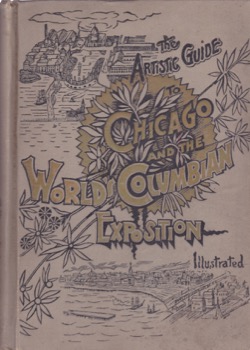
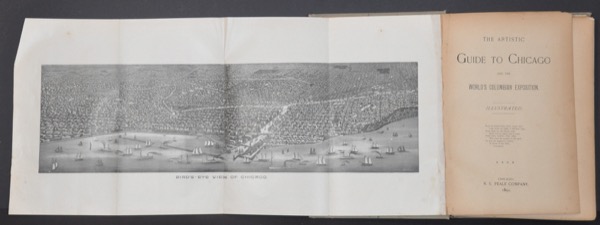
Hardcover. Columbian Art Company, 1st, 1892, Book: Very Good, Dust Jacket: None, Hardcover, bound in gray cloth with black and gilt titles and black embossed images to front. Illustrated with a fold-out frontispiece and with several full-page black and white illustrations, styled as plates, all illustrations in black and white. First published by R.S. Peale Co. the year before. A lovely overview of tourist spots in Chicago that World's Fair attendees could visit while enjoying the fair.
Center for American Places, 1st, Book: Very Good, Dust Jacket: None, Softcover, 180 pages, profusely illustrated in b&w. Foreword by Bill Kurtis. Contemporary Photographs by Judith Bromley and James Iska. Historic images from the Chicago Park District's Special Collections. Even Chicagoans who routinely enjoy its diverse open spaces -from the magnificent lakeshore parks to intimate neighborhood settings- may be surprised about their parkland legacy. The City in a Garden, developed in association with the Chicago Park District, is the first official history of Chicago's parks and it reveals why they are second to none in America and abroad. Clean copy.
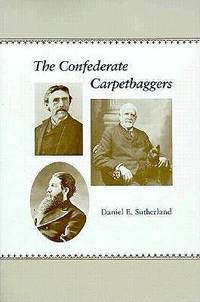
Hardcover. Baton Rouge LA, Louisiana State University Press, 1st, 1988, Book: Very Good, Dust Jacket: Very Good, Hardcover in a bright dust jacket. 360 pages, b&w illustrations. Following the American Civil War, many former Confederates fled their southern homeland. Some left the United States, some moved to the western territories. Still others moved north to northeastern and midwestern towns and cities, believing that northern economic and educational opportunities offered the quickest means of rebuilding shattered fortunes and lives. Sutherland provides a detailed and illuminating account of the contributions these displaced southerners made to the financial, literary, artistic, and political life of the nation. Very nice copy.
Softcover. Lincoln NE, University of Nebraska Press, reprint, 1994, Book: Very Good, Dust Jacket: None, Softcover, 311 pages. A 1913 novel about a black homesteader in South Dakota based on the author's experiences in the midwest as a young man. He later went on to fame as a celebrated early filmmaker. Clean copy.
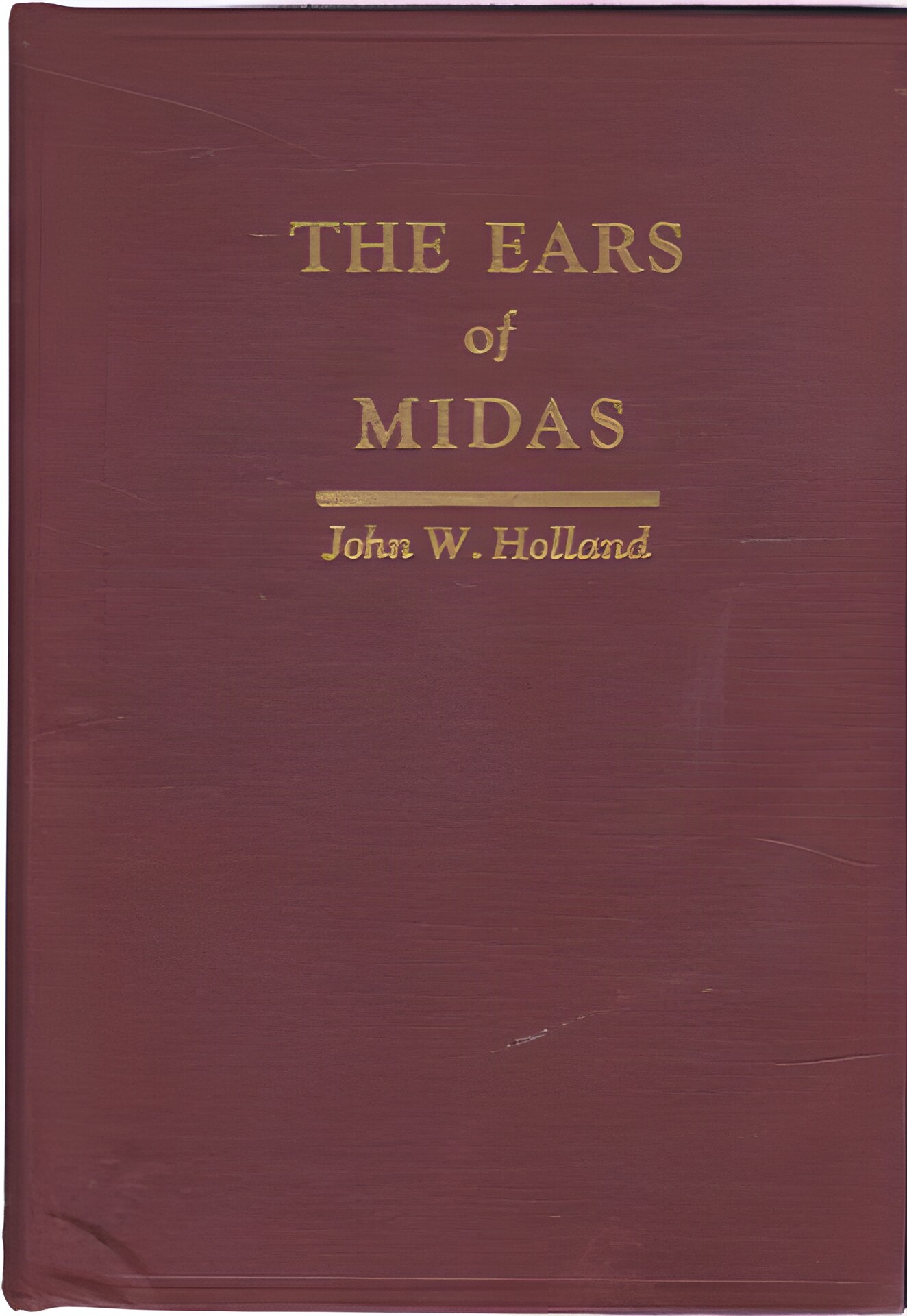
Hardcover. Chicago, The Prairie Press, 1st, 1935, Book: Very Good, Dust Jacket: None, Hardcover, brown cloth with gilt lettering to spine and front cover, 144 pages. A collection of radio sermons by a pastor broadcast on WLB, a midwest radio station in the 1930s. INSCRIBED BY HOLLAND on the title page. Clean copy.
Hardcover. NY/London, Overlook Duckworth, 1st, 2013, Book: Very Good, Dust Jacket: Very Good, Hardcover in a bright, unclipped dust jacket. Sven Norberg searches for his mezzo-soprano wife in the midwestern town of Trude. Clean copy.
Hardcover. Minneapolis, Univ Of Minnesota Press, 1st, 2005, Book: Very Good, Dust Jacket: Very Good, Hardcover in a bright dust jacket, 151 pages illustrated in b&w. Iowa Central Railway supporters fought for a north-south route across the state that would link Minneapolis and St. Paul and St. Louis. This is the history from station records, reports, newspaper articles, and interviews of "The Hook & Eye", which brought both the industrial and human sides of railroading into sharp and memorable view. Clean copy.
Hardcover. NY, Oxford University Press, 4th pr., 1951, Book: Very Good, Dust Jacket: Very Good, Hardcover in a lightly worn dust jacket, 350 pages. A history of the Little Traverse Bay on the northern tip of Michigan's lower peninsula. Text is illustrated with drawings and contains memoirs, memories, recollections, etc.
Hardcover. NY, Macmillan, 1st, 1942, Book: Very Good, Dust Jacket: Fair, Hardcover in a worn, chipped dust jacket. 291 pages illustrated by John O'Hara Cosgrave II.
Softcover. Silver Spring MD, Picture This Press, 1st, 2018, Book: Very Good, Dust Jacket: None, Softcover, 140 pages in color. Edited and restored by the artist's grandson, Brian E. Collins, with an introduction by Eisner Award-winning author Frank M. Young, and an Afterword by comics columnist Ed Catto. Lost Art Books launches the initial volume in a new series devoted to under-appreciated illustrator and comic artist Kreigh Collins (1908-74), collecting for the first time his syndicated Sunday strip, Mitzi McCoy, in its entirety. Kreigh Collins (1908-74) had a wanderlust, fueled by an itinerant childhood, that led to a lifetime of adventures, whether it was leaving his humble midwestern roots to study the masters in the Louvre and hone his craft painting on the banks of the Seine or getting knifed in Morocco while boating and painting his way through North Africa. But equally strong was the draw of his adopted home in Michigan, which is where he launched and set his first syndicated newspaper strip, Mitzi McCoy, in 1948. It didn't take long, though, for wanderlust to strike again, rendering Mitzi but a precursor to Collins' eventual 20-year run on the picaresque adventure comic, Kevin the Bold. Lost Art Books celebrates these beautiful beginnings with this first-ever complete collection of Collins' Mitzi McCoy. Drawn as well as scripted by Collins, Mitzi McCoy showcased the artist's skill as an illustrator and storyteller. His picturesque landscapes, lovely character designs, and thrilling action sequences brimmed with detail and charm, and the strip's ensemble cast rotated in and out of the spotlight, taking turns as protagonists in the dozen story arcs collected in this volume.
Softcover. Indiana Historical Society, 1st, 1996, Book: Very Good, Dust Jacket: None, Softcover in pictorial wraps, 358 pages, 2 maps, b/w photos, appendices, notes, important dates, bibliography, index. Explores the history and culture of the Miami Indians, who have fought for many years to gain tribal status from the U.S. government. Clean copy.
Softcover. Iowa City IA, State Historical Society of Iowa, 1960, Book: Very Good, Dust Jacket: None, Softcover, monthly magazine, stapled color wraps, 86 pages with b&w illustrations. Entire issue devoted to "Railroads Come to Iowa" by William Petersen. Clean copy.
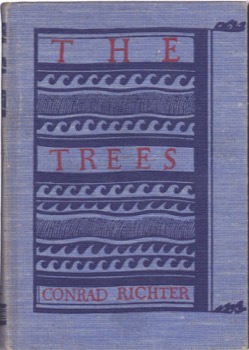
Hardcover. NY, Alfred A. Knopf, 1st, 1940, Book: Very Good, Dust Jacket: None, Hardcover, light blue cloth with red and dark blue lettering on the spine and cover, 302 pages. A moving novel of the beginning of the American trek to the west. Toward the close of the eighteenth century, the land west of the Alleghenies and north of the Ohio River was an unbroken sea of trees. Beneath them the forest trails were dark, silent, and lonely, brightened only by a few lost beams of sunlight. Here, in the first novel of Conrad Richter's Awakening Land trilogy, the Lucketts, a wild, woods-faring family, lived their roaming life, pushing ever westward as the frontier advanced and as new settlements threatened their isolation. This novel gives an excellent feel for America's lost woods culture, which was created when most of the eastern midwest was a vast hardwood forest---virtually a jungle. The Trees conveys settler life, including conflicts with Native Americans, illness, hunting, family dynamics, and marriage. INSCRIBED BY RICHTER on the front fly leaf. A bright, sharp copy missing the dust jacket. Related ephemera laid in.
Hardcover. NY, Knopf, 1st, 1989, Book: Very Good, Dust Jacket: Very Good, Hardcover in a bright, unclipped dust jacket. Benton (1889-1975) is a painter shrouded in paradox and misapprehension. Though pigeonholed as a regionalist chronicler of the Midwest, many of his finest on-site pictures are of Southern blacks and poor whites. Remembered best are his folksy rural scenes and aggressively three-dimensional murals, but the public tends to forget that he ran through the gamut of modernist styles (he was Jackson Pollock's teacher) and that his brilliant abstract color experiments ally him with the modernist movement. Some of Benton's crowded murals of the 1930s reflect his leftist sympathies, yet critics reviled him as politically conservative. These contradictions are illuminated in this catalogue of a touring exhibition curated by Adams. The text stands on its own as a wholly engaging biography, offering an unbuttoned look at a pugnacious, often reckless, artist who valiantly sought to preserve a rural America that was vanishing before his eyes. Clean copy.
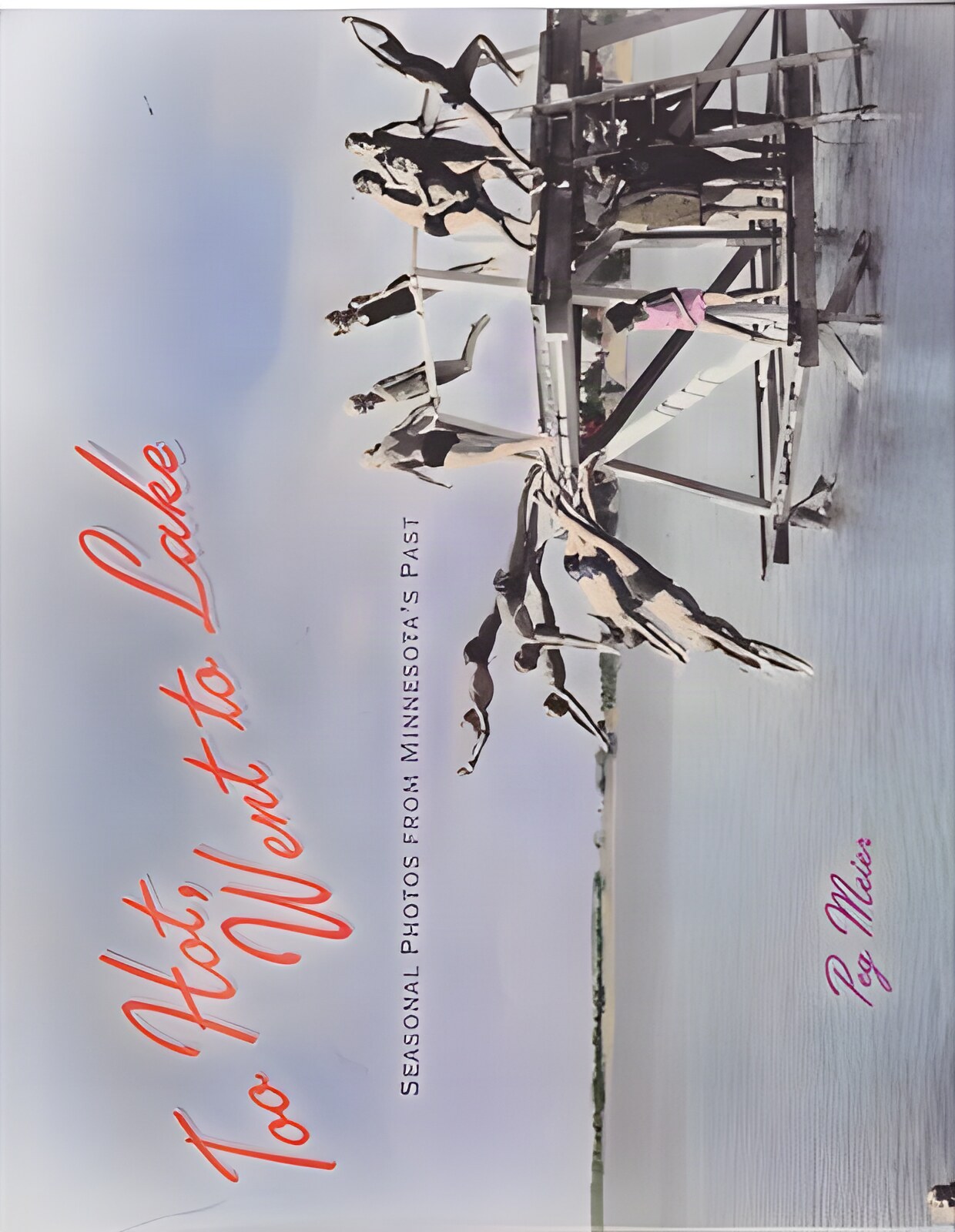
Softcover. Minnesota Historical Society, reprint, 2009, Book: Very Good, Dust Jacket: None, Softcover, oblong format, 309 pages. A collection of b&w seasonal photos from Minnesota's past with excerpts from letters and journals from each season. The book is broken up into the four seasons of the year and the author wrote captions giving available information about each photo. A fun look into Minnesota's past. Clean copy.
Hardcover. Indianapolis, State of Indiana, 1st, 1870, Book: Good, Dust Jacket: None, Hardcover, green cloth covers with blind-stamp design, gilt title on spine. 432 pages interspersed with dozens of b&w detailed engravings of farm machinery from the period. Light foxing throughout.



 "Reminiscences of Chicago During the Great Fire by: McIlvaine, Mabel")
 "Sky Pilot of the Great Lakes: A Biography of the Reverend William H. Law (INSCRIBED COPY)by: John Kotzian / Frederick Stonehouse (Foreword)")
 "Slaughterhouse: Chicago's Union Stock Yard and the World It Made by: Pacyga, Dominic A.")



 "The Conquest: The Story of a Negro Pioneerby: Micheaux, Oscar")
 "The Facades: A Novelby: Lundgren, Eric")
 "The Hook and Eye: A History of the Iowa Central Railwayby: Don L. Hofsommer")

 "The Long Ships Passing: The Story of the Great Lakes by: Walter Havighurst")
 "The Lost Art of Kreigh Collins Volume 1: The Complete Mitzi McCoyby: Collins, Kreigh")




 "Thomas Hart Benton: An American Originalby: Henry Adams")
 "Three Years Travels throughout the Interior Parts of North-America for more than five thousand miles...by: Carver, Captain Jonathan")
 "Twelfth Annual Report of the Indiana State Board of Agricultureby: Cox, Prof. E.T.")