Hardcover. Birmingham AL, Oxmoor House, 1st, 1990, Book: Very Good, Dust Jacket: Very Good, Hardcover, 154 pages, illustrated throughout in color. Light edgewear to dust jacket, else a clean, tight copy. With excerpts from Sanctuary, The Faulkner Reader, As I Lay Dying, The Unvanquished, Light in August, Essays, Go Down, Moses; Absalom, Absalom!; and the exceptional writing style of editor/novelist Willie Morris, this work reveals the textures of Faulkner's Mississippi--cultural, linguistic, and social--making an exceptional commentary on southern life. Morris accomplishes the task of seizing and capturing the imagination of the reader. This image is heightened by the stark, often haunting photographs of Eggleston which combines the reality of Mississippi's landscape with an almost spiritual journey through Faulkner's mystical Yoknapatawpha County.
Hardcover. Chapel Hill, University of Carolina Press , 1st, 1936, Book: Very Good, Dust Jacket: None, 321 pages. Green cloth without a dust jacket. Minor sun-fade to spine. Clean, tight copy.
Hardcover. Boston, Lothrop, Lee & Shepard, 1st, 1908, Book: Very Good, Dust Jacket: None, Hardcover, pictorial green cloth with 3-color and gilt decoration, 385 pages plus publisher's ads. Sic b&w plates by H.C. Edwards. Name, date on front fly leaf otherwise clean.
Hardcover. Jackson MS, University Press of Mississippi, 1st, 2025, Book: Very Good, Dust Jacket: Very Good, Hardcover in a bright dust jacket, 520 pages. New Orleans artist George Valentine Dureau (1930-2014) has always been an enigma. His status as an important artist gained momentum beginning with his first exhibition at the New Orleans Museum of Art, then the Isaac Delgado Museum of Art, in the mid-1960s. Not only did his career undergo a meteoric rise, but his work proved at once controversial and provocative, nuanced and groundbreaking. Critics and collectors embraced his bold images, describing them as sexual, sensual, exploitative, erotic, iconoclastic, and innovative. Beneath the surface, Dureau was even more complex as a person and persona, as he crafted a sensational character out of his artistic acumen. His reputation dimmed after his death, but in recent years his importance, and that of the New Orleans art scene he occupied, has once again been recognized. This lush publication features 100 large-format photographic plates, most of which have never been seen or published and surprisingly some in color. There are more than 200 illustrations and two essays to accompany the plates, along with a special section devoted to the artists and artwork of 1980s New Orleans, featuring hundreds of additional photographs, and several appendices of supplementary materials, such as interview transcripts, a timeline of Dureau's life and career, a map of important locations, and a section on relevant art publications, invitations, and posters. Clean copy. This is a heavy and oversized book and will require extra shipping. International customers please ask for a shipping quote before purchasing.
Softcover. Fayettevill, AR, Arkansas Archeological Survey, 1st Edition, 2002, Book: Very Good, 237 pages. Softcover. B/w illustrations throughout. Wrapper very good, just a touch of tanning and small crease on front cover. Pages clean. Binding tight. Study of recovered Mississippi riverboat wrecks discovered by archaeologists.
Hardcover. NY, Contemporary Books, 1st, 2003, Book: Very Good, Dust Jacket: Very Good, Hardcover in a bright, unclipped dust jacket, 398 pages. From its inauspicious beginnings through its improbable Super Bowl victories and its ultimate demise, the American Football League had a colorful and sometimes bizarre ten-year history that will not soon be forgotten. Going Long takes you back to that thrilling decade with the men who made the AFL--and who made it great. In this unique oral history, 170 voices come together to tell the unbelievable story of that maverick league, a rollicking tale of eight teams that refused to die. In 1959, the NFL had just a dozen teams, with only two located west of the Mississippi River. For forty years, it had enjoyed total dominance over the gridiron, tackling rival franchises and knocking them out of the game. But a revolution was coming to American football, and it all began with a man named Lamar Hunt, the Texas millionaire who desperately wanted a league of his own. With a team of enthusiastic investors, Hunt fired what he later called "the first cannon shot in what turned out to be the pro football war." It was a war that would rage on for ten rough-and-tumble years. Flavored with wild (and often ribald) anecdotes, inside stories, personal interviews, and never-before-told material, Going Long brings the incredible story of the upstart AFL to life through the words of the players, coaches, owners, and others who lived it--including Joe Namath, Mike Ditka, Bubba Smith, Roger Staubach, Pat Summerall, Curt Gowdy, and many others. Hearkening back to a simpler time in sports, this behind-the-scenes true story reveals the origins of the modern game we know today and how it all began with a fight to the death for professional football supremacy.
Hardcover. Boston, Houghton Mifflin, 1st, 1936, Book: Very Good, Dust Jacket: None, Hardcover, full blue cloth, silver titling, map endsheets. Local color novel about life in the Mississippi River Delta of Louisiana, by an author living in that area. Clean. No dust jacket.
Hardcover. NY, Vanguard Press, 1st, 1077, Hardcover in a bright dust jacket. The Catfish Bend series, set in Mississippi, is both a gentle comic satire and a fascinating tale of eccentric animals. Here after a lapse of eleven years, are a new band of silly creatures: a Sherlock Holmes type Bloodhound, the Prophet Crows etc. B&w drawings by Alice Caddy. No markings.
Hardcover. Lily Bay Press, 1st, 2003, Book: Very Good, Dust Jacket: Very Good, Hardcovr, 98 pages. After the horrendous events of September 2001, photographer Peter Elliott loaded his cameras and some clothes into his car and began a cross-country journey, looking for the flag. He found it everywhere: painted on a retaining wall in Tacoma, flying over a trailer in Bozeman, carried billowing by a lone man walking a sandbar in Florida, made of plastic cups stuck in a fence in Mississippi, draped over a fake horse in Salinas, immaculately hanging from a Beverly Hills mansion's window. Home Front is both a tribute to the profound emotions of the country and a testament to Elliott's eye. His genius in these eighty-seven arresting images is to wed these serendipitous meetings with the flag to a language of light and composition that draws as much from classic landscape photography as it does from urban visual idioms. Elliott manages to convey here America's stirring and complex national character, one in which those who have not benefited from the nation's prosperity nonetheless feel the same sense of pride as those who have. With its inspiring introduction by Julia Reed, Home Front is the record--both somber and joyous--of Elliott's encounters with spontaneous patriotism.
Hardcover. NY, Free Press, 1st, 2002, Book: Very Good, Dust Jacket: Very Good, Hardcover in a bright, unclipped dust jacket. Like Faulkner's Mississippi and Cormac McCarthy's American West, Gay's Tennessee is redolent of broken souls. Mining that same fertile soil, his debut collection, I Hate to See That Evening Sun Go Down, brings together thirteen stories charting the pathos of interior lives. Among the colorful people readers meet are: old man Meecham, who escapes from his nursing home only to find his son has rented their homestead to "white trash"; Quincy Nell Qualls, who not only falls in love with the town lothario but, pregnant, faces an inescapable end when he abandons her; Finis and Doneita Beasley, whose forty-year marriage is broken up by a dead dog; and Bobby Pettijohn -- awakened in the night by a search party after a body is discovered in his back woods. William Gay expertly sets these conflicted characters against lush backcountry scenery and defies our moral logic as we grow to love them for the weight of their human errors. Clean copy.
Softcover. Jackson MS, University Press of Mississippi , 1st, 1994, Book: Very Good, Dust Jacket: None, Softcover, 227 pages, b&w illustrations. A self-made woman with no formal art training, Rose O'Neill (1875-1944) was not only hugely financially successful through her illustration work and the production of Kewpie dolls, but also through her exhibited drawings and sculpture in solo shows in Paris and New York. Kewpie made her a famous figure commercially, but few recognize her today as a serious artist and a political subversive who expressed sympathy for minorities, suffragettes, and victims of intolerance and who struggled with her own expression in a male-dominated field. Clean, bright copy.
Softcover. Authors Choice Press, reprint, 2006, Book: Very Good, Dust Jacket: None, Softcover, b&w illustrations, 216 pages. Originally published in 1973 and covers the early and essential years of her life and career. The story of a shy girl from Mississippi who became a world opra star told in a sympathetic light.
Hardcover. Jackson MS, University Press of Mississippi, 1st, 2001, Book: Very Good, Dust Jacket: Very Good, Hardcover, 172 pages, filled with impressive folk art in full color on just about every page. Three essays on the collection by Marshall and Lynne E. Spriggs, High Museum of Art's Curator of Folk Art, Joanne Cubbs, the museum's first curator of folk art, and Lynd Roscoe Hartigan, Chief Curator at the Smithsonian American Art Museum. Forword by Michael E. Shapiro, director of the High Museum of Art. In a bright dust jacket.
Hardcover. Boston, James R. Osgood, 2nd pr., 1883, Book: Very Good, Dust Jacket: None, Hardcover, 624 pages, brown cloth with embossed black and gilt decoration on the front cover and spine. 300 b&w drawings. Second Issue with no tailpiece on p. 441 and "The St. Charles Hotel" on p. 443. Covers with light edgewear, discoloration/stain to rear cover. Rear hinge partially cracked. Previous owner's signature on front fly leaf. Interior is bright and clean. Attractive copy.
Hardcover. Jackson [Miss.], University Press of Mississippi, 1st, 2009, Book: Very Good, Dust Jacket: Very Good, 284 pages, b&w illustrations. Minor edgewear to dust jacket else a clean, tight copy.
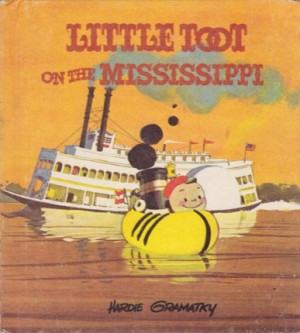
Hardcover. NY, G.P. Putnam, Book Club Ed., 1973, Book: Very Good, Dust Jacket: None, Hardcover, pictorial cloth, illustrated in color and b&w by Gramatky. Number four in the Little Toot series- this time the tugboat sets out on a daring mission when the Mississippi River floods.
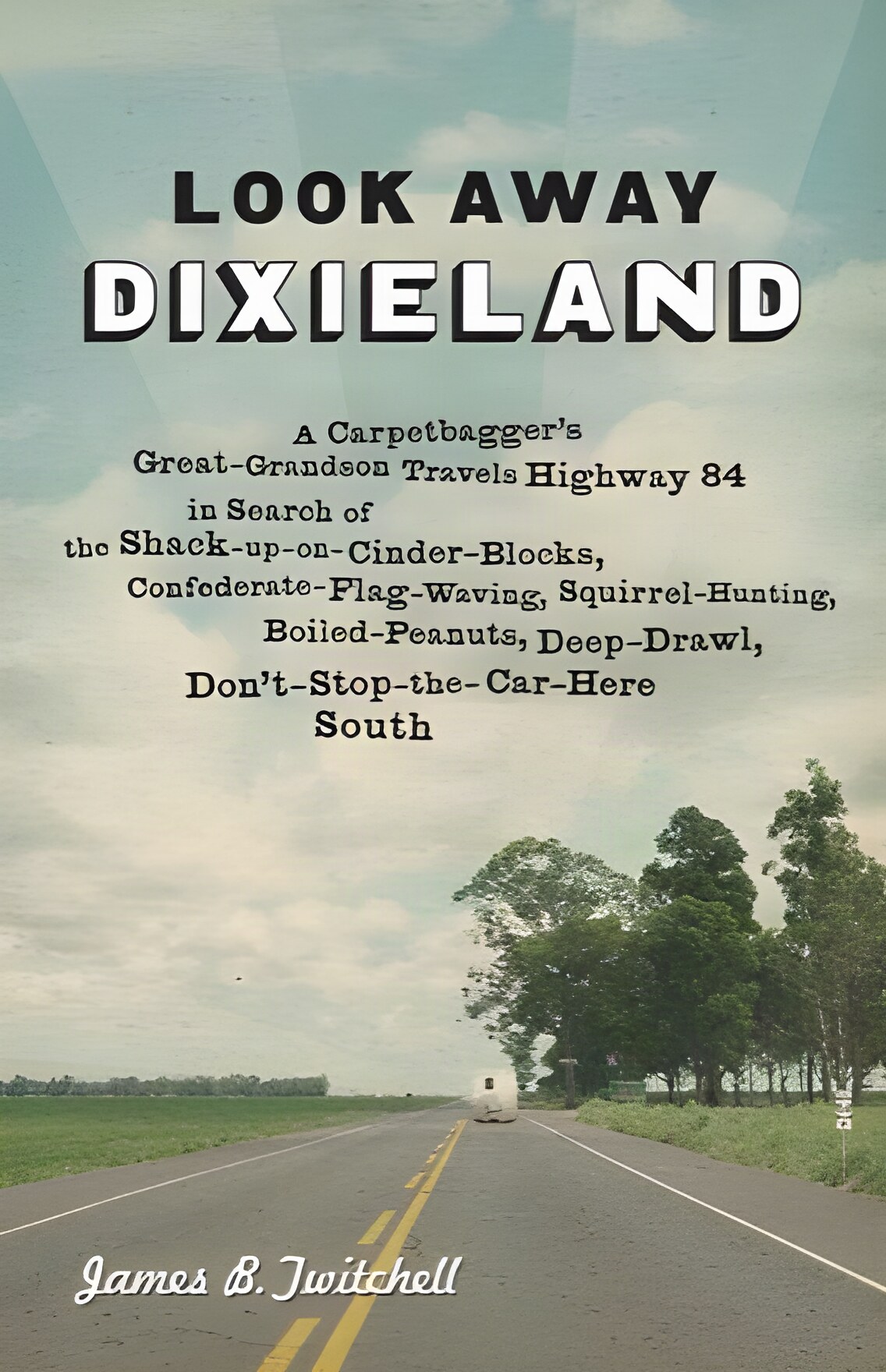
Hardcover. Baton Rouge, Louisiana State University Press, 1st, 2011, Book: Very Good, Dust Jacket: Very Good, Hardcover in a bright dust jacket, 175 pages, b&w illustrations. Vermont-native Twitchell sets out from his current home in Florida on the inauguration day of America's first black president to find the "real" South and to try to understand the truth about his illustrious ancestor. He travels in an RV from Georgia's Okefenokee Swamp across Alabama and Mississippi to Coushatta, Louisiana. As he drives through the heart of Dixie, Twitchell sorts through the prejudices he learned from his northern rearing. In searching for the culture he had held at arm's length for so long, he tours small-town southern life -- in campgrounds, cotton gins, churches, country fairs, and squirrel dog kennels -- and uncovers some fundamental truths along the way. Notably, he discovers that prejudices of race, class, and ideology are not limited by geography. As one man from Georgia mockingly summed up North versus South stereotypes, "Y'all are rude and we're stupid." Unexpectedly, Twitchell also uncovers facts about his great-grandfather and sheds new light on his family's past. An enlightening, humorous, and refreshingly honest search, Look Away, Dixieland reveals some of the differences and similarities that ultimately define us as a nation. Clean copy.
Hardcover. London, Faber & Faber, 1st, 2016, Book: Very Good, Dust Jacket: None, 72 pages. Hardcover with no dust jacket. Very clean, unmarked copy with only minor wear to edges. Black and white illustrations throughout by Mezzo. From 'Crossroads Blues' to 'Sweet Home Chicago', 'Hellhound on My Trail' to 'Come On In My Kitchen', Robert Johnson wrote some of the most enduring and formative songs of the original blues era, songs that would go on to help shape the birth of rock 'n' roll in the 1960s. Beloved of Clapton, Dylan and the Stones, Robert Johnson remains one of the most iconic and mythologized figures in popular music (and the first of many to die at the age of 27). Born in the in the South in Mississippi, Johnson made his way to the urban North as a traveling musician, but it was only when he returned to the South that he recorded the twenty-nine songs, in two sessions, which would create his legacy. Exploring the stories and legends that surround his life and death -- his childhood, his womanizing, his pact with the devil at the crossroads -- Mezzo and DuPont have produced a fittingly creative and beautiful depiction of this most extraordinary life.
Hardcover. New York, Aperture/SADEV, 1st, 1986, Book: Very Good, Dust Jacket: Very Good, Hardcover, 104 pages, b&w photographs, small format catalogue with extensive notes. A fine copy in the illustrated dust jacket. Bridges made aerial photographs of the earthworks in Peru, Yucatan and Chiapas, and in the U.S. in California, Arizona, New Mexico, Mississippi, South Dakota, as well as France and England. Preface by Haven O'More. Essays by Maria Reiche, Charles Gallenkamp, Lucy Lippard, Keith Critchlow. Clean, bright in an unclipped dust jacket.
Softcover. Tuscaloosa, University of Alabama Press, 1st, 1999, Book: Very Good, Dust Jacket: None, Softcover. This collection of Ford's works focuses on the development of ceramic chronology-a key tool in Americanist archaeology. When James Ford began archaeological fieldwork in 1927, scholars divided time simply into prehistory and history. Though certainly influenced by his colleagues, Ford devoted his life to establishing a chronology for prehistory based on ceramic types, and today he deserves credit for bringing chronological order to the vast archaeological record of the Mississippi Valley. This book collects Ford's seminal writings showing the importance of pottery styles in dating sites, population movements, and cultures. These works defined the development of ceramic chronology that culminated in the major volume Archaeological Survey in the Lower Mississippi Alluvial Valley, 1940-1947, which Ford wrote with Philip Phillips and James B. Griffin. In addition to Ford's early writings, the collection includes articles written with Griffin and Gordon Willey, as well as other key papers by Henry Collins and Fred Kniffen. Clean copy in publisher's shrinkwrap.
Hardcover. New York , HarperCollins, 1st, 1992, Book: Very Good, Dust Jacket: Very Good, Hardcover, 32 pages illustrated in color by Kellogg and SIGNED WITH A DRAWING of an alligator by Kellogg. A funny and energetic picture book portrayal of one of America's most famous frontiersmen and larger-than-life heroes. Mike Fink was king of the keelboatmen--the strongest, rowdiest bunch of fellows ever to work on the Mississippi. Mike was a whole lot more than a keelboater--yes, sir! He was a crack shot and the best grizzly and gator wrestler on the river. They don't make 'em like Mike these days, now do they? But what will Mike do when the larger, faster, smoke-spewing steamboats attempt to take over the rivers?
Softcover. Jackson MS, University Press of Mississippi, 1st, 2002, Book: Very Good, Dust Jacket: None, Softcover, 312 pages. In this collection of more than a dozen interviews one of the giants of American comic strips talks about his life and his craft. The years spanning 1937 to 1986, when the interviews were conducted, embrace almost all of Caniff's career as he was producing the legendary Terry and the Pirates and his post-World War II masterpiece Steve Canyon. In long talks with such comics luminaries as Jules Feiffer and Will Eisner, Caniff (1907-1988) discusses his signature chiaroscuro style, his passion for realism in every detail, and his relationships with such other cartooning greats as Al Capp (Li'l Abner), Noel Sickles (Scorchy Smith), and Alex Raymond (Flash Gordon) As Caniff speaks earnestly about his art, his techniques, and his intentions, he discloses his inspirations. He based his characters on real persons and his material on contemporary politics and military issues. He gives candid opinions about the effects of the marketplace, business, and sales upon his art. "I would have created Blondie if I'd known that I could have sold it, you can be damn sure." He notes that the cause for terminating his association with Terry and the Pirates and his creation of Steve Canyon was neither lack of interest nor censorship but the opportunity to exert full creative control over his work.
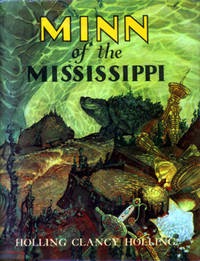
Hardcover. Boston, Houghton Mifflin, 1st, 1951, Hardcover in a bright dust jacket, unclipped with $3.00 on flap. The history of the Mississippi River Valley is told through the adventures of Minn, a snapping turtle, as she travels hundreds of miles downstream. As with all Holling books, it is lushly illustrated, containing many full-page color paintings, text pages that are also illustrated with black-and-white pen-and-ink drawings, and with explanatory captions in the margins. First published in Date: 1951, it received the Newbery Honor award the following year. Small ownership sticker to front fly leaf, otherwise clean and bright.

 "Faulkner's Mississippiby: Morris, Willie (text); William Eggleston (photographs)")
 "Fifty Years on the Mississippi: Gould's History of River Navigationby: Gould, E.W.")
 "Folksongs of Mississippi and Their Backgroundby: Hudson, Arthur Palmer")
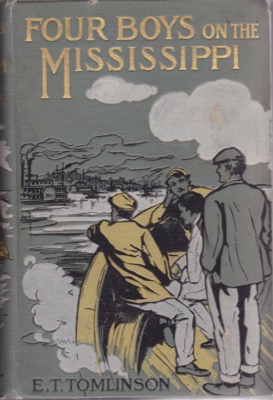

 "Ghost Boats on the Mississippi: Discovering Our Working Pastby: Stewart-Abernathy, Leslie C.")


 "Going Long: The Wild Ten-Year Saga of the Renegade American Football League in the Words of Those Who Lived Itby: Jeff Miller")
 "Green Margins by: O'Donnell, E. P.")
 "High Treason at Catfish Bendby: Ben Lucien Burman, Illustrator: Alice Caddy")
 "Home Front: American Flags from Across the United Statesby: Elliott, Peter")


 "Leontyne Price: Highlights of a Prima Donna by: Lyon, Hugh Lee")

 "Life On the Mississippiby: Twain, Mark")
 "Life on the Press: The Popular Art and Illustrations of George Benjamin Luksby: Gambone, Robert L.")
 "Love in Vain: Robert Johnson, 1911-1938 by: DuPont, J. M.")
 "Markings: Aerial Views of Sacred Landscapesby: Bridges, Marilyn")
 "Measuring the Flow of Time: The Works of James A. Ford, 1935-1941by: Ford, James A., Foreword: Willey, Gordon R./ Editor: Lyman, R. Lee/ Editor: O'Brien, Professor Mi")
 "Mike Fink (SIGNED COPY)by: Kellogg, Steven")