Hardcover. Princeton NJ, Princeton University Press, 1st, 1992, Book: Very Good, Dust Jacket: Very Good, Hardcover in a bright dust jacket, 281 pages, b&w illustrations. "For, Lo! We live in an Iron Age--In the age of Steam and Fire!" wrote a poet mesmerized by the engines that were transforming American transportation, agriculture, and industry during his lifetime. Indeed, by the nineteenth century fire had become America's leitmotif--for good and for ill. "Keeping the flame" was deadly serious: even the slightest lapse of attention could convert a fire from friendly ally to ravaging destroyer. To examine the cultural context of fire in "combustible America," Margaret Hazen and Robert Hazen gather more than a hundred illustrations, most never before published, together with anecdotes and information from hundreds of original sources, including newspapers, diaries, company records, popular fiction, art, and music. What results is an immensely entertaining and encyclopedic history that ranges from stories of the tragic "great fires" of the century to fire imagery in folktales and popular literature. Dealing more with technology than with fire in nature, the book provides a vast amount of information on fire manipulation and prevention in urban life. Hazen and Hazen discuss the people who worked with fire--or against it. Founders, gaffers, blacksmiths, boilers at saltworks, and housewives knew how to "read" a fire and employ it for their purposes. A few dedicated investigators inquired about the scientific nature of heat and flame. And firefighters gradually progressed from "bucket brigades" to "using fire to fight fire" with the newly invented steam engine. The colorful stories of these Americans--the risks they took and the rewards they received--will fascinate not only social historians but also a broad audience of general readers. Clean copy.
Hardcover. Manic D Press, 1st, 2003, Book: Very Good, Dust Jacket: Very Good, Hardcover, 128 pages. A visual feast of black-and-white portraits capturing some of the most notorious rock and roll icons from the late 1970s and early 1980s: Sid Vicious, John Lydon, PIL, Patti Smith, Blondie, The Ramones, The Clash, Circle Jerks, The Dead Boys, Dead Kennedys, The Exploited, GBH, Killing Joke, Misfits, X, Richard Hell, Lydia Lunch, Red Hot Chili Peppers, and more.
Hardcover. Library of American Comics, 1st, 2014, Book: Very Good, Dust Jacket: None, Oblong hardcover, 336 pages. In Alley Oop, Hamlin created a unique concept, marrying his fascination with dinosaurs and prehistoric times to a rollicking style of storytelling and drawing that was simultaneously serious, fantastic, and loaded with slapstick. The series was set in the kingdom of Moo and starred Alley Oop, the club-wielding caveman, his girlfriend Ooola, friends Dinny the dinosaur and Foozy (who speaks in rhyme), plus Oop's rival, King Guz, and Guz's Queen Umpateedle. Yet Hamlin knew that the strip's horizons in Moo were limited. So it was, in early 1939, that Alley Oop and Ooola see a mysterious box and, to the utter amazement of Guz and his minions, promptly fade from view, followed by the caption: "Dear Reader: you must now say goodbye to Moo...if you are to follow Alley Oop in this strangest of many strange adventures. --V. T. Hamlin". Oop and Ooola had entered a time machine and were now living in the modern-day 20th Century! Their host was the inventor of the time machine, Dr. Elbert Wonmug! No change of such magnitude had ever occurred in a continuing newspaper strip, and readers responded enthusiastically. With every time period in history available as a backdrop, Alley Oop became even more popular. This volume features Oop's final Moo adventure, followed by his trips to the 20th Century and ancient Greece, where he and Ooola share adventures with brave Ulysses, the lovely Helen of Troy, and the mighty Hercules. V.T. Hamlin would send his characters everywhere and everywhen--but the classic Alley Oop begins with the stories contained in this volume. The book is introduced by Michael T. Price, who first met V. T. Hamlin in the 1960s and remained friendly with him for the rest of the cartoonist's life. Price also composed the musical score for Hip Pocket Theatre's production, Alley Oop.
Hardcover. London, Faber & Faber, 1st, 2016, Book: Very Good, Dust Jacket: None, 72 pages. Hardcover with no dust jacket. Very clean, unmarked copy with only minor wear to edges. Black and white illustrations throughout by Mezzo. From 'Crossroads Blues' to 'Sweet Home Chicago', 'Hellhound on My Trail' to 'Come On In My Kitchen', Robert Johnson wrote some of the most enduring and formative songs of the original blues era, songs that would go on to help shape the birth of rock 'n' roll in the 1960s. Beloved of Clapton, Dylan and the Stones, Robert Johnson remains one of the most iconic and mythologized figures in popular music (and the first of many to die at the age of 27). Born in the in the South in Mississippi, Johnson made his way to the urban North as a traveling musician, but it was only when he returned to the South that he recorded the twenty-nine songs, in two sessions, which would create his legacy. Exploring the stories and legends that surround his life and death -- his childhood, his womanizing, his pact with the devil at the crossroads -- Mezzo and DuPont have produced a fittingly creative and beautiful depiction of this most extraordinary life.
Hardcover. Lexington KY, University Press of Kentucky, 1st, 2013, Book: Very Good, Dust Jacket: Very Good, Hardcover in a bright dust jacket. An Armenian national raised in Russia, Rouben Mamoulian (1897--1987) studied in the influential Stanislavski studio, renowned as the source of the "method" acting technique. Shortly after immigrating to New York in 1926, he created a sensation with an all-black production of Porgy (1927). He then went on to direct the debut Broadway productions of three of the most popular shows in the history of American musical theater: Porgy and Bess (1935), Oklahoma! (1943), and Carousel (1945). Mamoulian began working in film just as the sound revolution was dramatically changing the technical capabilities of the medium, and he quickly established himself as an innovator. Not only did many of his unusual camera techniques become standard, but he also invented a device that eliminated the background noises created by cameras and dollies. Seen as a rebel earlier in his career, Mamoulian gradually gained respect in Hollywood, and the Directors Guild of America awarded him the prestigious D. W. Griffith Award for Lifetime Achievement in 1983. In this meticulously researched biography, David Luhrssen paints the influential director as a socially conscious artist who sought to successfully combine art and commercial entertainment. Luhrssen not only reveals the fascinating personal story of an important yet neglected figure, but he also offers a tantalizing glimpse into the extraordinarily vibrant American film and theater industries during the twenties, thirties, and forties.
Hardcover. New Haven CT, Yale University Press, 1st, 2004, Book: Very Good, Dust Jacket: Very Good, Hardcover in a bright, unclipped dust jacket, 398 pages. From colonial times to the present, American composers have lived on the fringes of society and defined themselves in large part as outsiders. In this stimulating book Michael Broyles considers the tradition of maverick composers and explores what these mavericks reveal about American attitudes toward the arts and about American society itself. Broyles starts by examining the careers of three notably unconventional composers: William Billings in the eighteenth century, Anthony Philip Heinrich in the nineteenth, and Charles Ives in the twentieth. All three had unusual lives, wrote music that many considered incomprehensible, and are now recognized as key figures in the development of American music. Broyles goes on to investigate the proliferation of eccentric individualism in all types of American music-classical, popular, and jazz-and how it has come to dominate the image of diverse creative artists from John Cage to Frank Zappa. The history of the maverick tradition, Broyles shows, has much to tell us about the role of music in American culture and the tension between individualism and community in the American consciousness. Leer menos
Softcover. NY, Columbia University Press, 1st pbk, 2002, Book: Very Good, Dust Jacket: None, Softcover, 410 pages. Collection of essays on the impact of global modernity in the region. Between the 1890s and 1920s, cities in the vast region stretching from the Mediterranean Sea to the Indian Ocean were experiencing political, social, economic, and cultural changes that had been set in motion at least since the early nineteenth century. As the age of pre-colonial empires gave way to colonial and national states, there was a sense that a particular liberalism of culture and economy had been irretrievably lost to a more intolerant age. The book provides a comparative analysis of contested versions of the concept of modernity. The book examines not only the "high" culture of scholars and the literati, but also popular music, the visual arts, and journalism. Clean.
Hardcover. New Rochelle, Arlington House, 1st, 1972, Book: Very Good, Dust Jacket: Very Good, Hardcover in a bright dust jacket. 554 pages. Illustrated with black & white photographs. Moderate foxing to edges. An important reference book on this legend of the big band era. Clean, tight copy.
Hardcover. NY, Viking, 1st, 2023, Book: Very Good, Dust Jacket: Very Good, Hardcover in a bright, unclipped dust jacket. 970 pages illustrated with color, b&w illustrations. Barbra Streisand is by any account a living legend, a woman who in a career spanning six decades has excelled in every area of entertainment. She is among the handful of EGOT winners (Emmy, Grammy, Oscar, and Tony) and has one of the greatest and most recognizable voices in the history of popular music. She has been nominated for a Grammy 46 times, and with Yentl she became the first woman to write, produce, direct, and star in a major motion picture. In My Name Is Barbra, she tells her own story about her life and extraordinary career, from growing up in Brooklyn to her first star-making appearances in New York nightclubs to her breakout performance in Funny Girl on stage and winning the Oscar for that performance on film. Then came a long string of successes in every medium in the years that followed. The book is, like Barbra herself, frank, funny, opinionated, and charming. She recounts her early struggles to become an actress, eventually turning to singing to earn a living; the recording of some of her acclaimed albums; the years of effort involved in making Yentl; her direction of The Prince of Tides; her friendships with figures ranging from Marlon Brando to Madeleine Albright; her political advocacy; and the fulfillment she's found in her marriage to James Brolin. Clean copy.
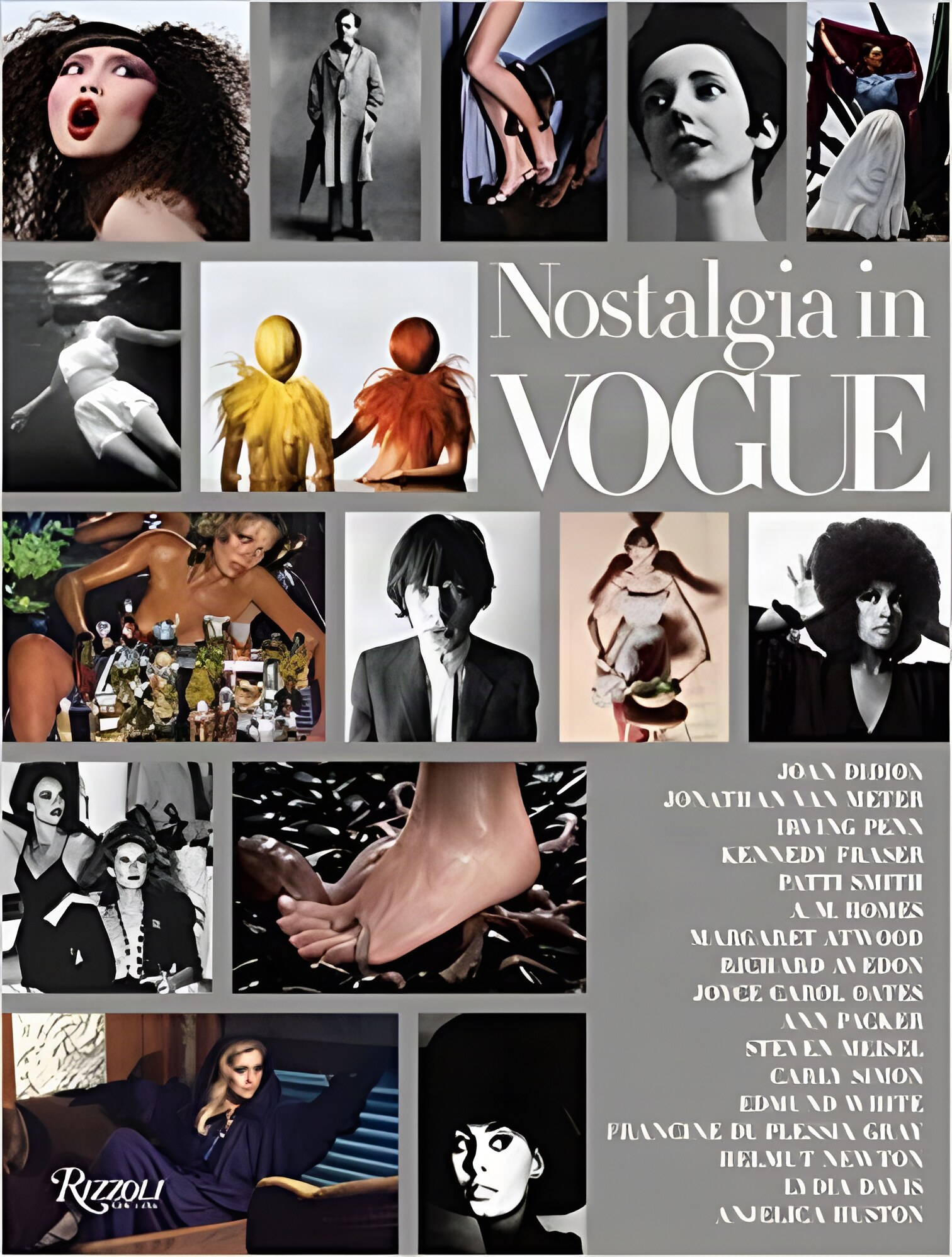
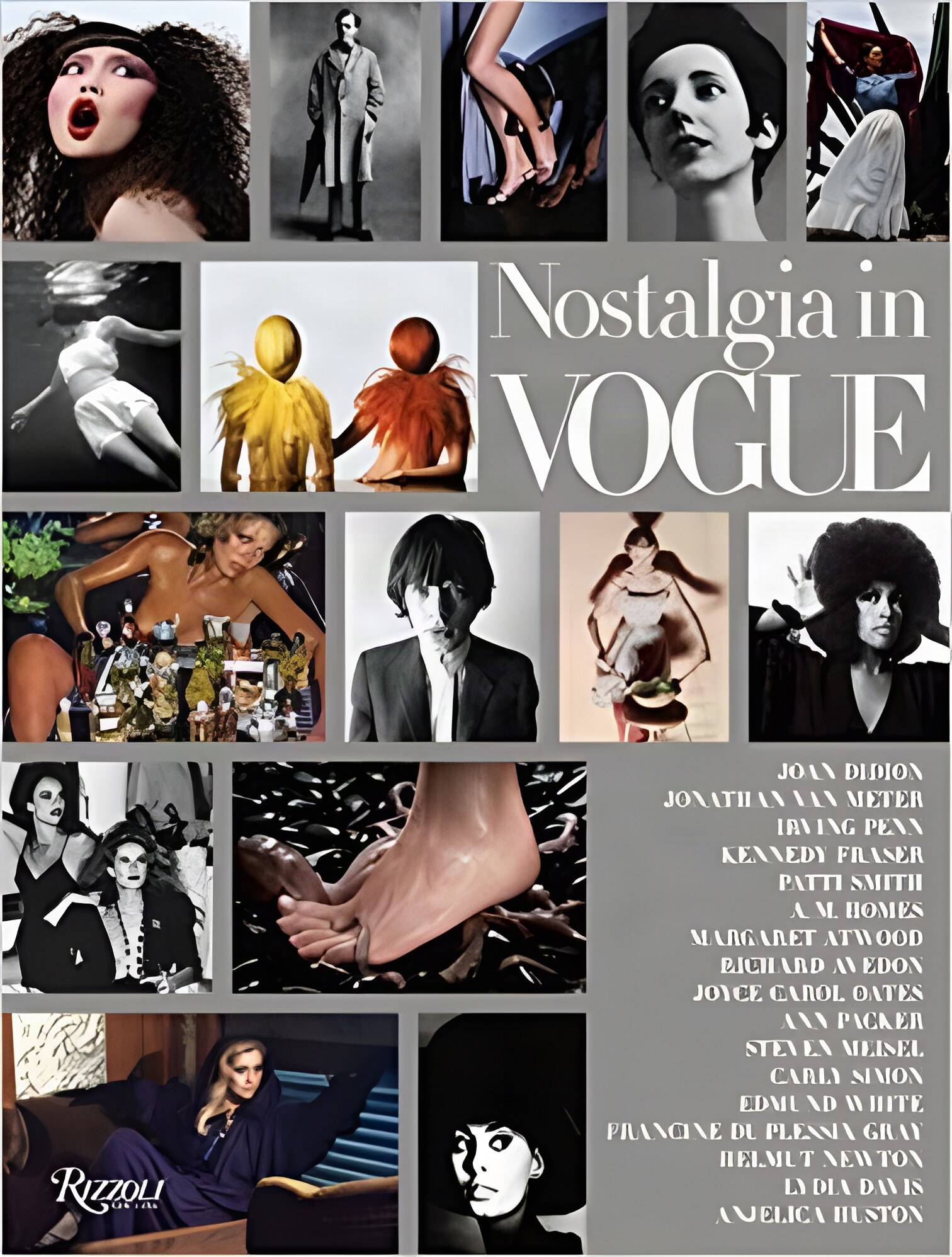
Hardcover. NY, Rizzoli, 1st, 2011, Hardcover, 288 pages. Nostalgia in Vogue celebrates the popular and poignant coming-of-age memoir columns that have been enchanting Vogue readers since 2000. This elegant volume collects a wonderful selection of Vogue's famous "Nostalgia" columns and the stunning photographs that accompanied them. Writers, designers, models, and celebrities share coming-of-age stories based on a rich range of themes from fashion to art, Hollywood, music, childhood, work, and love, each triggered by an extraordinary photograph from Vogue's history. With a host of intriguing characters and stories, and images by legendary photographers such as Irving Penn, Richard Avedon, Henry Clarke, Helmut Newton, Horst P. Horst, and Henri Cartier-Bresson, Nostalgia in Vogue is both a visual treat and a fascinating read. Whether told from the point of view of a budding movie star or a teenager straining to make sense of the sophisticated adult world, each entry offers a unique slice of life sharply evocative of time and place. Nostalgia in Vogue is a must for devotees of fashion, pop culture, photography, and literary memoir and reaches across a readership of all ages. Text by Eve Macsweeney with a Foreword by Anna Wintour and essays by Joan Didion, Margaret Atwood, Patti Smith, Edmund White, Karl Lagerfeld, Carly Simon, John Galliano, Ann Packer, Anjelica Huston, Nora Ephron, A. M. Homes, and others.
Hardcover. NY, Rizzoli, 1st, 2011, Book: Very Good, Dust Jacket: Very Good, Hardcover, 288 pages. Nostalgia in Vogue celebrates the popular and poignant coming-of-age memoir columns that have been enchanting Vogue readers since 2000. This elegant volume collects a wonderful selection of Vogue's famous "Nostalgia" columns and the stunning photographs that accompanied them. Writers, designers, models, and celebrities share coming-of-age stories based on a rich range of themes from fashion to art, Hollywood, music, childhood, work, and love, each triggered by an extraordinary photograph from Vogue's history. With a host of intriguing characters and stories, and images by legendary photographers such as Irving Penn, Richard Avedon, Henry Clarke, Helmut Newton, Horst P. Horst, and Henri Cartier-Bresson, Nostalgia in Vogue is both a visual treat and a fascinating read. Whether told from the point of view of a budding movie star or a teenager straining to make sense of the sophisticated adult world, each entry offers a unique slice of life sharply evocative of time and place. Nostalgia in Vogue is a must for devotees of fashion, pop culture, photography, and literary memoir and reaches across a readership of all ages. Text by Eve Macsweeney with a Foreword by Anna Wintour and essays by Joan Didion, Margaret Atwood, Patti Smith, Edmund White, Karl Lagerfeld, Carly Simon, John Galliano, Ann Packer, Anjelica Huston, Nora Ephron, A. M. Homes, and others.
Hardcover. NY, Rizzoli, 1st, 2011, Hardcover, 288 pages. Nostalgia in Vogue celebrates the popular and poignant coming-of-age memoir columns that have been enchanting Vogue readers since 2000. This elegant volume collects a wonderful selection of Vogue's famous "Nostalgia" columns and the stunning photographs that accompanied them. Writers, designers, models, and celebrities share coming-of-age stories based on a rich range of themes from fashion to art, Hollywood, music, childhood, work, and love, each triggered by an extraordinary photograph from Vogue's history. With a host of intriguing characters and stories, and images by legendary photographers such as Irving Penn, Richard Avedon, Henry Clarke, Helmut Newton, Horst P. Horst, and Henri Cartier-Bresson, Nostalgia in Vogue is both a visual treat and a fascinating read. Whether told from the point of view of a budding movie star or a teenager straining to make sense of the sophisticated adult world, each entry offers a unique slice of life sharply evocative of time and place. Nostalgia in Vogue is a must for devotees of fashion, pop culture, photography, and literary memoir and reaches across a readership of all ages. Text by Eve Macsweeney with a Foreword by Anna Wintour and essays by Joan Didion, Margaret Atwood, Patti Smith, Edmund White, Karl Lagerfeld, Carly Simon, John Galliano, Ann Packer, Anjelica Huston, Nora Ephron, A. M. Homes, and others.
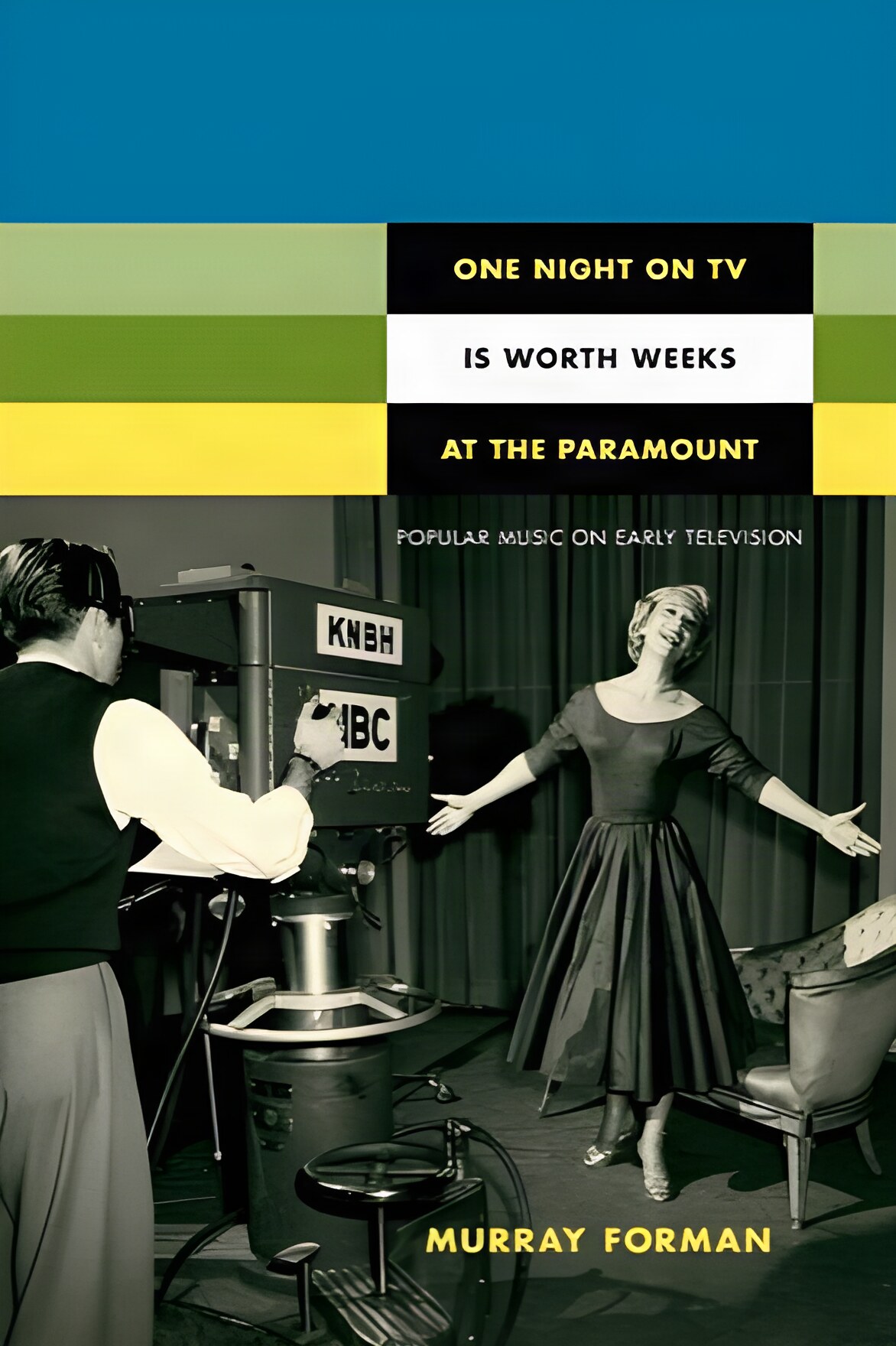
Softcover. Duke University Press, 1st, 2012, Book: Very Good, Dust Jacket: None, Softcover, 424 pages, 29 illustrations. Elvis Presley's television debut in January 1956 is often cited as the moment when popular music and television came together. Murray Forman challenges that contention, revealing popular music as crucial to television years before Presley's sensational small-screen performances. Drawing on trade and popular journalism, internal television and music industry documents, and records of audience feedback, Forman provides a detailed history of the incorporation of musical performances into TV programming during the medium's formative years, from 1948 to 1955. He examines how executives in the music and television industries understood and responded to the convergence of the two media; how celebrity musicians such as Vaughn Monroe, Frank Sinatra, and Fred Waring struggled to adjust to television; and how relative unknowns with an intuitive feel for the medium were sometimes catapulted to stardom. Forman argues that early television production influenced the aesthetics of musical performance in the 1940s and 1950s, particularly those of emerging musical styles such as rock and roll. At the same time, popular music helped to shape the nascent medium of television--its technologies, program formats, and industry structures. Popular music performances were essential to the allure and success of TV in its early years. Like new in publisher's shrinkwrap.
Softcover. Philadelphia, Temple University Press, 1st, 1999, Book: Very Good, Dust Jacket: None, Softcover, 271 pages. Confronting the cultural stereotypes that have been attached to Asian-Americans over the last 150 years, this title seizes the label Oriental and asks where it came from. It shows how the bewildering array of racialized images first proffered by music hall songsters and social commentators have evolved and become generalized to Asian-Americans. Clean copy.
Softcover. London, Tate Gallery, 1st, 2007, Book: Very Good, Dust Jacket: None, Softcover, 216 pages. A key figure in the history of British Pop Art, Blake is one of the most influential and original artists working in Britain today. Central to Blake's work since the 1950s has been his fascination with popular culture, ranging from music to Hollywood icons and wrestling stars. Perhaps his most famous engagement with Pop came with his design for the cover of The Beatles' album Sgt Pepper's Lonely Hearts Club Band. With this and other works he helped create a specifically British pop aesthetic that defined an era. A prolific artist, he has utilised a variety of media including painting, drawing, collage, sculpture and printmaking; this study focuses principally on his two-dimensional works and provides the first thorough survey of his paintings from the 1950s through to the present. It will include major icons of twentieth-century art, such as Self-Portrait with badges (1961), and Have a Nice Day, Mr Hockney (1981-3), but will also feature many lesser-known works including his recent, major work The Marcel Duchamp World Series.
Hardcover. NY, Doubleday, 1st, 2016, Book: Very Good, Dust Jacket: Very Good, Hardcover in a bright dust jacket. For generations the electric guitar has been an international symbol of freedom, danger, rebellion, and hedonism. In Play It Loud, veteran music journalists Brad Tolinski and Alan di Perna bring the history of this iconic instrument to roaring life. It's a story of inventors and iconoclasts, of scam artists, prodigies, and mythologizers as varied and original as the instruments they spawned. Clean copy.
Hardcover. Hal Leonard Corporation, 1st, 2007, Book: Very Good, Dust Jacket: Very Good, Hardcover, 226 pages. Haunting the recording studios, jam sessions, concert halls, and nightclubs of New York City, William "PoPsie" Randolph chronicled the postwar transformation of American music from swing and jazz, to rhythm & blues and rock n' roll. The 100,000 negatives left behind after his death in 1978 span the giddy, glitzy heyday of swing in the 1940s, the hot and cool jazz spawned in the clubs of 52nd Street, the rumbling emergence of black R&B and doo-wop, the sudden explosion of rock n' roll in the late '50s, the rise of Brill Building pop and the British Invasion of the '60s, and the growth of rock into a multibillion-dollar industry by the '70s. PoPsie's son Michael has chosen the very best of his father's collection for inclusion in this remarkable book. Here readers will find luscious black-and-white photos of everyone from Benny Goodman and Billie Holiday to Elvis, The Beatles, Hendrix, and the Rolling Stones. Insightful text explains the time, people, and place of each captured moment.
Softcover. London, Omnibus Press, Revised Ed., 1979, Book: Very Good, Dust Jacket: None, Softcover, 270 pages. Compiled by Solomon, Howard Pizzey and Martin Watson. Gives you instant answers to thousands of questions. Listed alphabetically by artists, is every top 50 entry, date of entry, number of weeks in chart, highest position reached, original label and catalogue number, plus details of any corresponding success in the U.S.charts. Clean.
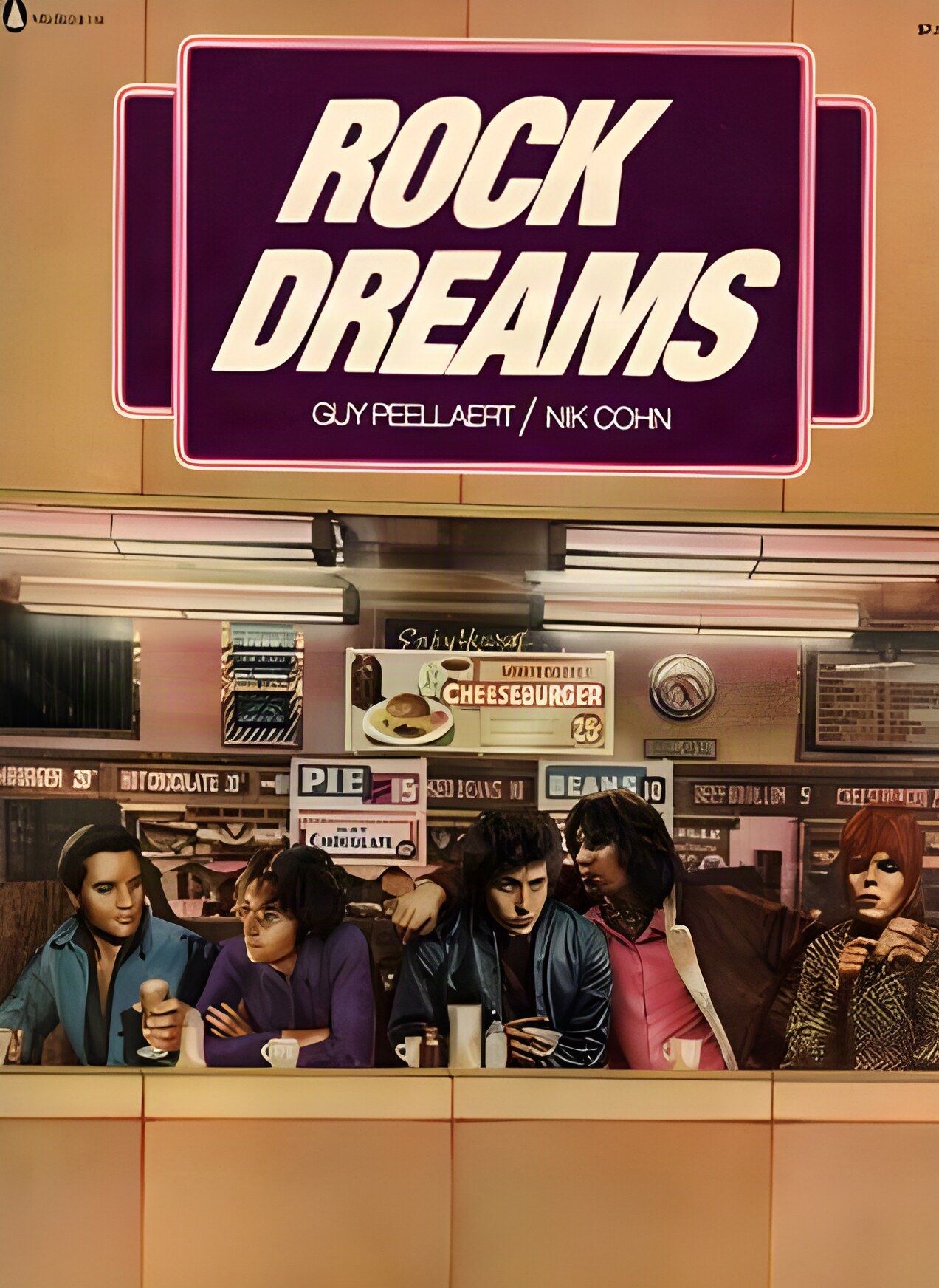
Softcover. New York , Popular Library, 1st, 1973, Book: Very Good, Dust Jacket: None, Wraps with Bob Dylan and Mick Jagger hanging out, no page numbers, [146 pages]. The book consists of Rock n Roll icons in fantasy settings created by Cohn and Peel;aert as a tribute to these Rock n Roll and other musical greats. Color illustrations throughout. Back cover with some rubbing, light scratches, otherwise clean, bright copy.
Hardcover. Seattle, Fantagraphics Books, 1st, 2006, Book: Very Good, Dust Jacket: Very Good, Hardcover, 144 pages. Sex, Rock 'N' Roll, & Optical Illusions is Victor Moscoso's first major, career-spanning retrospective, from his earliest poster work in 1966 to his most recent graphic experimentation. Optical Illusions contains his best posters that advertised bands playing in San Francisco's famous dance ballrooms of the time - the Avalon, the Matrix, and the Fillmore - as well as many of his Zap Comix contributions, and his solo comix work, many in Moscoso's signature color. This wide-ranging career retrospective - Moscoso's famous technique employing "vibrating colors" that he pioneered in his posters is impeccably reproduced with as much fidelity to the original as modern printing can achieve, his black-and-white and full color comix work is collected here for the first time - is an intense, vibrant, and revelatory experience. Introductions by Steve Heller and Milton Glaser.
Hardcover. Washington, Prestel, 1st, 2016, Book: Very Good, Dust Jacket: None, 288 pages. Softcover. Very clean, like new in publishers shrink-wrap. This book pays tribute to the mature work of Stuart Davis, a distinctly American artist who adapted European modernism to reflect the sights, sounds, and rhythms of popular culture. Beginning in 1921, a series of creative breakthroughs led Davis away from figurative painting and toward a more abstract expression of the world he inhabited. Drawing upon his admiration for Cezanne, Leger, Picasso, and Seurat, Davis developed a style that would evolve over the next four decades to become a dominant force in postwar art. His visionary responses to modern life and culture both high and low remain relevant more than 50 years after his death. Focusing on the images and motifs that became hallmarks of his career, this book features approximately 100 works-from his paintings of tobacco packages of the early 1920s, the abstract Egg Beater series, and the WPA murals of the 1930s, to the majestic works of his last two decades. The authors take a critical approach to the development of Davis's art and theory, paying special attention to the impact his earlier work had upon his later masterpieces. They also discuss Davis's unique ability to assimilate the lessons of Cubism as well as the imagery of popular culture, the aesthetics of advertising, and the sounds and rhythms of jazz-his great musical passion. Informed by previously unpublished primary documents, the detailed chronology is, in effect, the first Davis biography. Together, these elements create a vital portrait of an artist whose works hum with intelligence and energy.
Hardcover. NY, W. W. Norton, 1st, 1993, Book: Very Good, Dust Jacket: Very Good, Hardcover in a bright, unclipped dust jacket. A biography of the jazz clarinetist. Illustrated with photos, 522 pages including index. Clean copy.
Hardcover. Chicago, University of Chicago Press, 1st, 2016, Hardcover in a bright dust jacket, still in publisher's shrinkwrap. This stunning book charts the rich history of the blues, through the dazzling array of posters, album covers, and advertisements that have shaped its identity over the past hundred years. The blues have been one of the most ubiquitous but diverse elements of American popular music at large, and the visual art associated with this unique sound has been just as varied and dynamic. There is no better guide to this fascinating graphical world than Bill Dahl--a longtime music journalist and historian who has written liner notes for countless reissues of classic blues, soul, R&B, and rock albums. With his deep knowledge and incisive commentary--complementing more than three hundred and fifty lavishly reproduced images--the history of the blues comes musically and visually to life.
Softcover. Chicago, Chicago Review Press , 1st, 2002, Book: Very Good, Dust Jacket: None, Softcover, 320 pages, b&w illustrations. The popularity of cartoon music, from Carl Stalling's work for Warner Bros. to Disney sound tracks and The Simpsons' song parodies, has never been greater. This lively and fascinating look at cartoon music's past and present collects contributions from well-known music critics and cartoonists, and interviews with the principal cartoon composers. Here Mark Mothersbaugh talks about his music for Rugrats, Alf Clausen about composing for The Simpsons, Carl Stalling about his work for Walt Disney and Warner Bros., Irwin Chusid about Raymond Scott's work, Will Friedwald about Casper the Friendly Ghost, Richard Stone about his music for Animaniacs, Joseph Lanza about Ren and Stimpy, and much, much more. Clean copy.

 "Keepers of the Flame: The Role of Fire in American Culture, 1775-1925by: Margaret Hindle and Robert M Hazen")
 "Legends of Punk: Photos from the Vaultby: Rikki Ercoli")

 "Love in Vain: Robert Johnson, 1911-1938 by: DuPont, J. M.")
 "Mamoulian: Life on Stage and Screenby: David Luhrssen")
 "Mavericks and Other Traditions in American Musicby: Michael Broyles")

 "Moonlight Serenade - A Bio-discography of the Glenn Miller Civilian Bandby: Flower, John")

 "Orientals: Asian Americans in Popular Cultureby: Robert Lee")
 "Peter Blake: Retrospectiveby: Grunenberg , Christoph")

 "PoPsie: American Popular Music Through The Camera Lens of William \"PoPsie\" Randolphby: Randolph, Michael")
 "Sex, Rock & Optical Illusionsby: Moscoso, Victor")
 "Stuart Davis: In Full Swingby: Cooper, Harry")
 "Swing, Swing, Swing: The Life and Times of Benny Goodmanby: Firestone, Ross")
 "The Art of the Blues: A Visual Treasury of Black Music's Golden Ageby: Bill Dahl")


 "The Cartoon Music Bookby: Goldmark, Daniel /Taylor, Yuval / Taylor, Juval")