Hardcover. New Haven CT, Yale University Press, 1st, 2013, Book: Very Good, Dust Jacket: Very Good, Hardcover, 606 pages, b&w illustrations. In a bright, unclipped dust jacket. Clean copy. An extraordinary selection of revealing letters to and from one of the titans of 20th-century music. Leonard Bernstein was a charismatic and versatile musician--a brilliant conductor who attained international super-star status, and a gifted composer of Broadway musicals (West Side Story), symphonies (Age of Anxiety), choral works (Chichester Psalms), film scores (On the Waterfront), and much more. Bernstein was also an enthusiastic letter writer, and this book is the first to present a wide-ranging selection of his correspondence. The letters have been selected for the insights they offer into the passions of his life--musical and personal--and the extravagant scope of his musical and extra-musical activities.
Hardcover. NY, Dutton, 1st, 2003, Book: Very Good, Dust Jacket: None, Illustrated cardboard covers, illustrated throughout in color by Byrd, 48 pages. Famous in his time as a painter, prankster, and philosopher, Leonardo da Vinci was also a musician, sculptor, and engineer for dukes, popes, and kings. What remains of his work-from futuristic designs and scientific inquiry to artwork of ethereal beauty-reveals the ambitious, unpredictable brilliance of a visionary, and a timeless dreamer. Robert Byrd celebrates this passionate, playful genius in a glowing picture book replete with the richness and imagination of Leonardo's own notebooks. Twenty lavish spreads, including side drawings, supplemental texts, and quotes from Leonardo's writings, highlight distinct periods and make the master's art, jokes, explorations, and inventions wonderfully vivid and accessible. A striking tribute to an irrepressible mind and to the potential within all who are curious.
Softcover. Evanston IL, Northwestern University Press, 1st, 2010, Book: Very Good, Dust Jacket: None, Softcover, 390 pages. INSCRIBED BY AUTHOR on title page. A swing note is, to the listener of the rhythm, an unexpected note, and it is the spark of life in jazz and its relatives. Whether playing the standards or the most experimental piece, it is how a musician handles these notes--fearlessly or safely--that determines the fate of the performance. Howard Reich's critical writing is similarly unexpected and fearless, and Let Freedom Swing is a collection of the articles from the past three decades that best capture this spirit. Each section of Let Freedom Swing composes a suite, focusing on either a person, place, or scene. Reich gives new life to the standards with his profiles and elegies for such giants as Gershwin, Ellington, and Sinatra. A profile of Louis Armstrong brings out the often angry side of Satchmo but also reveals a more remarkable musician and human being. His open-mindedness makes Reich a particularly astute observer of the experimental and new, from Ornette Coleman to Chicago experimentalist Ken Vandermark. And his observations about street music open our ears to the songs of everyday life. Reich's fearlessness is evident in his writing about daunting subjects, such as the New Orleans music scene after Katrina, the lost legacy of jazz in Panama, and the complicated legacy of "race music" in America. Clean copy.
Hardcover. NY, Viking, 1st, 1975, Book: Good, Hardcover in a bright dust jacket. Illustrated and designed by Don Bolognese and Elaine Raphael. Ex-library with light marking, residue to endpapers. An epistolary narrative of the musical prodigy's first year in Italy, composed from his detail-laden letters to his younger sister Nannerl. Although the letters themselves are fictional they are based on detailed research and on the hundreds of letters which Mozart and his father both wrote home during their trip. A map of the trip is also included as well as a little biography on some of the main characters.
Hardcover. NY, Golden Press, 1st thus, 1967, Book: Very Good, Dust Jacket: None, Hardcover, pictorial boards. Two titles reprinted and combined in one book. Little Peewee illustrated by J.P. Miller, Sylvester illustrated by N.M. Bodecker. Name on title page otherwise clean. Weekly Reader Edition.
Hardcover. Library of American Comics, 1st, 2014, Book: Very Good, Dust Jacket: None, Oblong hardcover, 336 pages. In Alley Oop, Hamlin created a unique concept, marrying his fascination with dinosaurs and prehistoric times to a rollicking style of storytelling and drawing that was simultaneously serious, fantastic, and loaded with slapstick. The series was set in the kingdom of Moo and starred Alley Oop, the club-wielding caveman, his girlfriend Ooola, friends Dinny the dinosaur and Foozy (who speaks in rhyme), plus Oop's rival, King Guz, and Guz's Queen Umpateedle. Yet Hamlin knew that the strip's horizons in Moo were limited. So it was, in early 1939, that Alley Oop and Ooola see a mysterious box and, to the utter amazement of Guz and his minions, promptly fade from view, followed by the caption: "Dear Reader: you must now say goodbye to Moo...if you are to follow Alley Oop in this strangest of many strange adventures. --V. T. Hamlin". Oop and Ooola had entered a time machine and were now living in the modern-day 20th Century! Their host was the inventor of the time machine, Dr. Elbert Wonmug! No change of such magnitude had ever occurred in a continuing newspaper strip, and readers responded enthusiastically. With every time period in history available as a backdrop, Alley Oop became even more popular. This volume features Oop's final Moo adventure, followed by his trips to the 20th Century and ancient Greece, where he and Ooola share adventures with brave Ulysses, the lovely Helen of Troy, and the mighty Hercules. V.T. Hamlin would send his characters everywhere and everywhen--but the classic Alley Oop begins with the stories contained in this volume. The book is introduced by Michael T. Price, who first met V. T. Hamlin in the 1960s and remained friendly with him for the rest of the cartoonist's life. Price also composed the musical score for Hip Pocket Theatre's production, Alley Oop.
Hardcover. NY, Grand Central Publishing, 1st, 2023, Book: Very Good, Dust Jacket: Very Good, Hardcover in a bright dust jacket, 388 pages. Drawing on contributions from remaining members, contemporaneous musicians, critics, filmmakers, and the generation of artists who emerged in their wake, this "monumental origin story" celebrates the legacy of the Velvet Underground, which burns brighter than ever in the 21st century. Rebellion always starts somewhere, and in the music world of the transgressive teen--whether it be the 1960s or the 2020s--the Velvet Underground represents ground zero. Crystallizing the idea of the bohemian, urban, narcissistic art school gang around a psychedelic rock and roll band--a stylistic idea that evolved in the rarefied environs of Andy Warhol's Factory--the Velvets were the first major American rock group with a mixed gender line-up. They never smiled in photographs, wore sunglasses indoors, and invented the archetype that would be copied by everyone from Sid Vicious to Bobby Gillespie. They were avant-garde nihilists, writing about drug abuse, prostitution, paranoia, and sado-masochistic sex at a time when the rest of the world was singing about peace and love.
Hardcover. NY`, Child's Play Ltd., 1st, 1991, Book: Very Good, Dust Jacket: None, Non-paginated. Hardcover with no dust jacket. Color illustrations by Meyrick. Laminated covered boards with color illustrations. Small dings on top edge.
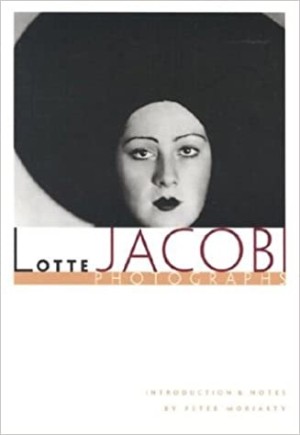
Softcover. Boston, David R. Godine / Pocket Paragon, 1st, 2003, Book: Very Good, Dust Jacket: None, Softcover, b&w illustrations. Introduction and notes by Peter Moriarty. Lotte Jacobi was the fourth generation of her family to seize a camera to earn a living. She was drawn to artists and writers, musicians, poets and scientists. 95 pages.
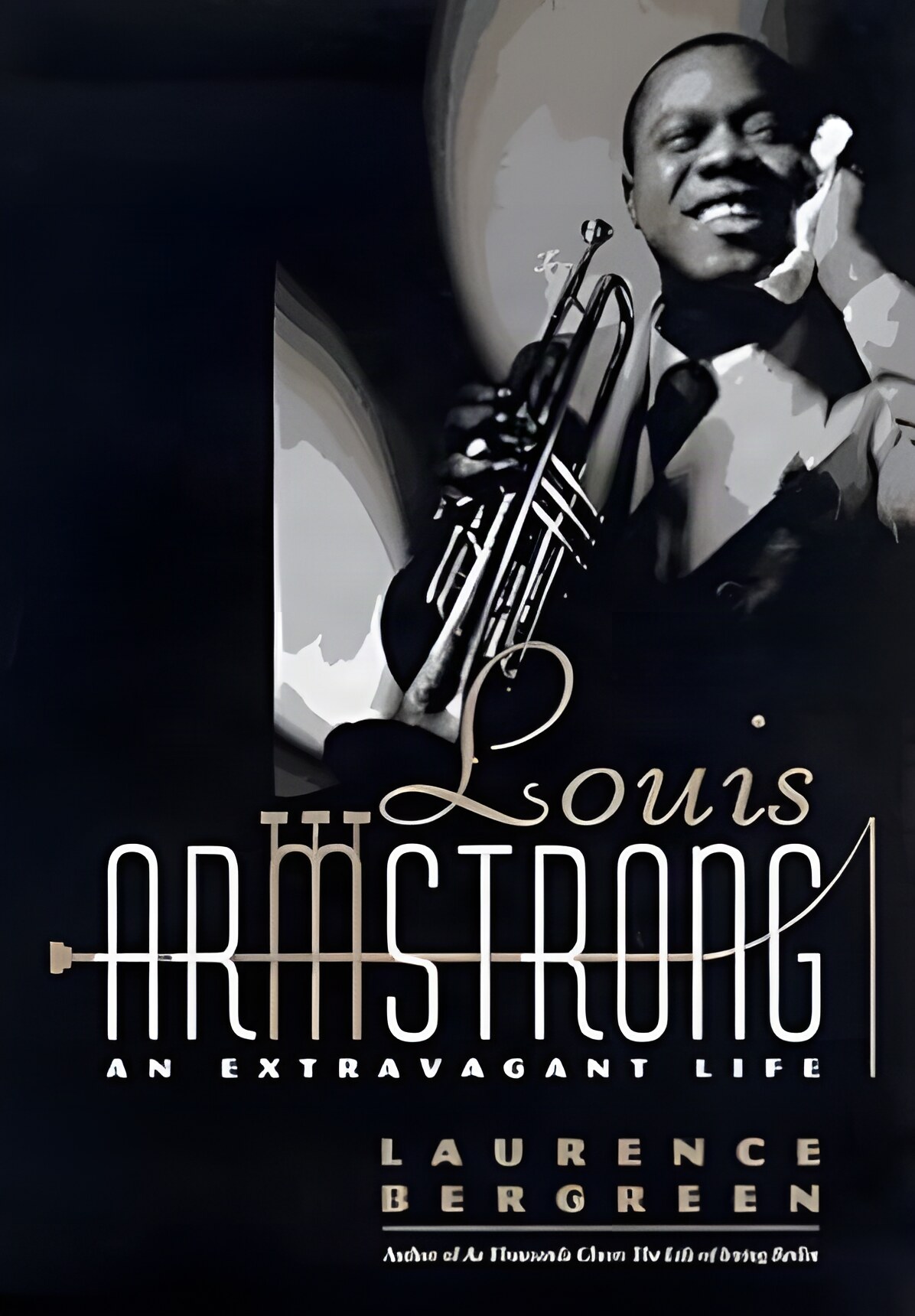
Hardcover. NY, Broadway Books, 1st, 1997, Book: Very Good, Dust Jacket: Very Good, Hardcover in a bright dust jacket, 564 pages, b&w illustrations. A definitive biography of this giant among jazz musicians - based on previously unexplored archives of Armstrong's writings. Photographs, discography, bibliography, endnotes, index. Clean copy.
Hardcover. Boston, Little Brown , 1st US, Book: Very Good, Dust Jacket: Very Good, Hardcover in a bright, unclipped dust jacket. 1st published in the UK 1971.
Hardcover. London, Faber & Faber, 1st, 2016, Book: Very Good, Dust Jacket: None, 72 pages. Hardcover with no dust jacket. Very clean, unmarked copy with only minor wear to edges. Black and white illustrations throughout by Mezzo. From 'Crossroads Blues' to 'Sweet Home Chicago', 'Hellhound on My Trail' to 'Come On In My Kitchen', Robert Johnson wrote some of the most enduring and formative songs of the original blues era, songs that would go on to help shape the birth of rock 'n' roll in the 1960s. Beloved of Clapton, Dylan and the Stones, Robert Johnson remains one of the most iconic and mythologized figures in popular music (and the first of many to die at the age of 27). Born in the in the South in Mississippi, Johnson made his way to the urban North as a traveling musician, but it was only when he returned to the South that he recorded the twenty-nine songs, in two sessions, which would create his legacy. Exploring the stories and legends that surround his life and death -- his childhood, his womanizing, his pact with the devil at the crossroads -- Mezzo and DuPont have produced a fittingly creative and beautiful depiction of this most extraordinary life.
Hardcover. NY, Viking, 1st, 2019, Book: Very Good, Dust Jacket: Very Good, Hardcover in a bright, unclipped dust jacket, 422 pages. Poets of the twentieth century Elizabeth Bishop's friend James Merrill once observed that 'Elizabeth had more talent for life--and for poetry--than anyone else I've known.' This new biography reveals just how she learned to marry her talent for life with her talent for writing in order to create a brilliant array of poems, prose, and letters--a remarkable body of work that would make her one of America's most beloved and celebrated poets. In Love Unknown, Thomas Travisano tells the story of the famous poet and traveler's life. Bishop moved through extraordinary mid-twentieth century worlds with relationships among an extensive international array of literati, visual artists, musicians, scholars, and politicians -- along with a cosmopolitan gay underground that was then nearly invisible to the dominant culture. Drawing on fresh interviews and newly discovered manuscript materials, Travisano illuminates that the 'art of losing' that Bishop celebrated with such poignant irony in her poem 'One Art' --perhaps her most famous-- was linked in equal part to an 'art of finding,' Like new.
Hardcover. NY, Random House, 1st, 1967, Book: Very Good, Dust Jacket: None, Hardcover, pale blue boards with dark blue spine, 266 pages. A very large selection of 142 lullabies and songs from around the world. Bright and clean, lacks dust jacket.
Softcover. Berkeley CA, University of California Press, 1st pbk, 2007, Book: Very Good, Dust Jacket: None, Softcover, 398 pages. Alex Stewart's excellent book tackles a subject which has been hidden in plain sight: the central importance of the big band, not as dead artifact of the Swing Era, but as a seminal and nurturing force through the entire history of jazz down to our own time. Through an attractive blend of ethnographic participant-observation, historiography, and formal analysis, Stewart puts the big band at the center of jazz, arguing for its indispensability as a locus of instrumental training and rehearsal, composition, legitimation, and professional networking. Informed and enriched by his own experience as a performer in those worlds. Light crease to front cover, clean copy.
Hardcover. Lexington KY, University Press of Kentucky, 1st, 2013, Book: Very Good, Dust Jacket: Very Good, Hardcover in a bright dust jacket. An Armenian national raised in Russia, Rouben Mamoulian (1897--1987) studied in the influential Stanislavski studio, renowned as the source of the "method" acting technique. Shortly after immigrating to New York in 1926, he created a sensation with an all-black production of Porgy (1927). He then went on to direct the debut Broadway productions of three of the most popular shows in the history of American musical theater: Porgy and Bess (1935), Oklahoma! (1943), and Carousel (1945). Mamoulian began working in film just as the sound revolution was dramatically changing the technical capabilities of the medium, and he quickly established himself as an innovator. Not only did many of his unusual camera techniques become standard, but he also invented a device that eliminated the background noises created by cameras and dollies. Seen as a rebel earlier in his career, Mamoulian gradually gained respect in Hollywood, and the Directors Guild of America awarded him the prestigious D. W. Griffith Award for Lifetime Achievement in 1983. In this meticulously researched biography, David Luhrssen paints the influential director as a socially conscious artist who sought to successfully combine art and commercial entertainment. Luhrssen not only reveals the fascinating personal story of an important yet neglected figure, but he also offers a tantalizing glimpse into the extraordinarily vibrant American film and theater industries during the twenties, thirties, and forties.
Hardcover. New York, Gotham, 1st, 2009, Book: Very Good, Dust Jacket: Very Good, Hardcover, 453 pages. SIGNED BY AUTHOR. Illustrated endpages and flyleaves. Gilt titles on spine. Clean, unmarked copy with only minor wear to dust jacket.
Hardcover. NY, Harper & Row, 1st, 1966, Book: Very Good, Dust Jacket: None, Hardcover, turquoise cloth with gilt lettering on the spine, 272 pages, b&w illustrations. Bibliography. Index. The author considers the paradoxical period between the social and political revolutions of 1848 and the death of optimisn in 1914. Besides presenting a revealing and fascinating account of great social contrasts, the author introduces the reader into other aspects of life during this period, the relaxations and dissipations of both the rich and poor, from the showboat and the music hall to the lavish spectacles of the Nineties and the beginnings of jazz. Clean copy. No dust jacket.
Hardcover. London, Faber and Faber, 1st, 2013, Book: Very Good, Dust Jacket: Very Good, Unpaginated. Hardcover no dusk jacket issued. Color boards with black and white comics throughout. Light rubbing to rear board. Marble Season is the semiautobiographical novel by the acclaimed cartoonist Gilbert Hernandez, author of the epic masterpiece Palomar and cocreator, with his brothers, Jaime and Mario, of the groundbreaking Love and Rockets comic book series. Marble Season is his first book with Drawn & Quarterly, and one of the most anticipated books of 2013. It tells the untold stories from the early years of these American comics legends, but also portrays the reality of life in a large family in suburban 1960s California. Pop-culture references-TV shows, comic books, and music-saturate this evocative story of a young family navigating cultural and neighborhood norms set against the golden age of the American dream and the silver age of comics. Middle child Huey stages Captain America plays and treasures his older brother's comic book collection almost as much as his approval. Marble Season subtly and deftly details how the innocent, joyfully creative play that children engage in (shooting marbles, backyard performances, and organizing treasure hunts) changes as they grow older and encounter name-calling naysayers, abusive bullies, and the value judgments of other kids. An all-ages story, Marble Season masterfully explores the redemptive and timeless power of storytelling and role play in childhood, making it a coming-of-age story that is as resonant with the children of today as with the children of the sixties.
Hardcover. NY, E.P. Dutton, 1st, 1970, Book: Very Good, Dust Jacket: Very Good, 204 pages. Hardcover with dust jacket. Dj with light edgewear, price clipped. Soil on fore edge.
Hardcover. New York, McCall Publishing, 1st, 1970, Book: Very Good, Dust Jacket: Good, Non-paginated. Hardcover. Full color illustrations by Ronni Solbert. INSCRIBED/SIGNED BY AUTHOR JEAN MERRILL, ILLUSTRATOR RONNI SOLBERT, AND COMPOSER GWYNETH WALKER on front endpaper. Program from original performance laid-in. Price clipped dust jacket with a few tape repaired tears along edges. Clean, unmarked pages.
Hardcover. New York, NY, Collins Design, 1st, 2010, Book: Very Good, Dust Jacket: Very Good, 205 pages. Hardcover with dust jacket. Minor yellowing to dust jacket edges. Minor soiling to dust jacket rear and top edge of front. An otherwise clean, unmarked copy with only minor wear to dust jacket edges. Match Prints is a visual and editorial dialogue between two renowned photographers of music and film celebrities, Jim Marshall and Timothy White. Marshall, one of the foremost photographers of the rock music scene in the 1960s and 1970s, shot some of the most iconic images of the era, including Jimi Hendrix burning his guitar at Woodstock; White, one of the most in-demand music and Hollywood photographers working today, has built an equally impressive portfolio of photos in his 20 year career. Match Prints features images from the worlds of film and music, compares the work of the two photographers, and provides first-hand behind-the-scenes anecdotes. With an introduction by renowned music writer Anthony DeCurtis.
Hardcover. NY, Guggenheim Museum, 1st, 2002, Book: Very Good, Hardcover First Edition SIGNED on title page by Matthew Barney. With essays by Nancy Spector and Neville Wakefield. Text in English. Published on the occasion of the exhibitions in Cologne, Paris and New York, 2002 - 2003. Cremaster Cycle is the definitive guide for 'The Cremaster Cycle', the Matthew Barney's epic five-part film series. The book is filled with hundreds of Barney's fantastical images which use the biological model of sexual difference as its conceptual departure point. Three essays by Barney experts articulate the series' diverse themes and explore the artist's innovative aesthetic vocabulary; interviews with key collaborators, a composer, costume designer, make-up artist, technicians and actors reveal his working process. A trailblazing essay by Curator of Contemporary Art Nancy Spector charts Barney's work from the 1990s to the present and provides critical insights into the aesthetic vocabulary of his five 'Cremaster' films, while Neville Wakefield's 'Cremaster Glossary' illuminates the films most far-flung references with citations from sources as diverse as Freud's psychoanalytic studies, Mormon law and lore, and hardcore music fanzines. In addition to stills from the five films, the book features related sculptures, photographs, drawings and storyboards. Barney himself collaborated on all aspects of this extraordinary publication, including the selection of over 700 images, most of them never before published. 530 pages. 32,2x23,5x6,2 cm Hardcover with plastic dust jacket with green and black cover title . Clean, as new. DOMESTIC SHIPPING ONLY.
Hardcover. New Haven CT, Yale University Press, 1st, 2004, Book: Very Good, Dust Jacket: Very Good, Hardcover in a bright, unclipped dust jacket, 398 pages. From colonial times to the present, American composers have lived on the fringes of society and defined themselves in large part as outsiders. In this stimulating book Michael Broyles considers the tradition of maverick composers and explores what these mavericks reveal about American attitudes toward the arts and about American society itself. Broyles starts by examining the careers of three notably unconventional composers: William Billings in the eighteenth century, Anthony Philip Heinrich in the nineteenth, and Charles Ives in the twentieth. All three had unusual lives, wrote music that many considered incomprehensible, and are now recognized as key figures in the development of American music. Broyles goes on to investigate the proliferation of eccentric individualism in all types of American music-classical, popular, and jazz-and how it has come to dominate the image of diverse creative artists from John Cage to Frank Zappa. The history of the maverick tradition, Broyles shows, has much to tell us about the role of music in American culture and the tension between individualism and community in the American consciousness. Leer menos

 "Leonard Bernstein Letters, Theby: Simeone (Ed.), Nigel")


 "Little PeeWee or, Now Open the Box and Sylvester the Mouse with the Musical Ear (2 Books in One)by: Dorothy Kunhardt/ Adelaide Holl")



 "Louis: The Louis Armstrong Story 1900-1971by: Jones, Max & Chilton, John")


 "Lullabies of the Worldby: Commins, Dorothy Berliner")



 "Manners and Morals in the Age of Optimism, 1848-1914 by: Laver, James")

 "Marvelous Misadventures of Sebastian, Theby: Alexander, Lloyd")
 "Mary, Come Running (SIGNED COPY)by: Merrill, Jean/Ronni Solbert")

 "Matthew Barney: The Cremaster Cycle (SIGNED)by: Barney, Matthew; Spector, Nancy & Neville Wakefield")
