Softcover. Santa Fe NM, School of American Research Press, 1st, 1983, Book: Very Good, Dust Jacket: None, Softcover, 118 pages illustrated in color and b&w. Light sunning to front wrapper. Otherwise clean.
Hardcover. Chicago, Albert Whitman & Co., 1st, 1938, Book: Good, Dust Jacket: None, 64 pages. Hardcover. Full color and black & white illustrations by Carol Nay. Some light library stamping and notation - endpapers and at bottom right corner of page 25. Light wear. Clean, unmarked text.
Hardcover. New York, New York Graphic Society, 1st, 1983, Book: Very Good, Dust Jacket: Very Good, Hardcover, 143 pages. color and duotone illustrations and b&w photos throughout. Beautifully illustrating the art of one of Americas most popular artist, Navaho R. C. Gorman. Photography by Chuck Henningsen. SIGNED BY GORMAN on titlepage. Blue cloth, gilt lettering to spine and front. A very attractive and well preserved copy.
Hardcover. Oxford UK, Clarendon Press, 1st, 1923, Book: Very Good, Hardcover, red cloth, 296 pages. Gilt title on spine. Folding maps in rear. Contents: Relation of Bantu to other African races: Africa & Africans - Study of Bantu life & thought: Spirits of things; Spirits of people; Tribal law & politics; Woman & marriage; Training of Bantu youths - Europeanization of Bantu Africa: Discovery of Bantu; White man's burden & how he got it; Some problems of government in Bantu areas; Native labour; Colour bar; Task of Church. Newsp. clippings re author laid in, leaving tan mark.
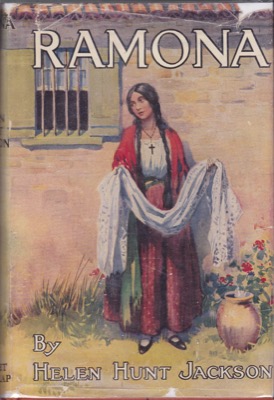
Hardcover. NY, Grosset & Dunlap, reprint, Book: Very Good, Dust Jacket: Good, Hardcover in a bright wraparound dust jacket. Ramona, written by Helen Hunt Jackson, is a timeless work of historical fiction that first captured hearts in 1884. Set against the rugged beauty of post-Mexican-American War California, this powerful novel weaves together romance, cultural heritage, and social justice in a narrative that resonates deeply with readers. We follow the life of a young woman of mixed Native American and European descent as she navigates the complexities of identity, love, and survival in a land fraught with change. Name on front fly leaf otherwise clean.
Hardcover. New York, W.W. Norton & Company, 1st, 2013, Book: Very Good, Dust Jacket: Very Good, 480 pages. Hardcover with dust jacket. A very clean, unmarked copy with only minor edgewear. A tight copy. Color illustrations throughout.
Hardcover. New York, Burt Franklin, reprint, 1969, Book: Very Good, Dust Jacket: None, Reprint of the original 1898 edition. 15 b&w plates. Red cloth, gilt lettering to spine. Oblong. Spine somewhat loose, not affecting binding. Small stains near spine, else a very nice copy. No dust jacket.
Hardcover. Orangeburg SC, Sandlapper Publishing, 2nd pr., 1987, Book: Very Good, Dust Jacket: Good, Hardcover, 120 pages, b&w illustrations. The author documents the customs and lifestyles of a proud group of Sea Island blacks. Beginning with the first freedmen and their descendents, he reveals a colorful and provocative story, told in words of island natives and illustrated with photographs taken around the turn of the century. INSCRIBED BY DAISE on the half-title page. Clean copy with color fading to dust jacket spine and part of front cover.
Hardcover. NY, Knopf, 1st, 1980, Book: Very Good, Dust Jacket: Very Good, Hardcover in a bright dust jacket. 227 pages. Previous owner's signature on front fly leaf, else a clean, tight copy. Naipaul presents here four essays about the "half-made" societies, those still suffering from the profound deprivations of colonialism and prey to corruption." He examines the role of Eva Peron as the catalyst for violence in Argentina, with its yearning for a European culture and the physical, historical, cultural reality of the land in which the native Indians were wiped out and the colonialists took over. He writes of the infamous Michael X in Trinidad whose pretensions to power and destiny led to the man's insanity and execution following two pointless murders. Shorter essays address nihilism in the Congo and Naipaul's take on Joseph Conrad and the Heart of Darkness.
Hardcover. NY, Harcourt Brace, 1st, 1993, Book: Very Good, Dust Jacket: Very Good, Hardcover in a bright, unclipped dust jacket. The painter, writer, and political activist returns to his native South Africa, where he was once imprisoned for working for the African National Congress, and reflects on the decline of apartheid and his own attachment to the Boer state. He describes the travail of his country riven by racial conflict. He recounts his seven-year imprisonment for treason and shares the passionate love of an exile--he resides in Paris--for his native land. In the recent period of "stability laced with blood" as De Klerk and Mandela's forces struggle to maintain a precarious political equilibrium, Breytenbach has been allowed to return for visits with his Vietnamese wife. Part travelogue and part memoir, this account offers frequent political discussions about the rivalry between the African National Congress and the Inkatha Freedom Party. A careful observer of people, their surroundings, fauna and flora, Breytenbach weaves richly colored narrative history, local lore and personal allusions. Clean copy.
Hardcover. New York, George Braziller, 1st, 1993, Book: Very Good, Dust Jacket: Very Good, Hardcover in a bright dust jacket, Unpaginated. Color and black & white photography. British artist Long ( Walking in Circles ) takes nature treks--in England's Lake District, the Sahara, Japan, Nepal--and creates site-specific works along the way. He fashions a mud circle in the river Avon, traces a line of snow near a temple in Kyoto and erects a circle of stones on a Swiss mountainside. The spare, deeply meditative photographs that he took en route sometimes call to mind prehistoric British megalithic monuments or Native American earthworks, as if he wants to tune in on planetary patterns of energy. At other times Long simply records what he sees, providing dramatic vistas of Iceland's vast rolling hills, Bolivia's high plateau, Washington's forests and Mount Everest's calm majesty. His images, poetic captions and unobstrusive siteworks reflect an artist who is at once traveler, nature-lover and adventurer.
Hardcover. NY, Time Life, reprint, 1983, Book: Very Good, Dust Jacket: None, 389 pages. Hardcover with no dust jacket. Dark blue leather bound with gilt titles to front cover and spine. Embossed decoration on front cover. Gilt text block edges, red ribbon marker. Clean, tight copy. The commander of a Georgia regiment through much of the Civil War mused later in his memoirs that the heaviest burden fell not upon the man at the front, but upon the woman who waited and prayed for victory: "While the men were carried away with the drunkenness of the war, she dwelt in the stillness of her desolate home." Sallie Brock Putnam spoke for Southern womanhood. She was a native of Madison County, Virginia, and seems to have come from a family of good social standing. The book contains an unexpectedly full history of the Civil War; the author exhibits a strong grasp of strategy and tactics. But at its heart is an incisive eyewitness account of life in a capital that was swollen to four times its normal population by the exigencies of war. Brock's descriptions of Jefferson Davis' inauguration and the Richmond Bread Riot of 1863 are dramatic, but no more so than her accounts of nameless refugees, race relations, opportunistic merchants and blockade runners. Confederate prisons and family matters. In contrast to other female Southern writers of the period, she was more sober and factual, less gossipy and speculative. She wrote with shrewdness and maturity, and with a remarkable lack of self-pity and exaggeration. Yet the reader cannot miss her courage, sacrifice and suffering. Sallie Brock Putnam died in 1911.
Hardcover. NY, Doubleday, 1st, 2022, Book: Very Good, Dust Jacket: Very Good, Hardcover in a bright, unclipped dust jacket. SIGNED BY MILLARD on a tipped-in prlim page. The Rosetta Stone--discovered by French soldiers in 1799, seized by a British envoy, and deciphered 23 years later--set off an obsessive interest in Egypt, including by the newly established Royal Geographical Society, to find the headwaters of the Nile. Bestselling author Millard, a former writer and editor for National Geographic, offers a tense, vibrant history of several dramatic expeditions across East Africa that finally resulted in a successful discovery. Drawing on archival sources and her own multiple trips to Africa following the explorers' paths, Millard creates a palpable sense of the daunting task undertaken by three ambitious men: the magnetic, impulsive, and often combative Richard Burton; John Hanning Speke, an aristocratic infantry lieutenant and passionate hunter whose initial interest in East Africa was largely for the animals he could kill; and their devoted and resourceful native guide, Sidi Mubarak Bombay a former enslaved person whose intimate knowledge of tribes and terrain proved to be indispensable.
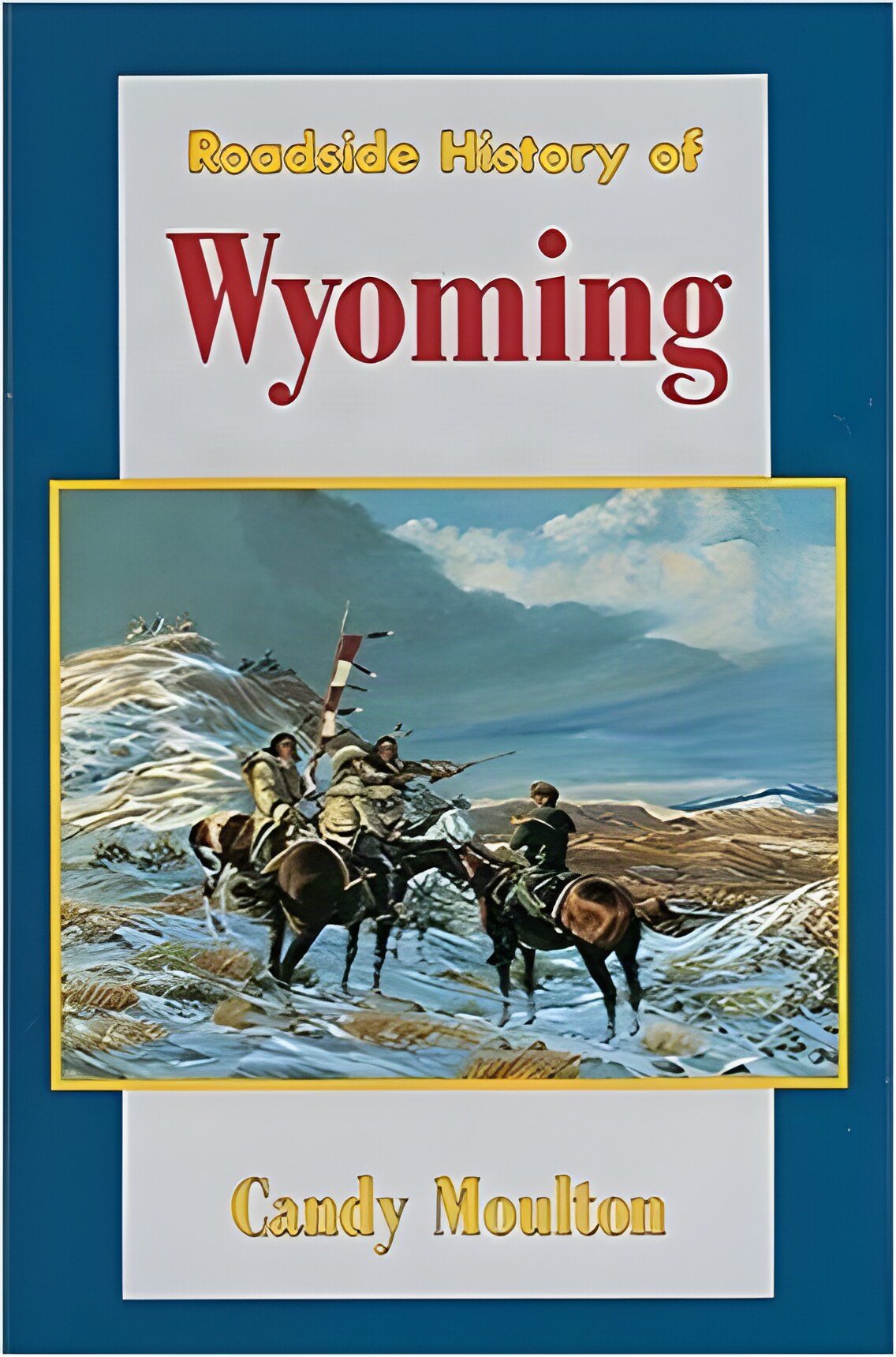
Softcover. Missoula MT, Mountain Press, 1st, 1995, Book: Very Good, Dust Jacket: None, Softcover, pages, b&w illustrations. In Roadside History of Wyoming readers will learn about Native Americans who struggled to adapt to many sudden changes, mountain men who braved the wilderness, emigrants who suffered untold hardships, cattle and sheep drovers who took advantage of the open range, miners who sought wealth below the ground, and many others whose deeds help define the state's rich history. Clean copy.
Hardcover. Germany, Steidl, 1st, 2010, Book: Very Good, Dust Jacket: None, Hardcover, 224 pages. Like new in publisher's shrink-wrap. Nowhere is the breezy and urbane romance of Paris conjured as memorably as in the photography of Robert Doisneau (1912-1994). A gentle minstrel of visual anecdote, Doisneau interpreted the city's charms in an iconography that both natives and Francophiles instantly recognize: the young hip couple stealing a spontaneous kiss at a busy intersection, the gendarme chatting with a mother while her kid tiptoes along a riverbank bench, the sweetly melancholic abandoned merry-go-round in the rain and the entire pageant of Parisian life mingling at cafes, bus shelters and on the banks of the Seine. Doisneau was possessed of both lightness of touch and spontaneity, as a result of which he has been sometimes championed as a photographer of the "pure" moment. But his ocular touch is even lighter than that suggests-his images are not so much "seized" as "netted." Accompanying the Fondation Cartier-Bresson's exhibition of around 100 prints from the Doisneau estate, From Craft to Art presents these treasures alongside a new version of Jean-Francois Chevrier's classic 1983 essay on the photographer, which describes Doisneau's knack for capturing "the shining melancholy that separates an individual from the crowd.
Hardcover. NY, Thomas Y. Crowell , 2nd pr., 1967, Book: Very Good, Dust Jacket: Very Good, Hardcover, 178 pages, with illustrations by the author and photographs throughout. Minor dust jacket edge wear, otherwise, very clean and tight.
Hardcover. Flagstaff, AZ, Northland Press, revised, 1984, Book: Good, Dust Jacket: Good, Hardcover, 107 pages. B&W and color plates. Illustrates beautifully the contemporary Southwest on canvas with vibrancy and refreshing perspective. Light blue pictorial cloth, silver lettering to spine. Dust jacket with minor wrinkles and smudges. Dust jacket folded off-center, otherwise a nice, clean and tight copy. "This comprehensive, expanded volume on Stefan and his work contains forty full-color reproductions of oils along with numerous black-and-white drawings, a panorama of the Southwest and a tribute to a fine painter."
Hardcover. NY, John Day/Reynal & Hitchcock, 1st, 1937, Book: Very Good, Dust Jacket: None, Hardcover, light tan cloth, 119 pages. B&w line illustrations by Bernadine Custer. Rudyard Kipling lived with his wife on a small estate in Dummerston, Vermont, in a house they built called Naulakha, from 1892 to 1896. It was while he was here that he wrote both "The Jungle Book" and "Captains Courageous". Kipling would have been content to live out his life there but in 1896, a dispute arose between the Kiplings an a neighbor led to a court case and the Kiplings left Vermont never to return. This volume, written by a Dummerston native and historian, tells the story of that dispute. Lacks dust jacket, otherwise clean, very good.
Hardcover. 1st, 2010, Book: Very Good, Dust Jacket: None, Hardcover with cover pastedown, gilt lettering. The amiably spontaneous pictures taken by Sam Shaw (1912-1999) are well known: the native and life-long New Yorker shot countless cover photographs for Life and Look in the fifties and sixties, and later also took the still images for the films he produced himself. Shaw and Marilyn Monroe were friends, and he captured her unique aura in countless unpretentious portraits. During the filming of The Seven Year Itch, he staged his probably best known picture with her: Marilyn standing over a subway grate, a waft of air blowing the skirt of her white dress above her knees. Sam Shaw also portrayed almost every major Hollywood star of his day, consistently capturing the moment in his quest for truthfulness, with enthusiasm and from a new perspective, just as if he were selecting the camera angle for a film sequence. The researcher and author Lorie Karnath, the book's editor, enhances the publication with very personal memories of her long-time friend.
Hardcover. NY, St. Martin's Press , 1st, 1999, Book: Very Good, Dust Jacket: Very Good, Hardcover in a bright, uclipped dust jacket. A moving and evocative look inside the world of rock and roll follows Laurie Moss as she leaves her native Texas in 1994 seeking stardom in California, where she struggles against the rampant sexism and cruelty of the music business.
Hardcover. Burlington VT, 3X120 Press., 1st, 2012, Book: Very Good, Dust Jacket: None, Hardcover, a collection of arresting black and white photographs of the dairy farms of the northeast. Skye Chalmers, a Vermont native, has brought his keenly honed eye and deep love of the land to this project and created a work of documentary photography at its finest. Sending Milk captures all aspects of dairy life - the families, the cows, the fields and barns, the equipment, the stunningly sublime and the hardships. An introduction by award-winning Vermont author, educator, and journalist Stephen Kiernan is the only text in this volume. The images speak for themselves. Clean, brighy copy.
Hardcover. Norman OK, University of Oklahoma Press, 1st, 1961, Book: Very Good, Dust Jacket: Good, Hardcover, in a edgeworn dust jacket, 270 pages. Color frontis, 115 b&w plates. Considers the life and work of American artist (and soldier) Seth Eastman (1808-1875). Follows his dual career at the Military Academy, and in Florida, Minnesota, Texas, and Washington. Includes a chronology and a fairly well-detailed checklist of works - oils, water colors, drawings, and lithographs and engravings after Eastman. The authoritative work on this fascinating artist.
Hardcover. Philadelphia, J.B. Lippincott, 1st, 1951, Book: Very Good, Dust Jacket: None, Hardcover, red and blue cloth with black stamping, 334 pages. Clean copy. Portraying the dark, authoritarian side of the utopian dream, this classic novel tells the story of the Reverend Harmston, a man devoted to building a microsociety in which there is a balance between the order that is necessary to produce livelihood and the freedom to fully explore sexuality. Setting up a commune in the remote Guyanese forest with the creed, "Hard work, frank love, and wholesome play," the reverend attempts to construct an ideal society that opens up cross-cultural dialogue between the spirit of European enlightenment and the culture of the native Amerindians. Underneath its generally comic tone, however, there are notes of a darker spirit at play--such as Harmston's unquestioned authority and the brutal punishments he hands out--that eerily foreshadow the actual 1978 Jonestown Massacre, a violent event that occurred 27 years after the novel's initial publication.
Hardcover. NY, Aperture, 1st, 1998, Book: Very Good, Dust Jacket: Very Good, Hardcover, 168 pages. A native of Kazakhstan, Ljalja Kuznetsova traversed the expanses of the Central Asian steppe to photograph the gypsies, or Roma people, whose mysterious comings and goings have fascinated her since she was a child. Shaking the Dust of Ages: Gypsies and Wanderers of the Central Asian Steppe is the first book devoted to these pictures, for which Kuznetsova won the Mother Jones Leica Medal of Excellence and the Paris Grand Prix for Photography. Kuznetsova's photographs present rare, intimate portraits of gypsies-- whose freedom from the ties of civilization is reflected in the wild winds and unlimited vistas of the steppe landscape. As Kuznetsova traveled through Kazakhstan, Turkmenistan, Uzbekistan, and the Ukraine, the gypsies continually inspired her. She found in them a people without frontiers, living independent of politics, religious dispute, or social class. Though their presence on the steppe is becoming a thing of the past, Kuznetsova's cast of characters and their world seem timeless in these images.


 "Pueblo Playmatesby: Brown, Marjorie Webber/Carol Nay")
 "R. C. Gorman: A Portrait (SIGNED COPY)by: Henningsen, Chuck")
 "Race Problems in the New Africa A Study of the Relation of Bantu and Britons in Those Parts of Bantu Africa Which Are under British Controlby: Willoughby, Rev. W. C.")


 "Red Man's Bones, The: George Catlin, Artist and Showmanby: Eisler, Benita")
 "Remington's Frontier Sketchesby: Remington, Frederic")
 "Reminiscences of Sea Island Heritage: Legacy of Freedmen on St. Helena Island (SIGNED COPY)by: Daise, Ronald")


 "Richard Long: Mountains and Watersby: Long, Richard")
 "Richmond During the War; Four Years of Personal Observation By a Richmond Lady (Leather Bound Hardcover) by: Putnam, Sallie B.")
 "River of the Gods: Genius, Courage, and Betrayal in the Search for the Source of the Nile (SIGNED COPY)by: Millard, Candice")
 "Robert Doisneau: From Craft to Artby: Chevrier, Jean-Franaois")

 "Ross Stefan: An Impressionistic Painter of the Contemporary Southwestby: Goodman, John K.")
 "Rudyard Kipling's Vermont Feud by: Van de Water, Frederic F.; Custer, Bernadine (drawings)")
 "Sam Shawby: Lorie Karnath/Sam Shaw")


 "Say Goodbye: The Laurie Moss Storyby: Shiner, Lewis")
 "Sending Milk The Northeast Farms and Farmers of the Cabot Creamery Cooperativeby: Chalmers, Skye (Photographer) and Stephen Kiernan (Intro)")


 "Seth Eastman: Pictorial Historian of The Indian by: McDermott, John Francis")

 "Shaking the Dust of Ages: Gypsies and Wanderers of the Central Asian Steppeby: Ljalja Kuznetsova , Inge Morath, et al.")