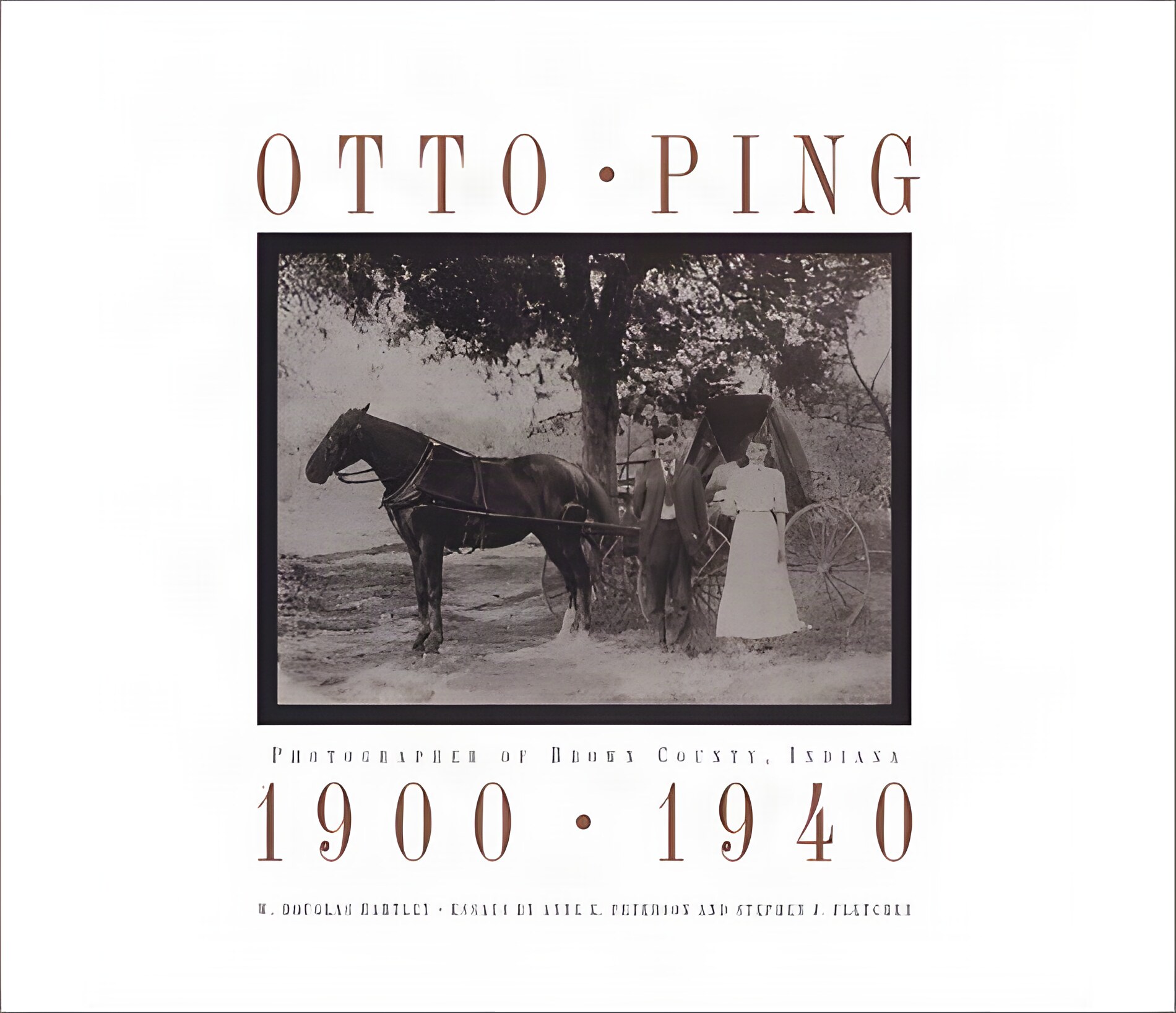
Softcover. Indianapolis, Indiana Historical Society, 1st, 1994, Book: Very Good, Dust Jacket: None, Softcover 96 pages. Otto Ping began taking pictures of the people and places of his native Brown County, Indiana, in 1900 at the age of seventeen in order to make some extra money. He continued doing so for forty years while he worked at such other endeavors as peddling, farming, canning, and chicken raising. Unlike the painters and photographers who came to the county in these years to capture quaint and rustic scenes for sophisticated audiences elsewhere, Ping made his pictures for the people who were in them. Primarily a portraitist, Ping photographed individuals, couples, family groups, and larger gatherings. He had no studio and carried with him no lights or props. His portraits are characterized by hastily thrown up backdrops, stark lighting, and rigid poses. They have a documentary quality, and one senses in the faces that peer from these images the determination with which these people met lives of toil and hardship. Many of the portraits betray a sense of melancholy. Life was tenuous for both young and old, and the photographer often worked against time to provide a family with images of the living before his efforts became memorial. Ping photographed people at work and play. Images abound of stiffly posed groups in front of sawmills, churches, schools, and lodge halls; families in front of cabins or newly framed houses; couples with buggies; and children at play. Clean copy.
Hardcover. NY, Frederick A. Stokes, reprint, Book: Very Good, Dust Jacket: Good, Hardcover, green cloth stamped in black. 332 pages. This edition features a color frontispiece, full-page plates in both color and black & white, and in-text illustrations throughout by William Walworth Stilson. A reprint of the 1901 edition. No date, probably the 1930s. Owner's name on inside front cover, otherwise clean.
Softcover. Ketchikan AK, United States Indian School, 1st, 1950s, Book: Good, Dust Jacket: None, Softcover, stapled pictorial card covers. A chronicle of the Thlingets, Tsimpshean, and Haidias tribes of Ketchikan, Alaska with a map detailing their locations. Approx. 60 pages, line drawings and typewriiten text printed on one side of pages. Illustrated with black-and-white drawings of totem poles, basket designs, hats, fish, canoes, an Indian house, bowl, household box, etc. Topics include: various totem poles, a Legend of the Eagle Clan, tales, basketry, Indian fishing and rights, berries, canoes, gambling, houses, dances, seal and deerskin tanning, Potlatch, prayers, etc. Clear tape on edges of cover, bookplate on inside front cover.
Hardcover. n.p., L.T. Myers, unknown, Book: Very Good, Dust Jacket: None, Hardcover, red cloth covers, 3 color lithographs, many black & white illustrations. Color label on decorated cover. No publisher indicated,(C) by L.T. Myers. Areas of cover show fading, soil.
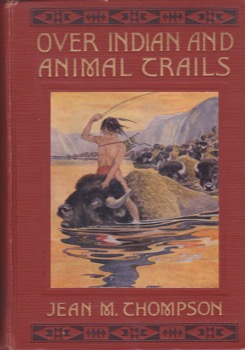
Hardcover. NY, Frederick A. Stokes, 1st, 1918, Book: Very Good, Dust Jacket: None, Hardcover, terra-cotta cloth with a color paste-down on cover, 263 pages, A collection of 35 Native American animal folklore tales. Wood-lore (or, the ways of wild things) are told in an engaging format - a wise old chief holds evening "story-time" sessions with his very curious grandson, Little Beaver. Running through the linked narrative is the little black bear Moween, of whom Little Beaver is particularly fond. Illustrated with 8 color plates, a color title page and an endpapers drawing by Paul Bransom. Light shelf wear.
Hardcover. NY, Frederick A. Stokes, 1st, 1918, Book: Good, Dust Jacket: None, Hardcover, terra-cotta cloth with a color paste-down on cover, 263 pages, A collection of 35 Native American animal folklore tales. Wood-lore (or, the ways of wild things) are told in an engaging format - a wise old chief holds evening "story-time" sessions with his very curious grandson, Little Beaver. Running through the linked narrative is the little black bear Moween, of whom Little Beaver is particularly fond. Illustrated with 8 color plates, a color title page and an endpapers drawing by Paul Bransom. Light shelf wear.
Softcover. Durham NC, Duke University Press, 1st, 2002, Book: Very Good, Dust Jacket: None, Softcover, 410 pages, b&w, color illustrations. INSCRIBED BY AUTHOR on the half-title page. Painting Culture tells the complex story of how, over the past three decades, the acrylic "dot" paintings of central Australia were transformed into objects of international high art, eagerly sought by upscale galleries and collectors. Since the early 1970s, Fred R. Myers has studied--often as a participant-observer--the Pintupi, one of several Aboriginal groups who paint the famous acrylic works. Describing their paintings and the complicated cultural issues they raise, Myers looks at how the paintings represent Aboriginal people and their culture and how their heritage is translated into exchangeable values. He tracks the way these paintings become high art as they move outward from indigenous communities through and among other social institutions--the world of dealers, museums, and critics.
Softcover. London, 1849, Book: Very Good, Dust Jacket: None, This is 64 page extract from a larger volume (pages 443 - 506), possibly London Magazine. This is the original printing and features 4 fold-out plans and illustrations, all in excellent condition. Bound in a clear acetate folder.
Hardcover. NY, Dutton, 1st, 1976, Book: Very Good, Dust Jacket: Very Good, Hardcover in a bright, price-clipped dust jacket. 256 pages, Index. Maroon cloth, stamped in gilt. Copiously illustrated with watercolors by Karl Bodmer. Map on endpapers. The Firsthand Account of Prince Maximilian's Expedition Up the Missouri River, 1833-34. Wonderful color plates by Swiss-born Bodmer accompany extracts from Maximilian's text, enhanced by historical background from Thomas and Ronnefeldt. Clean copy. DUE TO WEIGHT, DOMESTIC SHIPPING ONLY.
Hardcover. Princeton NJ, Princeton University Press, 1st , 1994, Book: Very Good, Dust Jacket: Very Good, Hardcover, 334 pages. Extensive b&w and color photography throughout. Extensive photo documentation and bibliography. Clean, unmarked copy with only minor wear to jacket.
Hardcover. Albuquerque, University of New Mexico Press, 1st, 2002, Book: Very Good, Dust Jacket: Very Good, Hardcover, 224 pages,97 b&w photographs taken by Collier between 1948 and 1953, with map, and text by Benally. Never opened, still in original shrink wrap.
Hardcover. London, Merrill Holberton, 1st, 1998, Book: Very Good, Dust Jacket: Very Good, Hardcover, 160 pages. Black & white photography. Clean, tight copy. These largely unpublished photographs, some only recently discovered, were taken by Aby Warburg on his trip to the American frontier in 1895. Neither a photographer nor a native tourist, Warburg was a scholar with a camera. As seen though his own cultural and psychological perspective on art, these insightful photographs are significant not only to the study of Native American and frontier life, but also to an understanding of Warburg's unique vision of cultural history. 80 duotone photos.
Hardcover. Boston , Lothrop Publishing, 1st, 1894, Book: Very Good, Dust Jacket: None, Hardcover, turquoise cloth stamped in red and gilt, 306 pages. Twelve b&w illustrations by Maria L. Kirk. Frontispiece piece protected by tissue guard. Unusually bright, clean copy. Light cornerwear to cover.
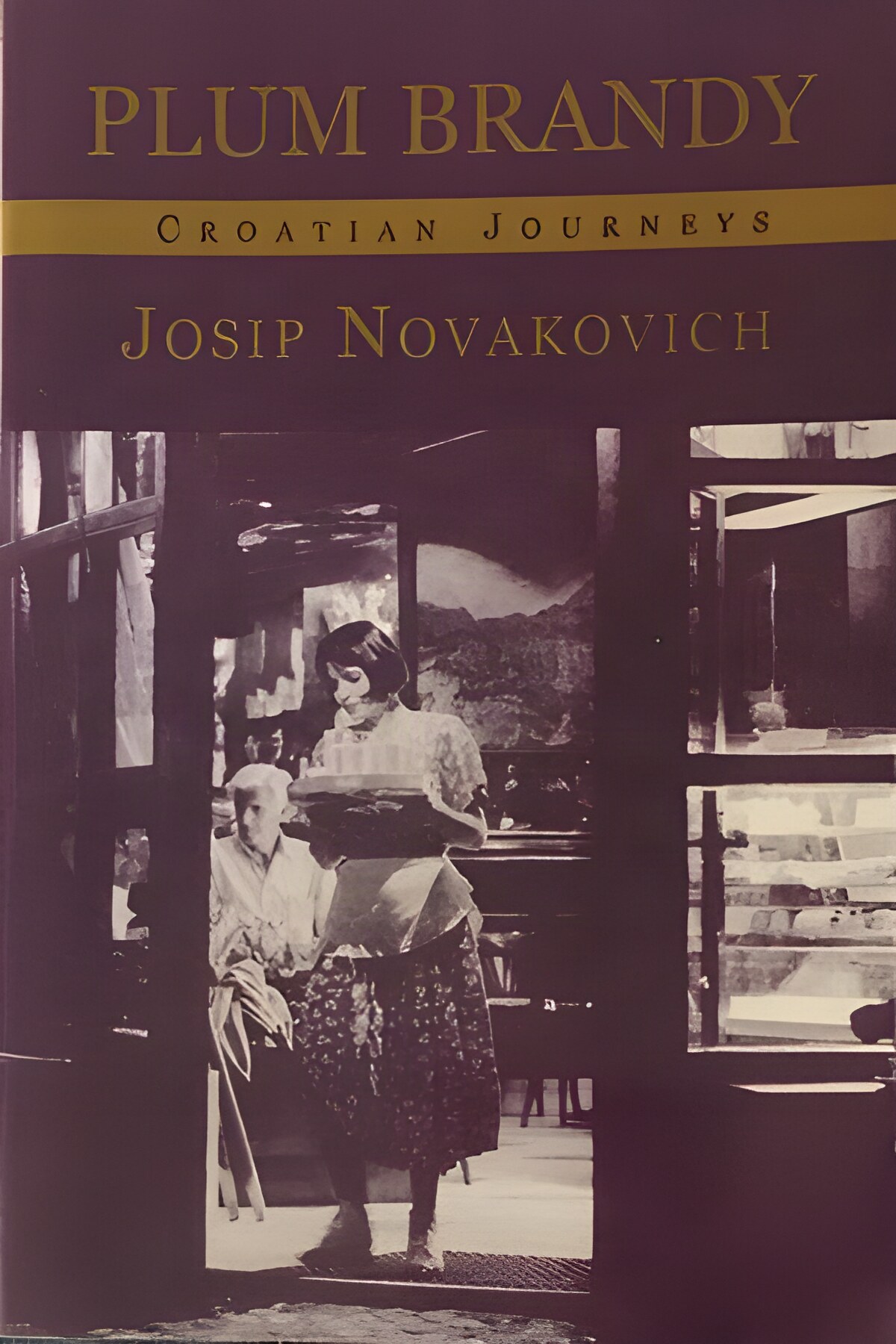
Softcover. Buffalo NY, White Pine Press, 1st, 2003, Book: Very Good, Dust Jacket: None, Softcover, 181 pages. INSCRIBED BY AUTHOR on the title page. Immigrant writer Novakovich records his journeys to find his roots, some to his native Croatia, some no farther than Cleveland, where he searches for the grave of his grandmother, who refused to return to Croatia with the rest of her family. This moving collection reflects the joys and the difficulties in returning to a homeland left behind. Clean copy.
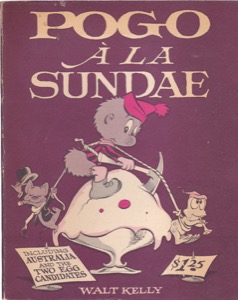
Softcover. NY, Simon and Schuster, 1st, 1961, Book: Very Good, Dust Jacket: None, Softcover, 127 pages in b&w. Purple pictorial wrappers. Walt Kelly's career in animation began in 1936 at Walt Disney Studios, where he contributed to Pinocchio and Fantasia. In 1941, Kelly resigned at the age of 28 to work at Dell Comics, where he created Pogo. He started drawing the comic strip in 1943 but it was not widely published until 1948. He based his characters on animals native to the Okefenokee Swamp. Pogo, a possum, was the central character and some of his friends were cigar chomping Albert the Alligator, Churchy LeFemme (a turtle), Dr. Howland Owl complete with glasses, and others. His biting political satire was aimed a Senator Joseph McCarthy (Kelly s nickname for him was Simple J Malarkey ), the FBI, the John Birch Society, Nikita Khrushchev, and later, Presidents Lyndon Johnson and Richard Nixon. Clean, bright copy.
Hardcover. NP, University of Alaska Press, 1st, 2009, Book: Very Good, Dust Jacket: Very Good, Hardcover, 204 pages, 192 b&w plates, map. This book is a window to the daily life and the environment of the Tikigaq, the Inupiaq people of Point Hope, Alaska, as seen in photographs taken by young Norwegian artist Berit Arnestad Foote from 1959 to 1962. In Berit Foote's days in Point Hope fifty years ago, the ice covered the sea in October and did not clear until July. In recent years, however, the Arctic ice has been changing rapidly, and so are the lives of people in Point Hope and across the North. This book--a call to action as well as a work of art--provides powerful documentation of how profoundly the entire fabric of a community's life and culture is affected by the ice that surrounds it.
Hardcover. New York , W. W. Norton, 1st, 2006, Book: Very Good, Dust Jacket: Very Good, Hardcover in a bright dust jacket, 237 pages. Numerous B&W illustrations, including portrait frontispiece, 14 color plates. Thomas Eakins, a native of Philadelphia, painted two worlds: one sure of its values - the surgeons, inventors, musicians and athletes of his time - and another that reflected his own struggles with depression and sexual identity. This book presents an account of Eakins' struggles, his genius, and the evocative melancholy of his portraits.
Hardcover. New York, W. W. Norton, 1st, 2006, Book: Very Good, Dust Jacket: Very Good, Hardcover, 237 pages, b&w illustrations, 16 color plates. A very clean, tight copy. Thomas Eakins, a native of Philadelphia, painted two worlds: one sure of its valuesthe surgeons, inventors, musicians, and athletes of his timeand another that reflected his own struggles with depression and sexual identity. In this evenhanded account of those struggles, William S. McFeely sheds new light on Eakins's genius and on the evocative melancholy of his portraits, particularly of women, which include many of his remarkable wife, Susan McDowell Eakins. Those deeply perceptive paintings may be the greatest expressions of his art.
Hardcover. New York , W. W. Norton, 1st, 2006, Book: Very Good, Dust Jacket: Very Good, Hardcover in a bright dust jacket, 237 pages. Numerous b&w illustrations, including portrait frontispiece, 14 color plates. Thomas Eakins, a native of Philadelphia, painted two worlds: one sure of its values - the surgeons, inventors, musicians and athletes of his time - and another that reflected his own struggles with depression and sexual identity. This book presents an account of Eakins' struggles, his genius, and the evocative melancholy of his portraits.
Hardcover. NY, Abbeville Press, 1st, 1997, Book: Very Good, Dust Jacket: Very Good, Hardcover in a bright dust jacket, 224 pages. This book provides a personal look at the three generations of American Indian women who made (and are still making) traditional pottery. Color illustrations throughout. Primarily a women's art, American Indian pottery reflects a heritage of powerful social, religious, and aesthetic values. Even now, modern American Indian women use the clay, paint, and fire of pottery making to express themselves, creating designs that range from dutifully traditional to strikingly original. This book--written in conjunction with one of the most important exhibitions of American Indian pottery ever mounted--provides an in-depth look at a unique North American art form. Clean copy. DOMESTIC SHIPPING ONLY.
Hardcover. NY, St. Martins, 1st US, 1995, Book: Very Good, Dust Jacket: Very Good, 245 pages. Hardcover with dust jacket. Ed. by Gerald Hausman and Bob Kapoun. Clean, tight copy.
Hardcover. Seattle, Fantagraphics, 1st, 2013, Book: Very Good, Dust Jacket: None, Hardcover, 112 pages. Hal Foster's masterpiece of adventure enters its second decade as Valiant and Aleta journey to "The New World" a 16-month epic that allows Foster to draw some of his spectacular native Canadian backgrounds, and during which Aleta gives birth to Arn and acquires her Indian nurse, Tillicum. Most of the rest of the book is taken up with the action-packed five-month sequence "The Mad King" during which Val, back at Camelot, confronts the evil, fat little King Tourien of Cornwall. This volume will be rounded off with an essay by Foster scholar Brian M. Kane (The Prince Valiant Companion) discussing Foster's depiction of "Indians" as it relates to other interpretations of the times, accompanied by various graphic goodies such as a previously unpublished camping cartoon by Foster from circa 1915, some of Foster's Mountie paintings, Foster's own map of Val's voyage to/from the New World, and more rare photos and art. As always, this volume is shot directly from Foster's personal collection of syndicate proofs, their glorious colors restored to create an unprecedentedly sumptuous reading experience.
Hardcover. Seattle, Fantagraphics, 1st, 2013, Book: Very Good, Dust Jacket: None, Hardcover, 112 pages. Hal Foster's masterpiece of adventure enters its second decade as Valiant and Aleta journey to "The New World" a 16-month epic that allows Foster to draw some of his spectacular native Canadian backgrounds, and during which Aleta gives birth to Arn and acquires her Indian nurse, Tillicum. Most of the rest of the book is taken up with the action-packed five-month sequence "The Mad King" during which Val, back at Camelot, confronts the evil, fat little King Tourien of Cornwall. This volume will be rounded off with an essay by Foster scholar Brian M. Kane (The Prince Valiant Companion) discussing Foster's depiction of "Indians" as it relates to other interpretations of the times, accompanied by various graphic goodies such as a previously unpublished camping cartoon by Foster from circa 1915, some of Foster's Mountie paintings, Foster's own map of Val's voyage to/from the New World, and more rare photos and art. As always, this volume is shot directly from Foster's personal collection of syndicate proofs, their glorious colors restored to create an unprecedentedly sumptuous reading experience.
Hardcover. NY, Century Co., Revised from 1894 ed., 1910, Book: Very Good, Dust Jacket: None, Hardcover. 257 pages. Illustrated with black & white drawings by George Wharton Edwards. Missing front endpaper. Illustrated front cover. Soil, spotting to binding.

 "OUR FERNS IN THEIR HAUNTS: A Guide to All the Native Species by: Clute, Willard N.")

 "Outdoor Life and Indian Stonesby: Ellis, Edward S.")
 "Over Indian and Animal Trailsby: Thompson, Jean M. and Paul")
 "Painting Culture: The Making of an Aboriginal High Art (SIGNED COPY)by: Myers, Fred R.")
 "Papers Relating to the First Settlement and Capture of Fort Oswego 1727-1756 (WITH FOLD-OUTS)by: O'Callaghan, E.B.")

 "Photograph and the American Indian, Theby: Bush, Alfred L. and Lee Clark Mitchell")
 "Photographing Navajos: John Collier Jr. on the Reservation, 1948-1953by: Doty C. Stewart; Dale Sperry Mudge & Herbert John Benally")
 "Photographs at the Frontier - Aby Warburg in America 1895-1896by: Cestelli Guidi (ed), Benedetta and Nicholas Mann")
 "Piokee and Her People - A Ranch and Tepee Storyby: Jenness, Theodora R.")
 "Point Hope, Alaska: Life on Frozen Waterby: Foote, Berit Arnestad")
 "Portrait: A Life of Thomas Eakinsby: McFeely, William S.")
 "Portrait: A Life of Thomas Eakinsby: McFeely, William S.")
 "Portrait: A Life of Thomas Eakinsby: McFeely, William S.")

 "Prayer to the Great Mystery - The Uncollected Writings and Photography of Edward S. Curtisby: Curtis, Edward S.")

 "Prince Valiant, Vol. 6: 1947-1948by: Hal Foster and Brian M. Kane")