Softcover. Washington DC, Smithsonian Institution, 1st, 1945, Book: Very Good, Dust Jacket: None, Softcover in gray wrappers, 244 pages, 20 full page photo plates on slick paper. 33 text figures. 1 map. Errata slip tipped in. Owner's small sticker on inside cover otherwise clean.
Hardcover. MY, Harcourt Brace & Co., 2nd pr., 1939, Book: Very Good, Dust Jacket: None, Hardcover, orange cloth stamped in black, 267 pages, b&w illustrations by James MacDonald. A boy's novel about track and field competition. Jim Wellington, Harvard senior and Waterloo, Iowa native, already the U. S. collegiate record holder for the two-mile, heads to Berlin for the Olympics. Inscription on front fly leaf, otherwise a clean, bright copy. Lacks dust jacket.
Hardcover. London, Edward Arnold, 2nd pr., 1905, Book: Fair, Dust Jacket: None, Hardcover, original blue cloth covers worn with faded gilt lettering. Frontis. missing, hinges cracked, B&w photos, folding maps present. An account of the British territories in East Africa, intended as a guide for prospective colonisers, and future developers. Topics discussed include the physical geography, native peoples such as the Swahilis, the Masai, Somalis, and Nandi, vegetations and animals, slavery, the Uganda railway and more. Sir Charles Eliot was a British colonial administrator and commissioner for the Protectorate of British East Africa, now Kenya.
Softcover. Austin TX, University of Texas Press, 3rd Pr., 1994, Book: Very Good, Dust Jacket: None, Softcover, 264 pages including appendices, bibliography and index. Profusely illustrated with b&w and color photographs. Superb images, portraits of individuals and family groups, and their arts, convey a quality of intimacy and serenity. Scenes of daily activity show many details of the way the Navajos life has been lived. Clean, bright copy. DOMESTIC SHIPPING ONLY.
Hardcover. NY, Henry Holt and Co., 1st, 1997, Book: Very Good, Dust Jacket: Very Good, Hardcover in a bright, unclipped dust jacket. Rikki Ducornet's boldest imaginative act yet-a brilliant novel about the Marquis de Sade that will forever change the way we regard one of history's most notorious men. Picture a dramatic courtroom scene: during the French Revolution a fan-maker is on trial because of a manuscript seized in her rooms and her friendship with the Marquis de Sade, the notorious author of Justine, who has already been condemned and imprisoned by the same court for his sexual transgressions. Not only has she made exquisite and sexually provocative fans for her friend, but she has also coauthored with the Marquis a book about the infamous Spanish missionary, Bishop Landa, accusing him of massacres and other hideous abuses against the native population of the New World. The men of the court are so consumed with punishing the authors of this scandalous book that they are blinded to the folly of their own accusations against the Marquis. 212 pages, clean copy.
Hardcover. NY, Printed for I. Riley and Co, 2nd Ed., 1806, Book: Very Good, Dust Jacket: None, The First Settlers of Virginia, an Historical Novel, Exhibiting a View of the Rise and Progress of the Colony at James Town, a Picture of Indian Manners, the Countenance of the Country, and its Natural Productions. Hardcover, Second edition, considerably enlarged. Contemporary calf over boards. Octavo. xii, [13]-284 pages. PLEASE NOTE: No frontispiece engraving of Pocahontas rescuing John Smith. No signs of extraction, so probably never bound in. A reproduction of the frontis laid in. This is one of the earliest American romantic novels about Native Americans. Davis was an English immigrant with literary aspirations who lived in Philadelphia at the beginning of the 19th century. He was acquainted with the likes of Thomas Jefferson and Aaron Burr. He originally adapted this material from his 1803 "Travels of Four Years and a Half in the United States of America" and published it in 1805 as "Captain Smith and Princess Pocahontas: An Indian Tale." This expanded version includes Davis's autobiography, "A Memoir of the Author" (pp. {275]-284). Includes "Errata" on page [274]. Clean, no markings.
Hardcover. NY, Macmillan, 1st, 1922, Book: Very Good, Dust Jacket: 100.00, Hardcover, blue cloth with gilt titles on the spine and front cover. Gilt still bright. The book shows little if any use. Two maps in excellent condition in pocket on rear paste down. 784 page, b&w frontispiece, fully illustrated with 138 photographs, 34 plates, 9 maps and 2 maps in a rear pocket, 4 fold out maps. Copyright page states: "Published in November 1921", title page states 1922. Preface by Stefansson, commander of expedition, who explains that he is an anthropologist by profession & he started his work. To learn whatever he could about the Eskimos. During 5-6 years of continuous residence he learned that the Eskimos resemble an uninstructed peasantry with a large measure of native intelligence lying fallow, lacking opportunities of instruction and development, "the Eskimos are honest and intelligent but have a higher percentage of unfounded beliefs than any white people with whom I have associated." Previous owner's inscription on front fly leaf, otherwise a clean, tight copy.
Hardcover. NY, McGraw Hill, 1st, 1966, Book: Very Good, Dust Jacket: Very Good, Hardcover in a bright, unclipped dust jacket. The American Trails Series, edited by A.B. Guthrie, Jr. 383 pages, includes a two-page map. This book offers an account of the route between Siberia and Alaska that continues southward along the Rockies all the way to Mexico and beyond. Cushman details the stories of the many groups who have traversed parts of the route from prehistoric peoples to Native Americans, Spanish explorers, fur traders, cowboys, and whiskey runners of the Prohibition era. A clean and pristine copy of the first printing,
Hardcover. Berkeley CA, University of California Press, 1st, 1975, Book: Very Good, Dust Jacket: Very Good, Hardcover, 433 pages including index. B&w illustrations. Recounts the Wilkes Expedition, whose six ships set out from Norfolk in summer 1838 to sail to the polar regions, the South Pacific, and the coasts of present-day Oregon, Washington, and British Columbia. The expedition discovered new islands and reefs in the Pacific and charted the Fijis and other islands. Its men explored, fought with natives, and gathered copious scientific specimens, many of which were given to the National Museum, the Naval Observatory, and the U.S. Botanical Garden. Dust jacket with light edgewear, clean copy.
Hardcover. Seattle, Fantagraphics, 1st, 2023, Book: Very Good, Dust Jacket: None, Hardcover, pictorial boards, 484 pages illustrated in color. In the 1950s, between his legendary EC work and his celebrated Marvel comics, John Severin joined with Mad artist Will Elder and Two-Fisted Tales writer Colin Dawkins to introduce a new level of historical accuracy to the comic-book Western. While Native Americans had generally been vilified or left in the shadows of gun-slinging cowboy heroes, the American Eagle stories featured in Prize Comics Western were built around action-packed tribal intrigues and a heroic Crow warrior. Collected here for the first time are all of the American Eagle stories drawn by Severin from Prize Comics Western #85-#113. Plus Severin-drawn stories featuring The Fargo Kid, Black Bull and The Lazo Kid. More than 55 exciting, gorgeous, Western tales of bullets vs. arrows, stampedes, tribal warfare, prospectors, buffalo hunters, broken treaties, gun battles, cavalry charges, wagon trains, and warriors on horseback. Thanks to Severin's famously exacting art, you'll be able to smell the leather and gunpowder. With commentary by comics historian Howard Leroy Davis. Clean, bright copy.
Hardcover. London, Routledge & Kegan Paul, reprint, 1951, Book: Very Good, Dust Jacket: None, Hardcover, yellow-orange cloth with stamped gilt lettering. One of the earliest and most comprehensive ethnographical studies of the Khoisan peoples. The interior contents (xi + 450 pp.) are clean, complete, and securely bound. These contents include two rear fold-out maps and 16 b&w plates. Owner's name inside front cover otherwise clean.
Hardcover. NY, Alfred A. Knopf, 1st, 2010, Book: Very Good, Dust Jacket: Very Good, Hardcover in a bright, unclipped dust jacket. He was the greatest Indian warrior of the nineteenth century. His victory over General Custer at the battle of Little Bighorn in 1876 was the worst defeat inflicted on the frontier Army. And the death of Crazy Horse in federal custody has remained a controversy for more than a century. The Killing of Crazy Horse pieces together the many sources of fear and misunderstanding that resulted in an official killing hard to distinguish from a crime. A rich cast of characters, whites and Indians alike, passes through this story, including Red Cloud, the chief who dominated Oglala history for fifty years but saw in Crazy Horse a dangerous rival; No Water and Woman Dress, both of whom hated Crazy Horse and schemed against him; the young interpreter Billy Garnett, son of a fifteen-year-old Oglala woman and a Confederate general killed at Gettysburg; General George Crook, who bitterly resented newspaper reports that he had been whipped by Crazy Horse in battle; Little Big Man, who betrayed Crazy Horse; Lieutenant William Philo Clark, the smart West Point graduate who thought he could "work" Indians to do the Army's bidding; and Fast Thunder, who called Crazy Horse cousin, held him the moment he was stabbed, and then told his grandson thirty years later, "They tricked me! They tricked me!" With the Great Sioux War as background and context, drawing on many new materials as well as documents in libraries and archives, Thomas Powers recounts the final months and days of Crazy Horse's life not to lay blame but to establish what happened.
Softcover. Santa Fe, Museum of New Mexico Press, 1st revised, 2003, Book: Very Good, Dust Jacket: None, Softcover, pages. Maria, the potter of San Ildefonso (1887-1981), is not only the most famous of Pueblo Indian potters but ranks among the best of international potters. Her work Is collected and exhibited around the world, and more than any other artist, Maria Martinez brought "signatures" to Indian art. She and other members of her family revived a dying art form and kindled a renaissance in pottery for all the Pueblos. She raised this regional art to one of international acclaim. This lavishly illustrated book draws from Spivey's 1979 classic work. Featuring entirely new photography and 120 added pots as well as a significantly expanded text, this volume considers the entirety of this artist's immense oeuvre and important works and developments in her collaboration with Julian, and after his death, with her daughter-in-law Santana, son Popovi Da, and grandson Tony Da, bringing the legacy of Maria into the bright future of Pueblo ceramics.
Hardcover. NY, Macmillan, 5th pr., 1966, Book: Very Good, Dust Jacket: Good, Hardcover in a edgeworn, price-clipped dust jacket. 371 pages with index. A vivid, swiftly paced account of the dispossession of the Plains Indians during the half century after 1840. Epic in sweep, magnificent in detail - here is the tragedy of the Indians who once roamed and hunted on the Great Plains. Included in this great saga are the names one expects: Red Cloud of the Sioux, Black Kettle of the Cheyennes, Generals Sheridan, Sherman, and Custer, Colonel Miles, Crazy Horse, Sitting Bull, and Chief Joseph of the Nez Perces. No marking.
Hardcover. NY, St. Martin's Press, 1st, 2007, Book: Very Good, Dust Jacket: Very Good, Hardcover in a bright, unclipped dust jacket, 432 pages, b&w illustrations. Despite having to contend with icebergs, storms, rogue whales, sharks, hostile natives, disease, the scarcity of whales, the increasing dangers of going farther into the Arctic, and the roving Confederate privateers, Captain Thomas William Williams of Wethersfield, Connecticut wemt out voyage after voyage, even taking on board with him his tiny wife, Eliza, and his infant son and daughter. This thrilling narrative recounts Williams' remarkable career, including a daring rescue and salvage of lost ships off Alaska's coast. Songini has crafted a historical masterpiece in recording a family saga, a true narrative of adventure and death on the high seas, and a detailed and well-researched look at the demise of Yankee whaling. Clean copy.
Hardcover. Boston, Bradbury Soden & Co., 1st thus, 1844, Book: Good, Dust Jacket: None, Hardcover, 336 pages, frontispiece engraving with tissue guard, extra engraved title page, many b&w text illustrations. Brown cloth with black leather spine stamped in gilt. Pages with tanning to edges, light water stain to bottom corners of most pages, affecting text and images, but not horrible. Covers show mottling, discoloration to foredges, front and rear. Interior clean, binding tight.
Softcover. Indiana Historical Society, 1st, 1996, Book: Very Good, Dust Jacket: None, Softcover in pictorial wraps, 358 pages, 2 maps, b/w photos, appendices, notes, important dates, bibliography, index. Explores the history and culture of the Miami Indians, who have fought for many years to gain tribal status from the U.S. government. Clean copy.
Hardcover. NY, Kraus Reprint, reprint, 1977, Book: Very Good, Dust Jacket: None, Hardcover, brown cloth, 341 pages. A reprint of a book first published in 1856. No dust jacket issued.
Hardcover. Norman OK, University of Oklahoma Press, 8th pr., 1970, Book: Very Good, Dust Jacket: Very Good, Hardcover in a lightly worn dust jacket, 220 pages with black & white illustrations. A thorough study of the art of the Indian silversmiths of the Southwest. Includes the history of the craft as well as names and localities of pioneer artisans. Bookplate on inside front cover, otherwise clean.
Hardcover. Washington DC, Smithsonian/GPO, 1st, 1959, Book: Very Good, Dust Jacket: None, Hardcover, olive green cloth, gilt lettering on spine faded. 490 pages, 3 fold-out plates include 2 maps. Name on inside front cover, otherwise clean.
Hardcover. NY, Stewart, Tabori & Chang, 1st, 1996, Book: Very Good, Dust Jacket: Very Good, Hardcover in a bright dust jacket, 99 pages, illustrated throughout in color by Gennady Spirin. Pages without illustrations are decorated with elegant and delicate borders. Faux marbled endpapers. Translator Brodmann has been celebrated in her native Germany for her work with juvenile literature. Stated first printing. Clean, bright copy.
Hardcover. NY, Henry Holt, 1st, 1992, Book: Very Good, Dust Jacket: Very Good, Hardcover in a bright, price-clipped dust jacket. Author's fourth novel, set in the steamy bayou town of St. Bruno. Woodrell reunites the three Shade brothers with their dissolute father. Aged rake and reprobate John X. Shade returns to his native Louisiana bayous, where he reviews his checkered past. Vengeful sociopath Lunch Pumphrey is hot on his trail, bent on recovering $47,000 stored in John X.'s safe, but Shade's young wife has absconded with the money in order to launch her singing career, leaving their daughter, toughly precocious Etta, in her father's care. Clean copy.
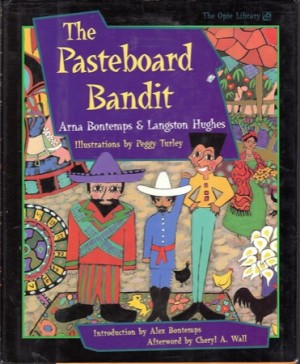
Hardcover. NY, Oxford University Press, 1st, 1997, Book: Very Good, Dust Jacket: Very Good, Hardcover in a bright, unclipped dust jacket. 94 pages, color illustrations by Peggy Turley. In this delightful children's tale, an American boy, Kenny Strange, moves to the quiet Mexican town of Taxco with his parents and strikes up a friendship with young Juanito Perez, a Taxco native. The two boys are brought together by an enchanting toy, the pasteboard bandit Tito. Chosen by Juanito at a town fair from among the other pasteboard toys, Tito, with his colorful clothes and bright eyes, becomes Juanito's and Kenny's constant companion, and the threesome share many adventures in and around the town's rolling green hills. The boys' growing friendship, Kenny's introduction to a culture unlike his own, and Tito's witty reflections on being a toy will be recognized instantly by anyone young or old who has ever made a friend or imagined that a toy might be real. Originally written in 1935, but never before published, The Pasteboard Bandit grew out of several trips Langston Hughes made to Mexico during his lifetime. Hughes first went to the town of Toluca at age 5 to visit his father, and again when he was older. During these visits, Hughes met many writers and artists, and it is their influence that informs the story of The Pasteboard Bandit--a story of two cultures meeting. When Hughes left Mexico for the last time, at age 32, he was carrying the first draft for The Pasteboard Bandit. Clean copy.
Hardcover. NY, Hastings House, 1st, 1941, Book: Good, Dust Jacket: None, Hardcover, gray cloth stamped with dark blue design, 124 pages, sepia tone photos throughout. This work is Gilpin's photographic love letter to the Pueblos of the southwest. Laura Gilpin (1891-1979) attained international recognition as photographer and her images of the Navajo and Pueblo peoples of the four corners area offer an important record of these cultures. She excelled in a field that up to the point, had largely been the purview of men. Cloth covers with edgewear, light soil. Inscription on inside front cover. Covers fair, interior good+.

 "The Contemporary Culture of The Cahita Indians. Smithsonian Institution, Bureau of American Ethnology, Bulletin 142. by: Beals, Ralph L.")
 "The Duke Decides by: Tunis, John R.")
 "The East Africa Protectorateby: Eliot, Sir Charles")
 "The Fan-Maker's Inquisition: A Novel of the Marquis De Sadeby: Rikki Ducornet")
![The First Settlers of Virginia, an Historical Novel, Exhibiting a View of the Rise and Progress of the Colony at James Town...by: [Davis, John (1774-1854)]](https://www.browsingisarousing.com/shop/images/The-First-Settlers-of-Virginia-an-Historical-Novel-Exhibiting-a-View-of-the-Rise-and-Progress-of-the398264-451892.jpg "The First Settlers of Virginia, an Historical Novel, Exhibiting a View of the Rise and Progress of the Colony at James Town...by: [Davis, John (1774-1854)]")
![The First Settlers of Virginia, an Historical Novel, Exhibiting a View of the Rise and Progress of the Colony at James Town...by: [Davis, John (1774-1854)]](https://www.browsingisarousing.com/shop/images/The-First-Settlers-of-Virginia-an-Historical-Novel-Exhibiting-a-View-of-the-Rise-and-Progress-of-the398264-451892_50_th.jpg)
![The First Settlers of Virginia, an Historical Novel, Exhibiting a View of the Rise and Progress of the Colony at James Town...by: [Davis, John (1774-1854)]](https://www.browsingisarousing.com/shop/images/The-First-Settlers-of-Virginia-an-Historical-Novel-Exhibiting-a-View-of-the-Rise-and-Progress-of-the398264-451893_50_th.jpg)

 "The Great United States Exploring Expedition of 1838-1842 by: Stanton, William")
 "The Khoisan Peoples of South Africa: Bushmen and Hottentots by: Schapera, I.")

 "The Legacy of Maria Poveka Martinezby: Richard L. Spivey , Maria Montoya Martinez, et al.")


 "The manners, customs, and antiquities of the Indians of North and South America (Parley's Cabinet Library)by: Goodrich, Samuel G.")





 "The Pueblos: A Camera Chronicleby: Gilpin, Laura")