Hardcover. Boston, William White & Co, 3rd, 1862, Book: Very Good, Dust Jacket: None, 344 pages. Black boards with embossed pictorial border, gilt titles to spine. Previous owner's signature to front endpaper, light rubbing to covers, top third of outside of front hinge cracked, mild edgewear, pages crisp and unmarked; overall, a very neat, tight copy.
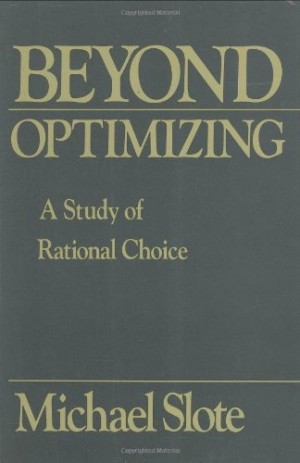
Hardcover. Cambridge MA, Harvard University Press, 1st, 1989, Book: Very Good, Dust Jacket: Very Good, Hardcover, 192 pages. Light sun-fade to dust jacket spine, else a clean, tight copy. Michael Slote challenges the long-dominant conception of individual rationality, which has to a large extent shaped the very way we think about the essential problems and nature of rationality, morality, and the relations between them. He contests the accepted view by appealing to a set of real-life examples, claiming that our intuitive reaction to these examples illustrates a significant and prevalent, if not always dominant, way of thinking. Slote argues that common sense recognizes that one can reach a point where "enough is enough," be satisfied with what one has, and, hence, rationally decline an optimizing alternative. He suggests that, in the light of common sense, optimizing behavior is often irrational.
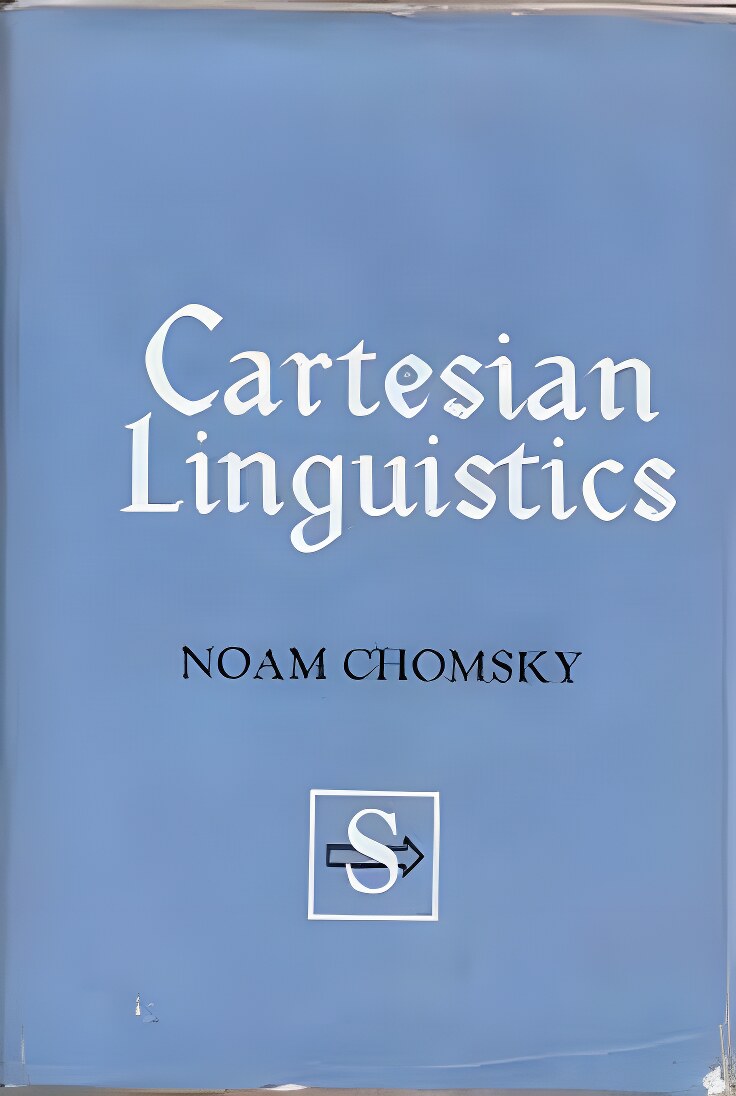
Hardcover. NY, Harper & Row, reprint, Book: Very Good, Dust Jacket: Very Good, Hardcover in a bright dust jacket, 119 pages. A book on linguistics by Noam Chomsky, written with the purpose of deepening 'our understanding of the nature of language and the mental processes and structures that underlie its use and acquisition'. Chomsky wished to shed light on these underlying structures of the human language, and subsequently whether one can infer the nature of an organism from its language. Cartesian linguistics refers to a form of linguistics developed during the time of RenE Descartes, a prominent 17th century philosopher whose ideas continue to influence modern philosophy. In Cartesian Linguistics, Chomsky traces the development of linguistic theory from Descartes to Wilhelm von Humboldt, that is, from the period of the Enlightenment directly up to Romanticism. The central doctrine of Cartesian linguistics maintains that the general features of grammatical structure are common to all languages and reflect certain fundamental properties of the mind. Clean copy.
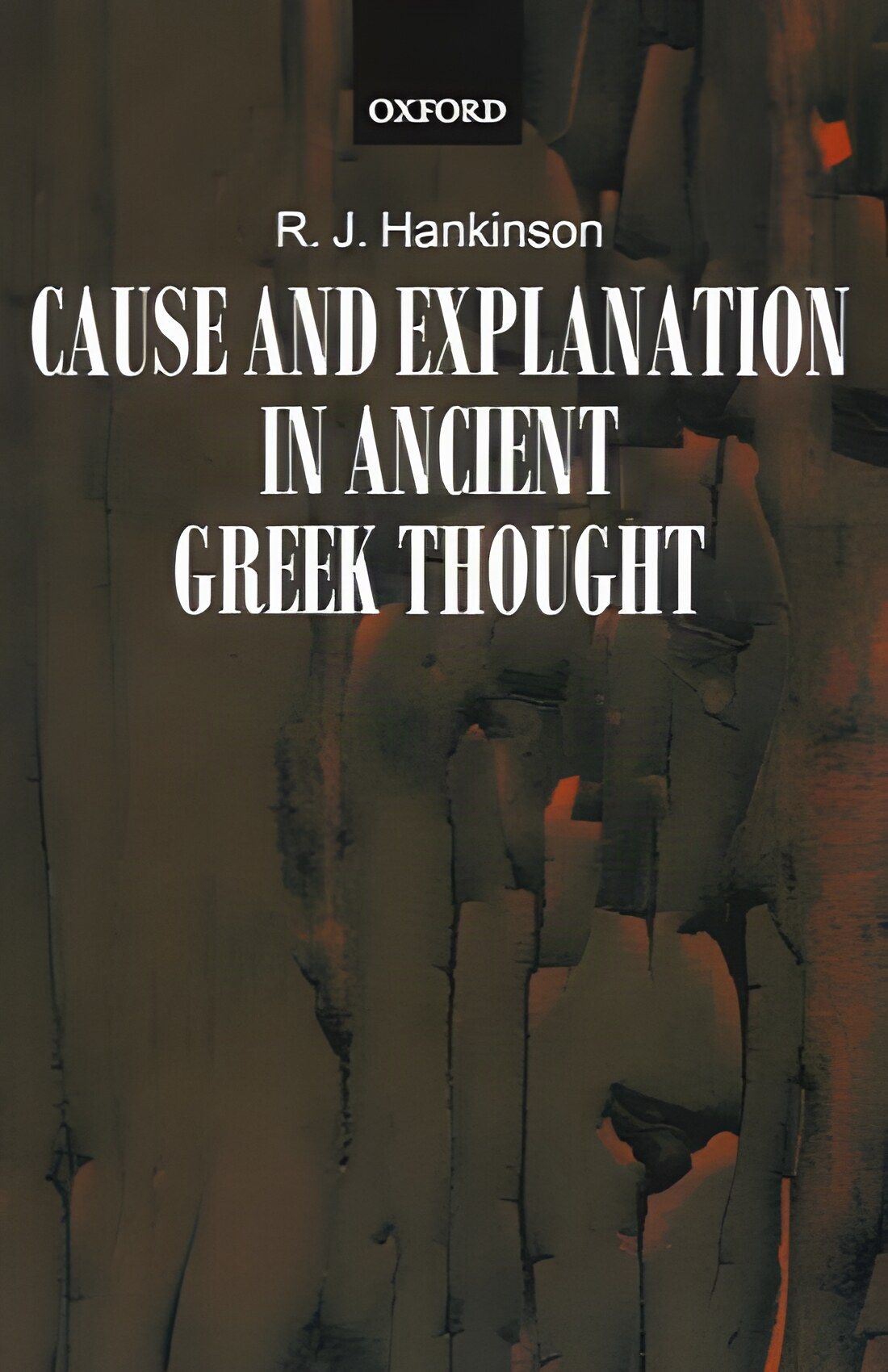
Softcover. UK, Clarendon Press, reprint, 2004, Book: Very Good, Dust Jacket: None, Softcover, 499 pages. R. J. Hankinson traces the history of ancient Greek thinking about causation and explanation, from its earliest beginnings through more than a thousand years to the middle of the first millennium of the Christian era. He examines ways in which the Ancient Greeks dealt with questions about how and why things happen as and when they do, about the basic constitution and structure of things, about function and purpose, laws of nature, chance, coincidence, and responsibility. Clean copy.
Softcover. Cambridge, UK, Cambridge University Press, 1st, 2006, Book: Very Good, Dust Jacket: None, Softcover, 331 pages including index. Who would the Saviour have to be, what would the Saviour have to do to rescue human beings from the meaning-destroying experiences of their lives? This book offers a systematic Christology that is at once biblical and philosophical. Starting with human radical vulnerability to horrors such as permanent pain, sadistic abuse or genocide, it develops what must be true about Christ if He is the horror-defeater who ultimately resolves all the problems affecting the human condition and Divine-human relations. Distinctive elements of Marilyn McCord Adams' study are her defence of the two-natures theory, of Christ as Inner Teacher and a functional partner in human flourishing, and her arguments in favour of literal bodily resurrection (Christ's and ours) and of a strong doctrine of corporeal Eucharistic presence. The book concludes that Christ is the One in Whom, not only Christian doctrine, but cosmos, church, and the human psyche hold together.
Softcover. Cambridge MA, Harvard University Press, 4th pr., 2001, Book: Very Good, Dust Jacket: None, Softcover, 656 pages. John Rawls's work on justice has drawn more commentary and aroused wider attention than any other work in moral or political philosophy in the twentieth century. Rawls is the author of two major treatises, A Theory of Justice (1971) and Political Liberalism (1993); it is said that A Theory of Justice revived political philosophy in the English-speaking world. But before and after writing his great treatises Rawls produced a steady stream of essays. Some of these essays articulate views of justice and liberalism distinct from those found in the two books. They are important in and of themselves because of the deep issues about the nature of justice, moral reasoning, and liberalism they raise as well as for the light they shed on the evolution of Rawls's views. Some of the articles tackle issues not addressed in either book. They help identify some of the paths open to liberal theorists of justice and some of the knotty problems which liberal theorists must seek to resolve. A complete collection of John Rawls's essays. Owner's name on front fly leaf otherwise clean.
Hardcover. NY, Oxford University Press, 1st, 1994, Book: Very Good, Dust Jacket: Very Good, Hardcover in a bright dust jacket, 206 pages. Marian David defends the correspondence theory of truth against the disquotational theory of truth, its current major rival. The correspondence theory asserts that truth is a philosophically rich and profound notion in need of serious explanation. Disquotationalists offer a radically deflationary account inspired by Tarski and propagated by Quine and others. They reject the correspondence theory, insist truth is anemic, and advance an "anti-theory" of truth that is essentially a collection of platitudes: "Snow is white" is true if and only if snow is white; "Grass is green" is true if and only if grass is green. According to disquotationalists the only profound insight about truth is that it lacks profundity. David contrasts the correspondence theory with disquotationalism and then develops the latter position in rich detail--more than has been available in previous literature--to show its faults. He demonstrates that disquotationalism is not a tenable theory of truth, as it has too many absurd consequences.
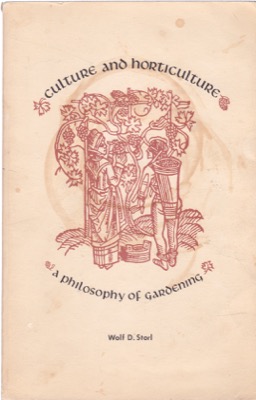
Softcover. Wyoming RI, Bio-Dynamic , 1st, 1979, Book: Good, Dust Jacket: None, Softcover, 435 pages, b&w illustrations. Explores the profound connection between human culture and the practice of gardening. Storl delves into the historical, spiritual, and ecological aspects of gardening, highlighting how various cultures have shaped their gardens as reflections of their beliefs and values. The book presents gardening as not only a practical endeavor but also a means of connecting with the natural world and understanding our place in it. Storl's work encourages readers to see gardening as a dynamic and meaningful cultural expression that bridges the gap between humanity and the environment. Light coffee cup rings to wraps, internally clean.
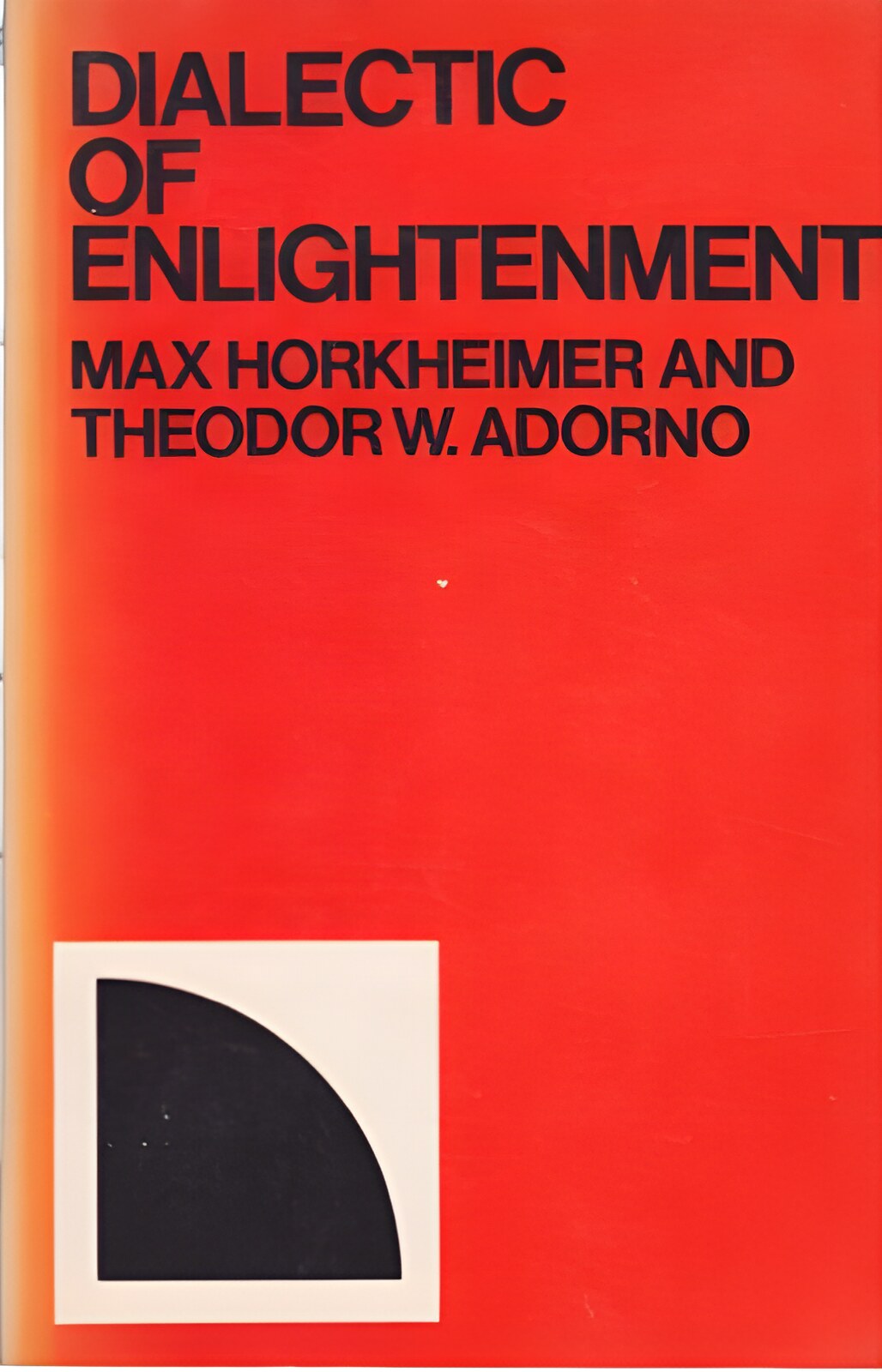
Softcover. NY, Continuum, reprint, 1989, Book: Very Good, Dust Jacket: None, Softcover, 258 pages. Dialectic of Enlightenment is undoubtedly the most influential publication of the Frankfurt School of Critical Theory. Written during the Second World War and circulated privately, it appeared in a printed edition in Amsterdam in 1947. "What we had set out to do," the authors write in the Preface, "was nothing less than to explain why humanity, instead of entering a truly human state, is sinking into a new kind of barbarism." Yet the work goes far beyond a mere critique of contemporary events. Historically remote developments, indeed, the birth of Western history and of subjectivity itself out of the struggle against natural forces, as represented in myths, are connected in a wide arch to the most threatening experiences of the present. The book consists in five chapters, at first glance unconnected, together with a number of shorter notes. The various analyses concern such phenomena as the detachment of science from practical life, formalized morality, the manipulative nature of entertainment culture, and a paranoid behavioral structure, expressed in aggressive anti-Semitism, that marks the limits of enlightenment. The authors perceive a common element in these phenomena, the tendency toward self-destruction of the guiding criteria inherent in enlightenment thought from the beginning. Using historical analyses to elucidate the present, they show, against the background of a prehistory of subjectivity, why the National Socialist terror was not an aberration of modern history but was rooted deeply in the fundamental characteristics of Western civilization. Spine faded, Clean copy.
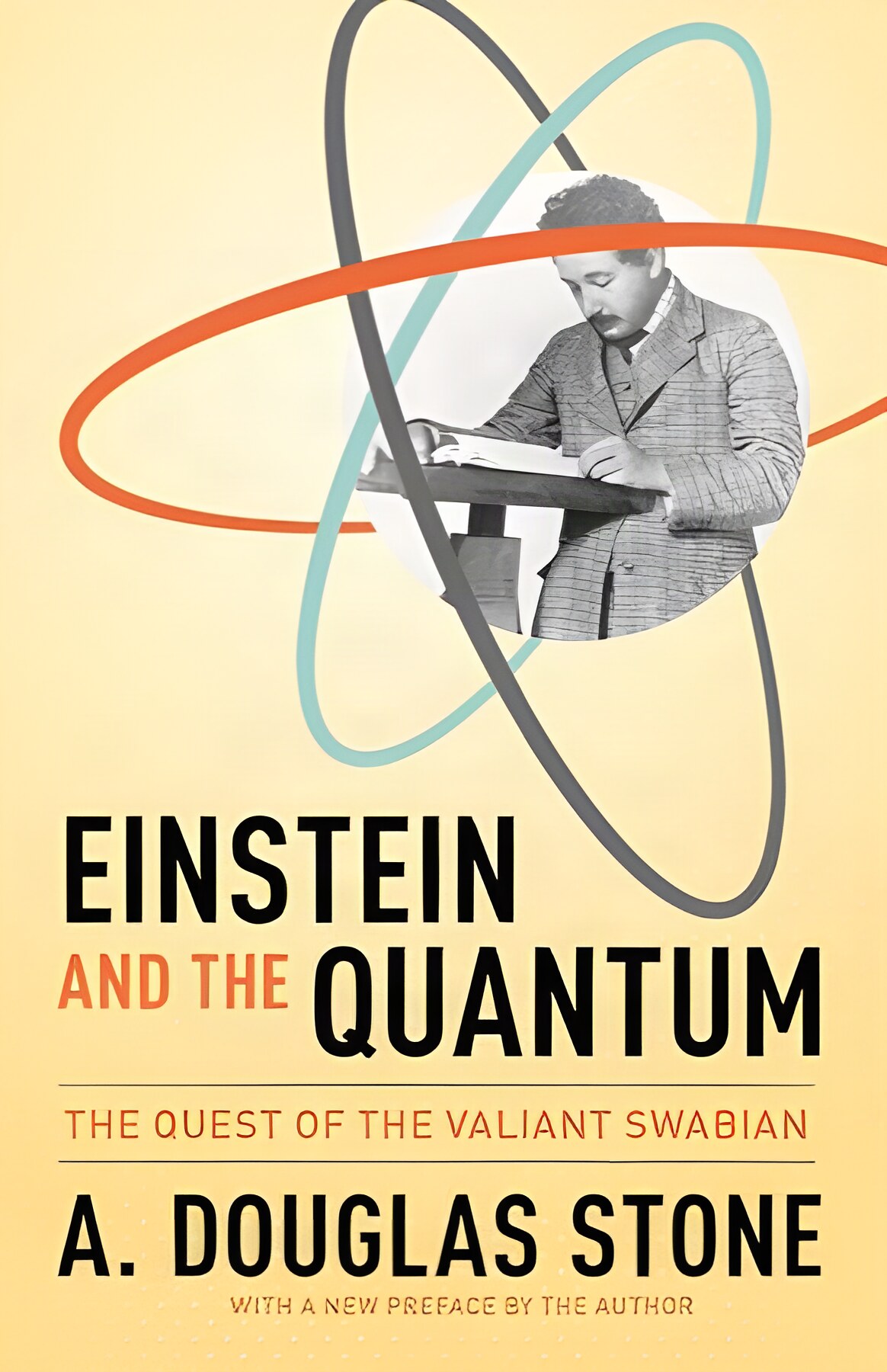
Hardcover. Princeton NJ, Princeton University Press, 2nd pr., 2013, Book: Very Good, Dust Jacket: Very Good, Hardcover in a bright dust jacket, 332 pages, b&w illustrations. Einstein and the Quantum reveals for the first time the full significance of Albert Einstein's contributions to quantum theory. Einstein famously rejected quantum mechanics, observing that God does not play dice. But, in fact, he thought more about the nature of atoms, molecules, and the emission and absorption of light-the core of what we now know as quantum theory-than he did about relativity. A compelling blend of physics, biography, and the history of science, Einstein and the Quantum shares the untold story of how Einstein-not Max Planck or Niels Bohr-was the driving force behind early quantum theory. It paints a vivid portrait of the iconic physicist as he grappled with the apparently contradictory nature of the atomic world, in which its invisible constituents defy the categories of classical physics, behaving simultaneously as both particle and wave. And it demonstrates how Einstein's later work on the emission and absorption of light, and on atomic gases, led directly to Erwin Schrodinger's breakthrough to the modern form of quantum mechanics. The book sheds light on why Einstein ultimately renounced his own brilliant work on quantum theory, due to his deep belief in science as something objective and eternal. Clean copy.
Hardcover. Bristol UK, Thoemmes Press, reprint, 1997, Book: Very Good, Dust Jacket: None, Hardcover, blue cloth with gilt lettering on spine, 319 pages. A facsimile reprint of the 1656 edition. One of 9 volumes in More's collected works. Name, light pencil marking to front fly leaf otherwise a clean, bright copy.
Hardcover. London, Bloomsbury Academic, 1st, 2020, Hardcover, decorated boards, 244 pages. The portrait of John Locke as a secular advocate of Enlightenment rationality has been deconstructed by the recent 'religious turn' in Locke scholarship. This book takes an important next step: moving beyond the 'religious turn' and establishing a 'theological turn', Nathan Guy argues that John Locke ought to be viewed as a Christian political philosopher whose political theory was firmly rooted in the moderating Latitudinarian theology of the seventeenth-century. Nestled between the secular political philosopher and the Christian public theologian stands Locke, the Christian political philosopher, whose arguments not only self-consciously depend upon Christian assumptions, but also offer a decidedly Christian theory of government. Finding Locke's God identifies three theological pillars crucial to Locke's political theory: (1) a biblical depiction of God, (2) the law of nature rooted in a doctrine of creation and (3) acceptance of divine revelation in scripture. As a result, Locke's political philosophy brings forth theologically-rich aims, while seeking to counter or disarm threats such as atheism, hyper-Calvinism, and religious enthusiasm. Clean copy.
Softcover. Cambridge UK, Cambridge University Press, 1st pbk, 2018, Book: Very Good, Dust Jacket: None, Softcover, 492 pages. Hegel's The Phenomenology of Spirit (1807) is one of the most influential texts in the history of modern philosophy. In it, Hegel proposed an arresting and novel picture of the relation of mind to world and of people to each other. Like Kant before him, Hegel offered up a systematic account of the nature of knowledge, the influence of society and history on claims to knowledge, and the social character of human agency itself. A bold new understanding of what, after Hegel, came to be called 'subjectivity' arose from this work, and it was instrumental in the formation of later philosophies, such as existentialism, Marxism, and American pragmatism, each of which reacted to Hegel's radical claims in different ways. This edition offers a new translation, an introduction, and glossaries to assist readers' understanding of this central text, and will be essential for scholars and students of Hegel. Clean copy.
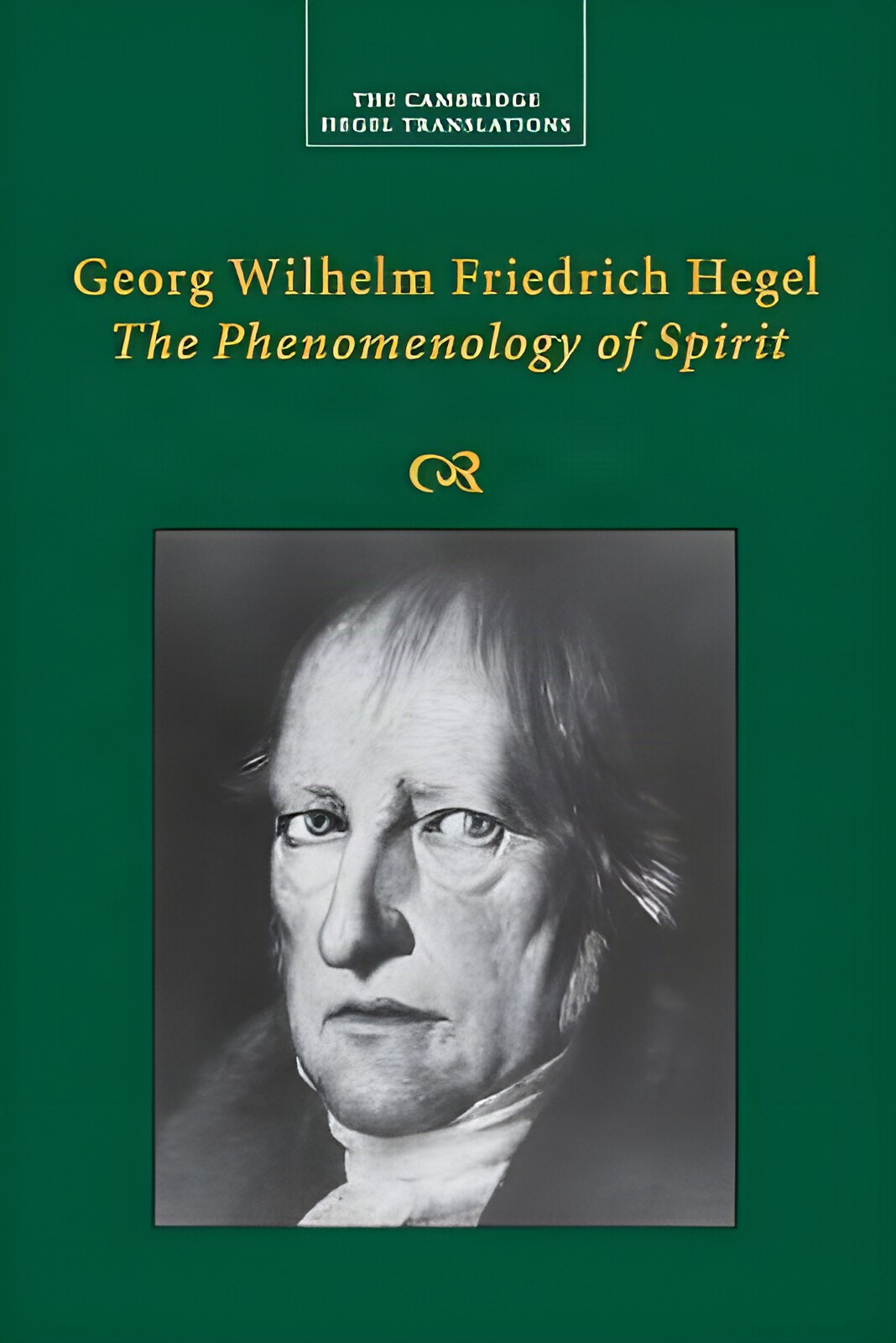
Softcover. Cambridge UK, Cambridge University Press, 1st pbk, 2018, Book: Very Good, Dust Jacket: None, Softcover, 492 pages. Hegel's The Phenomenology of Spirit (1807) is one of the most influential texts in the history of modern philosophy. In it, Hegel proposed an arresting and novel picture of the relation of mind to world and of people to each other. Like Kant before him, Hegel offered up a systematic account of the nature of knowledge, the influence of society and history on claims to knowledge, and the social character of human agency itself. A bold new understanding of what, after Hegel, came to be called 'subjectivity' arose from this work, and it was instrumental in the formation of later philosophies, such as existentialism, Marxism, and American pragmatism, each of which reacted to Hegel's radical claims in different ways. This edition offers a new translation, an introduction, and glossaries to assist readers' understanding of this central text, and will be essential for scholars and students of Hegel. Clean copy.
Hardcover. New York, German Library of Information, 1st, 1940, Book: Good, Dust Jacket: None, 127 pages. Hardcover. B/w illustrations throughout. Former library book with labels/stamps/attachments expected. Photographs by the author. Decorated cover boards. Pages and covers have some tanning from age. This volume, intended for American students, interprets the social, economic, hygenic, aesthetic and ethical significance of the German forest, presenting not merely facts but also the philosophy of German Forestry.
Hardcover. Minneapolis, University of Minnesota, 2nd pr., 1965, Book: Very Good, Dust Jacket: Very Good, Hardcover in a lightly worn dust jacket, 197 pages. Professor Noble examines the basic philosophy and writing of six American historians, George Bancroft, Frederick Jackson, Charles A. Beard, Carl Becker, Vernon Louis Parrington, and Daniel J. Boorstin, and finds in them a common tradition which he calls anti-historical. He argues that this viewpoint is founded in the frontier interpretation of American history, that American historians have served as the chief political theorists and theologians of this country since 1830, and that their writings can be interpreted as Jeremiads designed to preserve a national covenant with nature. Clean copy.
Hardcover. NY/London, Oxford University Press, 1st, 2011, Book: Very Good, Dust Jacket: Very Good, Hardcover in a bright, unclipped dust jacket, 470 pages. This central volume in the Collected Essays brings together John Finnis's wide-ranging contribution to central issues in political philosophy. The volume begins by examining the general theory of political community and social justice. It includes the powerful and well-known Maccabaean Lecture on Bills of Rights -- a searching critique of Ronald Dworkin's moral-political arguments and conclusions, of the European Court of Human Rights' approach to fundamental rights, and of judicial review as a constitutional institution. It is followed by an equally searching analysis of Kant's thought on the intersection of law, right, and ethics. Other papers in the book's opening section include an early assessment of Rawls's A Theory of Justice, a radical re-interpretation of Aquinas on limited government and the significance of the private/public distinction, and a challenging paper on virtue and the constitution. The volume then focuses on central problems in modern political communities, including the achievement of justice in work and distribution; the practice of punishment; war and justice; the public control of euthanasia and abortion; and the nature of marriage and the common good. There are careful and vigorous critiques of Nietzsche on morality, Hart on punishment, Dworkin on the enforcement of morality and on euthanasia, Rawls on justice and law, Thomson on the woman's right to choose, Habermas on abortion, Nussbaum and Koppelman on same-sex relations, and Dummett and Weithman on open borders. The volume's previously unpublished papers include a foundational consideration of labor unions, a fresh statement of a new grounding for the morality of sex, a surprising reading of C.S. Lewis's Abolition of Man on contraception, and an introduction reviewing some of the remarkable changes in private and public morality over the past half-century.
Softcover. London, T&T Clark, reprint, 2012, Book: Very Good, Dust Jacket: None, Softcover, 331 pages, INSCRIBED BU AUTHOR on the half-title page. Analyses the works of Jonathan Edwards (1703-1758) on natural philosophy in a series of contexts within which they may best be explored and understood. Its aim is to place Edwards's writings on natural philosophy in the broad historical, theological and scientific context of a wide variety of religious responses to the rise of modern science in the early modern period - John Donne's reaction to the new astronomical philosophy of Copernicus, Kepler and Galileo, as well as to Francis Bacon's new natural philosophy; Blaise Pascal's response to Descartes' mechanical philosophy; the reactions to Newtonian science and finally Jonathan Edwards's response to the scientific culture and imagination of his time. Clean, bright copy.
Hardcover. London, England, SPCK, 1st Edition, 1950, Book: Very Good, Dust Jacket: None, 175 pages. Hardcover. Red cover boards, fading to spine and edges, gilt title on spine. Pages unmarked. Binding tight. Spine straight. The Epitome covers a wide range of topics, including the nature of God, the creation of the world, the fall of man, the life and teachings of Jesus Christ, and the end of the world. It also discusses various aspects of Christian morality.
Hardcover. Oxford UK, The Voltaire Foundation, 1st, 1991, Book: Very Good, Dust Jacket: None, Hardcover in blue cloth, gilt lettering on spine, 251 pages. As France moved from the seventeenth to the eighteenth century, it found itself in the grip of anglomanie - a fascination with new English ideas in the domains of science and philosophy. Chief among the English thinkers it enthusiastically embraced was John Locke. On his visits to France and in his personal correspondence, Locke interacted with prominent French thinkers, scientists and savants of the day, such as Charles Barbeyrac and Pierre Magnol, and his works engaged in a critical dialogue with those of Descartes. However, Locke has been feted to such an extent that his position in the history of ideas in France is often overlooked. In Locke in France 1688-1734, Ross Hutchison re-examines and re-contextualises the precise nature and extent of Locke's influence in France by exploring how his ideas were incorporated into contemporary French debates and controversies in the transitional period from the seventeenth to the eighteenth century. Hutchison highlights the various channels of dissemination which brought Locke to the attention of the French, including translations of his major works and his personal friendships with French Protestant exiles. Hutchison also presents case studies of interactions in which Lockean ideas played a dominant role in the evolution of French thought, ranging from political theory to the nature of language, theories of education, and the relation between soul and matter. Clean copy, no dust jacket.
Hardcover. UK, Oxford University Press, 1st, 2013, Book: Very Good, Dust Jacket: Very Good, Hardcover in a bright dust jacket, 326 pages. Lucretius' didactic masterpiece De Rerum Natura (On the Nature of Things) is one of the most brilliant and powerful poems in the Latin language, a passionate attempt at dispelling humanity's fear of death and its enslavement by false beliefs about the gods, and a detailed exposition of Epicurean atomist physics. For centuries, it has raised the question of whether it is primarily a poem or primarily a philosophical treatise, which also presents scientific doctrine. The current volume seeks to unite the three disciplinary aspects -- poetry, philosophy, and science -- in order to offer a holistic response to an important monument in cultural history. With ten original essays and an analytical introduction, the volume aims not only to combine different approaches within single covers, but to offer responses to the poem by experts from all three scholarly backgrounds. Philosophers and scholars of ancient science look closely at the artistic placement of individual words, while literary critics explore ethical matters and the contribution of Lucretius' poetry to the argument of the poem. Topics covered include death and grief, evolution and the cosmos, ethics and politics, perception, and epistemology.Name and date on front fly leaf, light pencil marking to about 25 pages.
Hardcover. NY, D. Appleton and Company, 1st US, 1875, Book: Very Good, Dust Jacket: None, Hardcover, terra-cotta cloth with black design and gilt lettering, 363 pages plus publisher's ads. A late nineteenth century reference on natural science and philosophy. Papillon's engrossing essays, written at various times and put together in this volume as - after the fashion of the time - an effort to dovetail science, metaphysics and philosophy into a higher understanding of life. Name on front fly leaf otherwise a clean, bright copy.
Hardcover. Evanston IL, Northwestern University Press, 1st, 1966, Book: Very Good, Dust Jacket: Good, Hardcover in a lightly worn dust jacket with mild tanning, 220 pages. Lowith is probably most known for his two books From Hegel to Nietzsche, which describes the decline of German classical philosophy, and Meaning in History, which discusses the problematic relationship between theology and history.

 "Arcana of Nature; The History of Laws and Creationby: Tuttle, Hudson")
 "Christ and Horrors: The Coherence of Christology by: Adams, Marilyn McCord")


 "Enthusiasmus Triumphatus: Or, A Discourse of the Nature, Causes, Kinds, and Cure, of Enthusiasmeby: Henry More/ G.A.J. Rogers (Intro.)")





 "Lactantius' Epitome of the Divine Institutesby: Blakeney, E.H. (Editor and translation with commentary)")





![Nature, History, and Existentialismby: Karl Lowith; Arnold Levison [Editor]](https://www.browsingisarousing.com/shop/images/Nature-History-and-Existentialism_by_Karl-Lowith-Arnold-Levison-Editor400196-457823.jpg "Nature, History, and Existentialismby: Karl Lowith; Arnold Levison [Editor]")