Hardcover. Kampen GR, teNeues, 1st, 2014, Book: Very Good, Dust Jacket: Very Good, Hardcover, large format, 304 pages, cloth over boards, stamped spine and cover. 300 duotone photographs by Erwitt. Photographic master Elliott Erwitt has created many noteworthy portraits of womankind over the years. In Regarding Women he presents us with an exceptional collection composed (almost) exclusively of black-and-white female portraits. This volume is Erwitt's evocative personal tribute to female strength, intelligence, and beauty. The archival material spans several generations, with many images not previously published or rarely seen before. Conveying respect, admiration, and sometimes awe, these photographs portray all the complex elements that make up the feminine nature, whether formidable and tenacious, or occasionally capricious and coy. Through capturing their many varied facets the photographer shares his insights into how all kinds of women make their way into -- not to mention their mark on -- the world. In these pages, readers will find romance and glamor, touches of sensuality, as well as much affection. Of course, there are also those disarming flashes of candid everyday humor that are so quintessentially Erwitt. Text in English, German, French, Spanish and Italian.
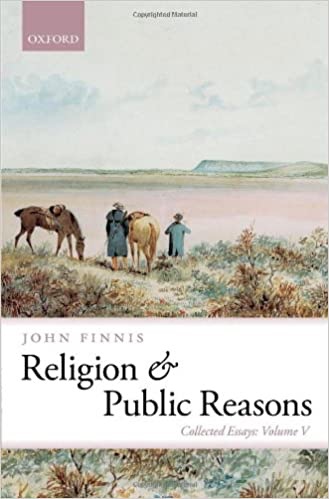
Hardcover. NY/London, Oxford University Press, 1st, 2013, Book: Very Good, Dust Jacket: Very Good, Hardcover in a bright, unclipped dust jacket, 450 pages. The essays in Religion and Public Reasons seek to argue for, and illustrate, a central element of John Finnis' theory of natural law: that the main tenets of personal and political morality, and of a good legal order, are taught both by reason (arguments accessible to everyone) and by authentic divine revelation (teachings accessible to all who have a reasonable faith in its witnesses). The author's main books each include arguments for rejecting atheism and agnosticism; several papers here take up these arguments and indicate ways in which they open onto the reasonable grounds for accepting that more about God's nature, and about the meaning of Creation (including ongoing natural evolution), is disclosed by the revelation carried far forward among the Jewish people, and given definitive form by the Jews and Greeks who assembled in the universal Church, as witnesses of Christ, to carry forward that revelation into our present. Several papers argue that "public reason" properly includes such a religion, and that Humeian, Nietzschean, Deweyian, Rawlsian or other atheistically or deistic understandings of a reasonable secularism are badly mistaken. Many substantial papers record the author's position in controversies within Catholicism since the 1960's: on social justice, contraception and abortion; nuclear deterrence; Newman on conscience before pope; Maritain's hopes for a new Christendom and von Balthasar's for a hell empty of human persons; and on "proportionalism" and Lonerganian "historical consciousness" as moral-theological methods. Previously unpublished papers include several University and college sermons, and a substantial introduction.
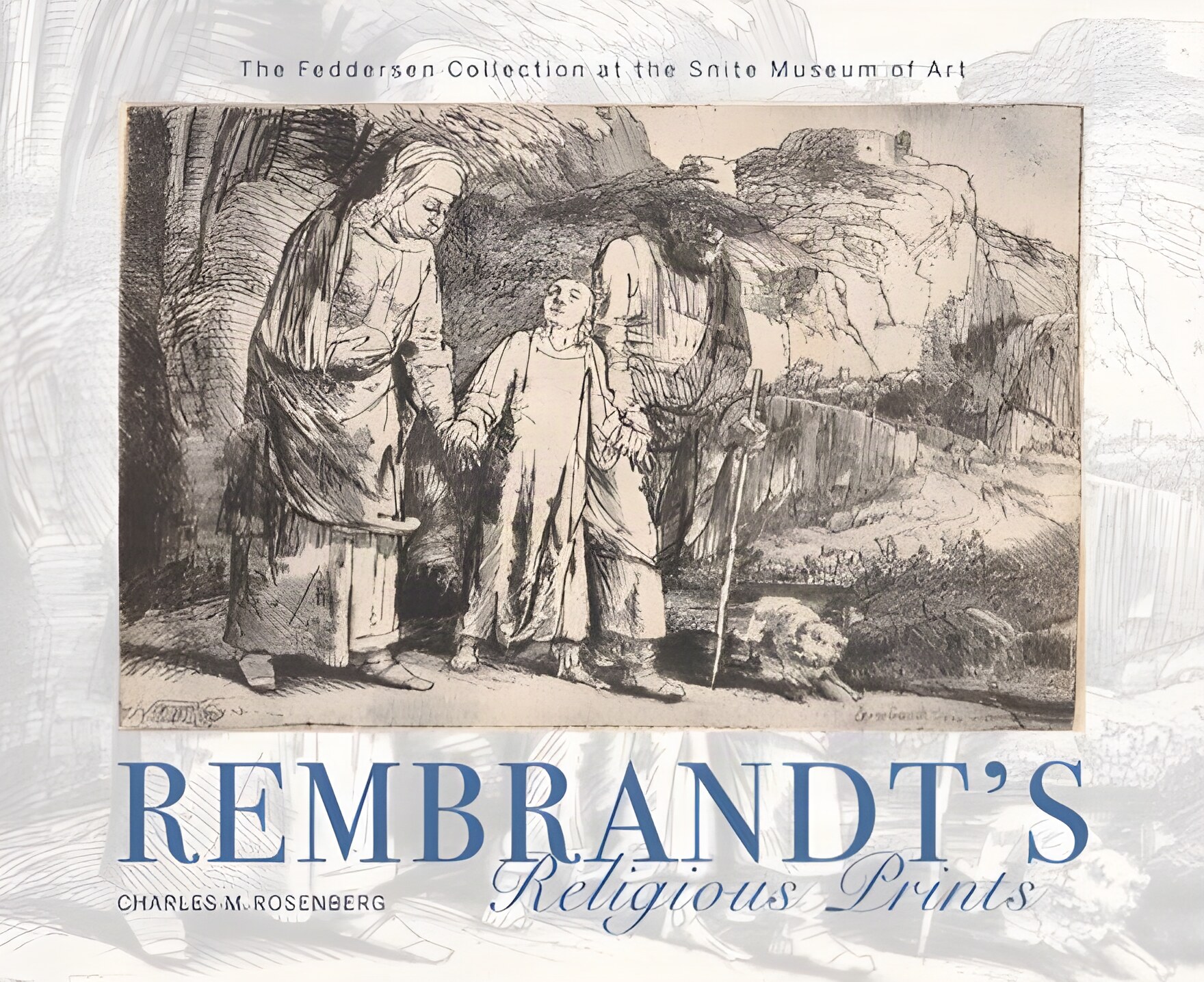
Hardcover. Indiana University Press, 1st, 2017, Book: Very Good, Dust Jacket: Very Good, Hardcover in a bright dust jacket, 475 pages. Rembrandt's stunning religious prints stand as evidence of the Dutch master's extraordinary skill as a technician and as a testament to his genius as a teller of tales. Here, several virtually unknown etchings, collected by the Feddersen family and now preserved for the ages at the University of Notre Dame, are made widely available in a lavishly illustrated volume. Building on the contributions of earlier Rembrandt scholars, noted art historian Charles M. Rosenberg illuminates each of the 70 religious prints through detailed background information on the artist's career as well as the historical, religious, and artistic impulses informing their creation. Readers will enjoy an impression of the earliest work, The Circumcision (1625-26); the famous Hundred Guilder Print; the enigmatic eighth state of Christ Presented to the People; one of a handful of examples of the very rare final posthumous state of The Three Crosses; and an impression and counterproof of The Triumph of Mordecai. From the joyous epiphany of the coming of the Messiah to the anguish of the betrayal of a father (Jacob) by his children, from choirs of angels waiting to receive the Virgin into heaven to the dog who defecates in the road by an ancient inn (The Good Samaritan), Rembrandt's etchings offer a window into the nature of faith, aspiration, and human experience, ranging from the ecstatically divine to the worldly and mundane. Ultimately, these prints? modest, intimate, fragile objects?are great works of art which, like all masterpieces, reward us with fresh insights and discoveries at each new encounter. Clean copy.
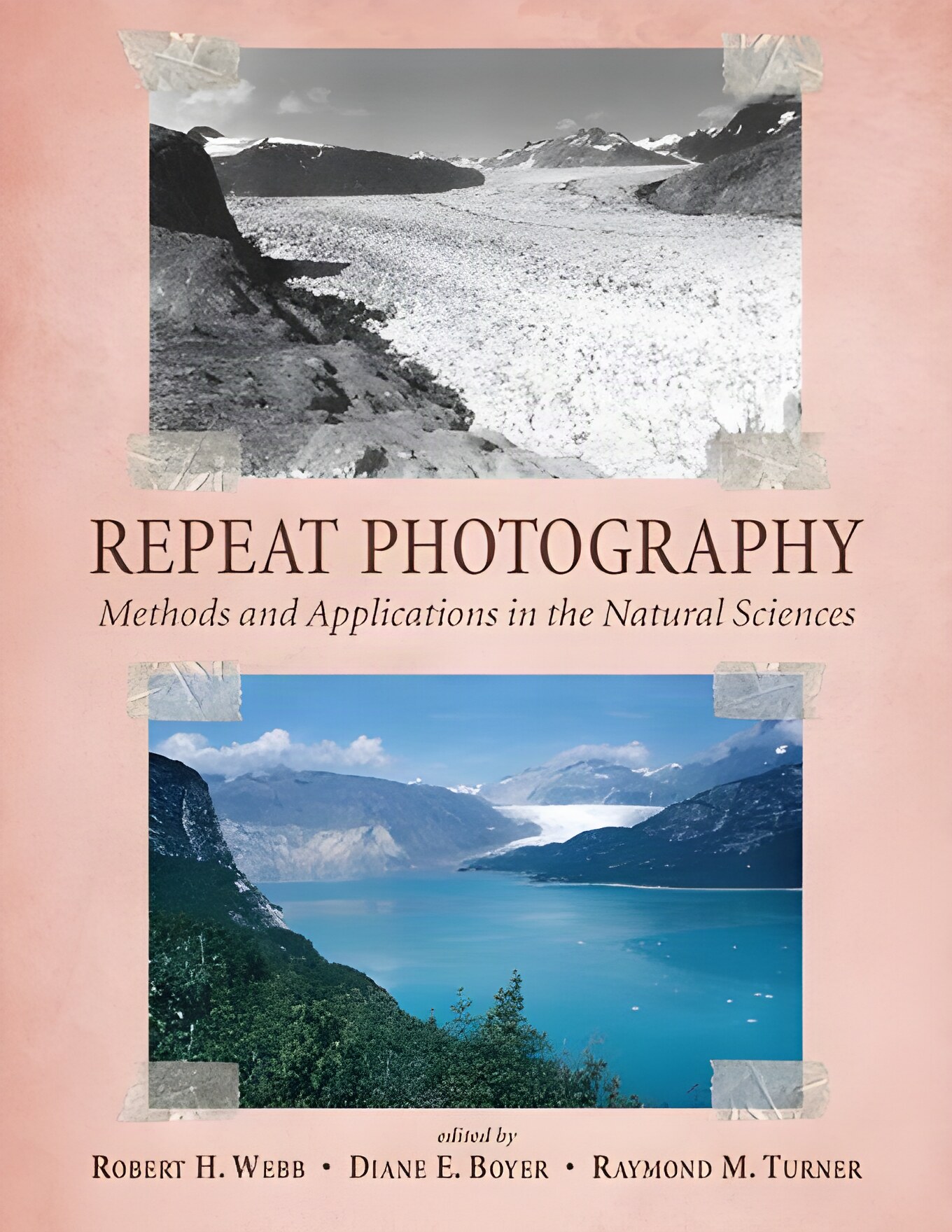
Softcover. Washington DC, Island Press, 1st, 2010, Book: Very Good, Dust Jacket: None, Softcover, 337 pages. Repeat photography is a scientific technique in which photographs are taken from the same vantage point over different points in time. This text explores the technical and geographic scope of this method through a series of essays by 35+ scholars. Topics include techniques for creation and analysis of repeat photographs, applications in the geosciences, population ecology, and ecosystem change. Thirty two pages of color photographs are included. Clean copy.
Hardcover. Albany NY, New York State Museum of Natural History, 1st, 1868-1875, Book: Very Good, Dust Jacket: None, Unpaginated (approximately 400 pages, including 12 plates, 4 in color, featuring fungi and mushrooms). Half leather and marbled boards with gilt lettering, raised bands on spine. Light rubbing to boards otherwise very good, clean.
Hardcover. Albany NY, New York State Museum of Natural History, 1st, 1876-1887, Book: Very Good, Dust Jacket: None, Hardcover. Unpaginated (approximately 400 pages, including 13 b & w plates featuring fungi and mushrooms). Half leather and marbled boards with gilt lettering, raised bands on spine. Light rubbing to boards otherwise very good, clean.
Hardcover. London/NY, Routledge, 1st, 2005, Book: Very Good, Dust Jacket: None, Hardcover, pictorial boards, 280 pages with index. Color and b&w illustrations. Why does art matter to us, and what makes it good? Why is the role of imagination so important in art? Illustrated with carefully chosen color and black-and-white plates of examples from Michaelangelo to Matisse and Poussin to Pollock, Revealing Art takes us on a compelling and provocative journey. Kieran explores some of the most important questions we can ask ourselves about art: how can art inspire us or disgust us? Is artistic judgement simply a matter of taste? Can art be immoral or obscene, and should it be censored? He brings such abstract issues to life with fascinating discussions of individual paintings, photographs and sculptures, such as Michelangelo's Pieta, Andres Serrano's Piss Christ and Francis Bacon's powerful paintings of the Pope. He also suggests some answers to problems that any one in an art gallery or museum is likely to ask themselves: what is a beautiful work of art? and can art really reveal something true about our own nature? Clean copy.
Hardcover. London, Faber & Faber, 1st, 1937, Book: Very Good, Dust Jacket: None, Hardcover, green cloth lettered in gilt at the spine. Illustrated with eight photographic plates. 422 pages. Extended passages from Jefferies' work, with a general introduction in two parts: 'The English Genius' and 'To the Two Types of Jefferies Readers', introductions to each section, notes on the text, and the Epigraph. No dust jacket, clean copy.
Hardcover. New York, George Braziller, 1st, 1993, Book: Very Good, Dust Jacket: Very Good, Hardcover in a bright dust jacket, Unpaginated. Color and black & white photography. British artist Long ( Walking in Circles ) takes nature treks--in England's Lake District, the Sahara, Japan, Nepal--and creates site-specific works along the way. He fashions a mud circle in the river Avon, traces a line of snow near a temple in Kyoto and erects a circle of stones on a Swiss mountainside. The spare, deeply meditative photographs that he took en route sometimes call to mind prehistoric British megalithic monuments or Native American earthworks, as if he wants to tune in on planetary patterns of energy. At other times Long simply records what he sees, providing dramatic vistas of Iceland's vast rolling hills, Bolivia's high plateau, Washington's forests and Mount Everest's calm majesty. His images, poetic captions and unobstrusive siteworks reflect an artist who is at once traveler, nature-lover and adventurer.
Hardcover. Koln GR, Taschen, 1st, 2000, Book: Very Good, Dust Jacket: None, Hardcover, 464 pages. Original publisher's faux wood boards, lettered orange at the spine and front cover. Copiously illustrated in color and black and white throughout. Text in English, German and French. Many photographs By Julius Shulman. Originally from Vienna, Richard Neutra came to America early in his career, settling in California. His influence on post-war architecture is undisputed, the sunny climate and rich landscape being particularly suited to his cool, sleek modern style. Neutra had a keen appreciation for the relationship between people and nature; his trademark plate glass walls and ceilings which turn into deep overhangs have the effect of connecting the indoors with the outdoors. Neutra's ability to incorporate technology, aesthetic, science, and nature into his designs brought him to the forefront of Modernist architecture. For the first time, all of Neutra's works (nearly 300 private homes, schools, and public buildings) are gathered together in one volume.
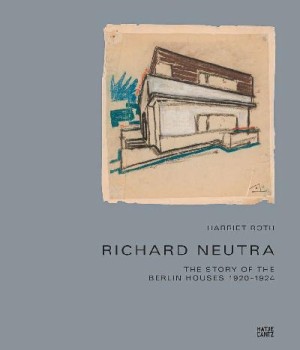
Hardcover. Hatje Cantz, 1st, 2019, Book: Very Good, Dust Jacket: None, Hardcover, pictorial boards, 304 pages illustrated in b&w and color. At the first mention of his name, one can easily picture them: light-flooded bungalows that are lavishly composed into nature and that characterize the architectural style of the American West Coast surrounding Los Angeles. But it is sometime overlooked that the career of Richard Neutra (1892-1970) began in Berlin-Zehlendorf. And yet these houses in Zehlendorf represent a fascinating phase in Neutra's work. With their complex color schemes and extravagant interior design, they reveal themselves to be more than just an experimental and radically innovative design. Indeed, these lesser-known aspects already hint at elements that will be taken up again in future projects. The present publication finally provides for a rightful appreciation of Neutra's early works and, alongside historical sources, it collects countless new and unpublished documents about the houses and their first residents. Clean, still in publisher's shrink wrap.
Hardcover. New Haven, Yale University Press, 1st, 2008, Book: Very Good, Dust Jacket: Very Good, 129 pages. Hardcover. Color and b/w illustrations throughout. Clean inside and out. In excellent shape. From the Foreward: "River of No Return is organized like a long poem or a piece of music...a stunning look at an actual place, a meditation on rivers, nature history, the history of landscape photography of the American West and the idea of the American West. And the nature of fact and the nature of myth, and how we hold the world in our hands."
Hardcover. Boston, Houghton Mifflin, 1st, 1894, Book: Very Good, Dust Jacket: None, 310 pages. Gilt top edge. Light edge wear, rubbing to covers. Pencil marking to several pages and inside front cover. Else a clean, tight copy.
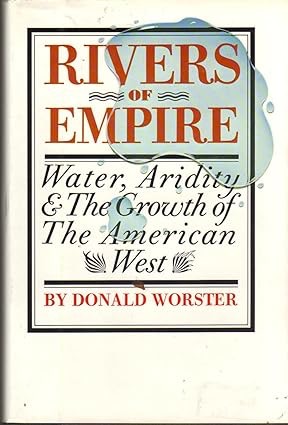
Hardcover. NY, Pantheon Books, 1st, 1985, Book: Very Good, Hardcover in a bright dust jacket, 402 pages, index, notes. A historical study of the development of the West and how, from the earliest days of development, elites of wealth and technological power have controlled the West's most precious resource: water. An analysis of the opening of the American West views the ecological reality of the area's aridity as the source of political control. Name on front fly leaf, light remainder line on bottom edge, otherwise clean.
Hardcover. NY, Pantheon Books, 1st, 1985, Book: Very Good, Dust Jacket: Very Good, Hardcover in a bright, price-clipped dust jacket, 402 pages. SIGNED BY THE AUTHOR on the title page. Worster presents a picture of a technological empire based on vast water projects, designed by engineers and controlled by a small managerial elite. This reality, he argues, considerably limited the West's fabled freedom, the claims of promoters, hack writers, and self-serving local historians notwithstanding . this is a major theoretical work, well-argued and generally well-written, a must for any bookshelf that seeks thoroughness in matters western. Chapter five "The Grapes of Wealth," is focused on irrigation in the Central Valley of California and the Central Valley Project. Donald Worster (born 1941) is a prize-winning American academic, one of the founders of, and leading figures in, the field of environmental history. Clean copy.
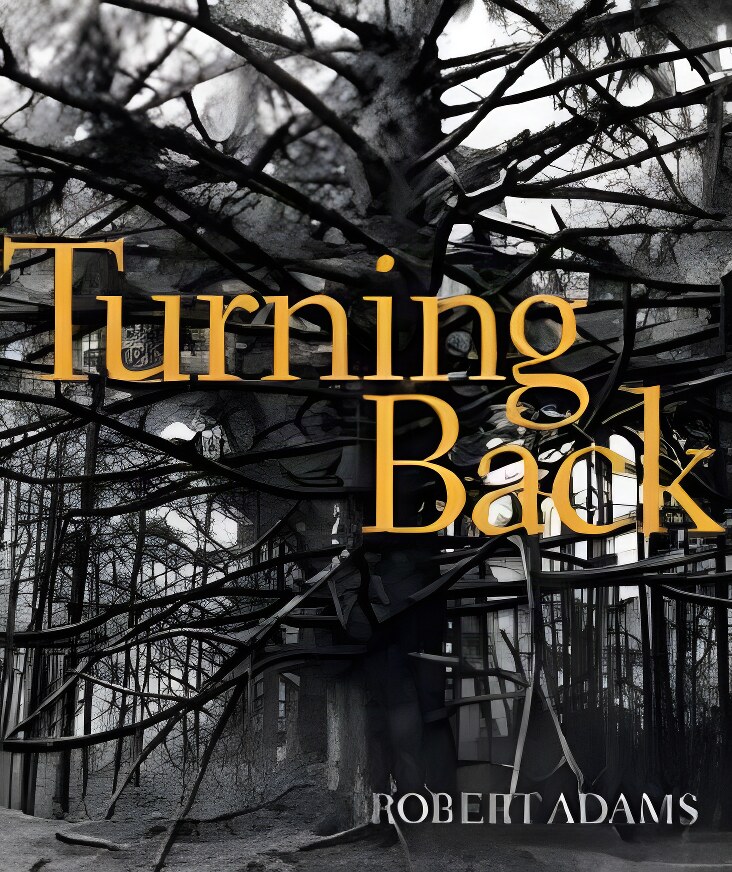
Hardcover. San Francisco, Fraenkel Gallery, 1st, 2005, Book: Very Good, Dust Jacket: Very Good, Hardcover in a bright dust jacket, 234 pages with 164 tritone photographs. beautiful copy still in shrinkwrap. Like new. Turning Back: A photographic journal of Re-exploration is published to coincide with the bicentennial of the Lewis and Clark Expedition.
Hardcover. Individual photographers, Fraenkel Gallery/Matthew Marks Gallery. , 1st, 2005, Book: Very Good, Dust Jacket: Very Good, Hardcover, 234 pages; 164 duo-toned b&w plates; 9.75 x 12 inches. A Photographic Journal of Re-Exploration is published to coincide with the bicentennial of the Lewis and Clark Expedition. Beautiful copy still in shrinkwrap. Like new.
Hardcover. San Francisco, Fraenkel Gallery, 1st, 2005, Book: Very Good, Dust Jacket: Very Good, Hardcover in a bright dust jacket, 234 pages with 164 tritone photographs. beautiful copy still in shrinkwrap. Like new. Turning Back: A photographic journal of Re-exploration is published to coincide with the bicentennial of the Lewis and Clark Expedition.
Softcover. New Haven CT, Yale University Press, 1st, 2011, Book: Very Good, Dust Jacket: None, Softcover, 202 pages. color and b&w illustrations. Italian couturier Roberto Capucci (b. 1930) is revered by contemporary fashion designers for his innovative silhouettes and masterful use of color and materials. Capucci refers to his creations as "studies in form," and draws inspiration from a multitude of sources, including art, architecture, and nature. This beautifully illustrated book, the companion to the first exhibition of Capucci's work in the United States, examines his career from the 1950s to the present in the context of the rise of Italian fashion.
Hardcover. Casemate, 1st, 2010, Book: Very Good, Dust Jacket: Very Good, Hardcover in a bright dustjacket, 264 pages. Following the Allied breakout from the Normandy beachhead in July 1944, the vaunted German Army seemed on the verge of collapse. As British and US forces fanned out across northwestern France, enemy resistance unexpectedly dissolved into a headlong retreat to the German and Belgian borders. In early September an elated Allied High Command had every expectation of continuing their momentum to cripple the enemy's warmaking capability, by capturing the Ruhr industrial complex and plunging into the heart of Germany. After a brief pause to allow for resupply, Courtney Hodge's First Army prepared to punch through the ominous but largely outdated Westwall (Siegfried Line) surrounding Aachen. Drawing on primary Wehrmacht and US sources, including battle analysis and daily situation and after-action reports, The Roer River Battles provides insight into the desperate German efforts to keep a conquering enemy at the borders of their homeland. Tactical maps down to battalion level help clarify the very fluid nature of the combat. Combined, they serve to explain not just how, but why decisions were made and events unfolded, and how reality often differed from doctrine in one of the longest US campaigns of World War II.
Hardcover. Boston, Houghton Mifflin, reprint, 1918, Book: Very Good, Dust Jacket: Good, Hardcover, gray/green cloth stamped with a black and white design. In a dust jacket with two chunks gone from spine. A naturalist ruminates on birds (mostly) and woodchucks in these essays on wildlife. B&w illustrations by R. Bruce Horsfall,Most of these pieces were previously published in magazines.
London, Hamish Hamilton, 1st UK, 1980, Book: Very Good, Dust Jacket: Very Good, Hardcover in a bright, price-clipped dust jacket. Edgewear, rubbing and sticker residue to dust jacket. Color illustrations by the author. Light sticker residue, small closed tears to dust jacket.
Hardcover. La Jolla CA, Green Tiger Press, 2nd pr., 1986, Book: Good, Dust Jacket: None, Hardcover, illustrated boards, no dust jacket. Rover and Coo Coo is a story in the traditional style of story telling, a story that was told to generations of the Hay family around an open fire in winter or on an open porch in summer. It takes place when Indiana was a frontier, and Charles Hay left his family in their log cabin and went to the distant mill to have his corn ground. The adventure takes place in the dark forest with a chase by hungry wolves, and Charles' faithful hounds saving the day. There are beautiful and clear descriptions of the surroundings in those pristine times. The illustrations of the highly acclaimed artist, Tim Soliday, bring it all alive. In the end Charles is safe with his wife and two small children, and he speaks of nature and how all creatures have a place in the larger picture of the oneness of the world.

 "Regarding Womenby: Erwitt, Elliott")
 "Report of the Botanist: Volume 22-29 (1868-1875)by: Peck, Charles S.")
 "Report of the Botanist: Volume 30-41 (1876-1887))by: Peck, Charles S.")

 "Richard Long: Mountains and Watersby: Long, Richard")
 "Richard Neutra : Complete Worksby: Barbara Mac Lamprecht, (Photography) Julius Shulman, (Editor) Peter Goessel")
 "River of No Return: Photographs by Laura McPheeby: McPhee, Laura")
 "Riverbyby: Burroughs, John")
 "Robert Adams: Turning Backby: Adams, Robert (Photographer)")
 "Robert Adams: Turning Backby: Adams, Robert (Photographer)")

 "Roberto Capucci: Art into Fashionby: Dilys E. Blum")
 "Roer River Battles: Germany's Stand at the Westwall, 1944")


 "Rookby: King, Deborah")
 "Rover and Coo Cooby: John Hay/Tim Solliday")