Hardcover. Cleveland, Ohio, Alexander T. Bunts, 1st, 1938, Book: Very Good, Dust Jacket: None, Hardcover, 219 pages. Limited first edition copy. Minor fading on blue cloth cover. Faded sticker mark on front flyleaf. Otherwise, a very clean and tight copy.
Hardcover. NY, Random House Studio , 1st, 2023, Book: Very Good, Dust Jacket: Very Good, Hardcover in a bright, unclipped dust jacket. Color illustrations throughout by Claire Keane. SIGNED BY KUNKEL on the title page. In the beginning, there was a boy named Robert McCloskey, growing up in Ohio, his hands always moving, always creating. Many years later, after attending art school in Boston, he would reflect on his days wandering through Boston Garden and write the classic picture book Make Way for Ducklings. In the beginning, there was also a girl named Nancy Sch n. She grew up in Newton, Massachusetts, working in her father's greenhouse, twisting wire and boughs into wreaths. Many years later, Nancy would look at Robert's drawings in Make Way for Ducklings and get the seed of an idea. That seed became the beloved bronze sculptures of Mrs. Mallard and her eight ducklings that stand in Boston Garden today. This stunning and clever picture book biography intertwines the lives of two phenomenal artists--who were contemporaries and friends--and reveals the extraordinary impact they've had on generations of children.
Hardcover. New York, Rizzoli, 1st, 1985, Book: Very Good, Dust Jacket: Very Good, Hardcover in a bright dust jacket,160 pages. Folio. gray cloth, spine stamped in gilt. Richly illustrated with 172 illustrations, 50 in full color. First monograph of this American-born artist who has lived most of his life in England. Includes a catalogue of all his work up until 1985.R.B. Kitaj (1932-2007) is one of the most intriguing 20th century artists. Born into a Russo-Jewish family near Cleveland, Ohio, 17-year old Kitaj spent 5 years at sea aboard a Norwegian freighter. He went on to study art in New York and Vienna. A Royal College of Art stipend made him move to London where he became a celebrated artist. Curating The Human Clay, a 1976 show of figurative contemporary British artists, he coined the term "School of London" for the artistic circle around Francis Bacon, Frank Auerbach, Lucian Freud, and Leon Kossoff. In 1991 he was elected a member of the Royal Academy, one of only three American painters to be thus honored in the history of the institution. A major 1994 retrospective at London's Tate Gallery failed to produce Kitaj's international breakthrough, but was unanimously panned by British critics instead. This, and the unexpected death of his wife Sandra, induced his increasingly paranoid perspective. Embittered he returned to the USA and settled in Los Angeles, where he finally took his own life in 2007. Kitaj left behind a manuscript unmatched among 20th-century artist autobiographies -- Confessions of an Old Jewish Painter. Eloquently describing his vices and sufferings, it stands in the traditions of both St. Augustine and Thomas de Quincey. Now published for the first time, it is a sensation, from both a literary and art historical point of view.
Hardcover. Baltimore, Genealogical Publishing Company, 2nd pr., 1997, Book: Very Good, Dust Jacket: None, Hardcover, blue cloth stamped with gilt lettering, 608 pages. After the Revolutionary War, the federal government awarded bounty lands to citizens and soldiers for services rendered. In its simplest form, this involved the exchange of free land for military service. Federal records of these Revolutionary War bounty land awards are well known and readily accessible to genealogists. But the federal government was not alone in rewarding its citizens and soldiers with bounty lands. Nine state governments adopted similar policies, generating even more records. Unlike the federal bounty land records, however, these state records are not centralized; instead, they are found in the various states in the form of manuscript records and printed books and are all but inaccessible to the researcher. Until now, that is! Because with this work by Lloyd Bockstruck we now have a master index to state bounty land records, a Revolutionary War resource unparalleled for freshness, originality, and research potential. The nine states that awarded bounty lands in their western reserves or on their western borders (directly affecting the future states of Indiana, Kentucky, Maine, Ohio, and Tennessee) are Connecticut, Georgia, Maryland, Massachusetts, New York, North Carolina, Pennsylvania, South Carolina, and Virginia. (The basis for the Connecticut and Georgia awards, by the way, differ from the norm.) Clean, bright copy.
Softcover. Columbus OH, Ohio State University Press, 1st, 2005, Book: Very Good, Dust Jacket: None, Softcover, 189 pages. Looks at the response of American writers to Prohibition with an analysis of fictional portrayals of bootleggers, moonshiners, cabarets, speakeasies, and Prohibition-era characters. Clean copy.
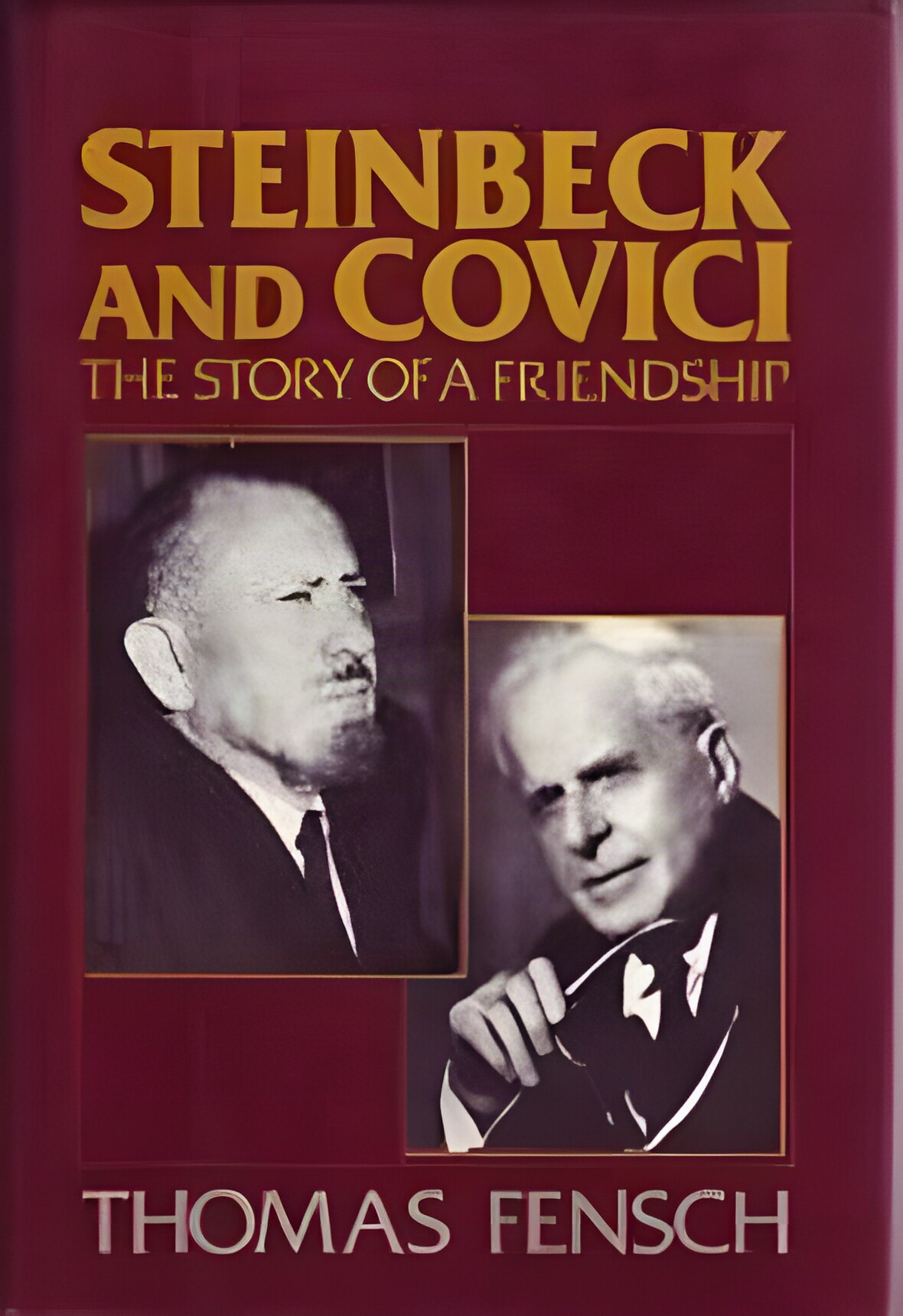
Hardcover. Middlebury, VT, Paul Eriksson, 1st collected ed., 1979, Book: Very Good, Dust Jacket: Good, Hardcover in a nice dust jacket. The relationship between the novelist and his editor Pascal Covici. Some fade, light wear to dj. Steinbeck and Covici is a major contribution to the literature about John Steinbeck. "Steinbeck Quarterly" magazine wrote, "Thomas Fensch offers the first comprehensive account of one of John Steinbeck's most enduring, intimate, and important relationships: his association with his editor, Pascal Covici. The results are revealing, and broaden the dimension of Steinbeck studies." This book was first published in l979 and received not one, but two separate reviews in "The New York Times." It was also widely reviewed elsewhere and won the Book of the Year Award in Biogaphy from the Ohioana Library Association, in l980.
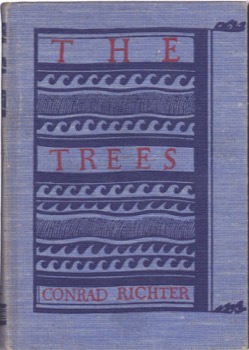
Hardcover. NY, Alfred A. Knopf, 1st, 1940, Book: Very Good, Dust Jacket: None, Hardcover, light blue cloth with red and dark blue lettering on the spine and cover, 302 pages. A moving novel of the beginning of the American trek to the west. Toward the close of the eighteenth century, the land west of the Alleghenies and north of the Ohio River was an unbroken sea of trees. Beneath them the forest trails were dark, silent, and lonely, brightened only by a few lost beams of sunlight. Here, in the first novel of Conrad Richter's Awakening Land trilogy, the Lucketts, a wild, woods-faring family, lived their roaming life, pushing ever westward as the frontier advanced and as new settlements threatened their isolation. This novel gives an excellent feel for America's lost woods culture, which was created when most of the eastern midwest was a vast hardwood forest---virtually a jungle. The Trees conveys settler life, including conflicts with Native Americans, illness, hunting, family dynamics, and marriage. INSCRIBED BY RICHTER on the front fly leaf. A bright, sharp copy missing the dust jacket. Related ephemera laid in.
Hardcover. NY, Alfred A. Knopf, 4th pr., 1963, Book: Very Good, Dust Jacket: Very Good, Hardcover in a bright, unclipped dust jacket. 361 pages, color frontis, preface, list of b&w illustrations and maps, prologue, 1. Beaver and Mountain Men; 2. Jedediah Strong Smith: From the Big Lake to the Sea; 3. Kedediah Strong Smith: The End of the Long Trail; 4. To Santa Fe and Beyond; 5. Perils of the Wilderness: The Wanderings of James Ohio Pattie; 6. "Joaquin Yong" and the Men of Taos; 7. From Santa Fe to California; 8. Joseph Reddeford Walker: To the "Extreme End of the Great West; 9. Partisans versus Mountain Men; epilogue, bibliographical notes, index. Minor edgewear to dust jacket. Clean copy.
hardcover. NY, Aperture, 1st, 2003, Book: Very Good, Dust Jacket: Very Good, Hardcover in a dust jacket. 80 black and white tritone portraits by Mark. Clean, bright copy. Mary Ellen Mark's fascination with twins has inspired a remarkable portrait series. Traveling to Twinsburg, Ohio, for their annual "Twins Day" festival allowed her to photograph hundreds of twins. In the two consecutive years Mark visited the festival she used a complex set-up for the seemingly simple aesthetic. Every detail is captured through the Polaroid 20x24 camera Mark used. Between the camera and dynamic lighting every wrinkle, toned muscle, body hair, and freckle is visible. Using the studio, all attention of the festival is lost. Instead the attention is given to the twins themselves. A thoughtful decision that emphasizes Marks pure interest in her subjects. The final pages of the book are dedicated to bits of conversation Mark collected after shooting the photographs. Each fragment from the conversations revels more about each pair connecting the viewer even more with every photograph.
Hardcover. NY, Aperture, 1st, 2005, Book: Very Good, Dust Jacket: Very Good, Hardcover, 96 pages. Mary Ellen Mark, voted by the readers of "American Photography" as the most influential woman photographer of all time, has made some of America's most iconic images in a career spanning more than three decades. In "Twins," her fourteenth publication, Mark turns her acute eye and her heart to the extraordinary bond that exists between these very special siblings. A collection of 80 tritone images and interviews of twins taken by Mark at a twins festival in Twinsburg, Ohio.
Hardcover. Columbia OH, Ohio State University Press, 1st, 2008, Book: Very Good, Dust Jacket: None, 368 pages. Hardcover with no dust jacket. Clean, unmarked copy with only minor wear to corners. While "freaks" have captivated our imagination since well before the nineteenth century, the Victorians flocked to shows featuring dancing dwarves, bearded ladies, "missing links," and six-legged sheep. Indeed, this period has been described by Rosemarie Garland-Thomson as the epoch of "consolidation" for freakery: an era of social change, enormously popular freak shows, and taxonomic frenzy. Victorian Freaks: The Social Context of Freakery in Britain, edited by Marlene Tromp, turns to that rich nexus, examining the struggle over definitions of "freakery" and the unstable and sometimes conflicting ways in which freakery was understood and deployed. As the first study centralizing British culture, this collection discusses figures as varied as Joseph Merrick, "The Elephant Man"; Daniel Lambert, "King of the Fat Men"; Julia Pastrana, "The Bear Woman"; and Laloo "The Marvellous Indian Boy" and his embedded, parasitic twin. The Victorian Freaks contributors examine Victorian culture through the lens of freakery, reading the production of the freak against the landscape of capitalist consumption, the medical community, and the politics of empire, sexuality, and art. Collectively, these essays ask how freakery engaged with notions of normalcy and with its Victorian cultural context.
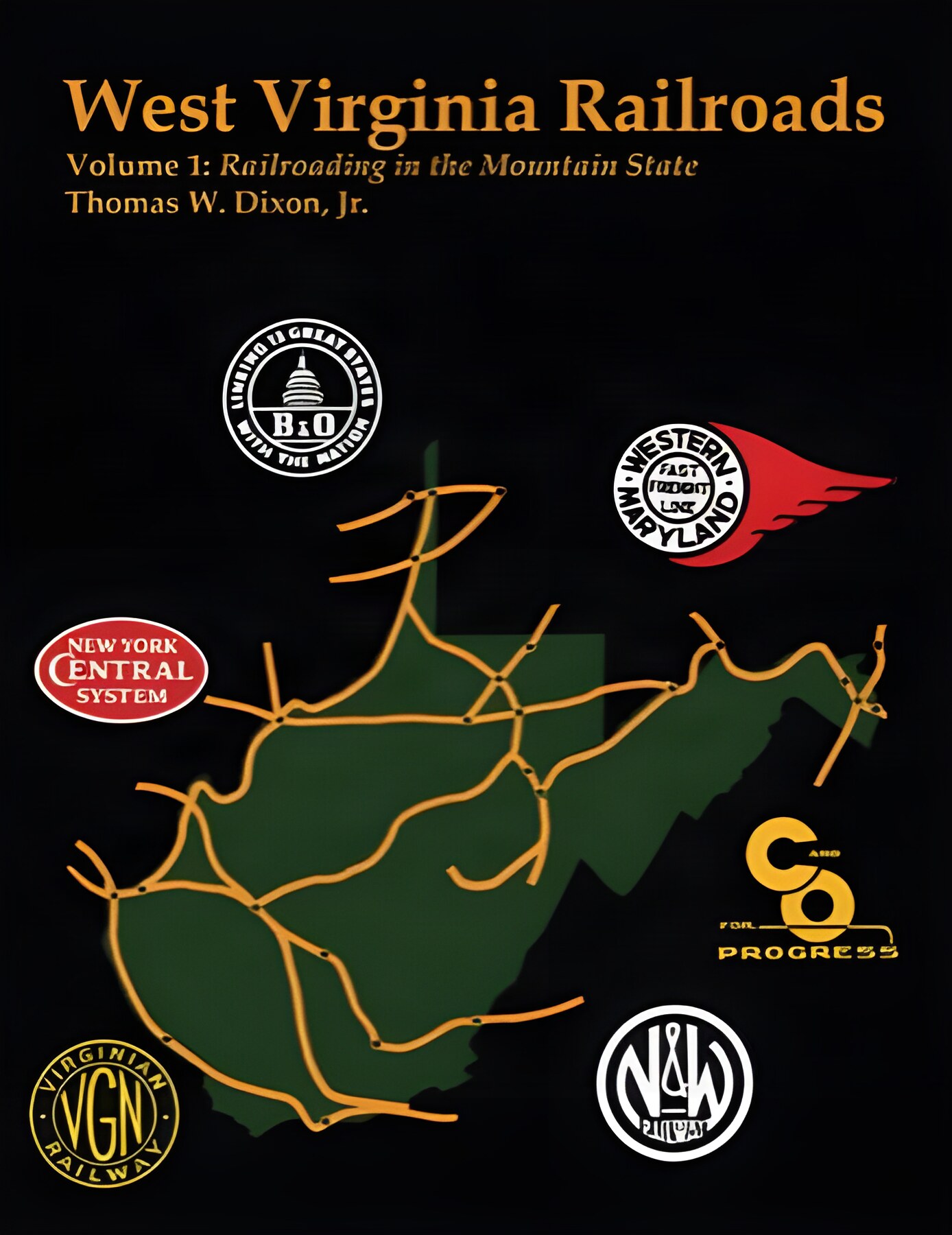
Softcover. Forest VA, TLC Publishing, 1st, 2009, Book: Very Good, Dust Jacket: None, Softcover, 128 pages, profusely illustrated in b&w. This book outlines the history of railroading in West Virginia from the earliest entry of Baltimore & Ohio into what was then western Virginia up to the 1860s. In addition to B&O, Chesapeake & Ohio, Western Maryland, Norfolk & Western, and Virginian have major chapters. Smaller sections cover the New York Central, short lines, logging railroads, and others that had only a smaller presence in the state. Clean copy.

 "Letters From the Asiatic Station 1881-1883by: Bunts, Frank Emory")
 "Lions and Foxes - Men and Ideas of the Italian Renaissanceby: Alexander, Sidney")
 "People, Places & Flingsby: n/a")
 "R. B. Kitajby: Livingstone, Marco")
 "Revolutionary War Bounty Land Grants Awarded by State Governmentsby: Bockstruck, Lloyd DeWitt")


 "Twinsby: Mark, Mary Ellen")
 "Twinsby: Mary Ellen Mark")
 "Victorian Freaks: The Social Context of Freakery in Britainby: Tromp, Ph.D. Marlene (editor)")