Hardcover. Kent OH, Kent State Univ Pr, 1st, 2003, Book: Very Good, Dust Jacket: Very Good, Hardcover, 180 pages, illustrated throughout in b&w. Clean, unmarked copy with only minor wear to dust jacket. Zoar, Ohio, a German-Christian utopian community founded in 1817, encouraged tourism and "gawkers." This has left a rich photographic record of the community, which includes tourists's photos and Zoarite-produced postcards. Fernandez uses many previously unpublished photos, captioned with the words of journalists, diarists, and other visitors.
Hardcover. Ohio, Kent State University Press , 1st, 1973, Book: Very Good, Dust Jacket: None, Hardcover,115 pages, cream cloth with black lettering on spine.
Softcover. Sacramento CA, Crocker Art Museum, 1st, 2007, Book: Very Good, Dust Jacket: None, 47 pages, illustrated throughout in color. SIGNED BY ARTIST on front end paper. Clean, unmarked copy with only minor wear to wrappers. Robert Cremean (1932 - Present) is a sculptor (and occasional painter) born in Ohio, now based in Tomales Bay, California. Cremean does superlative figurative work. However, he has largely isolated himself from the American art mainstream to the extent that any showing is a considerable rarity. He's developed, via a benefactor, an "arrangement" with the Fresno Art Museum whereby it displays most of his new work. This book is from a show at the Crocker Art Museum, Sacramento, in 2005. Now 88, Cremean was early--and unsurprisingly-- influenced by medieval art, particularly the illuminated Chaucer manuscript at the Huntington Library. "I was amazed at the way the words and pictures met one another on the page." Most of his painted words are transcribed from his own notebooks.
Softcover. Baltimore, Baltimore & Ohio Railroad, 1893, Book: Good, Softcover, folding brochure (4 X 8 1/2") which opens up to a large color map on the reverse: "Map of Baltimore & Ohio Railroad and Its Connections Over Which Through Cars Are Run". Opposite side of map has various schedules, scenic stops, b&w illustrations. Light wear, mild creases, Good+. More pictures upon request.
Hardcover. New York, Norton, 1st, 2018, Book: Very Good, Dust Jacket: Very Good, Hardcover, 634 pages, b&w illustrations. In a bright, unclipped dj. In Berenice Abbott: A Life in Photography, author, archivist, and curator Julia Van Haaften brings this iconic public figure to life alongside outlandish, familiar characters from artist Man Ray to cybernetics founder Norbert Wiener. A teenage rebel from Ohio, Abbott escaped first to Greenwich Village and then to Paris-photographing, in Sylvia Beach's words, "everyone who was anyone." As the Roaring Twenties ended, Abbott returned to New York, where she soon fell in love with art critic Elizabeth McCausland, with whom she would spend thirty years. In the 1930s, Abbott began her best-known work, Changing New York, in which she fearlessly documented the city's metamorphosis. When warned by an older male supervisor that "nice girls" avoid the Bowery-then Manhattan's skid row-Abbott shot back, "I'm not a nice girl. I'm a photographer...I go anywhere." This bold, feminist attitude would characterize all Abbott's accomplishments, including imaging techniques she invented in her influential, space race-era science photography and her tenure as The New School's first photography teacher. With more than ninety stunning photos, this sweeping, cinematic biography secures Berenice Abbott's place in the histories of photography and modern art, while framing her incredible accomplishments as a female artist and entrepreneur.
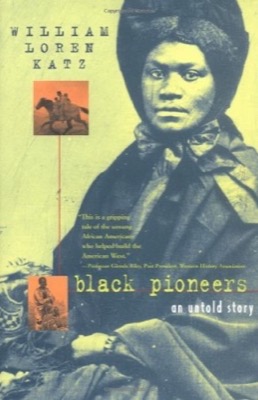
Hardcover. NY, Atheneum, 3rd pr., 1999, Book: Very Good, Dust Jacket: Very Good, Hardcover in a bright, unclipped dust jacket. In a clear, straightforward style, Katz describes the settlement of the Ohio and Mississippi Valleys (covering Ohio, Indiana, Illinois, Michigan, Wisconsin, Minnesota, Iowa, Kansas, and Missouri) by African Americans seeking freedom, including biographical sketches of men and women who formed churches, started schools, or were politically active in their region. Some of these settlers were fugitive slaves; several set up stations on the Underground Railroad with the aid of the Quakers; others were farmers, poets, and soldiers. In several states, they helped form black regiments in the Civil War. Chronologically arranged, the book introduces many lesser-known personages not found in most collective biographies and places them in a broader context of U.S. history as a whole.
Hardcover. NY, Atheneum, 3rd pr., 1999, Book: Very Good, Dust Jacket: Very Good, Hardcover in a bright, unclipped dust jacket. In a clear, straightforward style, Katz describes the settlement of the Ohio and Mississippi Valleys (covering Ohio, Indiana, Illinois, Michigan, Wisconsin, Minnesota, Iowa, Kansas, and Missouri) by African Americans seeking freedom, including biographical sketches of men and women who formed churches, started schools, or were politically active in their region. Some of these settlers were fugitive slaves; several set up stations on the Underground Railroad with the aid of the Quakers; others were farmers, poets, and soldiers. In several states, they helped form black regiments in the Civil War. Chronologically arranged, the book introduces many lesser-known personages not found in most collective biographies and places them in a broader context of U.S. history as a whole.
New York, Charlotte Zolotow/ HarperCollins, 1st, 1991, Book: Very Good, Dust Jacket: Very Good, Hardcover in a bright, unclipped dust jacket, 101 pages. A young adult novel by a Newbery medalist, about an Ohio farm girl's life. Mothers give birth in the borning room. The dying take their departure there. Outside the Lott family's Ohio farmhouse, the Civil War rages, slavery falls, and the world marvels at the wonder of electricity. Inside, within the walls of the borning room, Georgina Lott will experience her life's greatest turnings. Across the years, she discovers womanhood and first love, experiences the mourning that comes with loss, and, as did her mother and grandmother, at last takes her place in the room as another precious life is about to begin.
Hardcover. NY, Watson-Guptill Publications, 1st, 1976, Book: Very Good, Dust Jacket: Very Good, Hardcover in a bright, unclipped dust jacket. 208 pages, 46 four-color plates, and 100+ b&w reproductions. The first fully illlustrated major study of the artist, considered one of the greatest painters of the American scene. Burchfield (1893-1967) 'painted 'the haunting lights and shadows of small-town America. He evolved 'quite alone anmd independently' in Ohio and New York, painting nostalgic fantasies, dreary small-town life; fanciful & poetic landscapes. Clean copy.
Hardcover. NY, Time Life, reprint, 1983, Book: Very Good, Dust Jacket: None, 401 pages. Hardcover with no dust jacket. Dark blue leather bound with gilt titles to front cover and spine. Embossed decoration on front cover. Gilt text block edges, red ribbon marker. Clean, tight copy. This is one of the more impressive (and unfortunately little known) records of the American Civil War. John Beatty was a lawyer from Ohio who joined the Union Army when the South seceded. He started his service in western Virginia under General George B. McClellan. Although McClellan would later become one of the most well-known generals of the war, it was here that he first achieved the prominence that would lead to Lincoln promoting him to head Union forces on two separate occasions. Beatty, however, was clearly not enamored of McClellan. His journal opens with a description of arriving in one of the local railroad communities and subsequent entries describe the minutiae of camp life. Beatty is relatively unique among memoirists in that his book is largely a transcription of his original diary. As a result, his recollections are of recent events and have a degree of candor not present in many post-bellum narratives.
Hardcover. Cleveland, Ohio, The Arthur H. Clark Company, reprint, 1910, Book: Very Good, Dust Jacket: None, Hardcover, blue cloth, 434 pages. Minor cover corner and spine edge wear. Gilt top edge and titles on spine. Tissue guard on frontispiece portrait of Commodore Rodgers. Very clean and tight copy.
Hardcover. Cincinnati, Ohio, North Light Books, 1st, March 1991, Book: Very Good, Dust Jacket: None, Hardcover, 134 pages, b&w illustrations. A very clean, tight copy. Explains the role of caricature, tells how to develop a personal style, and includes profiles and work by top caricaturists. No dj issued.
Hardcover. Exton PA, Schiffer Publishing, 1st, 1981, Book: Very Good, Dust Jacket: Very Good, Hardcover in a lightly worn dust jacket, 271 pages. Black and white and color photos throughout. A history and study of the making and use of duck decoys along the Mississippi flyway, looking at makers in regions such as Canada, Wisconsin, Minnesota, Michigan, Ohio, Indiana, Illinois, Iowa, Missouri, Mississippi and Louisiana.
Softcover. self-published, 1st, 2007, Book: Very Good, Dust Jacket: None, Softcover, 150 pages. A collection of random newspaper snippets from the early newspapers in the Sandusky, Ohio area. Not in chronological order, they range from the mid-1800s to late 1920s. Clean copy.
Hardcover. Columbus OH, Ohio State University Press, 1st, 1967, Book: Very Good, Dust Jacket: Fair, Hardcover in a worn, chipped dust jacket. 170 pages. LONG INSCRIPTION BY AUTHOR on the front fly leaf dated 1987.
Hardcover. Hartford, W.H. Gocher, 1st, 1903, Book: Very Good, Dust Jacket: None, Hardcover, black cloth with gilt lettering on spine, 314 pages. Previous owners inscription and stamping on front and rear endpapers. Light rubbing to covers. Corners bumped. Memoirs of harness racing through the last half of the nineteenth century.
Softcover. Createspace Independent Publishing, 1st, 2018, Book: Very Good, Dust Jacket: None, Sodtcover, 254 pages. Actor, director, writer Evans connect his dots and long dashes through a life both creative and chaotic. Family, career, and cancer bump heads in a runaway boxcar full of colorful entanglements with the famous and the foolish. Tracing his family history through the years from the Dust Bowl and the Great Depression to the tragedy of the Hindenburg, and his early childhood in Japan before WW2, Evans cleverly sets the stage for what follows. His career as an actor ultimately clashed with an early marriage and fatherhood, providing many temptations that carried Evans to Mexico, Arizona, Ohio, Delaware, Kauai, Hawaii, and points beyond. Working in films with stars Jack Nicholson, George C. Scott, David Hemmings, and Michael J. Pollard were high points in his 50-year career that led to a love affair with France and La Nouvelle Vague and the writing, production and direction of his own films and plays. After a season as series regular Paul Hanley opposite Mia Farrow in tv's Peyton Place, Evans moved from early shows like Mr. Novak, Gunsmoke, and Bonanza to an episode of Star Trek with Shatner and Nimoy. Countless other roles sent him on his way to features including major roles in Islands in the Stream, The Nickel Ride, Dirty Little Billy and Synanon, productions that brought him together with many of Hollywood's top directors including Richard Rush, Robert Mulligan, Stan Dragoti and Richard Quine. As his wife, Jo, frequently reminds us, "Dick has made many things, but never without the help of others." Clean copy.
Hardcover. NY, Da Capo Press, 1st, 2012, Book: Very Good, Dust Jacket: Very Good, Hardcover in a bright, unclipped dust jacket. When the wartime 1944 presidential election campaign geared up late that spring, Franklin D. Roosevelt had already occupied the White House years longer than any other president. Sensing likely weakness, the Republicans mounted an energetic and expensive campaign, hitting hard at FDR's liberal domestic policies and the war's ongoing cost. Despite gravely deteriorating health, FDR and his feisty running mate, the unexpected Harry Truman, campaigned vigorously against young governor Thomas E. Dewey of New York and old-line Ohio governor John Bricker. Roosevelt's charm and wit, as well as the military successes in Europe and the Pacific, contributed to his sweeping electoral victory. But the hard-fought campaign would soon take its toll on America's only four-term president. Preeminent historian and biographer Stanley Weintraub recaptures FDR's striking "last campaign" and the year's momentous events, from the rainy city streets where Roosevelt, his legs paralyzed by polio since 1922, rode in an open car, to the battlefronts where the commander-in-chief's forces were closing in on Hitler and Hirohito.
Hardcover. Athens OH, Ohio University Press, 2nd pr., 1996, Book: Very Good, Dust Jacket: Very Good, Hardcover in a bright dust jacket, 373 pages. Editors Groth and Castronovo have chosen from Wilson's previously uncollected works to present materials illuminating his growth as a literary critic and writer. The works are arranged chronologically, beginning with essays published in the High School Record in 1911 proceeding to works penned for the Nation, New Republic, and the New Yorker in the Thirties, Forties, and Fifties, and winding up with an acceptance speech delivered by Wilson in 1966. Among the subjects of the essays are underrated pleasures (including Edith Wharton, satin breeches, and the human body), overrated experiences (such as afternoon tea, youth, summer, and weddings), and literary critiques, both admiring and scathing. Many libraries already own the source periodicals, but this collection includes a few items that would be difficult to obtain.
Hardcover. NY, David Mckay, 1st, 1964, Book: Very Good, Dust Jacket: Very Good, Hardcover in a lightly worn dust jacket, 329 pages. "This volume puts together as a continuous narrative the diary of Rutherford B. Hayes from March, 1875 to March 1881 - covering his nomination as the Republican candidate, the campaign of 1876, the disputed election and its compromise, and his Presidency. It is based on a typed copy of the original manuscript supplied by The Rutherford B. Hayes Library of Fremont, Ohio, and its director, Watt P. Marchman. Hayes was an inveterate diary keeper from his youth to his old age. In this record of the presidential years the diary is reproduced virtually in facsimile form. All misspellings, errors in punctuation, and other eccentricities have been retained, as have the deletions and gaps in the original copy." Name on front fly leaf, otherwise clean.
Hardcover. Erie PA, Ashby Printing Company, reprint, 1913, Book: Very Good, Dust Jacket: None, Hardcover, bright blue cloth with gilt lettering. Frontis. Illustrated w/ b/w photos. Previous owner's name on front fly leaf. Interior leaves are clean and tight. A memoir of Commodore Perry's victory of the battle of Lake Erie against a British squadron, September 1813. Includes period correspondence and memoranda of Sailing Master Daniel Dobbins. Second edition of this history first published in 1876. Standard account by this captain (1800-76) whose "father. was a pioneer in the construction of the squadron, and served actively upon the upper lakes during the war" -- which inspired and informed this chronicle of the pivotal War of 1812 battle off the coast of Ohio in which the American fleet gained control and turned the tides against the British.
Hardcover. GR, Steidl , 1st, 2014, Book: Very Good, Dust Jacket: Very Good, Hardcover in a bright, unclipped dust jacket. "James Karales (1930-2002) was big-time in the best time but is not as well-known as he should be," argues photographic historian Vicki Goldberg. This book will change that. Early in his career, Karales began a photo-essay documenting Rendville, Ohio, an important stop on the Underground Railroad during the Civil War and one of the few racially integrated communities in America in the late 1950s. These pictures demonstrate his striking ability to capture the essential qualities of a community, are reminiscent of images made for the Farm Security Administration in the 1930s, and reflect Karales' state of mind as he grappled with the racial issues that were to preoccupy him and America for many years to come. Karales worked for Look from 1960 until it ceased publication in 1971. Among many important assignments for the magazine, Karales documented Martin Luther King and the fifty-mile, five-day Selma (Alabama) march in 1965. Fifteen minutes before the end of the march, the sky darkened and Karales' wide-angle shot of the protesters silhouetted against the horizon has since become an emblem of the march and has insured the photographer's place in this tumultuous period of American history. In this new publication we discover that Karales' stature as a photojournalist and social documentary photographer par excellence is based on much more than one iconic image.
Hardcover. OH, Kent State University Press, 1st, 2004, Book: Very Good, Dust Jacket: Very Good, Hardcover, 96 pages. "In 1941 Frank Kessler, a young accountant in Canton, Ohio, was drafted, assigned to an Army Signal Corps unit, and went away to photograph the war in Europe. In 1945, home again with his wife and children, he stored hundreds of those images of blood and battle in his attic. There they stayed until after his death. "Then Lee Kessler, Frank's estranged younger brother, sorted through boxes seeking to better know a brother he'd never known very well. A flier who had been shot down and held in a German POW camp, Lee saw Frank's photographs as images of a different side of war, one he never experienced. He was moved by what he saw and recognized their importance. He preserved them for all of us, carefully ordering them into albums and typing the information Frank had written on the backs of the photos. "When I saw Frank Kessler's photographs I was struck by how different they were from the movie-camera views I see on television. No public relations pictures here, intended to glorify battle and rally support. These were up-close snapshots of the dirty, damp, and disheveled men in the rifle companies and tank units. It was the war as they endured it, as they struggled through it from the beaches of France to the streets of Berlin until they finally won it."
Hardcover. NY, Hyperion, 1st, 2002, Book: Very Good, Dust Jacket: Very Good, Hardcover in a bright, unclipped dust jacket, 237 pages. Author's critically acclaimed first book marks the debut of an extraordinary new voice in fiction. Wonderfully poignant and witty stories based on people and places she knows well, Ellen Slezak documents the colorful clash of young and old, of religious and secular, of traditional values and the temptations of the flesh. Like Winesburg, Ohio, Last Year's Jesus creates a fully realized world teetering on the brink of change. Clean copy.

 "A Singular People: Images of Zoarby: Fernandez, Kathleen M.")
 "Anais Nin: A Bibliographyby: Franklin V, Benjamin")
 "ART OF ROBERT CREMEAN, THE : Selected Works, 1952-2005 (SIGNED COPY)by: Shields, Scott A.; ROBERT CREMEAN")
 "Baltimore & Ohio Railroad Condensed Schedule between Chicago, St. Louis, Cincinnati, etc./ July 9, 1893 WITH COLOR MAPby: N/A")


 "Berenice Abbott: A Biographyby: Van Haaften, Julia")
 "Black Pioneers: An Untold Storyby: William Loren Katz")
 "Borning Room, Theby: Fleischman, Paul")
 "Charles Burchfieldby: Baigell, Matthew")
 "Citizen-Soldier, The; Or, Memoirs of a Volunteer (Collector's Library of the Civil War)by: Beatty, John")
 "Commodore John Rodgers: Captain, Commodore, and Senior Officer of the American Navy 1773-1838, A Biographyby: Paullin, Charles Oscar")
 "Complete Book of Caricature, Theby: Staake, Bob")
 "Decoys of the Mississippi Flyway by: Alan G. Haid")
 "Fasig's Tales of the Turf with Memoir in Which is Included a History of the Cleveland Driving Park, a Review of the Grand Circuit, How the Gentlemen's Driving Club of Cleveland Was Started, and a Sketch of Fasig's Sale")

 "Final Victory: FDR's Extraordinary World War II Presidential Campaignby: Stanley Weintraub")
 "From the Uncollected Edmund Wilson by: Edmund Wilson /Janet Groth (Editor), David Castronovo (Contributor)")

 "James Karalesby: James Karales")
 "Kilroy Was There: A GI's War in Photographsby: Tony Hillerman and Frank Kessler")