Softcover. La Salle IL, Open Court, reprint, 1990, Book: Very Good, Dust Jacket: None, Softcover, 448 pages. In this 1710 treatise, Gottfried Liebniz's only book-length work, he applies the idea of philosophical 'optimism'- that we live in the best of all possible worlds-to the 'problem of evil'- If a benevolent God exists, why do terrible things happen? He explores the possibility that humanity's happiness is not necessarily part of God's plan.Much of Leibniz's thinking in the realm of the sciences flowed from his philosophy-he believed the universe to operate under simple, intelligible, interconnected rules. Understanding how he approached the metaphysical world and humanity's place in it is vital to understanding his contributions to modern science. The impact of the work of this German mathematician (1646-1716) on modern science and technology is all but incalculable. His notation for infinitesimal calculus-which he developed independently of Newton-remains in use today, and his invention of binary counting is the basis for modern computing. He was a powerfully influential philosopher as well, and is still considered, alongside Descartes and Spinoza, one of the great 17th-century rationalists.
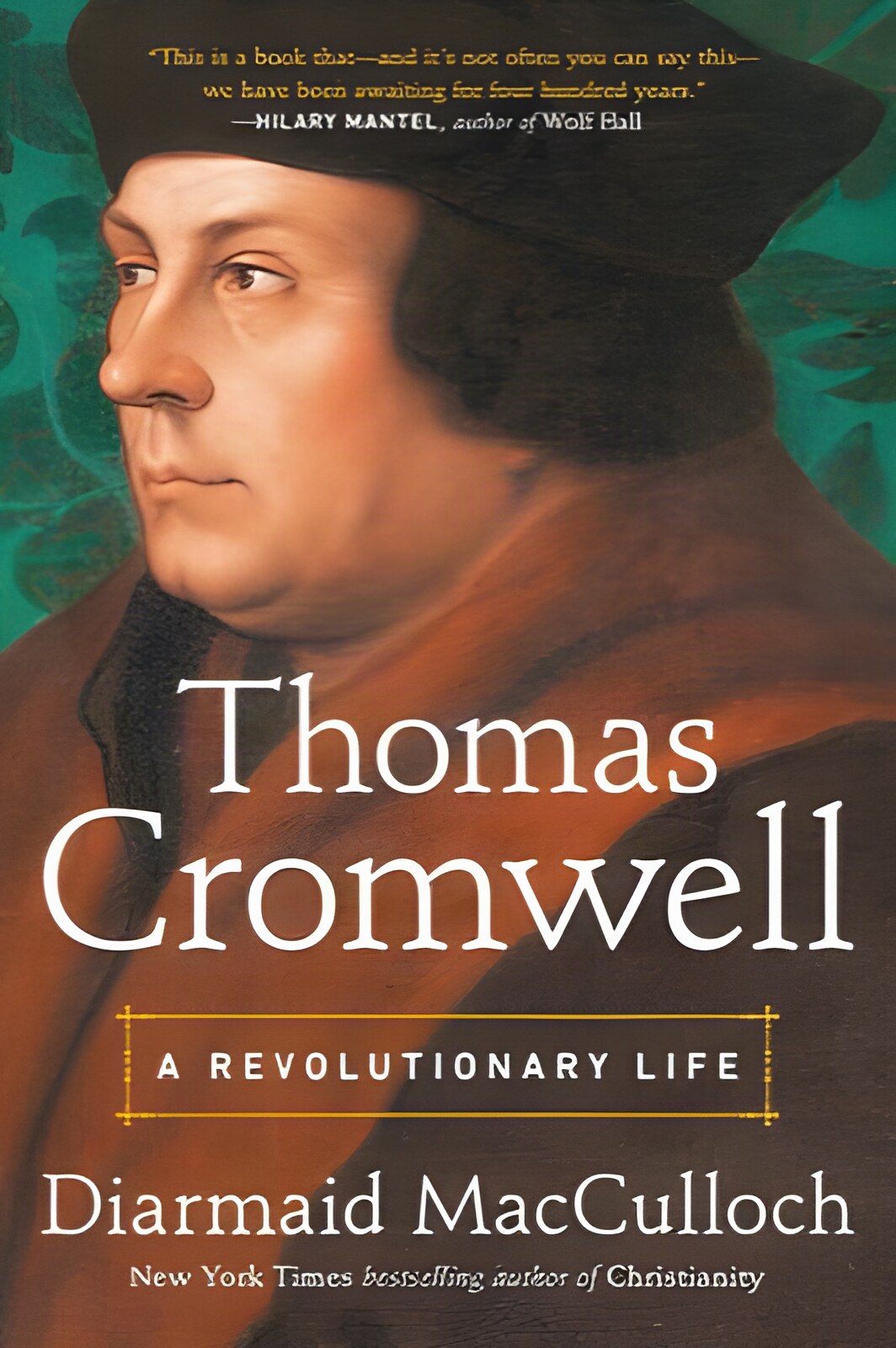
Hardcover. NY, Viking, 1st, 2018, Book: Very Good, Dust Jacket: Very Good, Hardcover in a bright dust jacket, 728 pages. The long-awaited biography of the genius who masterminded Henry VIII's bloody revolution in the English government, which reveals at last Cromwell's role in the downfall of Anne Boleyn. Since the sixteenth century we have been fascinated by Henry VIII and the man who stood beside him, guiding him, enriching him, and enduring the king's insatiable appetites and violent outbursts until Henry ordered his beheading in July 1540. After a decade of sleuthing in the royal archives, Diarmaid MacCulloch has emerged with a tantalizing new understanding of Henry's mercurial chief minister, the inscrutable and utterly compelling Thomas Cromwell. History has not been kind to the son of a Putney brewer who became the architect of England's split with Rome. Where past biographies portrayed him as a scheming operator with blood on his hands, Hilary Mantel reimagined him as a far more sympathetic figure buffered by the whims of his master. So which was he--the villain of history or the victim of her creation? MacCulloch sifted through letters and court records for answers and found Cromwell's fingerprints on some of the most transformative decisions of Henry's turbulent reign. But he also found Cromwell the man, an administrative genius, rescuing him from myth and slander. Clean copy.
Hardcover. NY, Oxford University Press, 1st, 2011, Book: Very Good, Dust Jacket: Very Good, Hardcover in a bright, unclipped dust jacket. 336 pages, b&w illustrations. Author Larry Hamberlin guides us through this large but oft-forgotten repertoire of operatic novelties, and brings to life the rich humor and keen social criticism of the era. In the early twentieth-century, when new social forces were undermining the view that our European heritage was intrinsically superior to our native vernacular culture, opera-that great inheritance from our European forebearers-functioned in popular discourse as a signifier for elite culture. Tin Pan Opera shows that these operatic novelty songs availed this connection to a humorous and critical end. Combining traditional, European operatic melodies with the new and American rhythmic verve of ragtime, these songs painted vivid images of immigrant Americans, liberated women, and upwardly striving African Americans, striking emblems of the profound transformations that shook the United States at the beginning of the American century. Clean copy.
Softcover. London, Hard Case Crime, 1st thus, 2004, Book: Very Good, Dust Jacket: None, Softcover, colorful wraps with a retro-style illustration by Bill Nelson. When the beautiful girlfriend of a notorious gangster vanishes, it's up to P.I. Donald Lam to get to the bottom of her disappearance -- and of a mining scam, an illegal casino operation, a double homicide, and an opportunity for an enterprising private eye to make a small fortune...if he can just stay alive long enough to cash in! Like new.
Hardcover. London, Cambridge University Press, 1st, 1969, Book: Very Good, Dust Jacket: Very Good, Hardcover in a bright dust jacket, 403 pages, 2 maps. In the belief that intensive study of selected local areas is an important development in scholarship on Africa, the author presents a micropolitical study of an important region of one of East Africa's Rew nations. Sukumaland, an area of Tanzania which contains one tenth of the country's population and its largest tribe, was chosen for the study. Before independence it exhibited the most organized nationalist political activity of any part of the country and developed the largest African-owned co-operative movement in all of Africa. In the final decade of the colonial era Sukumaland was the British administration's principal experimental area for attempts at radical transformation of indigenous political institutions and traditional agricultural techniques. After independence it became a critical testing ground for President Julius Nyerere's concepts of African socialism. Owner's signature on the front fly leaf, otherwise clean.
Hardcover. NY, Farrar Straus Giroux, 1st, 2007, Book: Very Good, Dust Jacket: Very Good, Hardcover in a bright, unclipped dust jacket. Named A Best Book of the Year by Time, The Washington Post, The Boston Globe, Chicago Tribune, San Francisco Chronicle, Salon, Slate, The National Book Critics Circle, The Christian Science Monitor. Tree of Smoke is the story of William "Skip" Sands, CIA--engaged in Psychological Operations against the Vietcong--and the disasters that befall him. It is also the story of the Houston brothers, Bill and James, young men who drift out of the Arizona desert and into a war where the line between disinformation and delusion has blurred away. In the words of Michiko Kakutani in The New York Times, Tree of Smoke is "bound to become one of the classic works of literature produced by that tragic and uncannily familiar war." Clean, bright copy.
Hardcover. Trama Editorial; Bilingual edition, 1st, 2006, Book: Very Good, Dust Jacket: Very Good, Hardcover, 130 pages. Train to the Sun.-Understanding how a steam locomotive works is like watching the energy of boiling water by lifting the lid of a pan. The fuel (oil, coal stone or wood) is burned in the firebox, it heats the water in the boiler and makes steam, which in turn nourishes the cylinders linked to a piston. An exciting historical and cultural journey, with a spectacular photography that shows us the path of "the most difficult train in the world." A profile of one of the world's last operating steam trains in Ecuador. Text in Spanish and English.
Hardcover. Berkeley/Los Angeles, University of California Press, 1st, 2005, Book: Very Good, Dust Jacket: Very Good, Hardcover, 225 pages, illustrated in b&w. In the first in-depth examination of music written for Hollywood animated cartoons of the 1930s through the 1950s, Daniel Goldmark provides a brilliant account of the enormous creative effort that went into setting cartoons to music and shows how this effort shaped the characters and stories that have become embedded in American culture. Focusing on classical music, opera, and jazz, Goldmark considers the genre and compositional style of cartoons produced by major Hollywood animation studios, including Warner Bros., MGM, Lantz, and the Fleischers. Tunes for 'Toons discusses several well-known cartoons in detail, including What's Opera, Doc?, the 1957 Warner Bros. parody of Wagner and opera that is one of the most popular cartoons ever created.
Hardcover. Berkeley CA, University of California, 1st, 2001, Book: Very Good, Dust Jacket: Very Good, Hardcover, 275 pages, b&w photos. In a bright, unclipped dust jacket. Lawyer, educator, novelist, radio and television scriptwriter, film director and screenwriter, wartime intelligence operative, and full-time radical romantic, Abraham Lincoln Polonsky was blacklisted in Hollywood for refusing to be an informer. This biography helps us understand the relationship between art and politics in American culture.
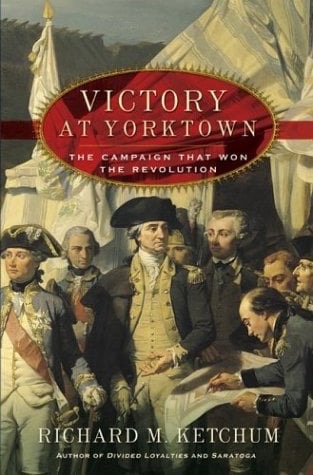
Hardcover. NY, Henry Holt and Co., 3rd pr., 2004, Book: Very Good, Dust Jacket: Very Good, Hardcover in a bright dust jacket, 350 pages. In 1780, George Washington's army lay idle for want of supplies, food, and money. All hope seemed lost until a powerful French force landed at Newport in July. Then, under Washington's directives, Nathanael Greene began a series of hit-and-run operations against the British. The damage the guerrilla fighters inflicted would help drive the enemy to Yorktown, where Greene and Lafayette would trap them before Washington and Rochambeau, supported by the French fleet, arrived to deliver the coup de grace. Richard M. Ketchum illuminates, for the first time, the strategies and heroic personalities-American and French-that led to the surprise victory, only the second major battle the Americans would win in almost seven horrific years. Relying on good fortune, daring, and sheer determination never to give up, American and French fighters-many of whom walked from Newport and New York to Virginia-brought about that rarest of military operations: a race against time and distance, on land and at sea. Ketchum brings to life the gripping and inspirational story of how the rebels defeated the world's finest army against all odds. Clean, like new.
Hardcover. Boston, Little, Brown and Company, 2nd pr., 1960, Book: Very Good, Dust Jacket: None, Hardcover, blue cloth with gilt lettering on spine. Volume XIV in The History of United States Naval Operations in World War II. 407 pages, illustrated with maps (one fold-out) and b&w photos. Gilt on spine with light fading, lacks dust jacket, dj flap pasted to inside front cover, otherwise clean, tight copy.
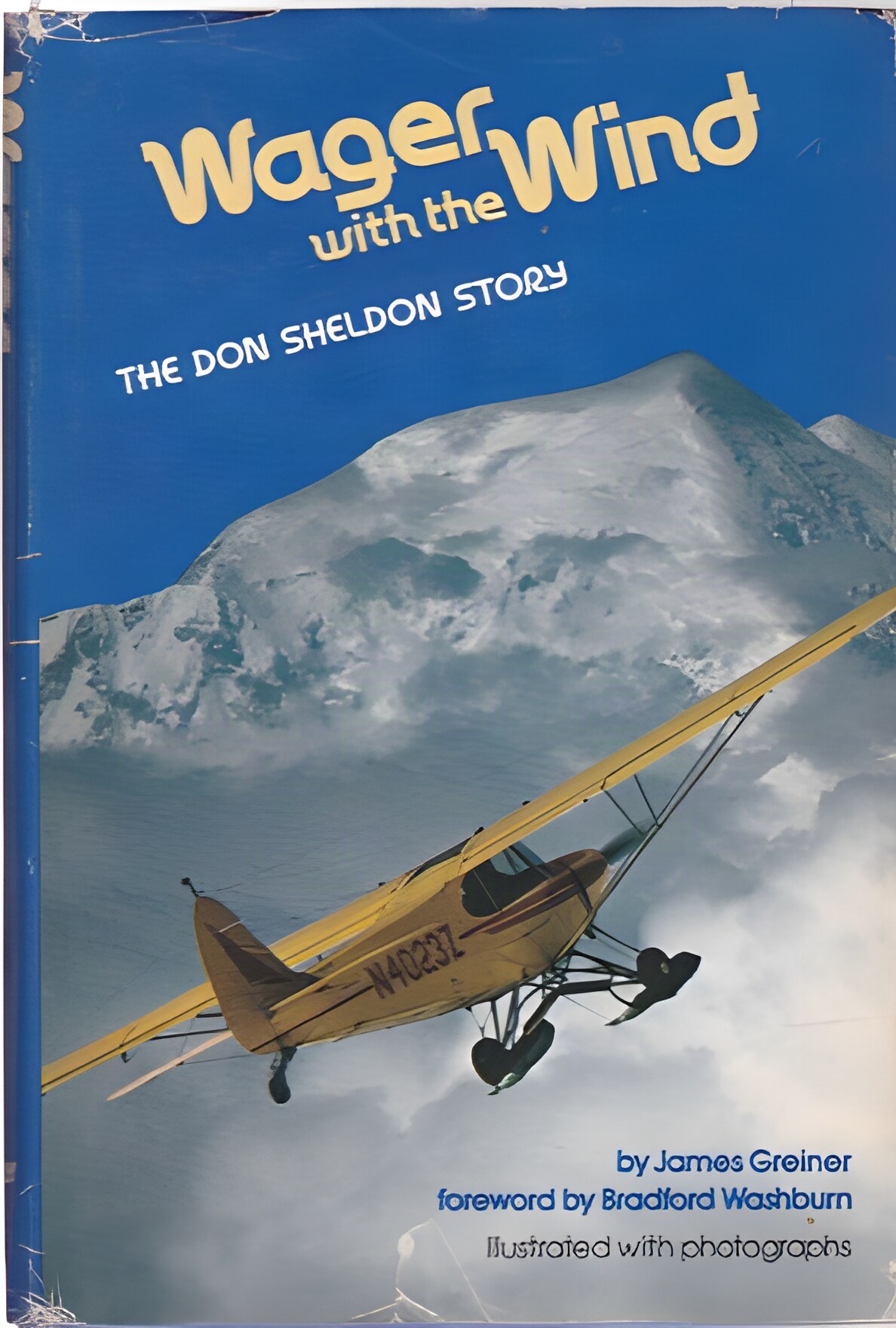
Hardcover. Chicago, Rand McNally, 2nd pr., 1974, Book: Very Good, Dust Jacket: Good, Hardcover in a lightlyworn and chipped dust jacket, 256 pages, b&w illustrations. The fascinating biography of one of Alaska's most outstanding and legendary bush pilots, discussing his high-risk mountain flying, his life, his family, his training and awards, his rescue operations, much more, as well as reflecting on this period of this Alaska's history when Sheldon did most of his work. Endpapers map, no markings.
Hardcover. Washington DC, Smithsonian Institution Press, 1st, 1998, Book: Very Good, Dust Jacket: Very Good, Hardcover in a bright dust jacket, 292 pages, b&w illustrations. SIGNED BY BOTH AUTHORS on the title page. Additionally INSCRIBED BY COHN on the dedication page. Kevin J. Crisman and Arthur B. Cohn show how a confluence of geographic, technological, economic, and social conditions in the United States and Canada turned an ancient idea into a practical alternative to more expensive and dangerous steamboats. Reviewing evidence from travelers' memoirs, regional histories, pictorial records, and the only horseboat ever studied by archaeologists - a wreck on the floor of Lake Champlain's Burlington Bay, in Vermont - the authors trace the evolution of horseboats from early mechanisms that forced the animals to walk in tight circles to "endless floor" treadmills that resembled modern exercise machines. In a lively narrative interspersed with quotes from passenger accounts, the book charts the rise and demise of horseboat businesses on the Hudson River, as well as in New York City, St. Louis, and Halifax, Nova Scotia. The authors also describe and record the underwater excavation of the Lake Champlain wreck, revealing a wealth of detail about the construction and operation of a typical treadwheel horseboat of the 1830s and 1840s. Clean copy.
Hardcover. Ames IA, University Museums at Iowa State, 1st, 2006, Book: Very Good, Dust Jacket: Very Good, Hardcover in a bright dust jacket, 398 pages. Mainly b&w illustrations with a small color section in center. In 1927, President Raymond Hughes began planning aesthetic improvements to the Iowa State campus. In 1933, at the depth of the Great Depression, and in an act that dramatically illustrates his artistic commitment, he began discussion with Grant Wood and Christian Petersen for each to create a significant mural cycle for the Iowa State College campus in Ames. The federal New Deal s Public Works of Art Project began in 1934 and offered a grand opportunity to employ artists in executing Grant Wood s painted mural for the library, When Tillage Begins, Other Arts Follow, and Christian Petersen s sculpted mural for the Dairy Industry Building, The History of Dairying. This book presents the first history of the Public Works of Art Project in Iowa and the first in-depth examination of the Grant Wood and Christian Petersen murals at Iowa State College. It also discusses the co-operative painting group that Grant Wood developed and illuminates the collaborative nature of the Iowa Project among its artists, as well as between the State University of Iowa in Iowa City and Iowa State College in Ames. Clean, like new. DOMESTIC SHIPPING ONLY.
Hardcover. NY, Routledge, 1st US, 1992, Book: Very Good, Dust Jacket: Very Good, Hardcover in a bright dust jacket, 289 pages, b&w illustrations. In the nineteenth century, major developments in internal surgery were due to operations on ovaries. Women bore the brunt of surgical experimentation and also reaped its rewards. Their need was great, but so was their compliance. From the first operation in America in 1809, much suffering was relieved at the expense of prolonged surgery endured by both black slaves and prosperous whites. Later, in the Victorian era, many surgeons looked at certain types of behavior as reasons for mutilating operations. Such procedures as "spaying" and clitoridectomies were performed to "cure" hysteria and masturbation, as well as questionable interventionalist surgery in pregnancy and childbirth which still continue today. Women Under the Knife is an extraordinary history, giving a vivid picture--medical, literary, and sociological--of Victorian society in America and Europe. Clean copy.
Hardcover. London, Cambridge University Press, 1st, 2010, Book: Very Good, Dust Jacket: Very Good, Hardcover in a bright, unclipped dust jacket. This revisionist study of Allied diplomacy from 1941 to 1946 challenges Americocentric views of the period and highlights Europe's neglected role. Fraser J. Harbutt, drawing on international sources, shows that in planning for the future Churchill, Roosevelt, Stalin, and others self-consciously operated into 1945, not on "East/West" lines but within a "Europe/America" political framework characterized by the plausible prospect of Anglo-Russian collaboration and persisting American detachment. Harbutt then explains the destabilizing transformation around the time of the pivotal Yalta conference of February 1945, when a sudden series of provocative initiatives, manipulations, and miscues interacted with events to produce the breakdown of European solidarity and the Anglo-Soviet nexus, an evolving Anglo-American alignment, and new tensions that led finally to the Cold War. This fresh perspective, stressing structural, geopolitical, and traditional impulses and constraints, raises important new questions about the enduringly controversial transition from World War II to a cold war that no statesman wanted. Clean copy.


 "Tin Pan Opera: Operatic Novelty Songs in the Ragtime Eraby: Larry Hamberlin")
 "TOP OF THE HEAPby: Erle Stanley Gardner")
 "Toward 'Uhuru' in Tanzania. The Politics of Participation by: Maguire, G. Andrew")
 "Tree of Smokeby: Denis Johnson")
 "Tren al Sol / Train to the Sun: Travesias Abordo Del Ferrocarril De Vapor Mas Dificil Del Mundo / Journey on Board the Most Difficult Steam Railroad in the World by:")
 "Tunes for 'Toons: Music and the Hollywood Cartoonby: Goldmark, Daniel")
 "Very Dangerous Citizen, A: Abraham Lincoln Polonsky and the Hollywood Leftby: Buhle, Paul, and Wagner, Dave")
 "Victory in the Pacific 1945; History of United States Naval Operations in World War II, Volume 14 by: Morison, Samuel Eliot")
 "When Horses Walked on Water: Horse-Powered Ferries in Nineteenth-Century America (SIGNED COPY)by: Kevin J. Crisman, Arthur B. Cohn")
 "When Tillage Begins, Other Arts Follow: Grant Wood and Christian Petersen Muralsby: Lea Rosson DeLong")

 "Yalta 1945: Europe and America at the Crossroadsby: Fraser J. Harbutt")