Hardcover. NY, Garland Publishing, reprint, 1978, Book: Very Good, Hardcover, orange cloth with black lettering on spine, 467 pages. Facsimile of the original 1687 edition. From the 'British Philosophers and Theologians of the 17th and 18th Century' series, edited by Rene Wellek. Name on front fly leaf otherwise clean.
Hardcover. NY, Garland Publishing, reprint, 1977, Book: Very Good, Dust Jacket: None, Hardcover, orange cloth with black lettering on spine, 253 pages. A Garland Series, British Philosophers and Theologians of the 17th and 18th Centuries. A facsimile reprint of the 1655 London edition. Name on front fly leaf, otherwise clean.
Hardcover. Stuttgart GR, Friedrich Frommann , reprint, 1971, Book: Very Good, Dust Jacket: None, Hardcover, terra-cotta cloth with gilt lettering, 272 pages. A facsimile reprint of the 1768 London edition. Light pencil marginalia to a dozen pages, otherwise clean.
Hardcover. NY, Garland Publishing, 1st thus, 1978, Book: Very Good, Dust Jacket: None, Hardcover, a collection of three facsimile reprints made from copies in Yale's Beinecke Library: 178, 85, 115 pages. Terra-cotta cloth, name on front fly leaf, otherwise clean. One in a series of volumes on British Philosophers and Theologians of the 17th and 18th Centuries edited by Rene Wellek.
Hardcover. Thoemmes Press, reprint, Book: Very Good, Dust Jacket: None, Hardcover, dark blue cloth with gilt lettering on spine, 56 pages. A facsimile reprint of a pamphlet originally published in 1735 in London. Introduction by John Yolton. Although not a particularly well-known figure in the history of philosophy, the importance of Jackson's work as representative of some of the major controversies in the first half of the 18th century should not be overlooked. With the dualism of matter and spirit firmly established, many thinkers struggled for an explanation of mind/body interaction. In "A Dissertation on Matter and Spirit" Jackson attacks the argument that God is the only genuine cause of the influence of matter on mind, and is significantly swayed by Locke's belief in thinking matter. However, as might be expected of a clergyman, he maintains that matter and spirit are essentially different, but continually qualifies this as based only on conjecture. Clearly examining the key elements involved, this pamphlet is a significant contribution to the materialism-immaterialism debate. Name on front fly leaf, otherwise clean.
Hardcover. Boston, Houghton Mifflin, 3rd Ed., 1891, Book: Good, Dust Jacket: None, Hardcover, 3/4 leather over marbled boards, ribbed spine with gilt lettering. Frontispiece with tissue guard. Marbled endpapers with gilt pattern. Black and white plates and illustrations. 349 pages. Front cover starting to split from spine but still holding. Mild edgewear to covers, bookplate on inside front cover, otherwise clean copy.
Hardcover. Boston, Beacon Press, reprint, 1972, Book: Very Good, Dust Jacket: Good, Hardcover in an edgeworn, chipped dust jacket, 617 pages. This is the first of Wilbur's two-volume history and the scarcer of the two. First published in 1945. Small owner's sticker on front fly leaf, otherwise clean.
Hardcover. NY, Doubleday, 1st, 1994, Book: Very Good, Dust Jacket: Very Good, Hardcover in a bright, unclipped dust jacket with minor edgewear. 1118 pages. This book is the second volume in John Meier's masterful trilogy on the life of Jesus. In it he continues his quest for the answer to the greatest puzzle of modern religious scholarship: Who was Jesus? To answer this Meier imagines the following scenario: "Suppose that a Catholic, a Protestant, a Jew, and an agnostic were locked up in the bowels of the Harvard Divinity School library... and not allowed to emerge until they had hammered out a consensus document on who Jesus of Nazareth was and what he intended...". A Marginal Jew is what Meier thinks that document would reveal. Volume one concluded with Jesus approaching adulthood. Now, in this volume, Meier focuses on the Jesus of our memory and the development of his ministry. To begin, Meier identifies Jesus's mentor, the one person who had the greatest single influence on him, John the Baptist. All of the Baptist's fiery talk about the end of time had a powerful effect on the young Jesus and the formulation of his key symbol of the coming of the "kingdom of God." And, finally, we are given a full investigation of one of the most striking manifestations of Jesus's message: Jesus's practice of exorcisms, hearings, and other miracles. In all, Meier brings to life the story of a man, Jesus, who by his life and teaching gradually made himself marginal even to the marginal society that was first century Palestine. Clean copy.
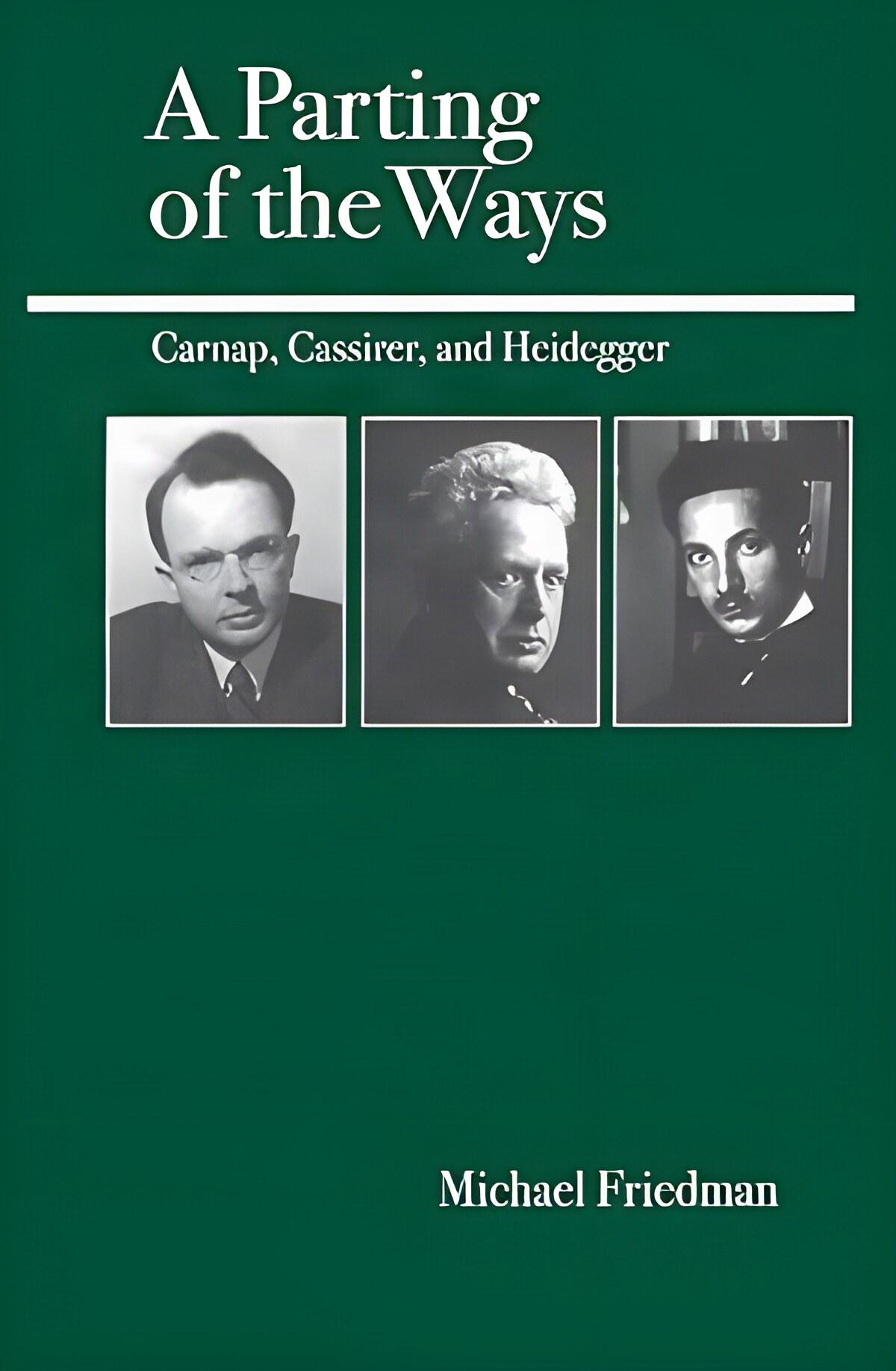
Softcover. Chicago/LaSalle IL, Open Court, reprint, 2000, Book: Very Good, Dust Jacket: None, Softcover, 175 pages. This work examines how social and political events intertwined and influenced philosophy during the early 20th-century, ultimately giving rise to two different schools of thought - analytic philosophy and continental philosophy. Light marking to ten pages. Otherwise a clean, bright copy.
Hardcover. NY, Clark Austin and Smith, 1st, 1854, Book: Good, Dust Jacket: None, Hardcover, embossed brown cloth, 283 pages. This is the original 1854 edition. Mild water stain to margins of first 30 pages, scattered foxing throughout. A comprehensive exploration of the origins, practices, and beliefs of various secret societies throughout history, with a particular focus on Freemasonry. The book delves into the philosophical and spiritual underpinnings of these societies, examining their rituals, symbols, and traditions. Arnold also explores the historical context in which these societies emerged, tracing their evolution from ancient mystery cults to modern-day fraternal organizations. The book provides a nuanced and objective analysis of these secretive groups, debunking myths and misconceptions while also acknowledging their enduring cultural significance. The secret societies of all ages considered in their relations with and influence on, the moral, social and intellectual progress of man. Through them came the new revelations of life, which contributed to the progress of Humanity. Contents: Importance of this History; Providential Character of these Institutions; Egyptian Mysteries; Secret Institution of Orpheus; Initiation at Eleusis; Secret Order of Pythagoras; Templars; Freemasonry; Second Period of Masonic History; Present Position of the Order; Christianity and Freemasonry; Thomas Paine's Essay on Freemasonry, with Comments. Gilt lettering on spine faded but readable. Bottom corner of front cover bumped. No markings.
Hardcover. UK, Oxford at the Clarendon Press, 1st, 1948, Book: Very Good, Dust Jacket: None, Hardcover, blue cloth with gilt lettering on spine, 301 pages. This edition is edited by D. Daiches Raphael, with a 47 page introduction by him. The title-page of the third edition, 1787, is reproduced after the introduction. Small name and date on front fly leaf, otherwise bright and clean.
Hardcover. UK, Oxford at the Clarendon Press, reprint, 1967, Book: Very Good, Dust Jacket: Very Good, Hardcover in a light blue dust jaket with light edgewear, 375 pages. An outline exposition of Hegel's categories is presented with the intention of being of assistance on a first reading of Hegel. Name on front fly leaf, otherwise clean.
Hardcover. Chicago, University of Chicago Press, 1st, 2007, Book: Good, Dust Jacket: Good, Hardcover in a lightly worn dust jacket. 553 pages, b&w illustrations. A spectacular reading of Western philosophy, religion, and mythology that draws on early maps and atlases, Plato, Kant, and Wittgenstein, Thomas Pynchon, Gilgamesh, and Marcel Duchamp, Abysmal is itself a minimalist guide to the terrain of Western culture. Olsson roams widely but always returns to the problems inherent in reason, to question the outdated assumptions and fixed ideas that thinking cartographically entails. A work of ambition, scope, and sharp wit, Abysmal will appeal to an eclectic audience--to geographers and cartographers, but also to anyone interested in the history of ideas, culture, and art. Name written on front fore-edge of book, otherwise clean.
Hardcover. NY, Harper & Brothers, 1st, 1946, Book: Very Good, Dust Jacket: Good, Hardcover in a dust jacket that is taped to covers, 554 pages. Name on front fly leaf, otherwise clean.
Hardcover. London, Church Missionary Society, 1st, 1925, Book: Very Good, Dust Jacket: None, 118 pages, gray cloth with gilt titles, frontispiece color illustration and foreword by Randall Cantuar, Archbishop of Canterbury dated March, 1925. No publication date on copyright page, crease on frontispiece, minor corner and edge wear, otherwise, very clean and tight copy.
Hardcover. Bristol UK, Thoemmes Press, reprint, 1997, Book: Very Good, Dust Jacket: None, Hardcover, blue cloth with gilt lettering on spine, 268 pages. A facsimile reprint of the 1690 edition. One of 9 volumes in More's collected works. Name on front fly leaf otherwise a clean, bright copy.
Hardcover. La Salle IL, Open Court Publishing , 1st, 1946, Book: Very Good, Dust Jacket: None, Hardcover, dark green cloth covers, gilt lettering on spine, 567 pages. The Paul Carus Lectures: Seventh Series, 1945. Name on a blank prelim page, otherwise clean.
Hardcover. Bristol UK, Thoemmes Press, reprint, 1997, Book: Very Good, Dust Jacket: None, Hardcover, blue cloth with gilt lettering on spine, 385 pages. A facsimile reprint of the 1655 Second Edition. One of 9 volumes in More's collected works. Light pencil marking to front fly leaf otherwise a clean, bright copy.
Hardcover. Bristol UK, Thoemmes Press, reprint, 2003, Book: Very Good, Dust Jacket: None, Hardcover, blue cloth with gray and gilt title, lettering on spine. A facsimile edition reprinted from the first issue of the first edition in 1690. 362 pages plus contents section in rear. Name on front fly leaf, otherwise clean, like new.
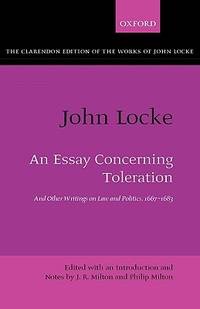
Hardcover. Oxford, Clarendon Press, 1st, 2006, Book: Very Good, Dust Jacket: Very Good, Hardcover in a bright dust jacket with light edgewear, 458 pages. J. R. and Philip Milton present the first critical edition of John Locke's Essay concerning Toleration, based on all extant manuscripts, and a number of other writings on law and politics composed between 1667 and 1683. Although Locke never published any of these works himself they are of very great interest for students of his intellectual development because they are markedly different from the early works he wrote while at Oxford and show him working out ideas that were to appear in his mature political writings, the Two Treatises of Government and the Epistola de Tolerantia. With authoritative contextual guidance from the editors, this will be an invaluable resource for all historians of early modern philosophy, of legal, political, and religious thought, and of 17th-century Britain. Name, date on front fly leaf, otherwise clean.
Softcover. NY, Liberal Arts Press, 1st, 1956, Book: Very Good, Softcover, 615 pages. Translated with an introduction by Merritt H. Moore. Some light fading to edges of yellow wrappers, name on front fly leaf, otherwise clean. Out of print and uncommon.
Hardcover. Bristol UK, Thoemmes Press, reprint, 1997, Book: Very Good, Dust Jacket: None, Hardcovers, red cloth with gilt stamping to spines. A reprint of the 1758 Fourth Edition. Introduction by Victor Nuovo. 555 total pages plus Index. Vol. 1 with fading to spine and part of front cover, otherwise tight and clean.
Hardcover. Bristol UK, Thoemmes Press, reprint, 1997, Book: Very Good, Dust Jacket: None, Hardcover, blue cloth with gilt lettering on spine, 570 pages. A facsimile reprint of the 1660 edition. One of 9 volumes in More's collected works. Pencil marking to 3 pages, otherwise a clean, bright copy.
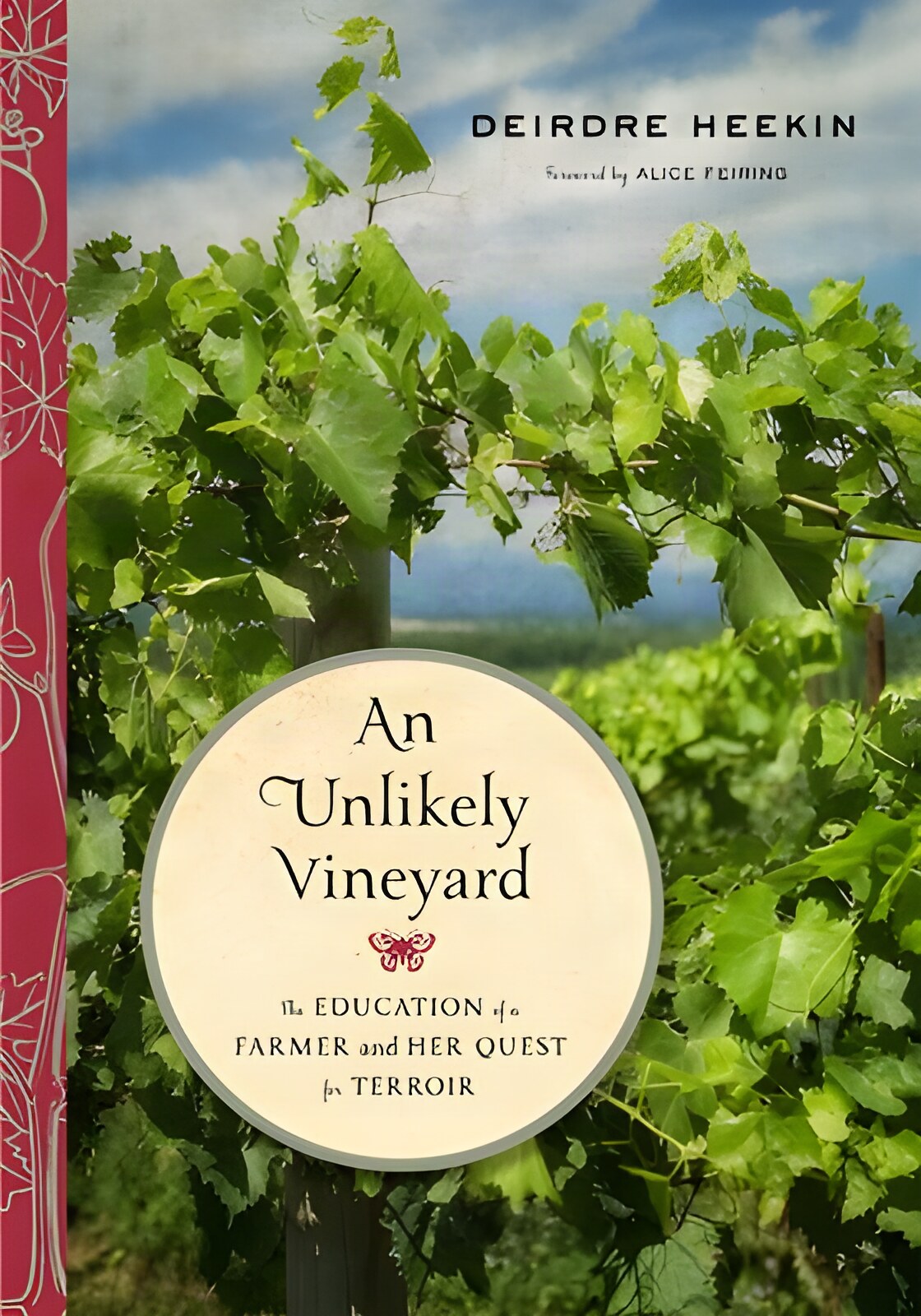
Hardcover. White River Junction VT, Chelsea Green Publishing, 1st, 2014, Book: Very Good, Dust Jacket: Very Good, Hardcover in a bright, unclipped dust jacket. Named one of the Best Wine Books of 2014 by The New York Times, An Unlikely Vineyard tells the evolutionary story of Deirdre Heekin's farm from overgrown fields to a fertile, productive, and beautiful landscape that melds with its natural environment. Is it possible to capture landscape in a bottle? To express its terroir, its essence of place-geology, geography, climate, and soil-as well as the skill of the winegrower? That's what Heekin and her chef/husband, Caleb Barber, set out to accomplish on their tiny, eight-acre hillside farm and vineyard in Vermont. Challenged by cold winters, wet summers, and other factors, Deirdre and Caleb set about to grow not only a vineyard, but an orchard of heirloom apples, pears, and plums, as well as gardens filled with vegetables, herbs, roses, and wildflowers destined for their own table and for the kitchen of their small restaurant. They wanted to create, or rediscover, a sense of place, and to grow food naturally using the philosophy and techniques gleaned from organic gardening, permaculture, and biodynamic farming. Clean copy.

 "A Collection of Miscellanies, Consisting of Poems, Essays, Discourses, and Lettersby: John Norris")


 "A Dialogue Between A Tutor and His Pupil by: Edward Lord Herbert of Cherbury")


 "A Handbook of Christian Symbols and Stories of the Saints As Illustrated in Art by: Clara Erskine Clement, Editor: Katherine Eleanor Conway")
 "A Marginal Jew: Rethinking the Historical Jesus, Vol. 2 - Mentor, Message, and Miraclesby: John P. Meier")


 "A Review of the Principal Questions in Moralsby: Richard Price")
![A Study of Hegel's Logicby: [Georg Wilhelm Friedrich Hegel]; G.R.G. Mure](javascript:largeIMTop('https://www.browsingisarousing.com/shop/images/A-Study-of-Hegels-Logic_by_Georg-Wilhelm-Friedrich-Hegel-G.R.G.-Mure386550-440282.jpg','https://www.browsingisarousing.com/shop/images/A-Study-of-Hegels-Logic_by_Georg-Wilhelm-Friedrich-Hegel-G.R.G.-Mure386550-440282.jpg',0,'386550',0,'') "A Study of Hegel's Logicby: [Georg Wilhelm Friedrich Hegel]; G.R.G. Mure")
 "Abysmal: A Critique of Cartographic Reasonby: Gunnar Olsson")
 "Aesthetic Experience and Its Presuppositionsby: Nahm, Milton C.")
 "African Church in Building, Anby: Willis, Right Rev. J. J.")
 "An Account of Virtue, or Dr. Henry More's Abridgment of Morals:by: Henry More/G.A.J. Rogers (Ed.)")
 "An Analysis of Knowledge and Valuationby: Clarence Irving Lewis")
 "An Antidote Against Atheism, or, An appeal to the naturall faculties of the minde of manby: Henry More/ G.A.J. Rogers (Intro.)")
 "An Essay on the Foundations of Our Knowledge by: Cournot, Antoine Augustin, 1801-1877")
 "An Explanation of the Grand Mystery of Godlinessby: Henry More")