Softcover. Ithaca NY, State University of New York , 2nd pr., 1990, Book: Very Good, Dust Jacket: None, Softcover, 350 pages. The contributors discuss the current debate about what philosophy is, how it works, and how Nietzsche's thought clarifies or complicates its understanding. They represent a wide range of views and practices, some aggressively postmodern in their approach, some profoundly skeptical about postmodernism. Although the issue of postmodernism is the central focus, the essays also touch on many other areas of interest to readers of Nietzsche. Spine faded, light pencil underlining to a few pages.
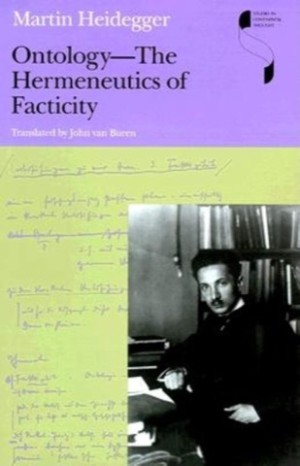
Hardcover. Bloomington, Indiana University Press, 1st, 1999, Book: Very Good, Dust Jacket: Good, Hardcover in a very good dust jacket with fading to spine and spine edge, 138 pages. "With thematic trajectories pointing both toward and beyond Being and Time, this translation ...is of enormous significance for students of the development of Heidegger's early thought." - Daniel O. Dahlstrom, Boston University. First published in 1988 as volume 63 of Heidegger's Collected Works, "Ontology" follows Heidegger's lectures at the University of Freiburg during the summer semester of 1923. In these lectures, Heidegger reviews and makes critical appropriation of the hermeneutical tradition from Plato, Aristotle, and Augustine to Schleiermacher and Dilthey. Other important themes that are taken up are his turn to the facticity and everyday world of Dasein, his interpretation of human existence in the present historically and philosophically, his understanding of phenomenology, and his repeated insistence on the temporal dimension of interpretation and significance. Students of Heidegger's thought will find initial breakthroughs in his unique elaboration of the meaning of human existence and "question of Being," which received mature expression in Being and Time. Name on front fly leaf, light pencil notations to rear endpapers, 3 pages.
Hardcover. New York, Rizzoli, 1st, 2006, Book: Very Good, Dust Jacket: Very Good, 275 pages, color illustrations throughout. In publisher's shrinkwrap. Owen Jones was, and still remains, a highly influential force in the world of architecture and design. His prolific and impressive work--captured here in its various stages through drawings, architectural plans, and photographs--is as current, imaginative, and important now as when it first emerged more than 125 years ago. Owen Jones: Design, Ornament, Architecture & Theory in an Age in Transition fills a serious gap in the history of Victorian design. In his early career Jones was recognized as an authority on Oriental design. In the 1850s he was commissioned to decorate the interior of Joseph Paxton's magnificent World's Fair Crystal Palace in London. Other signature projects include St. James' Hall, the Crystal Palace Bazaar, Osler's Glass Shop, and Eynsham Hall at Oxford. In 1856 he completed his monumental Grammar of Ornament, which remains one of the most influential works on design ever published and is a source for many artists and designers today. More than just an architect, Jones' skills were applied to designing interiors, books, textiles, furniture, and carpet. His philosophy can most accurately be expressed in his words, "Form without color is like a body without a soul."
Hardcover. New York, Rizzoli, 1st, 2006, Book: Very Good, Dust Jacket: Very Good, 275 pages, color illustrations throughout. In publisher's shrinkwrap. Owen Jones was, and still remains, a highly influential force in the world of architecture and design. His prolific and impressive work--captured here in its various stages through drawings, architectural plans, and photographs--is as current, imaginative, and important now as when it first emerged more than 125 years ago. Owen Jones: Design, Ornament, Architecture & Theory in an Age in Transition fills a serious gap in the history of Victorian design. In his early career Jones was recognized as an authority on Oriental design. In the 1850s he was commissioned to decorate the interior of Joseph Paxton's magnificent World's Fair Crystal Palace in London. Other signature projects include St. James' Hall, the Crystal Palace Bazaar, Osler's Glass Shop, and Eynsham Hall at Oxford. In 1856 he completed his monumental Grammar of Ornament, which remains one of the most influential works on design ever published and is a source for many artists and designers today. More than just an architect, Jones' skills were applied to designing interiors, books, textiles, furniture, and carpet. His philosophy can most accurately be expressed in his words, "Form without color is like a body without a soul."
Hardcover. Princeton NJ, Princeton University Press, 1st, 2015, Book: Very Good, Dust Jacket: Very Good, Hardcover in a bright dust jacket, 354 pages. From the turn of the fifth century to the beginning of the eighteenth, Christian writers were fascinated and troubled by the "Problem of Paganism," which this book identifies and examines for the first time. How could the wisdom and virtue of the great thinkers of antiquity be reconciled with the fact that they were pagans and, many thought, damned? Related questions were raised by encounters with contemporary pagans in northern Europe, Mongolia, and, later, America and China. Pagans and Philosophers explores how writers-philosophers and theologians, but also poets such as Dante, Chaucer, and Langland, and travelers such as Las Casas and Ricci-tackled the Problem of Paganism. Augustine and Boethius set its terms, while Peter Abelard and John of Salisbury were important early advocates of pagan wisdom and virtue. University theologians such as Aquinas, Scotus, Ockham, and Bradwardine, and later thinkers such as Ficino, Valla, More, Bayle, and Leibniz, explored the difficulty in depth. Meanwhile, Albert the Great inspired Boethius of Dacia and others to create a relativist conception of scientific knowledge that allowed Christian teachers to remain faithful Aristotelians. At the same time, early anthropologists such as John of Piano Carpini, John Mandeville, and Montaigne developed other sorts of relativism in response to the issue. Clean copy.
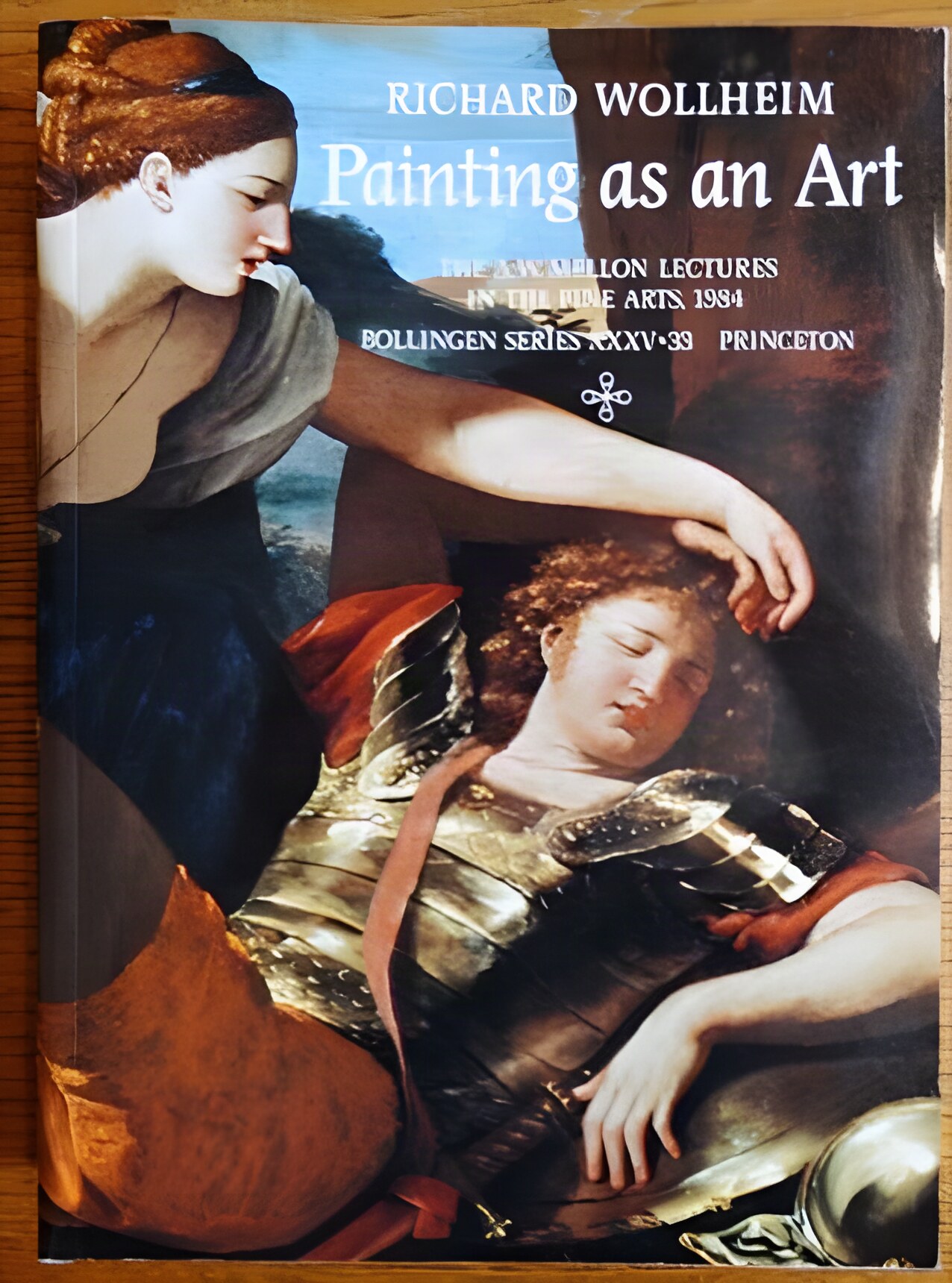
Hardcover. Princeton NJ, Princeton University Press, 1st, 1987, Book: Very Good, Dust Jacket: Very Good, Hardcover in a bright dust jacket, In Painting as an Art, which began as the 1984 Andrew Mellon Lectures at the National Gallery of Art in Washington, D.C., philosopher Richard Wollheim transcended the boundaries and habits of both philosophy and art history to produce a large, encompassing vision of viewing art. Wollheim had three great passions--philosophy, psychology, art--and his work attempted to unify them into a theory of the experience of art. He believed that unlocking the meaning of a painting involved retrieving, almost reenacting, the creative activity that produced it.In order to fully appreciate a work of art, Wollheim argued, critics must bring to the understanding of a work of art a much richer conception of human psychology than they have in the past: "Many [critics] . . . make do with a psychology that, if they tried to live their lives by it, would leave them at the end of an ordinary day without lovers, friends, or any insight into how this came about." Many reviewers have remarked on the insightfulness of the book's final chapter, in which Wollheim contended that certain paintings by Titian, Bellini, de Kooning, and others represent the painters' attempts to project fantasies about the human body onto the canvas. Light fading to dj spine. Name on front fly leaf, otherwise clean.
Hardcover. NY, Oxford University Press, 2nd pr., 2112, Book: Very Good, Dust Jacket: Very Good, Hardcover in a bright dust jacket, 270 pages. Since the birth of cinema at the end of the nineteenth century religion and film have been entwined. The Jesus-story and other religious narratives were the subject matter of some of the earliest cinema productions and this relationship has continued into the present. A recent proliferation of texts, conferences and courses bear witness to burgeoning academic interest in the relation between religion and film. In this study, Jonathan Brant explores the possibility that even films lacking religious subject matter might have a religious impact upon their viewers, the possibility of revelation through film. The book begins with a reading of Paul Tillich's theology of revelation through culture and continues with a qualitative research project which grounds this theoretical account in the experiences of a group of filmgoers. The empirical research takes place in Latin America where the intellectual puzzle and central research questions that drive the thesis arose and developed.
Hardcover. New Haven CT, Yale University Press, 1st, 2000, Book: Very Good, Dust Jacket: Very Good, Hardcover in a bright dust jacket, 234 pages, b&w illustrations. Nicolas-Claude Fabri de Peiresc (1580-1637) was, during his lifetime, one of Europe's most famous men. A friend of Pope Urban VIII and Galileo, of Peter-Paul Rubens and Hugo Grotius, of Tommaso Campanella and Marin Mersenne, Peiresc played an important role in the intellectual culture of his time. This book is the first study in English of this extraordinary man, as well as a vivid portrait of his whole circle. Looking through the lens of Peiresc's life, Peter N. Miller brings into focus the early-seventeenth-century world of learning-its people, places, and ideas. Drawing on the extensive Peiresc archive (more than 50,000 pieces of paper), Miller brilliantly evokes the lives of antiquaries, philosophers, theologians, and politicians of Peiresc's day, only some of whom remain known today. He explores the age in which Peiresc's toleration and sociability, his political action and cosmopolitanism, and his serious scholarship without dogmatism were identified as a set of virtues and practices by which to live. Peiresc's notion of scholarship as a moral exercise, the sweep of his interests, and the cross-Continental reach of his intellectual life show with new clarity what it meant to be a man of learning during the decades around 1600. Name on front fly leaf, otherwise clean copy.
Hardcover. NY, Greenwood Press, reprint, 1969, Book: Very Good, Dust Jacket: None, Hardcover, blue cloth covers with gilt lettering on spine, 477 pages, two b&w plates. A reprint of the 1913 revised Second Edition. A selection from his correspondence with Boccaccio and other friends, designed to illustrate the beginnings of the Renaissance. Name on front fly leaf, otherwise clean
Softcover. Albany, State University of New York Press , 1st, 1983, Book: Very Good, Dust Jacket: None, Softcover, 317 pages. Phenomenology in a Pluralistic Context contains papers selected from three years of meetings of the Society for Phenomenology and Existential Philosophy (SPEP). The essays are representative of the most current thinking among North American philosophers who have been influenced by the phenomenological movement. A majority of the selections reveals a considerable mutual influence between phenomenology and other philosophical currents. Special emphasis is given to issues in social and political theory; the philosophy of medicine, of art, of language, and of religion; phenomenology's relationship to Kantianism and to Marxism; and the figures of Merleau-Ponty, Sartre, and Heidegger. Clean copy.
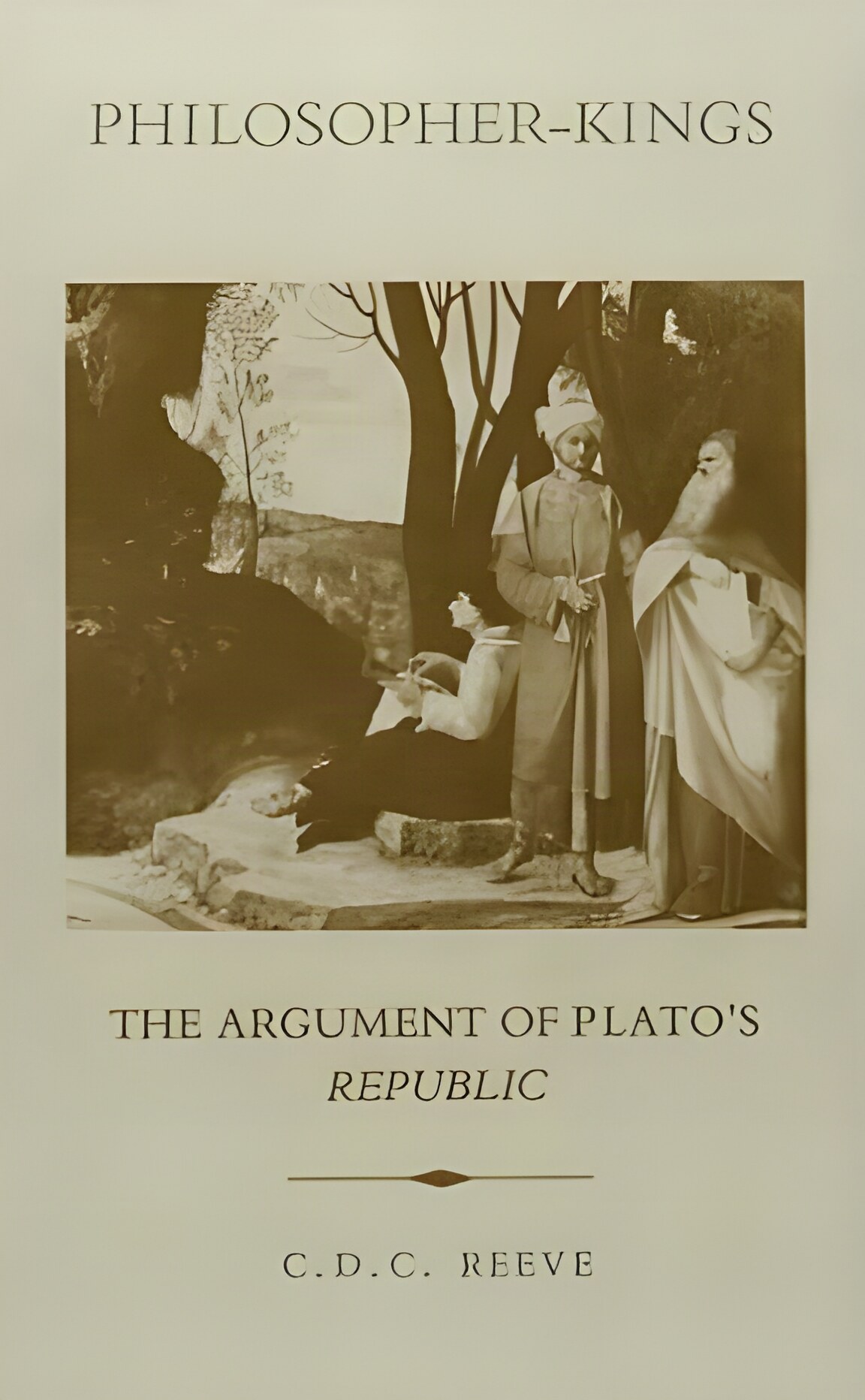
Hardcover. Princeton NJ, Princeton University Press, 1st, 1988, Book: Very Good, Dust Jacket: Very Good, Hardcover in a dust jacket, dark green cloth covers with gilt title on spine. 350 pages. The distinctive aim of Philosopher-Kings is to show, by giving a rational reconstruction of its overall argument, that the Republic is not the flawed patchwork it is usually made out to be by interpreters, but a deeply consistent and systematic work, which raises fundamental problems for philosophy and develops powerful and probing solutions to them. The book's central innovative thesis is that Plato's psychology, more specifically his theory of desires, holds the key to this, his most ambitious work. "Although the Republic has come to seem frazzled from too much use in introductory courses, in Reeve's hands it is new and refreshing".--Paul Woodruff, Ancient Philosophy "Although the philosopher-kings of Reeve's title are central to the argument of this handsomely produced book, it is in reality nothing less than a complete reinterpretation of the Republic. Name on front fly leaf, otherwise clean.
Hardcover. Oxford, Clarendon Press, 1st , 1982, Book: Good, Dust Jacket: Good, Hardcover, 284 pages. Previous owner's signature on front fly leaf. Slight foxing to top edge. Dust jacket has price clipped from front flap. Dust jacket also shows minor shelf wear and fading to spine. Otherwise, tight clean copy.
Softcover. Rochester NY, University of Rochester Press, reprint, 1994, Book: Very Good, Dust Jacket: None, Softcover, 539 pages. The essays in this collection illustrate the interdisciplinary approach to the history of ideas fostered by the Journal of the History of Ideas. Science, philosophy and religion were closely connected in the 17th and 18th centuries, and common threads run through all the articles. A number of essays revolve around Locke: the implications of his doctrines for religion, and their relation to and support of the new science; several of these articles refer to Descartes, Leibniz andHume. There are essays on optics and vision in the work of Berkeley, Reid and Newton, and on the relation between biology and physiology, especially as these disciplines contribute to the science of man. The authors include HENRY GUERLAC, MARGARET C. JACOB, SHIRLEY ROE, L. LAUDAN, NICHOLAS JOLLEY, JAMES FORCE, G. A. J. ROGERS and CATHERINE WILSON. Name on front fly leaf, otherwise clean.
Hardcover. NY, Arno Press, reprint, 1977, Book: Very Good, Dust Jacket: None, Hardcover, green cloth with silver lettering on spine and front cover, A facsimile reprint of the corrected 1716 4th edition published in London. Sixteen sermons with notes and observations. Name on front fly leaf otherwise a clean, bright copy.
Hardcover. Cambridge UK, Cambridge University Press , 1st, 2007, Book: Very Good, Dust Jacket: Very Good, Hardcover in a bright dust jacket, 283 pages. This book offers a comprehensive treatment of the philosophical system of the seventeenth-century philosopher Pierre Gassendi. Gassendi's importance is widely recognized and is essential for understanding early modern philosophers and scientists such as Locke, Leibniz and Newton. Offering a systematic overview of his contributions, LoLordo situates Gassendi's views within the context of sixteenth- and early seventeenth-century natural philosophy as represented by a variety of intellectual traditions, including scholastic Aristotelianism, Renaissance Neo-Platonism, and the emerging mechanical philosophy. LoLordo's work will be essential reading for historians of early modern philosophy and science. Name on front fly leaf, otherwise clean.
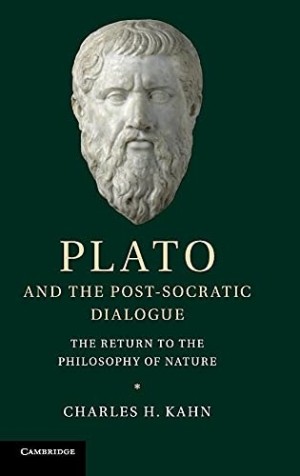
Hardcover. UK, Cambridge University Press, 1st, 2013, Book: Very Good, Dust Jacket: Very Good, Hardcover in a bright dust jacket, 249 pages. Plato's late dialogues have often been neglected because they lack the literary charm of his earlier masterpieces. Charles Kahn proposes a unified view of these diverse and difficult works, from the Parmenides and Theaetetus to the Sophist and Timaeus, showing how they gradually develop the framework for Plato's late metaphysics and cosmology. The Parmenides, with its attack on the theory of Forms and its baffling series of antinomies, has generally been treated apart from the rest of Plato's late work. Kahn shows that this perplexing dialogue is the curtain-raiser on Plato's last metaphysical enterprise: the step-by-step construction of a wider theory of Being that provides the background for the creation story of the Timaeus. This rich study, the natural successor to Kahn's earlier Plato and the Socratic Dialogue, will interest a wide range of readers in ancient philosophy and science. Name and date on front fly leaf otherwise clean.
Hardcover. Cambridge UK, Cambridge University Press, 1st, 2004, Book: Very Good, Dust Jacket: Very Good, Hardcover in a bright dust jacket, 218 pages. The Timaeus-Critias is concerned with cosmology and Plato's claim that its central task is to articulate the way in which the cosmos manifests the values of goodness and beauty. This book examines this important dialogue in its entirety using current methods of Platonic scholarship. Arguing that Aristotle's physics is far closer to the Timaeus than usually realized, the study's other prominent findings reinforce the dialogue's essentially moral message, and clarify its literary character.
Softcover. UK, Oxford University Press, 1st pbk., 2004, Book: Very Good, Dust Jacket: None, Softcover, 643 pages. An illuminating reappraisal of Plato's later works, which reveals radical changes in his ethical and political theory. Christopher Bobonich argues that in these works Plato both rethinks and revises important positions which he held in his better-known earlier works such as the Republic and the Phaedo. Bobonich analyses Plato's shift from a deeply pessimistic view of non-philosophers in the Republic, where he held that only philosophers were capable of virtue and happiness, to his far more optimistic position in the Laws, where he holds that the constitution and laws of his ideal city of Magnesia would allow all citizens toachieve a truly good life. Name on front fly leaf, otherwise clean.
Hardcover. Cambridge MA, Harvard University Press, 1st, 2003, Book: Very Good, Dust Jacket: Very Good, Hardcover in a very good dust jacket with light fading to spine, 362 pages. The Platonic Theology is a visionary work and the philosophical masterpiece of Marsilio Ficino (1433-1499), the Florentine scholar-philosopher-magus who was largely responsible for the Renaissance revival of Plato. A student of the Neoplatonic schools of Plotinus and Proclus, he was committed to reconciling Platonism with Christianity, in the hope that such a reconciliation would initiate a spiritual revival and return of the golden age. His Platonic evangelizing was eminently successful and widely influential, and his Platonic Theology, translated into English for the first time in this edition, is one of the keys to understanding the art, thought, culture, and spirituality of the Renaissance. Name on front fly leaf otherwise clean.
Softcover. UK, Cambridge University Press, 1st pbk, 2019, Book: Very Good, Dust Jacket: None, Softcover, 931 pages. Greek glossary, English glossary, bibliography of Principal editions of secondary sources. Octavo. Glossy burgunday soft covers with gold and white titles. Covers have minimal shelf wear, a small bump at top left front, interior clean and fresh, a few pages have very slight sign of storage bend at the top corner, otherwise very good. Heavy for international shipping. The Enneads is a work central to the history of philosophy in late antiquity. This volume is the first complete edition in English for 75 years and also includes Porphyry's Life of Plotinus. Led by Gerson, a team of experts present up to date translations which are based on the best available text, the editio minor of Henry and Schwyzer and its corrections.... They also offer extensive annotation to assist the reader, together with cross-references and citations. Clean, bright copy.
Softcover. Baltimore, Johns Hopkins University Press, reprint, 2007, Book: Very Good, Dust Jacket: None, Softcover, 285 pages. In this book noted scholar Thomas L. Pangle brings back a lost and crucial dimension of political theory: the mutually illuminating encounter between skeptically rationalist political philosophy and faith-based political theology guided ultimately by the authority of the Bible. Focusing on the chapters of Genesis in which the foundation of the Bible is laid, Pangle provides an interpretive reading illuminated by the questions and concerns of the Socratic tradition and its medieval heirs in the Christian, Jewish, and Islamic worlds. He brings into contrast the rival interpretive framework set by the biblical criticism of the modern rationalists Hobbes and Spinoza, along with their heirs from Locke to Hegel. The full meaning of these diverse philosophic responses to the Bible is clarified through a dialogue with hermeneutic discussions by leading political theologians in the Judaic, Muslim, and Christian traditions, from Josephus and Augustine to our day. Profound and subtle in its argument, this book will be of interest not only to students and scholars of politics, philosophy, and religion but also to thoughtful readers in every walk of life who seek to deepen their understanding of the perplexing relationship between religious faith and philosophic reason. Name and date on front fly leaf, otherwise clean.
Hardcover. Brattleboro VT, Joseph Steen & Co, reprint, 1851, Book: Good, Dust Jacket: None, All leather bound, with illustrations, a critical introduction, sermons and essay, and historical index. Gilt border on covers and title on spine with all edges marbled. Bound upside down, cover worn with wear and rub, two rough worn down patches on cover, otherwise, internally clean and tight.

![Nietzsche as Postmodernist: Essays Pro and Contra by: Clayton Koelb [Ed.]](https://www.browsingisarousing.com/shop/images/399735.jpg "Nietzsche as Postmodernist: Essays Pro and Contra by: Clayton Koelb [Ed.]")
 "Objects of Thoughtby: Prior, Arthur N./P. T. Geach/A. J. P. Kenny (Editors)")


 "Owen Jones: Design, Ornament, Architecture, and Theory in an Age in Transitionby: Flores, Carol A. Hrvol")
 "Owen Jones: Design, Ornament, Architecture, and Theory in an Age in Transitionby: Flores, Carol A. Hrvol")

 "Pearls & Corals: Al-Lu'lu'wal-Marjan: Arabic-English: A Collection of Agreed upon Ahadith from Al-Bukhari & Muslim (2 volume set) (ARABIC TEXT WITH ENGLISH TRANSLATIONS)by:")

 "Petrarch: The First Modern Scholar and Man of Lettersby: James Harvey Robinson")
 "Philosophes and Post-Revolutionary France, Theby: Lough, John")
 "Physico-Theology: Or, A Demonstration of the Being and Attributes of God, From His Works of Creationby: William Derham")
 "Plato's Natural Philosophy: A Study of the Timaeus-Critiasby: Johansen, Thomas Kjeller")


 "Polyglott BIbleby: N/A")