Hardcover. UK, Cambridge University Press , 1st, 1972, Book: Very Good, Dust Jacket: Very Good, Hardcover in a bright orange dust jacket, 336 pages. This book is a commentary on the surviving testimonia and fragments of Posidonius' work collected in Volume I of this edition. Posidonius was one of the most important philosophers and intellectuals writing in the first century BC Graeco-Roman world. The purpose of this commentary is to assess the fragmentary evidence and reports of Posidonius found in the writings of about sixty ancient authors, and to separate what Posidonius himself actually said from the interpretations and distortions of his reporters. Since Posidonius also wrote at length on the sciences and on geography, and composed a large History, Kidd assesses his work against the philosophical, scientific, and historical writings of Posidonius' predecessors and contemporaries. Each fragment is explored through detailed examination of its context, philosophical and scientific content, and its relationship to Posidonius' whole thought and to contemporary ideas. VOLUME 1 ONLY. The fragments are in the original Greek and Latin (mostly Greek). The Introduction is in English. Previous owner's name on front fly leaf, embossed stamp, otherwise a clean copy.
Softcover. UK, Cambridge University Press, reprint, 2004, Book: Very Good, Dust Jacket: None, Softcover, orange wrappers, 341 pages. Classic scholarly text contains a collection of the surviving attested fragments of Posidonius, the leading stoic philosopher of his time in the first half of the first century, B.C. This exhaustive work was begun by Prof. Edelstein, a preeminent authority on Posidonius, and subsequently completed and edited after his death by Ian Kidd. There are some sixty different ancient reporters represented in this volume. First published in 1972, this re-issue contains 60 new readings, nearly eighty alterations to the apparatus criticus and corrections of errors. GREEK AND LATIN TEXT. Name on front fly leaf, otherwise, clean.
Softcover. UK, Oxford University Press, Revised Ed., 2001, Book: Very Good, Dust Jacket: None, Softcover, 384 pages. Published here for the first time is much of a final and long-anticipated work on the philosophy of history by the great Oxford philosopher and historian R. G. Collingwood (1889-1943). The original text of this uncompleted work has only recently been discovered and is accompanied here by Collingwood's shorter writings on historical knowledge and inquiry. Besides containing entirely new ideas, these incredible writings discuss many of the issues which Collingwood famously raised in The Idea of History and in his Autobiography. This book also includes two conclusions written by Collingwood, which were eventually revised and published as The Idea of Nature. and a lengthy editorial introduction that puts Collingwood's writings in their context and discusses the philosophical questions they initiate. A landmark publication, this work will appeal not only to those studying Collingwood but also to anyone broadly curious about philosophy of history. Clean copy.
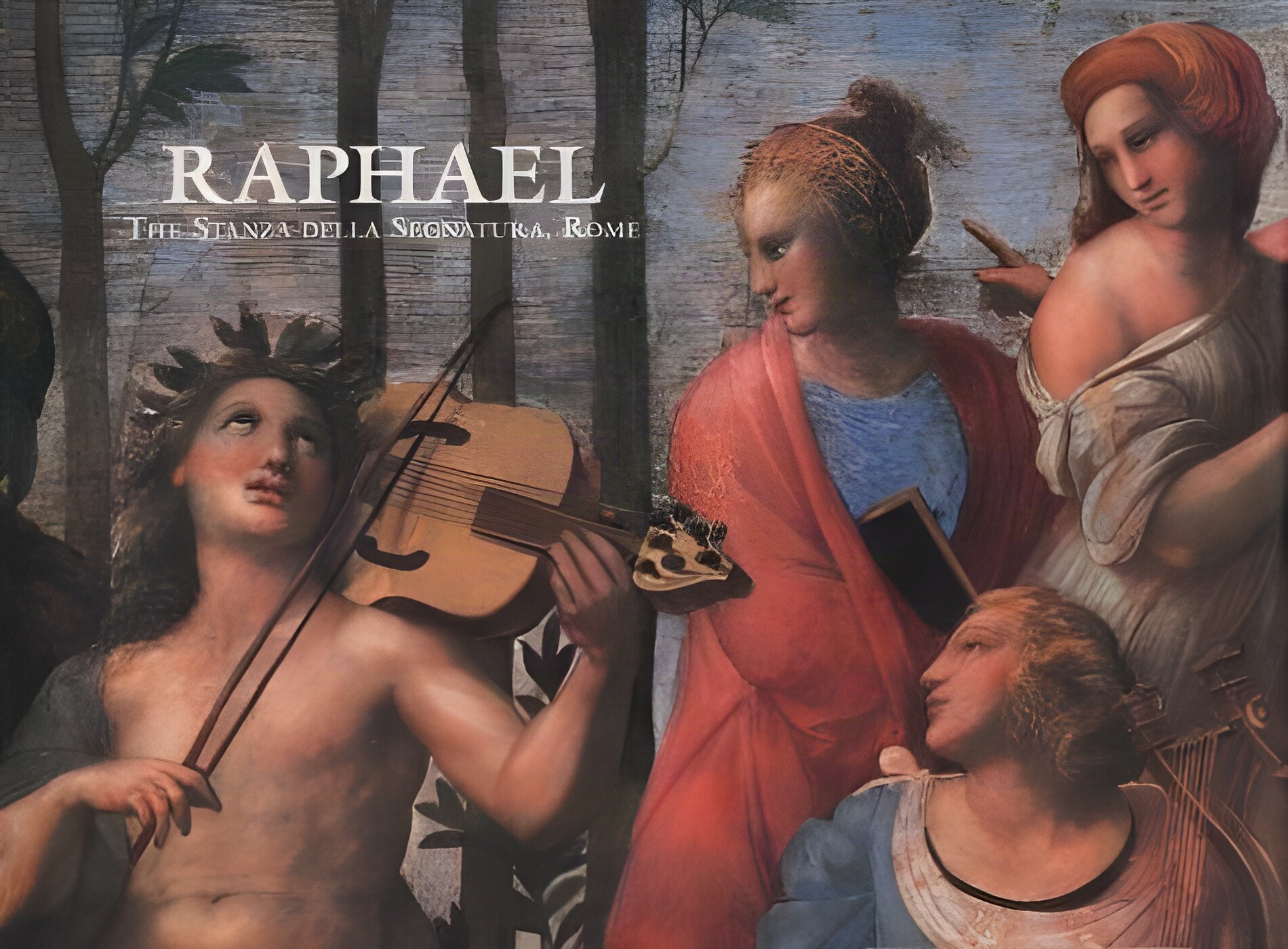
Hardcover. NY, George Braziller , 1st, 1993, Book: Very Good, Dust Jacket: Very Good, Hardcover in a bright dust jacket, 95 pages. Oblong format. 33 color plates of the artist's fresco in the Vatican. Other b&w illustrations. Recognizing the precocious talent of Raphael, then age twenty-six, Pope Julius II commissioned the artist in 1509 to paint four monumental murals and numerous smaller scenes that gave visual form to the enlightened world of the Renaissance. Guided by the leading scholars of his day, Raphael chose themes that glorified the four branches of learning required for a general education, particularly that of a pope: Theology, Poetry, Jurisprudence, and Philosophy. The painting of the latter, perhaps best known today as "The School of Athens," shows Plato and Aristotle striding through a vast, open hallway and flanked by scientists and philosophers of the ancient world; rediscovered in the Renaissance, they hold a convention where they discuss issues that will inspire a new age. Short inscription on front fly leaf, otherwise clean.
Hardcover. Reilly & Britton Co., 1st Edition, 1910, Book: Good, Dust Jacket: None, 110 pages. Hardcover. Also included: "The Bells", "Annabel Lee" and "The Philosophy of Composition", an essay by Edgar Allan Poe. Gorgeous Color & B/W Illustrated Drawings by John Rea Neill, Cover boards bound in green cloth, with illustrated paste-on on front cover board. Previous owner's bookplate on verso of front fly leaf. Some wear and soil to covers. Top edge gilt. Tanning to edges and pages, doesn't affect text or illustrations. Binding tight. Spine straight. Previous bookstore proprietary stamp on page 21.
Hardcover. NY, Cooper Square, reprint, 1972, Book: Very Good, Dust Jacket: None, Hardcover, light blue cloth with gilt lettering on spine, 862 pages. All four parts in one volume. Name on front fly leaf, otherwise clean, bright copy.
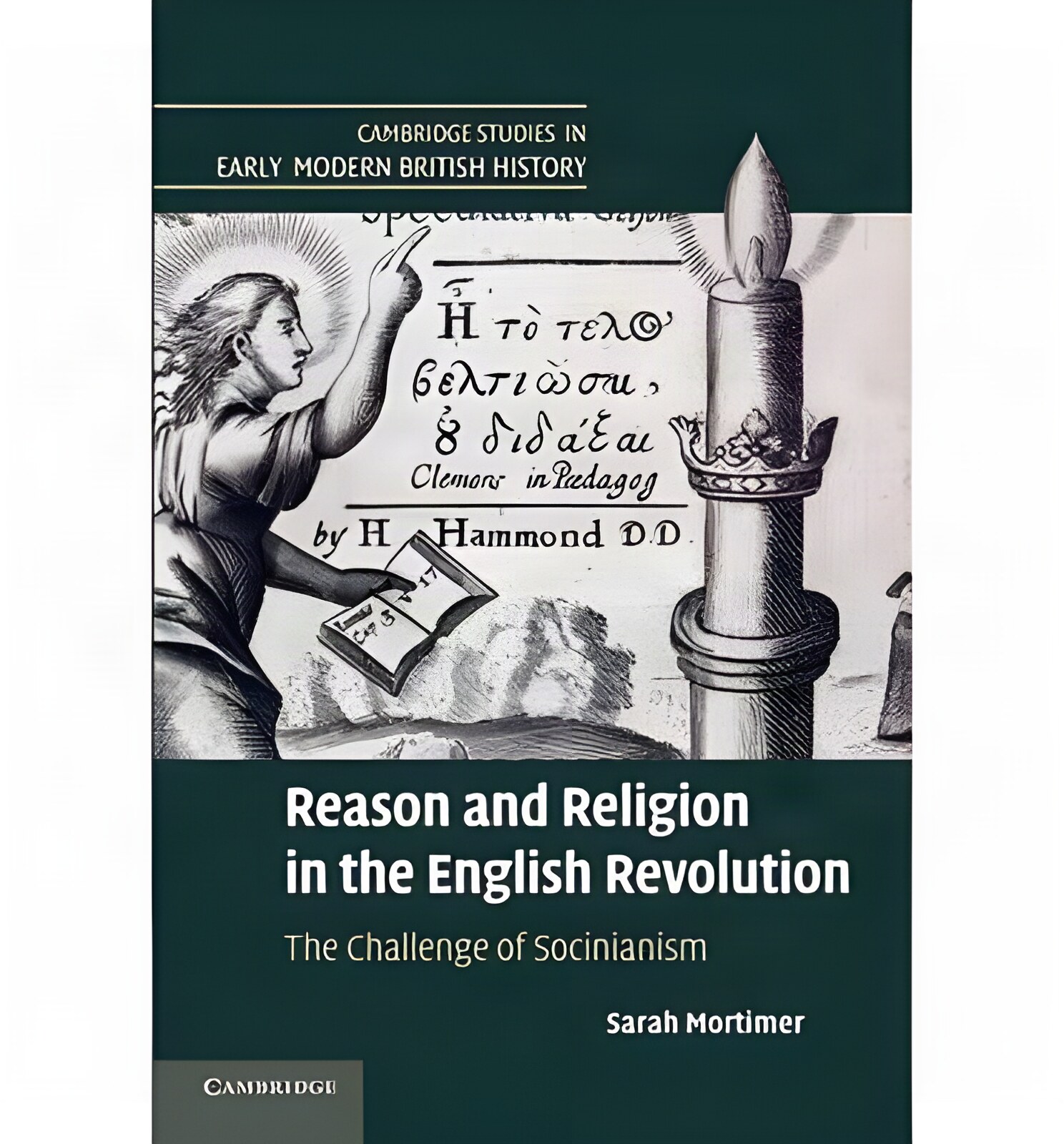
Softcover. Oxford UK, Cambridge University Press, reprint, 2013, Book: Very Good, Dust Jacket: None, Softcover, 264 pages. Examines the reception of Socinian ideas in England, providing a rereading of political and ecclesiastical developments during the English Revolution. Light pencil marking to 10 pages, otherwise clean.
Softcover. Oxford UK, Clarendon Press , 1st, 1992, Book: Very Good, Dust Jacket: None, Softcover, 475 pages, What is reduction? Must all discussions of the mind, value, color, biological organisms, and persons aim to reduce these to objects and properties that can be studied by more basic, physical science? Conversely, does failure to achieve a reduction undermine the legitimacy of higher levels of description or explanation? Though reduction has long been a favorite method of analysis in all areas of philosophy, in recent years philosophers have attempted to avoid these traditional alternatives by developing an account of higher-level phenomena which shows them to be grounded in, but not reducible to, basic physical objects and properties. The contributors to this volume examine the motivations for such anti-reductionist views, and assess their coherence and success, in a number of different fields, including moral and mental philosophy, psychology, organic biology, and the social sciences. Name on front fly leaf, otherwise a clean, bright copy.
Hardcover. NY/London, Oxford University Press, 1st, 2013, Book: Very Good, Dust Jacket: Very Good, Hardcover in a bright, unclipped dust jacket, 450 pages. The essays in Religion and Public Reasons seek to argue for, and illustrate, a central element of John Finnis' theory of natural law: that the main tenets of personal and political morality, and of a good legal order, are taught both by reason (arguments accessible to everyone) and by authentic divine revelation (teachings accessible to all who have a reasonable faith in its witnesses). The author's main books each include arguments for rejecting atheism and agnosticism; several papers here take up these arguments and indicate ways in which they open onto the reasonable grounds for accepting that more about God's nature, and about the meaning of Creation (including ongoing natural evolution), is disclosed by the revelation carried far forward among the Jewish people, and given definitive form by the Jews and Greeks who assembled in the universal Church, as witnesses of Christ, to carry forward that revelation into our present. Several papers argue that "public reason" properly includes such a religion, and that Humeian, Nietzschean, Deweyian, Rawlsian or other atheistically or deistic understandings of a reasonable secularism are badly mistaken. Many substantial papers record the author's position in controversies within Catholicism since the 1960's: on social justice, contraception and abortion; nuclear deterrence; Newman on conscience before pope; Maritain's hopes for a new Christendom and von Balthasar's for a hell empty of human persons; and on "proportionalism" and Lonerganian "historical consciousness" as moral-theological methods. Previously unpublished papers include several University and college sermons, and a substantial introduction.
Hardcover. UK, Cambridge University Press, 1st, 1996, Book: Very Good, Dust Jacket: None, Hardcover, blue cloth with gilt lettering on spine, 518 pages. This volume collects for the first time in a single volume all of Kant's writings on religion and rational theology. These works were written during a period of conflict between Kant and the Prussian authorities over his religious teachings. The historical context and progression of this conflict are charted in the general introduction to the volume and in the translators' introductions to particular texts. All the translations are new with the exception of The Conflict of the Faculties, where the translation has been revised and redited to conform to the guidelines of the Cambridge Edition. Name on front fly leaf, otherwise a clean, bright copy.
Hardcover. New Haven, Yale University Press, 1st, 1993, Book: Very Good, Dust Jacket: Very Good, Hardcover in a bright, unclipped dust jacket. INSCRIBED BY AUTHOR on the title page. What motivates us to reread literary works? How is our pleasure, interpretation, involvement, and evaluation different when we read a literary work and when we reread it? This fascinating book by Matei Calinescu is the first to focus on the implications of rereading for critical understanding. Drawing on literary theory, cultural anthropology, psychology, philosophy, and previous theories of reading, Calinescu describes the dynamics of rereading and explores the sometimes complementary, sometimes sharply conflicting relationships between reading and rereading. Calinescu analyzes fictional works by Borges, Nabokov, Proust, Robbe-Grillet, and Henry James, among others, explaining how reading texts is related both to symbolic play or make-believe and to games with rules. He reviews the history of reading in modern times, discussing, for example, how the Reformation led to rereadings of Scripture and how the proliferation of books during the Enlightenment led to a shift from "intensive reading" to "extensive reading." Calinescu looks at the distinctions between reading and rereading from the perspectives of the age, situation, and gender of the individual reader. He discusses the problems raised by secret or oblique languages and codes - devised to evade censors, communicate with a select audience of "secret sharers," or play games of hide-and-seek with the reader - and shows that they naturally lead to rereading a text. Calinescu argues persuasively that an understanding of rereading is useful in formulating both analytic strategies of practical criticism and a poetics of reading. Clean, bright copy.
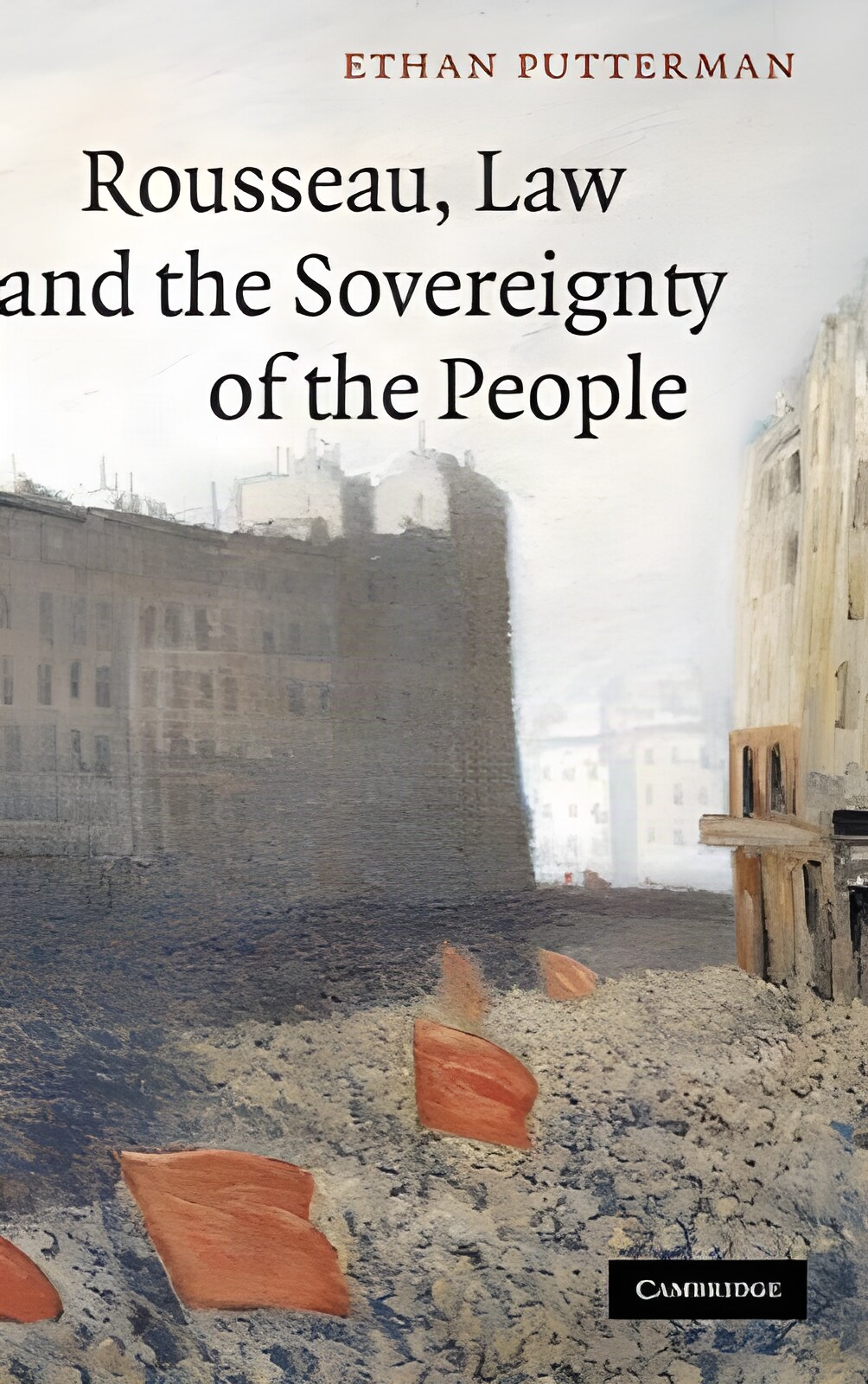
Hardcover. Cambridge UK, Cambridge University Press, 1st, 2010, Book: Very Good, Dust Jacket: Very Good, Hardcover in a bright dust jacket, 187 pages. Examines Rousseau's contribution as a constitutionalist and builder of institutions, relating his major ideas to twenty-first century debates. Rubber stamp on copyright page, otherwise clean.
Softcover. UK , Cambridge University Press, reprint, 1992, Book: Very Good, Dust Jacket: None, Softcover, 231 pages. Schleiermacher's On Religion: Speeches to its Cultured Despisers is a classic of modern Protestant religious thought that powerfully displays the tensions between the Romantic and Enlightenment accounts of religion. This edition presents the original 1799 text in English for the first time. Richard Crouter's introduction places the work in the milieu of early German Romanticism, Kant criticism, the revival of Spinoza and Plato studies, and theories of literary criticism and of the physical sciences. This fully annotated edition also contains a chronology and notes on further reading. Name on front fly leaf, otherwise clean.
Hardcover. Chapel Hill, University of North Carolina Press, 1st, 1982, Book: Very Good, Dust Jacket: Very Good, Hardcover, red dust jacket with sunned spine, 195 pages. Hobart demonstrates how Malebranche's theories of truth, ideas, and intelligible extension were formulated under the influence of mathematics and how these theories conflicted with the assumptions and patterns of thought needed for traditional substance philosophy and natural theology. The conflict produced inconsistencies in key concepts--necessity, infinity, being, faith, and reason--rendering any reconciliation between science and religion intellectually unattainable. Name on front fly leaf, otherwise clean.
Hardcover. Oxford UK, Oxford University Press, 1st, 2017, Book: Very Good, Dust Jacket: Very Good, Hardcover in a bright dust jacket, 274 pages. Both science and philosophy are interested in questions of ontology - questions about what exists and what these things are like. Science and philosophy, however, seem like very different ways of investigating the world, so how should one proceed? Some defer to the sciences, conceived as something apart from philosophy, and others to metaphysics, conceived as something apart from science, for certain kinds of answers. This book contends that these sorts of deference are misconceived. A compelling account of ontology must appreciate the ways in which the sciences incorporate metaphysical assumptions and arguments. At the same time, it must pay careful attention to how observation, experience, and the empirical dimensions of science are related to what may be viewed as defensible philosophical theorizing about ontology. The promise of an effectively naturalized metaphysics is to encourage beliefs that are formed in ways that do justice to scientific theorizing, modeling, and experimentation. But even armed with such a view, there is no one, uniquely rational way to draw lines between domains of ontology that are suitable for belief, and ones in which it would be better to suspend belief instead. In crucial respects, ontology is in the eye of the beholder: it is informed by underlying commitments with implications for the limits of inquiry, which inevitably vary across rational inquirers. As result, the proper scope of ontology is subject to a striking form of voluntary choice, yielding a new and transformative conception of scientific ontology. Clean copy.
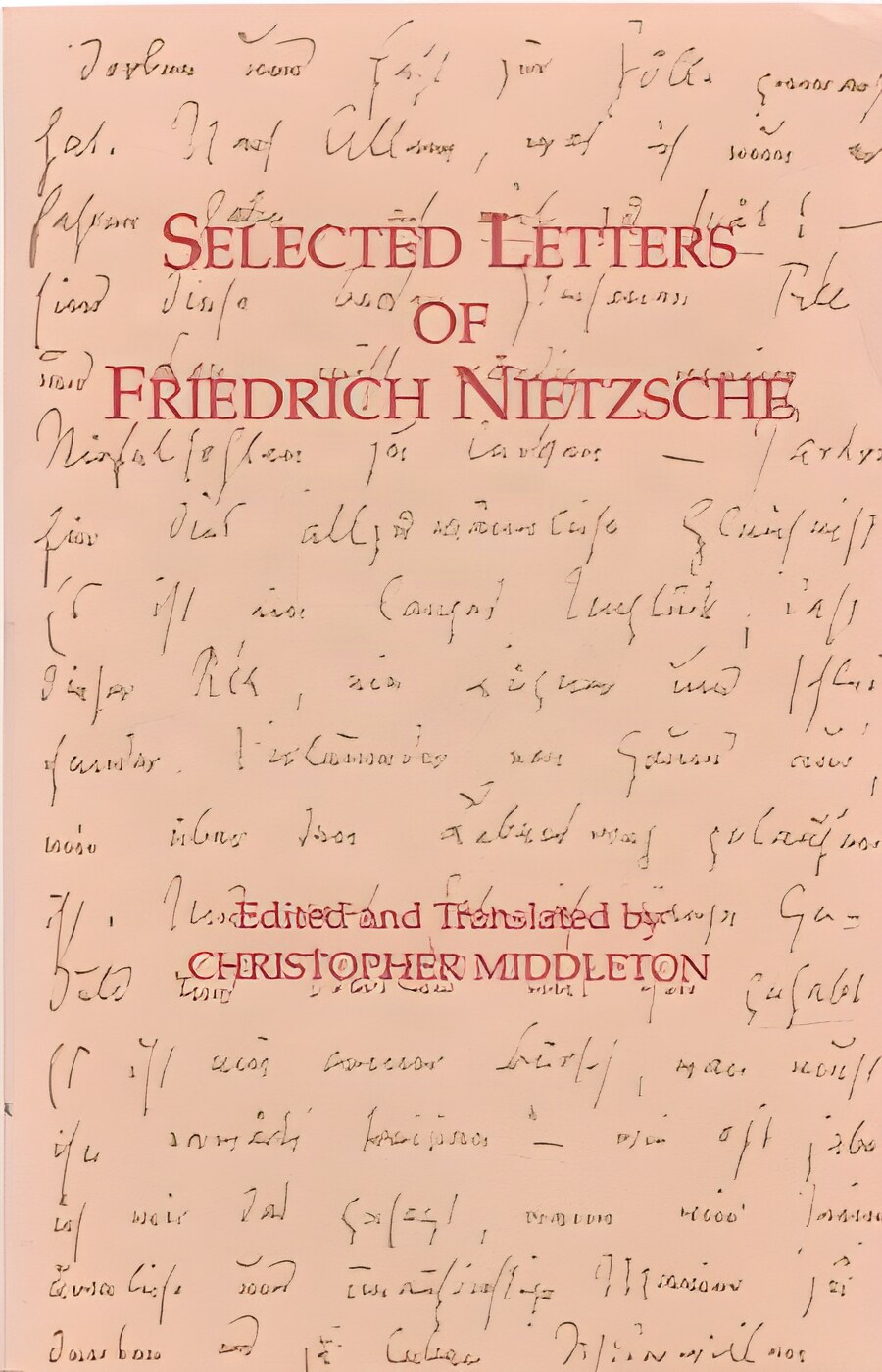
Softcover. Indianapolis IN, Hackett Publishing, reprint, 1996, Book: Very Good, Dust Jacket: None, Softcover, 368 pages. This collection of more than two hundred of Nietzsche's letters offers a representative body of correspondence on subjects of main concern to him--philosophy, history, morals, music and literature. Also included are letters of biographical interest which, in Middleton's words, mark the stresses and turnings of his life. Among the addressees are Richard Wagner, Erwin Rohde, Jacob Burkhardt, Lou Salome, his mother, and his sister Elisabeth. The annihilating split in Nietzsche's personality that has been associated with his collapse on a street in Turin in 1889 is described in a moving letter from Franz Overbeck which forms the Epilogue. Index. Light cease to front cover, otherwise clean, bright copy.
Hardcover. Boston, J. Stilman Smith & Co., 1st, 1893, Book: Very Good, Dust Jacket: None, Hardcover, white buckram with maroon rules and gilt lettering, decorations. 293 pages, a collection of sermons given the previous year by the author who was Minister of the South Congregational Church in Boston. From a church library with a spine label, bookplate on inside front cover and a stamp on a blank prelim page. Otherwise clean and bright.
Softcover. Spain, Editorial Escudo de Oro. S.A., 1st, 1995, Book: Very Good, Dust Jacket: None, 93 pages. Softcover. Mild soiling throughout. An otherwise unmarked copy with only minor edgewear. Color photographs throughout.
Softcover. Cambridge MA, Medieval Academy of America, 1st, 1979, Book: Very Good, Dust Jacket: None, Softcover, 152 pages. Bouchard's work is erudite and provides a picture of the development of the shifting relationship between the pastoral demands placed on the prelates and those of the secular administrative. Some coped with the phenomenal increase of secular administration over the century better than others. Some coped with the machinations of local counts and even kings who would seize property almost at a whim better than others. One even defied the Pope until threatened with excommunication if he did not accept his 'promotion'. Clean copy.
Hardcover. Cambridge UK, Cambridge University Press, 1st, 2004, Book: Very Good, Dust Jacket: Very Good, Hardcover in a bright dust jacket with mild edgewear. 295 pages. Stoicism is now widely recognized as one of the most important philosophical schools of ancient Greece and Rome. But how did it influence Western thought after Greek and Roman antiquity? The contributors recruited for this volume include leading international scholars of Stoicism as well as experts in later periods of philosophy. They trace the impact of Stoicism and Stoic ideas from late antiquity through the medieval and modern periods. Name on front fly leaf otherwise clean.
Hardcover. Munchen/Leipzig, K.G. Saur, 1st, 2004, Book: Very Good, Dust Jacket: None, Hardcover, blue cloth with light gray stamping, 348 pages. Name on front fly leaf, otherwise clean. Name on front fly leaf, otherwise clean.
Hardcover. Munchen/Leipzig, K.G. Saur, 1st, 2004, Book: Very Good, Dust Jacket: None, Hardcover, blue cloth with light gray stamping, 269 pages. Name on front fly leaf, otherwise clean. Name on front fly leaf, otherwise clean.
Hardcover. Munchen/Leipzig, K.G. Saur, 1st, 2004, Book: Very Good, Dust Jacket: None, Hardcover, blue cloth with light gray stamping, 221 pages. Name on front fly leaf, otherwise clean. Name on front fly leaf, otherwise clean.

 "Raven, The: And Other Poems by Edgar Allan Poeby: Poe, Edgar Allan, John Rea Neill (Illustrations)")


 "Realms of Being: One-Volume Edition With a New Introduction By the Authorby: Santayana, George")

 "Religion and Rational Theology (The Cambridge Edition of the Works of Immanuel Kant)by: Immanuel Kant / Allen W. Wood (Translator)")
 "Rereading (INSCRIBED COPY)by: Calinescu, Matei")
 "Saint Paul's Epistles to the Galatians: A Revised Textby: Lightfoot, J. B.")
 "Schleiermacher: On Religion: Speeches to its Cultured Despisers by: Friedrich Schleiermacher and Richard Crouter")
 "Science and Religion in the Thought of Nicolas Malebranche by: Hobart, Michael E.")
 "Scientific Ontology:Integrating Naturalized Metaphysics and Voluntarist Epistemologyby: Chakravartty, Anjan")
 "Sermons of the Winterby: Hale, Edward Everett")
 "Sevilla Cathedral by: Delgado. Francisco Gil (Editor)")
 "Spirituality and Administration: The Role of the Bishop in Twelfth Century Auxerre: Volume 5 Speculum Anniversary Monographs by: Bouchard, Constance Brittain")