Hardcover. NY/London, Oxford University Press, 1st, 2011, Book: Very Good, Dust Jacket: Very Good, Hardcover in a bright, unclipped dust jacket, 350 pages. The essays in Intention and Identity explore themes in Finnis' work touched on only lightly, if at all, in Natural Law and Natural Rights, developing profound accounts of personal identity and existence; group identity and common good; and intention and choice as action- and self-shaping. In his many-faceted study of what it is to be a human person, and a human community, Finnis not only engages with contemporary philosophers and bioethicists such as Peter Singer, Michael Lockwood and John Harris, with thinkers from other traditions such as Karol Wojtyla (John Paul II), and with judges in the highest courts. He also offers illuminating and deeply considered readings of Shakespeare and Aquinas, and debates with Roger Scruton, Joseph Raz, Hans Kelsen, John Rawls, Glanville Williams, Richard Posner, Ronald Dworkin and others. The role of intention in the criminal law and the law of civil wrongs is searchingly explored through case-law, as are judicial attempts to understand conditional and preparatory intentions. Moral or bioethical issues discussed include in vitro fertilization, cloning, abortion, euthanasia, and 'brain death', patriotism, multi-culturalism and immigration.
Softcover. Burlington VY, Ashgate Publishing , 1st, 2002, Book: Very Good, Dust Jacket: None, Softcover, 241 pages. The theology of Irenaeus, and the Demonstration of the Apostolic Preaching in particular, is pivotal in showing the way in which the fathers of the church interpreted scripture and distilled doctrine. The Demonstration is an important hinge showing how the doctrine of the fourth century with its definitive councils and definitions of faith, opens out from the new testament apostolic and evangelical witness. Presenting the full translation of the Demonstration of Irenaeus by Dean Armitage Robinson, this book offers a detailed theological commentary by Canon Iain MacKenzie on this foundational doctrinal text. MacKenzie sets out the main theological themes throughout Irenaeus' work, and explores his method of systematic theology, Athanasius's dependence on Irenaeus, and Irenaeus' influence on doctrine in the fourth century - particularly the works of Athanasius, Basil of Caesarea, Gregory of Nazianzus and Gregory of Nyssa. Highlighting the importance of this second century theologian for theology today, this commentary and theological interpretation offers an incentive to study Irenaeus in the wider development of Christian doctrine as a cardinal figure in the appreciation of systematic theology. Name on front fly leaf otherwise clean.
Hardcover. US, University Of Chicago Press, 1st, 1991, Book: Very Good, Dust Jacket: Very Good, 229 pages. Light edgewear to dust jacket, else a clean, tight copy. Isaiah Berlin: A Celebration gathers tributes, reflections, and commentaries on the great thinker and his philosophy, politics, and life-including contributions from Michael Ignatieff, Leon Wieseltier, Ronald Dworkin, Stephen Spender, and many others.
Hardcover. UK, Oxford University Press, 1st, 2019, Book: Very Good, Dust Jacket: Very Good, Hardcover in a bright dust jacket, 409 pages. This is the first critical edition of the literary and historical writings of John Locke (1632-1704): poems, orations, a plan for a play, a guide to compiling a commonplace book, rules for societies, writings on the liberty of the press, and a memoir of Locke. Vol. 23 of The Clarendon Edition of the Works of John Locke. Clean copy.
Softcover. Paris, Les Impressions Nouvelles, 1st thus, 1988, Book: Very Good, Dust Jacket: None, Softcover, 540 pages. FRENCH TEXT. Name on front fly leaf otherwise clean, tight copy.
Hardcover. NY, March & Greenwood, 1st, 1938, Book: Very Good, Dust Jacket: None, Hardcover, purple cloth with gilt lettering on spine. 23.4*16.3cm, 123 pages. Printed on one side of double leaves, folded once in Chinese style. Now uncommon in commerce, this was the first English translation by a Chinese scholar of the foundational book of Taoism. The enigmatic polymath Dr Sum Nung Au-Young (1893-1942) was an accomplished poet, philosopher, lawyer and economist. There is some faint discoloration but hardly visible unless held at an angle, otherwise a very good hardcover. "Author's edition".
Hardcover. Paris, Desaint et Saillant, 1764, Book: Good, Dust Jacket: None, 642 pages, leather bound with spine label and raised bands. FRENCH TEXT. Copy that belonged to children's author Edith Thacher, with her signature, Paris 1929 on front fly leaf (She wrote Goodnight Moon, among many other classics). Marbled end papers, overall very good.
Hardcover. Berkeley CA, University of California Press, 1st, 1985, Book: Very Good, Dust Jacket: Very Good, Hardcover in a bright dust jacket, 423 pages. Volume III only. Edited by Peter C. Hodgson. Translated from the German by R. F. Brown, et al. The third volume of philosopher G.W.F. Hegel's LECTURES ON THE PHILOSOPHY OF RELIGION covers Hegel's philosophical interpretation of Christianity. Taken together, the three volumes establish a critical study, separating the material and publishing it as autonomous units on the basis of a complete re-editing of the sources--a series of actual lectures delivered by Hegel in 1821, 1824, 1827, and 1831. Name on front fly leaf, otherwise clean.
Softcover. Berkeley, University of California Press, reprint, 1988, Book: Very Good, Dust Jacket: None, Sotcover, 552 pages. From the complete three-volume critical edition of Hegel's Lectures on the Philosophy of Religion, this edition extracts the full text and footnotes of the 1827 lectures, making the work available in a convenient form for study. Of the lectures that can be fully reconstructed, those of 1827 are the clearest, the maturest in form, and the most accessible to nonspecialists. In them, readers will find Hegel engaged in lively debates and in important refinements of his treatment of the concept of religion, the Oriental religions and Judaism, Christology, the Trinity, the God-world relationship, and many other topics. Name onfront fly leaf, otherwise clean.
Hardcover. Boston, Houghton Mifflin, reprint, 1882, Book: Very Good, Dust Jacket: None, Hardcovers, two-volume set complete. Matching dark brown cloth covers stamped in black and gilt, top edge gilt. 639; vi, 653 pages; index, bibliography, frontispiece portrait in each volume - one a quite formal portrait of Voltaire in his prime, the other a sketch of him in old age. Covers show light wear, name on title pages. This is the second printing, the first published a year earlier. A comprehensive life of the great Enlightenment writer. PLEASE NOTE: DUE TO WEIGHT, DOMESTIC SHIPPING ONLY.
Hardcover. Oxford UK, Clarendon Press, 1st, 1991, Book: Very Good, Dust Jacket: Very Good, Hardcover set, complete in two volumes, both with bright dust jackets. Locke on Money presents for the first time the entire body of the philosopher's writings on this important subject (other than Two Treatises of Government). Accurate texts, together with an apparatus listing variant readings and significant manuscript changes, record the evolution of Locke's ideas from the original 1668-74 paper on interest to the three pamphlets on interest and coinage published in the 1690s. The introduction by Patrick Hyde Kelly establishes the wider context of Locke's writings in terms of contemporary debates on these subjects, the economic conditions of the time, and the circumstances of writing and publication. It shows, notably, that Locke's supposed responsibility for the 1696 recoinage is a myth. The account of what Locke derived from Mercantilist writings and of how he reformulated these in accordance with his philosophy illuminates his contribution to the evolution of economics, and will aid reappraisal of Two Treatises. The picture that emerges confirms Locke's status as major economic thinker, contrary to the prevalent view of recent decades. There are two volumes in the edition. The first contains the introductory matter, and the texts of the Early Writings on Interest, 1688-74, and Some Considerations. The second comprises Short Observations, Further Considerations, and the Appendices, Bibliography, and Index. 664 total pages. Name on front fly leaf in Vol. 1, otherwise clean.
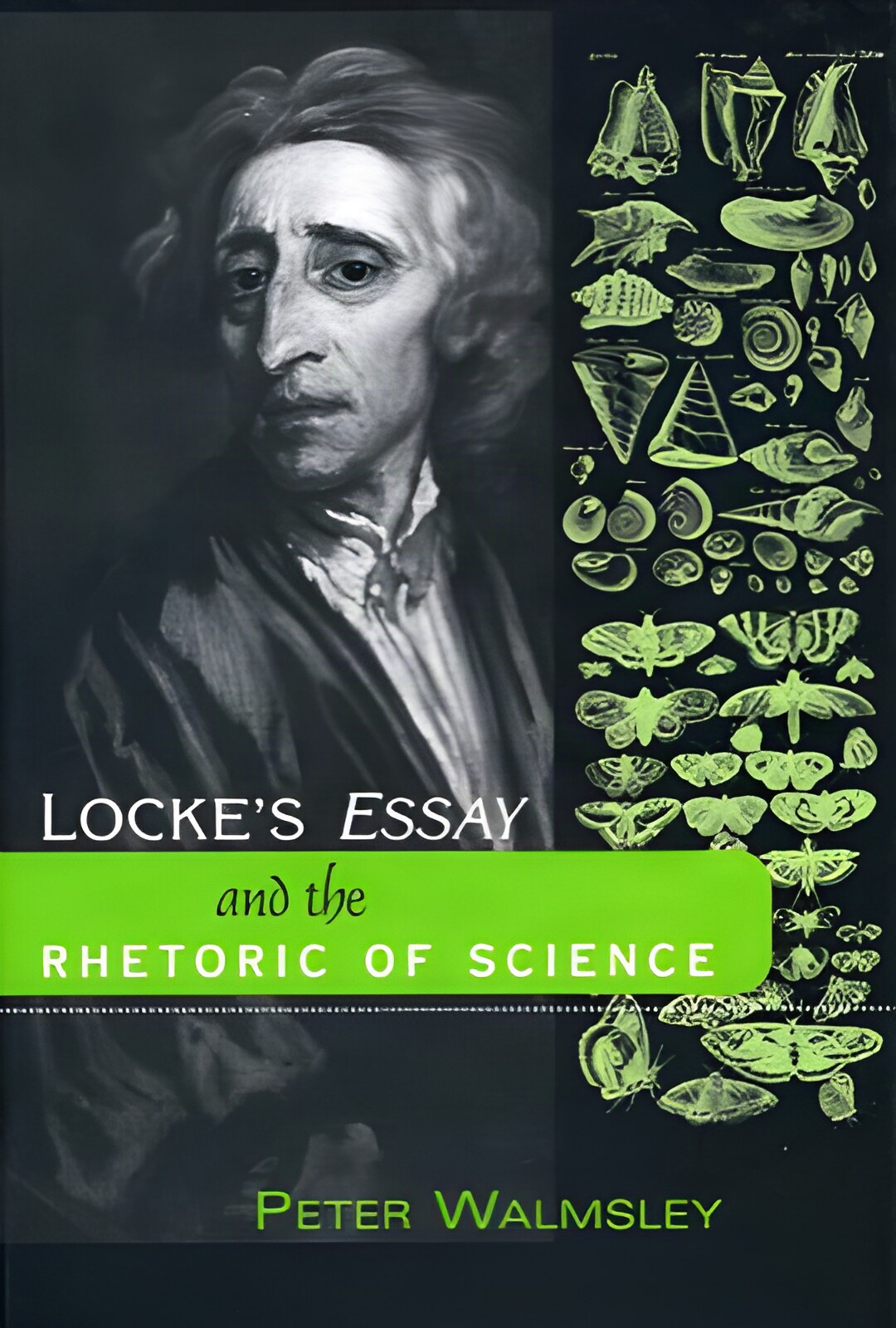
Hardcover. London, Bucknell University Press, 1st, 2003, Book: Very Good, Dust Jacket: Very Good, Hardcover in a bright dust jacket, 199 pages. This book shows how, in his enormously influential Essay Concerning Human Understanding (1689), John Locke embraces the new rhetoric of seventeenth-century natural philosophy, adopting the strategies of his scientific contemporaries to create a highly original natural history of the human mind. With the help of Locke's notebooks, letters, and journals, Peter Walmsley reconstructs Locke's scientific career, including his early work with the chemist Robert Boyle and the physician Thomas Sydenham. He demonstrates too how the Essay embodies in its form and language many of the preoccupations of the science of its day, from the emerging discourses of experimentation and empirical taxonomy to developments in embryology and the history of trades. Widely research and lucidly and engagingly written, Locke's Essay and the Rhetoric of Science constitutes an important new reading of Locke, on that shows both his brilliance as a writer and his originality in turning to science to effect a radical re-invention of the study of the mind. Pencil marking to front fly leaf, otherwise clean.
Hardcover. Cambridge UK, Cambridge University Press, 1st, 1953, Book: Very Good, Dust Jacket: Good, Hardcover in a worn dust jacket with a chunk gone from rear panel, 309 pages. This book gives a complete account of all that Locke saw, did and heard during his four years in France. The entries vary from laconic jottings to detailed accounts - full of colour and wit - of life in Paris and the provinces. Locke's variety of interests presents a vivid and thorough account of France at that time. He observed and recorded the absolutism of Louis XIV and the poverty of the peasants, the growing persecution of the Protestants and the external manifestations of Catholicism, recent developments in science and technology - even agricultural methods and the system of taxes. So that this is a book for the general reader as well as for the student of Locke, the social historian and the historian of science. Three b&w plates including a map of his travels. Name on front fly leaf, rubber withdrawn stamp on copyright page, otherwise clean.
Hardcover. Leiden/NY, Brill, 1st, 1997, Book: Very Good, Dust Jacket: Very Good, Hardcover in a bright dust jacket, 165 pages. Name and date on front fly leaf, otherwise clean. The main argument of this book, against a prevailing orthodoxy, is that the study of logic was a vital - and a popular - part of stoic philosophy in the early imperial period. The argument relies primarily on detailed analyses of certain texts in the Discourses of Epictetus. It includes some account of logical 'analysis', of 'hypothetical' reasoning, and of 'changing' arguments. Written both for historians and for philosophers, and presupposing no logical expertise, this is an important contribution to the history of philosophy in the early imperial period.
Hardcover. London, Routledge, 1st, 2003, Book: Very Good, Dust Jacket: Very Good, Hardcover in a bright dust jacket, 289 pages. Nicolas Malebranche (1638-1715) is one of the most important philosophers of the seventeenth century after Descartes. A pioneer of rationalism, he was one of the first to champion and to further Cartesian ideas. Andrew Pyle places Malebranche's work in the context of Descartes and other philosophers, and also in its relation to ideas about faith and reason. He examines the entirety of Malebranche's writings, including the famous The Search After Truth, which was admired and criticized by both Leibniz and Locke. Pyle presents an integrated account of Malebranche's central theses, occasionalism and 'vision in God', before exploring and assessing Malebranche's contribution to debates on physics and biology, and his views on the soul, self-knowledge, grace and the freedom of the will. This penetrating and wide-ranging study will be of interest to not only philosophers, but also to historians of science and philosophy, theologians, and students of the Enlightenment or seventeenth century thought.
Hardcover. London, Rudolf Steiner Publishing, 1st, 1945, Book: Good, Hardcover, red cloth faded to tan on front and spine, 211 pages. Translation by H. Collison. Name and stamp on front fly leaf, no other markings.
Hardcover. Burlington VT, Ashgate, 1st, 2005, Book: Very Good, Dust Jacket: None, Hardcover, black cloth stamped in gilt, 263 pages. (Early Modern Englishwoman: a Facsimile Library of Essential Works) Name on front fly leaf otherwise clean.
Hardcover. New York, Mahlon Day, reprint , 1836, Book: Good, Dust Jacket: None, 270 pages. Compilation of three separate volumes published in different times. Rear fly leaf creased. Foxing throughout. Otherwise clean, tight copy.
Hardcover. NY, D. Appleton and Company, 1st US, 1875, Book: Very Good, Dust Jacket: None, Hardcover, terra-cotta cloth with black design and gilt lettering, 363 pages plus publisher's ads. A late nineteenth century reference on natural science and philosophy. Papillon's engrossing essays, written at various times and put together in this volume as - after the fashion of the time - an effort to dovetail science, metaphysics and philosophy into a higher understanding of life. Name on front fly leaf otherwise a clean, bright copy.
Hardcover. London, Macmillan & Co, reprint, 1956, Book: Good, Dust Jacket: Good, Hardcover, 530 pages, dust jacket edge wear and small tears, price clipped. Pencil markings and underlining on some pages, foxing on edges, and previous owner's signature on front fly leaf, otherwise, clean and tight copy.
Hardcover. Brattleborough VT, J. Holbrook, 1819, Book: Very Good, Dust Jacket: None, 336 pages, black leather binding with gilt lettering and decorations on spine. Early Vermont imprint. Previous owner's inscription on blank prelim page, otherwise clean, bright copy.


 "Isaiah Berlin: A Celebrationby: Ullmann-Margalit, Edna")

 "Kant's Rational Theologyby: Wood, Allen W.")
 "King and the Corpse, The: Tales of the Soul's Conquest of Evilby: Zimmer, Heinrich")
 "La Querelle d'Utrecht. Textes ?©tablis, traduits et annot?©s par Theo Verbeek. Pr?©face de Jean-Luc Marionby: Descartes, Ren?© und Martin Schoock")
 "Lao Tze's Tao Teh King: The Bible of Taoism. English Version, by Sum Nung Au-Young. With an Introduction by Merton S. Yewdaleby: Sum Nung Au-Young; Lao Tze")



 "Locke on Money. Edited together with Ancillary Manuscripts, an Introduction, Critical Apparatus, and Notes by Patrick Hyde Kelly.(2 Volumes)by: Locke, John and Kelly,")

 "Malebrancheby: Pyle, Andrew")
 "Man as Symphony of the Creative Word: (Esoteric Studies) Twelve lectures given in Dornach, Switzerland from October 19th to November 11th, 1923 by: Steiner, Rudolf")
 "Marx's Theory of Scientific Knowledgeby: Murray, Patrick (Irving Adler)")
 "Memorials Concerning Several Ministers, and Others, Deceased: Of the Religious Society of Frineds, Within the Limits of the Yearly Meeting of New York. by: N/A")

 "Nature, Man and God: Being the Gifford Lectures Delivered in the University of Glasgow in the Academical Years 1932-1933 and 1933-1934by: Temple, William")
 "New Testament of Our Lord and Saviour Jesus Christ, Theby: N/A")