Hardcover. Baltimore, Genealogical Publishing Company, 2nd pr., 1997, Book: Very Good, Dust Jacket: None, Hardcover, blue cloth stamped with gilt lettering, 608 pages. After the Revolutionary War, the federal government awarded bounty lands to citizens and soldiers for services rendered. In its simplest form, this involved the exchange of free land for military service. Federal records of these Revolutionary War bounty land awards are well known and readily accessible to genealogists. But the federal government was not alone in rewarding its citizens and soldiers with bounty lands. Nine state governments adopted similar policies, generating even more records. Unlike the federal bounty land records, however, these state records are not centralized; instead, they are found in the various states in the form of manuscript records and printed books and are all but inaccessible to the researcher. Until now, that is! Because with this work by Lloyd Bockstruck we now have a master index to state bounty land records, a Revolutionary War resource unparalleled for freshness, originality, and research potential. The nine states that awarded bounty lands in their western reserves or on their western borders (directly affecting the future states of Indiana, Kentucky, Maine, Ohio, and Tennessee) are Connecticut, Georgia, Maryland, Massachusetts, New York, North Carolina, Pennsylvania, South Carolina, and Virginia. (The basis for the Connecticut and Georgia awards, by the way, differ from the norm.) Clean, bright copy.
Hardcover. Philadelphia, University of Pennsylvania Press, 1st, 1937, Book: Very Good, Dust Jacket: Very Good, 296 pages, b&w illustrations, dark blue cloth with gilt design on spine. In a bright, price-clipped dust jacket.
Hardcover. Pittsburgh PA, Bissell Block Publishing, 1st, 1905, Book: Very Good, Dust Jacket: None, Hardcover in tan cloth with gilt lettering. SIGNED BY AUTHOR in pencil, dated 1913 on a prelim page. 192 pages, 29 illustrations: halftone plates of river, scenery, oil, rigs, glass-making, bridges, mills, comic drawings, few signed Syd Smith.
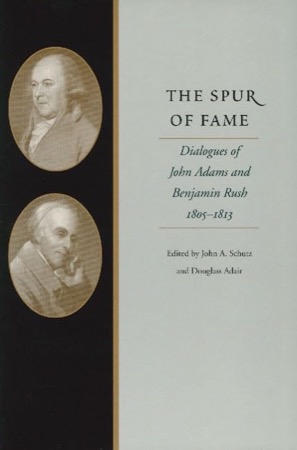
Softcover. Indianapolis, Liberty Fund, reprint, 2001, Book: Very Good, Dust Jacket: None, Softcover, 325 pages. John Adams and Benjamin Rush were two remarkably different men who shared a devotion to liberty. Their dialogues on the implications of fame for their generation prove remarkably timely--even for the twenty-first century. Adams and Rush championed very different views on the nature of the American Revolution and of the republic established with the United States Constitution; yet they shared one of the most important correspondences of their time. John Adams and Benjamin Rush met in 1774 as members of the Continental Congress--Adams from Massachusetts, Rush from Pennsylvania. In 1805, after Adams was defeated in his quest of a second term as the new republic's second President, the two men self-consciously commenced an exchange of letters. Their recurring subject was fame. This emphasis on fame was crucial, Adams and Rush believed, because on the fame attached to individual leaders of the Revolutionary generation would depend the view of the Revolution and of the Constitution and republican government that would be embraced by generations to come, including our own. The Liberty Fund edition of The Spur of Fame reproduces a text originally published by the Huntington Library.
Hardcover. NY, Random House, 1st, 1997, Book: Very Good, Dust Jacket: Very Good, Hardcover in a bright, unclipped dust jacket, 391 pages. Attractive copy of the fourth novel by Pulitzer Prize winner, Richard Russo. William Henry Devereaux, Jr., spiritually suited to playing left field but forced by a bad hamstring to try first base, is the unlikely chairman of the English department at West Central Pennsylvania University. Over the course of a single convoluted week, he threatens to execute a duck, has his nose slashed by a feminist poet, discovers that his secretary writes better fiction than he does, suspects his wife of having an affair with his dean, and finally confronts his philandering elderly father, the one-time king of American Literary Theory, at an abandoned amusement park. Such is the canvas of Richard Russo's Straight Man, a novel of surpassing wit, poignancy, and insight. As he established in his previous books Russo is unique among contemporary authors for his ability to flawlessly capture the soul of the wise guy and the heart of a difficult parent. In Hank Devereaux, Russo has created a hero whose humor and identification with the absurd are mitigated only by his love for his family, friends, and, ultimately, knowledge itself. Clean copy.
Softcover. Philadelphia, University of Pennsylvania Press, 1st pbk, 1998, Book: Very Good, Softcover, 330 pages. Twelve literary scholars and historians investigate the ways in which space and place are politically, religiously, and culturally inflected. Exploring medieval texts as diverse as Icelandic sagas, Ptolemy's Geography, and Mandeville's Travels, the contributors illustrate the intimate connection between geographical conceptions and the mastery of land, the assertion of doctrine, and the performance of sexuality. Clean copy.
Hardcover. University Park PA, Pennsylvania State University Press, 1st, 2010, Book: Very Good, Dust Jacket: Very Good, Hardcover in a bright dust jacket, 295 pages illustrated in b&w and color. Beginning in the 1730s, Heather Minor tells us, Rome "began to resemble one huge construction site," with a series of ambitious and expensive new building campaigns that transformed the face and substance of the city. From renovations of the Santa Maria Maggiore and San Giovanni in Laterano and the restoration of the Arch of Constantine to the creation of the Capitoline Museum and the establishment of the papacy's Calcografia, the push for reform not only renewed papal and Church identity but also revived Italian culture as a whole. Based on extensive archival research and full of fascinating stories about the often stormy theological and intellectual debates central to the attempts at reform, The Culture of Architecture in Enlightenment Rome brings to life the personalities of architects, theologians, and intellectuals and links the extensive architectural programs with powerful shifts in the intellectual climate of the time. Clean, bright copy.
Hardcover. Boston, The Boston Music Co., 1st, 1913, Book: Very Good, Dust Jacket: None, Hardcover, brown woven cloth with publisher's printed paper labels on spine and front cover. 247 pages, b&w photographs. Biography of an American composer with a strong family life. MOSTLY TOLD BY Nevin and his wife throughout. Nevin, 1862-1901, born in Edgewerth Pennsylvania; debut as pianist, Pittsburgh (Dec. 10, 1886); excelled in lyrical music, composing 70 songs, published in Sketch Book (1888), Water Scenes (1891), In Arcady (1892), May in Tuscany (1896), A Day in Venice (1898). INSCRIBED BY HIS WIFE on the title page with her calling card laid in. Clean, bight copy.
Softcover. Cambridge, Komatik Press, 1st, 2017, Book: Very Good, Dust Jacket: None, Softcover, oblong format. In 1917, while still in art school, Edward Shenton joined Company B, 103rd Engineers of the Pennsylvania National Guard. He stocked up on art materials, including many canvas-bound sketchbooks and a watercolor set, and went off to train and fight. Much of the war he witnessed made their way into his sketchbooks. When Ed returned home, no one wanted to hear about the war, much less see images of the horrors of battle. He went back to art school and his sketches were put away and forgotten. He had a brilliant career as an illustrator. His drawings graced the cover of Scribner's Magazine for ten years and embellished books by, among others, Hemingway, Fitzgerald and Thomas Wolf.Edward Shenton had a long career as an outstanding illustrator, author, and teacher and, after a very full life, died at the age of eighty-two. Nine decades after they were put away, his son came across Ed's sketchbooks and he and I decided that they, along with his father's wartime story, had to be shared with the world.
Hardcover. Gloucester MA, Peter Smith, reprint, 1959, Book: Very Good, Dust Jacket: None, Hardcover, light blue cloth with dark blue lettering on spine. 360 pages. Originally published in 1902. The author looks at the formation of the Tory or Loyalist party in the American Revolution, its persecution, the banishment (or death) of over 100,000 of these most conservative and respectable Americans, and the consequences of their banishment. In numbers, historically it is only comparable to the fates of the Moors of Spain and the Huguenots of France. This was the first book by the famous historian Claude Halstead van Tyne (1869-1930), who was a Michigan and Pennsylvania professor and author who wrote extensively on the American Revolution. Name on front fly leaf, otherwise a bright, clean copy.
Hardcover. NY, Henry Holt, 1st, 1986, Book: Very Good, Dust Jacket: Very Good, Hardcover in a bright, unclipped dust jacket. Fifteen-year-old Sammy di Cantini, resident of a mining region of Pennsylvania, is determined to rise above his class, falls disastrously in love with a Protestant, and visits his Mafia brother in New York where he becomes involved in impossible struggles. Takes place in 1925 in Pennsylvania's coal country. Clean, bright copy.
Softcover. Reading Lines, 1st, 1958, Book: Very Good, Dust Jacket: None, Softcover, 60 pages, illustrated in 2-colors. The history of the Reading Railroad. Mild crease to cover, otherwise clean.
Hardcover. Philadelphia, University of Pennsylvania Press, 1st, 1929, Book: Very Good, Dust Jacket: None, Hardcover, maroon cloth stamped in red and gilt, 251 pages. Chapters include: Includes "'Sundry sorts of earthen ware,'" "On the trail of the tulip," "Spatter after its kind," and "The last of the old potters." Mild bumping to spine, otherwise a clean, bright copy.
Hardcover. NY, Macmillan, 1st, 1963, Book: Very Good, Dust Jacket: None, Hardcover, light tan cloth with green lettering and decoration. No dust jacket. INSCRIBED BY AUTHOR on title page. A memoir of a year in rural Pennsylvania. Clean copy.
Hardcover. University Park, Pennsylvania State University , 1st, 2003, Book: Very Good, Dust Jacket: Very Good, Hardcover with black cloth boards in dust jacket, oblong quarto, 265 pages, illustrated in b&w. Book near fine with handsome boards and tight binding, text clean and unmarked.
Hardcover. Philadelphia, John C. Winston, 1st, 1930, Book: Very Good, Dust Jacket: None, Hardcover, blue cloth with gilt decoration, 500 pages. Color frontispiece and 246 illustrations, the majority black and white photographic illustrations. 3 maps and endpaper maps. Index. Gifford Pinchot (1865-1946) was an American forester, the first head of the US Forestry Service, the person for whom the Gifford Pinchot National Forest in Washington state is named, and a governor of Pennsylvania. In 1929 Pinchot and family took a seven-month cruise to the South Seas during which time he collected specimens for the National Museum. On board were other naturalists and representatives of scientific institutions. Profusely illustrated.
Softcover. Philadelphia, University of Pennsylvania Museum, 1st, 1998, Book: Very Good, Dust Jacket: None, Softcover in pictorial wraps, 195 pages. Exhibition Catalog, illustrated throughout in color and b&w. This stunning catalogue includes color photographs of more than 230 objects, excavated in the 1930s by renowned British archaeologist Sir Leonard Woolley, from the third-millennium-B.C. Sumerian city of Ur. Learn the fascinating story of the excavation and preservation of these magnificent artifacts. Many of the objects are published in color and fully described for the first time--jewelry of gold and semiprecious stones, engraved seal stones, spectacular gold and lapis lazuli statuettes and musical instruments; and vessels of gold, silver, and alabaster. Curator Richard Zettler sets the stage with a history of Ur in the third millennium and the details of the actual excavations. Art historians Donald Hansen and Holly Pittman discuss the historical importance and significance of the many motifs on the most spectacular finds from the tombs. Clean copy.
Softcover. Forty Fort PA, Harold Cox, 1st, 1975, Book: Very Good, Softcover, 68 pages. B&w photos, drawings and maps. Clean, bright copy of a scarce pamphlet.
Softcover. Forty Fort PA, Harold Cox, 1st, 1970, Book: Good, Dust Jacket: None, Softcover, 86 pages, b&w photos, drawings and maps. Some light soill to covers. Folded map in rear is missing.
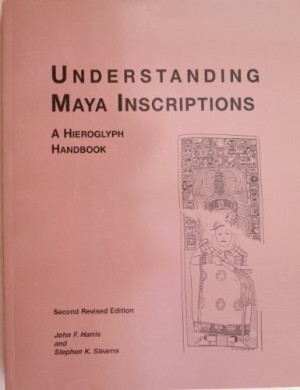
Softcover. Philadelphia, University of Pennsylvania Museum of Archaeology and Anthropology, 2nd Ed., 1997, Book: Very Good, Dust Jacket: None, Softcover, 247 pages, b&w drawings throughout. .This volume is designed to function as a self-teaching tool to help the neophyte, and yet be of value to scholars. It introduces the latest methods of analysis, illustrates techniques for computing Maya calendrics, uses the currently accepted orthography, provides syllabary and syntax, suggests new glyph readings, and presents various interpretations. The second edition includes updated versions of three publications on Maya hieroglyphs. Serving as a self-teaching tool, it introduces analysis methods, calendrics, orthography, syllabary, syntax, new glyph readings, and interpretations for both beginners and scholars. Light fading to spine, clean copy.
Hardcover. New Haven CT, Yale University Press, 1st, 1977, Book: Very Good, Dust Jacket: Very Good, Two volume set. 575 pages, 63 b&w illustrations. Latrobe (1764-1820), English-born architect of the United States Capitol under Jefferson, Madison, and Monroe, set the course for a vast amount of nineteenth-century American architecture with such works as the Capitol, the Bank of Pennsylvania, and the Baltimore Cathedral. A pioneering engineer as well, he designed the nation"s first comprehensive steam-powered waterworks in Philadelphia. Latrobe combined his professional concerns with an astonishing range of other interests and an acutely ob- servant eye. His papers form one of the finest existing literary and pictorial descriptions of the young republic.
Hardcover. Pennsylvania, Schiffer Publishing Ltd., 1st, 1984, Book: Near Fine, Dust Jacket: Near Fine, 176 pages. Light green cloth cover with gilt lettering to spine, color illustrated dust jacket, decorated endpapers, over 250 large glossy photographs, 10 in color. Extremely light wear to dust jacket; a very tight, clean copy.
Softcover. Philadelphia, University of Pennsylvania Press, 2nd pr., 2001, Book: Very Good, Dust Jacket: None, Softcover, 211 pages. Exposes the fact that slavery remains widespread in Sudan and is not grounded in the current civil war but on old prejudices between the Muslim north and the Christian south. A shocking account of Sudanese slavery.

 "Rail Transit Philadelphia: Twenty Colorful Years, 1969-1989by: Elsner, Henry & Vible, Richard")
 "Revolutionary War Bounty Land Grants Awarded by State Governmentsby: Bockstruck, Lloyd DeWitt")
 "Romantic Decatur, Theby: Lewis, Charles Lee")


 "Text and Territory: Geographical Imagination in the European Middle Ages by: Tomasch, Sylvia; Gilles, Sealy (Editors)")


 "The Lost Sketchbooks: A Young Artist in The Great War by: Passion, Rex")





 "Times of Sorrow and Hope: Documenting Everyday Life in Pennsylvania During the Depression and World War II: A Photographic Record by: Allen Cohen; Ronald L. Filippell")
 "To the South Seas. The Cruise of the Schooner Mary Pinchot to the Galapagos, the Marquesas, and the Tuamotu Islands, and Tahiti by: Pinchot, Gifford")
 "Treasuries from the Royal Tombs of Ur by: Zettler Richard L. and Horne Lee")
 "Trolleys of Chester County Pennsylvaniaby: Stanley Bowman, Harold Cox")
 "Trolleys of Lower Delaware Valley, Pennsylvaniaby: Harold Cox, Paul J. Schieck")


 "Virginia Journals of Benjamin Henry Latrobe, The: 1795-1798 (2 Volumes)by: Benjamin Henry Latrobe; Editor-Edward Carter II; Editor-Angeline Polites")
 "Walter Launt Palmer, Poetic Realityby: Mann, Maybelle")
 "War and Slavery in Sudan The Ethnography of Political Violence by: Jok, Jok Madut")