Hardcover. Edinburgh University Press, 1st, 2015, Book: Very Good, Dust Jacket: None, Hardcover, pictorial boards, 210 pages. All students of Western political thought encounter Niccolo Machiavelli's work. Nevertheless, his writing continues to puzzle scholars and readers who are uncertain how to deal with the seeming paradoxes they encounter. 'The Political Philosophy of Niccolo Machiavelli' is a clear account of Machiavelli's thought, major theories and central ideas. It critically engages with his work in a new way, one not based on the problematic Cambridge-school approach. Geared towards the specific requirements of students who need to reach a sound understanding of Machiavelli's ideas, it is the ideal companion to the study of this influential and challenging philosopher.
Softcover. Cambridge UK, Cambridge University Press, reprint, 1995, Book: Very Good, Dust Jacket: None, Softcover, 290 pages. This study provides a comprehensive reinterpretation of the meaning of Locke's political thought. John Dunn restores Locke's ideas to their exact context, and so stresses the historical question of what Locke in the Two Treatises of Government was intending to claim. By adopting this approach, he reveals the predominantly theological character of all Locke's thinking about politics and provides a convincing analysis of the development of Locke's thought. In a polemical concluding section, John Dunn argues that liberal and Marxist interpretations of Locke's politics have failed to grasp his meaning. Locke emerges as not merely a contributor to the development of English constitutional thought, or as a reflector of socio-economic change in seventeenth-century England, but as essentially a Calvinist natural theologian. Name on front fly leaf, otherwise clean.
Hardcover. Boston, Houghton Mifflin, 1st, 1911, Book: Very Good, Dust Jacket: None, Hardcover, blue cloth covers, Gilt title on spine, top edge gilt, 211 pages. The book explores the concept of freedom, its meaning, and its significance in human life. Palmer examines the different philosophical and ethical theories surrounding freedom and its limitations, including determinism and the role of the state in regulating individual freedom. He also discusses the relationship between freedom and morality, and the importance of individual responsibility in the exercise of freedom. The text results from a course of lectures delivered in 1909 before the Lowell Institute of Boston. Delivered without notes, they were carefully reported and subsequently much revised. Clean copy.
Hardcover. London, Pickering & Chatto, 1st, 1999, Book: Very Good, Dust Jacket: None, Hardcover, black cloth, spine with maroon title block and gilt lettering, 377 pages. Vol. 2 ONLY of a six volume set. Clean, bright copy, no markings.
Hardcover. London, Pickering & Chatto, 1st, 1999, Book: Very Good, Dust Jacket: None, Hardcover, black cloth, spine with maroon title block and gilt lettering, 384 pages. Vol. 3 ONLY of a six volume set. Name and date on front fly leaf, otherwise clean.
Hardcover. London, Pickering & Chatto, 1st, 1999, Book: Very Good, Dust Jacket: None, Hardcover, black cloth, spine with maroon title block and gilt lettering, 448 pages. Vol. 4 ONLY of a six volume set. Clean, bright copy, no markings.
Hardcover. Princeton NJ, Princeton University Press, 1st, 1986, Book: Very Good, Dust Jacket: Very Good, Hardcover in a bright dust jacket, 234 pages. When Leviathan first appeared in 1651, it was recognized as a work of extraordinary scope, uniting metaphysical, theological, and political arguments into a single distinctive outlook. Contending that modern readers do the book an injustice by neglecting its metaphysical and theological themes, David Johnston supports his claim with a detailed examination of the text as a whole and with a reinterpretation of the genesis of the work. Clean copy.
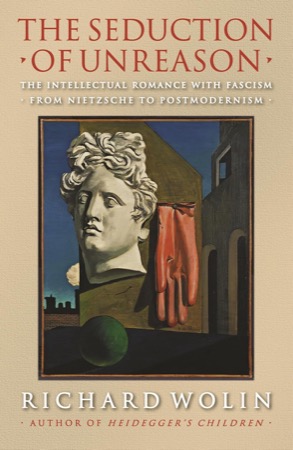
Hardcover. Princeton NJ, Princeton University Press, 1st, 2004, Book: Very Good, Dust Jacket: Very Good, Hardcover in a bright dust jacket, 375 pages. In probing chapters on C. G. Jung, Hans-Georg Gadamer, Georges Bataille, and Maurice Blanchot, Wolin discovers an unsettling commonality: during the 1930s, these thinkers leaned to the right and were tainted by a proverbial "fascination with fascism." Frustrated by democracy's shortcomings, they were seduced by fascism's grandiose promises of political regeneration. The dictatorships in Italy and Germany promised redemption from the uncertainties of political liberalism. But, from the beginning, there could be no doubting their brutal methods of racism, violence, and imperial conquest. Postmodernism's origins among the profascist literati of the 1930s reveal a dark political patrimony. The unspoken affinities between Counter-Enlightenment and postmodernism constitute the guiding thread of Wolin's suggestive narrative. In their mutual hostility toward reason and democracy, postmodernists and the advocates of Counter-Enlightenment betray a telltale strategic alliance--they cohabit the fraught terrain where far left and far right intersect. Clean copy.
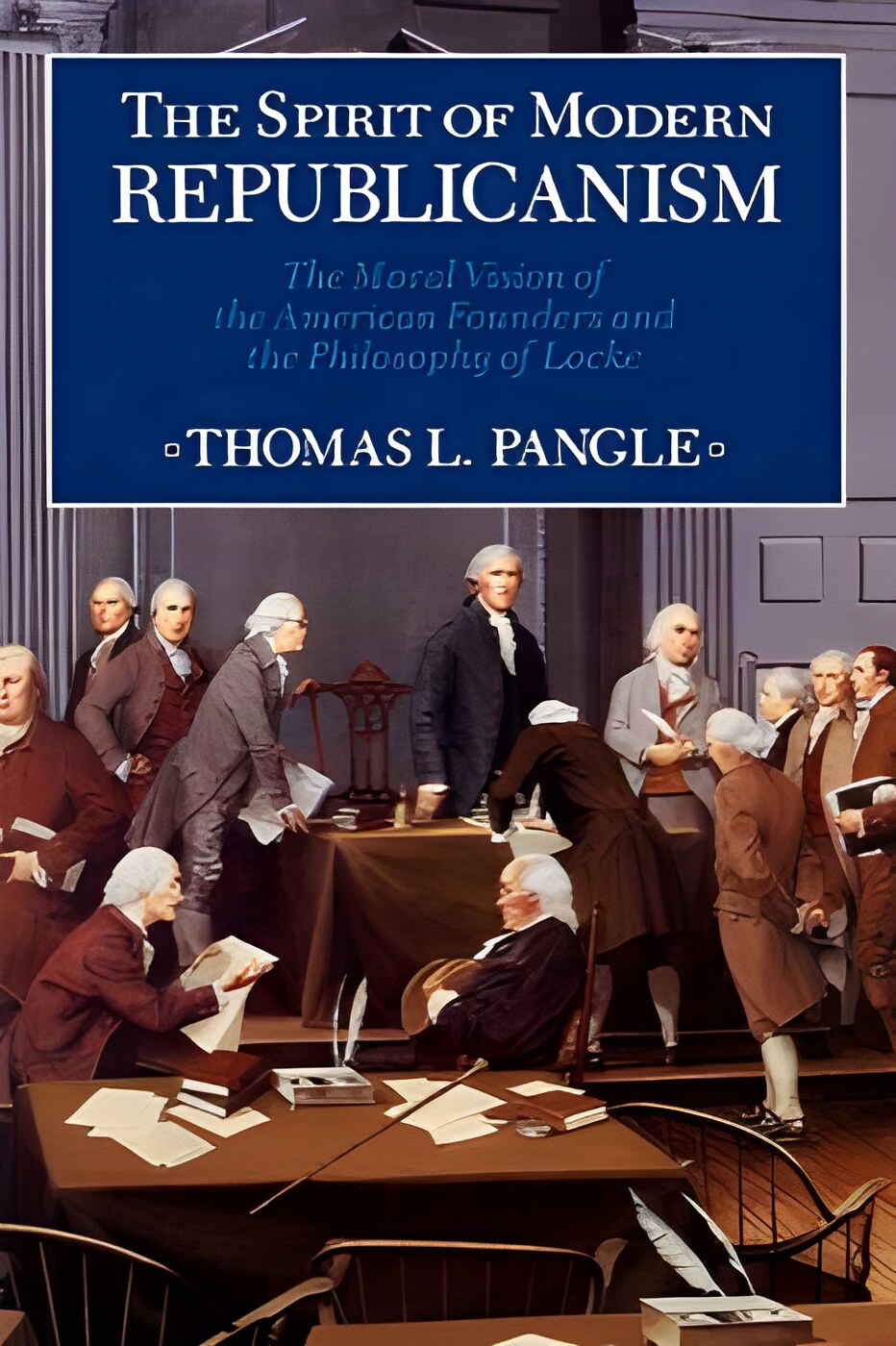
Hardcover. Chicago, University Of Chicago Press, reprint, 1990, Book: Very Good, Dust Jacket: None, Softcover, 334 pages. The Spirit of Modern Republicanism sets forth a radical reinterpretation of the foundations on which the American regime was constructed. Thomas L. Pangle argues that the Founders had a dramatically new vision of civic virtue, religious faith, and intellectual life, rooted in an unprecedented commitment to private and economic liberties. It is in the thought of John Locke that Pangle finds the fullest elaboration of the principles supporting the Founders' moral vision. Clean copy.
Hardcover. London, George Allen & Unwin Ltd, 2nd Ed., 1955, Book: Very Good, Dust Jacket: Good, Hardcover in a worn, chipped dust jacket. 664 pages with index. Volume 2 ONLY. Masaryk was the president of Czechoslovakia after World War I. Long a student of Russia this book was first published in 1913. Clean copy.
Hardcover. Boston, Little, Brown and Company, 1st, 1929, Book: Very Good, Dust Jacket: None, Hardcover, bright green cloth with gilt and black stamping, 548 pages. Illustrated from photographs, facsimiles, plates. Study of Jefferson's mind based on contributions of "French thinkers" on his political philosophy. Inscription on inside front cover, otherwise a clean, tight copy.
Hardcover. Oxford UK, Oxford University Press, 1st, 2016, Book: Very Good, Dust Jacket: Very Good, Hardcover in a bright dust jacket, 175 pages. Despite recent advances in Locke scholarship, philosophers and political theorists have paid little attention to the relations among his three greatest works: An Essay Concerning Human Understanding, Two Treatises of Government, and Epistola de Tolerantia. As a result our picture of Locke's thought is a curiously fragmented one. Toleration and Understanding in Locke argues that these works are unified by a concern to promote the cause of religious toleration. Making extensive use of Locke's neglected replies to Proast, Nicholas Jolley shows how Locke draws on his epistemological principles to criticize religious persecution - for Locke, since revelation is an object of belief, not knowledge, coercion by the state in religious matters is not morally justified. In this volume Jolley also seeks to show how the Two Treatises of Government and the letters for toleration adopt the same contractualist approach to political theory; Locke argues for toleration from the function of the state where this is determined by the decisions of rational contracting parties. Throughout, attention is paid to demonstrating the range of Locke's arguments for toleration and to defending them, where possible, against recent criticisms. The book includes an account of the development of Locke's views about religious toleration from the beginning to the end of his career; it also includes discussions of his individualism about knowledge and belief, his critique of religious enthusiasm, his commitment to the minimal creed, and his teachings about natural law. Locke emerges as a rather systematic thinker whose arguments are highly relevant to modern debates about religious toleration. Light pencil marking to some pages.
Hardcover. Cambridge MA, Belknap Press / Harvard University Press, 1st, 1979, Book: Very Good, Dust Jacket: Very Good, Hardcover in a lightly worn dust jacket, 896 pages. This masterly study has a grand sweep. It ranges over centuries, with a long look backward over several millennia. Yet the history it unfolds is primarily the story of individuals: thinkers and dreamers who envisaged an ideal social order and described it persuasively, leaving a mark on their own and later times. The roster of utopians includes men of all stripes in different countries and eras--figures as disparate as More and Fourier, the Marquis de Sade and Edward Bellamy, Rousseau and Marx. Fascinating character studies of the major figures are among the delights of the book. 1980 National Book Award winner. Name on front fly leaf, otherwise clean.
Softcover. Albany, State University of New York , 1st thus, 2000, Book: Very Good, Dust Jacket: None, Softcover, 332 pages. Bayle, arguably the primary intellectual predecessor to the Enlightenment, sought in this text to undermine the influence of "superstition" in politics, particularly the superstition brought about by religious beliefs, and it is here that he first made his suggestion that a decent society of atheists is possible in principle. Translator Robert Bartlett provides extensive notes and an introduction to Bayle, his influence, and the intricacies of his thinking.
Softcover. Lanham MD, Rowman & Littlefield , 1st, 2003, Book: Very Good, Dust Jacket: None, Softcover, 349 pages. In Vergil's Empire, Eve Adler offers an exciting new interpretation of the political thought of Vergil's Aeneid. Adler argues that in this epic poem, Vergil presents the theoretical foundations of a new political order, one that resolves the conflict between scientific enlightenment and ancestral religion that permeated the ancient world. The work concentrates on Vergil's response to the physics, psychology, and political implications of Lucretius' Epicurean doctrine expressed in De Rerum Natura. Proceeding by a close analysis of the Aeneid, Adler examines Vergil's critique of Carthage as a model of universal enlightenment, his positive doctrine of Rome as a model of universal religion, and his criticism of the heroism of Achilles, Odysseus, and Epicurus in favor of the heroism of Aeneas. Beautifully written and clearly argued, Vergil's Empire will be of great value to all interested in the classical world. Clean copy.
Softcover. Canada, Penguin Books, reprint, 1993, Book: Very Good, Dust Jacket: None, Softcover, 640 pages. The Western world is full of paradoxes. We talk endlessly of individual freedom, yet we've never been under more pressure to conform. Our business leaders describe themselves as capitalists, yet most are corporate employees and financial speculators. We call our governments democracies, yet few of us participate in politics. We complain about invasive government, yet our legal, educational, financial, social, cultural and legislative systems are deteriorating. All these problems, John Ralston Saul argues, are largely the result of our blind faith in the value of reason. Over the past 400 years, our "rational elites" have turned the modern West into a vast, incomprehensible, directionless machine, run by process-minded experts--"Voltaire's bastards"--whose cult of scientific management is empty of both sense and morality. Whether in politics, art, business, the military, entertain-ment, science, finance, academia or journalism, these experts share the same outlook and methods. The result, Saul maintains, is a civilization of immense technological power whose ordinary citizens are increasingly excluded from the decision-making process. In this wide-ranging anatomy of modern society and its origins--whose "pages explode with insight, style and intellectual rigor" (Camille Paglia, The Washington Post)--Saul presents a shattering critique of the political, economic and cultural estab-lishments of the West. Clean copy.
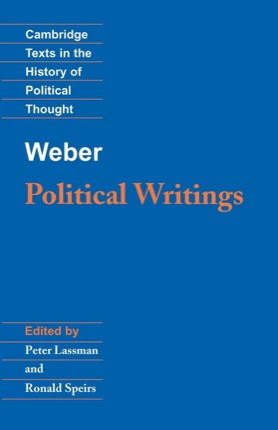
Softcover. UK, Cambridge University Press, reprint, 2008, Book: Very Good, Dust Jacket: None, Softcover, 390 pages. A selection of Max Weber's most important political writings. Weber examines constitutional questions, problems of democracy, socialism, and economic policy, always with careful attention to the moral claims of political antagonists and their intellectual basis. The texts show his power as an analyst of politics and make clear that a serious consequentialist understanding of political life requires subtlety and historical understanding. Clean copy.
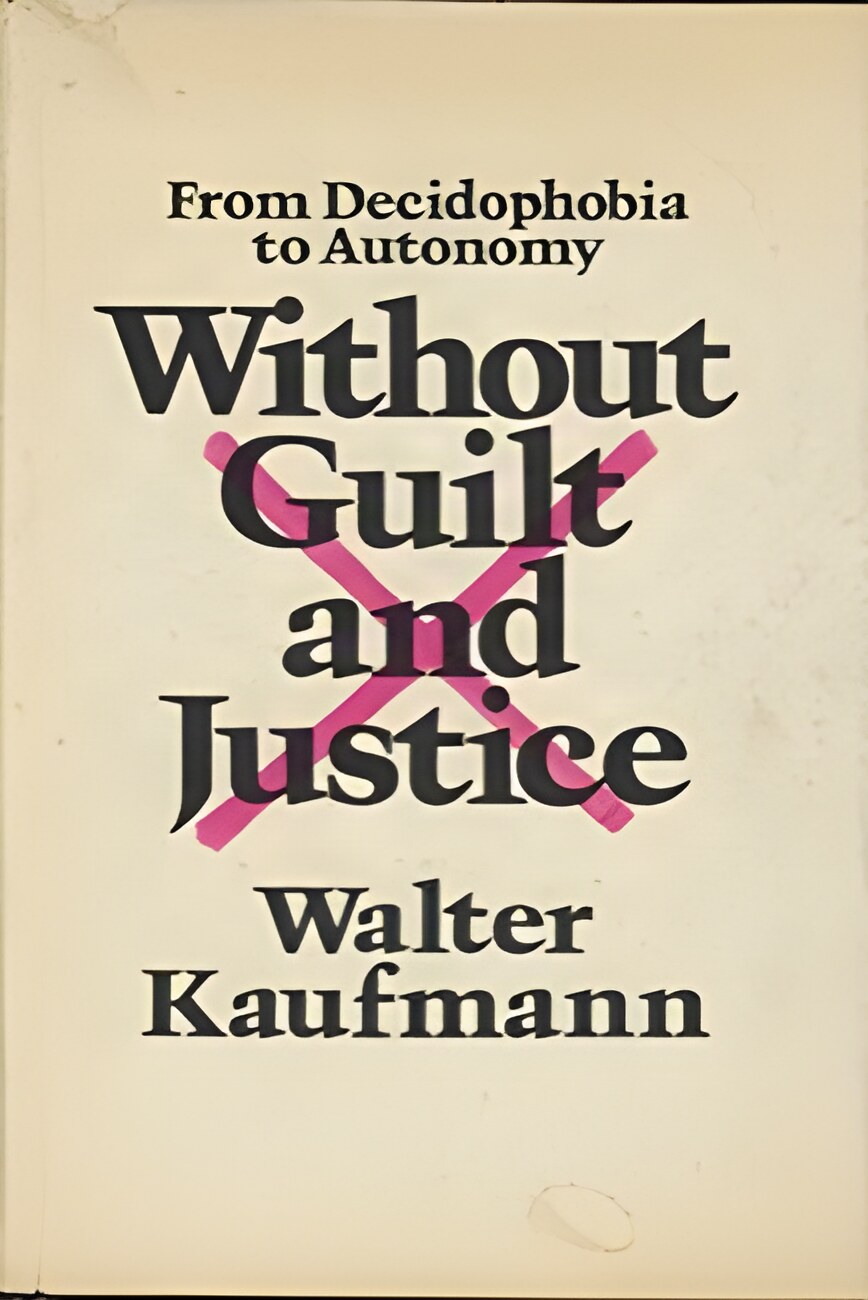
Hardcover. NY, Peter H. Wyden, 1st, 1973, Book: Good, Dust Jacket: Fair, Hardcover in a dust jacket that has a water stain to rear panel. Mild ripple to rear cloth, but book, text pages not affected. There is some foxing/tanning to top edge of text block. No markings. Walter Kaufmann in defining the conflicts in Germany that put Hitler in power, are very similar to our challenges today. A good read for people who want to understand underlying impulses in our culture.


 "The Political Thought of John Locke: An Historical Account of the Argument of the 'Two Treatises of Government'by: Dunn, John/John Locke")

 "The Reception of Locke's Politics Vol 2: Patriarchalism, the Social Contract and Civic Virture 1705- 1760by: Goldie, Mark (Ed.)")
 "The Reception of Locke's Politics Vol 3: The Age of the American Revolution 1760-1780by: Goldie, Mark (Ed.)")
 "The Reception of Locke's Politics Vol 4: Poitical Reform in the Age of The French Revolution 1780-1838by: Goldie, Mark (Ed.)")



 "Toleration and Understanding in Locke by: Jolley, Nicholas")
 "Unthinkable Swift, The - The Spontaneous Philosophy of a Church of England Manby: Montag, Warren")

 "Various Thoughts on the Occasion of a Comet by: Bayle, Pierre/ Bartlett, Robert C. (Translator)")