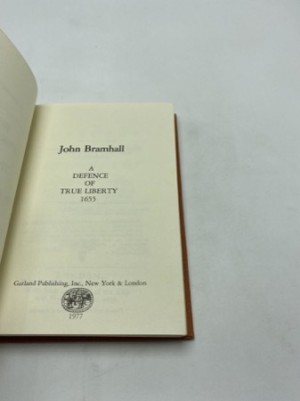
Hardcover. NY, Garland Publishing, reprint, 1977, Book: Very Good, Dust Jacket: None, Hardcover, orange cloth with black lettering on spine, 253 pages. A Garland Series, British Philosophers and Theologians of the 17th and 18th Centuries. A facsimile reprint of the 1655 London edition. Name on front fly leaf, otherwise clean.
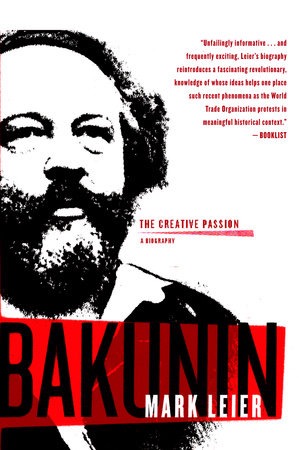
Hardcover. NY, St. Martins Press, 1st, 2006, Book: Very Good, Dust Jacket: Very Good, Hardcover in a bright dust jacket, 350 pages. The spellbinding story of both the man and the theory,this book chronicles one of the most notorious radicals in Mikhail Bakunin, the founder of anarchism, here revealed as a practical moral philosophy rooted in a critique of wealth and power. Mark Leier corrects many of the popular misconceptions about Bakunin and his ideas, offering a fresh interpretation of his life and thoughts. Bakunin is an insightful read for all those who wish to better understand the fundamental basis of modern radical movements. Ex-lib but clean, only residue to acetate wrapper.
Hardcover. Oxford University Press, 1st thus, 2010, Book: Very Good, Dust Jacket: Very Good, Hardcover in a bright dust jacket, 426 pages. Behemoth, or The Long Parliament is essential to any reader interested in the historical context of the thought of Thomas Hobbes (1588-1679). In De Cive (1642) and Leviathan (1651), the great political philosopher had developed an analytical framework for discussing sedition, rebellion, and the breakdown of authority. Behemoth, completed around 1668 and not published until after Hobbe's death, represents the systematic application of this framework to the English Civil War. Clean, bright copy.
Softcover. UK, Cambridge University Press, reprint, 1996, Book: Very Good, Dust Jacket: None, Softcover, 141 pages. This volume contains the essential points of Jean Bodin's theory of sovereignty, a landmark in legal theory and royalist ideology. The four chapters presented form the core of Bodin's classic work, Six Livres de la Republique. Bodin was primarily responsible for introducing the seductive but erroneous notion that sovereignty is indivisible, that the entire power of the state had to be vested in a single individual or group. This thesis, combined with the prevailing crisis of authority during the French religious wars, led Bodin to a systematically absolutist interpretation of the French and other European monarchies. This is the first complete translation of this material into English since 1606, and is accompanied by a lucid introduction, chronology, and bibliography. Clean copy.
Softcover. Oxford, UK, Clarendon Press, Reprint, 1978, Book: Very Good, Dust Jacket: None, 306 pages. Softcover with light wear to wraps. Sunfade to spine. Spine faded. Small black mark on rear wrap, some lines highlighted on four pages. Light toning throughout, illustrated by tables & figures in bw.
Softcover. Cambridge MA, Harvard University Press, 4th pr., 2001, Book: Very Good, Dust Jacket: None, Softcover, 656 pages. John Rawls's work on justice has drawn more commentary and aroused wider attention than any other work in moral or political philosophy in the twentieth century. Rawls is the author of two major treatises, A Theory of Justice (1971) and Political Liberalism (1993); it is said that A Theory of Justice revived political philosophy in the English-speaking world. But before and after writing his great treatises Rawls produced a steady stream of essays. Some of these essays articulate views of justice and liberalism distinct from those found in the two books. They are important in and of themselves because of the deep issues about the nature of justice, moral reasoning, and liberalism they raise as well as for the light they shed on the evolution of Rawls's views. Some of the articles tackle issues not addressed in either book. They help identify some of the paths open to liberal theorists of justice and some of the knotty problems which liberal theorists must seek to resolve. A complete collection of John Rawls's essays. Owner's name on front fly leaf otherwise clean.
Hardcover. University Park, Pennsylvania State University Press, 1st Edition, 2012, Book: Very Good, Dust Jacket: Very Good, 346 pages. Hardcover. Dust jacket with only minor wear. Clean, unmarked and tight copy.
Hardcover. New York, Dodd, Mead and Company, 1st Edition, 1920, Book: Good, Dust Jacket: None, 370 pages. Hardcover. Green cloth covers with gilt titles to cover & spine. Fraying, scuffing to edges. Light sunfade to spine. As is, with light pencil marking throughout. Cracked rear hinge.
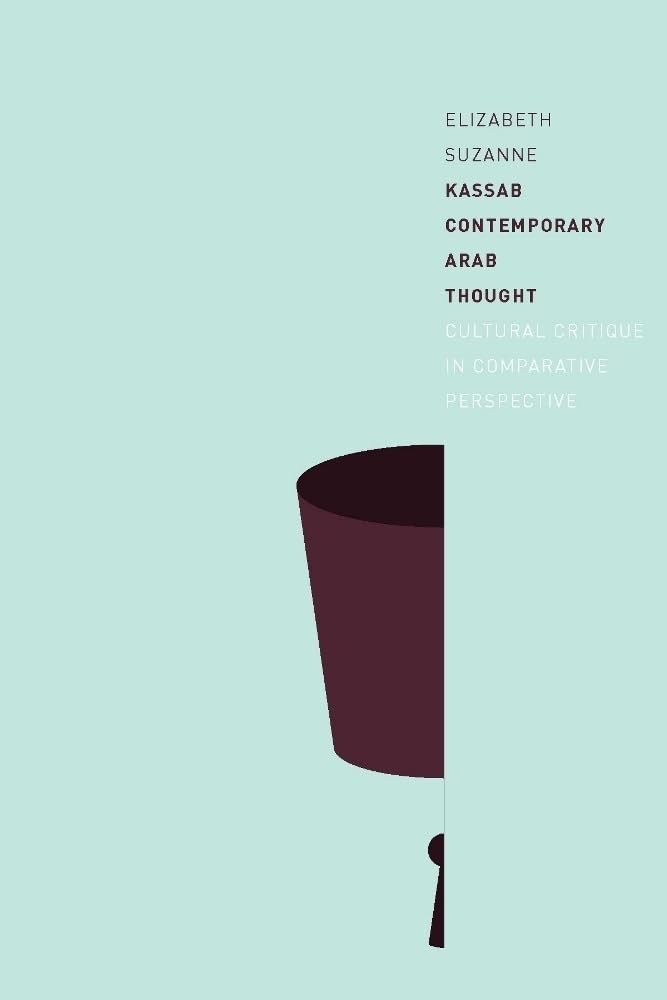
Softcover. NY, Columbia University Press, 2nd pr., 2009, Book: Very Good, Dust Jacket: None, Softcover, 496 pages. During the second half of the twentieth century, the Arab intellectual and political scene polarized between a search for totalizing doctrines-nationalist, Marxist, and religious-and radical critique. Arab thinkers were reacting to the disenchanting experience of post-independence Arab states, as well as to authoritarianism, intolerance, and failed development. They were also responding to successive defeats by Israel, humiliation, and injustice. The first book to take stock of these critical responses, this volume illuminates the relationship between cultural and political critique in the work of major Arab thinkers, and it connects Arab debates on cultural malaise, identity, and authenticity to the postcolonial issues of Latin America and Africa, revealing the shared struggles of different regions and various Arab concerns. Clean copy.
Hardcover. London, Longmans, Green, Reader, and Dyer, 2nd, 1874, Book: Very Good, Dust Jacket: None, 164 pages, plus 24 pages of new works from publishers. Green cloth covers, gilt titles to spine, blind stamped titles and border to front cover. Light edgewear and rubbing to covers, spine cracked at inside of front hinge, previous owner's inscription to front endpaper, Edinburgh Medical Society stamp to title page, short pencil notations to rear endpaper; otherwise a very neat, tight copy.
Softcover. Berkeley CA, University of California Press, reprint, 1988, Book: Very Good, Dust Jacket: None, Softcover, 392 pages. Provides a comprehensive analysis of the politics that are implicit and explicit in Nietzsche's work. This book examines both the personal and the political sides of Nietzsche's writings to show how his writings can expand notions of democratic politics and democratic understanding. Light pencil underlining to about 15 pages.
Hardcover. Oxford at the Clarendon Press, London, England, 1959, Book: Very Good, Dust Jacket: None, 505 pages. Hardcover. Previous owner's name on front flyleaf. Navy blue cloth boards, some chipping at top and bottom of spine, gilt title on spine, faded. Some light tanning to pages and edges. Spine straight. Binding good.
Hardcover. NY, Viking Press, 1st, 1970, Book: Very Good, Dust Jacket: Very Good, Hardcover in a bright dust jacket, 146 pages. Lukacs was a Hungarian Marxist philosopher, aesthetician, literary historian, and critic. He was one of the founders of Western Marxism, an interpretive tradition that departed from the Marxist ideological orthodoxy of the Soviet Union. He developed the theory of reification, and contributed to Marxist theory with developments of Karl Marx's theory of class consciousness. He was also a philosopher of Leninism. Clean copy.
Hardcover. NY, Cambridge University Press, reprint, 2000, Book: Very Good, Dust Jacket: Very Good, Hardcover in a bright, price-clipped dust jacket, 256 pages. Originally published in 1971, this volume was created to commemorate the bicentenary of Hegel's birth in 1770. Thirteen essays are included from experts with diverse approaches, concentrating on the central issues of Hegel's political philosophy, and covering all of the major political works. These essays demonstrate the vitality of Hegel's philosophical perspective, engaging the reader and providing a way into the often difficult explication of his ideas. Whilst this is a commemorative edition, and the views put forward are broadly sympathetic, a critical distance is maintained, allowing for numerous fresh insights. Accessible and highly informative, this book will be of value to anyone with an interest in Hegelian thought and its political implications.
Hardcover. New York, State University of New York Press, 1st, 1991, Book: Very Good, Dust Jacket: Very Good, 233 pages. Hardcover. Dust jacket with light wear. Clean unmarked text.
Hardcover. New Haven CT, Yale University Press, 1st, 2012, Book: Very Good, Dust Jacket: Very Good, Hardcover in a bright dust jacket, 232 pages. Political theorist Michael Walzer reports his findings after decades of thinking about the politics of the Hebrew Bible. Attentive to nuance while engagingly straightforward, Walzer examines the laws, the histories, the prophecies, and the wisdom of the ancient biblical writers and discusses their views on such central political questions as justice, hierarchy, war, the authority of kings and priests, and the experience of exile. Because there are many biblical writers with differing views, pluralism is a central feature of biblical politics. Yet pluralism, Walzer observes, is never explicitly defended in the Bible; indeed, it couldn't be defended since God's word had to be as singular as God himself. Yet different political regimes are described in the biblical texts, and there are conflicting political arguments--and also a recurrent anti-political argument: if you have faith in God, you have no need for strong institutions, prudent leaders, or reformist policies. At the same time, however, in the books of law and prophecy, the people of Israel are called upon to overcome oppression and "let justice well up like water, righteousness like an unfailing stream." Name on front fly leaf, light pencil marking to pages.
Hardcover. Cambridge ; New York, Cambridge University Press, reprint, 1994, Book: Very Good, Dust Jacket: None, Hardcover, 234 pages. Laminated boards. No dust jacket issue. Clean, unmarked copy with only minor wear to covers.
Softcover. Berkeley CA, University of California Press, reprint, 1990, Book: Very Good, Dust Jacket: None, Softcover, 218 pages. Students and teachers of Chinese history and philosophy will not want to miss Daniel Gardner's accessible translation of the teachings of Chu Hsi (1130-1200)-a luminary of the Confucian tradition who dominated Chinese intellectual life for centuries. Homing in on a primary concern of our own time, Gardner focuses on Chu Hsi's passionate interest in education and its importance to individual development. For hundreds of years, every literate person in China was familiar with Chu Hsi's teachings. They informed the curricula of private academies and public schools and became the basis of the state's prestigious civil service examinations. Nor was Chu's influence limited to China. In Korea and Japan as well, his teachings defined the terms of scholarly debate and served as the foundation for state ideology. Clean copy.
Hardcover. UK, Imprint Academic, 1st, 2004, Book: Very Good, Dust Jacket: Very Good, 208 pages. Clean, unmarked copy with only minor wear to dust jacket. This book examines Oakeshott's political philosophy within the context of his more general conception of philosophical understanding. The book stresses the underlying continuity of his major writings on the subject and takes seriously the implications of understanding the world in terms of modality. The book suggests strongly that Oakeshott's philosophy of political activity cannot be reduced to a branch of conservatism, liberalism, or postmodernism or a theory or set of doctrines which fit neatly into any conventional school, like that of Idealism or Skepticism. Rather, Oakeshott's philosophy of political activity is a provocation to all of the currently dominant schools of political theory and political practice. It questions their presuppositions and exposes as ambiguous, arbitrary, or confused all of the supposed certainties which they take for granted. It does all this by offering profound insights into the character and limits of both political activity and political theory in the modern world.
Hardcover. Princeton NJ, Princeton University Press, 1st, 1992, Book: Very Good, Dust Jacket: Very Good, Hardcover, 387 pages. Black cloth covers slightly bowed. Some light notes in pencil. Previous owners name on front endpaper. Dust jacket shows light wear.
Softcover. NY, W. W. Norton , reprint, 1984, Book: Very Good, Dust Jacket: None, Softcover, 339 pages. In Felix Gilbert's skilled analysis, the figures of Niccolo Machiavelli, whose writing changed the way people think about politics, and Francesco Guicciardini, whose History of Italy is one of the first classics of modern historical writing, provide important clues to interpreting the Renaissance. "Instead of treating these two great figures in isolation, Professor Gilbert puts them into the context of their times, into the stream of political thinking and historical writing of which they were a part. . . .His book is the fruit of years of writing of which they were a part. . . .His book is the fruit of years of original research among Florentine archives and of careful thought about the problems of Renaissance politics and historiography." Clean, bight copy.
Softcover. indianapolis, Hackett Publishing, reprint, 2008, Book: Very Good, Dust Jacket: None, Softcover, 388 pages. Contains the most helpful version of Hobbes's political and moral philosophy available in English. Includes the only English translation of De Homine, chapters X-XV. Features the English translation of De Cive attributed to Hobbes. Clean copy.
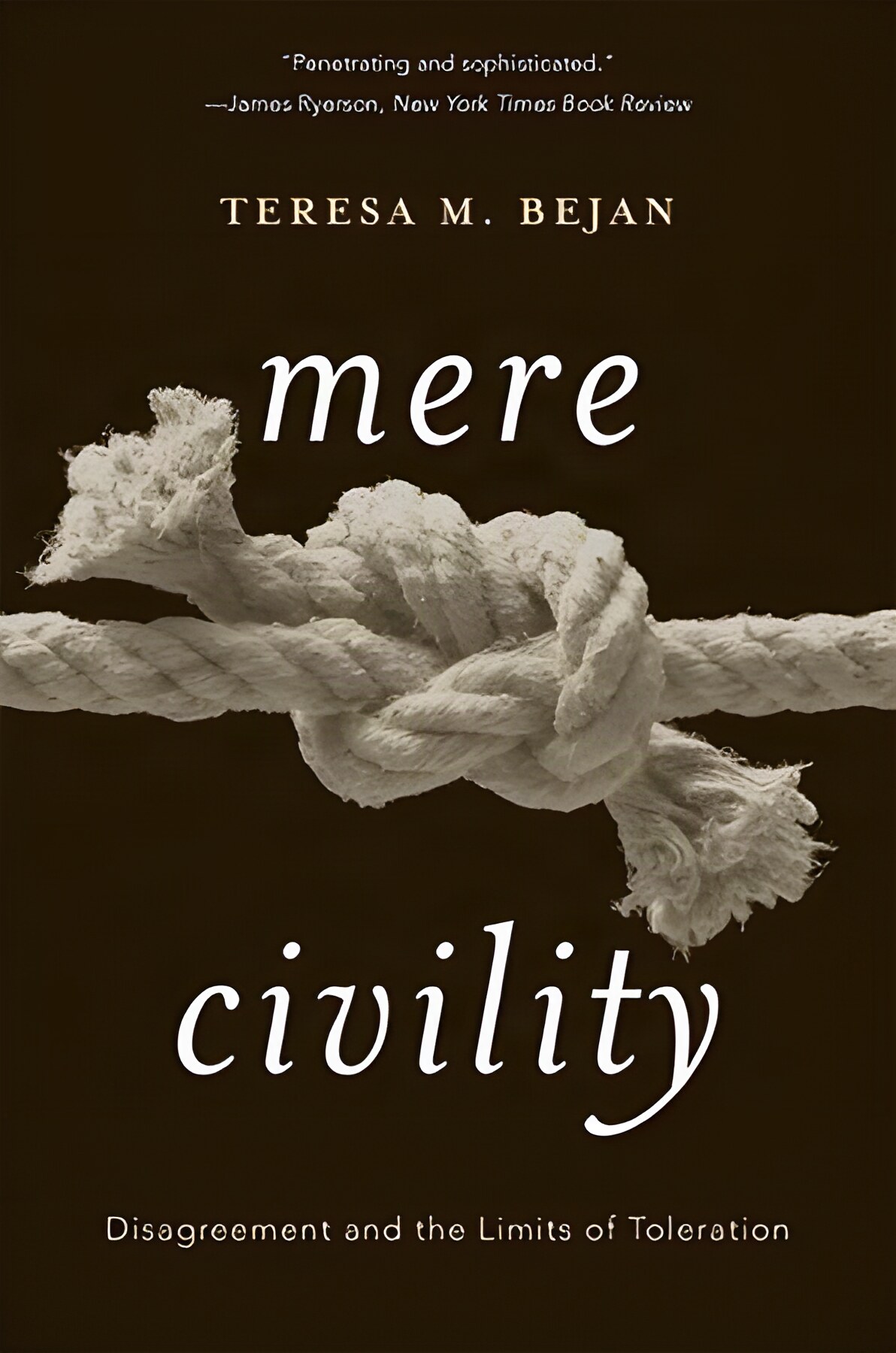
Softcover. Cambridge MA, Harvard University Press, reprint, 2019, Book: Very Good, Dust Jacket: None, Softcover, 272 pages. We are facing a crisis of civility, a war of words polluting our public sphere. In liberal democracies committed to tolerating active, often heated disagreement, the loss of this virtue appears critical. Most modern appeals to civility follow arguments by Hobbes or Locke by proposing to suppress disagreement or exclude views we deem "uncivil" for the sake of social harmony. By comparison, mere civility-a grudging conformity to norms of respectful behavior-as defended by Rhode Island's founder, Roger Williams, might seem minimal and unappealing. Yet Teresa Bejan argues that Williams's outlook offers a promising path forward in confronting our own crisis, one that challenges our fundamental assumptions about what a tolerant-and civil-society should look like. Clean copy.



 "Bartlous of Sassoferrato: His Position in the History of Medieval Political Thoughtby: Woolf, Cecil N. Sidney")


 "Classical Economists, Theby: O'Brien, D. P.")

 "Companion to Michael Oakeshott, Aby: Oakeshott, Michael/Paul Franco & Leslie Marsh")
 "Complex Vision, The by: Powys, John Cowper")


 "Essays on Some Unsettled Questions of Political Economyby: Mill, John Stuart")
 "From Alexander to Constantine: Passages and Documents Illustrating the History of Social and Political Ideas 336 B.C.-A.D. 337by: Barker, Ernest")


 "Heidegger and the Project of Fundamental Ontologyby: Taminiaux, Jacques")
 "In God's Shadow: Politics in the Hebrew Bibleby: Walzer, Michael")
 "Invention of the Modern Republic, The by: Fontana, Biancamaria (Editor)")
 "Limits of Political Theory, The: Oakeshott's Philosophy of Civil Association by: McIntyre, Kenneth B.")
 "Lockean Theory of Rights, Theby: Simmons, A. John")