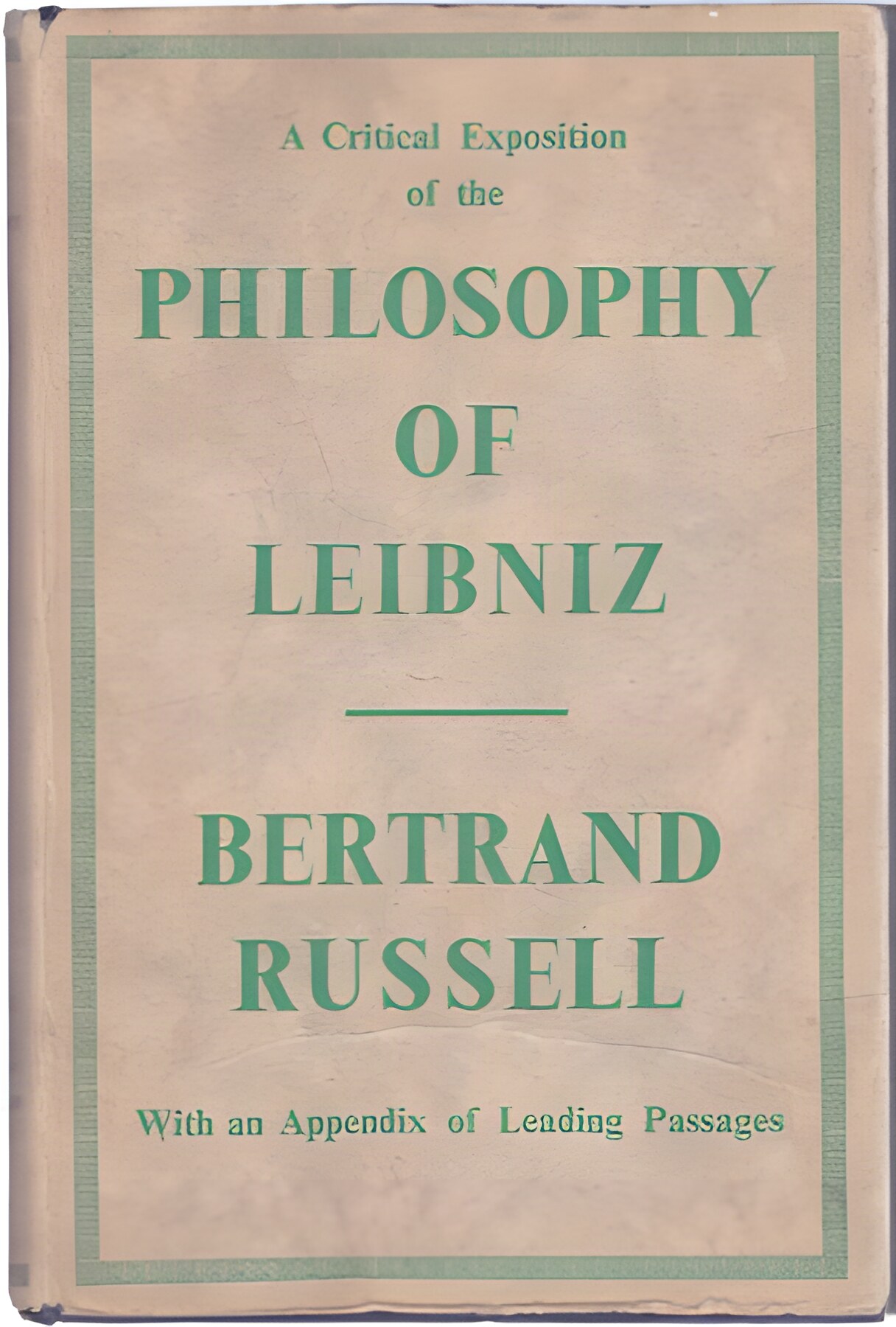
Hardcover. London, George Allen & Unwin, reprint, 1949, Book: Very Good, Dust Jacket: Very Good, Hardcover in a lightly worn dust jacket, 311 pages. The writings of German mathematician and philosopher GOTTFRIED WILHELM LEIBNIZ (1646-1716) have had an incalculable impact on modern science and technology, from physics and computers to law and psychology. But not everyone is a fervent fan. At the turn of the 20th century, the great British thinker Bertrand Russell uncovered what he believed was the hypocritical secret to Leibniz's philosophy: a hidden devotion to a logic he did not reveal in his writings. Here, Russell explores Leibniz's work from this perspective, examining the premises of Leibniz's work, the questions raised by his arguments, the validity of Leibniz's proofs, problems with his "philosophy of matter," and much more. First published in 1900, this is a replica of the 1937 second edition, and is complete with the original, extensive appendix of relevant extracts from Leibniz's work, essential for understanding Russell's critique. Clean copy.
Hardcover. Chicago, University of Chicago Press , 1st, 1987, Book: Very Good, Dust Jacket: Very Good, Hardcover in a bright dust jacket, 249 pages. A study of "Aristotle's psychology, or philosophy of mind." Name on front fly leaf, otherwise clean, tight copy.
Hardcover. Ithaca NY, Cornell University Press, 1st, 1990, Book: Very Good, Dust Jacket: Very Good, Hardcover in a bright dust jacket, 249 pages. Berkeley's Essay towards a New Theory of Vision (1709), his first substantial publication, revolutionized the theory of vision. His approach provided the framework for subsequent work in the psychology of vision and remains influential to this day. Among philosophers, however, the New Theory has not always been read as a landmark in the history of scientific thought, but instead as a halfway house to Berkeley's later metaphysics. In this book, Margaret Atherton seeks to redress the balance through a commentary on and a reinterpretation of Berkeley's New Theory. Clean copy.
Hardcover. Berkeley CA, University of California Press, 1st, 2009, Book: Very Good, Dust Jacket: Very Good, Hardcover, 320 pages. In the voluminous scholarship that's been written on Paul Cezanne, little has been said about the twenty-four portraits in oil that Cezanne made of his wife, Hortense Fiquet Cezanne, over an extended twenty-year period. In Cezanne's Other: The Portraits of Hortense, Susan Sidlauskas breaks new ground, focusing on these paintings as a group and looking particularly at the differences that render many of them unrecognizable as the same person. She argues that Cezanne sidestepped the conventional goals of portraiture-he avoids representing a consistent, identifiable physiognomy or conventional feminine postures and does not portray the subject's inner life-making lack of fixedness itself his subject, which leads him ultimately to a radical reformulation of modern portraiture. Sidlauskas also upends the notion of Mme Cezanne as the irrelevant and absent spouse. Instead she reveals Hortense Fiquet Cezanne as a presence so crucial to the artist that she became the essential "other" to his ever-evolving "self." Coupling historical texts from philosophy, psychology, and physiology with more recent writings from women's and gender studies, cognitive psychology, and visual culture, Sidlauskas demonstrates that Mme Cezanne offered intimacy at arm's length for the painter who has been dubbed "the lone wolf of Aix."
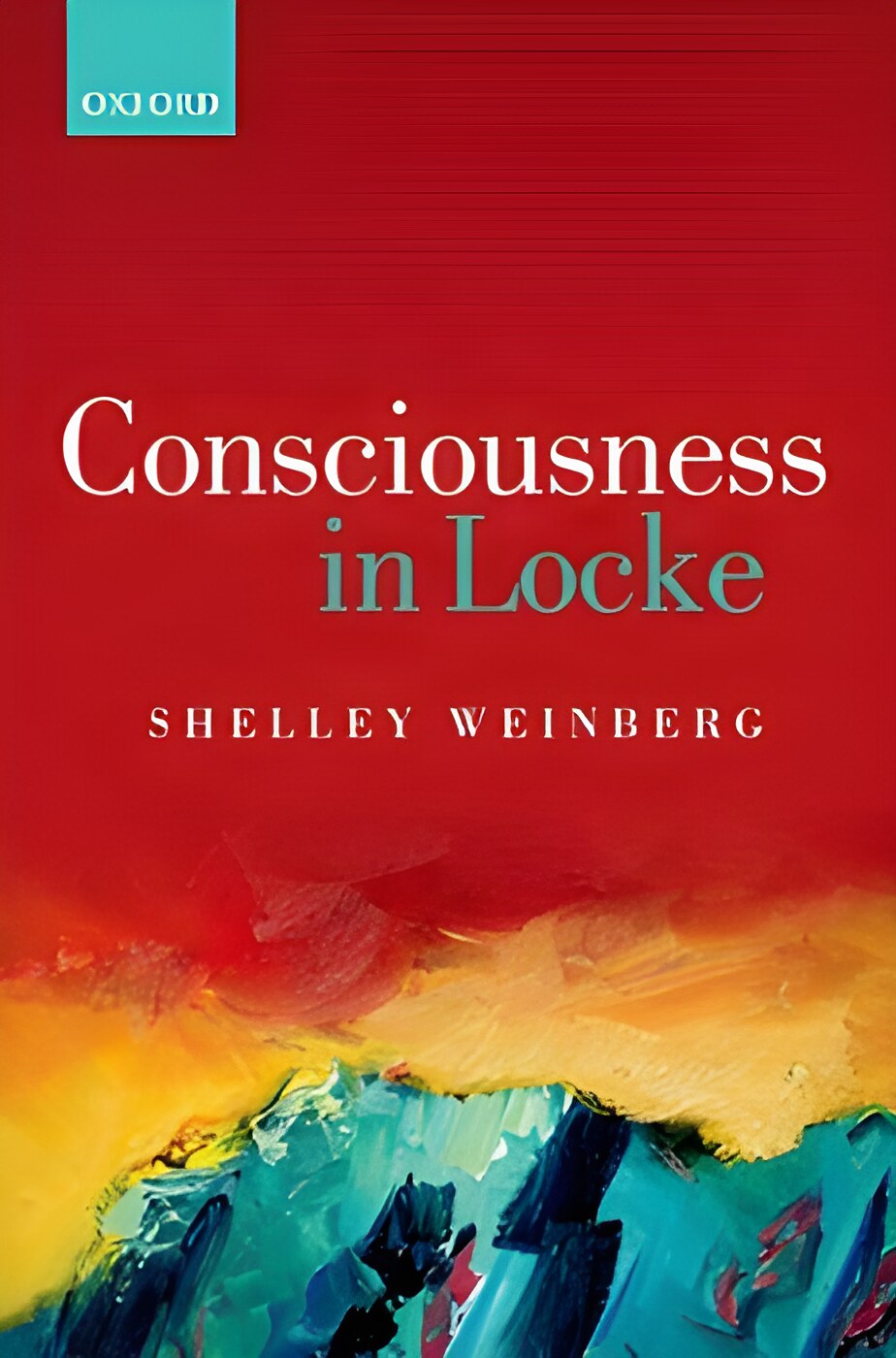
Hardcover. Oxford UK, Oxford University Press , 1st, 2016, Book: Very Good, Dust Jacket: Very Good, Hardcover in a bright dust jacket, 240 pages. Shelley Weinberg argues that the idea of consciousness as a form of non-evaluative self-awareness runs through and helps to solve some of the thorniest issues in Locke's philosophy: in his philosophical psychology and in his theories of knowledge, personal identity, and moral agency. Central to her account is that perceptions of ideas are complex mental states wherein consciousness is a constituent. Such an interpretation answers charges of inconsistency in Locke's model of the mind and lends coherence to a puzzling aspect of Locke's theory of knowledge: how we know individual things (particular ideas, ourselves, and external objects) when knowledge is defined as the perception of an agreement, or relation, of ideas. In each case, consciousness helps to forge the relation, resulting in a structurally integrated account of our knowledge of particulars fully consistent with the general definition. This model also explains how we achieve the unity of consciousness with past and future selves necessary for Locke's accounts of moral responsibility and moral motivation. And with help from other of his metaphysical commitments, consciousness so interpreted allows Locke's theory of personal identity to resist well-known accusations of circularity, failure of transitivity, and insufficiency for his theological and moral concerns. Although virtually every Locke scholar writes on at least some of these topics, the model of consciousness set forth here provides for an analysis all of these issues as bound together by a common thread. Clean copy.
Hardcover. New York, Zone Books, 1st, 1996, Book: Very Good, Dust Jacket: Very Good, 565 pages. Hardcover. B/w illustrations throughout. Dust jacket unclipped, excellent, in protective brodart. Boards bound in black cloth, gilt title on spine. Binding tight. Some light pencil underlining throughout. Boards have a touch of rubbing, but in very good shape. A little light foxing to edges (shelfwear). A stunning, innovative blend of microsociology, cultural history, and philosophical reflection that will fascinate anyone concerned with problems of authenticity, identity, and originality.
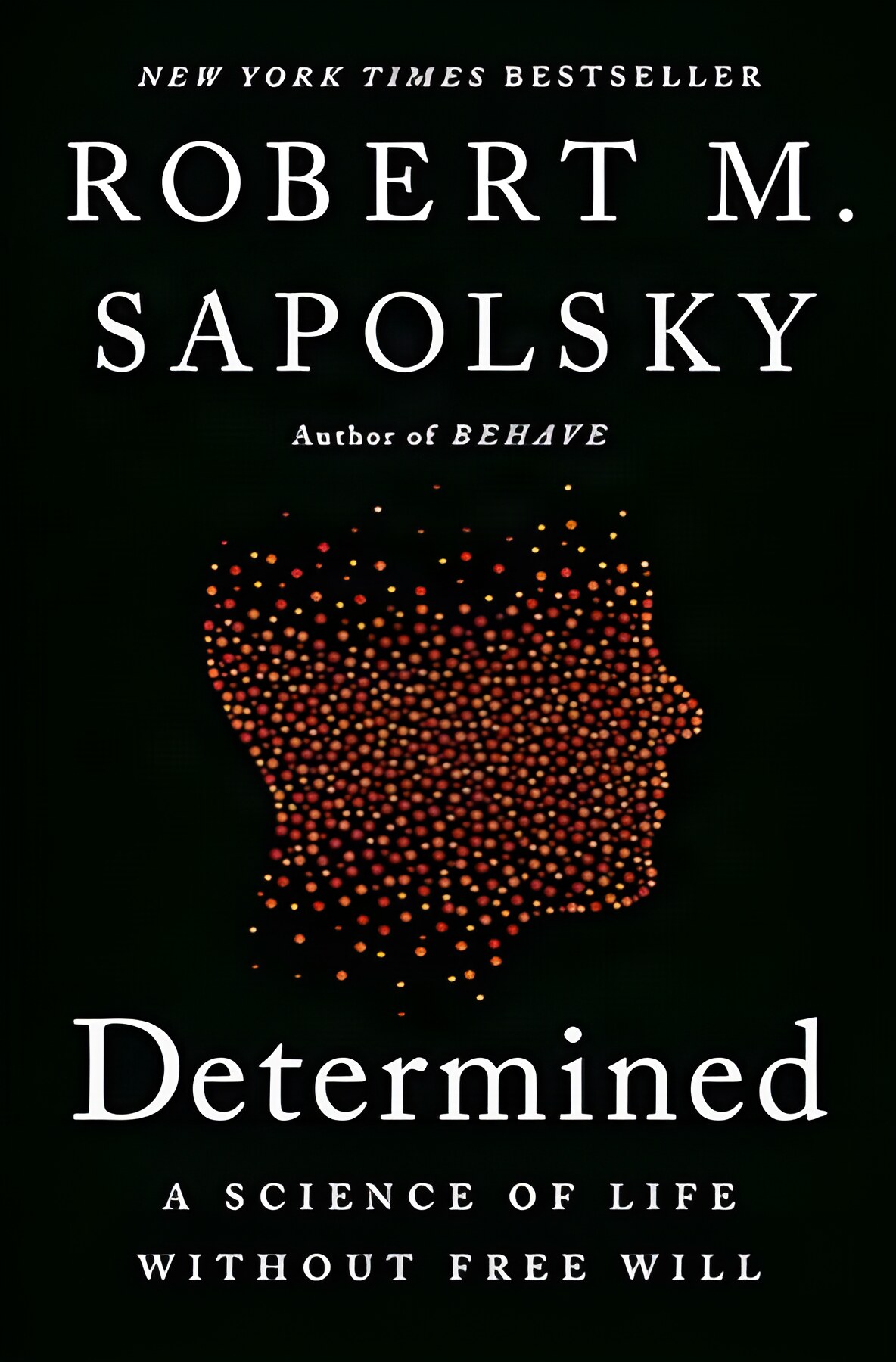
Hardcover. NY, Penguin Press, 1st, 2023, Book: Very Good, Dust Jacket: Very Good, Hardcover in a bright dust jacket, 511 pages. Determined offers a marvelous synthesis of what we know about consciousness--the tight weave between reason and emotion and between stimulus and response in the moment and over a life. One by one, Sapolsky takes out all the major arguments for free will, cutting a path through the thickets of chaos theory and quantum physics. But as Sapolsky acknowledges, it's sometimes impossible to uncouple from our zeal to judge people, including ourselves. Determined applies this new understanding to some of our most essential questions around punishment, morality, and living well together. Most of all, Sapolsky argues that while accepting the reality about free will is monumentally difficult, it will make for a much more humane world. Clean copy.
Hardcover. Ithaca, NY, Cornell University Press, 1st Edition, 1986, Book: Very Good, Dust Jacket: Very Good, 336 pages. Hardcover. SIGNED BY AUTHOR. Tan cloth bound covers, red title on spine. In excellent condition, pages clean, bright, unmarked. Binding tight. Spin straight. Dust jacket unclipped, has a touch of tanning, otherwise very good, no tears or rips. Previous bookstore's label on spine. Traces the historical roots of an idea that has had an incalculable impact on twentieth-century thought and culture by examining the interplay of Freud's inner life--his fantasies and dreams--with the world around him.
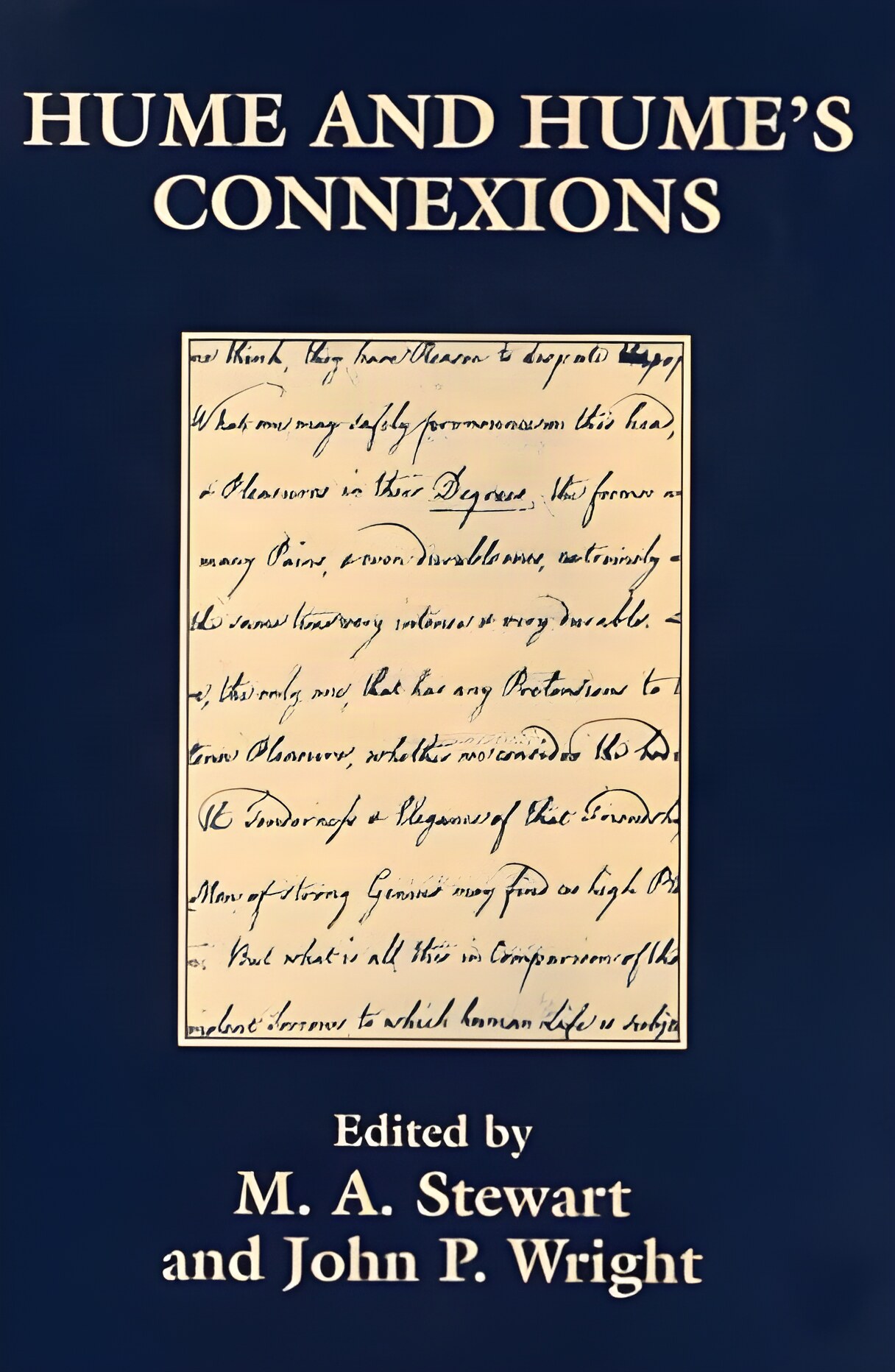
Hardcover. Edinburgh, Edinburgh University Press, 1st, 1994, Book: Very Good, Dust Jacket: Very Good, Hardcover in a bright dust jacket, 266 pages. Presenting new research on the moral and religious philosophy of David Hume, this volume tries to illustrate the importance of intellectual context in understanding the work and career of one of the most important thinkers of the 18th Century. The essays fall into three broad groups. The first looks at Hume's work as a moral philosopher, re-evaluating his place in the sceptical, utilitarian, and natural-law traditions. The second reassesses his work in moral psychology and the science of hte mind in the light of new research on 17th and 18th century sources. A final group, which examines Hume's critique of religion in its literary, historical, and philosophical aspects, includes an edited transcription of a new manuscript on the problem of evil. Clean copy.
Softcover. Los Angeles, Wilshire Book Company, reprint, 1971, Book: Very Good, Dust Jacket: None, Softcover, 167 pages. Author name spelled Wynn on cover and Winn on title page. Has 1939 and 1956 dates on the copyright page. Clean, tight copy.
Softcover. Cambridge UK, Cambridge University Press, 1st, 1990, Book: Very Good, Dust Jacket: None, Softcover, 217 pages. Emotions have long been a central concern in philosophy, psychological and sociological studies. When anthropologists began to study emotion, they challenged many assumptions shared by Western academics and lay persons by exposing the cultural variability of emotional meanings. In this collection of original essays by anthropologists concerned with the relationship of language and emotion, it is argued that the key focus to the study of emotion might be the politics of social life rather than the psychology of the individual. Through close studies of talk about emotion and emotional discourses in social contexts from poetry and song to therapeutic narratives, scholars who have worked in India, Fiji, the United States, Egypt, Senegal and the Solomon Islands show how emotion is tied to politics of everyday interaction. Their arguments and cross-cultural findings will intrigue and provoke anyone who has thought about the relationship between emotion, language and social life. The book will be of special interest to those who find the boundaries between cultural, psychological and linguistic anthropology, sociology, cross-cultural psychiatry, and social psychology too confining. Clean, bright copy.
Hardcover. London, Williams and Norgate, 1st, 1897, Book: Good, Dust Jacket: None, Hardbound edition of the four journals for 1897. 584 pages. Half leather with marbled boards, spine with raised bands, fading. Short closed tear at top of spine. Clean, unmarked pages.
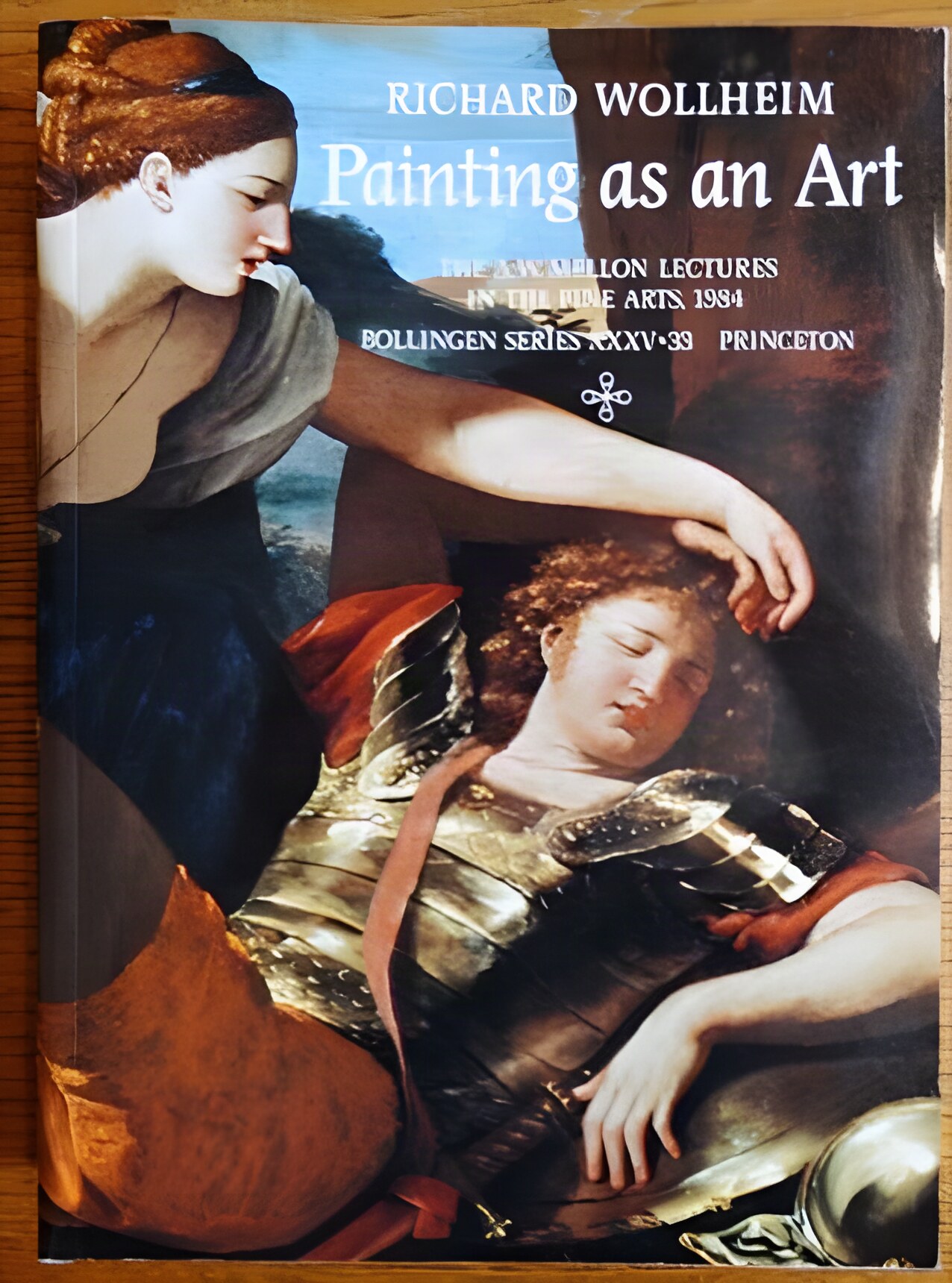
Hardcover. Princeton NJ, Princeton University Press, 1st, 1987, Book: Very Good, Dust Jacket: Very Good, Hardcover in a bright dust jacket, In Painting as an Art, which began as the 1984 Andrew Mellon Lectures at the National Gallery of Art in Washington, D.C., philosopher Richard Wollheim transcended the boundaries and habits of both philosophy and art history to produce a large, encompassing vision of viewing art. Wollheim had three great passions--philosophy, psychology, art--and his work attempted to unify them into a theory of the experience of art. He believed that unlocking the meaning of a painting involved retrieving, almost reenacting, the creative activity that produced it.In order to fully appreciate a work of art, Wollheim argued, critics must bring to the understanding of a work of art a much richer conception of human psychology than they have in the past: "Many [critics] . . . make do with a psychology that, if they tried to live their lives by it, would leave them at the end of an ordinary day without lovers, friends, or any insight into how this came about." Many reviewers have remarked on the insightfulness of the book's final chapter, in which Wollheim contended that certain paintings by Titian, Bellini, de Kooning, and others represent the painters' attempts to project fantasies about the human body onto the canvas. Light fading to dj spine. Name on front fly leaf, otherwise clean.
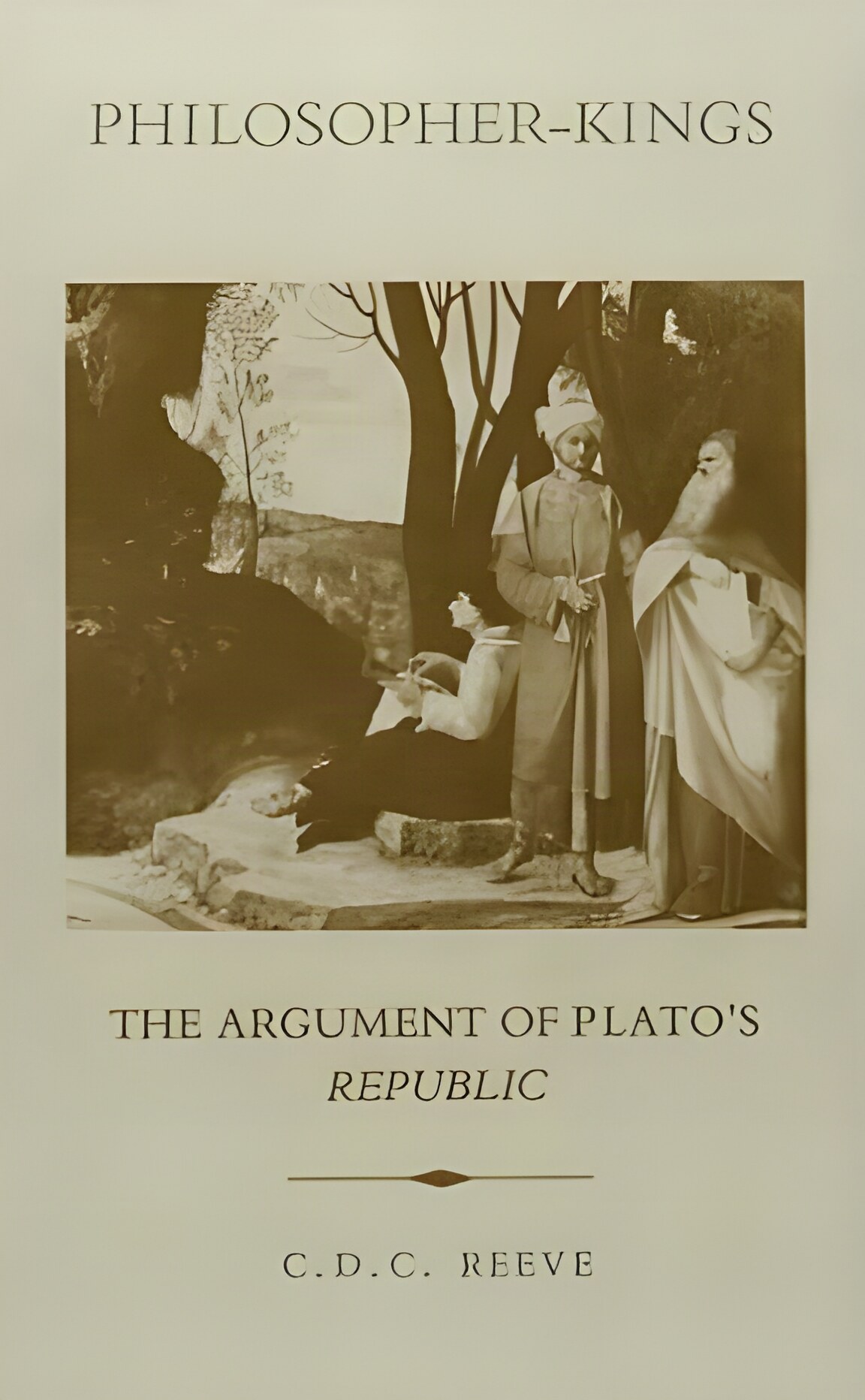
Hardcover. Princeton NJ, Princeton University Press, 1st, 1988, Book: Very Good, Dust Jacket: Very Good, Hardcover in a dust jacket, dark green cloth covers with gilt title on spine. 350 pages. The distinctive aim of Philosopher-Kings is to show, by giving a rational reconstruction of its overall argument, that the Republic is not the flawed patchwork it is usually made out to be by interpreters, but a deeply consistent and systematic work, which raises fundamental problems for philosophy and develops powerful and probing solutions to them. The book's central innovative thesis is that Plato's psychology, more specifically his theory of desires, holds the key to this, his most ambitious work. "Although the Republic has come to seem frazzled from too much use in introductory courses, in Reeve's hands it is new and refreshing".--Paul Woodruff, Ancient Philosophy "Although the philosopher-kings of Reeve's title are central to the argument of this handsomely produced book, it is in reality nothing less than a complete reinterpretation of the Republic. Name on front fly leaf, otherwise clean.
Hardcover. Hillsdale NJ, Lawrence Erlbaum, 1st, 1982, Book: Very Good, Dust Jacket: None, Hardcover, green cloth covers with light blue stamping, 422 pages. This highly readable translation of the major works of the 18th- century philosopher Etienne Bonnot, Abbe de Condillac, a disciple of Locke and a contemporary of Rousseau, Voltaire, and Diderot, shows his influence on psychiatric diagnosis as well as on the education of the deaf, the retarded, and the preschool child. Published two hundred years after Condillac's death, this translation contains treatises which were, until now, virtually unavailable in English: A Treatise on Systems, A Treatise of the Sensations, Logic. Name on front fly leaf, light bumps to cover corners.
Softcover. Oxford UK, Clarendon Press , 1st, 1992, Book: Very Good, Dust Jacket: None, Softcover, 475 pages, What is reduction? Must all discussions of the mind, value, color, biological organisms, and persons aim to reduce these to objects and properties that can be studied by more basic, physical science? Conversely, does failure to achieve a reduction undermine the legitimacy of higher levels of description or explanation? Though reduction has long been a favorite method of analysis in all areas of philosophy, in recent years philosophers have attempted to avoid these traditional alternatives by developing an account of higher-level phenomena which shows them to be grounded in, but not reducible to, basic physical objects and properties. The contributors to this volume examine the motivations for such anti-reductionist views, and assess their coherence and success, in a number of different fields, including moral and mental philosophy, psychology, organic biology, and the social sciences. Name on front fly leaf, otherwise a clean, bright copy.
Hardcover. New Haven, Yale University Press, 1st, 1993, Book: Very Good, Dust Jacket: Very Good, Hardcover in a bright, unclipped dust jacket. INSCRIBED BY AUTHOR on the title page. What motivates us to reread literary works? How is our pleasure, interpretation, involvement, and evaluation different when we read a literary work and when we reread it? This fascinating book by Matei Calinescu is the first to focus on the implications of rereading for critical understanding. Drawing on literary theory, cultural anthropology, psychology, philosophy, and previous theories of reading, Calinescu describes the dynamics of rereading and explores the sometimes complementary, sometimes sharply conflicting relationships between reading and rereading. Calinescu analyzes fictional works by Borges, Nabokov, Proust, Robbe-Grillet, and Henry James, among others, explaining how reading texts is related both to symbolic play or make-believe and to games with rules. He reviews the history of reading in modern times, discussing, for example, how the Reformation led to rereadings of Scripture and how the proliferation of books during the Enlightenment led to a shift from "intensive reading" to "extensive reading." Calinescu looks at the distinctions between reading and rereading from the perspectives of the age, situation, and gender of the individual reader. He discusses the problems raised by secret or oblique languages and codes - devised to evade censors, communicate with a select audience of "secret sharers," or play games of hide-and-seek with the reader - and shows that they naturally lead to rereading a text. Calinescu argues persuasively that an understanding of rereading is useful in formulating both analytic strategies of practical criticism and a poetics of reading. Clean, bright copy.
Hardcover. La Salle, Illinois, Open Court, 1st, 1974, Book: Good, Dust Jacket: Fair, Hardcover, 151 pages. No. 14 of the Paul Carus Lecture Series. Tears on dust jacket and some foxing on rear of dust jacket. Dust jacket rubbing on front. Previous owner's signature on front flyleaf. Small notes and markings in pencil on about 20 pages. Light creasing on top edge. Nice reading copy.
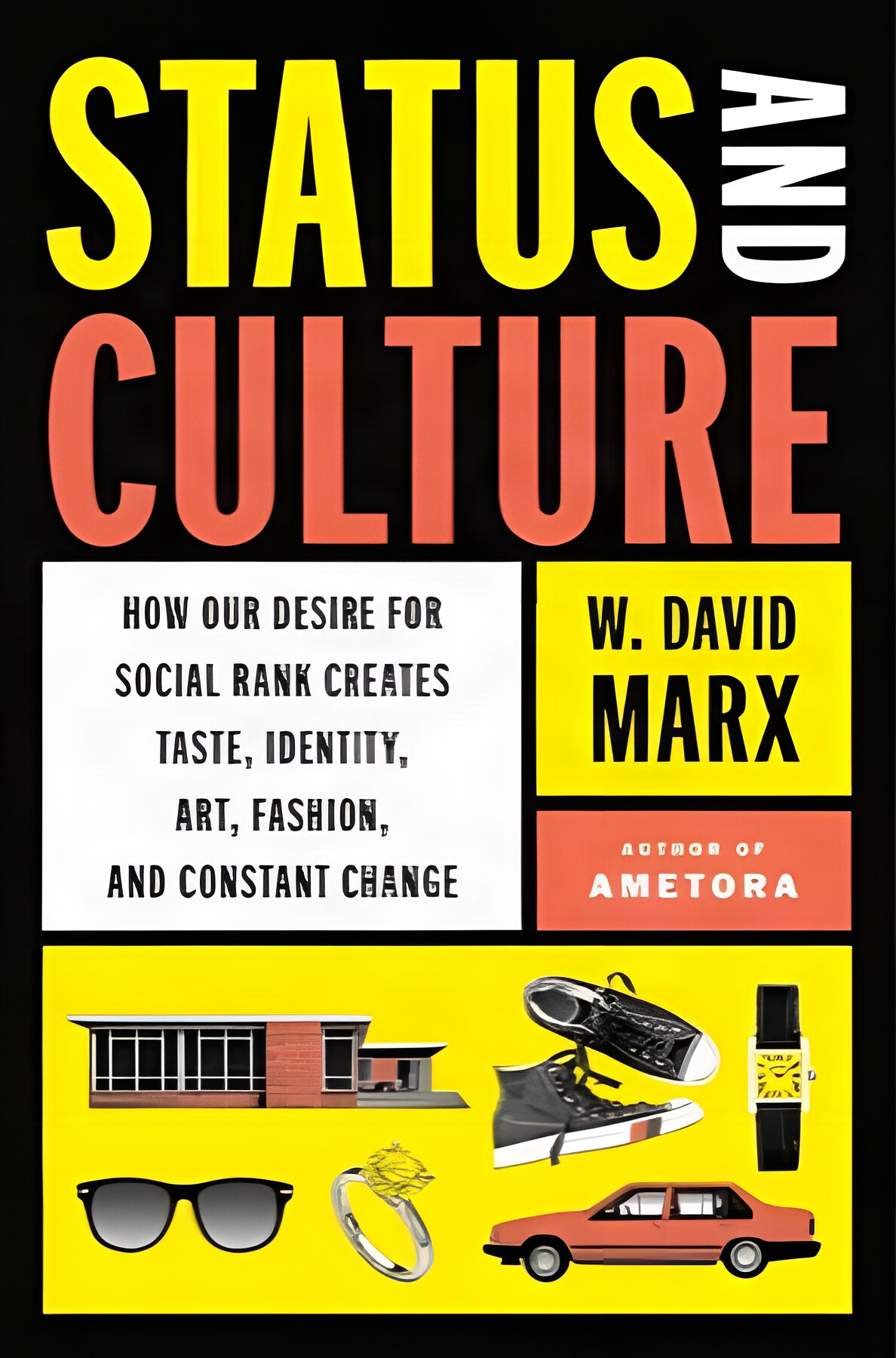
Hardcover. NY, Viking, 1st, 2022, Book: Very Good, Dust Jacket: Very Good, Hardcover in a bright dust jacket, 346 pages. In Status and Culture, W. David Marx weaves together the wisdom from history, psychology, sociology, anthropology, economics, philosophy, linguistics, semiotics, cultural theory, literary theory, art history, media studies, and neuroscience to demonstrate exactly how individual status seeking creates our cultural ecosystem. Marx examines three fundamental questions: Why do individuals cluster around arbitrary behaviors and take deep meaning from them? How do distinct styles, conventions, and sensibilities emerge? Why do we change behaviors over time and why do some behaviors stick around? The answers then provide new perspectives for understanding the seeming "weightlessness" of internet culture. Clean copy.
Hardcover. NY, Oxford University Press, 1st, 2005, Book: Very Good, Dust Jacket: Very Good, Hardcover in a bright dust jacket, 242 pages. While few soldiers may have read the works of Epictetus or Marcus Aurelius, it is undoubtedly true that the ancient philosophy known as Stoicism guides the actions of many in the military. Soldiers and seamen learn early in their training "to suck it up," to endure, to put aside their feelings and to get on with the mission. Stoic Warriors is the first book to delve deeply into the ancient legacy of this relationship, exploring what the Stoic philosophy actually is, the role it plays in the character of the military (both ancient and modern), and its powerful value as a philosophy of life. Marshalling anecdotes from military history--ranging from ancient Greek wars to World War II, Vietnam, and Iraq--Nancy Sherman illuminates the military mind and uses it as a window on the virtues of the Stoic philosophy, which are far richer and more interesting than our popularized notions. Clean copy.
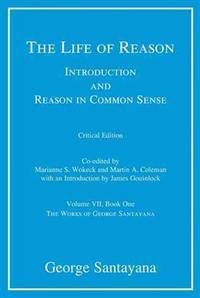
Hardcover. Cambridge MA, The MIT Press, 1st, 2011, Book: Very Good, Dust Jacket: Very Good, Hardcover in a bright blue dust jacket, 344 pages. Santayana's Life of Reason, published in five books from 1905 to 1906, ranks as one of the greatest works in modern philosophical naturalism. Acknowledging the natural material bases of human life, Santayana traces the development of the human capacity for appreciating and cultivating the ideal. It is a capacity he exhibits as he articulates a continuity running through animal impulse, practical intelligence, and ideal harmony in reason, society, art, religion, and science. The work is an exquisitely rendered vision of human life lived sanely.In this first book of the work, Santayana provides an account of how the human animal develops instinct, passion, and chaotic experience into rationality and ideal life. Inspired by Aristotle's De Anima, Darwin's evolutionary theory, and William James's The Principles of Psychology, Santayana contends that the requirements of action in a hazardous and uncertain environment are the sources of the development of mind. More specifically, instinct and imagination are crucial to the emergence of reason from chaos. Separating himself from the typical thought of the time by his recognition of the imagination, Santayana in this volume offers extensive critiques of various philosophies of mind, including those of Kant and the British empiricists. Clean copy.
Softcover. The Hague, Martinus Nijhoff, 2nd Ed., 1965, Book: Very Good, Dust Jacket: None, Two matching softcover volumes, 765 total pages, b&w illustrations. Clean copies.


 "C")
 "Culture of the Copy, The: Striking Likenesses, Unreasonable Facsimilesby: Schwartz, Hillel")
 "Freud's Discovery of Psychoanalysis: The Politics of Hysteria (SIGNED BY AUTHOR)by: McGrath, William J.")


 "Hypnotism Made Easyby: Ralph Wynn")
 "Inventing the Enemyby: Eco, Umberto")
 "Language and the Politics of Emotion (Studies in Emotion and Social Interaction) by: Lutz, Catherine; Abu-Lughod, Lila")
 "Mind: A Quarterly Review of Psychology and Philosophy - Vol. VI 1897by: Stout, G.F.")
 "Philosophical Writings of Etienne Bonnot, Abbe De Condillac:by: Franklin Philip/ Harlan Lane")

 "Rereading (INSCRIBED COPY)by: Calinescu, Matei")
 "Roots of Reference: The Paul Carus Lectures, Theby: Quine, W. V.")

 "The Phenomenological Movement: A Historical Introduction (2 volumes). by: Spiegelberg, Herbert")