Softcover. London/NY, Routledge, reprint, 1996, Book: Very Good, Dust Jacket: None, Softcover, 1062 pages. This volume includes twenty-two chapters by international experts covering the entire history of technology from humankind's earliest use of stone tools to the exploration of space. Written clearly and without unnecessary jargon, each chapter traces the development of its subject from earliest times to the present day, stressing the social context and its place in scientific thought. Usefully drawn with over 150 tables, drawings and photographs. Two comprehensive indexes of names and subjects. Essential reading for teachers and students in the History and Philosophy of Science and Technology, Industrial History and Archaeology. Clean copy.
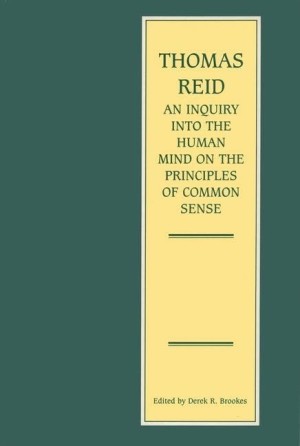
Hardcover. Edinburgh, Edinburgh University Press, 1st, 1997, Book: Very Good, Dust Jacket: Very Good, Hardcover in a bright dust jacket, 345 pages. Thomas Reid (1710-96) is increasingly being seen as a highly significant philosopher and a central figure in the Scottish Enlightenment. This edition of Reid's classic philosophical text in the philosophy of mind at long last gives scholars a complete critically edited text of the Inquiry. The critical text is based on the fourth life-time edition (1785). A selection of related documents showing the development of Reid's thought, textual notes, bibliographical details of previous editions, and a full introduction by the editor makes this an important contribution to the study of this increasingly respected philosopher.Key Features:*Complete, critically edited text of the Inquiry accompanied by a judicious selection of manuscript evidence relating to its composition.*Comprehensive Introduction providing an historical and philosophical account of the formation of the Inquiry.*Detailed textual notes which include bibliographical details and allusions, translations, references to secondary literature and selected passages from Reid's MSS. Clean copy.
Hardcover. Cambridge UK, Cambridge University Press, 1st, 2000, Book: Very Good, Dust Jacket: Very Good, 170 pages, blue cloth covers with gilt lettering on spine. This book considers the relation between language and thought. Robert Wardy explores this huge topic by analyzing linguistic relativism with reference to a Chinese translation of Aristotle's Categories. He addresses some key questions, such as, do the basic structures of language shape the major thought patterns of its native speakers? Could philosophy be guided and constrained by the language in which it is done? And does Aristotle survive rendition into Chinese intact? Wardy's answers will fascinate philosophers, Sinologists, classicists, linguists and anthropologists, and make a major contribution to the scholarly literature.
Hardcover. Cambridge, England, Cambridge University, 1st Edition, 1777, Book: Good, Dust Jacket: None, Nonpaginated. Hardcover. Cover boards bound in polished calf (agewear--see image), gilt bands on spine. Front cover boards and front flyleaf still attached but coming loose from binding,Binding tight otherwise. Spine straight. Previous owner's inscription on front flyleaf and dated signatures (178? and 1792) on title page (see image). Some light pencil on top of title page (see image). Tanning throughout from age. Beautiful old volume, a collector's dream.
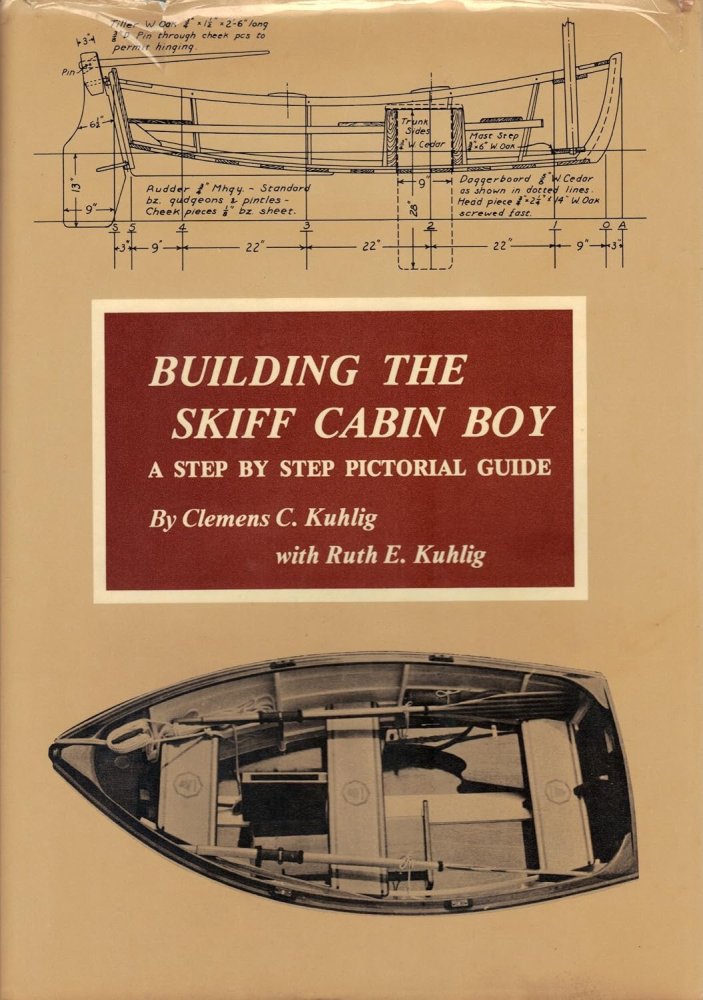
Hardcover. Camden ME, International Marine Publishing, 1st, 1977, Book: Very Good, Dust Jacket: Very Good, Hardcover in a bright dust jacket with residue from label on spine. Clemens Kuhlig is a craftsman whose skills are reminiscent of an age long past: his meticulous construction of the sailing skiff Cabin Boy offers ample proof. Here in more than 200 photographs and drawings, is the story of how he built the Cabin Boy. Throughout the book, Kuhlig expresses his philosophy of boatbuilding, stressing the aesthetics of wooden boat building. The book includes chapters on boatbuilding materials, tools, plans, actual construction, completing the interior, finishing the exterior as well as final touches. Bookplate on front fly leaf.
Hardcover. Canada, McGill-Queen's University Press, 1st, 1982, Book: Very Good, Dust Jacket: None, 227 pages. Hardcover. Brown cloth cover boards, black title on spine and front cover. Pages clean and bright. Spine straight. Binding tight. Previous owner's name on front flyleaf. Brown endpapers. This book challenges widespread asumptions about common-sense philosophies and provides a major reassessment of an influential segment of the history of ideas.
Hardcover. Durham UK, Acumen, 1st, 2009, Book: Very Good, Dust Jacket: None, Hardcover in blue cloth, with red title block, gilt lettering, 348 pages. The early modern period in philosophy - encompassing the 16th to the 18th centuries - reflects a time of social and intellectual turmoil. The Protestant Reformation, the Catholic Counter-Reformation, and the birth of the Enlightenment all contributed to the re-evaluation of reason and faith. The revolution in science and in natural philosophy swept away two millennia of Aristotelian certainty in a human-centered universe. Covering some of the most important figures in the history of Western thought - notably Descartes, Locke, Hume and Kant - "Early Modern Philosophy of Religion" charts the philosophical understanding of religion at a time of intellectual and spiritual revolution. "Early Modern Philosophy of Religion" will be of interest to historians and philosophers of religion, while also serving as an indispensable reference for teachers, students and others who would like to learn more about this formative period in the history of ideas. Lacks dust jacket. Clean copy.
Hardcover. London, England, Cambridge at the University Press, Revised 2nd edition, 1925, Book: Very Good, Dust Jacket: None, 207 pages. Hardcover. Navy blue cloth cover boards, gilt title on spine. Ex-library book with labels/stamps/and appropriate markings. Light pencil markings throughout. Some light tanning to edges and pages. Traditions of Science, The Foundations of Dynamical Physics, Scientific Relativity, The Natural Elements...
Hardcover. POONA, Oriental Book Agency, 1st, 1939, Book: Very Good, Dust Jacket: None, 567 pages. Hardcover. Boards bound at spine with orange quartercloth, has fading and foxing to spine from age. Gray cardboard cover boards (some agewear). Pages and edges have some tanning, but otherwise unmarked. Previous owner's name on front flyleaf. This work is a product of seven manuscripts. It begins with the English tranlation of lectures on Nyayasutras by Gautama. The author has also used his notes from Bodhasiddhi.
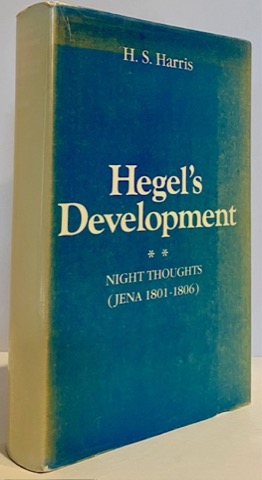
Hardcover. Oxford, England, Clarendon Press, 1st Edition, 1983, Book: Very Good, Dust Jacket: Very Good, 627 pages. Hardcover. Sequel to Hegel's Development: Toward the Sunlight 1770-1801(Clarendon Press, 1972). Black cover boards, gilt title and design on spine. Pages clean and bright. Binding tight. Spine straight. Dust jacket unclipped, faded (shelfwear), light agewear, glossy. Harris distinguishes three main phases in Hegel's development over this period: the period of callaboration with Schelling (1801-3); the appearance of a three-part 'phenomenological' system (1803-50; and the emergence of the mature system.
Hardcover. New York, State University of New York Press, 1st, 1991, Book: Very Good, Dust Jacket: Very Good, 233 pages. Hardcover. Dust jacket with light wear. Clean unmarked text.
Hardcover. Leiden, Netherlands, E. J. Brill, 1st, 1976, Book: Very Good, Dust Jacket: None, Hardcover, 377 pages. Blue cloth, gilt lettering to front and spine, no dust jacket. Light wear and smudges to covers. Clean, tight copy in excellent condition.
Hardcover. NY, Oxford University Press, 1st, 1998, Book: Very Good, Dust Jacket: Very Good, Hardcover in a bright dust jacket, 279 pages. John Barrow is increasingly recognized as one of our most elegant and accomplished science writers, a brilliant commentator on cosmology, mathematics, and modern physics. Barrow now tackles the heady topic of impossibility, in perhaps his strongest book yet. Writing with grace and insight, Barrow argues convincingly that there are limits to human discovery, that there are things that are ultimately unknowable, undoable, or unreachable. He first examines the limits on scientific inquiry imposed by the deficiencies of the human mind: our brain evolved to meet the demands of our immediate environment, Barrow notes, and much that lies outside this small circle may also lie outside our understanding. Barrow investigates practical impossibilities, such as those imposed by complexity, uncomputability, or the finiteness of time, space, and resources. Clean copy.
Softcover. Stanford CA, Stanford University Press, 1988, Book: Very Good, Dust Jacket: None, Softcover, 230 pages. Jean Baudrillard is one of the most topical and controversial theorists in France today. He has played a major role in the development of critical social theory and cultural sociology, and his writings are currently at the center of the 'post-modernism' debate. This volume makes his most important work widely available in English for the first time. It includes selections from the entire range of his writings, from his early work on advertising and commodity culture to his most recent writings on simulation and desire. Throughout the selections Baudrillard stresses the ways in which our lives are embedded in a world if images which have no clear reference and which are reproduced by the new mechanisms of cultural production in contemporary societies. Clean copy.
Hardcover. London, England, SPCK, 1st Edition, 1950, Book: Very Good, Dust Jacket: None, 175 pages. Hardcover. Red cover boards, fading to spine and edges, gilt title on spine. Pages unmarked. Binding tight. Spine straight. The Epitome covers a wide range of topics, including the nature of God, the creation of the world, the fall of man, the life and teachings of Jesus Christ, and the end of the world. It also discusses various aspects of Christian morality.
Hardcover. Princeton, NJ, Princeton University Press, 1st Edition, 1989, Book: Very Good, Dust Jacket: Very Good, 350 pages. Hardcover. Previous owner's name on front flyleaf. Blue cover boards, gilt title on spine. Dust jacket unclipped, some fading and agewear to spine of dj. This study of the metaphysics of G.W. Leibniz gives a clear picture of his philosophical development within the general scheme of seventeenth-century natural pholosophy.
Hardcover. London, Williams and Norgate, 1st, 1897, Book: Good, Dust Jacket: None, Hardbound edition of the four journals for 1897. 584 pages. Half leather with marbled boards, spine with raised bands, fading. Short closed tear at top of spine. Clean, unmarked pages.
Hardcover. NY, D. Appleton and Company, 1st US, 1875, Book: Very Good, Dust Jacket: None, Hardcover, terra-cotta cloth with black design and gilt lettering, 363 pages plus publisher's ads. A late nineteenth century reference on natural science and philosophy. Papillon's engrossing essays, written at various times and put together in this volume as - after the fashion of the time - an effort to dovetail science, metaphysics and philosophy into a higher understanding of life. Name on front fly leaf otherwise a clean, bright copy.
Softcover. UK, Cambridge University Press, 1st pbk, 2019, Book: Very Good, Dust Jacket: None, Softcover, 931 pages. Greek glossary, English glossary, bibliography of Principal editions of secondary sources. Octavo. Glossy burgunday soft covers with gold and white titles. Covers have minimal shelf wear, a small bump at top left front, interior clean and fresh, a few pages have very slight sign of storage bend at the top corner, otherwise very good. Heavy for international shipping. The Enneads is a work central to the history of philosophy in late antiquity. This volume is the first complete edition in English for 75 years and also includes Porphyry's Life of Plotinus. Led by Gerson, a team of experts present up to date translations which are based on the best available text, the editio minor of Henry and Schwyzer and its corrections.... They also offer extensive annotation to assist the reader, together with cross-references and citations. Clean, bright copy.
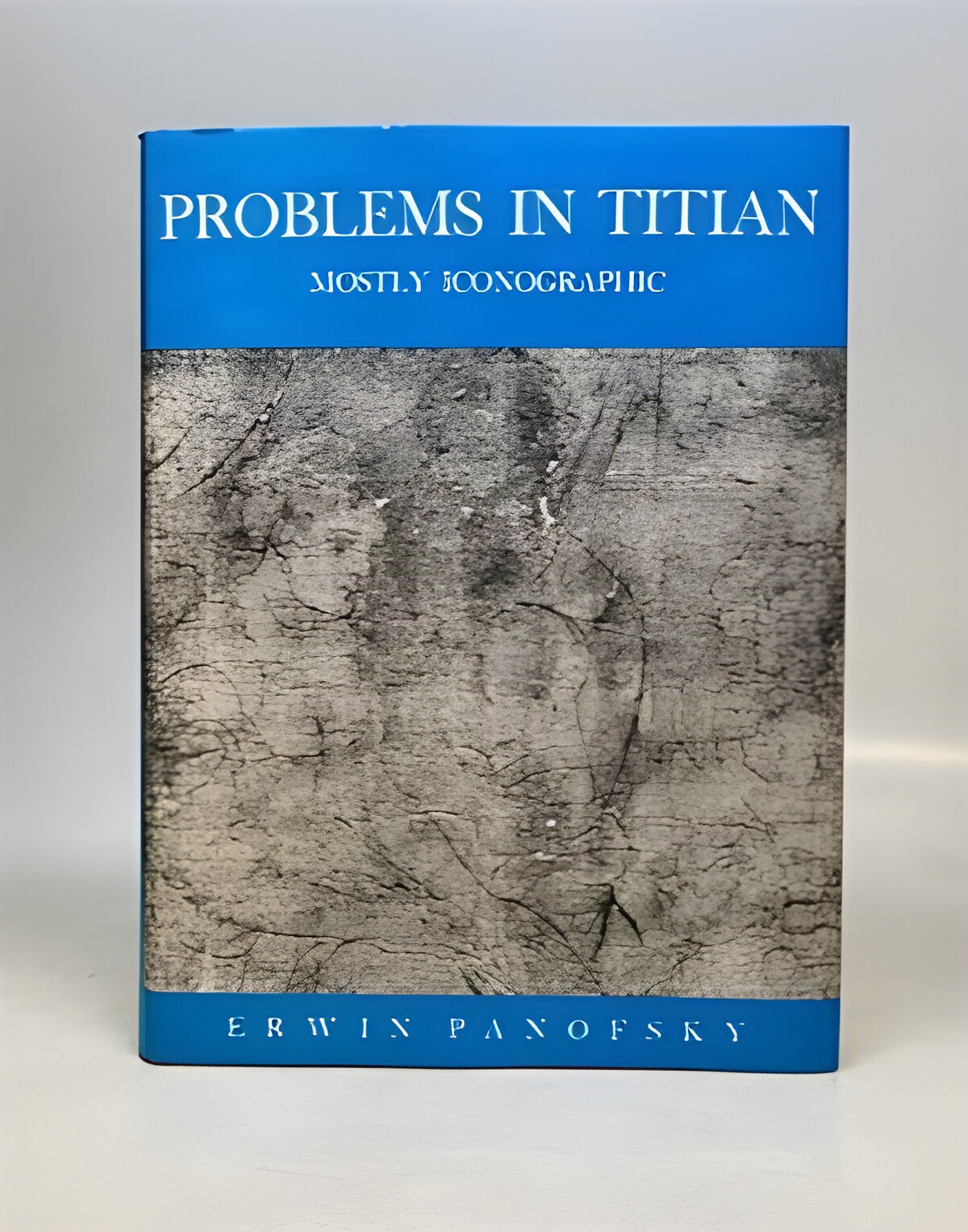
Hardcover. New York, NYUP, 1st, 1969, Book: Very Good, Dust Jacket: Very Good, Hardcover. 208 pages of text followed by a ection of corresponding black & white illustrations. Titian's fame as the greatest colorist in the history of painting has led students of his art to concentrate on problems of style and authenticity rather than on problems of content and meaning. Dr. Panofsky treats this neglected aspect of the Venetian master's work with a wealth of humanistic scholarship, exploring such varied topics as Titian's relationship to the philosophy and literature of his time, his attitude toward the antique, and the reasons behind his unrivaled acclaim as a portraitist. These studies show Titian to have been a man of far richer and more complex culture than hitherto assumed, possessed not only of the supremely gifted hand but of a subtle and poetic mind.Light wear. Clean, tight copy.
Hardcover. Ithaca, Cornell University Press, 1st, 1990, Book: Very Good, Dust Jacket: None, Hardcover, 260 pages. No dust jacket. John Locke's untitled manuscript "Questions concerning the Law of Nature" (1664) was his only work focused on the subject of natural law, a circumstance that is especially surprising since his published writings touch on the subject frequently, if inconclusively. Containing a substantial critical apparatus, this new edition of Locke's manuscript is faithful to Locke's original intentions and to the format he chose for his discourse on the law of nature-a late-Scholastic quaestio disputata, the form through which in 1664 the young Locke debated questions with his students as moral censor of Christ Church. For this volume, Robert Horwitz provides an introduction summarizing the history of the manuscript and analyzing Locke's role in the development of thinking on natural law. Jenny Strauss Clay offers a superb critical edition of the Latin text, for which she has supplemented the Latin text of Manuscript B, written by an amanuensis, with Manuscript A, a first draft in Locke's own hand. Diskin Clay's precise English translation-with the Latin presented on facing pages-is accompanied by annotations identifying Locke's references and allusions and explaining difficulties of translation. In the view of Horwitz, Clay, and Clay, Questions concerning the Law of Nature shows a tension between several opposing conceptions of natural law. In developing this view, the editors break with W. von Leyden, who prepared the first edition of the text and who interpreted Locke's understanding of natural law squarely within a Christian framework. The editors here present a fresh interpretation of Locke as a thinker who posed a series of subtle challenges to traditional natural law doctrine. That Locke was aware of the political danger of this challenge is evident from his refusal to publish the work during his lifetime and from the care he took to conceal these manuscripts among his possessions. Clean, tight copy.
Hardcover. Edinburch and London, William Blackwood and Sons, 2nd revised edition, 1874, Book: Very Good, Dust Jacket: None, Vol. 1: 463 pages. Vol. 2: 500 pages. Scarce. Hardcovers. Colored endpapers (black). Light pencil notes/marks in margins. Red cloth cover boards, gilt title on spine, light age wear to covers. Front endpapers' gutters are split, binding is good. Spines straight. Edges untrimmed, pages and edges have some tanning from age. Some foxing to preliminary pages. DOMESTIC SHIPPING ONLY.
Hardcover. La Salle, Illinois, Open Court, 1st, 1974, Book: Good, Dust Jacket: Fair, Hardcover, 151 pages. No. 14 of the Paul Carus Lecture Series. Tears on dust jacket and some foxing on rear of dust jacket. Dust jacket rubbing on front. Previous owner's signature on front flyleaf. Small notes and markings in pencil on about 20 pages. Light creasing on top edge. Nice reading copy.

![An Encyclopedia of the History of Technology by: McNeil, Ian [Editor]](https://www.browsingisarousing.com/shop/images/397565.jpg "An Encyclopedia of the History of Technology by: McNeil, Ian [Editor]")
 "Aristotle in China: Language, Catagories and Translationby: Wardy, Robert")
 "Book of Common Prayer, The: and Administration of the Sacraments, and Other Rites and Ceremonies of the Church, According to the Use of the Church of England; Together with the Psalter or Psalms of David, Pointed as they are to be su")




 "Early Modern Philosophy of Religion (The History of Western Philosophy of Religion, Volume 3) by: Oppy, G.raham & Trakakis, Nick N. (eds)")
 "Enquiry Concerning the Principles of Natural Knowledge, Anby: Whitehead, A.N.")


 "Gautama's Nyaua Sutras (With Vatsuayana-Bhasya)by: Jha, Ganganatha (English translation with revised notes)")



 "Heidegger and the Project of Fundamental Ontologyby: Taminiaux, Jacques")
 "Iconographic Dictionary of the Indian Religions: Hinduism - Buddhism - Jainismby: Liebert, Gosta")


 "Lactantius' Epitome of the Divine Institutesby: Blakeney, E.H. (Editor and translation with commentary)")


 "Leibniz's Metaphysics: A Historical and Comparative Studyby: Wilson, Catherine")

 "Mind: A Quarterly Review of Psychology and Philosophy - Vol. VI 1897by: Stout, G.F.")

 "Objects of Thoughtby: Prior, Arthur N./P. T. Geach/A. J. P. Kenny (Editors)")


 "Questions Concerning the Law of Natureby: Locke, John")



 "Roots of Reference: The Paul Carus Lectures, Theby: Quine, W. V.")