Hardcover. Ithaca NY, Cornell University Press, 2nd pr., 2005, Book: Very Good, Dust Jacket: Very Good, Hardcover in a bright dust jacket, 261 pages, previous owner's signature on front fly leaf. "Evil is the most serious of our moral problems. All over the world cruelty, greed, prejudice, and fanaticism ruin the lives of countless victims. Outrage provokes outrage. Millions nurture seething hatred of real or imagined enemies, revealing savage and destructive tendencies in human nature. Understanding this challenges our optimistic illusions about the effectiveness of reason and morality in bettering human lives. But abandoning these illusions is vitally important because they are obstacles to countering the threat of evil. The aim of this book is to explain why people act in these ways and what can be done about it." The first part of this book is a detailed discussion of six horrible cases of evil: the Albigensian Crusade of about 1210; Robespierre's Terror of 1793?94; Franz Stangl, who commanded a Nazi death camp in 1943?44; the 1969 murders committed by Charles Manson and his "family"; the "dirty war" conducted by the Argentinean military dictatorship of the late 1970s; and the activities of a psychopath named John Allen, who recorded reminiscences in 1975. John Kekes includes these examples not out of sensationalism, but rather to underline the need to hold vividly in our minds just what evil is. The second part shows why, in Kekes's view, explanations of evil inspired by Christianity and the Enlightenment fail to account for these cases and then provides an original explanation of evil in general and of these instances of it in particular.
Softcover. Madras, Government Press, 1st, 1931, Book: Very Good, Dust Jacket: None, Softcover, Heavy gray paper wraps, 158 pages. 12 plates of b/w photographs. A complete survey of the origin and development of the Brahmanas as well as an authoritative exposition of their liturgical codes and an accurate account of their cultural life. This work also deals with Vaishnavism of south India. Azhvars, Acharyas, Ramanuja, Visistadvaita philosophy, cardinal principles of Sri Vaishnavism. Some interesting illustrations enhance the beauty of this volume. Light wear to wrappers, clean copy.
Hardcover. Cambridge MA, Belknap Press / Harvard University Press, 1st, 1979, Book: Very Good, Dust Jacket: Very Good, Hardcover in a lightly worn dust jacket, 896 pages. This masterly study has a grand sweep. It ranges over centuries, with a long look backward over several millennia. Yet the history it unfolds is primarily the story of individuals: thinkers and dreamers who envisaged an ideal social order and described it persuasively, leaving a mark on their own and later times. The roster of utopians includes men of all stripes in different countries and eras--figures as disparate as More and Fourier, the Marquis de Sade and Edward Bellamy, Rousseau and Marx. Fascinating character studies of the major figures are among the delights of the book. 1980 National Book Award winner. Name on front fly leaf, otherwise clean.
Softcover. Canada, Penguin Books, reprint, 1993, Book: Very Good, Dust Jacket: None, Softcover, 640 pages. The Western world is full of paradoxes. We talk endlessly of individual freedom, yet we've never been under more pressure to conform. Our business leaders describe themselves as capitalists, yet most are corporate employees and financial speculators. We call our governments democracies, yet few of us participate in politics. We complain about invasive government, yet our legal, educational, financial, social, cultural and legislative systems are deteriorating. All these problems, John Ralston Saul argues, are largely the result of our blind faith in the value of reason. Over the past 400 years, our "rational elites" have turned the modern West into a vast, incomprehensible, directionless machine, run by process-minded experts--"Voltaire's bastards"--whose cult of scientific management is empty of both sense and morality. Whether in politics, art, business, the military, entertain-ment, science, finance, academia or journalism, these experts share the same outlook and methods. The result, Saul maintains, is a civilization of immense technological power whose ordinary citizens are increasingly excluded from the decision-making process. In this wide-ranging anatomy of modern society and its origins--whose "pages explode with insight, style and intellectual rigor" (Camille Paglia, The Washington Post)--Saul presents a shattering critique of the political, economic and cultural estab-lishments of the West. Clean copy.
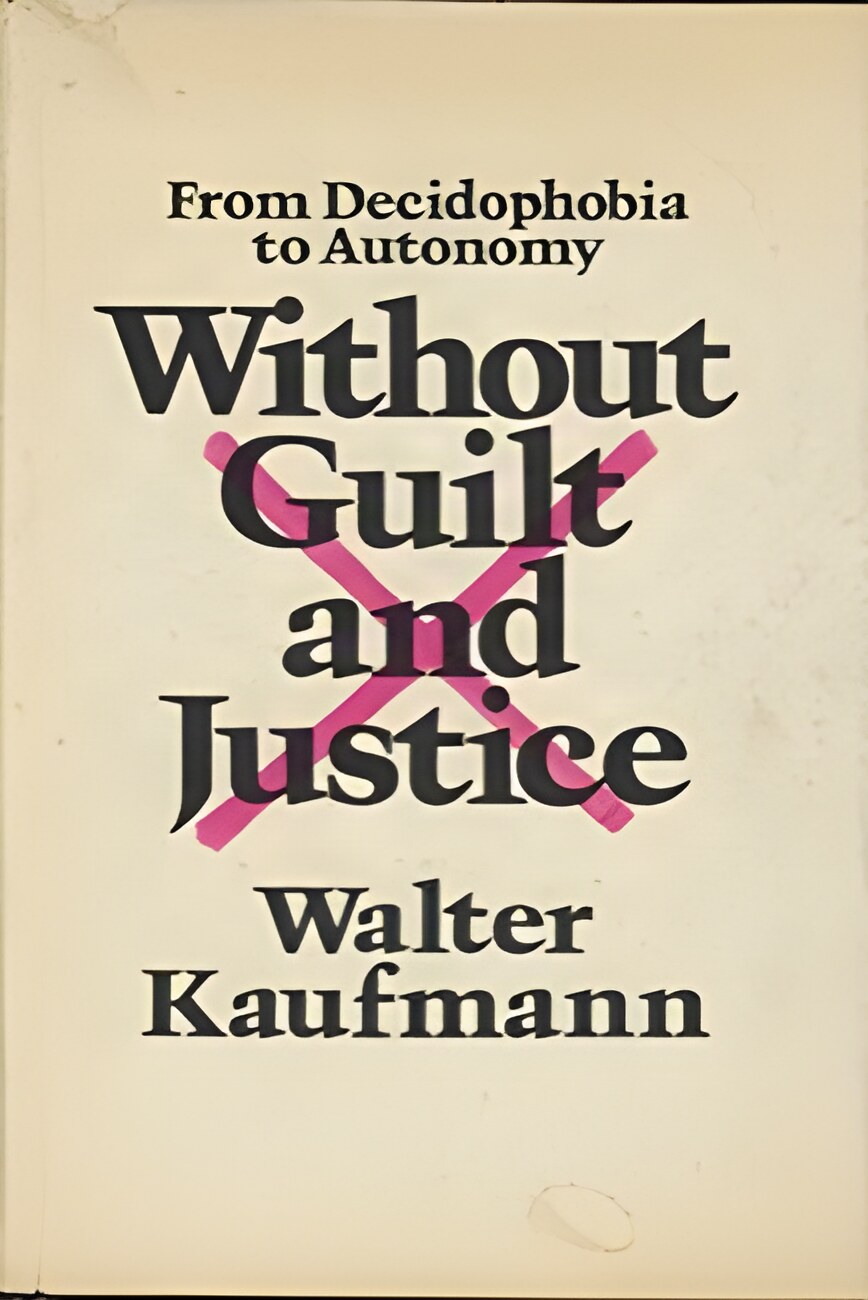
Hardcover. NY, Peter H. Wyden, 1st, 1973, Book: Good, Dust Jacket: Fair, Hardcover in a dust jacket that has a water stain to rear panel. Mild ripple to rear cloth, but book, text pages not affected. There is some foxing/tanning to top edge of text block. No markings. Walter Kaufmann in defining the conflicts in Germany that put Hitler in power, are very similar to our challenges today. A good read for people who want to understand underlying impulses in our culture.


 "THE SRI VAISHNAVA BRAHMANS. Bulletin of the Madras Government Museum, Vol II Part 2by: Rangachari, Diwan Bahadur K.")