Hardcover. London, Neville Spearman, 1st, 1972, Book: Good, Dust Jacket: Good, 285 pages. Hardcover with dust jacket. Dj has tape repair on top edges, chipping, fraying and rubbing throughout dust jacket. Cover boards show medium wear on corners, as well as spine. Light foxing to fore edge text block. Black and white illustrations.
Softcover. Amsterdam, North - Holland Publishing, 2nd pr., 1957, Book: Very Good, Dust Jacket: Very Good, Thin card covers in a lightly sunned dust jacket, 122 pages. Remarkable work in which the author aimed to collect some of the data available in the state of science of Bochenski's times and to arrange them in a kind of outline, which showed forth some of our indebtedness to Greek Logicians, and allowed the reader to see how their results were reached.
Hardcover. Berkeley CA, University of California Press, 1st, 2009, Book: Very Good, Dust Jacket: Very Good, Hardcover, 320 pages. In the voluminous scholarship that's been written on Paul Cezanne, little has been said about the twenty-four portraits in oil that Cezanne made of his wife, Hortense Fiquet Cezanne, over an extended twenty-year period. In Cezanne's Other: The Portraits of Hortense, Susan Sidlauskas breaks new ground, focusing on these paintings as a group and looking particularly at the differences that render many of them unrecognizable as the same person. She argues that Cezanne sidestepped the conventional goals of portraiture-he avoids representing a consistent, identifiable physiognomy or conventional feminine postures and does not portray the subject's inner life-making lack of fixedness itself his subject, which leads him ultimately to a radical reformulation of modern portraiture. Sidlauskas also upends the notion of Mme Cezanne as the irrelevant and absent spouse. Instead she reveals Hortense Fiquet Cezanne as a presence so crucial to the artist that she became the essential "other" to his ever-evolving "self." Coupling historical texts from philosophy, psychology, and physiology with more recent writings from women's and gender studies, cognitive psychology, and visual culture, Sidlauskas demonstrates that Mme Cezanne offered intimacy at arm's length for the painter who has been dubbed "the lone wolf of Aix."
Softcover. Oxford, UK, Clarendon Press, Reprint, 1978, Book: Very Good, Dust Jacket: None, 306 pages. Softcover with light wear to wraps. Sunfade to spine. Spine faded. Small black mark on rear wrap, some lines highlighted on four pages. Light toning throughout, illustrated by tables & figures in bw.
Softcover. London/NY, Bloomsbury, 1st, 2016, Book: Very Good, Dust Jacket: None, Softcover, 346 pages. This volume makes the key essays of 19th century French philosopher Felix Ravaisson available in English for the first time. In recent years, Ravaisson has emerged as an extremely important and influential figure in the history of modern European philosophy. The volume contains the classic 1838 dissertation Of Habit, studies of Pascal, Stoicism and the wider history of philosophy together with the Philosophical Testament that he left unfinished when he died in 1900. The volume also features Ravaisson's work in archaeology, the history of religions and art-theory, and his essay on the Venus de Milo, which occupied him over a period of twenty years after he noticed, when hiding the statue behind a false wall in a dingy Parisian basement during the Franco-Prussian war, that it had previously been presented in a way that deformed its original bearing and meaning. Clean copy.
Hardcover. Bloomingdale, Indiana University Press, reprint, 1991, Book: Very Good, Dust Jacket: Very Good, 290 pages. Hardcover with dust jacket. Clean and tight copy with only light edgewear to dust jacket and very light foxing to top text block. This classic work, first published in 1956, is now available in English. Along with Luthi's The European Folktale and Propp's The Morphology of the Folktale, Rohrich's Marchen und Wirklichkeit is considered a key text in folklore scholarship.
Hardcover. Staten Island NY, Center Migration Studies , 1st, 2000, Book: Very Good, Dust Jacket: Very Good, Hardcover in a bright dust jacket, 359 pages. Clean copy.
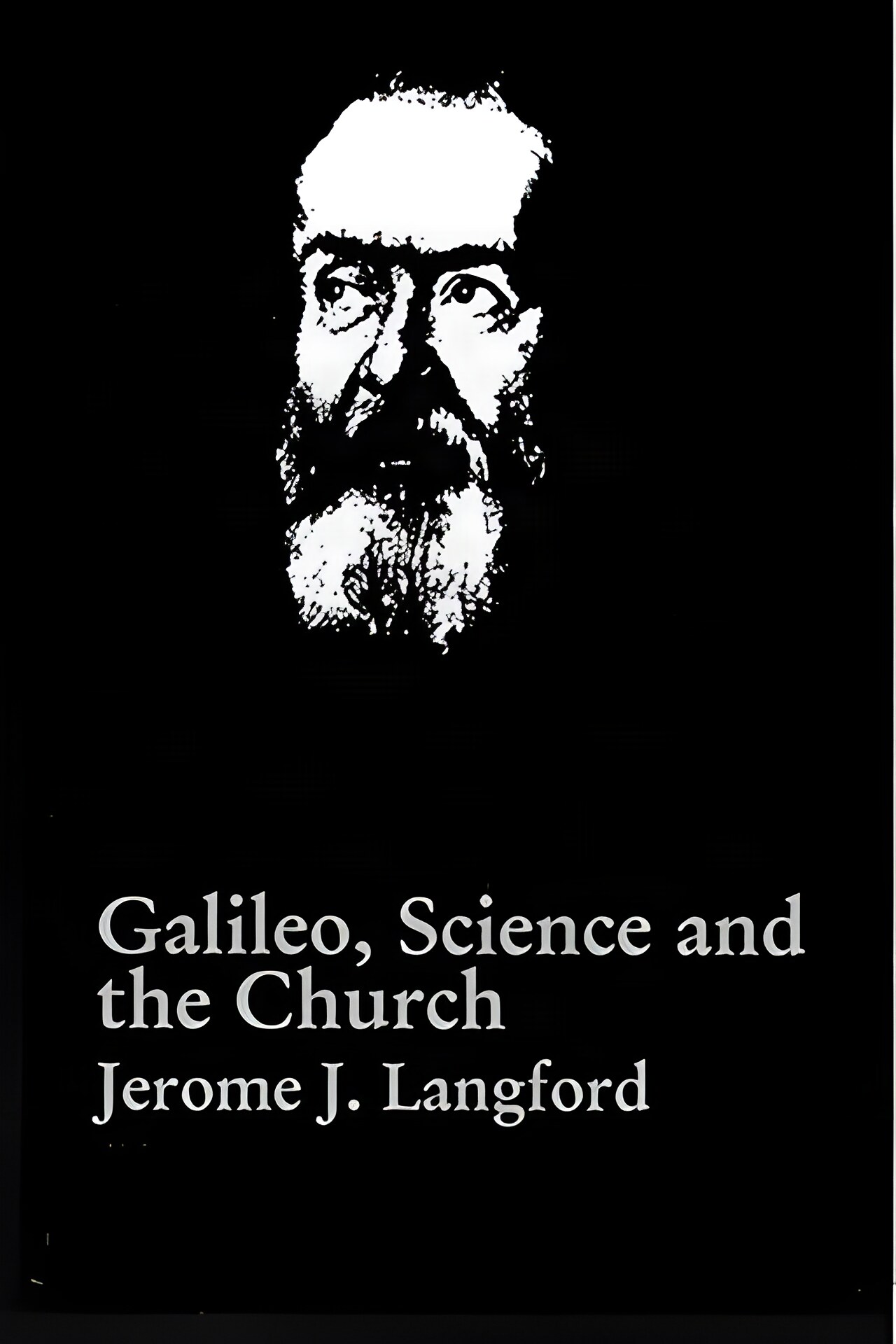
Hardcover. South Bend IN, St. Augustine's Press, reprint, 1998, Book: Very Good, Dust Jacket: None, Hardcover, glossy pictorial boards, 225 pages. Widely recognized as a classic account of the circumstances, issues, and consequences of Galileo's tragic confrontation with the theologians. Langford's book is cited in much of the Galileo literature of the past three decades, and it has been in print continuously since 1971. The present text is the third edition, updated and expanded with a survey of the most important advances in recent Galileo studies. In it, Langford assesses the validity of his own account while making the modifications dictated by recent scholarship.
Hardcover. Cambridge, U.K. ; New York, Cambridge University Press, 1st, 2001, Book: Very Good, Dust Jacket: Very Good, Hardcover, 442 pages. Light shelf-wear to dust jacket with slight sun-fade on spine. Clean, tight copy.
Softcover. Evanston, IL, Northwestern University Press, reprint, 2001, Book: Very Good, Dust Jacket: None, 355 pages. Softcover with light edgewear to paper wrappers. In this groundbreaking volume, Krzysztof Ziarek rethinks modern experience by bringing together philosophical critiques of modernity and avant-garde poetry. Ziarek explores, through selective readings of avant-garde poetry, the key aspects of the radical critique of experience: technology, everydayness, event, and sexual difference. To that extent, The Historicity of Experience is less a book about the avant-garde than a critique of experience through the avant-garde. Ziarek reads the avant-garde in dialogue with the work of some of the major critics of modernity (Martin Heidegger, Walter Benjamin, Jean-Francois Lyotard, and Luce Irigaray) to show how avant-garde experiments bear critically on the issue of modern experience and its technological organization. The four poets Ziarek considers--Gertrude Stein, Velimir Khlebnikov, Miron Biaoszewski, and Susan Howe--demonstrate the broad reach of and variety of forms taken by the avant-garde revision of experience and aesthetics.
Hardcover. Cambridge MA, Harvard University Press, 1st, 1963, Book: Very Good, Dust Jacket: Very Good, Hardcover, 184 pages, maroon cloth with a lightly worn dust jacket. Previous owner's signature, pencil notes on front end paper. Otherwise clean. These studies concern the development in the Renaissance of a new perspective on the past, a new method for interpreting the meaning of the documents of the past, and a reformulation of traditional doctrine that history was philosophy teaching by example.
Softcover. Albany NY, State University of New York Press, reprint, 1987, Book: Very Good, Dust Jacket: None, Softcover, 157 pages. Introduction: Sharpe, Eric, Translation from the Swedish by Birgitta Sharpe. Here are the early Sufis: their ascetic practices, their attitudes toward women and marriage, toward food and drink and toward music and poetry. First published in 1947. Clean copy.
Softcover. Amherst MA, Warring States Project, 1st, 2017, Book: Very Good, Dust Jacket: None, Softcover, 191 pages. This book is an overview of the history of Early Christianity. Each chapter is based on one selection from Jewish texts or from those produced by the Jesus sect of Judaism. It gives a sense of how things happened, from the words of certain ancient prophets, to Jesus' effort to bring about those prophecies, to the efforts of his followers to reshape their expectations after his death. It follows the movement as it came to regard Jesus himself as divine, a process which eventually led to the separation of the sect from the parent religion. It ends with a glimpse of a surviving early Christian church on the shores of the Black Sea, and how it appeared to the Roman administrator who was in charge of executing those who, like the Early Christians, refused Emperor worship. From the evidence of two deaconesses whom he tortured, which Pliny reported to Emperor Trajan, we too learn what were the regular practices of that church. Clean copy.
Hardcover. Cambridge UK, Cambridge University Press, 1st, 2006, Book: Very Good, Dust Jacket: Very Good, Hardcover in a bright dust jacket, 767 pages. 'This book is a major new intellectual and cultural history of intolerance and toleration in early modern and early Enlightenment Europe. John Marshall offers an extensive study of late seventeenth-century practices of religious intolerance and toleration in England, Ireland, France, Piedmont and the Netherlands and of the arguments which John Locke and his associates made in defence of 'universal religious toleration'. He analyses early modern and early Enlightenment discussions of toleration; debates over toleration for Jews and Muslims as well as for Christians; the limits of toleration for the intolerant, atheists, 'libertines' and 'sodomites'; and the complex relationships between intolerance and resistance theories including Locke's own Treatises. This study is a significant contribution to the history of the 'republic of letters' of the 1680s and the development of early Enlightenment culture and will be essential reading for scholars of early modern European history, religion, political science, and philosophy.' Clean copy.
Hardcover. New York, Collins Brother & Co, 1st, 1845, Book: Fair, Dust Jacket: None, 309 pages. Hardcover, full leather with black band on spine. Heavy wear to tan leather edges. Water staining throughout bottom half pages, heavy foxing and tanning. bottom corners bumped. Previous owner's name on front fly leaf and end paper. Front end paper has previous owner's name pasted on small piece of paper bottom corner. Binding tight for age of copy.
Softcover. Cambridge UK, Cambridge University Press, 1st, 1987, Book: Very Good, Dust Jacket: None, Softcover, 482 pages. Previous owner's signature on front end paper, else a clean, unmarked copy with only minor wear to wrappers.
Softcover. Cambridge UK, Cambridge University Press, 1st, 1990, Book: Very Good, Dust Jacket: None, Softcover, 217 pages. Emotions have long been a central concern in philosophy, psychological and sociological studies. When anthropologists began to study emotion, they challenged many assumptions shared by Western academics and lay persons by exposing the cultural variability of emotional meanings. In this collection of original essays by anthropologists concerned with the relationship of language and emotion, it is argued that the key focus to the study of emotion might be the politics of social life rather than the psychology of the individual. Through close studies of talk about emotion and emotional discourses in social contexts from poetry and song to therapeutic narratives, scholars who have worked in India, Fiji, the United States, Egypt, Senegal and the Solomon Islands show how emotion is tied to politics of everyday interaction. Their arguments and cross-cultural findings will intrigue and provoke anyone who has thought about the relationship between emotion, language and social life. The book will be of special interest to those who find the boundaries between cultural, psychological and linguistic anthropology, sociology, cross-cultural psychiatry, and social psychology too confining. Clean, bright copy.
Hardcover. Oxford UK, The Voltaire Foundation, 1st, 1991, Book: Very Good, Dust Jacket: None, Hardcover in blue cloth, gilt lettering on spine, 251 pages. As France moved from the seventeenth to the eighteenth century, it found itself in the grip of anglomanie - a fascination with new English ideas in the domains of science and philosophy. Chief among the English thinkers it enthusiastically embraced was John Locke. On his visits to France and in his personal correspondence, Locke interacted with prominent French thinkers, scientists and savants of the day, such as Charles Barbeyrac and Pierre Magnol, and his works engaged in a critical dialogue with those of Descartes. However, Locke has been feted to such an extent that his position in the history of ideas in France is often overlooked. In Locke in France 1688-1734, Ross Hutchison re-examines and re-contextualises the precise nature and extent of Locke's influence in France by exploring how his ideas were incorporated into contemporary French debates and controversies in the transitional period from the seventeenth to the eighteenth century. Hutchison highlights the various channels of dissemination which brought Locke to the attention of the French, including translations of his major works and his personal friendships with French Protestant exiles. Hutchison also presents case studies of interactions in which Lockean ideas played a dominant role in the evolution of French thought, ranging from political theory to the nature of language, theories of education, and the relation between soul and matter. Clean copy, no dust jacket.
Hardcover. London, Rudolf Steiner Publishing, 1st, 1945, Book: Good, Hardcover, red cloth faded to tan on front and spine, 211 pages. Translation by H. Collison. Name and stamp on front fly leaf, no other markings.
Hardcover. Burlington VT, Ashgate, 1st, 2005, Book: Very Good, Dust Jacket: None, Hardcover, black cloth stamped in gilt, 263 pages. (Early Modern Englishwoman: a Facsimile Library of Essential Works) Name on front fly leaf otherwise clean.
Hardcover. UK, Cambridge University Press, 1st, 2001, Book: Very Good, Dust Jacket: Very Good, 444 pages. Hardcover with dust jacket. Light fading to dust jacket front. Light edgewear to dj. Black and white pictures throughout. Clean, tight copy. In 1999 Pope John Paul II proclaimed Our Lady of Guadalupe a patron saint of the Americas. According to oral tradition and historical documents, in 1531 Mary appeared as a beautiful Aztec princess to Juan Diego, a poor Indian. Speaking to him in his own language, she asked him to tell the bishop her name was La Virgen de Guadalupe and that she wanted a church built on the mountain. During a second visit, the image of the Virgin miraculously appeared on his cape. Through the centuries, the enigmatic power of this image has aroused such fervent devotion in Mexico that it has served as the banner of the rebellion against Spanish rule and, despite skepticism and anticlericalism, still remains a potent symbol of the modern nation. In Mexican Phoenix, David Brading traces the intellectual origins, the sudden efflorescence, and the theology that has sustained the tradition of Our Lady of Guadalupe. Brading also documents the interaction of religion and patriotism, and describes how the image has served as a banner both for independence and for the Church in its struggle against the Liberal and revolutionary state.
Hardcover. Cambridge, MA, Harvard University Press, 1st, 1968, Book: Very Good, Dust Jacket: None, 208 pages. Hardcover. Green-blue cloth, gilt lettering to spine. No dust jacket. Previous owner's signature on front fly leaf, light fading to spine title, else a clean, tight copy.

 "Alchemists & Goldby: Sadoul, Jacques")

 "C")
 "Classical Economists, Theby: O'Brien, D. P.")

 "Folktales and Realityby: Rohrich, Lutz")

 "Hegel and Aristotleby: Ferrarin, Alfredo")
 "Historicity of Experience: Modernity, the Avant-Garde, and the Event, Theby: Ziarek, Krzysztof")

 "In the Garden of Myrtles: Studies in Early Islamic Mysticism by: Andrae, Tor")

 "John Locke, Toleration and Early Enlightenment Culture (Cambridge Studies in Early Modern British History)by: Marshall, John")
 "Journal of the Life, Gospel Labors, and Christian Experiences of That Faithful Minister of Jesus Christby: Woolman, John")
 "Kant and the Claims of Knowledgeby: Guyer, Paul")
 "King and the Corpse, The: Tales of the Soul's Conquest of Evilby: Zimmer, Heinrich")
 "Language and the Politics of Emotion (Studies in Emotion and Social Interaction) by: Lutz, Catherine; Abu-Lughod, Lila")

 "Man as Symphony of the Creative Word: (Esoteric Studies) Twelve lectures given in Dornach, Switzerland from October 19th to November 11th, 1923 by: Steiner, Rudolf")

 "Mexican Phoenix: Our Lady of Guadalupe: Image and Tradition Across Five Centuriesby: Brading, D.A.")